Tag Archives: silk

Trying out Stuff, Steep and Store

I mentioned a while back that I let out a squeak of glee when I got my copy of India Flint’s new book Stuff, Steep and Store… and it was only a matter of time before I’d try it out.
IMAG3530

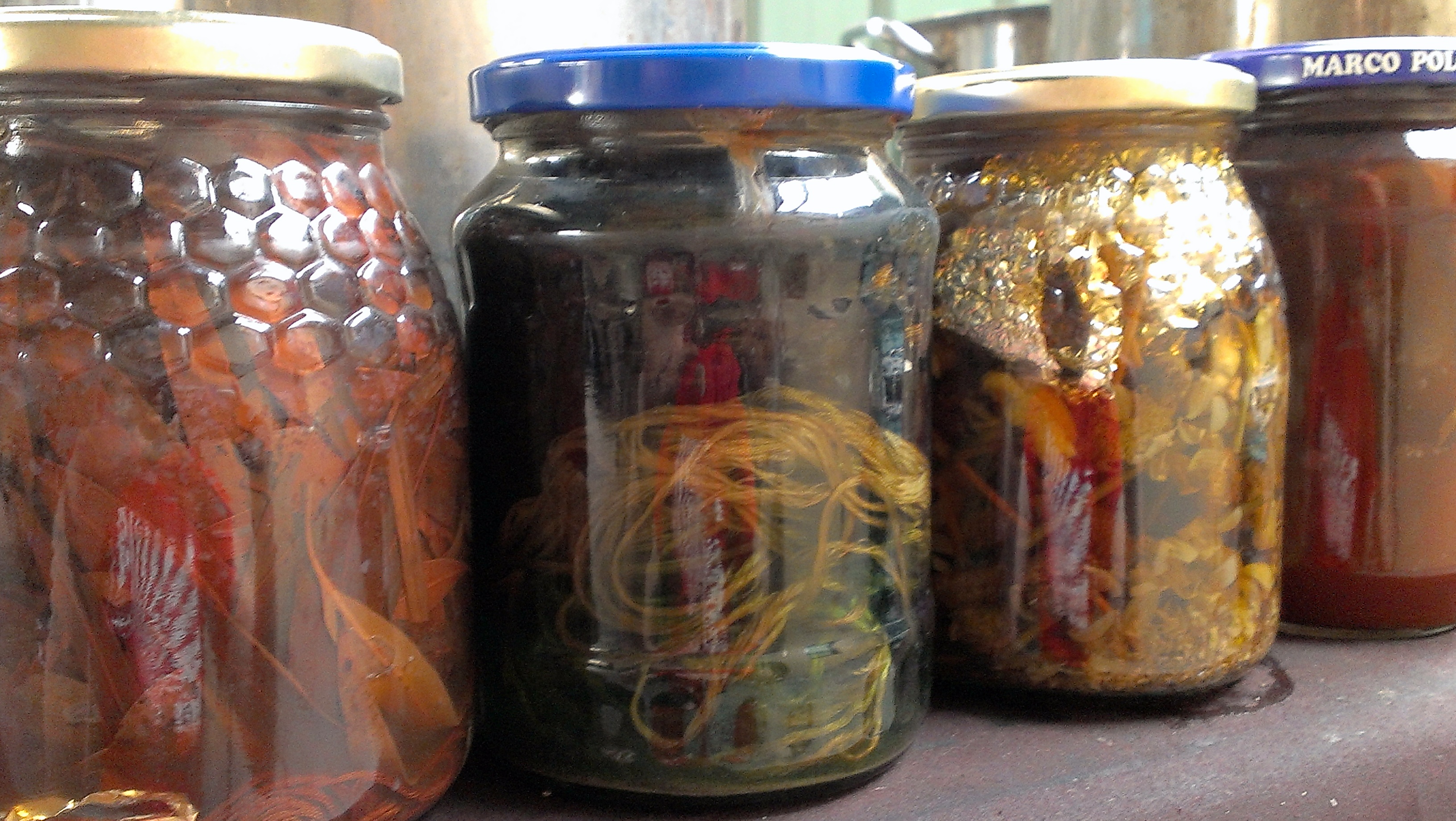
I’m trying out the following.  I can’t pretend to think they are especially well suited to this method but there it is… time will tell, as it always does!

  • Brown onion skins, aluminium foil, E Scoparia dyebath with vinegar (I hope I wrote some fibre or other on the label!!)
  • E Scoparia leaves, bark and dye, aluminium foil, silk thread, vinegar
  • Dyers’ chamomile flowers, aluminium foil, silk thread, water and seawater and finally
  • Red onion skins, silk thread, copper and vinegar water, seawater.

Entertainingly enough, while India Flint says she has been inspired in this dyeing process by years of food preserving (and that’s evident from the book)… After my first batch of dye jars I was inspired to pitch a round of food preserving to my beloved.  We put up a dozen or so jars of white peaches and yellow plums for later enjoyment.  I am not sure why this is called ‘canning’ in the US, but in Australia it’s usually called ‘bottling’ because it is done in glass jars.  I have a massive collection. I have been the receiving point for others’ Fowlers Vacola preserving kits for so long I now gift or share them with friends who are not so well endowed.  Perfect, really!

Since filling these jars I’ve been on a seaside holiday.  I set the blog to load scheduled posts while I was gone… and being lazy at the beach is the reason for slow responses to comments lately.  WordPress and my phone have an on-again-off-again relationship, which doesn’t help.  Since I was by the sea and pedalling around the neighbourhood, I collected seeds of hardy native plants for later propagation and planting in the abandoned waste parts of my own neighbourhood. Plantings on public land just call out for seed collection, don’t you think?
IMAG3651

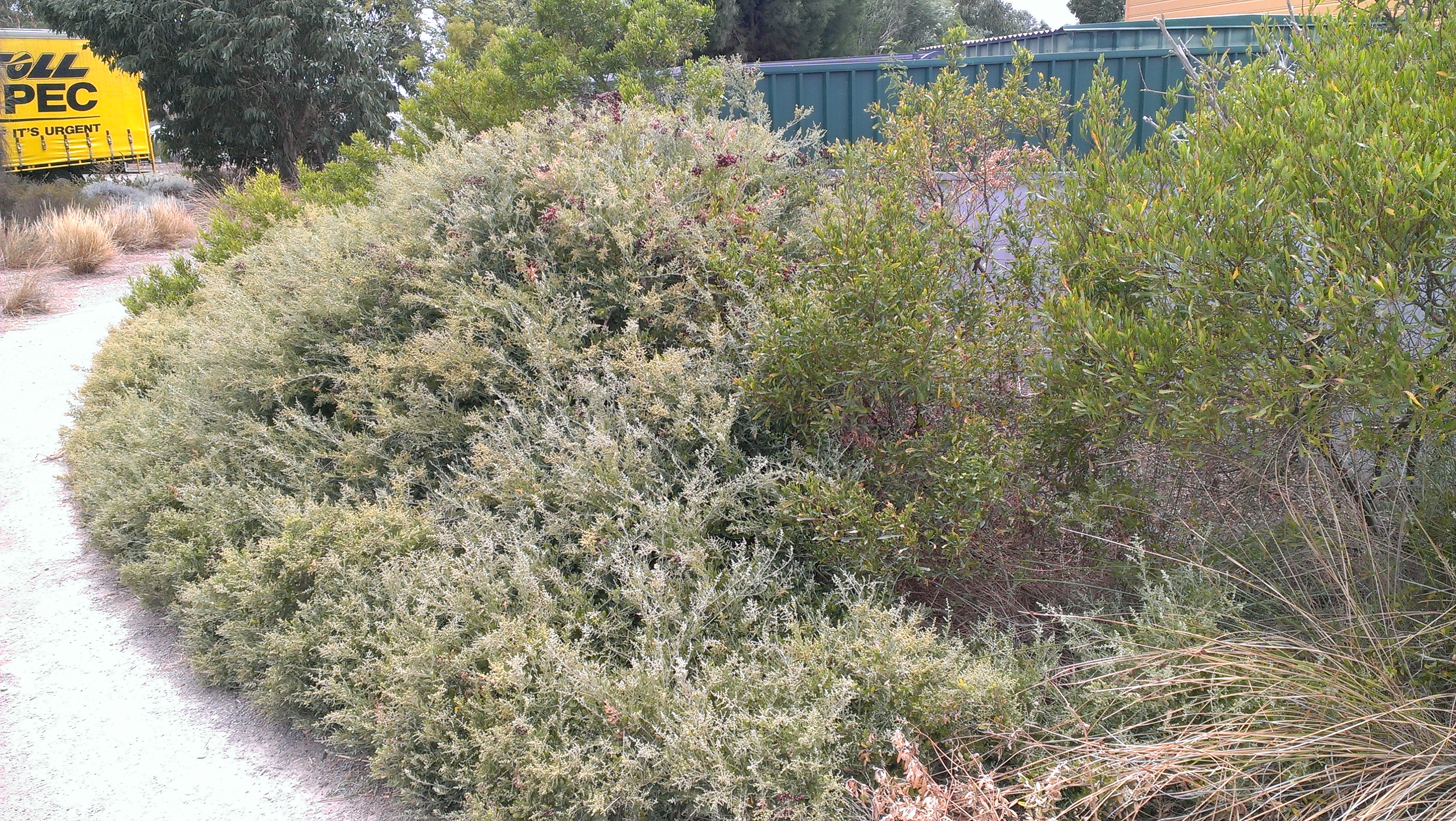
One plant, the seaberry saltbush (rhagodia spp, probably rhagodia candolleana), was in such profuse fruit that I collected enough to fill a small jar we had finished using.

IMAG3657

I can confirm that rhagodia fruit ferments quickly in heat like we’ve had lately (41C today)… and began to do so before I managed to get it home and process my jar properly.  Ooops!  That really should not have been a surprise.  The fruits are smaller than a currant but very pretty…

IMAG3670

Another experiment, since if anyone else has tried dyeing with this plant I don’t know about it and have only a foggy memory of the Victorian Handspinners reporting they got some colour from saltbush fruit (saltbush is a big family).  I happened to have embroidery thread with me… and into the jar it went with chocolate-bar-foil.  And now we wait.

IMAG3687

To see how others are working with this process, visit the delectable ‘pantry’ India Flint has set up, or if you’re so inclined, have a look on facebook.

8 Comments

Filed under Dye Plants, Eucalypts, Natural dyeing

What to do with silk cocoons 4: Spin degummed cocoons

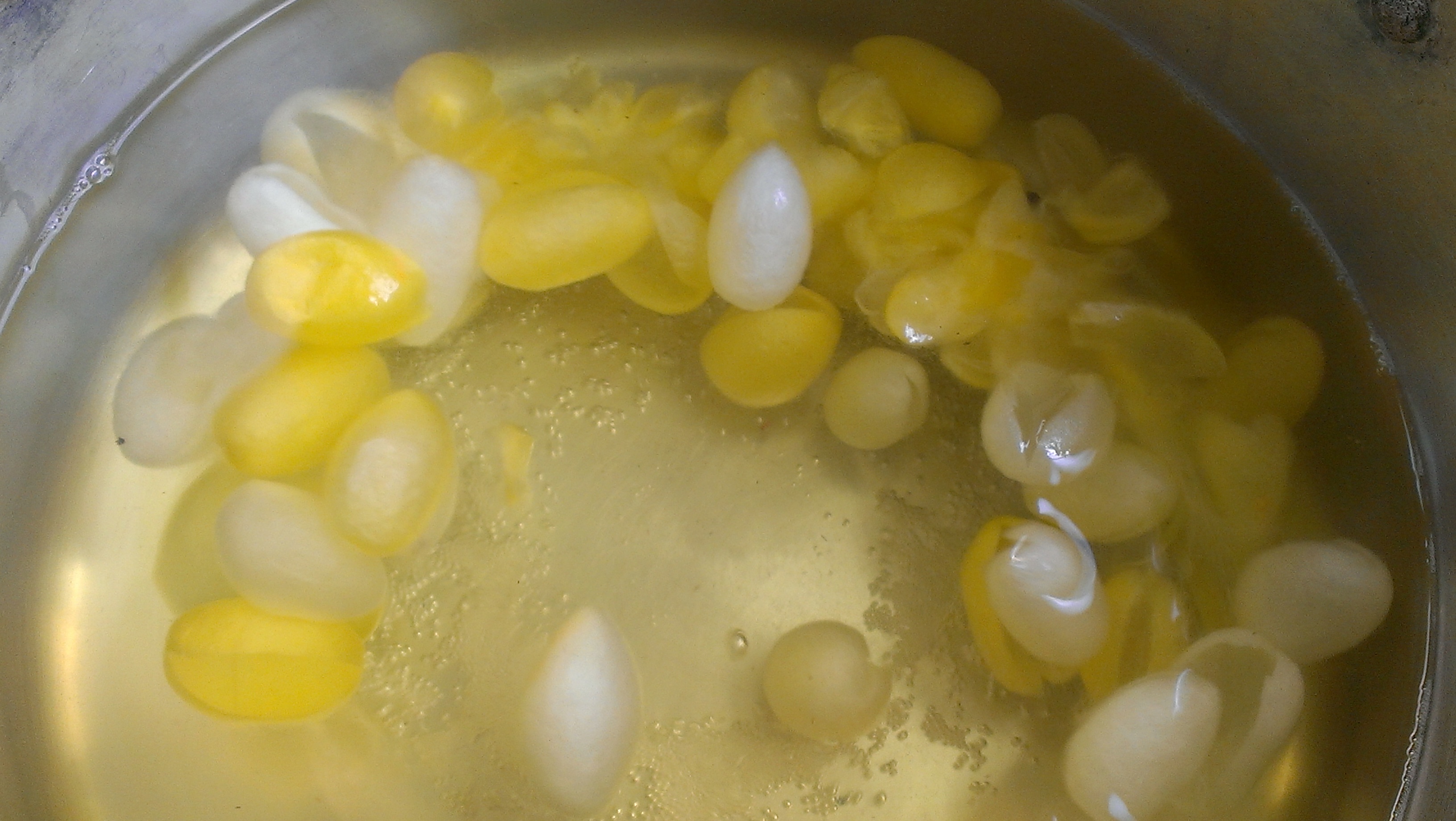
For those who have not been following the silkworm saga… I raised a good number of silkworms last year, starting with the hatching and ending (after riveting weekly updates, believe me), with the very last silkworm creating a cocoon. Since then there has been a small series of ‘what I did with my silk cocoons’ posts… and I think this is the last one for this season of silk.

With  A Silk Worker’s Notebook by Cheryl Kolander (Interweave Press, Colorado USA 1985) as my guide, I moved on to my final experiment.  Cheryl describes the potential of spinning from degummed cocoons as ‘unlimited’ (page 71).  In fact, she goes so far as to say: ‘Direct spinning from degummed cocoons is the classic form for handspun silk. In fact, there is no easier fiber to spin.’
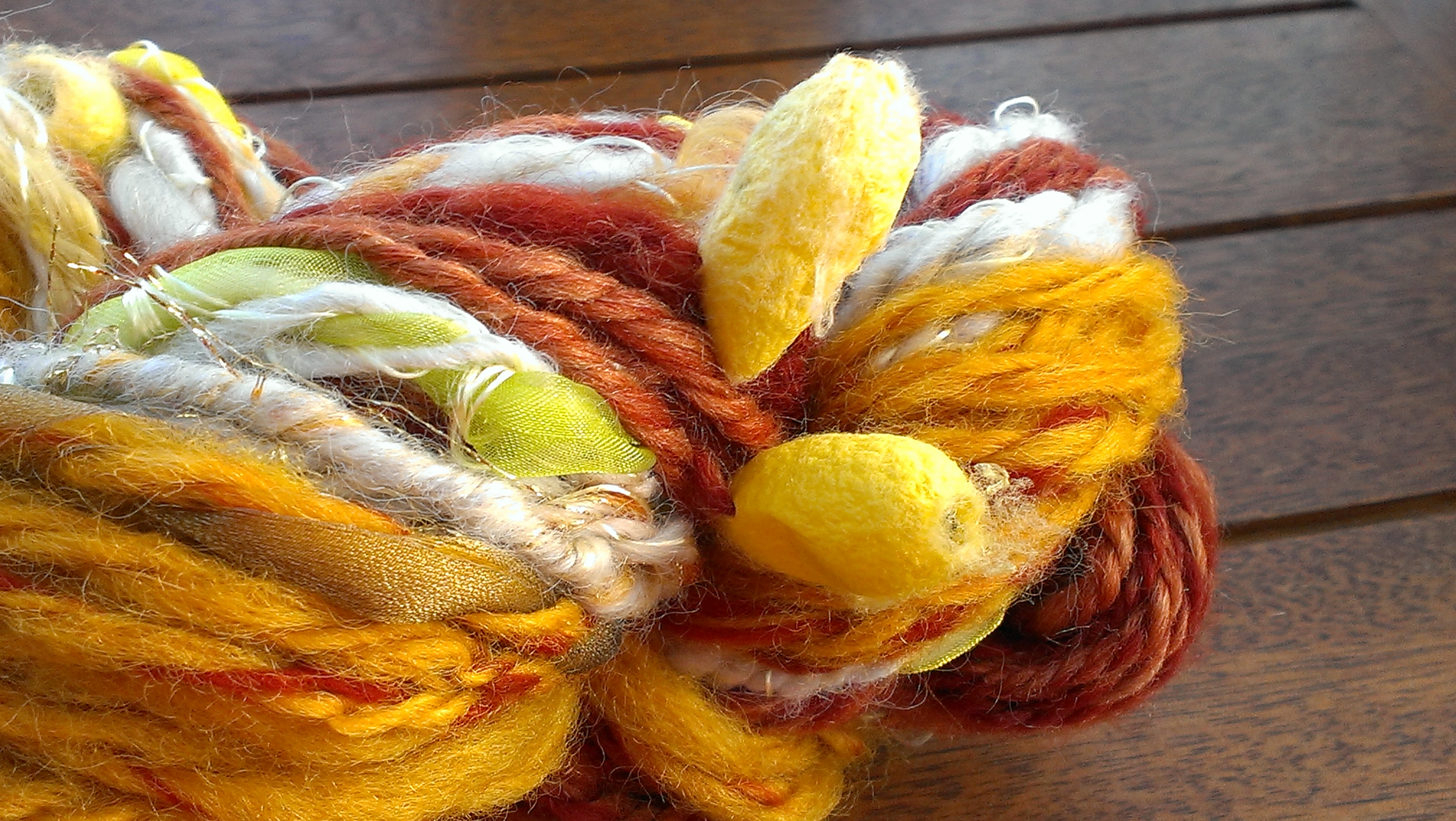
As it happens, I bought 25g of degummed cocoons last time I visited the Victorian Guild, (they have a lovely shop and gallery) for the princessly sum of $3.20.  It’s a good thing I did, because these are the only degummed silk cocoons I have ever touched. It can be difficult to embark on a process (such as degumming) when you have never seen anyone do it (other than on YouTube perhaps) and you have never seen or touched the finished product–and you have only a paragraph of text as your guide.

IMAG3043

Degumming is a way of releasing the sticky substance that holds the strands of silk together to form the cocoon, so these are still roughly cocoon shaped but fluffy by comparison with their intact counterparts.  Now, I have to begin by saying that Cheryl Kolander has skills that far exceed my own, but for me this was not the easiest fibre I have ever spun!

IMAG3480

Just the same, I managed to spin it, extract most of the chrysalis remains that were included and produce yarn, even if I was quite unsure how to turn it into something even and lovely.  I didn’t really expect to do that on my first attempt–but I would not object to being surprised by beginners’ luck at some point in my life. I re-read the relevant part of the book to discover that even from Cheryl’s skill level and point of view, some parts are not spinnable, and they were the ones I struggled with most.  Here is what I produced:

IMAG3430

The next thing to do was to follow Cheryl’s advice on how to degum silk cocoons and try this process with my own.

IMAG3447

There were two accounts of how to degum in the book, one of which implied that the cocoons were degummed with the chrysalis intact (since it was extracted at a certain point in the spinning process).  The other advised cutting the cocoons up the side and removing the chrysalis before before degumming,  In the end, I decided to do that because the idea of a well simmered chrysalis did not excite me.  Call me unprepared to pick small insect parts from my fibre–stronger insults have come my way!

IMAG3487

So, into the pot went the white cocoons, the yellow cocoons and the parts left over from spinning raw cocoons, just in case more could be done with them.  There were mysterious elements, as there often are with instructional texts from the US–for me, at least.  What is Ivory dish detergent?  Does the brand matter?  What would count as a big squirt?  This complication in understanding what others actually do is particularly entertaining in reading online discussion of washing wool–I recommend the thousands of accounts of the ‘only’ and ‘best’ way to clean raw fleece that you can find in any forum where this issue is discussed as fine entertainment!

As usual, I resolved these mysteries with the judicious application of guesswork.  Some time later I had this, a circular mass of silk fibres with quite a bit less structure, much less colour and some yellow water:

IMAG3495

I rinsed–and had something decidedly mangy and sad looking at the end of the process.  So I drew it out into a longish lumpy mass and hung it out to dry.

IMAG3527

Then, the struggle to spin began.  I think the temperature on my degumming pot may have been a problem… in that my burners maintain temperature by intermittently heating, which sometimes produces bubbling. I think this introduced a level of tangling that the cocoons I bought from the Victorian Guild did not suffer from.  But of course… this was probably only one of my beginner mistakes. My cocoons did not contain as much fibre as those I had purchased either, so the ratio of spinnable silk to fine inner layer was different too.

In the end, there was some yarn.  Not very much, and not very lovely.  But there was yarn.

IMAG3598

Time to put my feet up until next September, I guess!

7 Comments

Filed under Fibre preparation, Spinning

Leaf Print of the Day

IMAG3315

This glorious tree is in full bud near my parents’ house.

IMAG3208

I have had colour from the buds before, but they are still very small at present. You can see how spectacular it will be to have flowers in such profusion when the time comes!

IMAG3210

An entire branch had fallen to the ground: too good an opportunity to pass up.  I was on my bike that day, so I filled my pannier before heading home.

IMAG3255

And so, buds and leaves of an unknown eucalypt on silk velvet, part of a special pack of some kind from Beautiful Silks. I have no idea what I could do with these small pieces of velvet, but I’m more than open to suggestions.  Treasure bag? Cushion panel?

3 Comments

Filed under Eucalypts, Leaf prints

What to do with silk cocoons 3: Spin them onto a yarn!

IMAG2997

I used Jacey Boggs‘ techniques to do this…

IMAG2994

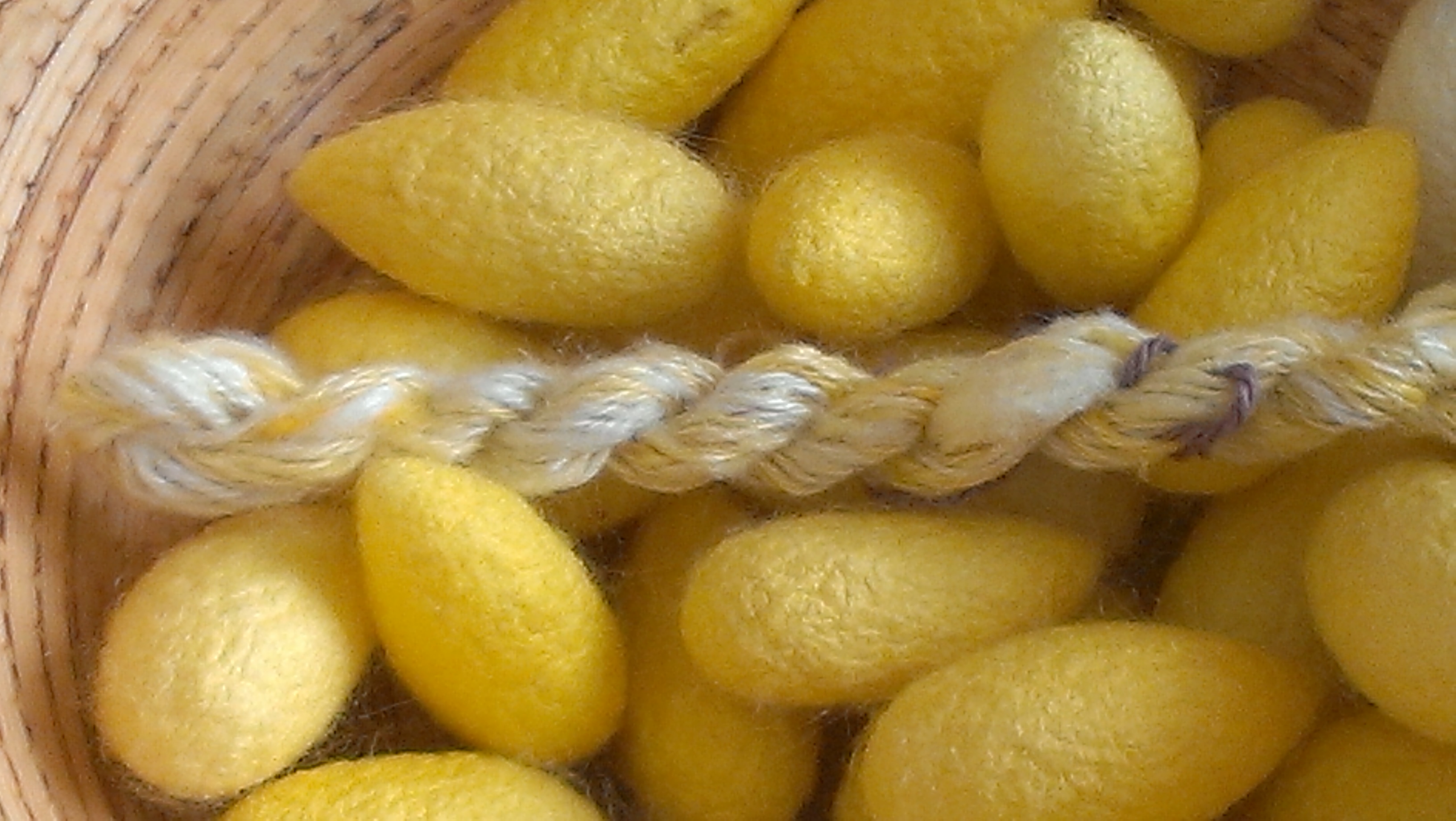
I feel a tea cosy coming on!  Big thanks to the friend who gifted these cocoons: you know who you are!  This is really what I had planned all along to do with my home grown cocoons, but they turned out to be rather thin.  I guess I am raising silkworms of uncertain parentage, not silkworms that have been bred for their fine silk or silkworms that have had optimum treatment!  Their cocoons are certainly not as strong or as thick-walled as the cocoons in this picture.  So… perhaps they are not suitable to this use.  There have turned out to be many others!

10 Comments

Filed under Spinning

What to do with silk cocoons 2: Spin raw cocoons

On the last Guild meeting day for 2013 I wandered into the library intent on borrowing for the coming 2 months–including holiday time.  One of my loans was A Silk Worker’s Notebook by Cheryl Kolander (Interweave Press, Colorado USA 1985). She describes spinning raw (softened in water but not degummed), degummed whole and cut and degummed cocoons.  Choices, choices, choices!

She instructs the reader to soak the cocoons to soften them.  I soaked them cold and nothing much happened.

IMAG3411

I double checked and Cheryl Kolander says to soak in warm water.  I did, and by bedtime, I had spun a very small number of cocoons over a considerable amount of time with great effort and decided soaking until the following evening would be necessary, since I do in fact have a job to go to…

IMAG3415

Kolander’s instructions make gradually drawing out fibre from one end of the cocoon sound straightforward.  Bless her heart, if she can do that, she has greater skills and/or strength than I do!  I have never applied so much sheer force to draft anything.  I found I had to snip the cocoon to make a start, enlarge the hole by pulling, remove the chrysalis and then tear or stretch the cocoon far enough that I could grab one half in one hand and the other half in my other hand and create a bridge of fibres I could attenuate and attempt to join to my thread.  All while still wet.

IMAG3460

Kolander promised a stiff thread and mine did not disappoint. Can you see the end of the thread heading off to the upper right in the next picture?  No wind or special effects were applied to this image!

IMAG3466

This was the smallest reel I could find.  But I am delighted to have managed to spin a thread.  I drew the line at plying and left it as a single.  As always, experiments like these give some finger-and-muscle-understanding and not just a vague intellectual sense of the tremendous skill and sheer hard work and time commitment of people who create fine reeled silk and all manner of silk yarns and fabrics with the most basic of equipment. I won’t be giving up my day job anytime soon!

IMAG3474

2 Comments

Filed under Fibre preparation, Spinning

What to do with silk cocoons 1: Spin the blaze!

One of my more knowledgeable friends (who loves working with silk) told me that the loose fluffy fibres around a silk cocoon–where the silkworm was just getting started on anchoring themselves in space and creating a scaffolding for the eventual cocoon–is called the ‘blaze’. She was planning to try spinning the blaze–and I decided to follow her example.  I had never seen this feature of a silk cocoon before growing my own.  I guess it is removed or destroyed when cocoons are dyed or prepared for sale.  But this puffy little cloud of fibre is rather lovely.

IMAG3395

I tried spinning it by just drafting it away from the cocoons.

IMAG3398

This sometimes meant several cocoons were caught up in my drafting, and occasionally one was dangling in mid-air, hanging from a filament so slender as to be invisible.

IMAG3402

Here are the cocoons, now without their blaze.

IMAG3404

And here is the resulting tiny three-ply skein with some cocoons for scale.

IMAG3420

It’s pretty but tiny!

IMAG3433

10 Comments

Filed under Fibre preparation, Spinning

Tree loving craftivism

While I was in Melbourne, I found Sarah Corbett’s A Little Book of Craftivism.  Yes, it is literally small, but inspiring out of proportion to its size.  It is about the work of the craftivist collective, together with proposals about how the reader might engage in their own craftivism.

IMAG3245

For those who might be wondering… one definition of craftivism: ‘Craftivism is a way of looking at life where voicing opinions through creativity makes your voice stronger, your compassion deeper & your quest for justice more infinite.’ More at the link.

I loved this little book from the beginning. This is activism of a gentle, slow kind.  It isn’t the only kind of activism the world needs.  But every social movement needs a variety of approaches–I’ve participated in many–and gentle is one of them.  This book is packed with organising wisdom, clear instruction, pictures that inspire and make you wish you had been there and examples of projects from the small to the enormous that offer plenty of scope for DIY.

IMAG3361

For a view of the book and its content, click here.  For a brief review with links to multiple other reviews and ways to purchase online other than through amazon, click here.  To purchase from the craftvist collective itself, click here and check the sidebar.

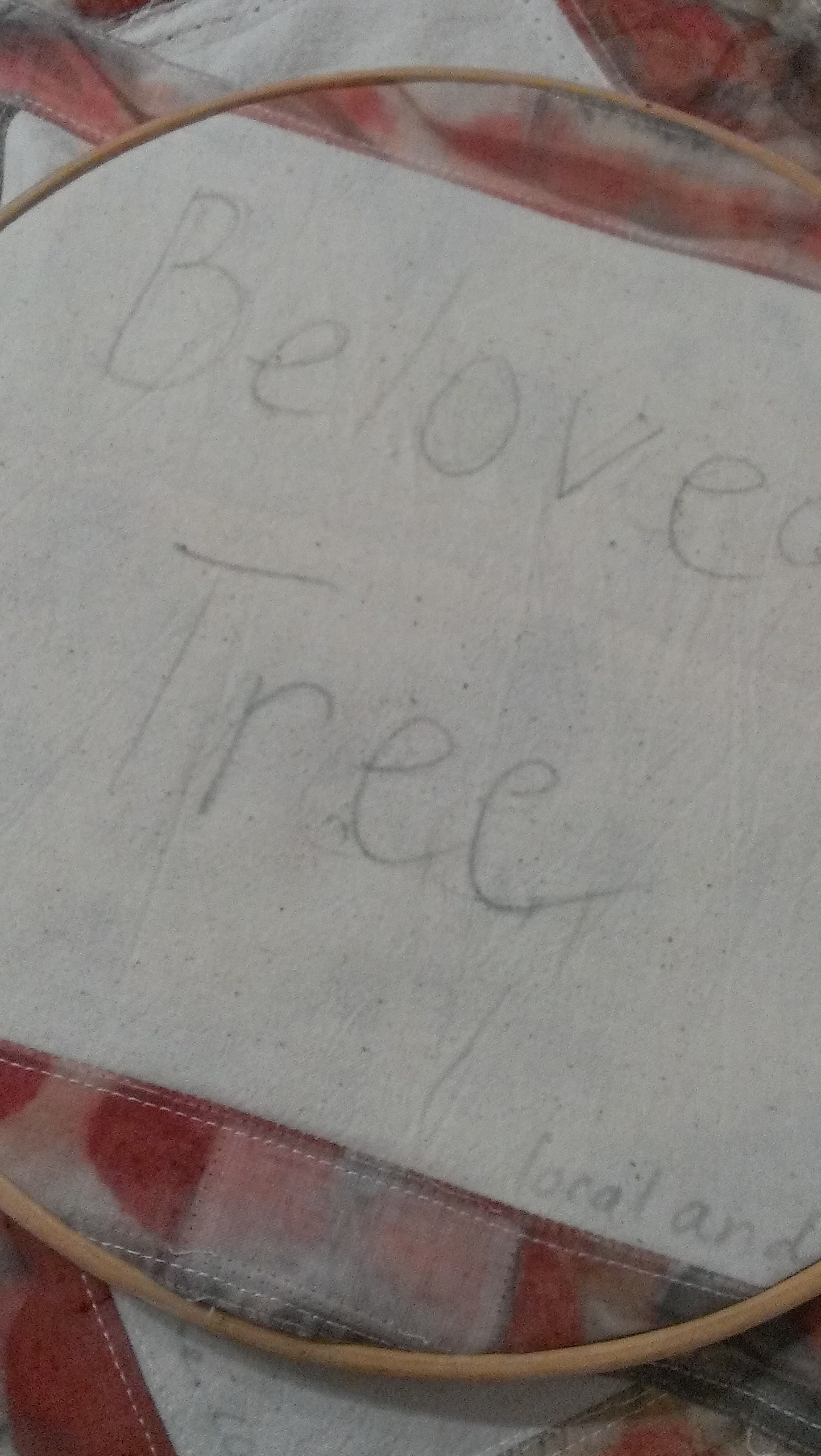
Did I mention finding this book inspiring?  I think it’s one of the highest compliments that you could pay to a book of its kind to say that I immediately wanted to go out and make some of the projects in this book and could immediately see places that could happen to good effect. Not only that, I tried my ideas out on my nearest and dearest and then created them.  My ‘mini protest banner’ is a little different to the cross stitched versions in the book–but nevertheless the same concept.

IMAG3241

I took:

  • a calico sack from a local business for my banner background (I offered to take the offcast bags from a shop and they accepted)
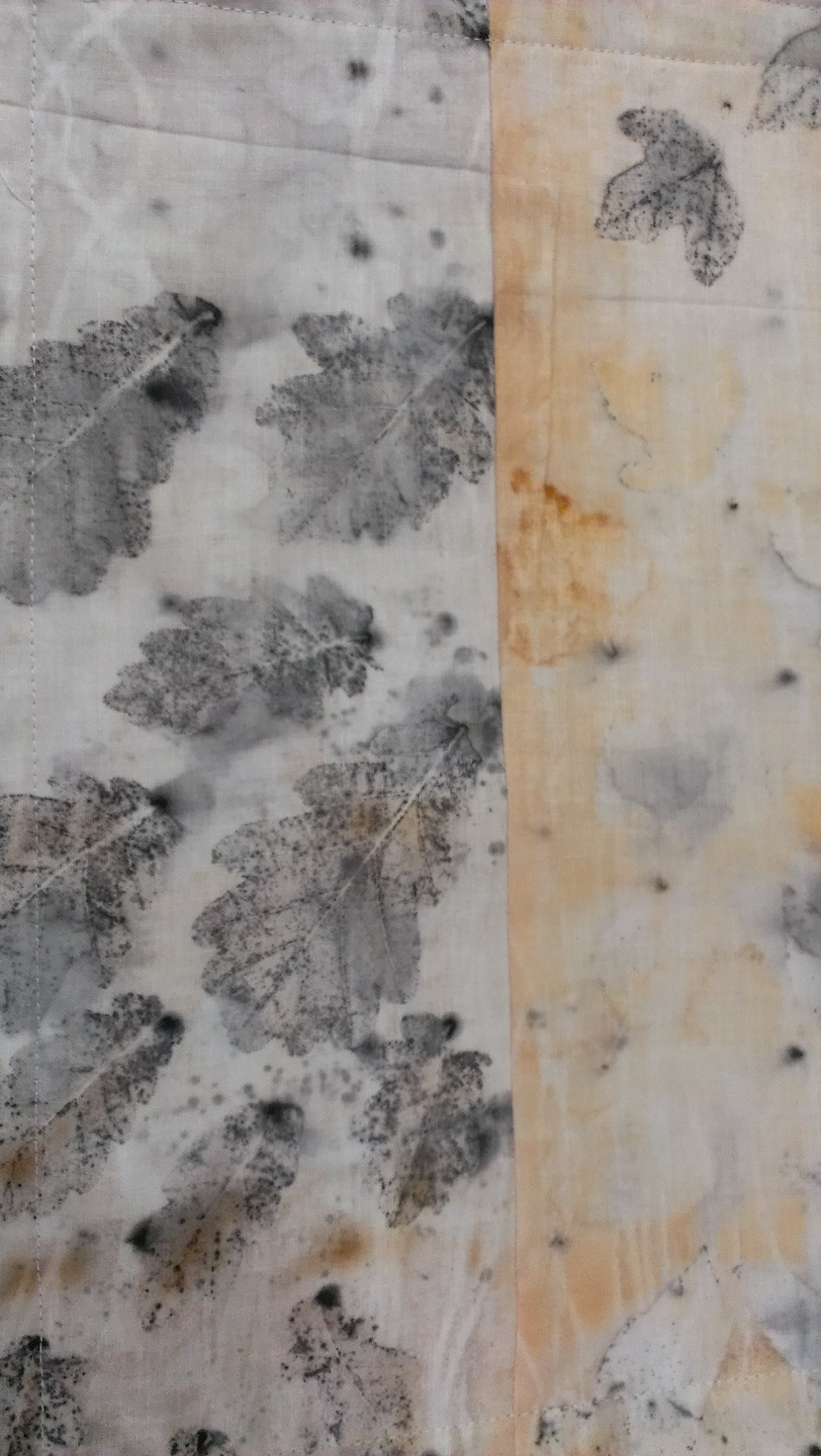
  • some not-so-glorious leaf print experiments for backing
  • some leaf-printed collars and cuffs for my frame
  • some eucalyptus dyed silk thead and
  • some secondhand bias binding… and…

Before long I had made two banners.  We hung the first one today. One of my friends offered the view that every day was a good day for this kind of event (I guess we’re friends in part because we agree on things like that!) so we had cool drinks of water and cherries and chat and then went out to admire the tree and tie on.  The 6 year old present wants to make more banners, which is additionally promising.

IMAG3366_1

This banner celebrates a river red gum (E Camaldulensis) that we managed to save from being cut down last year, with help from other local people and our local MP, Steph Key.  It has a legally mandated 3 m exclusion zone around it to protect the root zone, but this is not being observed very well lately and I want the people responsible to know that we care.  I had to measure the tree to be sure I had stitched on enough tape:  3.6 m (11′ 9”) around the trunk, well above the ground.  To give you a sense of its size… and the relative size of the banner (which is in the picture), I give you the full view.

IMAG3373

4 Comments

Filed under Book Review, Craftivism, Eucalypts, Leaf prints, Neighbourhood pleasures, Sewing

Textured yarns and tea cosies

There has been quite a bit of tea cosy action around here…

IMAG2728

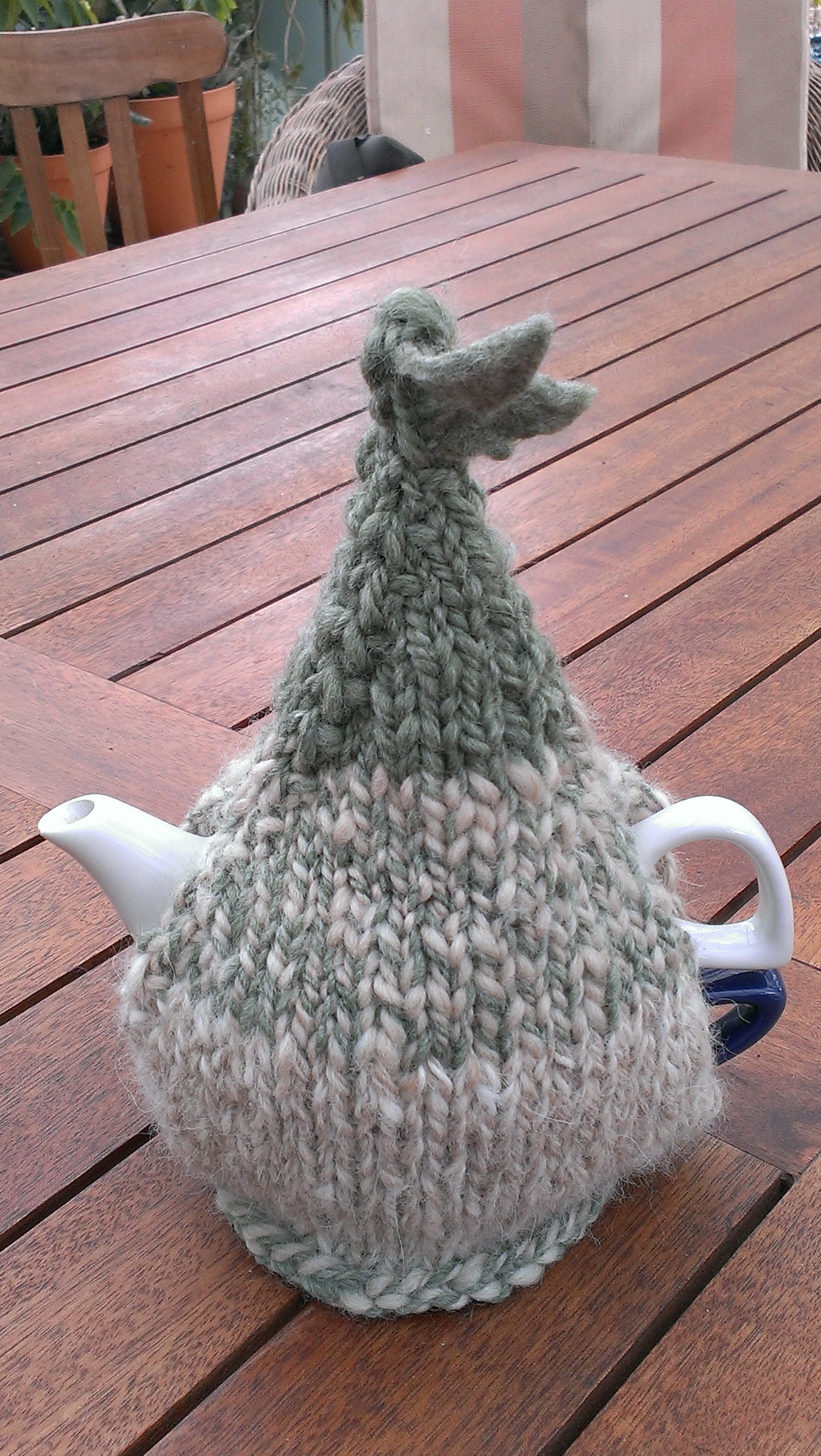
This was the leftover from a yarn with felted leaves on it.  As it turned out, there were only a couple left!  I like the pennant effect… like a ship’s mast, or perhaps a circus tent. Then there is this corespun yarn, complete with silk and sparkle.

IMAG2734

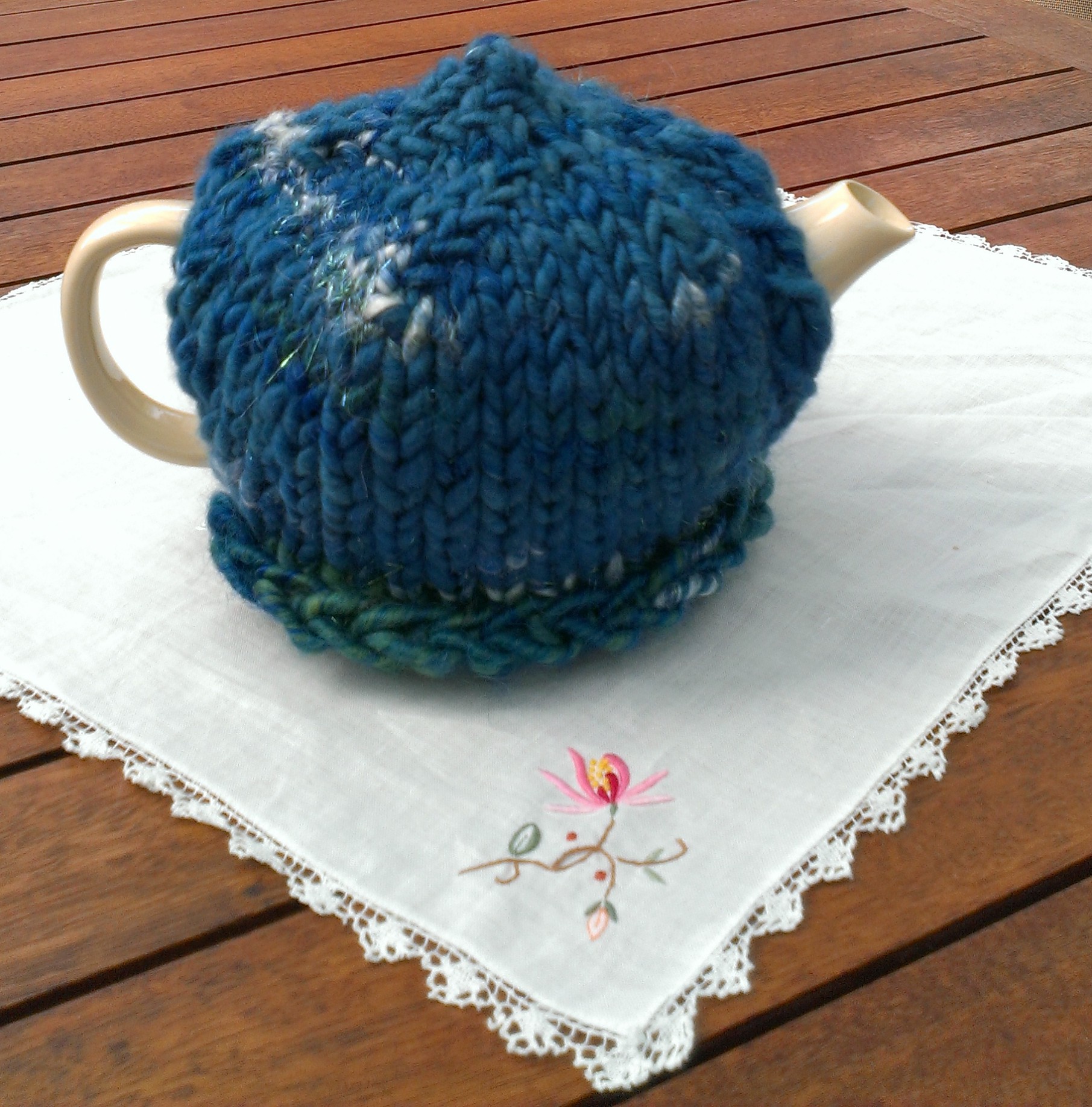
It went home after a film viewing at our house recently, to a happy new home.

IMAG2761

Corespun but with the tips of the locks left to roam free… incredibly silly…

IMAG2727

Oh… and there is this natural grey single with leftover silk thread from a friend’s handspinning and card weaving… and mohair and sari silk thread and suchlike…

IMAG3019 (2)

… and there are a few others from previous tea cosy jags lying about too…

4 Comments

Filed under Knitting, Spinning

Silkworms: 7 week update + more wild textured spinning

Well, here are the late bloomers. Yes, only 5 left.

IMAG2607

Everyone else is in here now in another form…

IMAG2608

And meanwhile I decided to try a spinning challenge set up on Ravelry… a yarn generator based on a date system.  What genius on the part of its originator! Sounded like fun to me… I put in the date for my birthday and that meant creating a yarn that incorporated autowrapping (see that rayon thread over the white section?), metallic elements (there are strange and peculiar glitter pompoms from the op shop as well as sparkly gold fibre and gold recycled ribbon)…

IMAG2609

Yellow is required too, so there is some of the coreopsis dyed corriedale, some yellow preloved ribbon (there has to be fabric spinning too), and last year’s silk cocoons…

IMAG2610

Then there is chain plying and the ever present eucalyptus dyed merino… and one mighty strange yarn overall!

IMAG2611

4 Comments

Filed under Fibre preparation, Spinning

Textured spinning and trash batts

I went on a weekend away with members of my Guild recently and had a fabulous time chatting, spinning and eating way more than made any sense.  I took some little packs I made up beforehand, each designed to create a skein of yarn. This first one began as Finn cross locks I bought pre-dyed and perhaps a little felted, with curly tips.  Perfect for this technique, I thought.

IMAG2260

Here they are as a lockspun yarn, with the teased-out, butt ends of the locks corespun around a crossbred grey wool core that can no longer be seen, and the curly tips on display.

IMAG2427

This batt of unloved green fleece that I was given includes some orange silk noil and some pre-dyed mohair locks.

IMAG2261

Here it is corespun over that same grey crossbred core.  I learned these two techniques from the fine writing and DVDs of Jacey Boggs.

IMAG2557

The trash batt experiments continue!  This is eucalyptus dyed carder waste (and nepps pulled out as I was spinning) carded with white and tan Polwarth locks.

IMAG2389

I used it for my first attempt at a  new textured spinning technique–a friend gave me a copy of The Wheel that contained this technique and you can also see it here.  It originates with Steph Gorin, who demonstrates here.  (The video also includes advertising for Ashford.)

IMAG2546

Here is the outcome of a batt made with the flick carding waste from the blue lockspun yarn above, and a eucalyptus dyed carder waste and polwarth batt.

IMAG2579

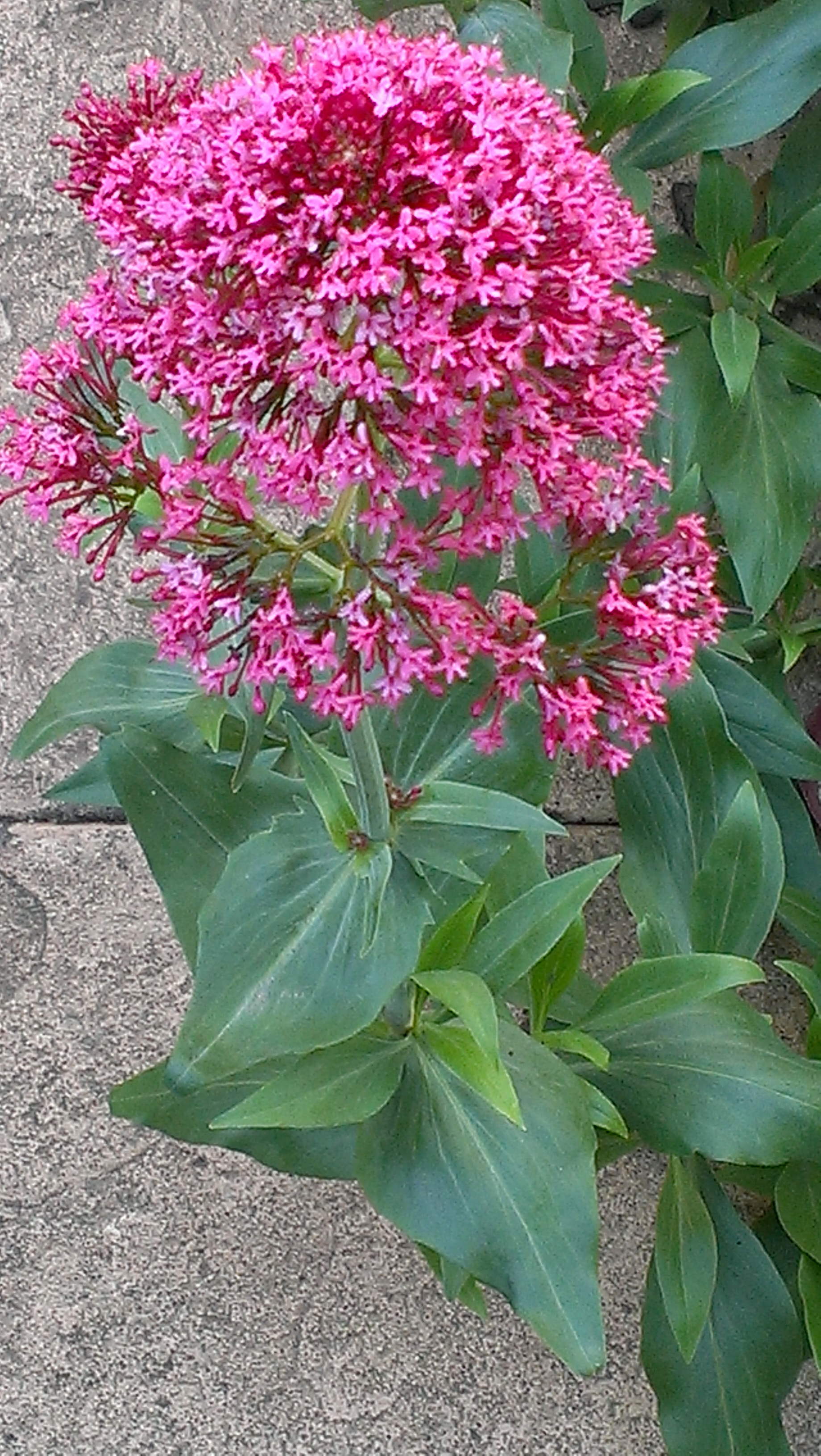
Finally, a gratuitous picture of what appears to me to be valerian in flower in my garden.  Which is gorgeous apart from the fact that I bought it because it was soapwort.  It doesn’t look like any soapwort I have ever seen now it is in flower, which makes me glad it wasn’t big enough to harvest until now!

IMAG2584

6 Comments

Filed under Fibre preparation, Natural dyeing, Spinning