Category Archives: Natural dyeing

Quilt finished at long last!

It has been a long time coming, but toward the end of my first burst of holiday time I finally got a proverbial wriggle on and made some serious quilt progress. I have created a series of blocks that each showcase leaves from a specific eucalypt, and embroidered the name of the eucalypt onto the block with eucalyptus-dyed silk thread. Who knew I had it in me?  I thought I had decided against embroidery as a child, never to go back.  I tracked the old posts on this project because I wondered just how long I have been working on this quilt (or not working on it, which is the routine case, of course!)  Just between you and me, this post in July 2013 is my first intimation on the blog that this project was in my mind.  Blocks sitting waiting for courage here.  Blocks finished here.  Sashing attached with help from a visiting friend here. Dyeing the border here.  Back finished here.  Finally, it was assembly time!  Here is the back, pinned out flat on the floor, wrong side up.

2015-01-03 14.38.04

I love the wrong side.  Of most things. The back is made of a mix of recycled, inherited and thrifted fabric.  Next, the minimal batting option for women of a certain age in a warm climate: an ancient flannellette sheet, well past its prime.  It’s hard to tell it was ever blue now.
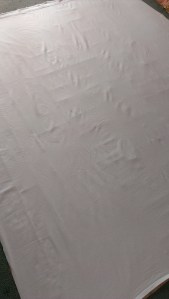
2015-01-03 14.56.57

The top, pinned out over the rest, is made of stash black fabrics and a mix of recycled and thrifted fabric again:
2015-01-03 16.05.14

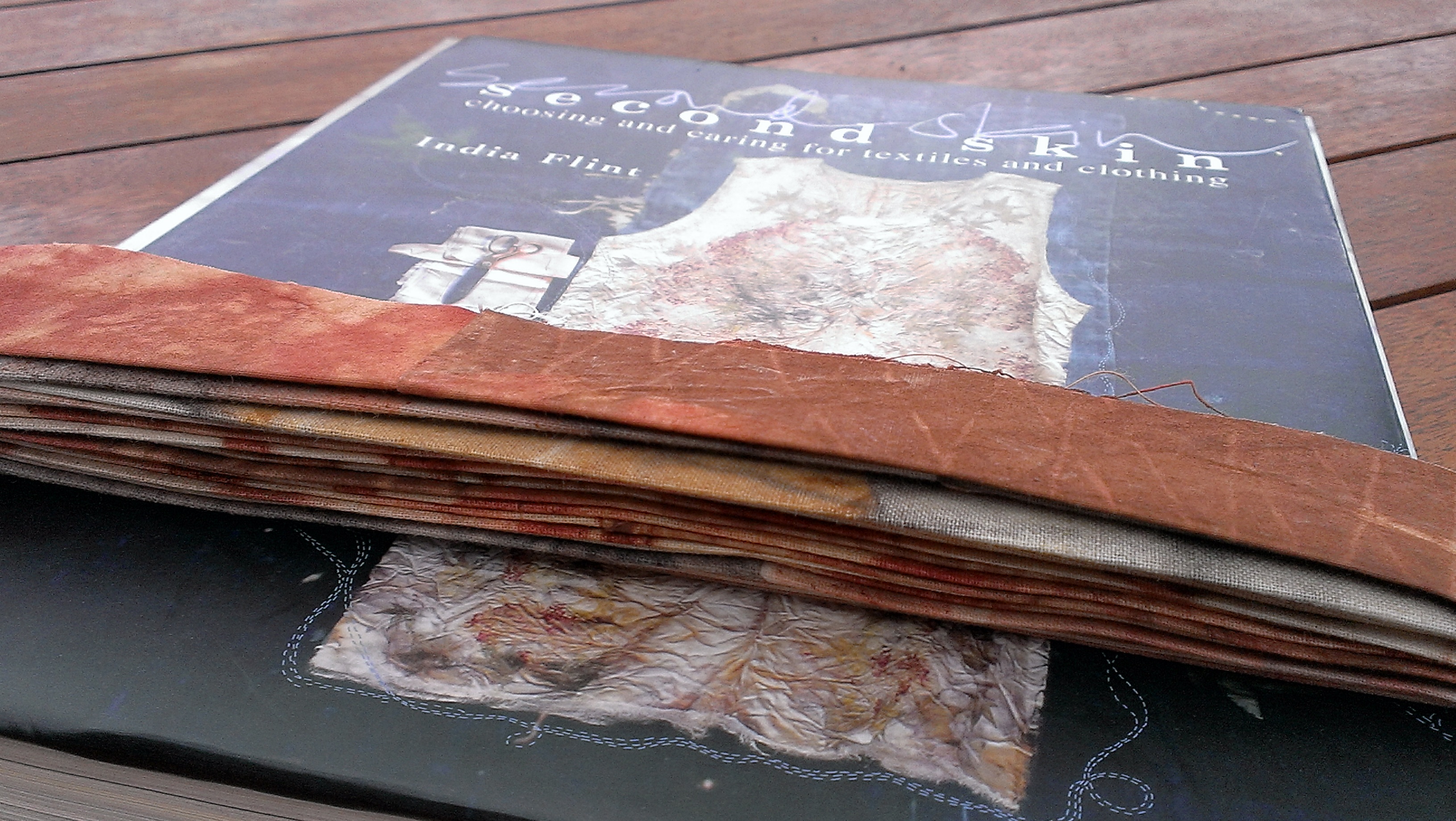
All layers pinned together, I decided on machine quilting, coaxed by a friend. The quilting part has never gripped me.  My last quilt was tie-quilted and not really ‘quilted’ with stitching much at all. Clearly the patchwork is my main interest, and the dyeing, of course.  Then, time to make the binding.  There were plenty of leftovers.  I made metres of binding and followed the instructions in Block Party by Alissa Haight Carlton and Kristen Lejnieks.   As usual, with less precision than the authors suggest might be warranted.  Just the same… here it is, kept tidy until stitching-on time…  Second Skin was right behind the ironing board, and seemed perfect for multiple reasons…

2015-01-03 16.44.04

I do understand bias binding, and there are places for it, but I can’t see the point when binding a straight edge, so I went with on-the-grain binding and contrary to the instructions, sewed seams straight across at 90 degrees (okay, it creates less bulk to use 45 degree seams–that part, I concede). I made an exception when I had a moment of curiosity and finished with a lovely 45 degree seam–seen under sewing-machine-mood-lighting below.  Because who needs seams that match?  Maybe next time I’ll give all the binding that treatment, you just never know.  I followed the instructions for mitred corners.  Simple and effective!  Much better than my own past efforts at reverse engineering without instructions.  Done!

2015-01-04 16.57.11

Apart, that is, from the metres and metres of hand stitching required on the back.  And here it is, midsummer!
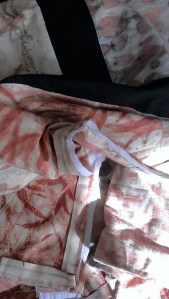
2015-01-04 16.59.16

But all such jobs come to an end, and now, finally, I have a quilt I love.  I am surprised by how much I like the embroidery.  It just glowed in the sunlit window the day I tried for pictures.

2015-01-14 15.24.40

I like all those blocks with their Latin names and motley prints.

2015-01-14 15.53.07

And I like its all-over-leafiness and the nicely bound edge.  I expect this quilt will be a companion for many years to come, and this is such a happy thing!
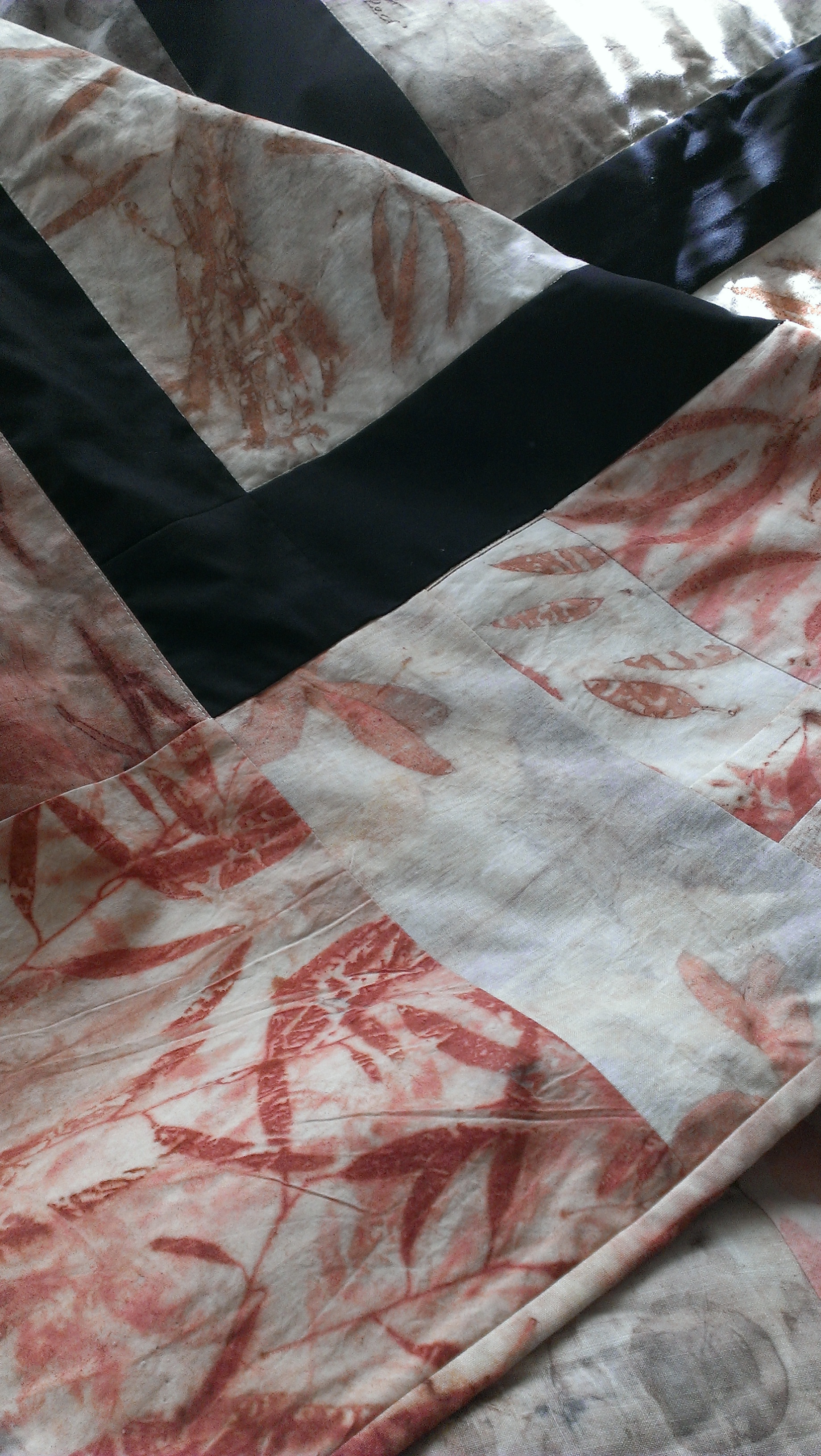
2015-01-14 15.25.10


24 Comments

Filed under Leaf prints, Natural dyeing, Sewing

Home made mending kits

On a visit to relatives not so long ago, I discovered that an entire family were depending on a single tin of buttons and needles and thread for mending.  When we visited, I was called on to assist in mending and when the tin could not be found–repairs could not be made.  I decided that this was not good enough.  So when we got home, I made up two mending kits to add to the family resources, as two members of the family are reaching the fledging stage of life.  Each comes with a Pohutukawa-leaf needle case, a seam ripper, thread, buttons, and a few other basics.

2015-01-03 17.09.36

Pohutukawa (Metrosideros excelsa) is native to Aotearoa/New Zealand and widely grown in Australia.  Here is the interior view of one of the needle case.  They are simple: two layers of leaf-printed wool blanketing, blanket-stitched together.  The leaves gave completely different prints on each side, so the outside of the needle case is one side of the leaf and the inside is a print from the other side.

2015-01-03 17.09.53

This kit makes use of a tin left behind by recent Austrian visitors. It contained a rather delicious Austrian chocolate covered delicacy, but not for long!  I’m delighted to find the next use for this tin.  This kit was big enough to also fit a pre-loved darning mushroom.

2015-01-03 17.08.11

These little kits have found their way to their new homes by mail–I received a text message of thanks today.  And now, I’ll finish on a gratuitous koala picture.

2015-01-07 17.01.35

The appearance of this amazing creature on a Manchurian pear tree at my place of work is not a good sign.  It arrived in a period of extreme heat and little rainfall, no doubt seeking water (and fame, I’m sure–in the bush, koalas are much further away and very hard to photograph effectively–JOKE!).  Over the years a koala has turned up in this spot once in a while–presumably the same one–and water is provided.  In a day or two, it heads back to the nearby eucalypts, since koalas have a very narrow dietary range.  Sometimes one or two can be sighted from a glass walkway up on the second floor, hanging out in the treetops, to equal fascination on the part of passing humans.  Enjoy!

8 Comments

Filed under Leaf prints, Natural dyeing, Sewing

Summer Indigo 3: Happy endings and learnings

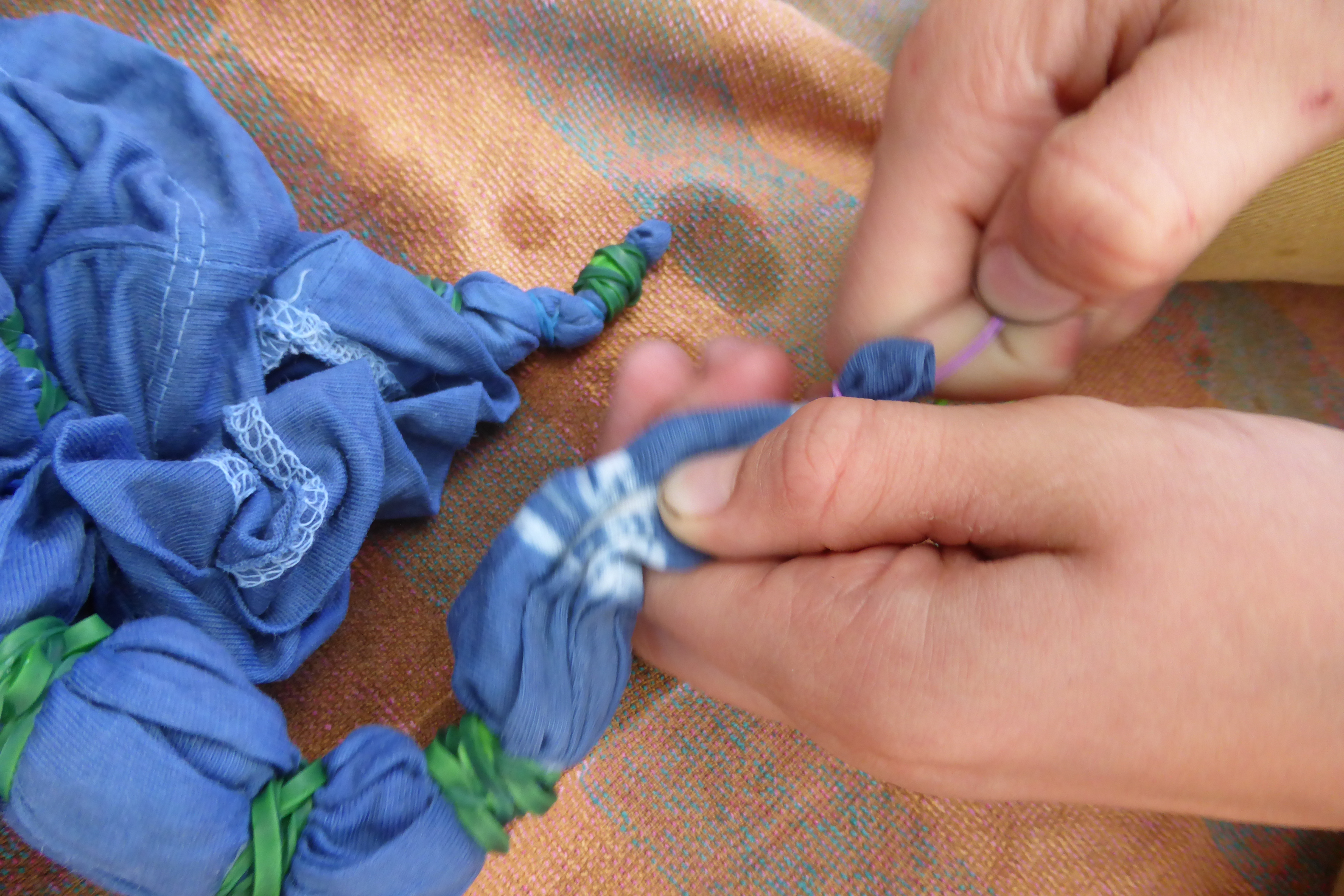
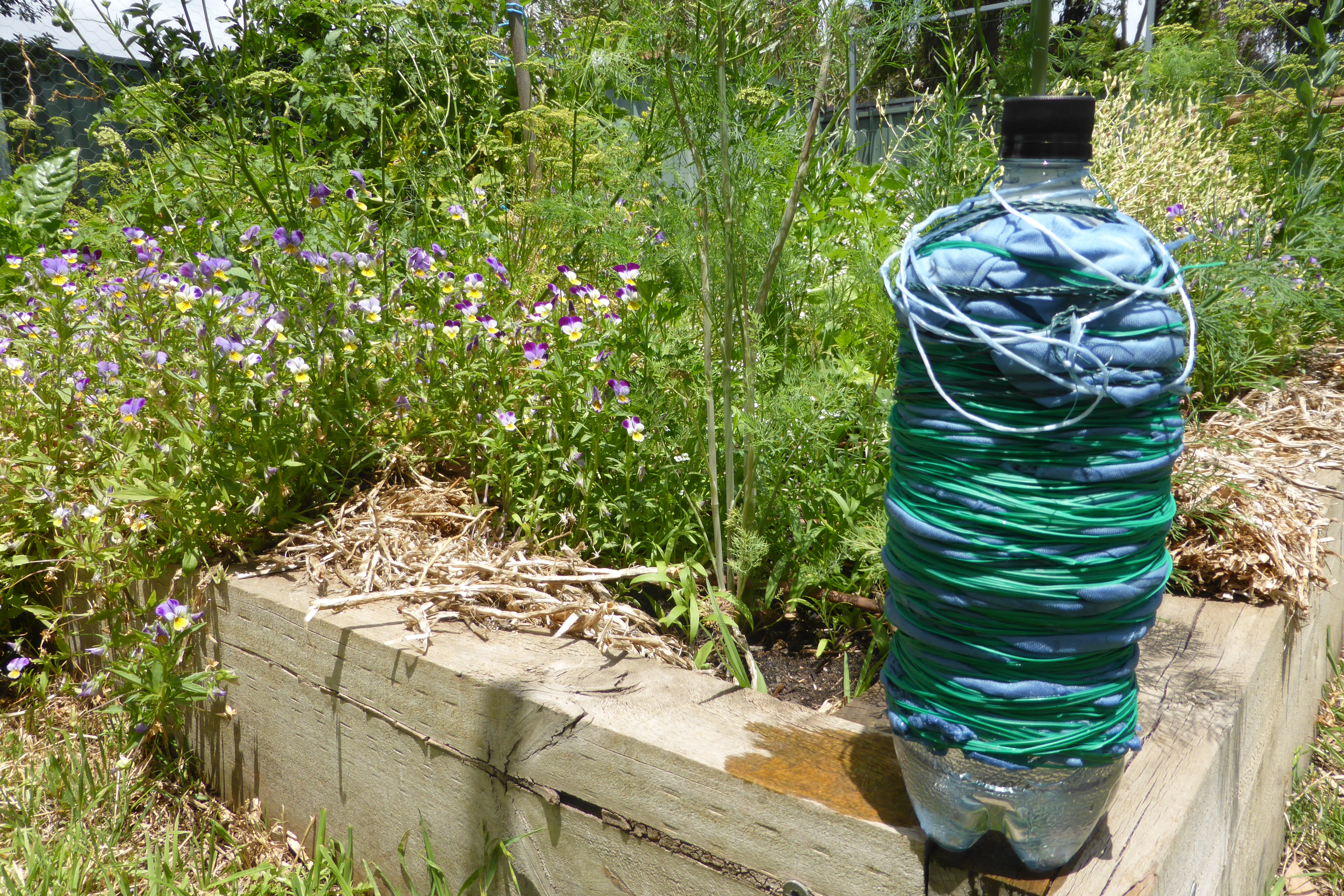
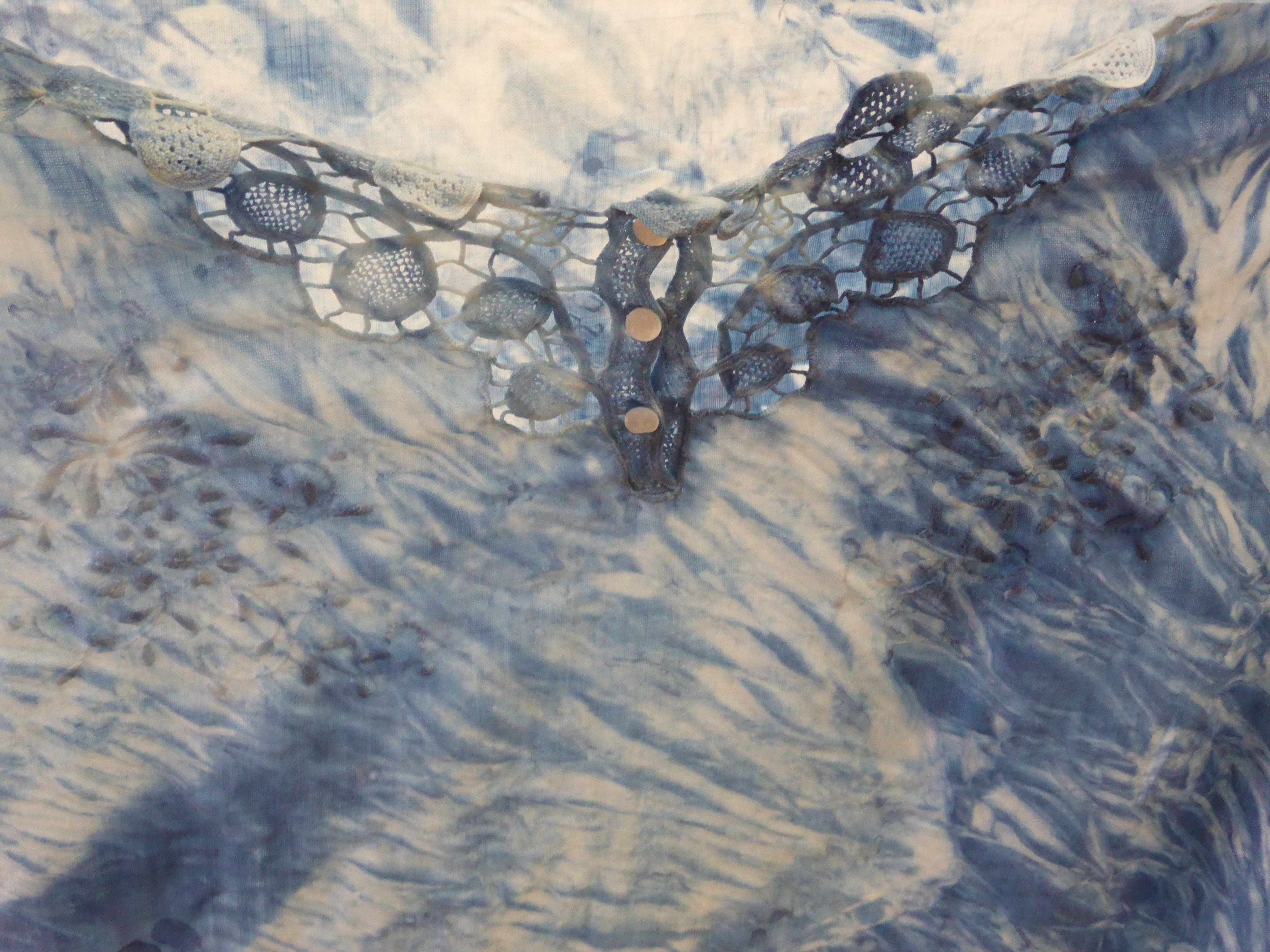
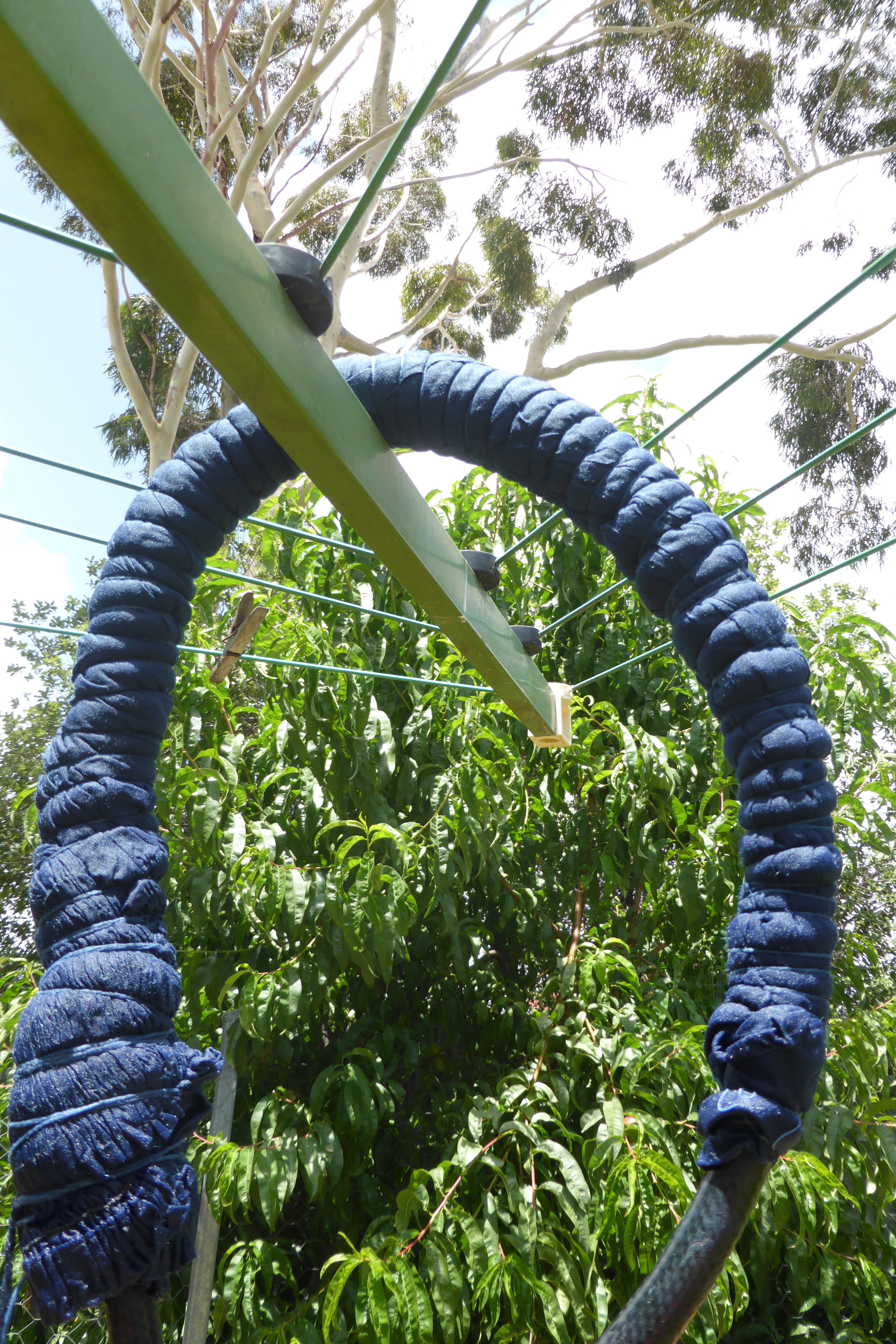
One of the fun things about doing a vat dye is watching the transformation through its many stages.  With indigo, even more so–because of the magical qualities of the dye–yellow while in solution in the vat but turning blue as soon as the fibre enters the air and oxygen reaches it, paired with the process involving multiple dips to build up depth of shade. Given my friend’s generosity with the camera, here are a few efforts to follow specific items through the process.

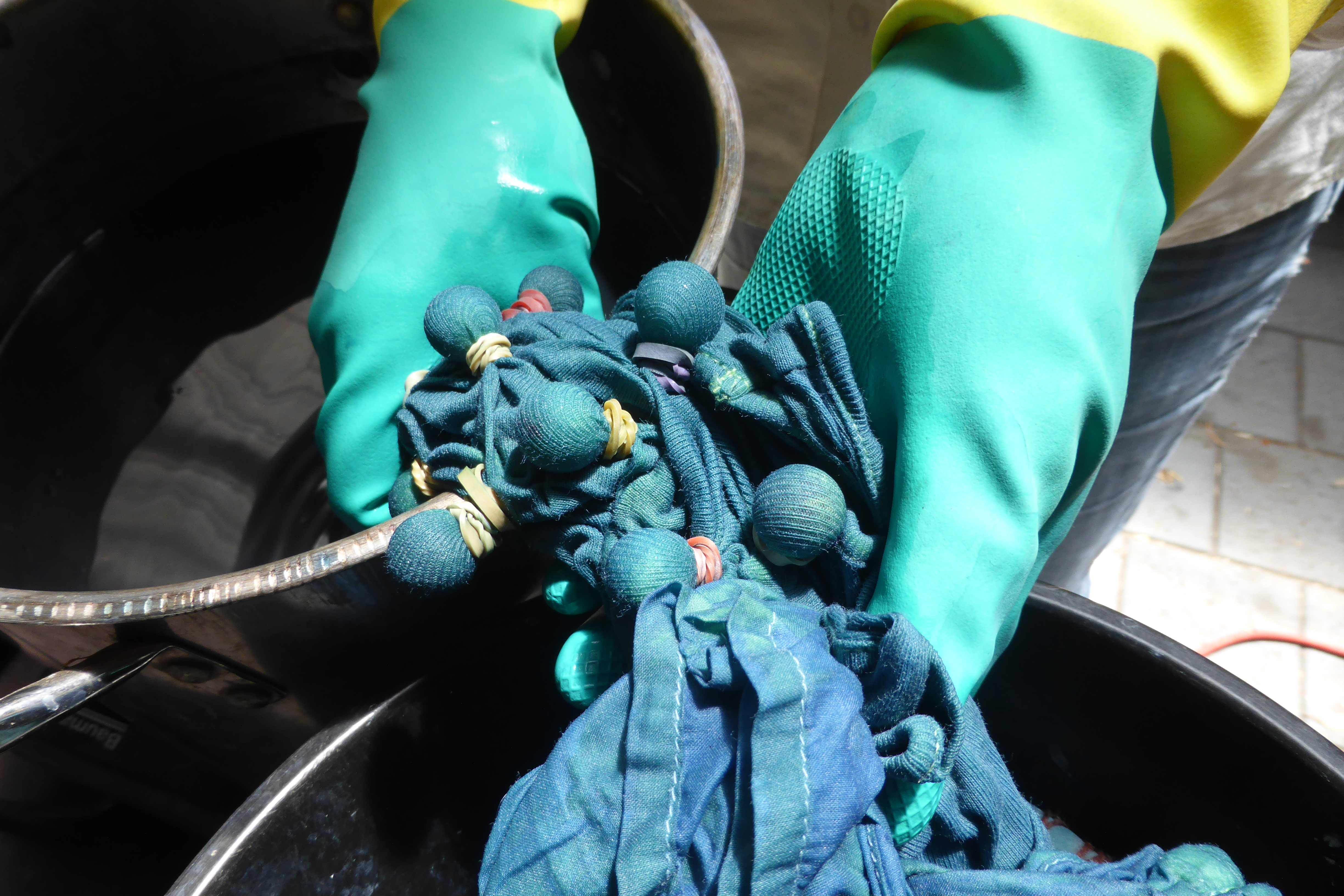
Cotton t-shirt with rubber band and loom band resist: before…

P1020532

P1020665

After…

P1020672

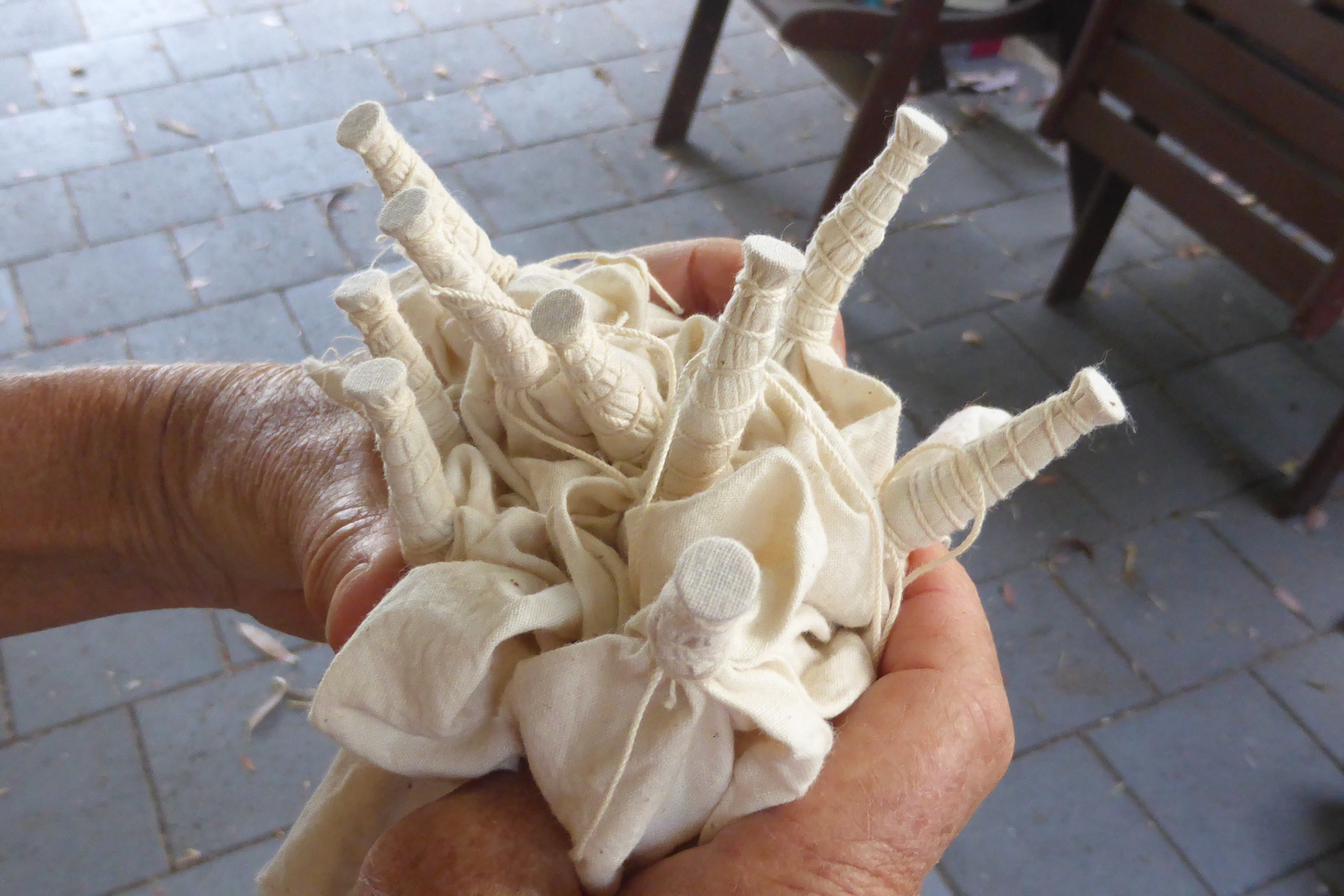
Lacy shirt rolled around a bottle and tied:

P1020623

P1020700

P1020702

Pair of pants wrapped around a piece of garden hose and tied:

P1020634

P1020642

P1020707

Screws tied into calico:

P1020536

Really tightly tied!

P1020691

There was a spectacular effect when they were untied–but it was temporary–the binding was so tight that air hadn’t reached the inside pleats despite rinsing and time on the line!

P1020717

P1020719

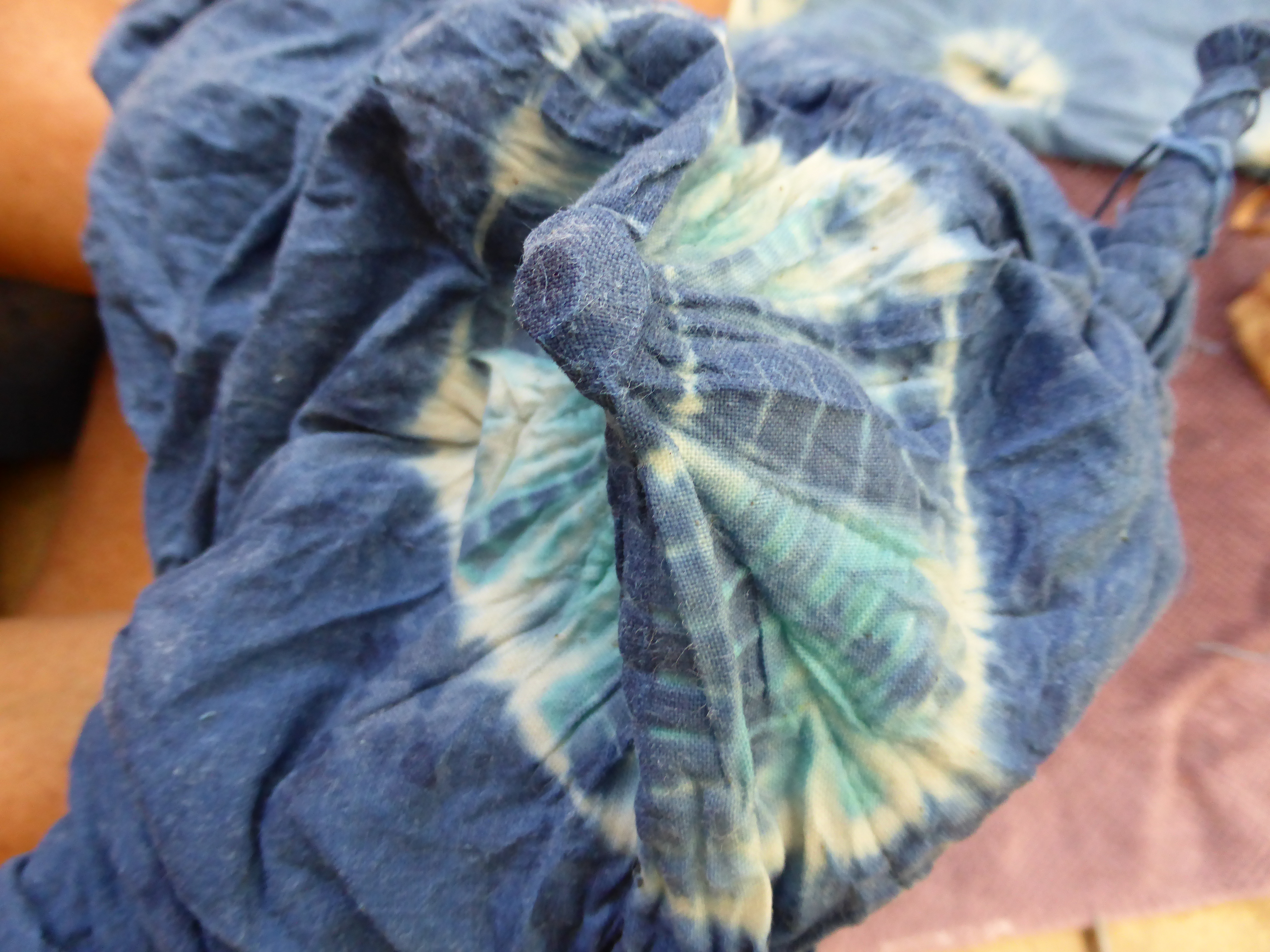
Marbles and rubber bands in a yellow t shirt:

P1020652

P1020692

P1020698

So, given that all indigo vats are going to be learning experiences for me, possibly for the rest of my life… what did I notice and what did I learn?  Preparation of the fructose vat a day earlier worked well and this experience gave me confidence to try this process again and keep experimenting.

P1020662

This time, I tried to hold onto what I learned from the last one: to trust my judgment about when to stop.  I am a beginner at this process.  But, limited as it is, my judgment is what I currently have, and judgment is there to be developed.  In my experience as a teacher, judgment is one of the most difficult, yet most important, things to acquire–but at least in dyeing the repercussions of poor judgment are more limited than in an operating theatre or a court!  This time, no evidence of crocking.

P1020718

Some things were pale blue even after several dips. All of the calico items that went into the fructose vat, for instance.  I like the colour, but had not expected this.  I noticed that most of the items that only went into the fructose vat remained pale shades.  Some went from there to the colour run remover process when the fructose vat needed a rest–they were deeper.

2014-12-29 16.36.21

This might have been because the natural indigo in the fructose vat gave a different outcome to the synthetic indigo in the colour run remover vats.  It might have been due to the difference in processes or some failure of my understanding of the fructose process resulting in the oxygen not being sufficiently removed from the vat–though the colour of the vat was good.  It now occurs to me that I could have tested this by adding hydrosulphite to the exhaust of the fructose vat when I really couldn’t get much colour from it two days later. Next time?

2014-12-29 14.00.38

It might have meant the calico had a treatment that resisted dyeing–but other fabrics also came out pale.  We did dye a LOT of materials–and perhaps the fructose vat ran low on indigo.  It was in a bigger container so may have received more fabric (and more oxygen). But I had an exhaust vat extravaganza two days later and the colour run remover vats still gave colour–one in particular dyed quite a quantity of wool (after adjustment of the Ph to a level more suitable for protein fibres).

2014-12-29 14.28.23

Mmm… the indigo vat curiosity and the love continue… here, the fructose vat gets a cuddle as it warmly rests.

12 Comments

Filed under Dyefastness, Natural dyeing

Summer Indigo 2: Dyeing and the colour run remover vats

When the big day arrived, I had more company than initially expected, with two of our beloved friends staying with us and keen to try indigo, and more coming over.  I have to say, I am intimidated by indigo and it was a holiday project that kept me nervous, planning this indigo dyeing day.  What if it didn’t work out?  What if my ignorance trumped my effort? What if people were bored? What if nothing worked and people’s things were ruined?   The funny thing about fret is that so often it has me focused on myself and my overdeveloped sense of responsibility, and that’s neither sensible, nor fun, nor realistic.  How could I even temporarily forget how wonderful my friends are, in the face of fret?  Everyone who came knew at least some of the other folk and it was such a generous and friendly gathering.  One of my near and dear spent the day taking photographs, so a big thanks to her for those that follow…

2014-12-29 11.27.43

We practised our skills at getting fabric into and out of the dye without adding needless oxygen.

P1020572

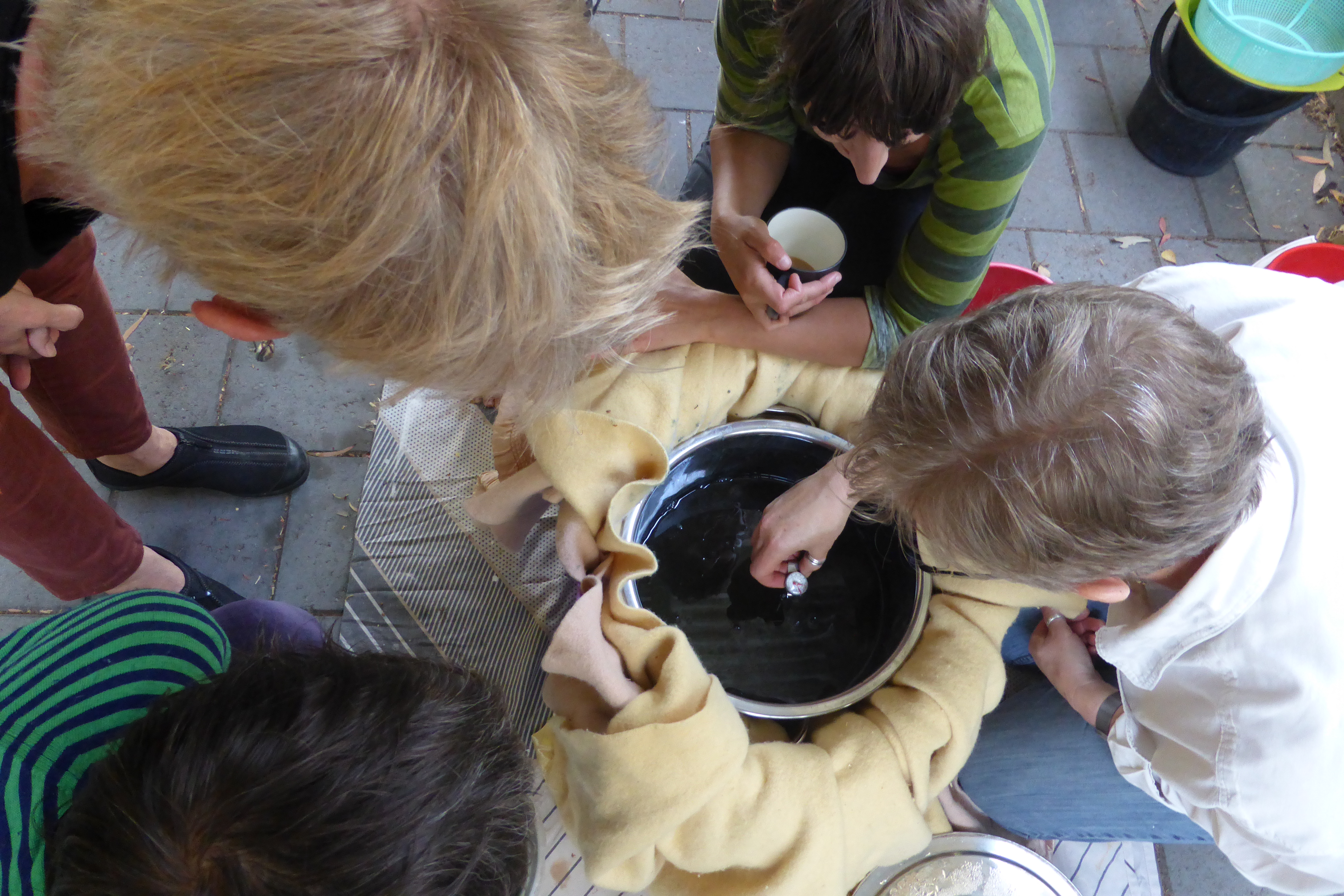
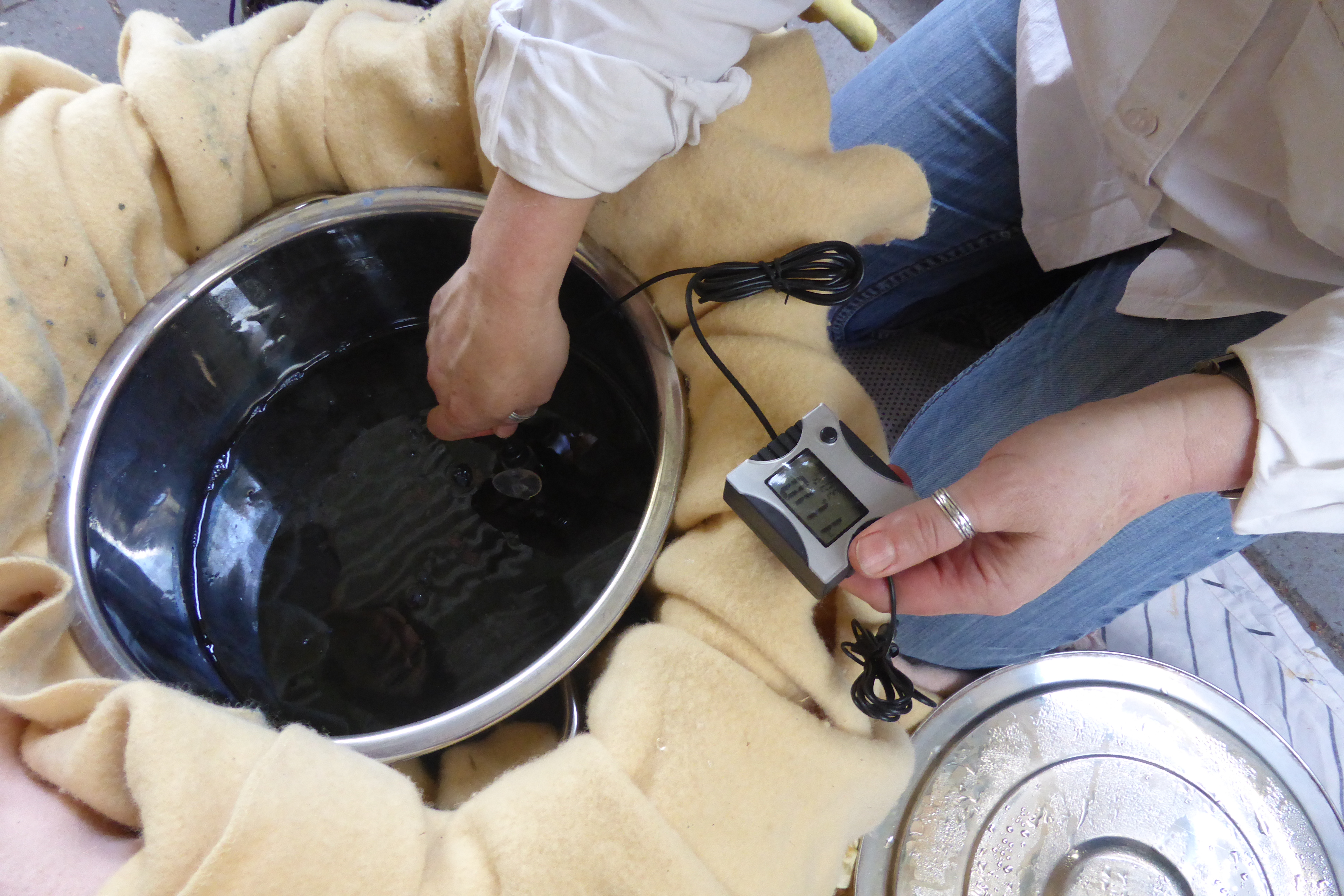
This time I had a dependable thermometer and used it!

P1020569

I also now have a Ph meter.  My dear Dad asked what I wanted for my birthday last year and when I said I wanted a Ph meter but wasn’t sure where to get one he had the answer!!!  You don’t know him, but eBay, my friends, is the answer to a shocking number of things for Dad…

P1020547

There wasn’t just the fructose vat.  I have decided that aiming for fermentation and fructose vats is a good long term goal for environmental, health and all kinds of other reasons (pure curiosity, for a start…) and I am growing woad and indigofera australis and Japanese indigo.  However, I have decided that in the interim, colour run remover (mostly sodium hydrosulphite) can rescue failures in my judgment and experience and save wastage of indigo. Since I have some synthetic indigo, I decided to use that in any hydrosulphite vats as it may not be so suitable for fermentation or fructose vats.  There was a lot of fabric when everyone piled in–so I set up two hydrosulphite vats and was delighted not to need to use hydrosulphite to troubleshoot the fructose vat.

P1020626

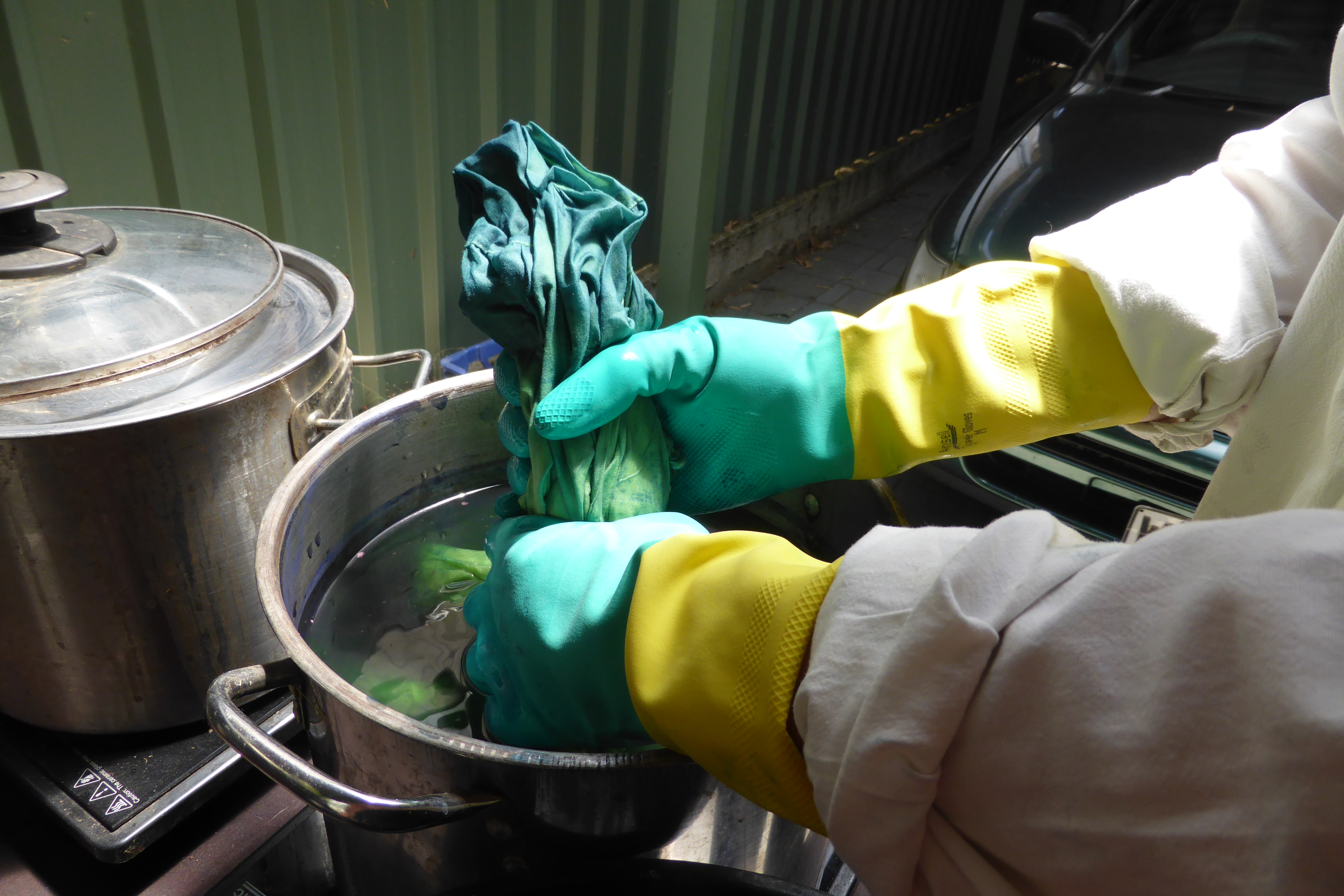
This is something-or-other coming out of one  colour run remover vat quite yellow and beginning to turn blue as the air strikes it.  For these vats, I tried Jenny Dean’s recipe for a colour run remover indigo vat from Wild Colour.  It worked really well and uses washing soda, a much milder alkali than some proposed in other books. It’s also designed for colour run remover and not pure hydrosulphite–and that is what I had.  The fructose vat smells MUCH better!

P1020646

I love this process of transformation!  The best item of all for this effect was a pair of pants tied around a length of garden hose.  It was long enough to be yellow at one end, green in the middle and various shades of blue as it slowly emerged from the pot.  My friends had been out researching techniques for resist–so there was stitching, wrapping, bundling, string, thread, rubber bands–and even wax resist, some applied with a biscuit cutter and some freehand.

P1020640

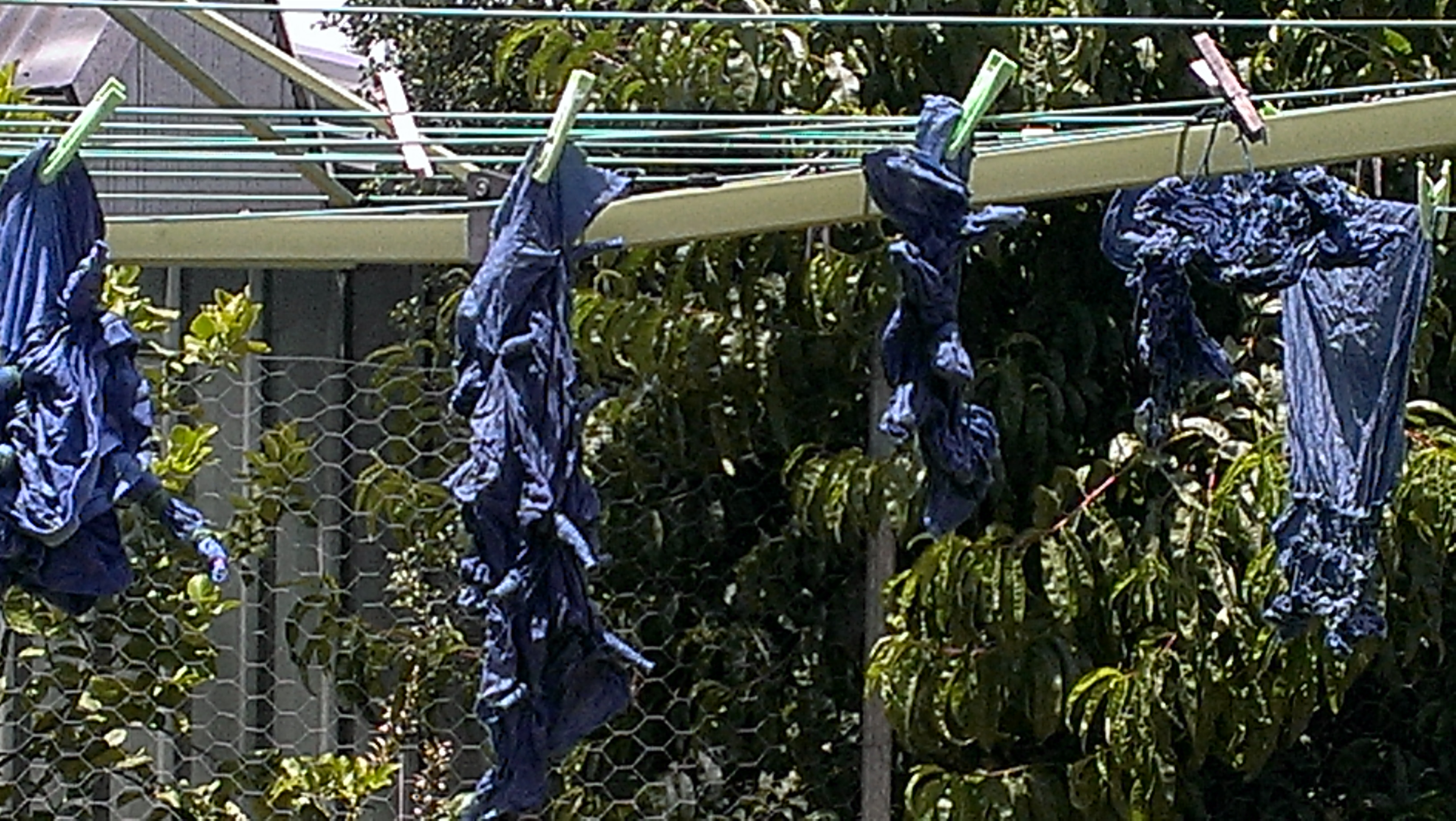
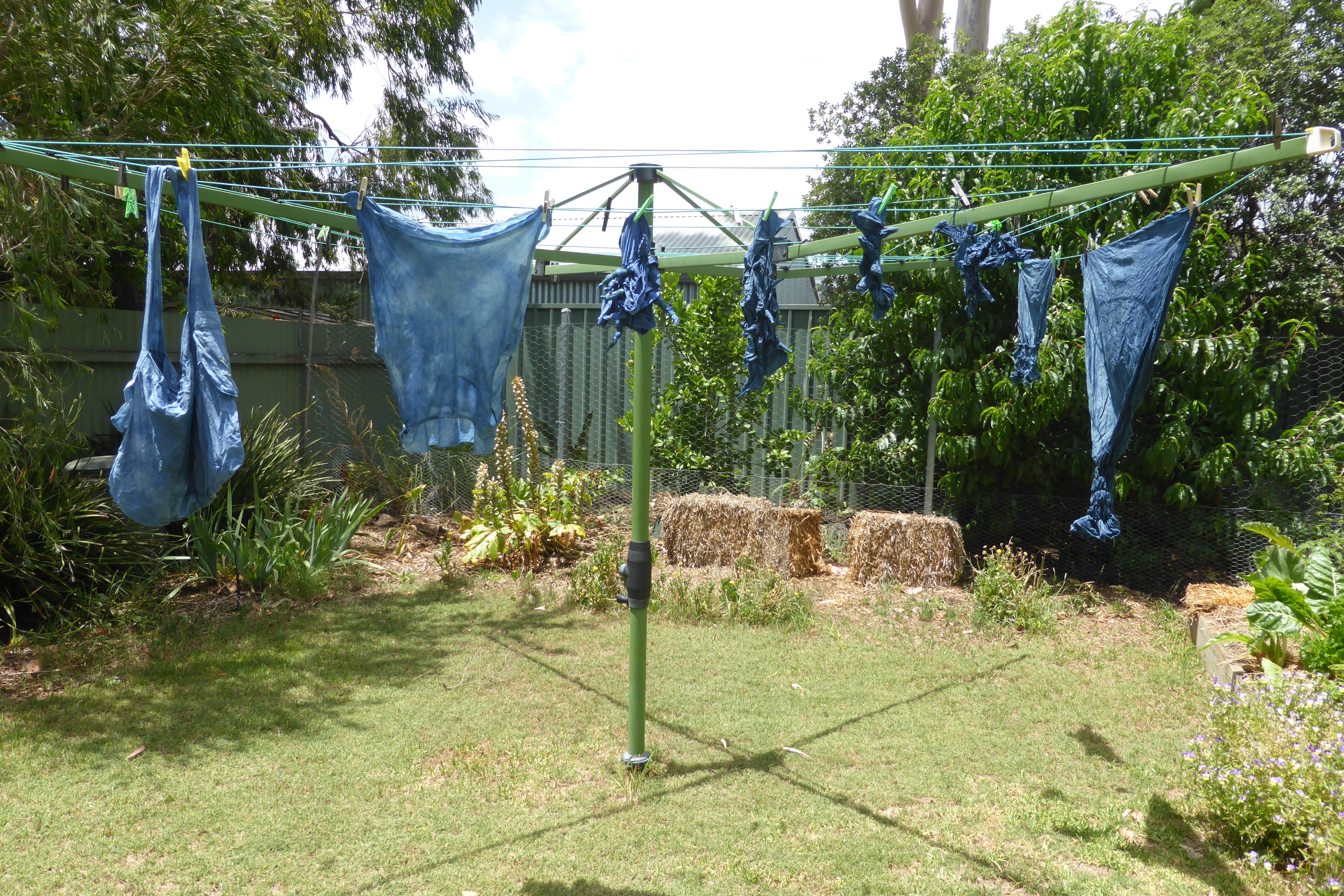
With three vats going, and regular monitoring of temperature and Ph and so on, the scene at the clothes line kept changing.

P1020617

There were whole-garment makeovers, a purpose made bag, scrap fabrics, an opportunistic bag makeover and the pieces for a pair of pants yet to be made.

P1020619

The shades kept changing–wet to dry and dip to dip.

P1020578

…Until finally we had done all we could do and time to head to our various homes started to arrive.  Then there was a lot of undoing and exclaiming… and I’ll save that for another post!

18 Comments

Filed under Natural dyeing

Summer Indigo 1: Preparation of fructose vat and fabrics

I’ve had indigo on my mind (oh, and on my fingers, too!).  I’d been planning a summer indigo dyeing day with a bunch of locals–and there are folk at the Guild who want to try indigo too.  I was keen to try the fructose vat again.  My last experiment with the fructose indigo vat involved some errors on my part… so I decided on treating it (and all other indigo vats) as a learning experience and trying again. I love the idea of being able to run an indigo vat without using sodium hydrosulphite, and I also love the idea of being able to use local fruit and even the leftovers from jam or other uses of fruit to prepare a vat, thus wasting nothing.  This is what the fructose vat has to offer… So, I took up Maiwa’s instruction sheet for Michel Garcia’s fructose vat, and began.  I am just so delighted to have access to Michel Garcia’s wisdom on this subject.  You can see the instructions as a blog post here or a downloadable pdf here.

2014-12-28 12.45.25

I decided to make a starter: beginning with a concentrated solution first and adding it into the larger vat later. The instructions on hydrating the indigo with marbles in a plastic jar are just such genius… so I started there. I also decided to start the day before I planned dyeing with my group of friends–this was one part of the instructions I missed last time.  Soon my strong solution was ready. Freshly mixed:

2014-12-28 12.59.59

And then… the magic started!

2014-12-28 16.55.39

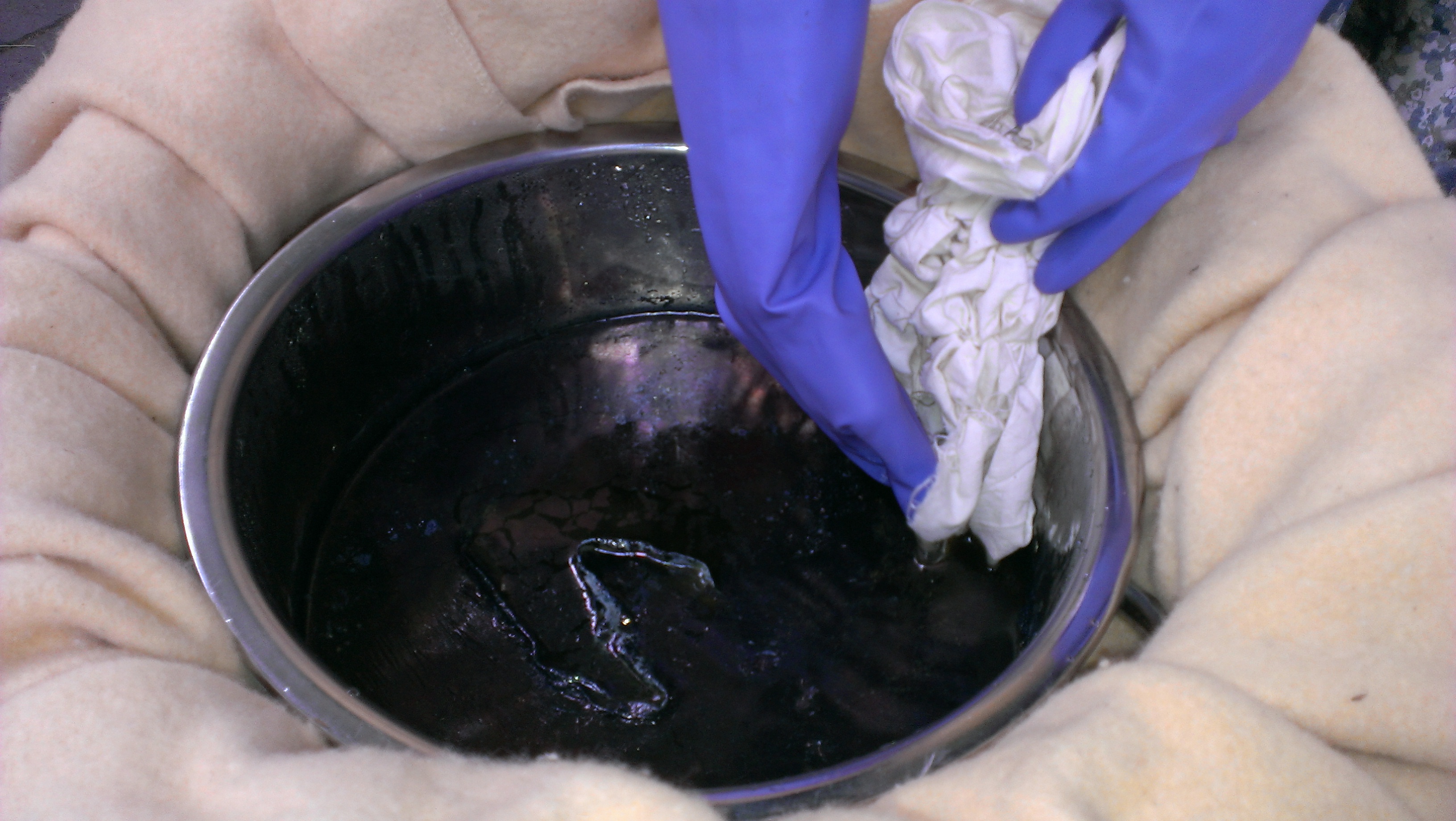
I mixed the starter into the larger vat and then contrived a very sophisticated system for overnight: a very big bucket with a towel and my two woollen dye blankets inside for insulation, then the vat.  Wrapped for the night!

2014-12-28 18.56.38

Next morning… it all looked rather fabulous!

2014-12-29 10.42.12

In the meantime, I’d been plying my needle during various festive gatherings.

2014-12-26 14.17.52

Can you see the half-circles in the half-light?

2014-12-25 17.25.43

I read Vivien Prideaux’s A Handbook of Indigo Dyeing and tried out some of her ideas in a rather less precise manner than she proposes.  Essentialy, I decided that anything I could prepare to dye in advance was a bonus and precision was the least of my concerns.  her ideas were very helpful.

2014-12-25 16.21.24

I had so much calico from my most recent inheritance I really just stitched whenever I could find time and interest…

2014-12-25 15.12.16

And piled up a little stack of fabric in preparation.

2014-12-25 15.09.28

13 Comments

Filed under Natural dyeing, Sewing

Some endings

Before the end of the year, we had a trip to Melbourne and I finally finished some socks I’ve been carrying around for quite a while. the triumphant moment when I grafted them occurred in a wonderful tea house our niece took us to.  She humours me as much as her aunt, so I recorded the moment for posterity (that would really mean, your viewing pleasure).

2014-12-21 17.08.01

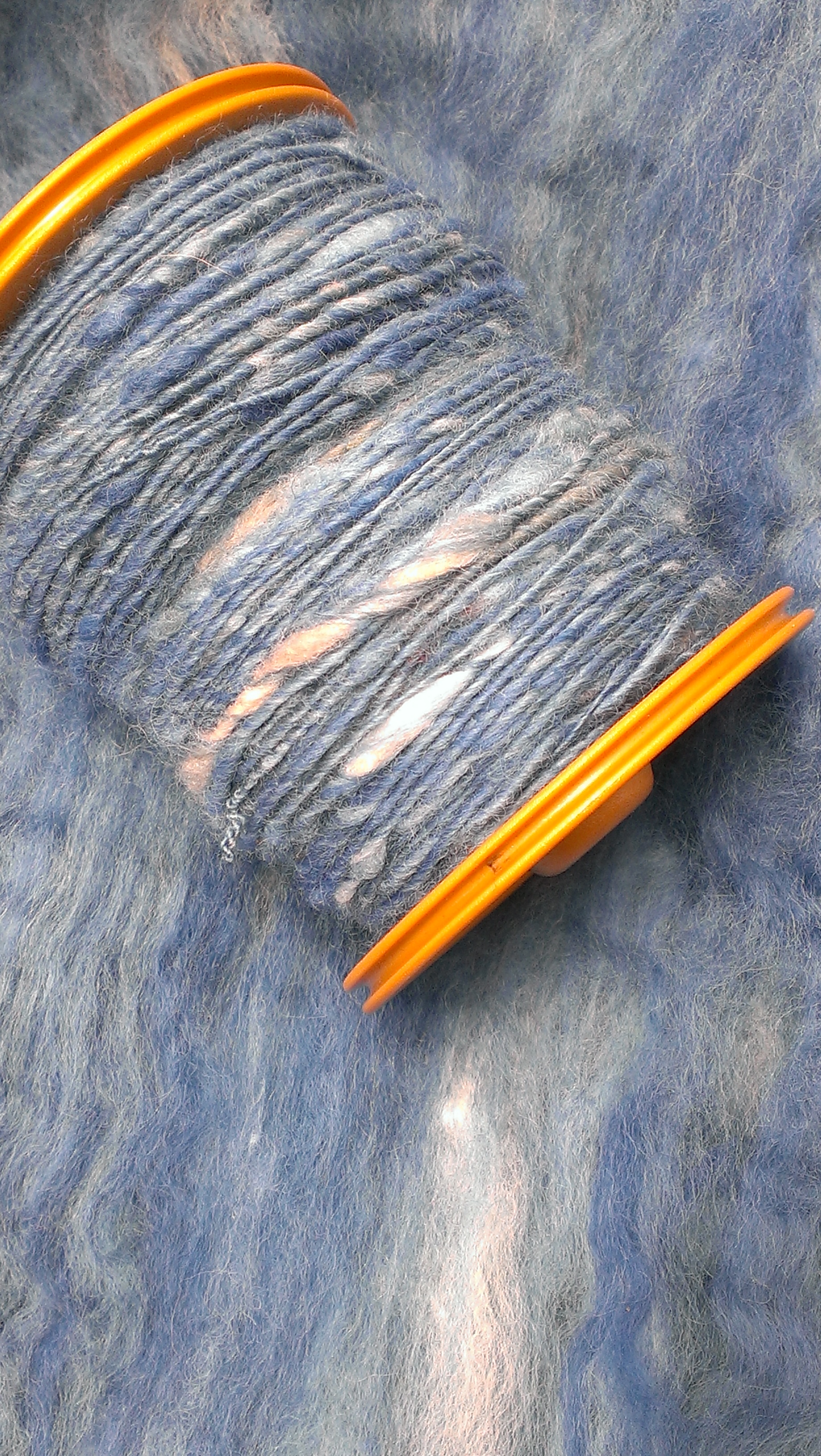
I should admit that I don’t drink tea, so was very surprised to find myself relishing an iced peppermint and liquorice tea.  It was a lovely afternoon.  I have also finished the last of 2014’s (or was it 2013’s?) indigo dyed wool.  The last was polwarth.  I seem to recall I ran out of patience, which is always bad when you are handling wet wool, worse with fine wool, and possible only made still worse if also dealing with indigo.  Let me further confess, some felting resulted, which will not surprise other spinners.  This was the last of it, and I decided to just card it up and spin it lumps and all.  I have been drawing batts through a diz to make a roving.

2014-12-19 12.50.32

Rolled up roving:

2014-12-19 11.49.28

Spinning in progress, including lumps as promised! I feel sure there are more felted slippers in my future…

2014-12-19 12.40.05

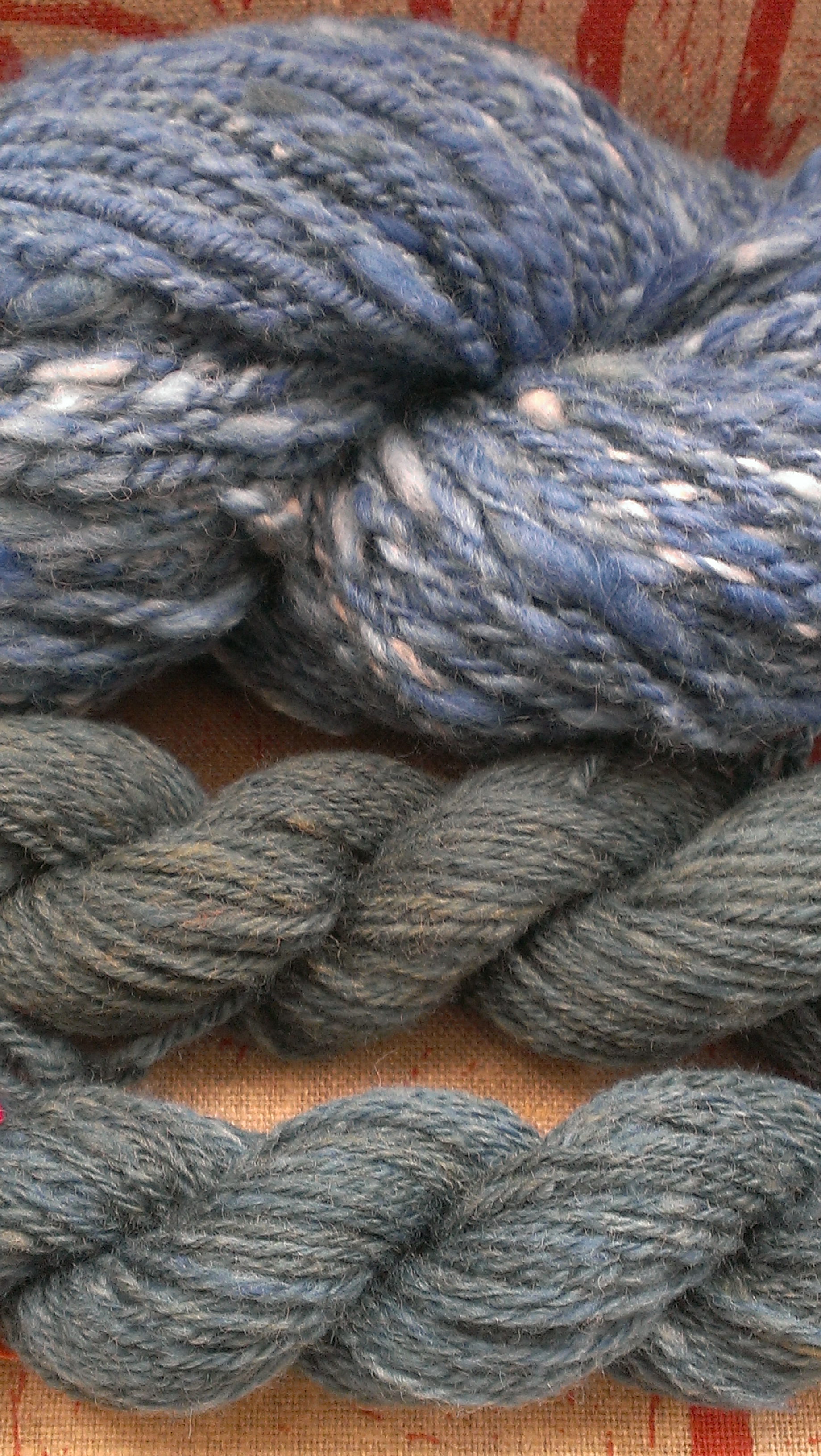
So, here they are.  The last 3 skeins… all different shades, some first dyed with coreopsis or osage orange, and some involving quite a bit better spinning and plying than others!

2014-12-28 16.49.12

2 Comments

Filed under Fibre preparation, Knitting, Natural dyeing, Spinning

Leaf print experiments

2014-12-14 14.31.15

I’ve been trying leaves I don’t usually use and some different strategies for cooking them up. Prunus leaves, kindly contributed by this block of flats.  I am sure they wouldn’t mind!

2014-12-14 09.41.35

Maple… I think this is Japanese maple.

2014-12-14 14.07.59

I have tried several different sheoaks.

2014-12-14 14.14.17

Some of the results are really spectacular.  My favourite is quite green, very exciting.

2014-12-19 11.02.42

Here it is beside the prunus prints.

2014-12-19 11.03.47

They are pretty pale…

2014-12-19 11.03.25

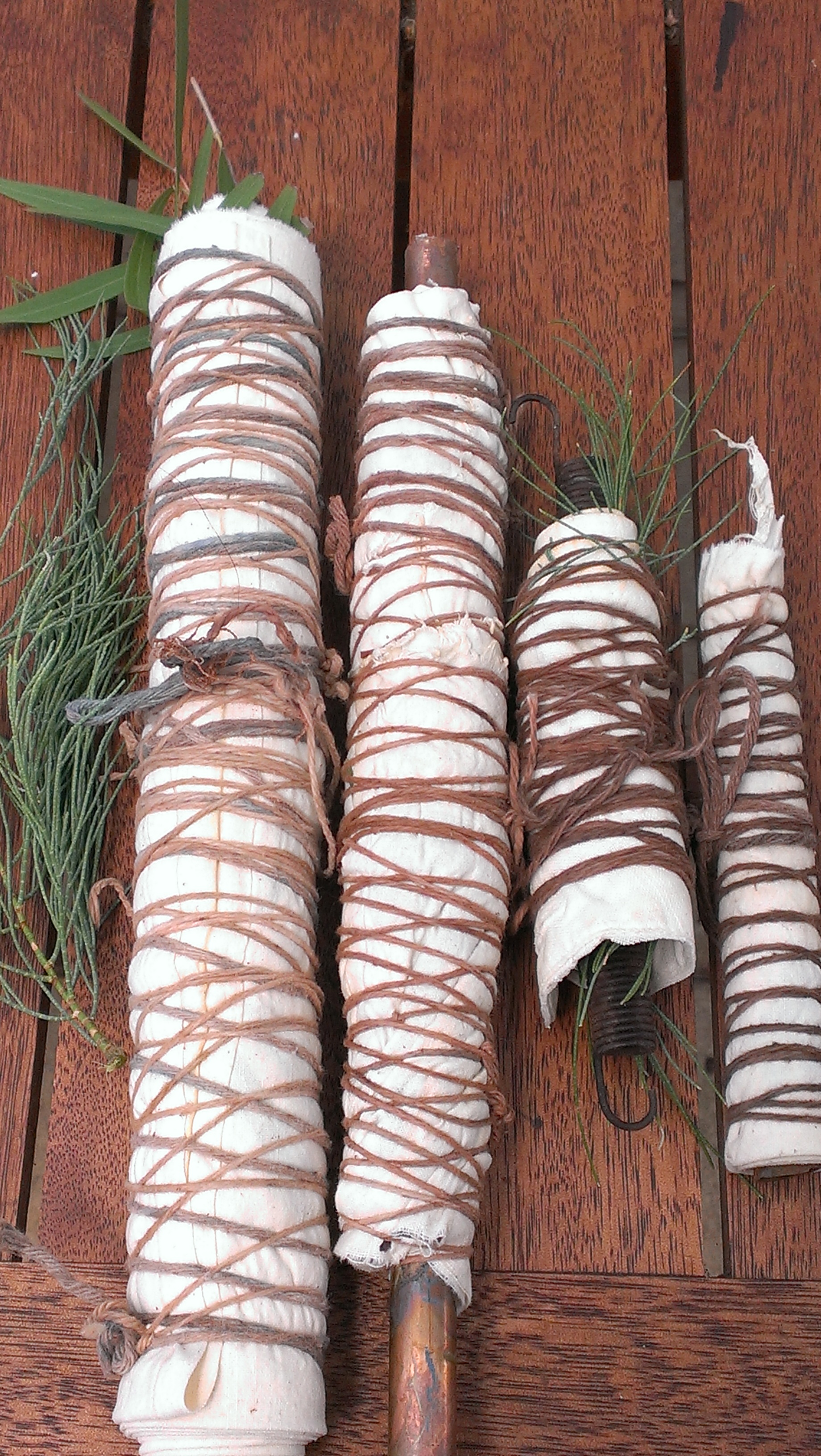
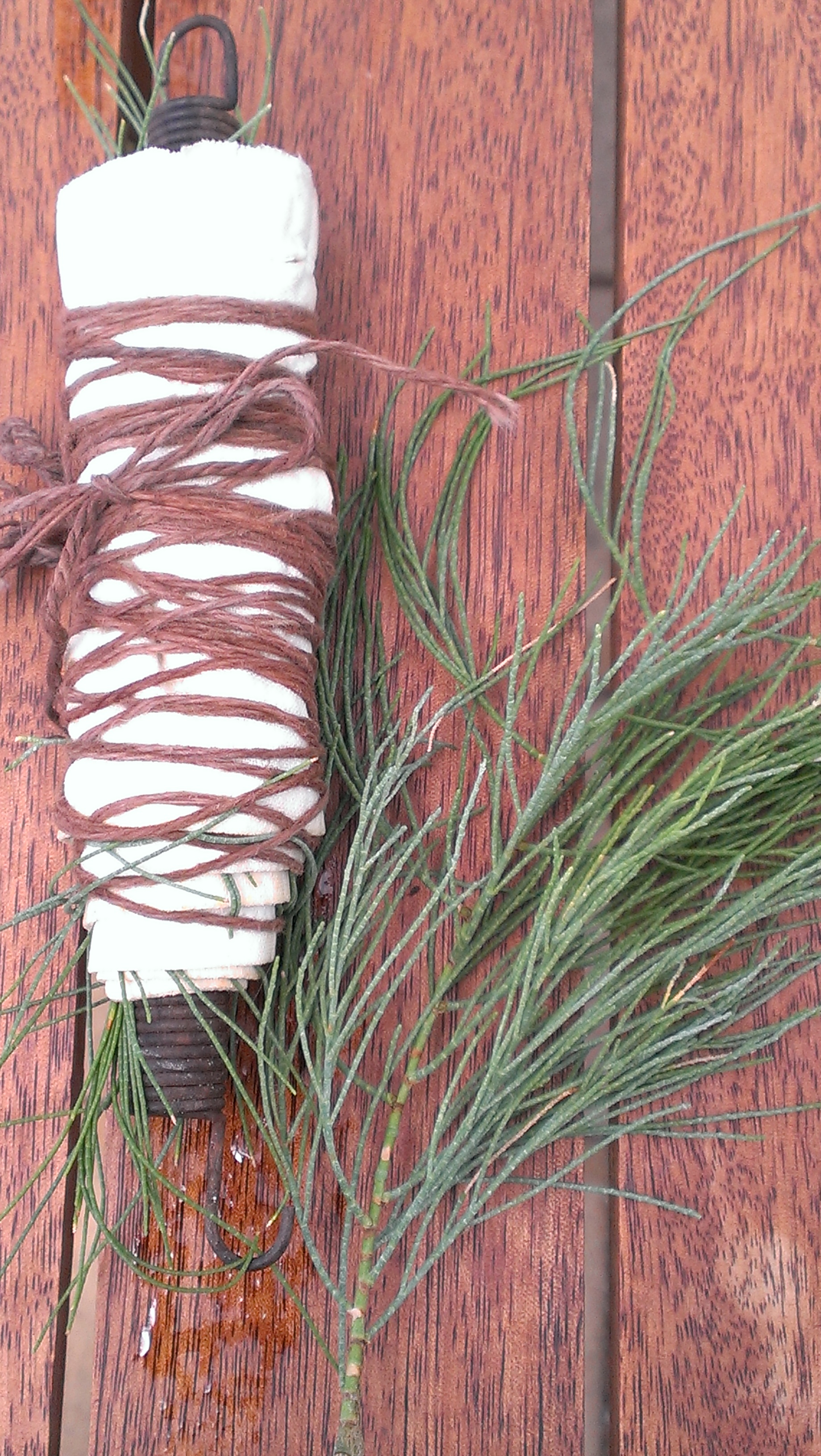
The maple leaves were interesting, and I love the impression of the string ties.  And this sheoak came out better than any other so far.  I tried 6he leaves out on a linen collar, and wrapped it around a rusty spring I found in my leaf gathering travels.  This bundle was so small I overlooked it, so this one had a long time in the pot, which is no doubt a clue for future experiments.

2014-12-19 11.02.27

Some results were less exciting.  I did get a pale green print from our birch leaves, which is a first and might be promising.

2014-12-19 11.01.23

I went back for more juvenile E Polyanthemos and this time, not so great prints resulted, but I did get some that were quite green, and that’s promising too.

2014-12-19 11.02.04

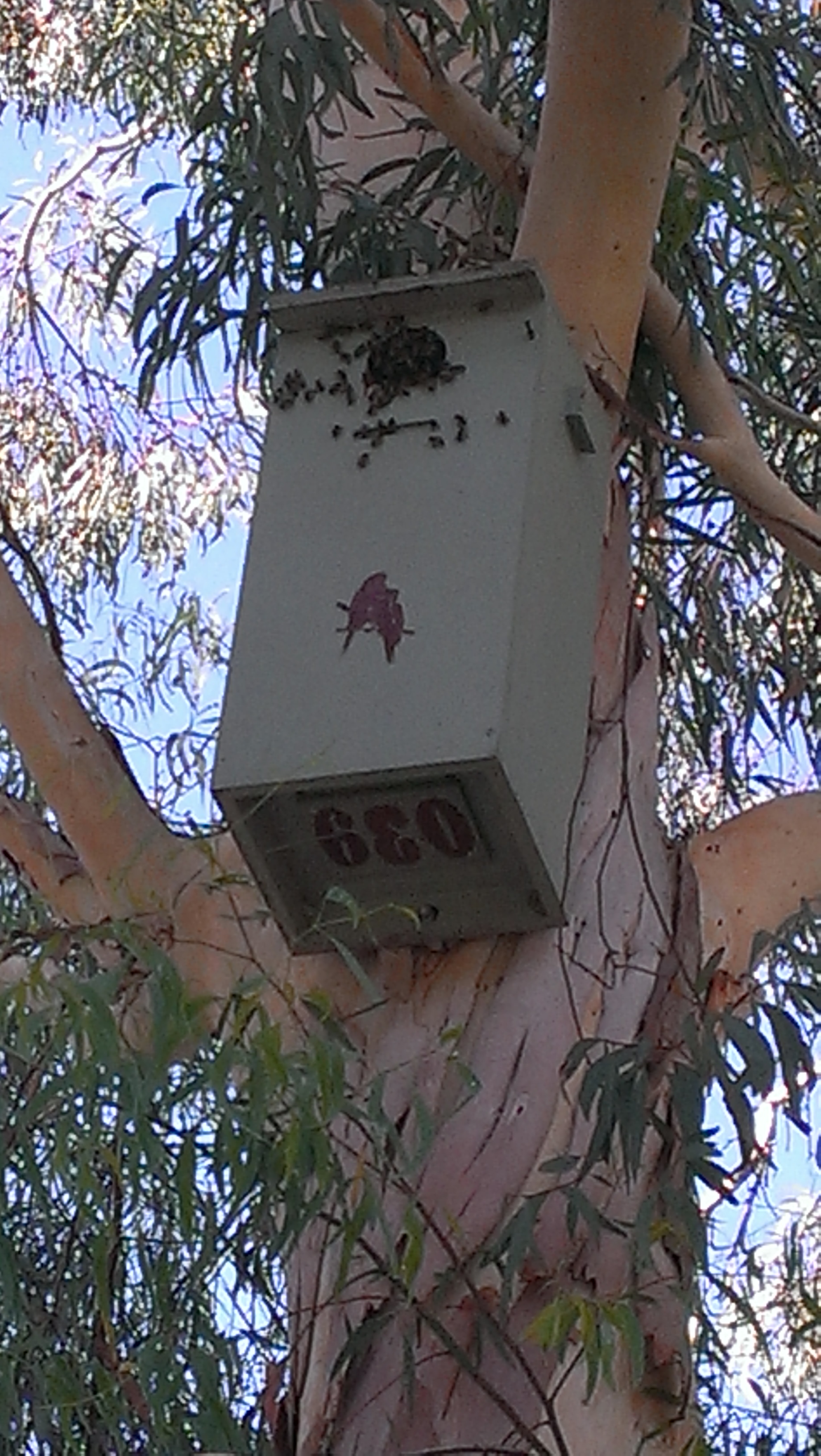
Meanwhile, the saga of the neighbourhood bees continues.  The lorikeets moved out of this nesting box, and the bees moved in weeks ago.  There is now honeycomb visible in the opening.

2014-12-14 09.46.25

8 Comments

Filed under Dye Plants, Leaf prints, Natural dyeing, Neighbourhood pleasures

Bark dyes

2014-11-18 08.40.25

What with all the bark collecting there’s been… there have been some bark dye pots too.

2014-11-18 08.43.11

I  smash the bark up small, the better to create a nice, strong dye.

2014-11-29 15.48.51

After heating, I get something more like this…

2014-12-24 15.54.59

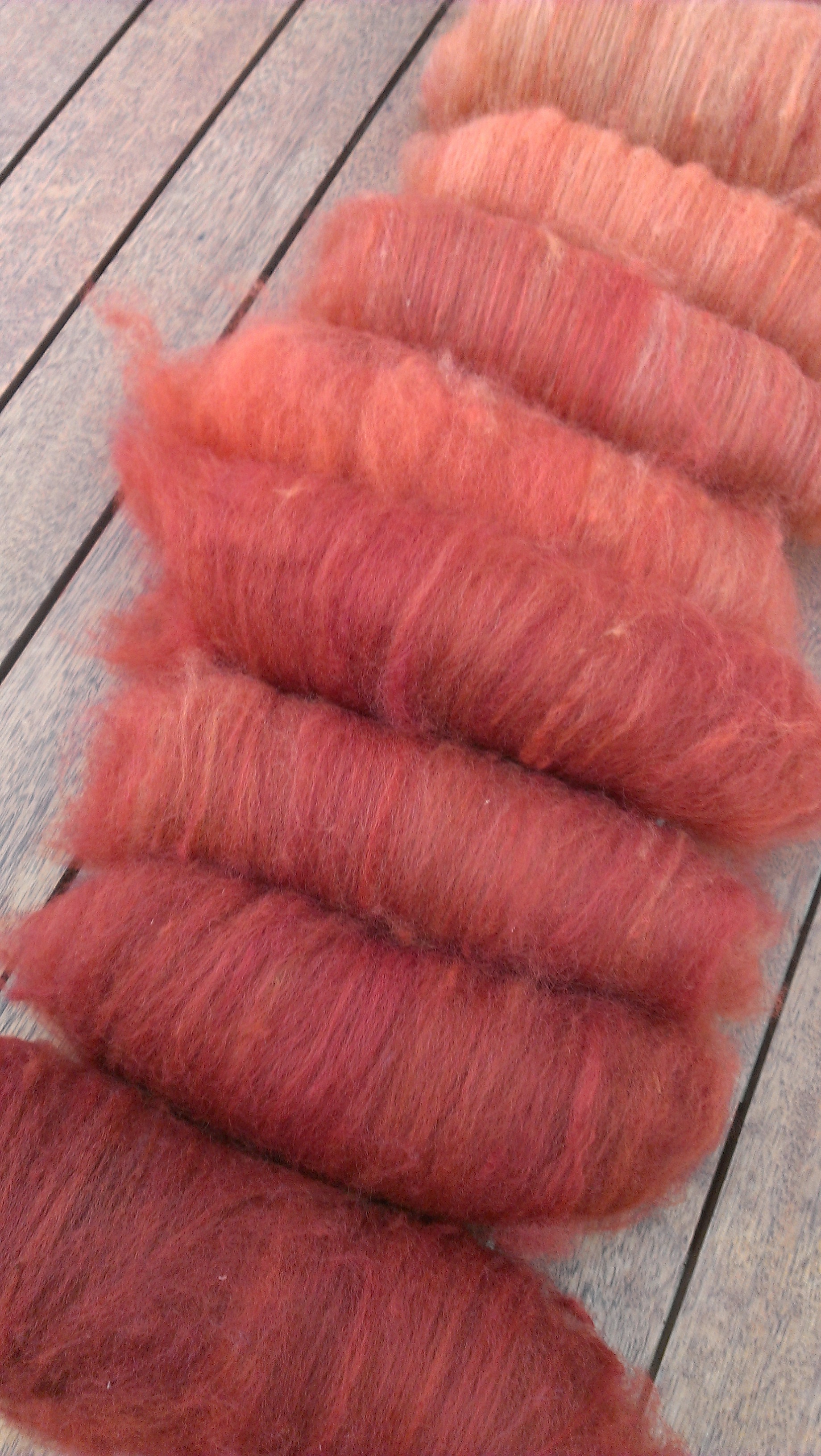
For some reason the light out the back is making things look less spectacular rather than more spectacular (as is my camera’s usual tendency) as we head into summer–but as you can see I have scaled up to colour separation… grading the colours and carding them separately.  One of my friends put me onto this strategy and I just love it.  She’s very clever about colour and I feel lucky to have the benefit of her wisdom.

2014-12-24 16.42.59


And then carding…

2014-12-25 10.08.23

And more carding… and finally spinning, which is underway.  I hope your holiday season has treated you well and the new year is looking promising.  I think this kind of preparation, time consuming and sometimes boring as it is, always makes me think that promising things are in the future, and this is a year in which the collective project at our place involves focusing on optimism.   I will gratefully accept tips!

9 Comments

Filed under Fibre preparation, Natural dyeing

‘Tis the season for bark collecting

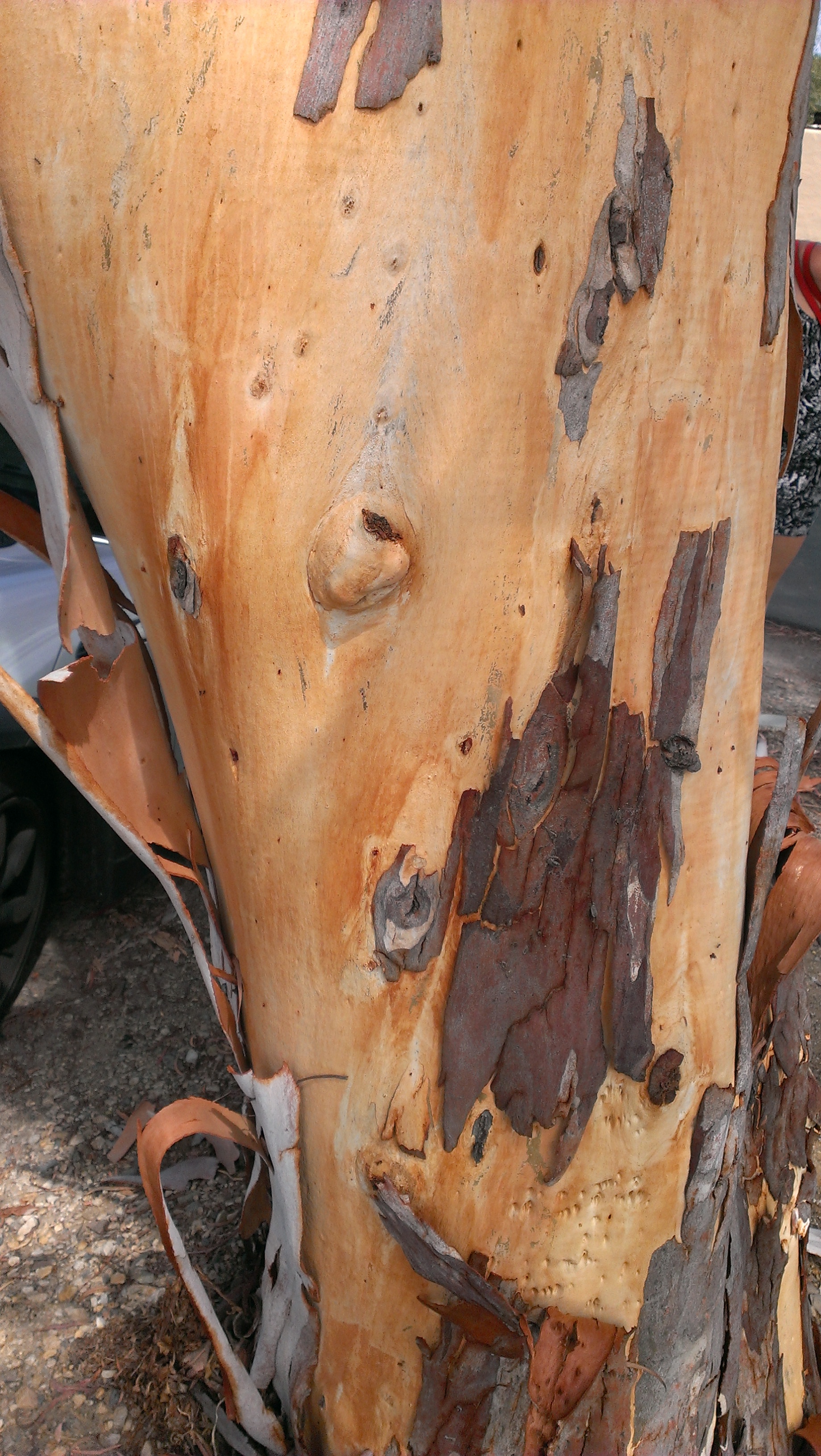
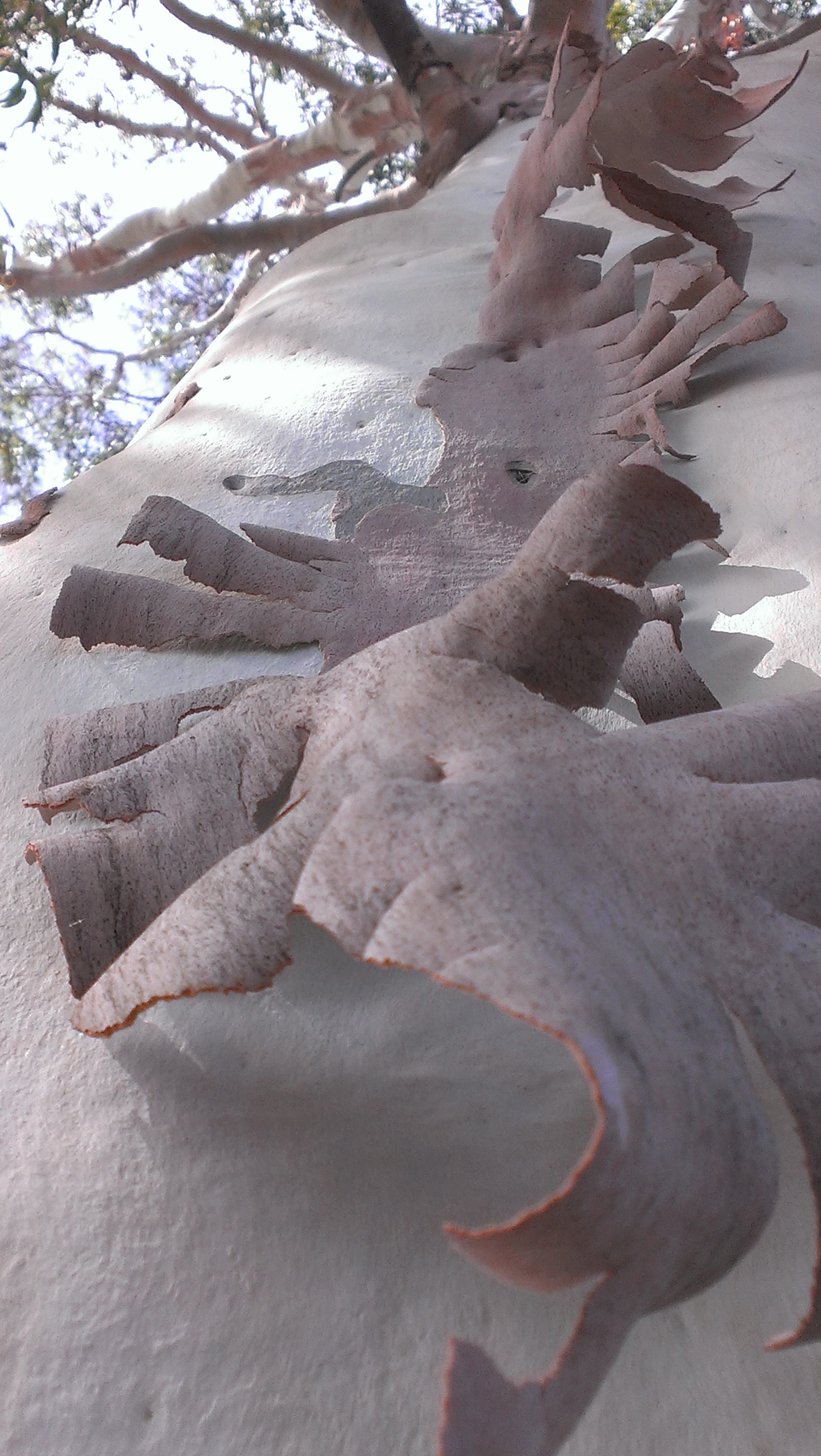
It is the season when a lot of eucalypts shed their bark here.  It’s impressive…  here are a couple of local and spectacular examples… E Scoparia:

2014-11-29 15.01.30

And closer up:

2014-11-29 15.01.25

Corymbia Citriodora:

2014-11-29 15.00.00

Needless to say there has been some collecting, though I haven’t done as much as I thought I might so far… often it’s just a bagful when I pass.

2014-11-29 15.07.23

But one time when we went to visit for dinner with some saltbush to plant out we just brought back the wheelbarrow full!

2014-12-07 11.59.52

It has led to dyeing, especially now I’m done with work for the year!

2014-11-29 15.48.51

6 Comments

Filed under Dye Plants, Eucalypts, Natural dyeing, Neighbourhood pleasures

Jars of summer’s glory

I’ve been collecting for a while now… as flowers finish or petals fall.

2014-11-29 13.27.30

After re-potting, the daylily had a bumper season, flowering for weeks.  The maroon pelargonium also did well, and I picked up all the dead flowers as their petals fell.

2014-11-15 12.02.22

My friends have hollyhocks, some almost black and some a little more pink and purple.

2014-12-06 18.16.51

They’re patient or even encouraging when I collect spent blooms… and realise that they will end up being stuffed into jars for steeping and storing following India Flint’s method of preservation dyeing (more or less).  This is my new favourite way to dye embroidery thread.  I never thought I could be converted to embroidery, no matter how simple.

2014-11-29 18.19.08

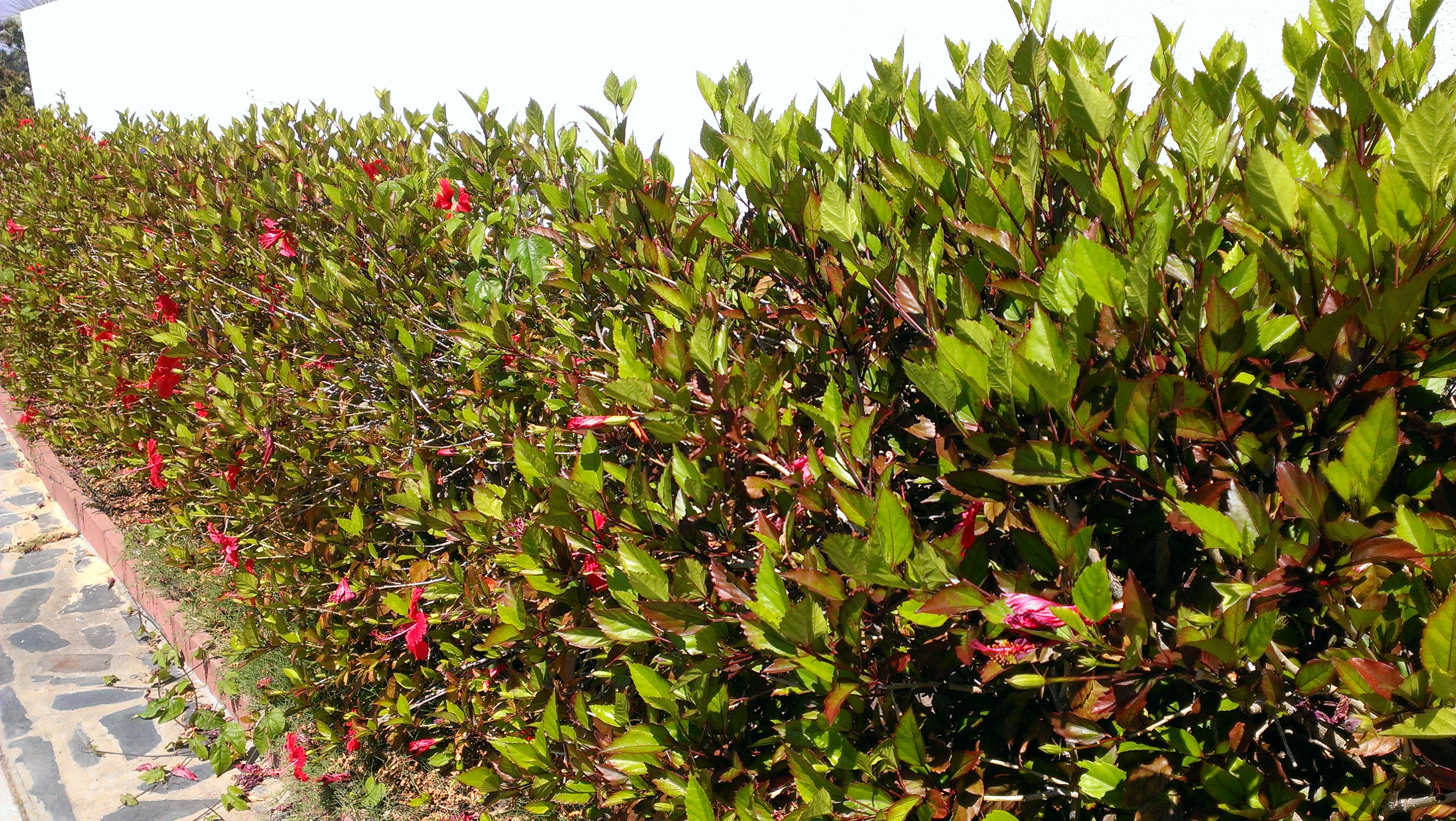
And, it is hibiscus season again.  I went along for a ride to West Lakes for others to do open water swimming.  The dog and I found an entire hedge of red hibiscus (we’re temporary dog aunties again), and I just happened to have a bag with me.  I know–how fortuitous!

2014-12-07 15.14.31

Closer up…

2014-12-07 15.14.46

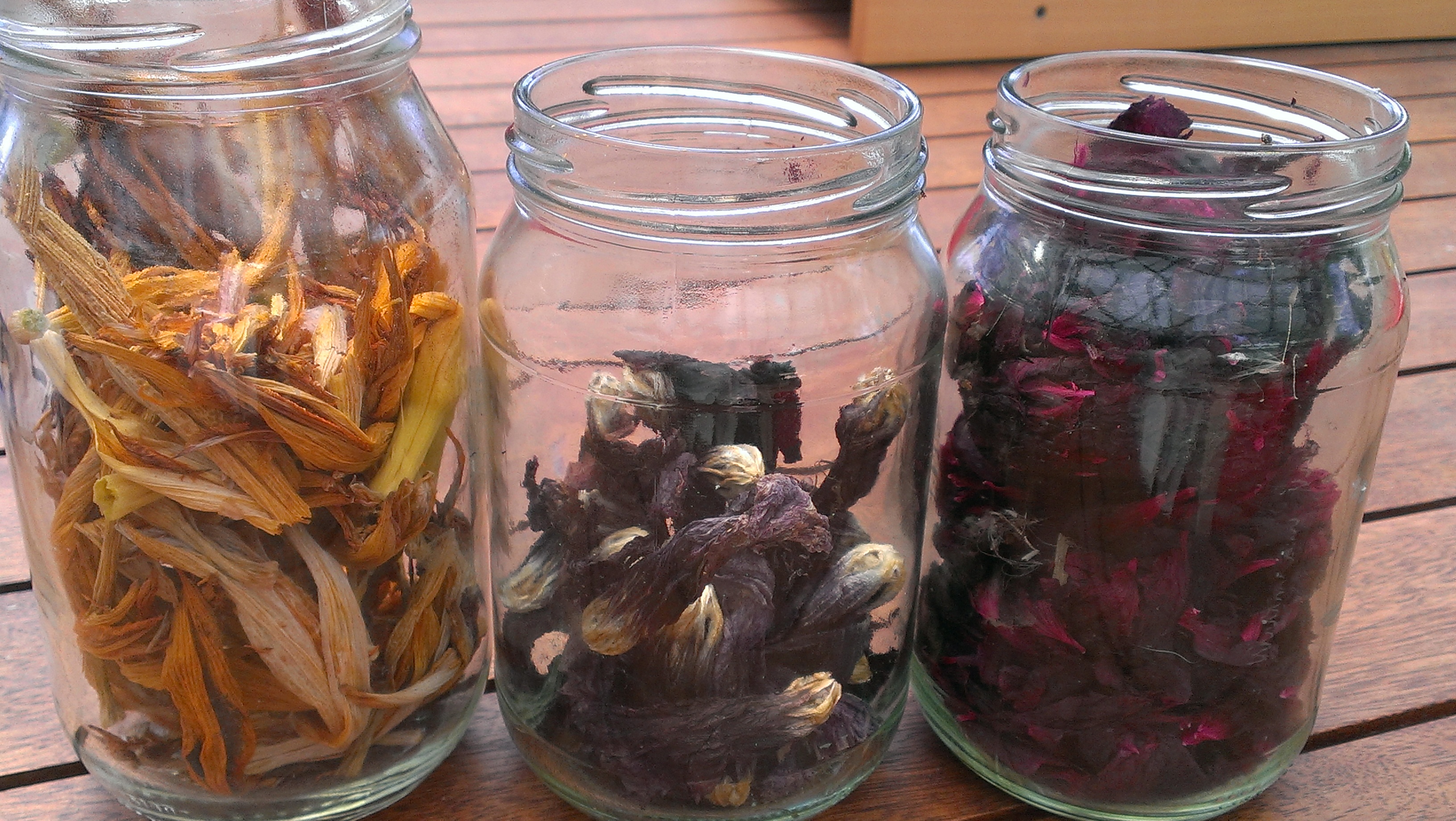
And here is the dye jar result of picking up all those spent flowers.  Hollyhocks on the left, hibiscus on the right.  The jars that have come to me as a result of Mum having a favourite brand of mayonnaise are all finding good uses despite being a bit too big for jam.  these jars of summer’s glory will now sit and steep in all their jewel like colours for about a year.

2014-12-09 11.46.54


8 Comments

Filed under Natural dyeing