Category Archives: Natural dyeing

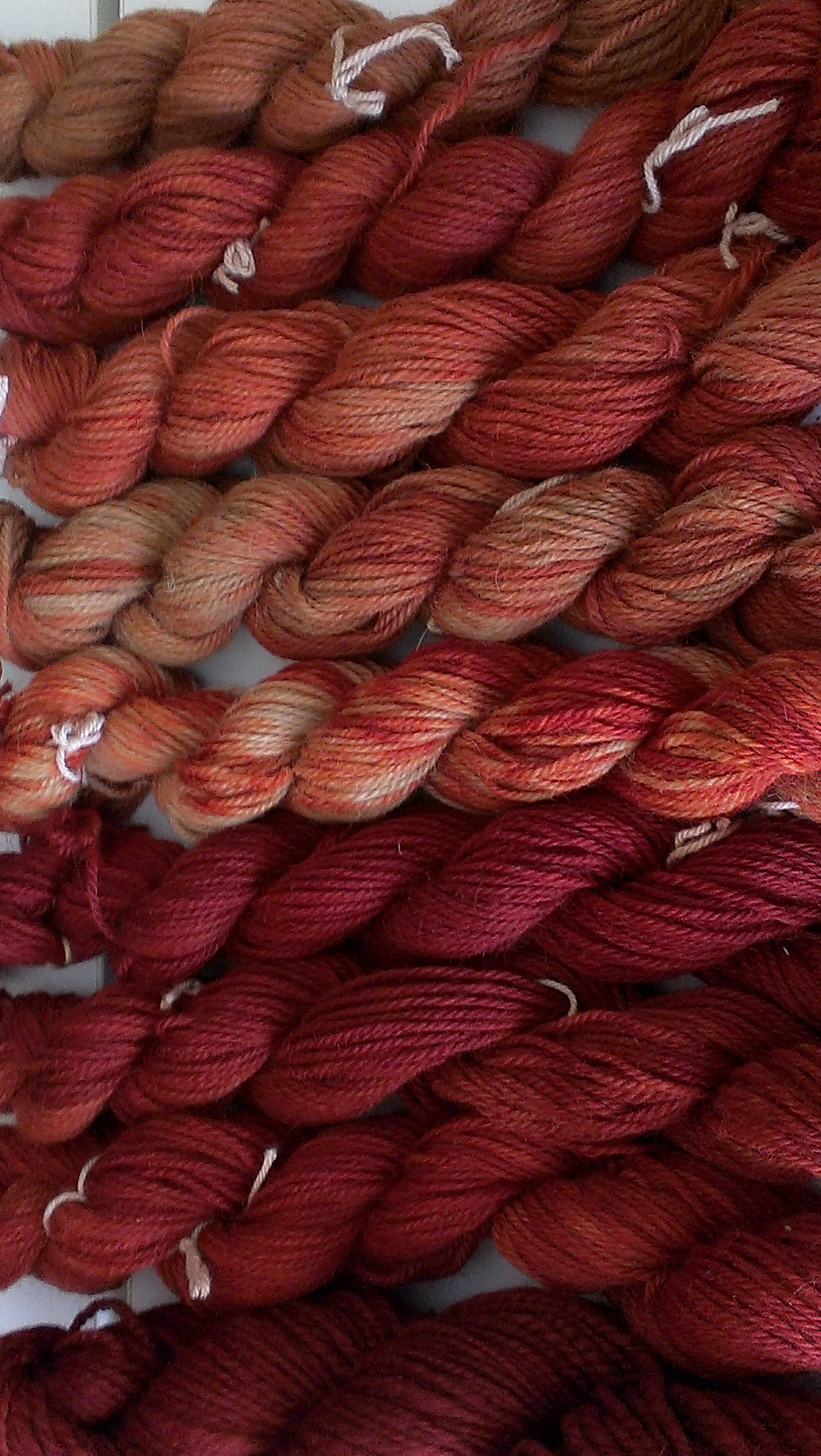
Cool spectrum gradient yarn

There has been some plain Jane spinning.  Three ply natural Polwarth, finaly plied after a long wait. Not my best work, unfortunately.  One of the singles is plumper and fluffier than the other two.  Just the same, it’s yarn and it’s a true three ply made from three singles.

IMAG3856

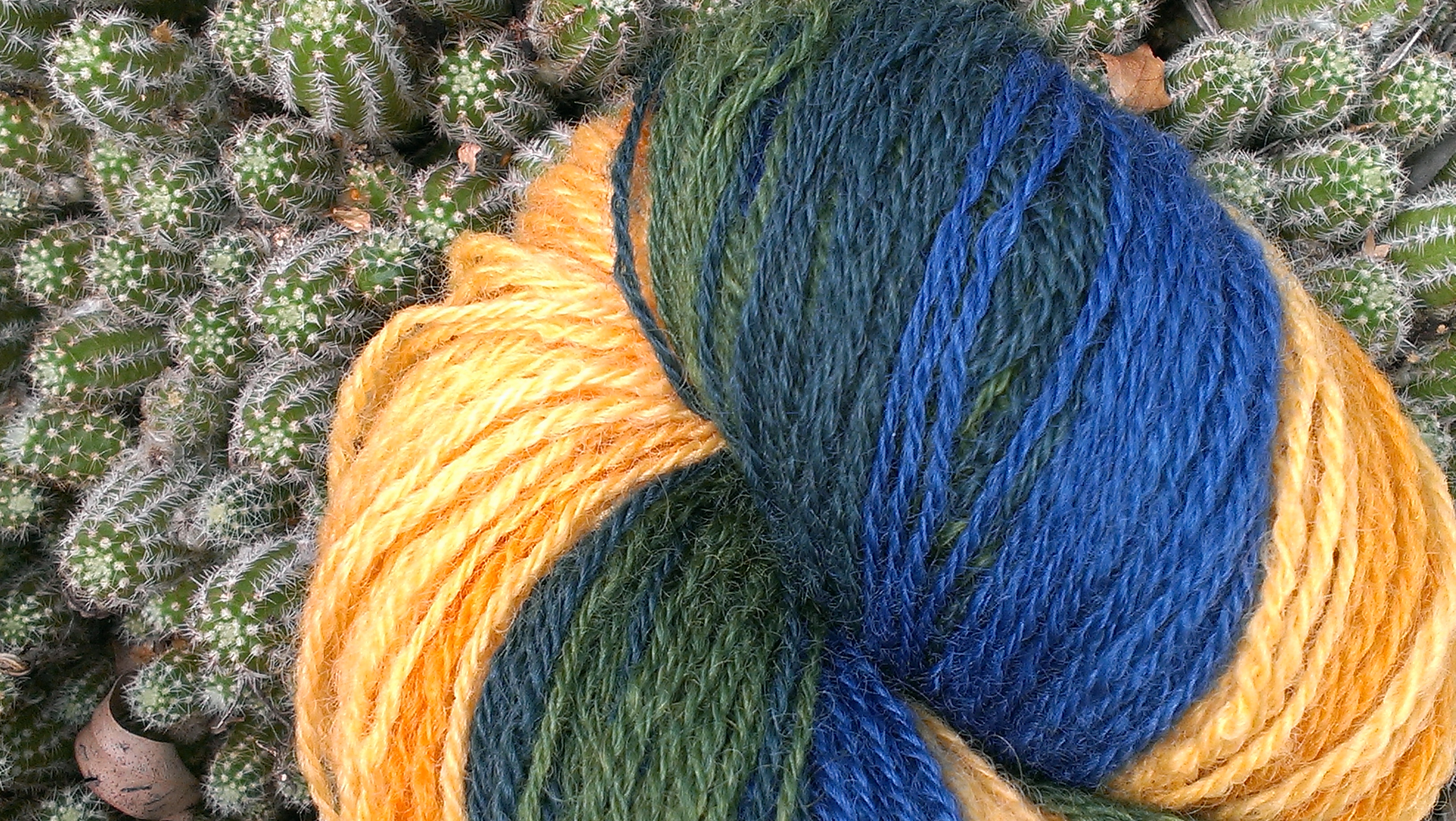
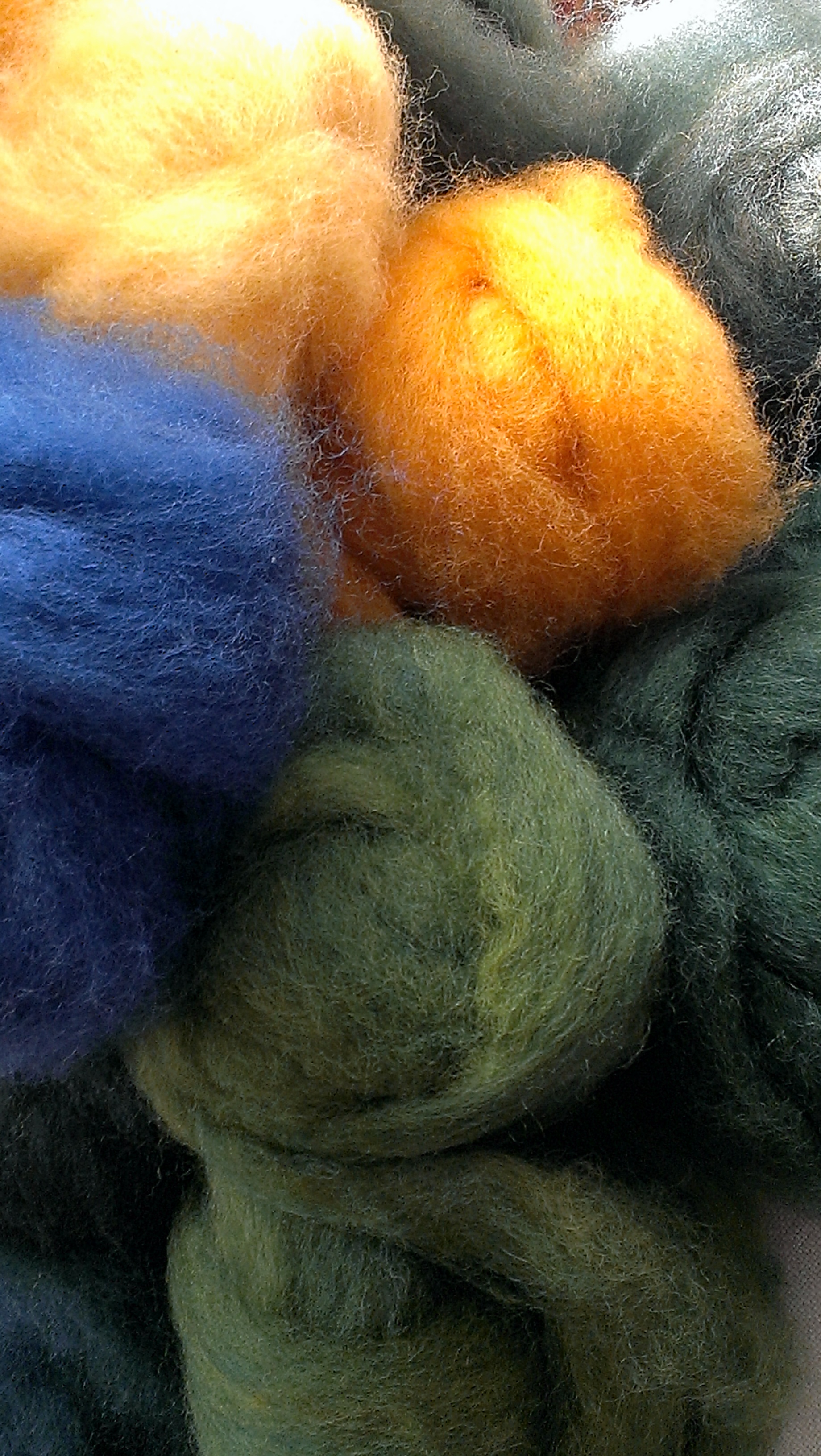
In the not-so-plain stakes, there has also been plying of some of the holiday spinning.  This one is Malcolm the Corriedale, dyed yellow with osange orange and my mother’s coreopsis flowers (she is generous enough to collect her dead flowers for me and such a committed gardener that she deadheads her coreopsis).  I overdyed with indigo to create greens and, of course, blue.

IMAG3870


No sign of crocking, just in case you’re wondering!  I have several more flour sacks of this fibre carded, pulled into roving through a diz and ready to spin.  Mmmm!

IMAG2939

The yarn is three ply and I’ve chain plied it so it will stripe… and just for the sheer pleasure of it.  Because I met internet spinners before I met many in real life, chain plying never seemed to me to be an unusual skill.  I took it up quite early in my spinning career and expected it to be challenging, because I was beginner and most things were challenging.  While I was plying this yarn at my regular Guild group, women who have been spinning for decades were commenting about how easy I made it look.  Ah, the warm glow of competence…  I admire all the things they can do that I find difficult, and there they are, doing just the same thing in reverse.

IMAG3858

6 Comments

Filed under Fibre preparation, Natural dyeing, Spinning

Where do I find the time?

I was at a wonderful birthday picnic today, celebrating my friends turning 7 and 40, respectively.  There was all kinds of interesting chat, of course, and in the midst of it another friend who reads this blog was marvelling at the way things seem to happen at my place, to judge by the blog.  I had to break the news that I write posts at all kinds of odd times and that their sequence isn’t always entirely mapping the way things happen at my place, and that I auto scheduled posts to load every two days while I was on holidays…  I guess I think the way that things really do happen is not quite such a good story!

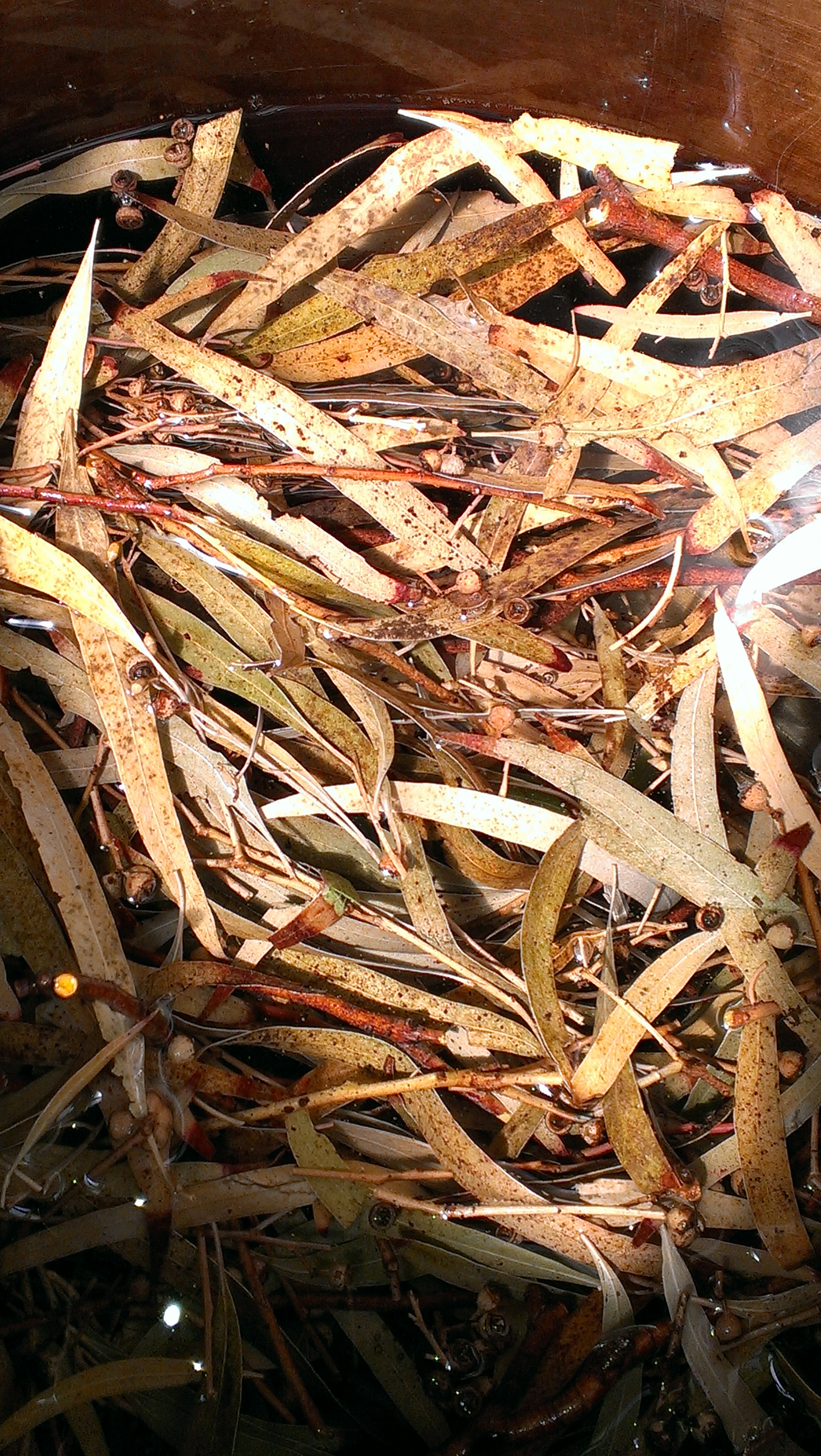
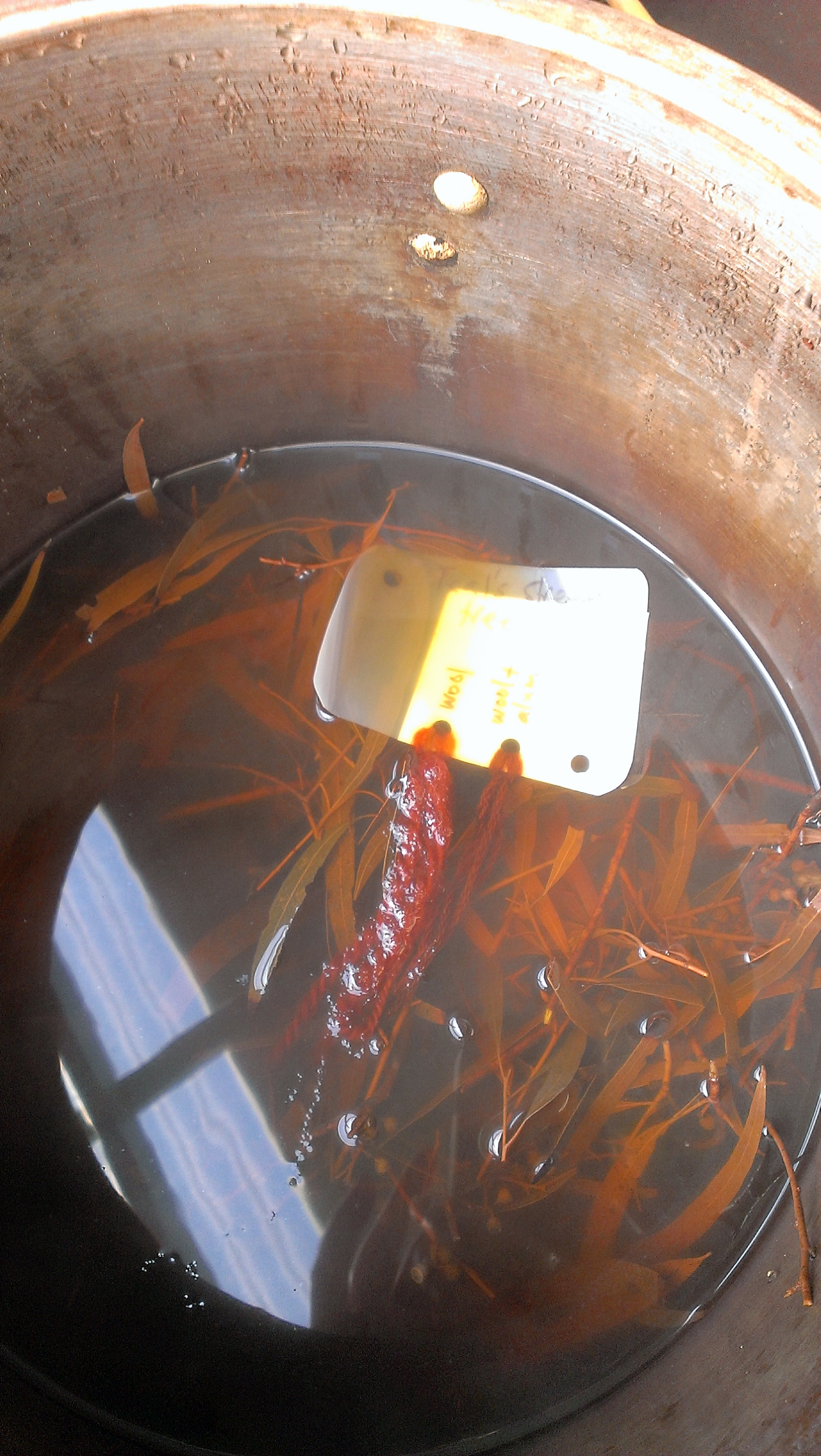
But just in case…   here’s the story of my Saturday.  We were up early to go to an exercise class.  I was ready in plenty of time so went outside, removed the sock yarn from its eucalypt dye bath, put it to soak in rainwater and hung the soy-soaked-indigo-dyed sock yarn up to dry.  Then there was exercise, a ‘coffee’ (I don’t drink coffee so for me it was yoghurt and hot chocolate).  I knit a few rows on my sock.

Then there was grocery shopping and visiting an upholsterer who had calico flour sacks and hessian sugar sacks on the wall that had come out of old chairs he was refurbishing (I like him already).  Then preparing food and gifts and off to the picnic.  I knit more on my sock there.  Another friend was appliqueing on a pair of jeans which were her gift.  Then home.  Cleaning up and a short pause.  So many ideas in my head! I have a couple of hours to do what I like and so… I have samples of two trees collected yesterday.
IMAG3779

Dealing with them requires two empty dye pots but my two are full.
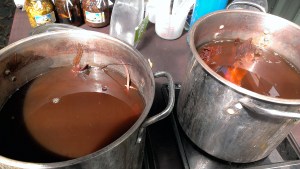
IMAG3782

They are the ones the sock yarn came out of at breakfast time. I empty, rinse and refill them. One with my friend’s street tree in case it might be E Nicholii (I live in hope, but not much!!)
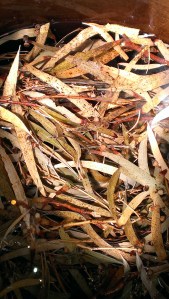
IMAG3788

The other with leaves from a tree that has intrigued me every time I’ve driven to her house–but yesterday it was in flower and I was running early, so I stopped. Put the heat on them. While dealing with that I’ve remembered the sock yarn.  That bucket isn’t very clean, is it?  Better keep rinsing.
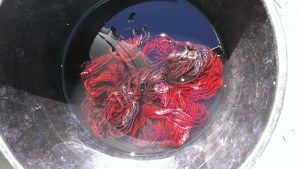
IMAG3784

Thank goodness we’ve had rain and the whole place is on rainwater at last. Must deal with the sealing fail on my dye jars.  That requires another free dye pot I don’t have.  Next.
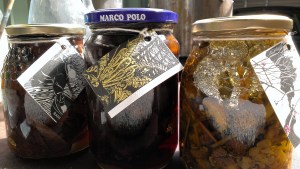
IMAG3781

I decide to try to identify the eucalypt. Oh, remember to rinse the sock yarn.

IMAG3786

Uploading photos for this post takes a while, so I set about turning saved cardboard into tags to clean it off the desk.
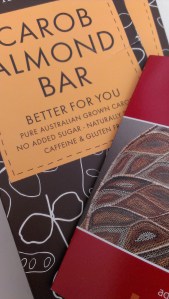
IMAG3795

Miraculously I manage to find some of the lovely pre-used string and thread I’ve been saving… some of it with attached safety pins, and that gets reuse too.  It puits me in mind of clearing out my grandfather’s shed after he died.  String saved for re-use, straightened out nails, screws that have been saved from previous applications…
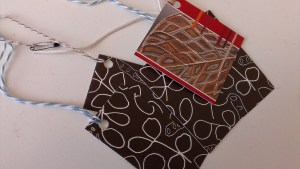
IMAG3798

Now these tags can join the ones that are already in the drawer made from last year’s calendar.  Out comes my favourite euc book.  If that tree is in the book it is E Stricklandii, which means I probably should have recognised it.  Mmmm.  A friend comes over.  More chat and then my beloved and said friend head off into the shed.  Rinse the sock yarn.  Put sample cards into the dye pots and turn them down.  One looks promising, the other not so much. Back to the computer, to check out my euc.  These leaves are not glossy… and so on….

Some work on another blog post.  Go to the bin to put the cardboard remains in the recycling only to find my beloved has put some greeting cards in there that surely shouldn’t be so readily disposed of… three new postcards created, one card saved for potential use as a stencil (lovely cut out design).  Check out my files for the last time I identified E Stricklandii.  Clearly I did try it out as a dye plant so there will be a comparison… Re-file craft books and fabrics. Check dye pots. Looking good.

IMAG3801

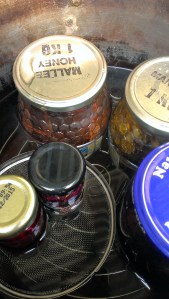
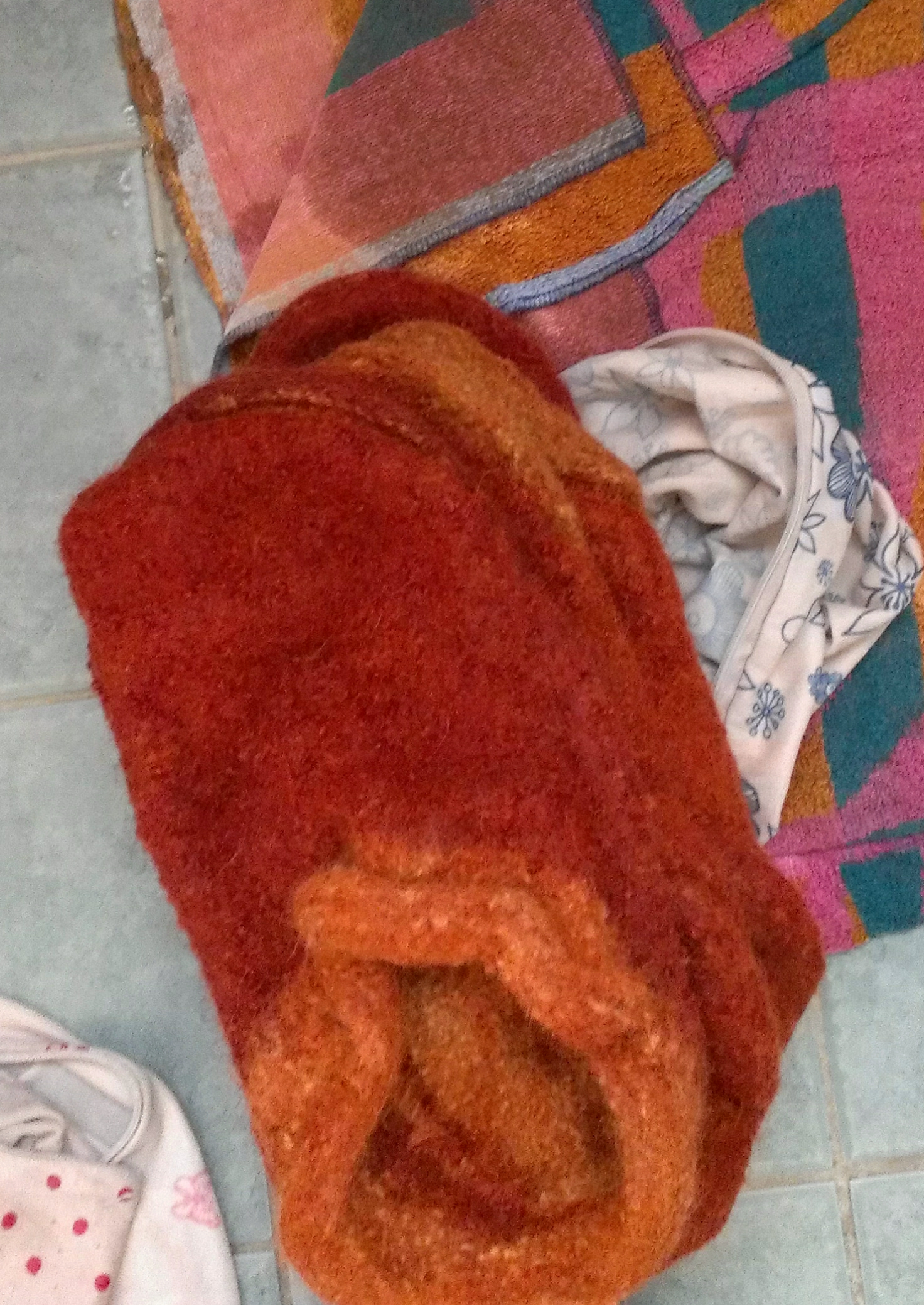
Empty sock yarn rinse water.  Tidy up in the laundy and see those slippers I finished ages ago but haven’t felted.  What the hey?  Put them in the washing machine and get out a timer so I won’t forget they are there (sure sign of overreach but always a good idea with felting).  Put timer in pocket.  Set up India Flint’s suggested fix for hard to seal jars (I think mine suffered from being heated too quickly despite using the lowest heat on the stove, but may as well add insurance).  Now they will be ready when the dye pot comes free.  Or tomorrow, if it comes to that!
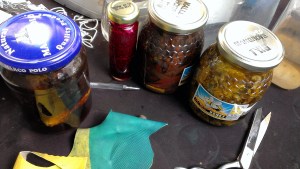
IMAG3803

Timer rings.  Check slippers.  Not ready yet.  Go to find traced shape of my friend’s foot.
IMAG3804_1

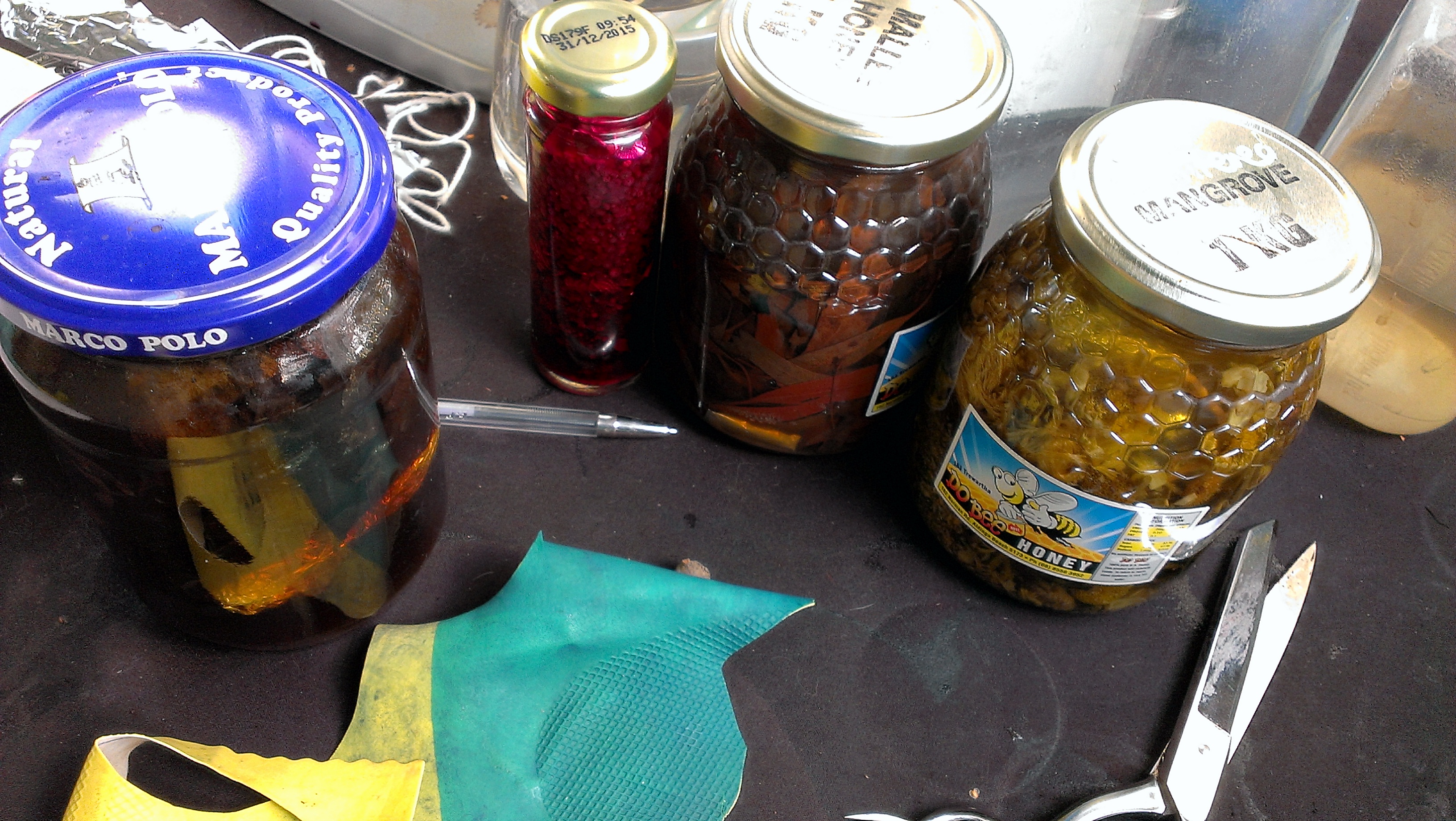
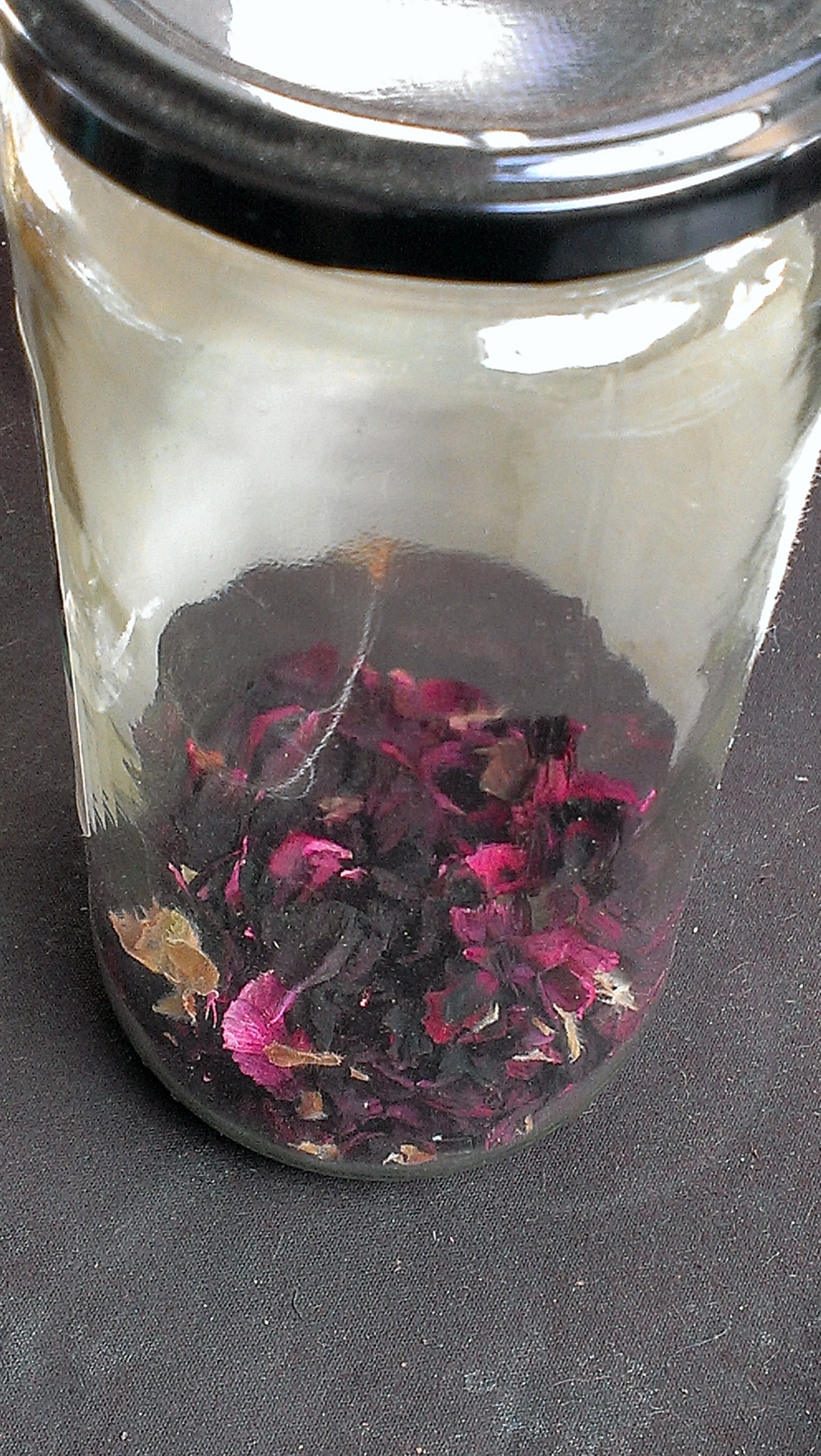
Take drum carder and the vacola jars Dad picked up secondhand out to the shed.  Check dye pots. terminate the less interesting dye pot ready for the jars, pour the dyebath into a bucket.  Put the knitting nancy (french knitting kit) I found at an op shop in the box for delivery to friends who might use this, plus things from the picnic that need to go to their place.  Decide to make another dye jar with the pelargonium petals, since the pelargonium has stopped flowering. I must have been so optimistic when I started gathering them in this jar!

IMAG3806

Timer goes.  Slippers look about right. Take them out to cool.

IMAG3807

One slipper pair is perfect.  The other, back in for ten minutes.  Finish sorting out those jars of stuff, steep and store goodness.

IMAG3811

In they go!

IMAG3815

The dried avocado peels from the kitchen finally make it out into dyestuff storage land.

IMAG3809

Slippers come out just after our other dinner guest arrives (with dinner! bless her!)  I shape the slippers over chat with crackers and avocado and cheese.  And put a load of the really dirty dyeing stuff on to wash.  I need to keep an eye on the stuff, steep and store jars during the evening.  I am pronounced a nerd with glee…  After main course, one of our guests says she wants to ask a technical question, which is whether I could draft a pattern from a simple vest she has so that she can make one on a ‘trashed and treasured’ theme… Out comes the recycled tissue paper and we give it a go and find a vest pattern that might help with conceptualising construction.

IMAG3816

Well, it’s bedtime.  After heating extremely slowly (the dye burners win over the gas stove in the kitchen for slowly heating, clearly) my jars are now a little too hot… I turn them down and leave them to the dye pot timer.  Goodnight!
IMAG3817


11 Comments

Filed under Dye Plants, Eucalypts, Knitting, Natural dyeing, Neighbourhood pleasures

Let’s try that again!

IMAG3709

My indigo dyed sock yarn emerged from its vinegar and water soak a little improved.  Instead of being able to see blue on my fingers after just twisting the skeins and then being sble to see the track yarn takes around my fingers when I knit in blue detail after only a row or two… it took winding the skein into a ball to produce this effect…

IMAG3722

I decided to try casting on.  After casting on 64 stitches…

IMAG3723

(That would be the long tail cast on for knitters who need to know!)  Well, it’s an option to knit and get blue fingers: people who seem to know on Ravelry say the resulting garment will not lose dye onto the wearer.  Why not, I wonder–as a sock will clearly be in friction with the feet it is on and crocking is all about dye loss through friction rather than washing.  Still, a little slower rate of dye loss would be my preference!  I’ve checked with the redoubtable J N Liles The Art and Craft of Natural Dyeing (1990), and he would appear to be the source of my belief that if indigo crocks it will keep doing so.  He offers a method for addressing the problem that seems entirely logical but does involve some effort.  There is another simple solution suggested on Ravelry–a soymilk soak.  Since finding it mentioned on Ravelry, I’ve found John Marshall offering soymilk as a solution to crocking here.

IMAG3724

On the premise of doing the simple things first, I’ll try that before proceeding to take Mr Liles’ advice, which would have to wait for a day with some relaxed hours.  As it happens, there were two part-used boxes of soymilk in the tearoom fridge at work… they have been there a long while and no one is claiming knowledge (one of them is mine but I’m not sure which one!)  They smell fine but I think they’re past the point of safe human consumption. What an opportunity!  Now we wait.

IMAG3716_1

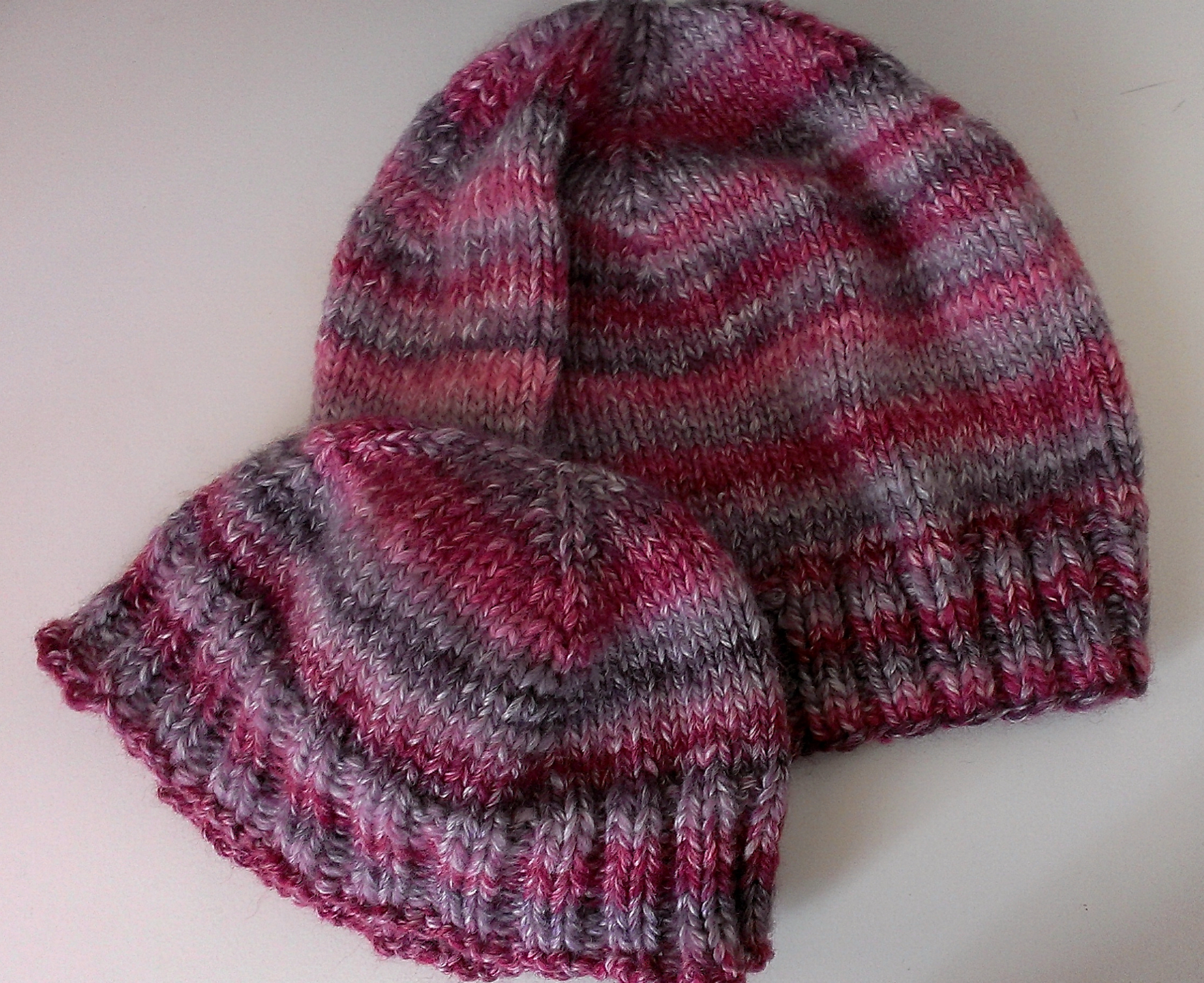
I made a little hat to match the big one.  Same basic hat, smaller, and top-down so I could use all the yarn.  I am sure it will fit a little person or perhaps a doll or a bear…

IMAG3720

And… I had a score at the op shop (thrift store) on my way home from work.  I could not resist all that thread for A$2 and there were so many examples of lovely embroidery I had to bring one home…

6 Comments

Filed under Dyefastness, Knitting, Natural dyeing, Sewing

Travel Knitting

I have been travelling for work… and then my oldest friend invited me to his birthday… so I have been extending my carbon footprint by going to Perth for work, then to my friend’s birthday on my way home (for those who don’t know, Sydney is not on the way home to Adelaide, when you start out in Perth).

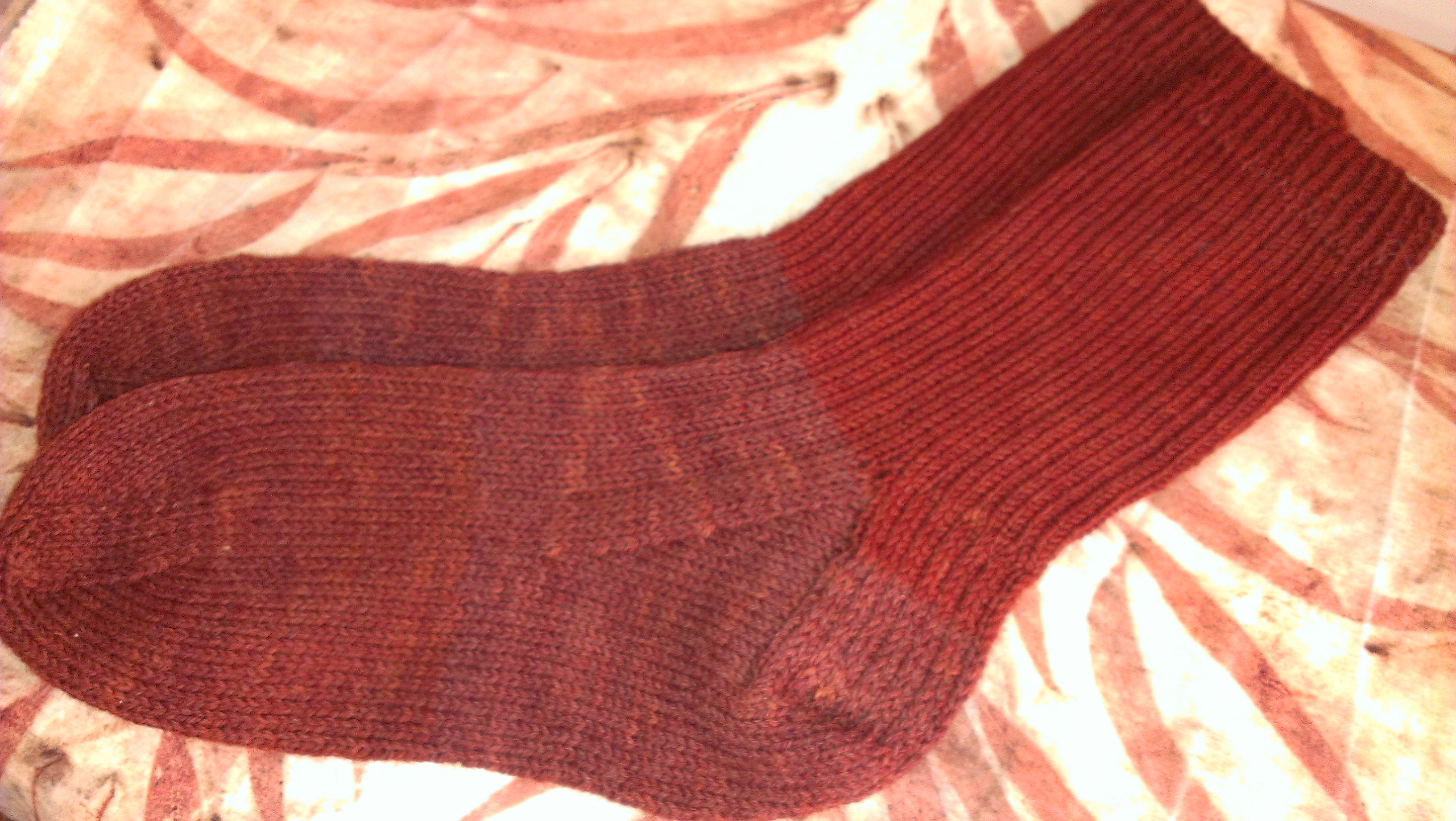
Anyway… in the hurry to leave home I managed to remember to pack travel knitting.  I started out with a sock in progress.  Eucalyptus dyed patonyle, destined for the feet of my Blue Mountains friends.  The weather where they live calls for handknit socks.

Image

These colours are the result of overdyes, where I didn’t like the initial colour and decided to try again.  By the time I left for Perth, I had one sock knit and another underway and caused quite a bit of fascination among the project team by knitting in breaks and grafting a toe over lunch.

IMAG3702

I had overdyed the rest of my patonyle more recently.  It started out dyed with black beans (not as colourfast as I’d like) and plum pine (not at all colourfast).

Image

These yarns went into my first attempt at the Michel Garcia organic indigo vat.  I had reservations about my vat as I went… the Ph test strips I had bought turned out not to measure the part of the Ph spectrum I needed and in the end I ran out of time and should have left the vat to the next day.  On the up side, the preparation of the vat all made sense and most of it went really well.   I think my judgment about it was basically right, I just didn’t go with my judgment as I should have done.  My friend dyed a doily:

Image

I re-dyed the sock yarn, originally bought second hand at a garage sale.

Image

Although I was happy with the finished colours, it turned out that I had hurried the indigo too much and I was left with crocking… the blue rubbed of on my hands a lot as I was knitting in Perth.  This made it certain the finished socks would leave the wearer with blue feet and I finally decided to abandon them after a few centimetres, frogged and left the yarn in a bin in Perth.  Sigh!  That must be the fiirst dyeing fail I have pronounced irretrievable.

I had an alternative plan.  I pulled out yarn I intended for a hat and chose one of the two patterns in my bag, Jared Flood’s Turn a Square.  I wound the ball in my motel room and cast on. Here it is as I wait for the taxi to the airport in Perth.

Image

The time difference between Western Australia (Perth) and the rest of the country is considerable, so even though the flight was four and a half hours, I left Perth at 10 am and arrived in Sydney at 5 pm, and here is the hat in the Sydney airport:

Image

Here it is in Sydney about to depart for Adelaide next day…

IMAG3701

I finished it on the way and started a second hat with the rest of the skein, top down. I’d call that a productive trip on many fronts!

IMAG3707_1

12 Comments

Filed under Dyefastness, Knitting, Natural dyeing

Holiday spinning

We had a fabulous holiday at Port Willunga.  In spite of the warm weather, I did a lot of spinning. I have three fat bobbins of naturally dyed wool waiting for plying and I three-plied this rather lovely wool and silk blend by Wren and Ollie, a relatively new local business.

IMAG3601

Here is the resulting yarn.

IMAG3628

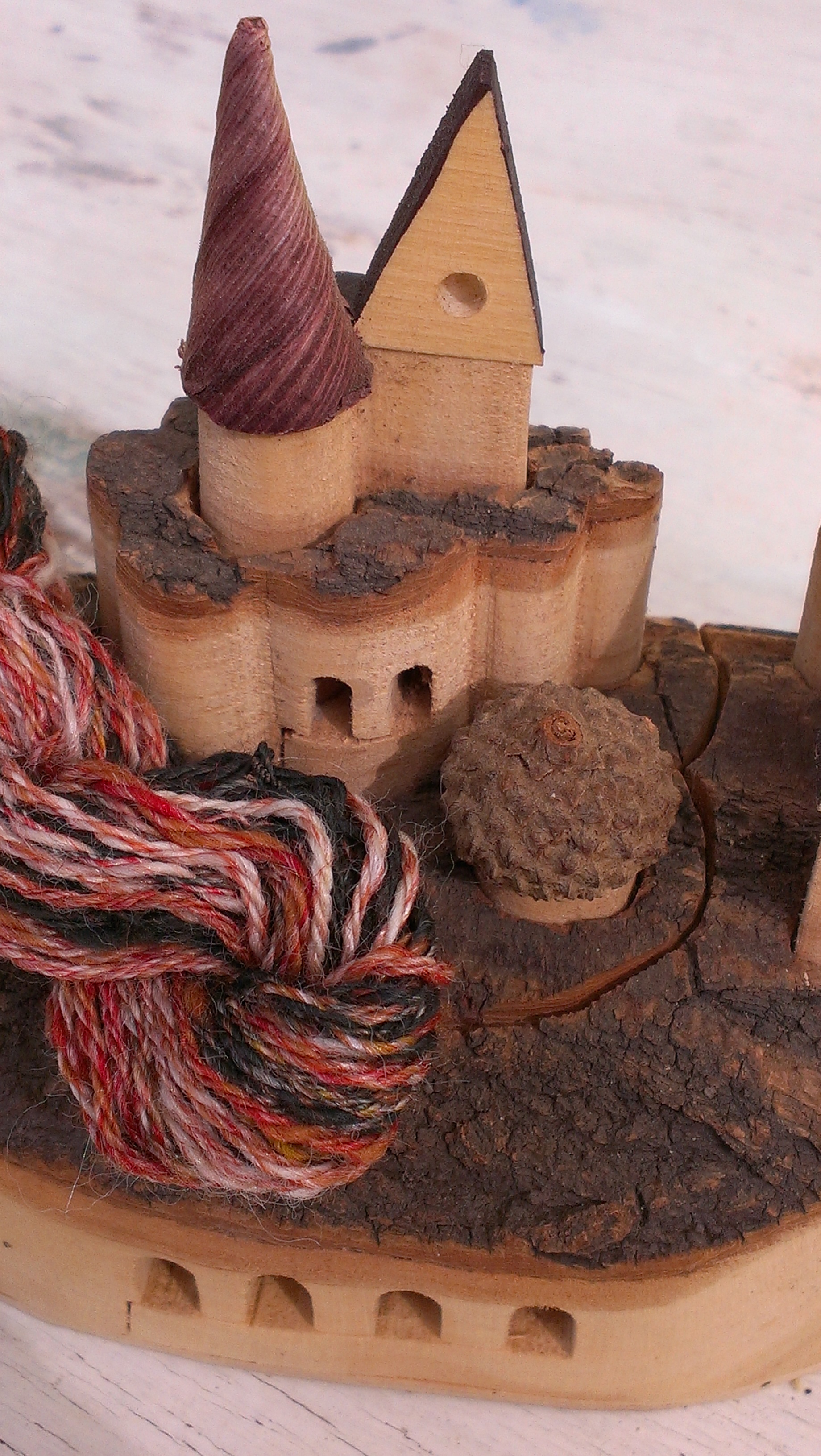
It came with a tiny lucky dip batt. I spun it up finely and three ply was the theme of the moment. I could’t resist using the photo opportunities of the lovely beach shack we were staying in. The low turret on the front right seems to be an acorn cap, for those wondering about scale.

IMAG3634

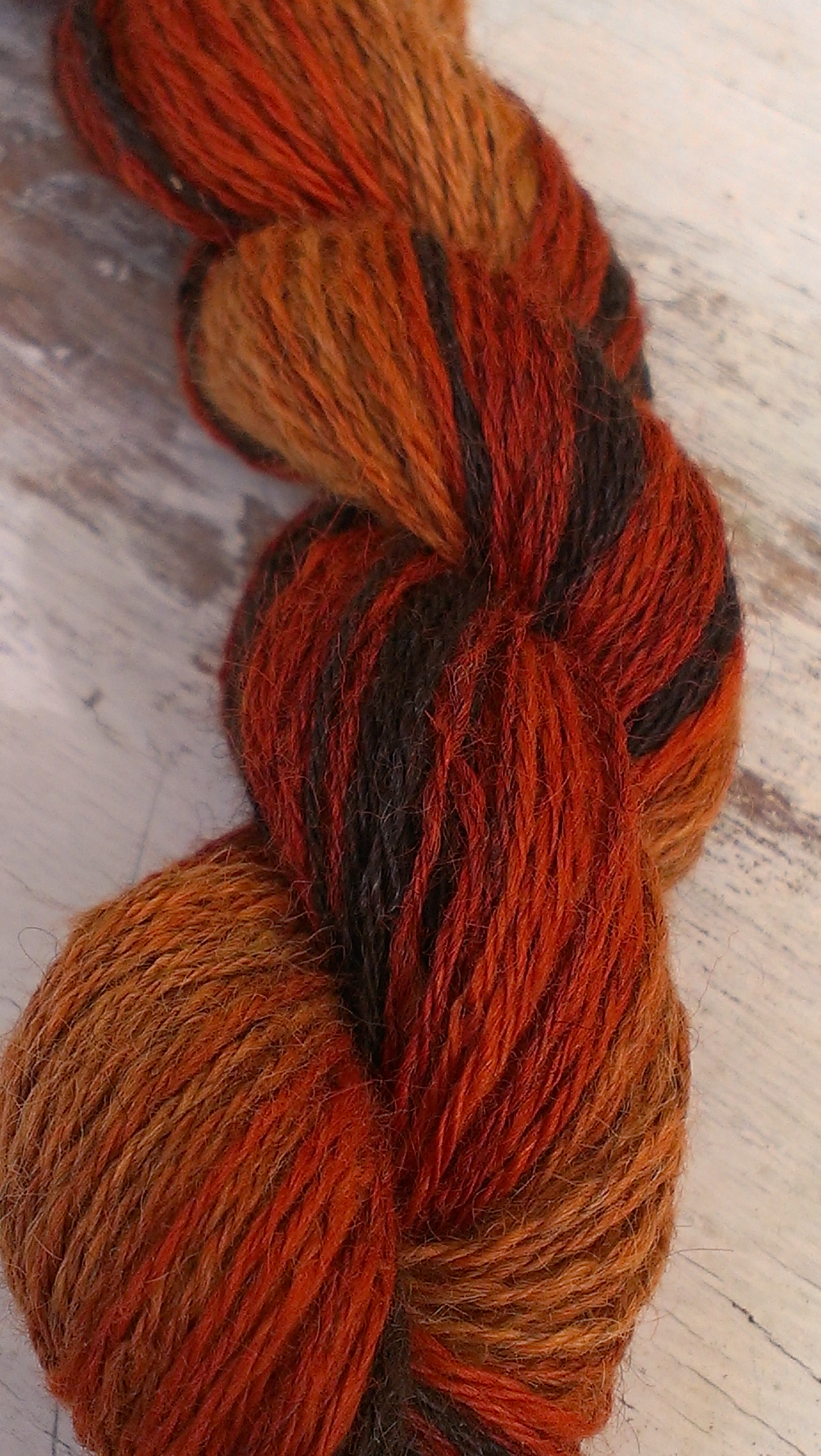
Finally, I had several small batts of alpaca that began in natural shades of grey which I then dyed with eucalyptus, leavng the deepest grey in its natural state.  I turned them into a gradient yarn.

IMAG3640

One final photo just for fun…

IMAG3641

6 Comments

Filed under Natural dyeing, Spinning

Trying out Stuff, Steep and Store

I mentioned a while back that I let out a squeak of glee when I got my copy of India Flint’s new book Stuff, Steep and Store… and it was only a matter of time before I’d try it out.

IMAG3530

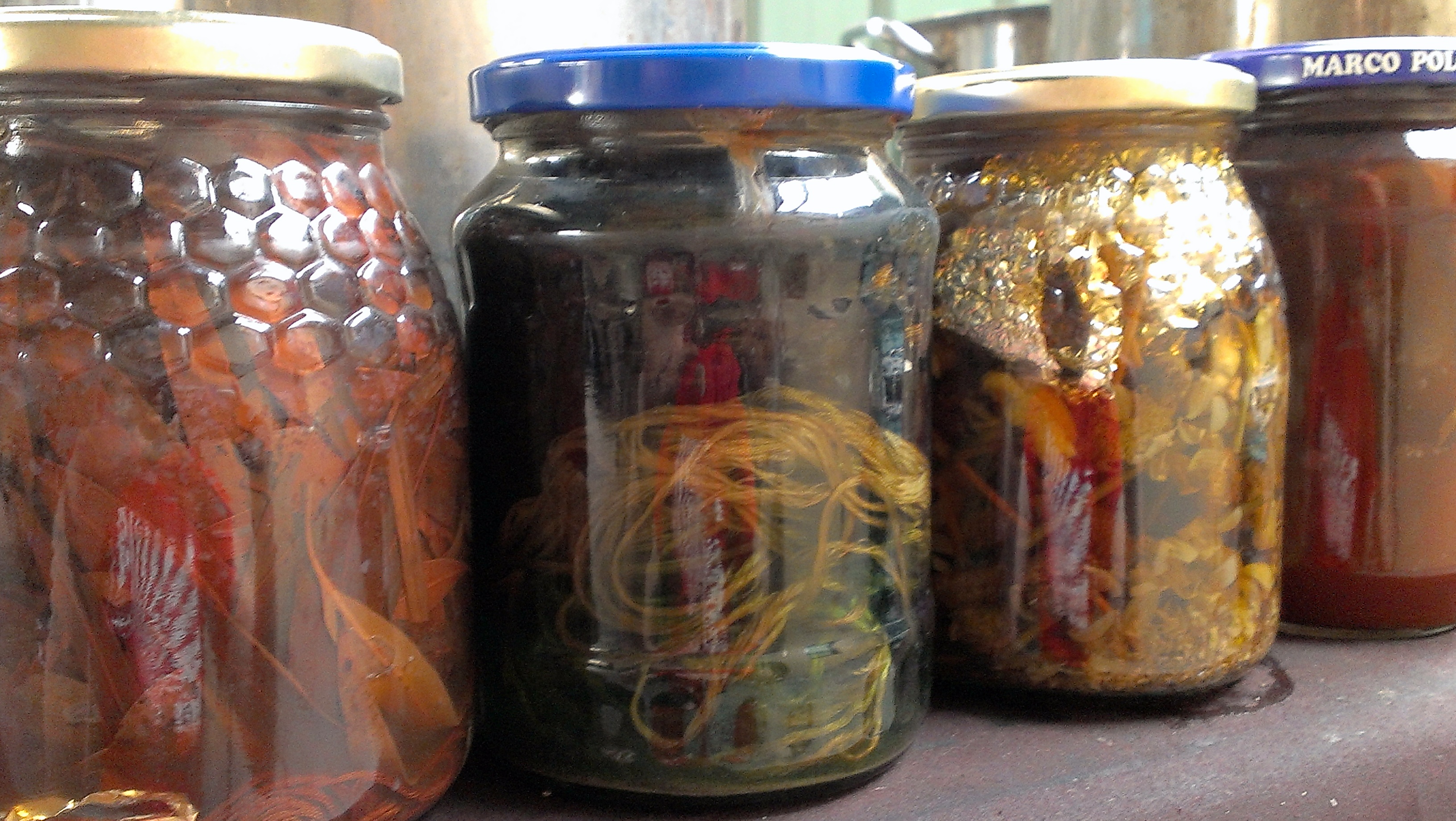
I’m trying out the following.  I can’t pretend to think they are especially well suited to this method but there it is… time will tell, as it always does!

  • Brown onion skins, aluminium foil, E Scoparia dyebath with vinegar (I hope I wrote some fibre or other on the label!!)
  • E Scoparia leaves, bark and dye, aluminium foil, silk thread, vinegar
  • Dyers’ chamomile flowers, aluminium foil, silk thread, water and seawater and finally
  • Red onion skins, silk thread, copper and vinegar water, seawater.

Entertainingly enough, while India Flint says she has been inspired in this dyeing process by years of food preserving (and that’s evident from the book)… After my first batch of dye jars I was inspired to pitch a round of food preserving to my beloved.  We put up a dozen or so jars of white peaches and yellow plums for later enjoyment.  I am not sure why this is called ‘canning’ in the US, but in Australia it’s usually called ‘bottling’ because it is done in glass jars.  I have a massive collection. I have been the receiving point for others’ Fowlers Vacola preserving kits for so long I now gift or share them with friends who are not so well endowed.  Perfect, really!

Since filling these jars I’ve been on a seaside holiday.  I set the blog to load scheduled posts while I was gone… and being lazy at the beach is the reason for slow responses to comments lately.  WordPress and my phone have an on-again-off-again relationship, which doesn’t help.  Since I was by the sea and pedalling around the neighbourhood, I collected seeds of hardy native plants for later propagation and planting in the abandoned waste parts of my own neighbourhood. Plantings on public land just call out for seed collection, don’t you think?

IMAG3651

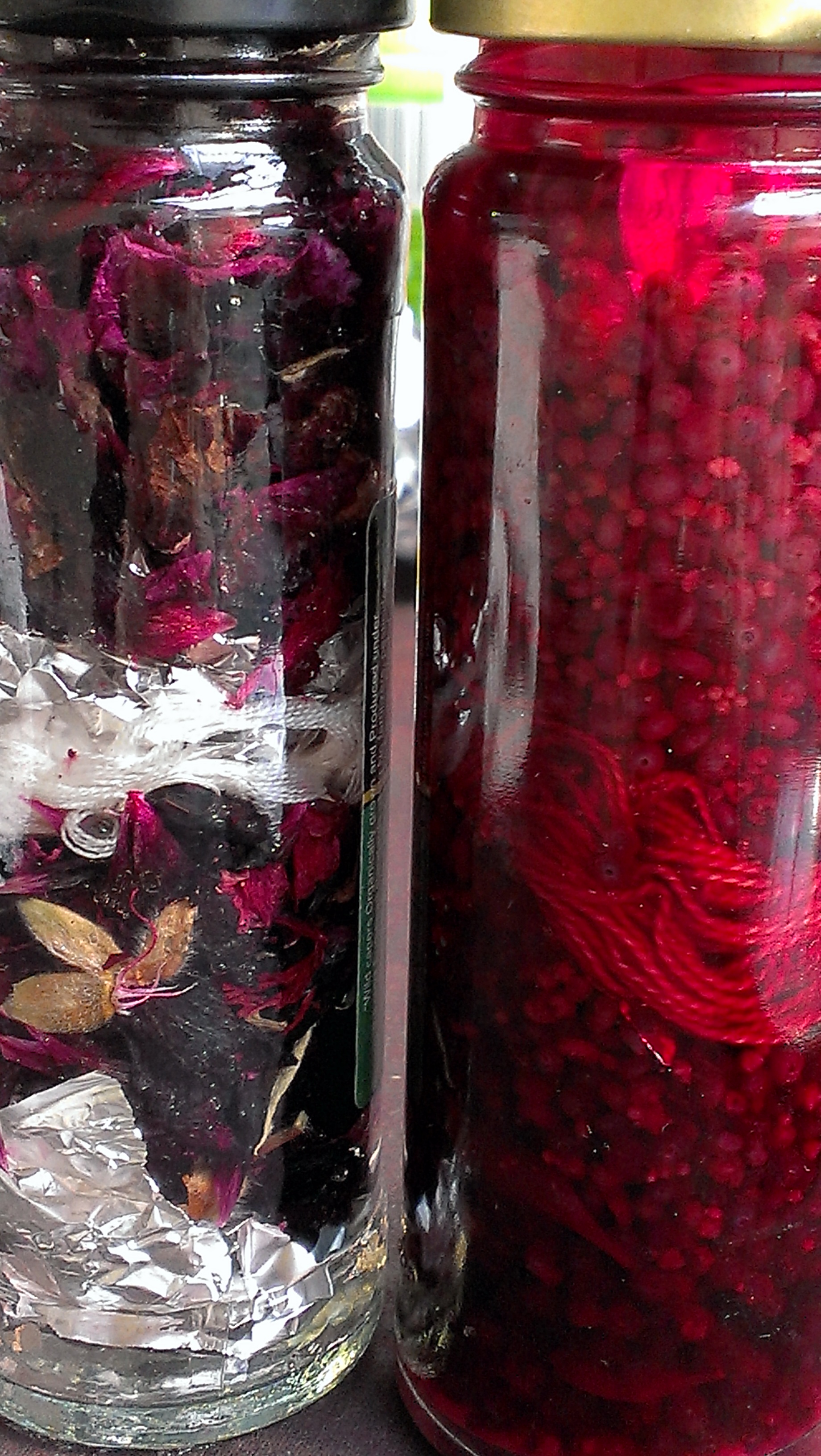
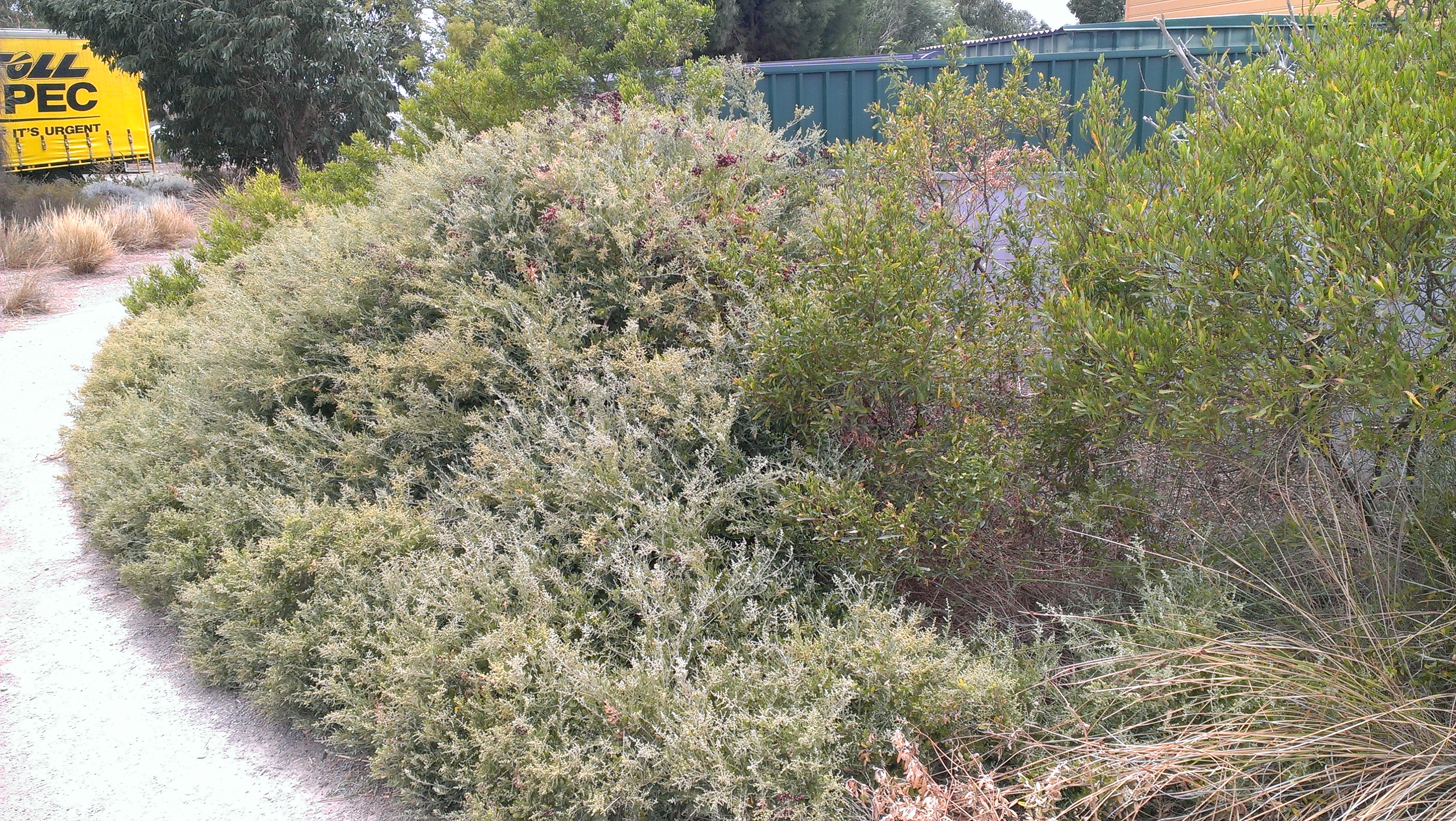
One plant, the seaberry saltbush (rhagodia spp, probably rhagodia candolleana), was in such profuse fruit that I collected enough to fill a small jar we had finished using.

IMAG3657

I can confirm that rhagodia fruit ferments quickly in heat like we’ve had lately (41C today)… and began to do so before I managed to get it home and process my jar properly.  Ooops!  That really should not have been a surprise.  The fruits are smaller than a currant but very pretty…

IMAG3670

Another experiment, since if anyone else has tried dyeing with this plant I don’t know about it and have only a foggy memory of the Victorian Handspinners reporting they got some colour from saltbush fruit (saltbush is a big family).  I happened to have embroidery thread with me… and into the jar it went with chocolate-bar-foil.  And now we wait.

IMAG3687

To see how others are working with this process, visit the delectable ‘pantry’ India Flint has set up, or if you’re so inclined, have a look on facebook.

8 Comments

Filed under Dye Plants, Eucalypts, Natural dyeing

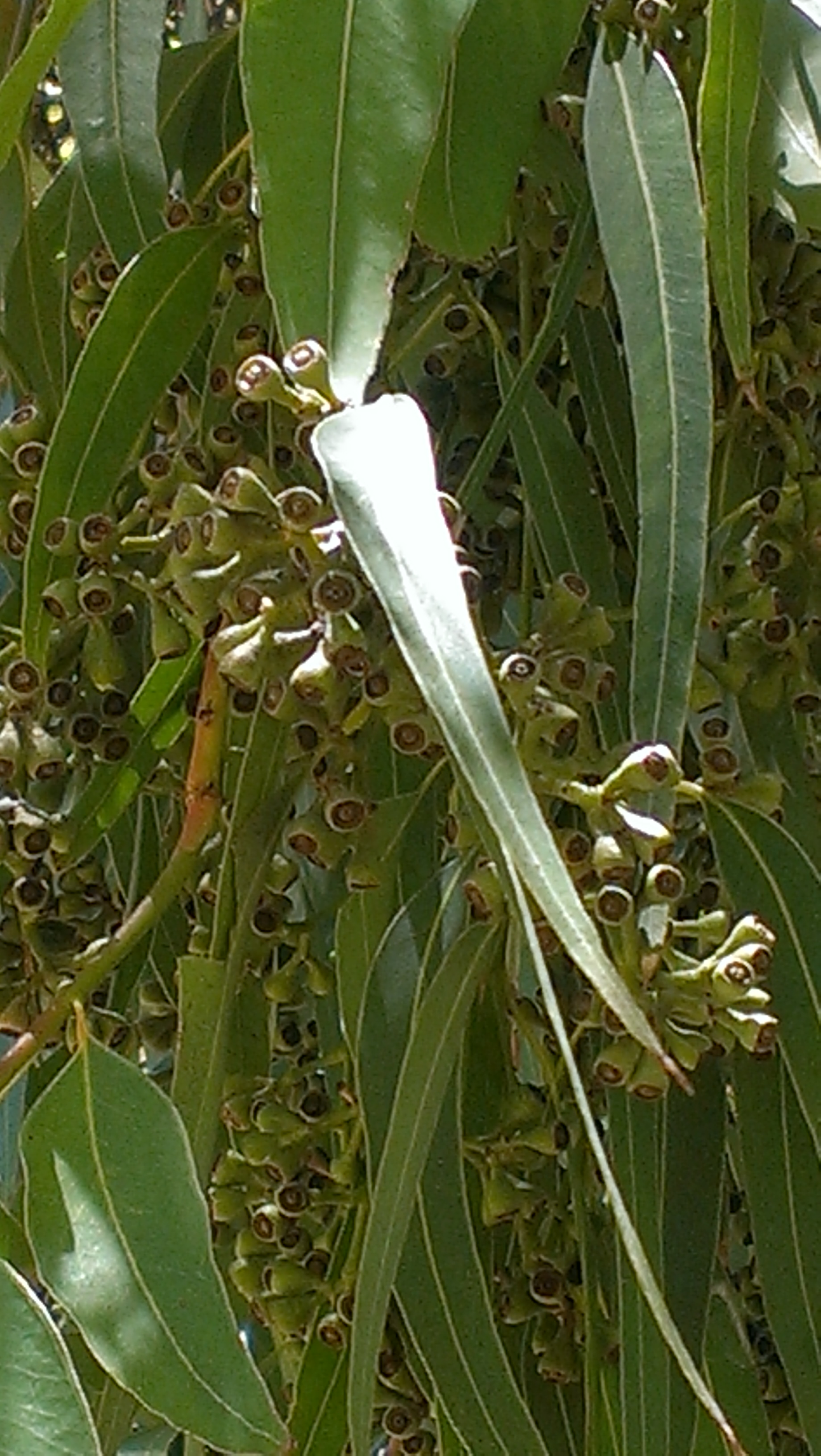
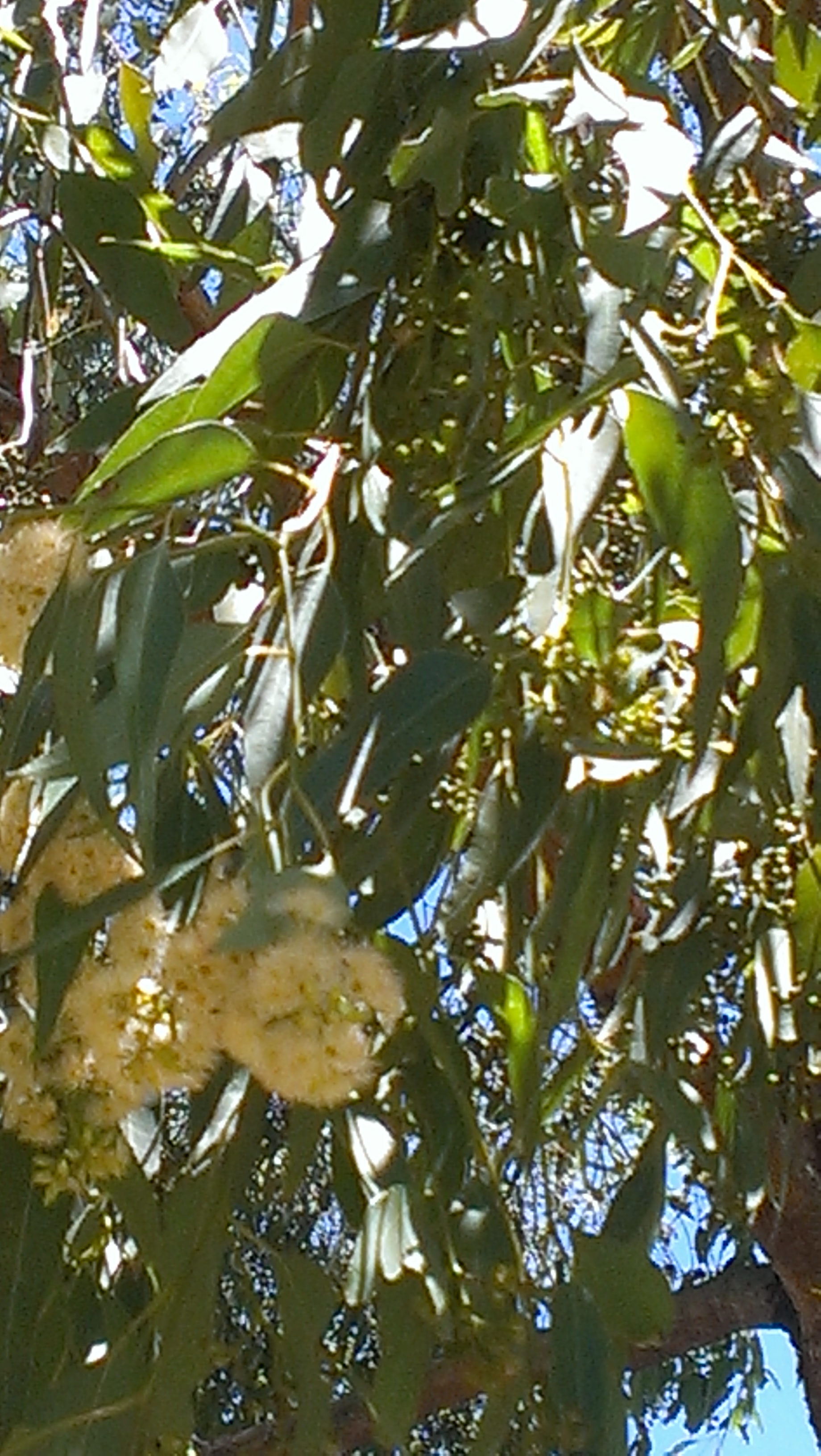
Eucalyptus Rummeryi

A eucalyptus windfall will often get my attention… and never more so than when the tree is one I have never tried and which a more knowledgeable person has labelled for the edification of passersby such as myself.  E Rummeryi is native to NSW but seen here growing in Botanic Park, slim, straight and already tall.

IMAG3198

Bark…

IMAG3190

Immature fruit:

IMAG3192

In flower, but quite high up and on a breezy day (this is a way of apologising for the quality of the picture)!

IMAG3201

Results from a standard dye pot…

IMAG3316

4 Comments

Filed under Dye Plants, Eucalypts, Natural dyeing

A squeak of glee and a visit to the beach

I was in Melbourne when I saw that India Flint had put out a new book: Stuff, Steep and Store.  Yesterday (well, the day before I wrote this post–) it arrived in the mail and I gave out a squeak of glee.  It is short but lovely, so there was one reading before bed and another over breakfast.  I happened to be heading out to an early appointment at a suburb near the beach.  Inspired as I was, and consequently full of exciting plans, I decided to go to the beach to dip some fabric (the last of a roll of cotton sheeting from a church fete) in the sea and  collect seawater for later use.  And, of course, for a walk.

IMAG3291

I am my father’s daughter, so my walk was accompanied by the collection of glass shards from the sand.  There was also the greeting of a lot of dogs and a smaller number of humans.

IMAG3302

A great start to the day, and multiple dyeings to come.

IMAG3300

10 Comments

Filed under Fibre preparation, Natural dyeing

Bark dyes on alpaca and wool yarn

Here it is… some of my holiday knitting, ready to go!

IMAG3146_1

Last year I ran some workshops at the Guild, and I ended up with quite a quantity of Bendigo Woollen Mills Alpaca Rich in a shade of white called ‘rich magnolia’… which I was never going to use in this colourway.

IMAG3039

So… I have been skeining and dyeing it. Unevenly…

IMAG3135

More evenly…

IMAG3134

And in quite a range of shades.  The one right at the bottom in the picture below is handspun that had been mordanted with alum, dyed in logwood exhaust, suffered some kind of surprise bleaching episode in our laundry and then gone through two eucalyptus baths.  It looks great now, but what a soap opera of a story!

IMAG3136

And now… turned into balls and ready to be holiday knitting! Would you believe… slippers?

IMAG3141

9 Comments

Filed under Eucalypts, Natural dyeing

Dyeing experiment: Chicory ‘Red Dandelion’ root

I have seen quite a few claims that it is possible to get red dye from dandelion root in print.  But not usually with any detailed instructions.  In Craft of the Dyer Karen Casselman said she had tried numerous times without success to get red from dandelion root.  She invited readers to write in if they knew how it could be done. I don’t know how it can be done.  But when I started growing Chicory ‘Red Dandelion’ the stems and leaf ribs were such a vibrant deep red I promised myself I would try it out just in case.

IMAG2062

Many a happy dinner has come from this plant! When I harvested the root the plants were huge, and full of blue flowers, and falling all over other vegetables, at more promising stages in their life cycles.  Out came the chicory, destined to become chicken happiness.  Here are the roots, just as unpromising looking as dandelion roots (in the matter of red dye at any rate).

IMAG3048

Chopped and soaking:

IMAG3051

After an hour of cooking:

IMG_0007

Those roots had not released any colour at all.  So–one more dead end in the mystery of red dye from dandelion roots… There is a dyer on Ravelry who says she has achieved red from a specific dandelion by a cold ammonia process… but her description is not like any dandelion I have seen here so far…

5 Comments

Filed under Dye Plants, Natural dyeing