
How to Make a Bag
Please follow this link to a tutorial on how to make a basic tote bag with a patch on it (if you like) and mitred corners (if you like). Fully illustrated, and suitable for a person with basic sewing machine skills.
Mending information
Please find some pointers on finding supplies (in Adelaide especially) here.
How to patch a fine machine knit garment (like a t-shirt or a sock or your leggings). Pictures of patched merino underwear and patched socks (right at the end) here.

How to darn (how to sew a mend for a hole in a knit or stretchy garment like a sock), or, a cautionary take about clothes moths…

How to patch your jeans (and any similar non-stretch garment that needs a big patch). Colour scheme, shape of patch and kneeling in the garden, all optional.

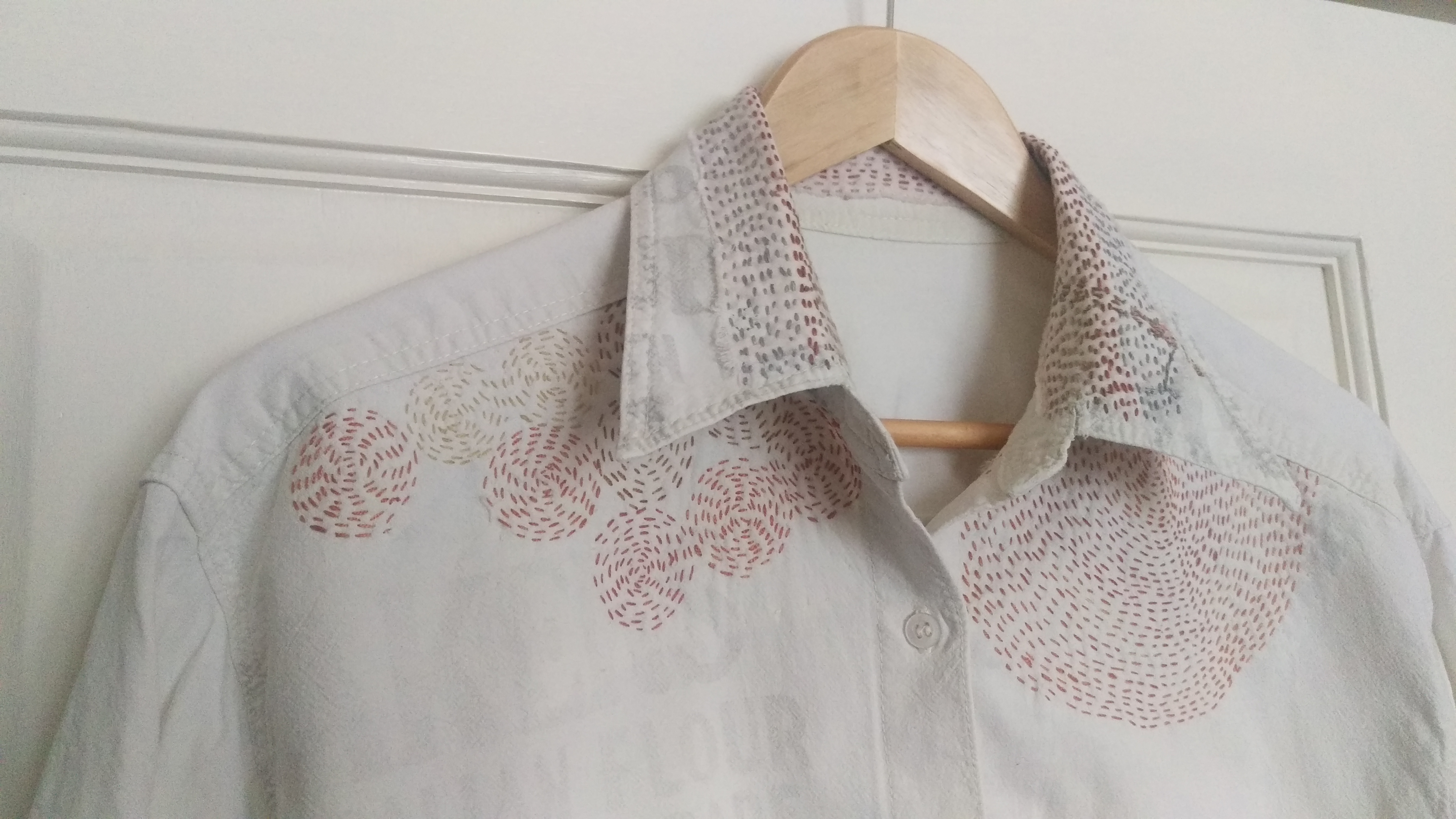
How to mend threadbare clothing (I know, it looks like embroidery but it is mending).
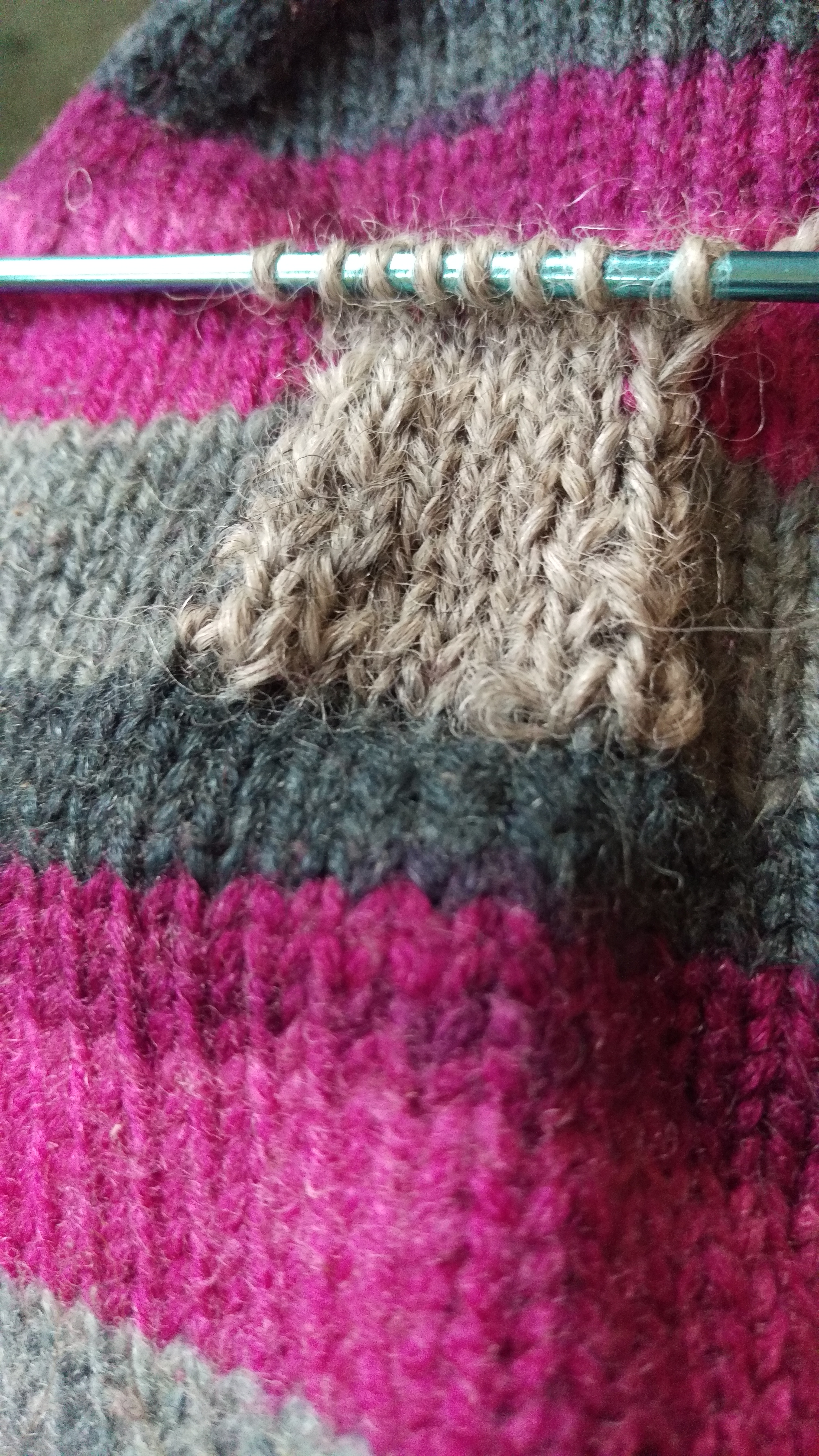
How to knit a patch into a knit garment with a BIG hole! (Choosing a contrasting colour is optional)…
How to make string by hand
There are many videos on making ‘cordage’ on YouTube. Many start with a whole lot of steps about stripping bark, which is only one possibility in terms of materials to use. The process of actually twisting fibre into string is the same whether your use bark, bast fibre, leaves or fabric strips, really. If you can find suitable materials (I use daylily and cordyline leaves mostly)–you need to start with dried leaves. I use those that have died as long as they have not started to break down. This may not be optimal practice but it works. Soak them long enough to make them supple. Tough leaves like cordyline might need overnight in a bucket, but an hour will do it for daylily, or you can dunk the leaves in water and wrap in a wet towel overnight. Then tear into strips lengthways and begin the twisting process. You can find the process explained in every basic book on basketry techniques. I am using a technique like the one in figures 4a and 4b on this site. The link shows three ways to create string by hand, all of which have been in use by humans for a very, very long time. In a short video here you can see Jude Hill using the same technique to create a thread fringe on a piece of patchwork. Enjoy!
How to turn calendars and other pretty papers into envelopes
Follow the link to my tutorial.
How to make bunting with applique lettering
Follow the link to my tutorial
How to make bunting with applique lettering
See tutorial here.

 Local & Bespoke
thank you for the kind mention!
LikeLike
You are more than welcome. Thanks for sharing so much information and inspiration.
LikeLike
Hi could you please also spread the word and get behind a page on facebook called save our trees in goodwood.
LikeLike
I’d love to, Renee!
LikeLike
I love seeng all the wonderful results! Is there anyone who can send me some ‘fallen’ cinera leaves? I haven’t been able to locate any in Cairns…I think they are a more ‘dry’ climate tree??
LikeLike
I think that E Cinerea is from Tasmania, so certainly a cool climate tree. I would send you some Seva, if I was sure it was legal and not a disease risk to do so. But keep experimenting with the trees you have–there are sure to be some that give great colour!
LikeLike
Cinerea I think comes from victoria I have planted 6 tube stock from South Aust native nursery after 2 years im giving then a prune lovely red pink result no luck whatsover with dried leaves they also grow well in pots
LikeLiked by 1 person
I get pink on linen sometimes but quite a strong orange most of the time. The result will vary with season and weather and water.
LikeLike
Your words and your activities are an inspiration……so much so that I am finding the need to make string after seeing you twisting so many materials into lovely lengths. Perhaps you could give a brief tutorial on string making for the textile illiterates like me when you have time. I would be grateful! Thanks again for your gorgeous pictures and thoughts.
LikeLiked by 1 person
Thanks so much, Fiona! I haven’t quite managed the art of making a video… and I think this is what would be needed to show string making (either that, or I need to be able to draw a whole lot better than I can!) There are videos on making ‘cordage’ on YouTube. Many start with a whole lot of steps about stripping bark, which is only one possibility in terms of materials to use. The process of actually twisting fibre into string is the same whether your use bark, bast fibre, leaves or fabric strips, really. If you can find suitable materials (I use daylily leaves mostly)–you need to start with dried leaves. I use those that have died as long as they have not started to break down. Soak them long enough to make them supple. Tough leaves like cordyline might need overnight in a bucket, but an hour will do it for daylily, or you can dunk the leaves in water and wrap in a wet towel overnight. Then tear into strips lengthways and begin the twisting process. You can find the process explained in every basic book on basketry techniques. I am using a technique like the one in figures 4a and 4b on this site.
LikeLike
Pingback: #MenditMay Mending workshop | Local & Bespoke