Leaf Print of the Day

IMAG3315

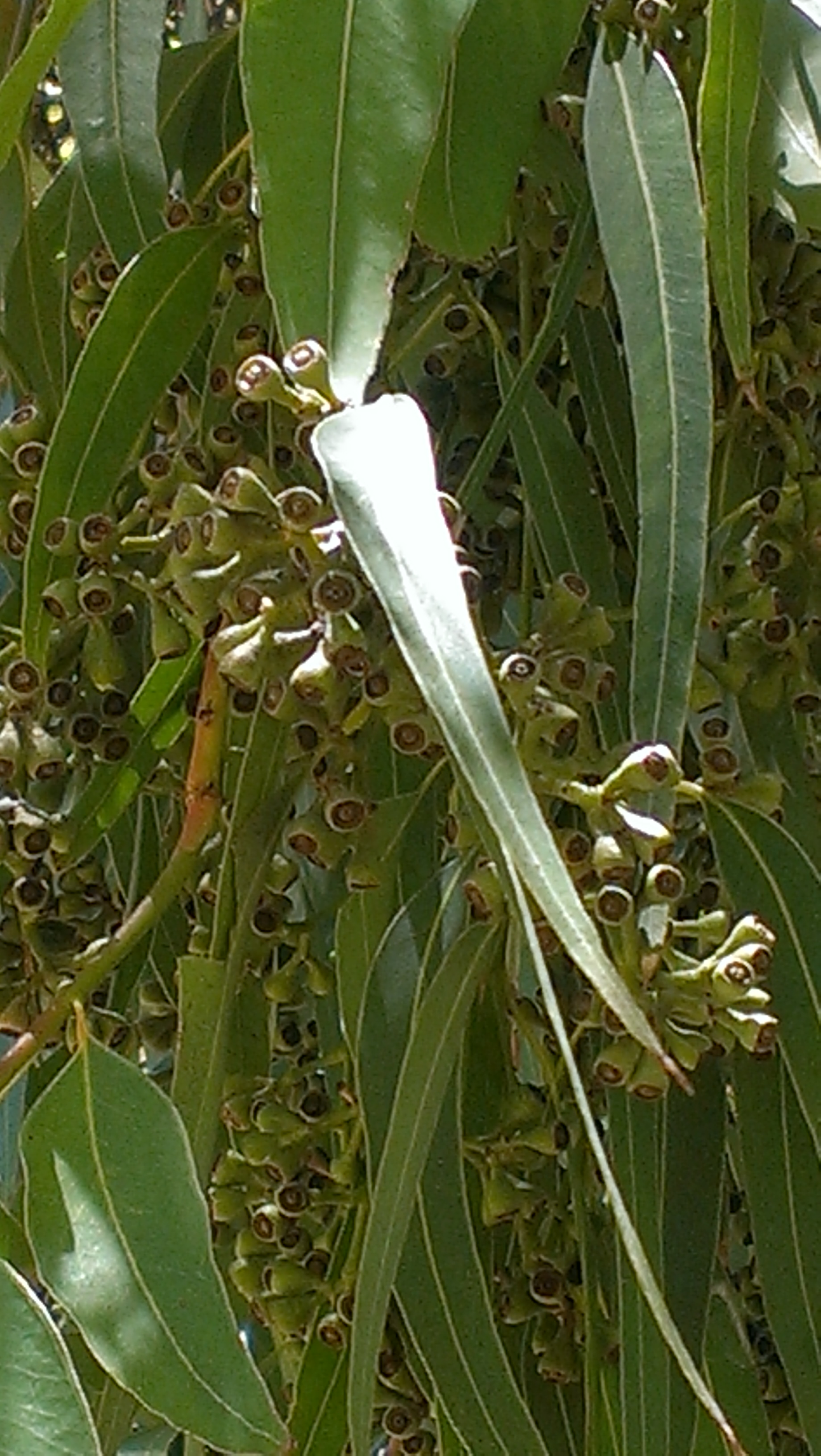
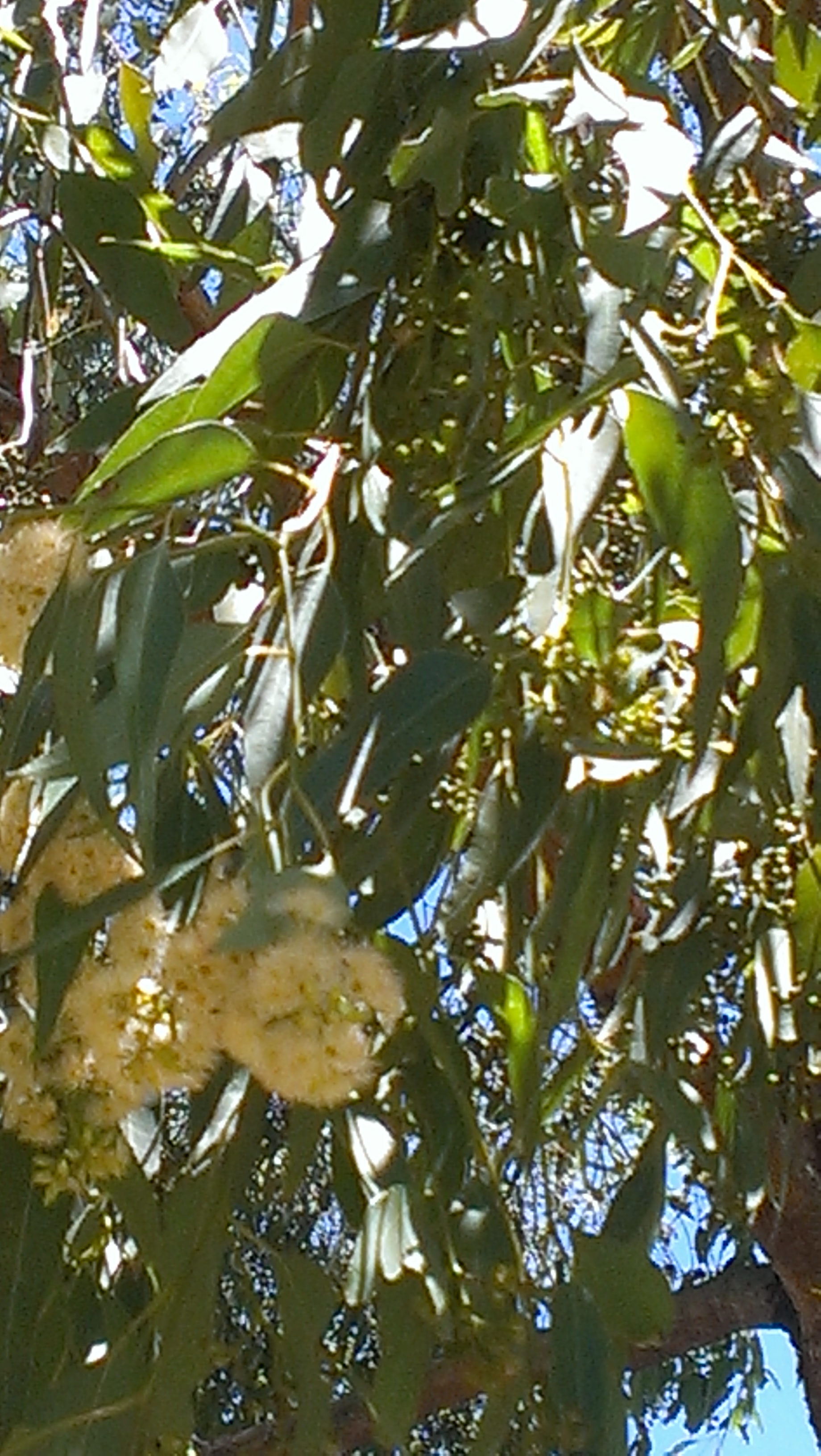
This glorious tree is in full bud near my parents’ house.

IMAG3208

I have had colour from the buds before, but they are still very small at present. You can see how spectacular it will be to have flowers in such profusion when the time comes!

IMAG3210

An entire branch had fallen to the ground: too good an opportunity to pass up.  I was on my bike that day, so I filled my pannier before heading home.

IMAG3255

And so, buds and leaves of an unknown eucalypt on silk velvet, part of a special pack of some kind from Beautiful Silks. I have no idea what I could do with these small pieces of velvet, but I’m more than open to suggestions.  Treasure bag? Cushion panel?

3 Comments

Filed under Eucalypts, Leaf prints

There are never too many socks or too many friends to knit socks for…

Another pair of socks reached completion on the weekend.  Their final moments happened at a long lunch, on a farm, where–I admit–my knitting was much commented on but did not seem to offend.  Two more sets of slippers were negotiated over lunch, and it was a truly lovely afternoon. I took a picture of my sock-in-progress on the table, a la Yarn Harlot

IMAG3115

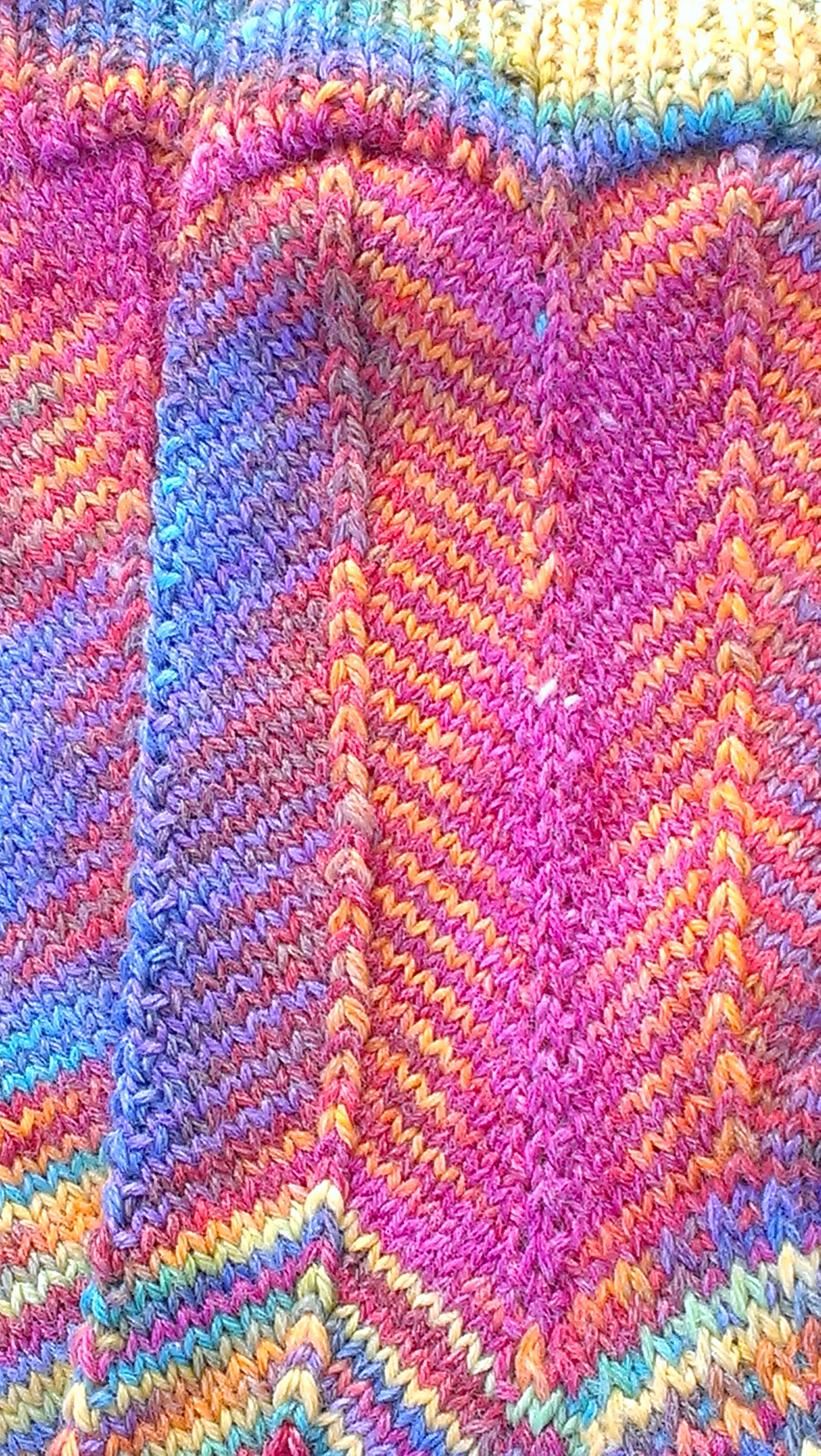
And the finished socks are ready.  The friend for whom they are intended is a big repairer and recycler.  One of the biggest I know, which is saying quite a lot.  She’s coming around to finish up rehabilitating a table this week, and when I saw her on the weekend she showed off some pretty wonderful jeans mending.  When I told her about my Mum’s favourite way to mend jeans, she knew that method already and had tried it on sheets.  Say no more.  You can’t talk the pros and cons of different mending strategies with just anyone.  She is a sister!  If she can’t already darn, she’ll want to learn, and I am one of the keepers of the skill for future generations–only too happy to teach her.  [I’ve asked now, and can confirm she already knows how to mend]. So, her ball of darning wool is right there ready to add into the small pile of woolly goodness that is soon to be hers.

IMAG3127

The yarn is locally dyed by Kathys Fibres–wool/bamboo/nylon, autumn colourway.

2 Comments

Filed under Knitting, Sewing

Eucalyptus Rummeryi

A eucalyptus windfall will often get my attention… and never more so than when the tree is one I have never tried and which a more knowledgeable person has labelled for the edification of passersby such as myself.  E Rummeryi is native to NSW but seen here growing in Botanic Park, slim, straight and already tall.

IMAG3198

Bark…

IMAG3190

Immature fruit:

IMAG3192

In flower, but quite high up and on a breezy day (this is a way of apologising for the quality of the picture)!

IMAG3201

Results from a standard dye pot…

IMAG3316

4 Comments

Filed under Dye Plants, Eucalypts, Natural dyeing

Harvesting the finger limes… with recipes!

We interrupt your regularly scheduled programme of fibre related crafts and natural dyeing for a dessert special.  Not interested?  You are, of course, allowed to leave the kitchen and I hope to see you back soon!

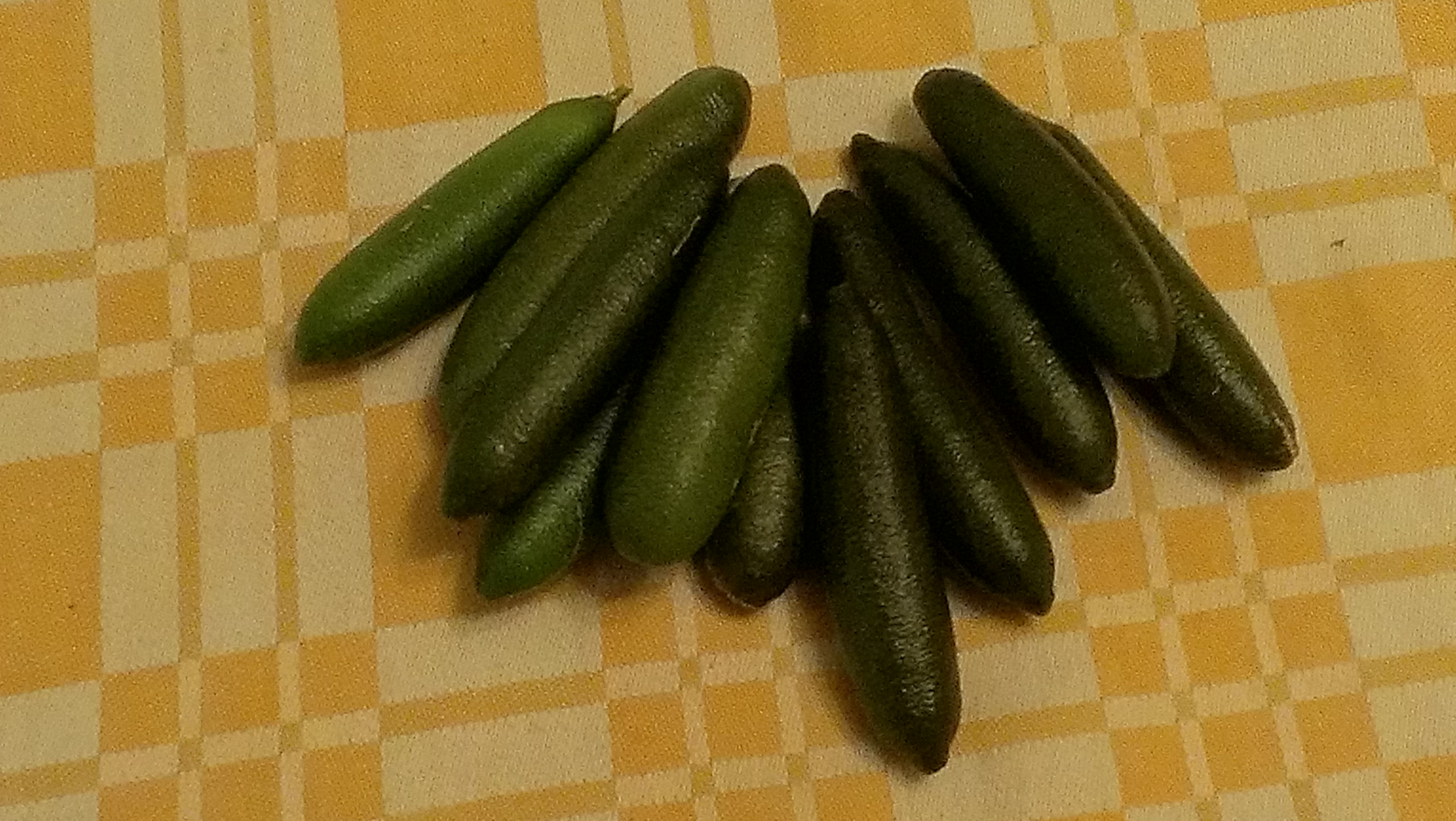
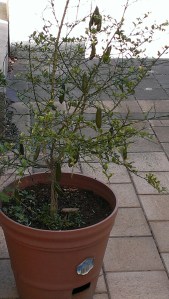
We have a little finger lime tree (Citrus australasica syn. Microcitrus australasica). This is a native plant but it certainly isn’t native to any place near me: it’s a tropical plant.  A friend was growing it in a pot in a seaside location that is windy and cold in winter and it was judged to need rescue by her horticulturally knowledgeable friends, who proposed me as a suitable new host. Colour me flattered by this! We’ve struggled to find it a spot in which it can manage through winter, and this year it behaved less like a deciduous plant through the colder months and we have had a bumper harvest.
IMAG3371

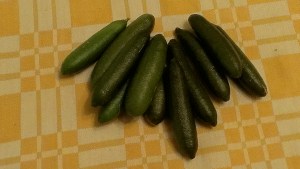
We have dozens of fruit this year instead of the three or four of the last two years. In the past, we would share the small harvest in a single special dish with the tree’s previous host.
IMAG3326

There aren’t a lot of cookbooks with recipes for finger lime on my shelf, so I made some up.  We had ten people for dinner and a very interesting and complex conversation one night and these dishes were so well reviewed I decided to share despite the absence of wool or eucalyptus.  If you have traumatic English boarding school memories of sago (tapioca), avert your eyes now! If, on the other hand, you love bubble tea, I am cooking with the baby sister of those bubbles. These dishes are gluten and dairy free and vegan as well as delicious….

Finger lime sago jelly for 10

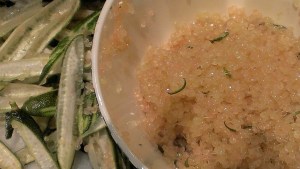
Cook 1 cup of sago (seed tapioca, tapioca pearls) in 5 cups of water with 3-4 cardamom pods (to be removed when the cooking part is over).  Cook until the sago is clear.  I prefer to do this by bringing to a boil, stirring vigorously while the heat is on, then turning off the heat and putting the lid on for about 10 minutes.  Repeat 3-4 times.  The sago will absorb a lot of liquid this way with little energy being used and little attention from you.  Then, add the zest and flesh of 8-10 finger limes, juice of 2 lemons, 1 cup of sugar, vanilla and some ground cardamom if you didn’t use the pods.  Now is the time to take them out if you did use them.  Cool, refrigerate.

The flesh of a finger lime is like a mass of tiny spheres of tangy, sour, almost resinous flavour.  I cut the fruit lengthways in quarters to extract the contents with my fingers.  Mixing this with sago is like having the textural experience of sago (which I find sublime) paired with tiny explosions of intense flavour.
IMAG3331

Coconut custard for 10

Heat three 400 ml (13.5 fl oz) cans of light coconut milk–that makes a total of 1200ml (40.5 fl oz) coconut milk–in a saucepan.  Reserve a little to use in the next step.  In a separate bowl, blend the reserved coconut milk, 3 tablespoons of sugar (or stevia), 4 tablespoons of cornflour, ginger and vanilla until smooth.  When the coconut milk is warm but not boiling, remove from the heat.  Stirring vigorously, add the thickening mixture in a stream.  When it is mixed in, return the saucepan to the heat and continue to heat, stirring constantly, until it begins to bubble.  Cool. Serve with your finger lime sago jelly.

I hope some of you are lucky enough to be able to try finger limes!

10 Comments

Filed under Neighbourhood pleasures

More socks for happy feet

More socks were completed over the end of year break. These are for my daughter, who got to try them out for fit and taste while we were visiting–and what a pleasure it was to be visiting!

IMAG3317

The pattern is Jaywalker, by Grumperina, and the yarn is Kathys Fibres Wool/Bamboo/Nylon Sock in Stained Glass.  Jaywalker is not a very stretchy stitch pattern, but it is simple to memorise, a couple of stitch markers make it easy to execute, and it is dramatic in a suitable colourway.  I always love wearing them myself.  I thought the yarn called out for something more than a simple rib.  The lary colours raised eyebrows while they were in progress… but it’s all a question of what the recipient will enjoy, and hopefully she will enjoy these for years to come.

IMAG3320

Leave a comment

Filed under Knitting

Leaf prints of the week: Pecan and Eucalyptus on cotton

Last week there was some leaf printing. Eucalyptus Scoparia leaves, one of my favourites.

IMAG3492

Pecan leaves, inspired by Lotta Helleberg (when I went to her blog to insert this link there was an especially delectable pecan leaf printed fabric on show, by complete coincidence) and by a wonderful lunch with friends who have a pecan tree. The leaves have been patiently waiting in my freezer.

IMAG3490

Let me admit right here and now that I had some alum and tannin mordanted fabric which took no colour at all–I must have made some kind of mistake there!

IMAG3489

As always, the thrill of seeing good things begin to emerge.

IMAG3496

Then waiting to unwrap bundles.  I saved these until I had a friend over for dinner who I realised would enjoy the reveal as much as I do.

IMAG3499

Some pecan prints were better than others, but the good ones are lovely.

IMAG3535

And the Eucalyptus leaf prints were all I hoped for and more.

IMAG3534

6 Comments

Filed under Eucalypts, Fibre preparation, Leaf prints

A Community Celebration

As I read The Little Book of Craftivism, ideas kept popping into my head.  This one took a little longer to execute than the mini banners. There is a row of immense, sugar gums (Eucalyptus Cladocalyx) over 100 year old in our neighbourhood which were scheduled to be cut down due to changes in the railway corridor.  Many people in our neighbourhood were part of a campaign to save them.

IMAG3510

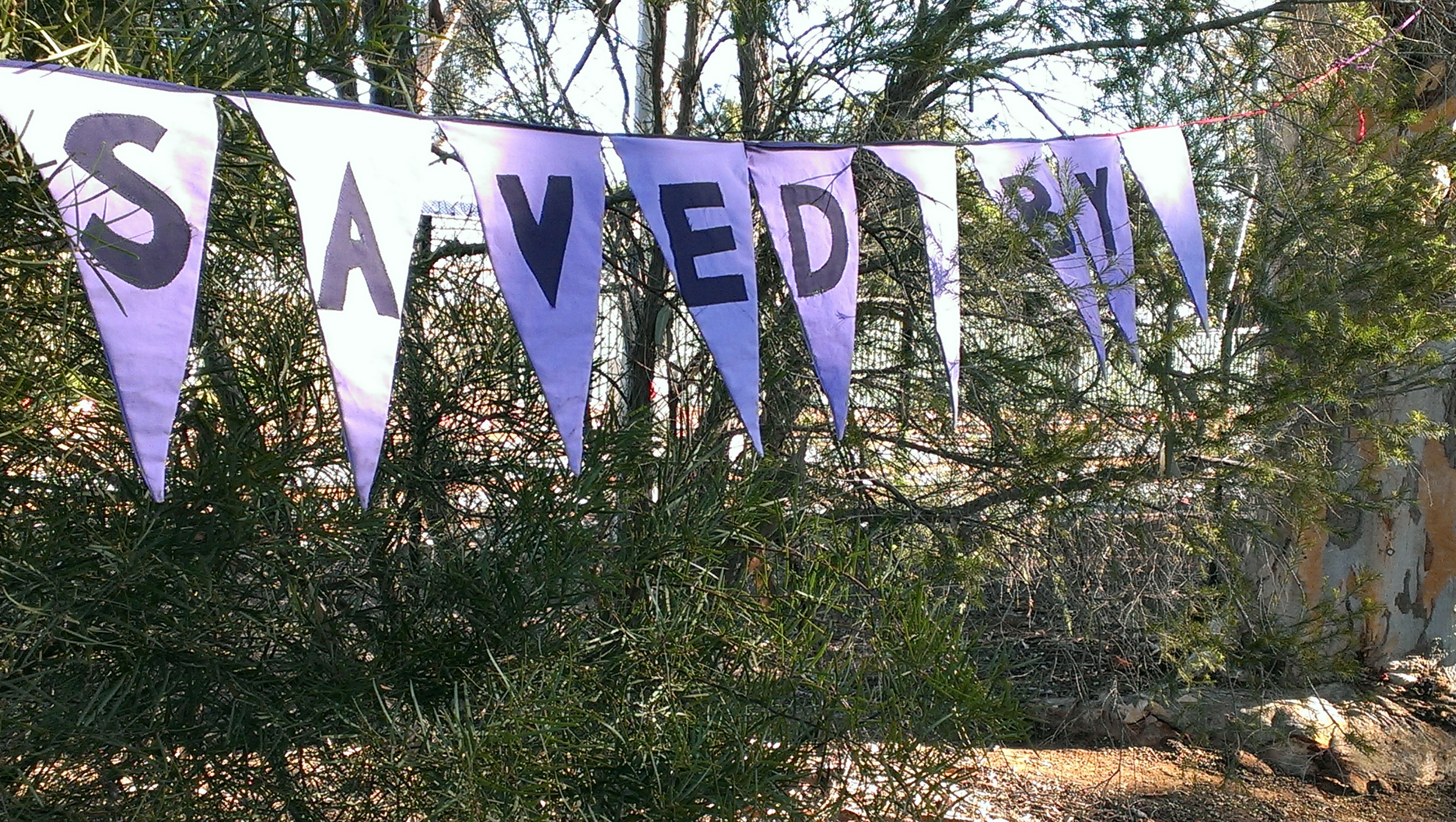
We managed to save these trees (albeit very severely pruned) while dozens of others were cut down.  People have been saying to me when they visit the nearby local neighbourhood centre how awful it looks now that all the trees that used to stand between the neighbourhood centre and the railway have been cut down.  They often say how relieved they are that the ones we saved are still there–but they do not realise what went into saving them.  They don’t even know those trees were threatened.  There are still all night works and daytime works and continuing campaigns and about noise going on and many people in the area feel very discouraged living with the aftermath of all the infrastructure works.  So I imagined bunting that read ‘these trees saved by community action’ and a bit of a celebration of our having actually succeeded in this part of what we have tried to do.

IMAG3512_1

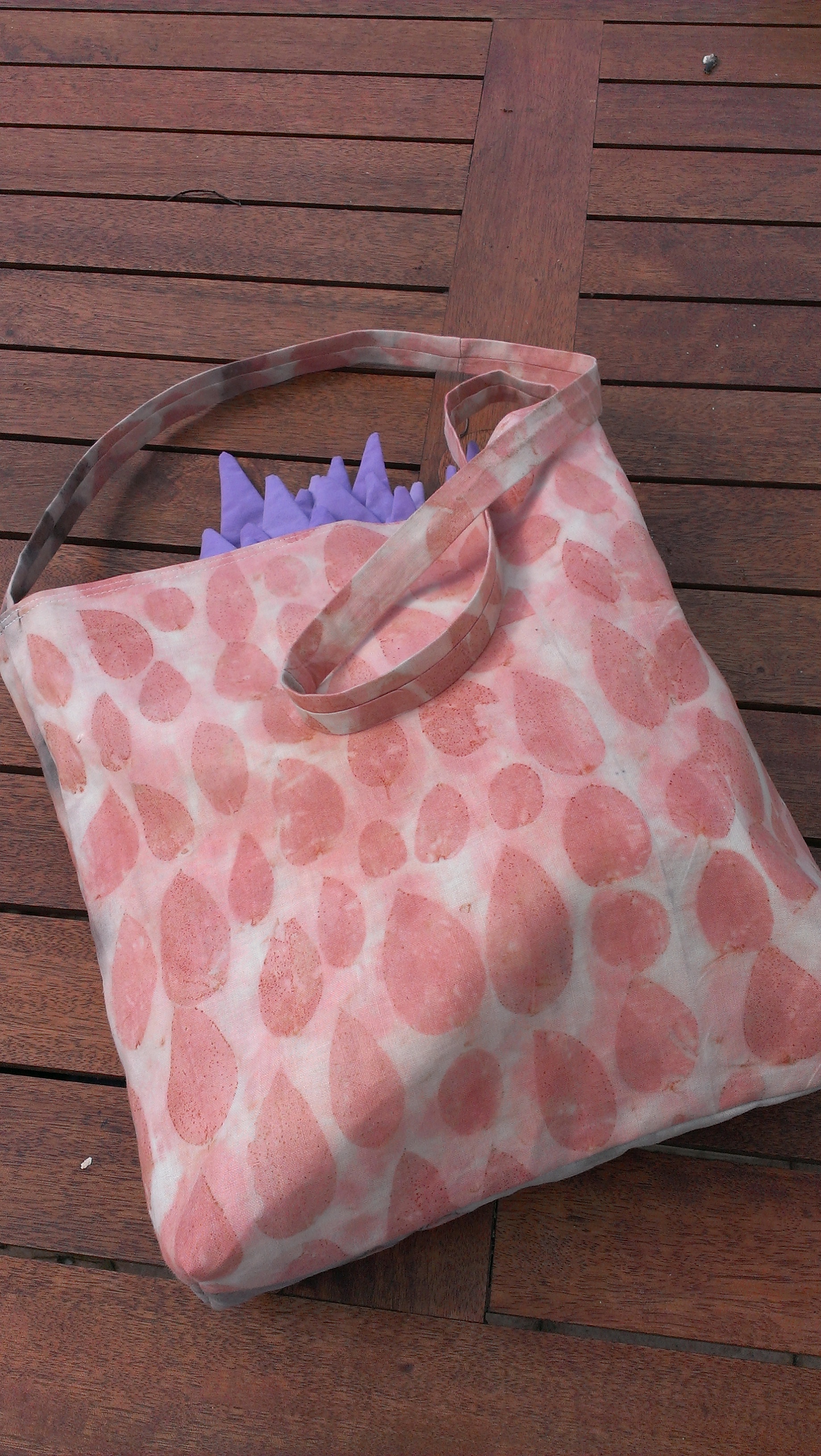
Well, I made the bunting.  And another member of our local group emailed out the most beautiful invitation to come and hang it up and celebrate the continued existence of the sugar gums.  And so a small local celebration, complete with our local MP Steph Key and our local councillor, Jennie Boisvert, who both put considerable effort into supporting our campaign.  I wanted to thank the woman who stared the campaign and was its mainstay, so I made her a little leafy bag.  Here it is filled with rolled up bunting ready to go and celebrate.

IMAG3501

And here we are, after a highly entertaining hanging of the bunting.

IMAG1509

I’ve made a tutorial on how to create this kind of lettered bunting, which you can find in the how-to page (link at the top of the blog) or here, if you’d like to try your own.  I already have another plan, personally….

2 Comments

Filed under Craftivism, Leaf prints, Neighbourhood pleasures, Sewing

What to do with silk cocoons 3: Spin them onto a yarn!

IMAG2997

I used Jacey Boggs‘ techniques to do this…

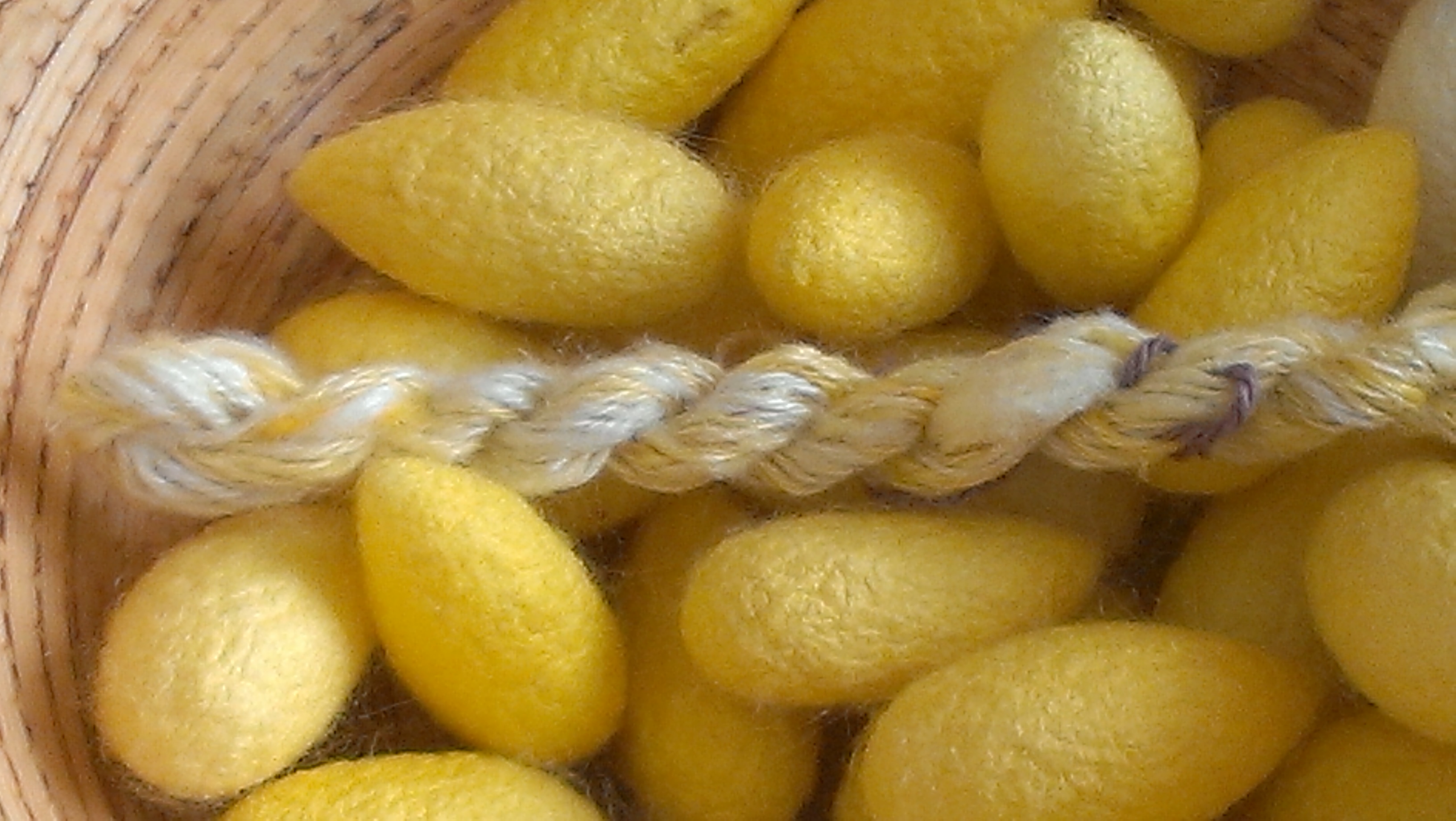
IMAG2994

I feel a tea cosy coming on!  Big thanks to the friend who gifted these cocoons: you know who you are!  This is really what I had planned all along to do with my home grown cocoons, but they turned out to be rather thin.  I guess I am raising silkworms of uncertain parentage, not silkworms that have been bred for their fine silk or silkworms that have had optimum treatment!  Their cocoons are certainly not as strong or as thick-walled as the cocoons in this picture.  So… perhaps they are not suitable to this use.  There have turned out to be many others!

10 Comments

Filed under Spinning

What to do with silk cocoons 2: Spin raw cocoons

On the last Guild meeting day for 2013 I wandered into the library intent on borrowing for the coming 2 months–including holiday time.  One of my loans was A Silk Worker’s Notebook by Cheryl Kolander (Interweave Press, Colorado USA 1985). She describes spinning raw (softened in water but not degummed), degummed whole and cut and degummed cocoons.  Choices, choices, choices!

She instructs the reader to soak the cocoons to soften them.  I soaked them cold and nothing much happened.

IMAG3411

I double checked and Cheryl Kolander says to soak in warm water.  I did, and by bedtime, I had spun a very small number of cocoons over a considerable amount of time with great effort and decided soaking until the following evening would be necessary, since I do in fact have a job to go to…

IMAG3415

Kolander’s instructions make gradually drawing out fibre from one end of the cocoon sound straightforward.  Bless her heart, if she can do that, she has greater skills and/or strength than I do!  I have never applied so much sheer force to draft anything.  I found I had to snip the cocoon to make a start, enlarge the hole by pulling, remove the chrysalis and then tear or stretch the cocoon far enough that I could grab one half in one hand and the other half in my other hand and create a bridge of fibres I could attenuate and attempt to join to my thread.  All while still wet.

IMAG3460

Kolander promised a stiff thread and mine did not disappoint. Can you see the end of the thread heading off to the upper right in the next picture?  No wind or special effects were applied to this image!

IMAG3466

This was the smallest reel I could find.  But I am delighted to have managed to spin a thread.  I drew the line at plying and left it as a single.  As always, experiments like these give some finger-and-muscle-understanding and not just a vague intellectual sense of the tremendous skill and sheer hard work and time commitment of people who create fine reeled silk and all manner of silk yarns and fabrics with the most basic of equipment. I won’t be giving up my day job anytime soon!

IMAG3474

2 Comments

Filed under Fibre preparation, Spinning

What to do with silk cocoons 1: Spin the blaze!

One of my more knowledgeable friends (who loves working with silk) told me that the loose fluffy fibres around a silk cocoon–where the silkworm was just getting started on anchoring themselves in space and creating a scaffolding for the eventual cocoon–is called the ‘blaze’. She was planning to try spinning the blaze–and I decided to follow her example.  I had never seen this feature of a silk cocoon before growing my own.  I guess it is removed or destroyed when cocoons are dyed or prepared for sale.  But this puffy little cloud of fibre is rather lovely.

IMAG3395

I tried spinning it by just drafting it away from the cocoons.

IMAG3398

This sometimes meant several cocoons were caught up in my drafting, and occasionally one was dangling in mid-air, hanging from a filament so slender as to be invisible.

IMAG3402

Here are the cocoons, now without their blaze.

IMAG3404

And here is the resulting tiny three-ply skein with some cocoons for scale.

IMAG3420

It’s pretty but tiny!

IMAG3433

10 Comments

Filed under Fibre preparation, Spinning