Eucalyptus dyes over grey corriedale: The spinning finale

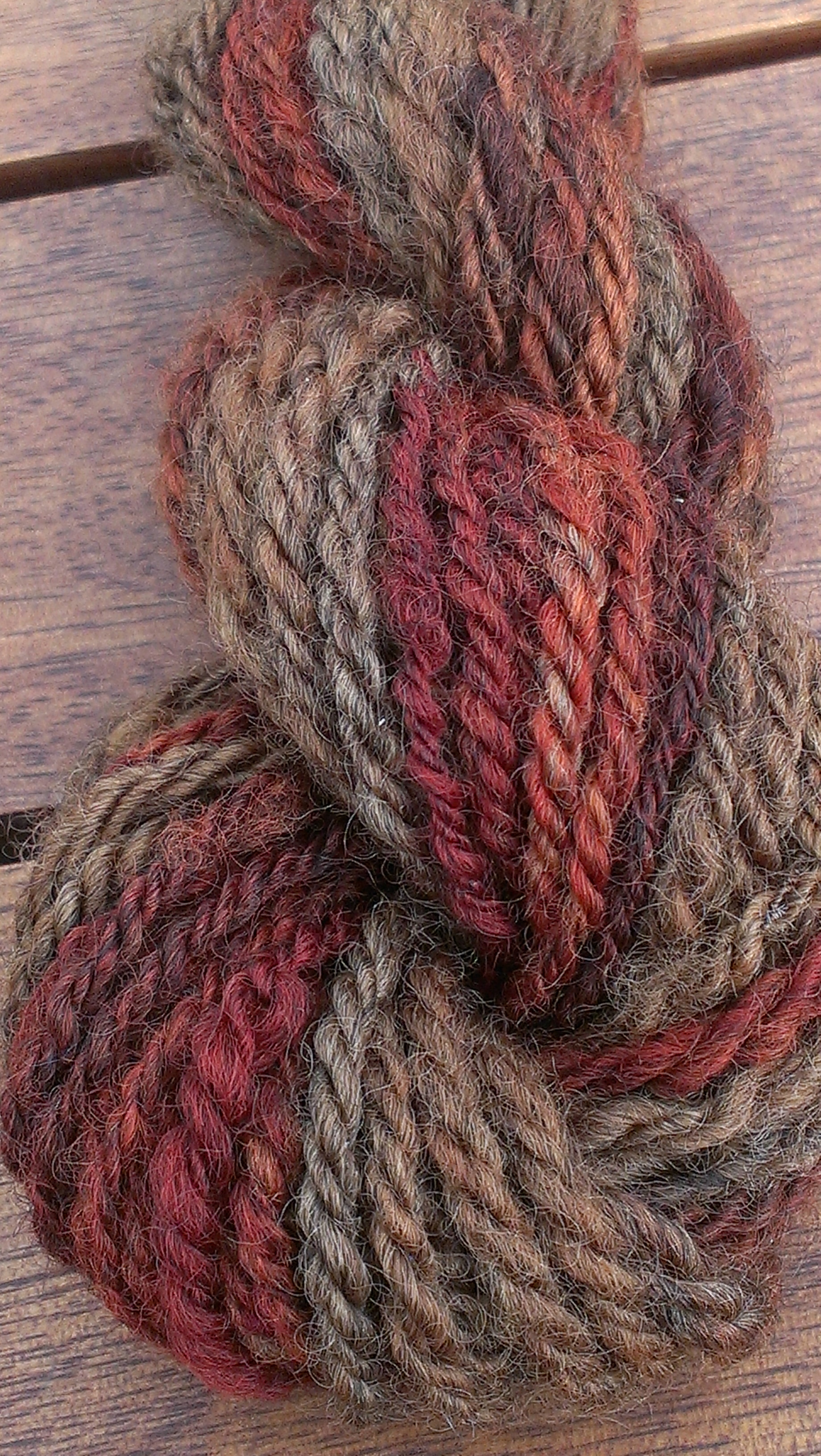
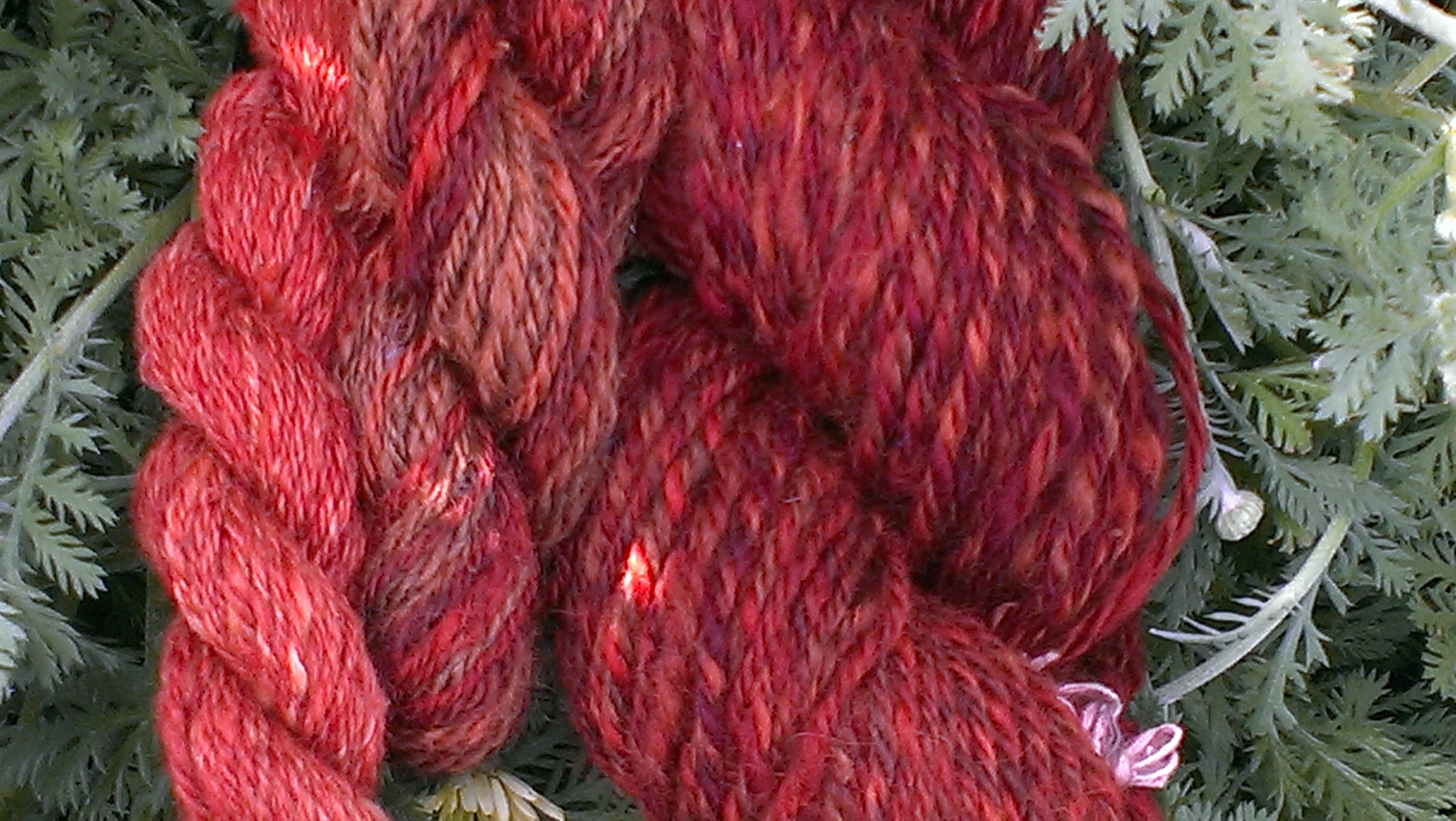
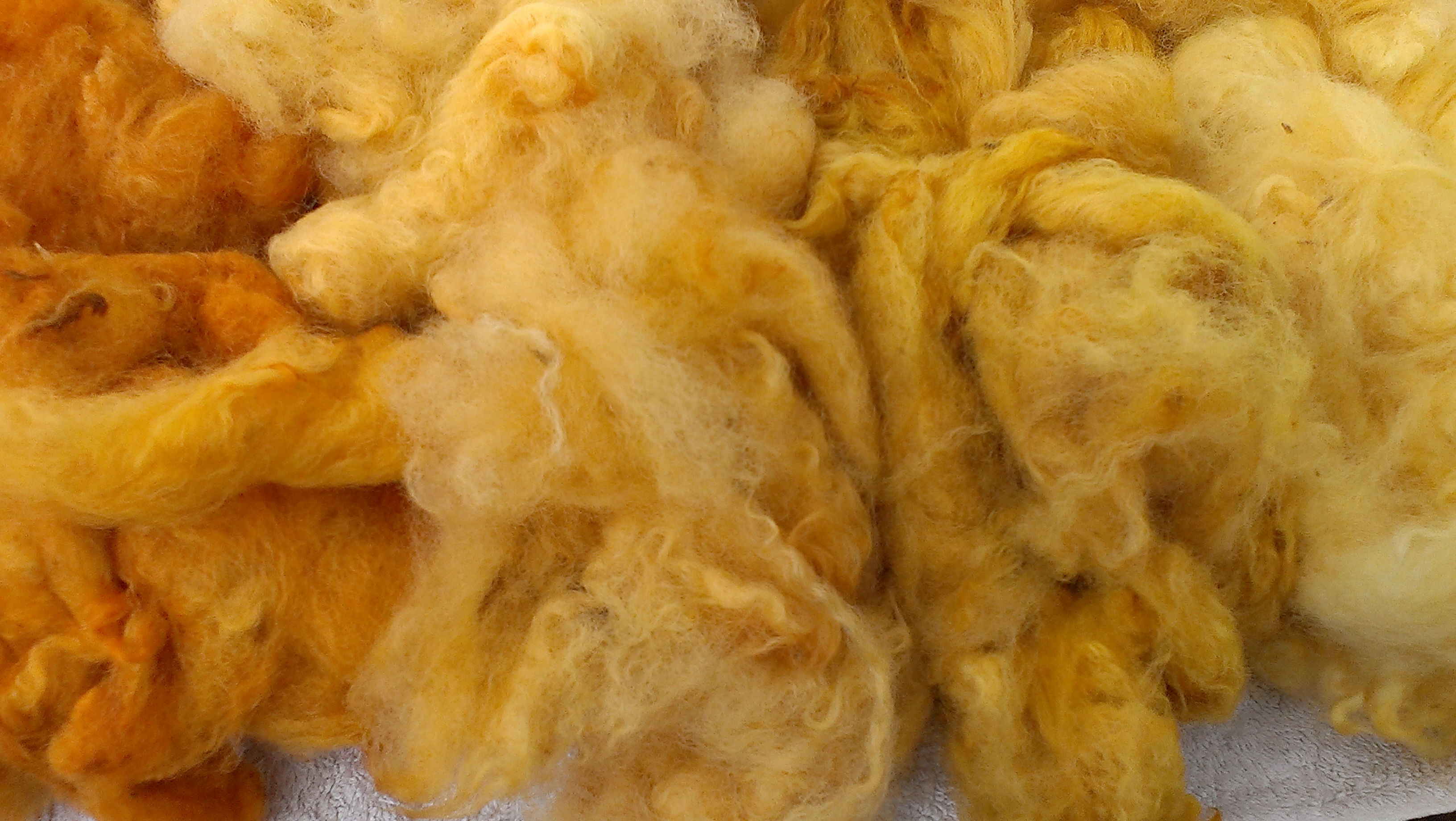
I have a bit of a tendency to go a long way toward the completion of a big project and then pause near the end.  Sometimes for a little while, sometimes for a long while.  So here, finally, is the very last of the grey corriedale I dyed months ago and planned to spin during the Tour de Fleece. I loved the two ply yarn I created during the Tour a good bit less than my initial chain plied skein, even though it is what I need if I ever knit that cardigan I dream of.

I found the label for this fleece on the weekend and I started out with 3.5 kg of fleece.  I made a true three ply yarn (three singles plied together) from most of the last part…

IMAG2559

And chain plied the rest (one single plied on itself in a chain).  I think the long pause on this was caused by the way my heart sank when I stopped chain plying it in the first place.  I love the distinct colours in the last little leftover skein!   IMAG2562

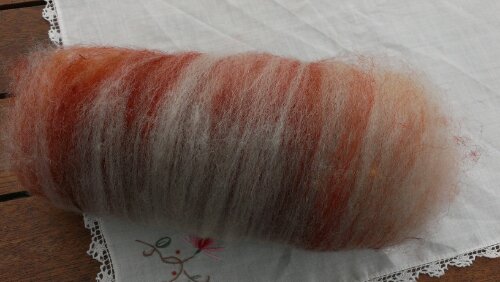
I also spun up a little batt of alpaca dyed in eucalyptus.

IMAG2382


Three ply wins again!

IMAG2563

Leave a comment

Filed under Eucalypts, Fibre preparation, Natural dyeing, Spinning

Indigo vat with colour run remover

I am a bit intimidated by indigo.  Perhaps I have just made it a major performance each time I have attempted it so far–overreach is a superpower I have in spades.  But the temperature maintenance, chemistry, my lack of experience and (in the case of the hydrosulphite vat) my aversion to the chemicals involved, all make me wary.  Anyway, I overcame my reluctance and ran a vat last weekend.  I made an assessment of the fleece I might dye –in varying states of yellowness and natural whiteness (with a little tan), corriedale and polwarth.

IMAG2474

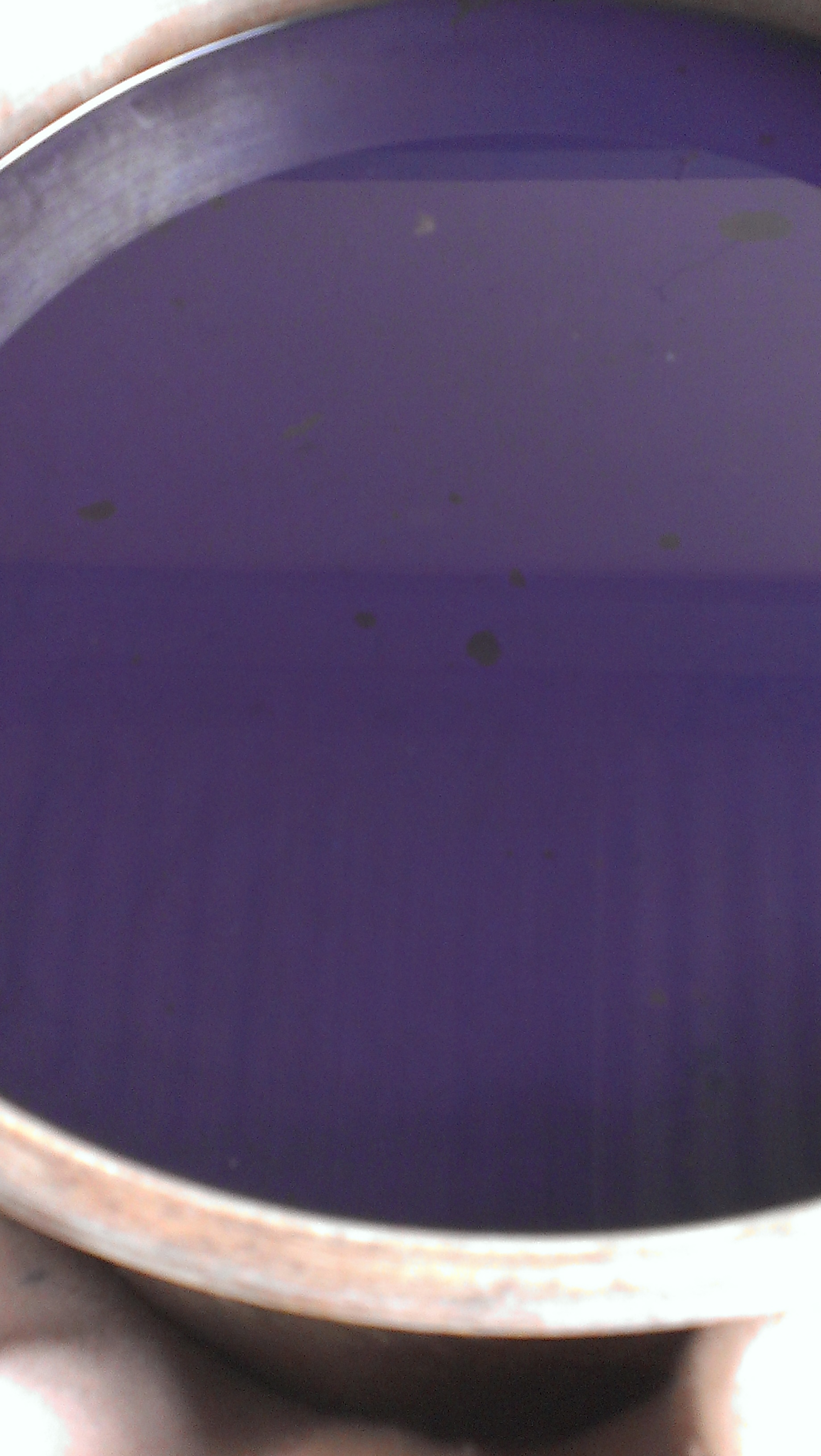
The quiescent vat has been dormant since January, since I failed to make a successful fermentation vat using ambient summer temperatures. It has only been waiting 10 months for resurrection!  It contained madder and bran as well as indigo due to its first life as a potential fermentation vat, so the night before,  I sieved out all the larger particles remaining rather than have them distributed throughout my already less than pristine fleece.

IMAG2475

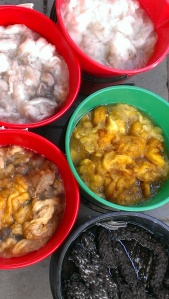
I wetted out my fleece and some brown polwarth slippers in readiness.
IMAG2476

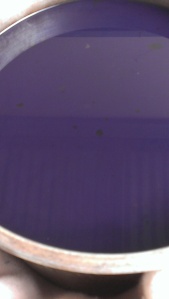
The vat was a far more exciting colour after warming and the addition of colour run remover.
IMAG2489

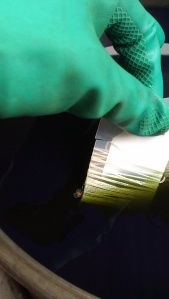
I had read Vivien Prideaux and Jenny Dean in preparation and realised some guesswork would be required. How much colour run remover?  How much could I hope to dye? Just the same, this is the second half of this vat I have managed to render useable by this method, another reason to think I should give up being intimidated and get on to practising fermentation methods.  Perhaps, just like sourdough bread, it isn’t as delicate as you might think at first–even if time needs to be on your side. It was very reassuring to see that telltale yellow-green colour appear under the surface on my silk embroidery thread.
IMAG2491

Some of the yellow fibre going into the indigo:

IMAG2499

And afterward, while still wet. Some of the greens will be quite emerald when they are dry, I think, but the paler yellows became blue rather than green.
IMAG2509

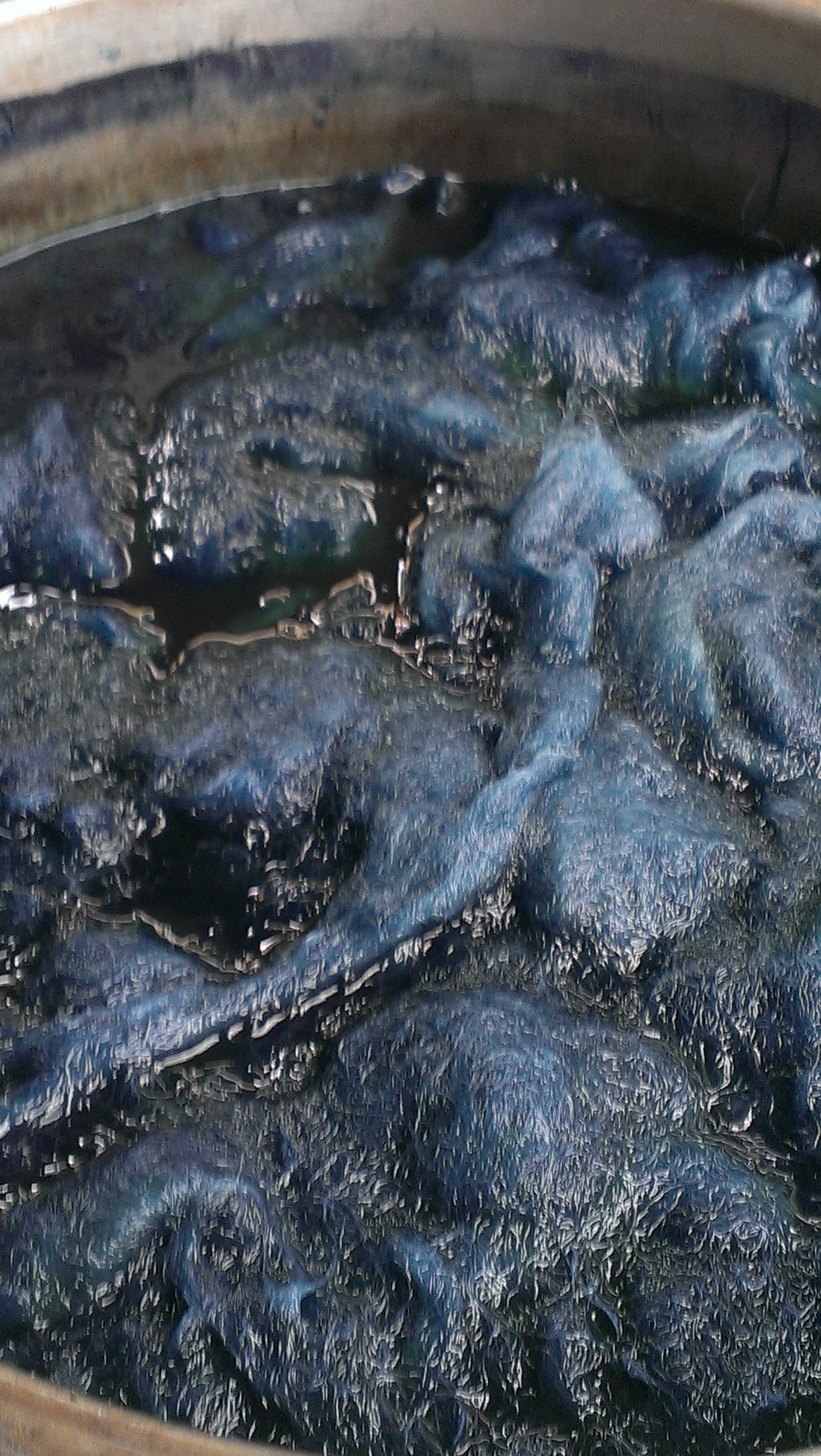
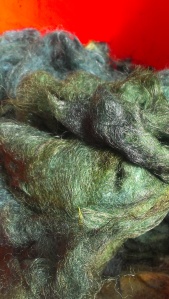
The white fleece became many shades of blue in a very satisfying way that will let me create graduated yarns.  Here it is, going into the vat:

IMAG2512

Here it is still wet but rather gloriously blue…

IMAG2524

The slippers took up blue where they were white or pale purple from the tail end of a logwood exhaust bath, but took virtually no colour on the brown parts, which is to say, most parts.  It may be that the vat was exhausted–not completely, or the pale parts would not have taken up colour–but sufficiently that no colour change showed up on the brown.  It may also be that they were greasy enough to repel the dye somewhat and that so much wet fleece having entered it, the vat was diluted.  So I have kept the vat aside for another day or a new thought on the matter.

Meanwhile, there has been a breakout of the urge to spin silk and enter the cocoon…  But not for every single silkworm, and the ones that remain are SO HUNGRY!  So now I am off to look for a mulberry tree in the parklands I heard about on the weekend…

IMAG2526

12 Comments

Filed under Fibre preparation, Natural dyeing

Silkworm Newsflash!

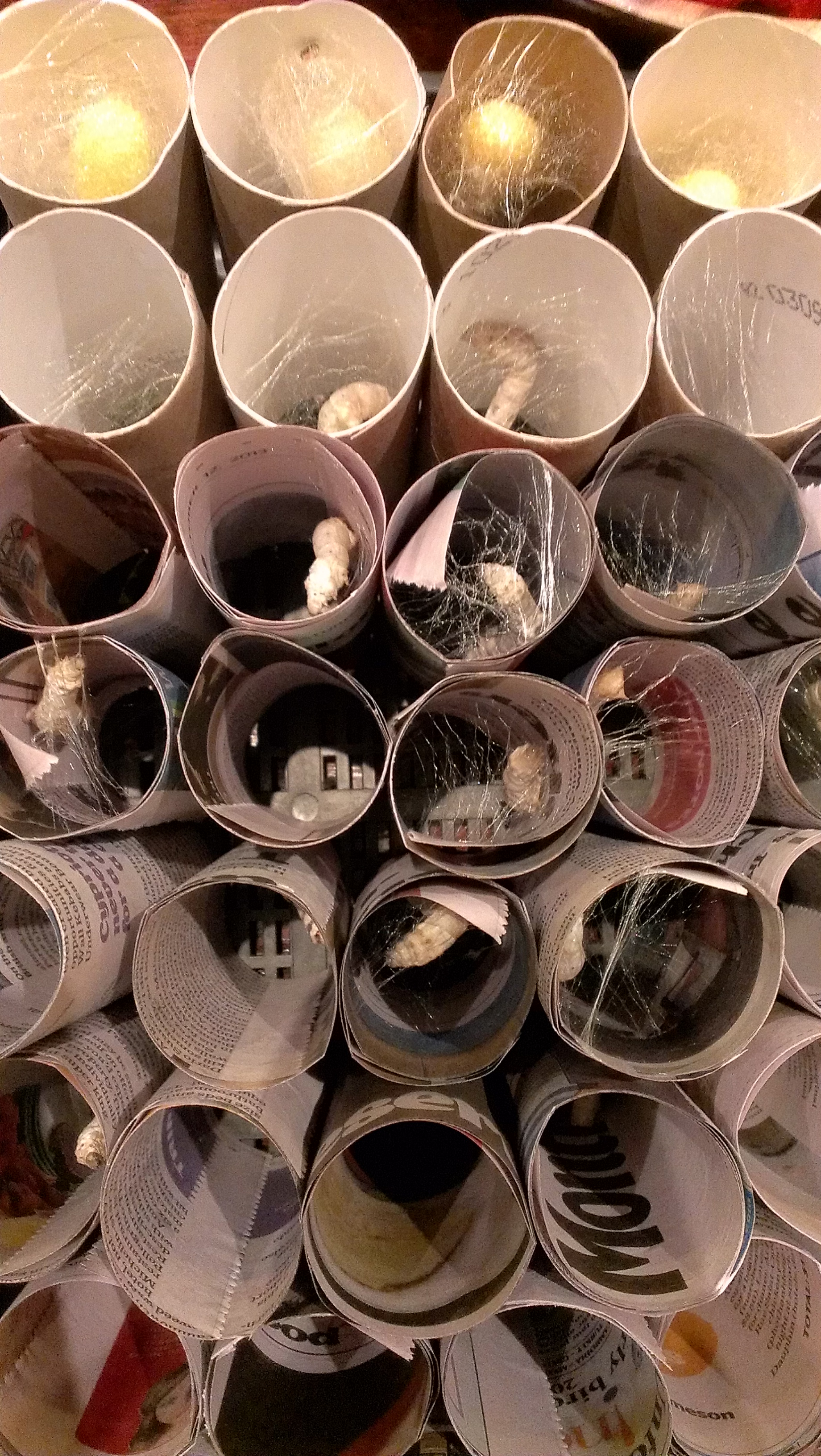
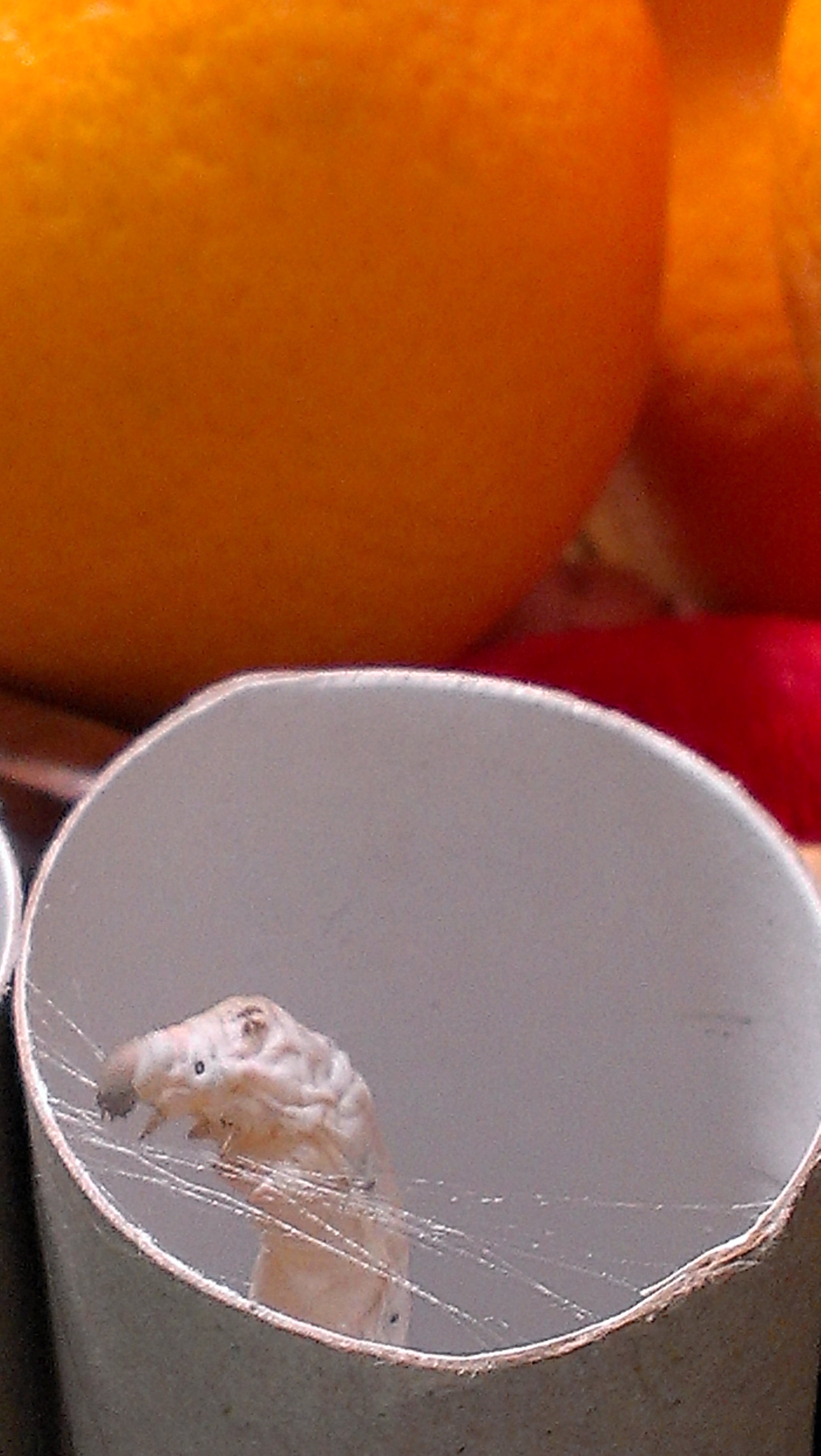
The first cocoon began yesterday.

IMAG2484

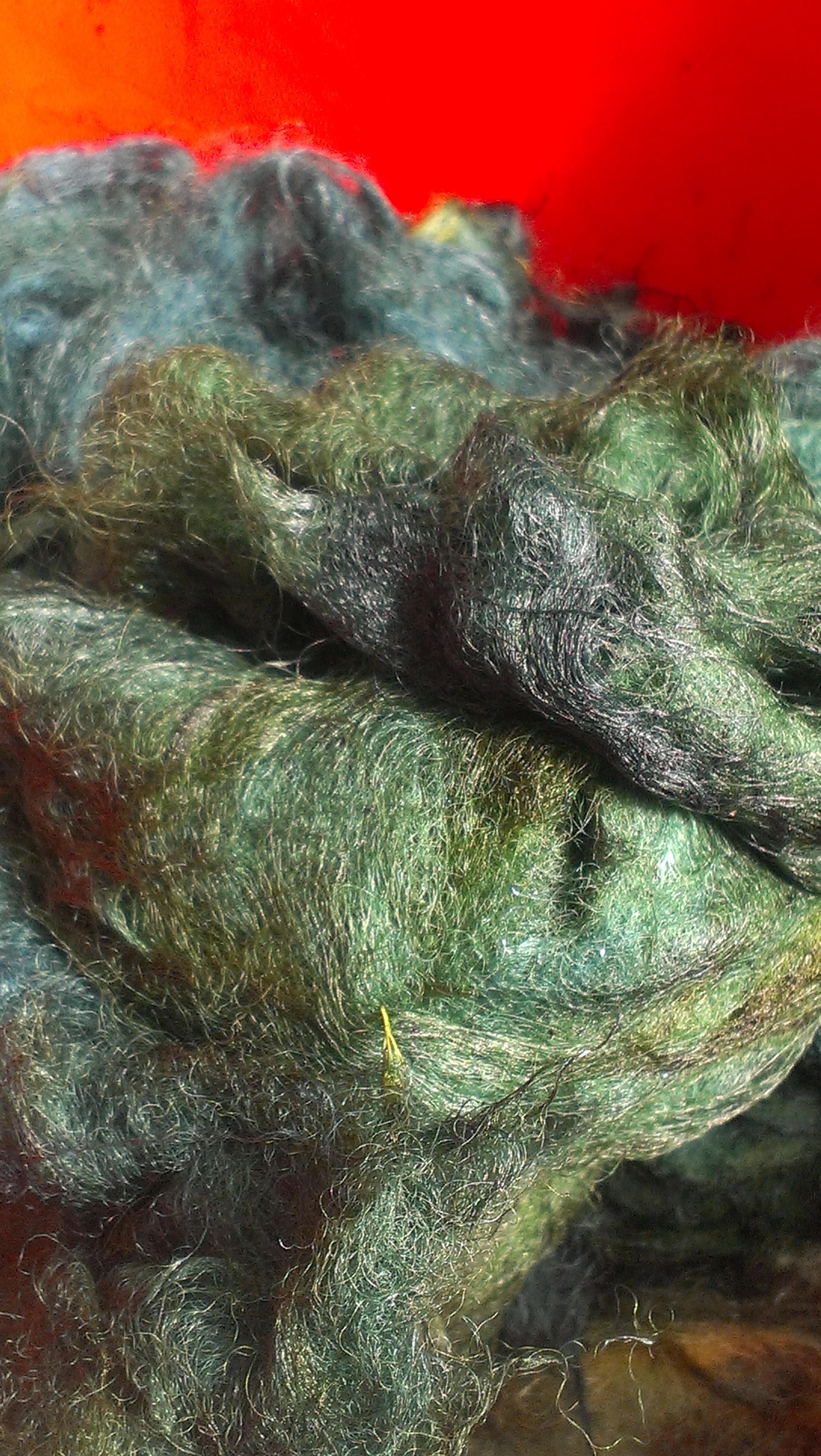
There are so many other silkworms writhing over one another I’ve removed this one to a cardboard tube in front of the orange bowl. (I say this by way of explaining the backdrop!)

IMAG2488

By breakfast this morning, there were 5 silkworms beginning the journey toward becoming silkmoths.  Meanwhile, alpaca dyeing and an indigo vat… more about that later.  For now, we need to collect more mulberry leaves.  Last night’s substantial harvest is almost consumed.

2 Comments

Filed under Fibre preparation

Silkworms: 5 week update

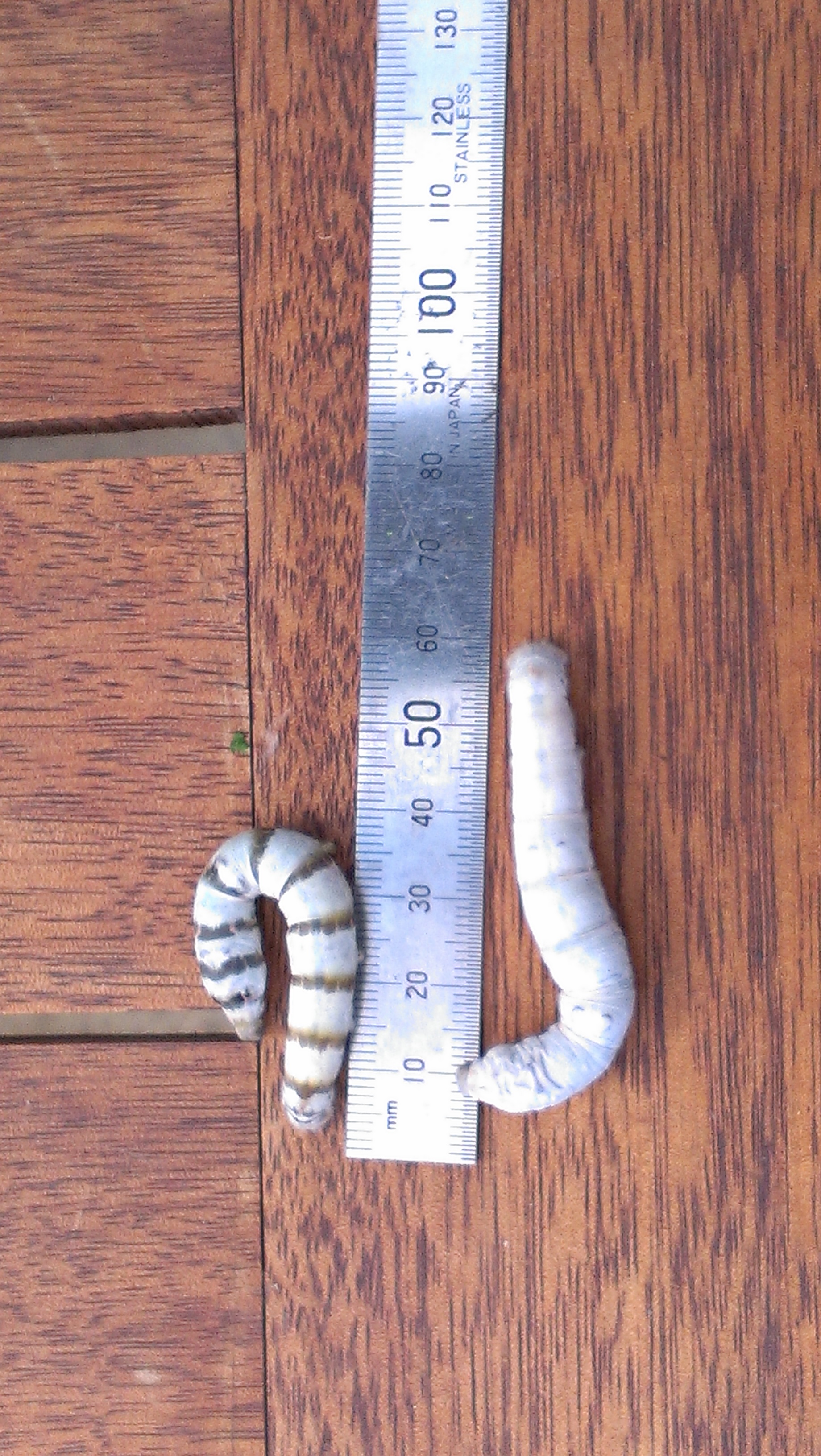
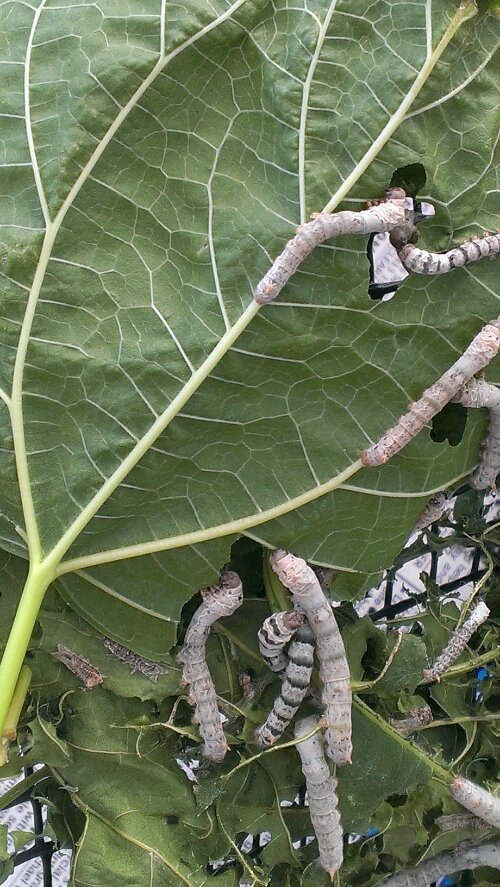
The sound of munching is getting louder.  When we add new leaves, there is an audible crackling, a bit like when you add milk to rice bubbles.  I am not sure I have really been showing you the full enormity. But, of course, the enormity is growing all the time. Here, a couple of specimens representative of their general size (some are smaller): about 6 cm or 2   1/2 inches long.  And hungry!  Hungry all the time!

IMAG2464


A friend took ten to share with her students at school, but we still have ohhh… over 100.  Here they are after this morning’s tidy up.

IMAG2461

I live in hope they will pupate before I have had to introduce myself to complete strangers with mulberry trees.  We had two merciful gifts of leaves this week, and offers of more from fellow Guildies who understood the gravity of the situation..  So perhaps we won’t have to strip the neighbourhood trees completely bare!  On the other hand, I can hear chewing…

5 Comments

Filed under Fibre preparation, Neighbourhood pleasures

Yellows from coreopsis flowers and osage orange

I have decided to branch out from the eucalyptus based palette of ochre–caramel–tan–orange–red–maroon I have been so focused on for the last while and plan toward an indigo vat.  Don’t you love these bold statements?

I still love the eucalypt colours: here, a small quantity of alpaca passing through various stages of preparation.  Picked, dyed locks;

IMAG2377

Partially carded batt;

IMAG2379

and, finally, yarn–pictured in the dyer’s chamomile patch.

IMAG2428

I have decided to try for yellow–green–blue transitions, which will necessarily begin with yellow.  I had coreopsis flowers my mother saved me one summer, as she deadheaded her plants. This collection of flower heads speak to me of her love and her fine qualities as a gardener and a person who loves to share.  I had reservations about the colour I would get from them, as some had gone mouldy.  Her -plants are just so prolific–the stack of wilted heads had trapped enough moisture to create mould.

IMAG2370

I also had a little remaining quantity of osage orange shavings of antiquity, gifted to me from the Guild.

IMAG2371

I prepared them both for the dyebath, but have to say my tea ball was not a good enough receptacle to retain the osage orange.  I not only sieved the dye vat before adding wool (thank goodness I remembered to do this as I tackled it one night when the amount of sawdust in the vat was not as obvious as in the clear light of day) but also placed the whole tea ball in another fine cloth bag before running an exhaust bath.

IMAG2372

Even after the first bath of each dye, there was a lot of colour left, so I ran an exhaust bath and dyed a total of about 800g of white corriedale.  I was especially impressed with the amount of colour and the wonderful smell of the coreopsis bath.  I need not have worried about the mould.  Here is the coreopsis bath between dyeings.

IMAG2383

The resulting yellows are lovely.  On the left, coreopsis bath 1, then coreopsis bath 2, osage orange bath 1 and osage orange bath 2.  The coreopsis yellows are quite buttery and golden and the osage orange colours are a little more lemony.  And, there is further evidence that grass seeds and other vegetable matter take dyes quite well!  Now, to build up my courage for the indigo stage and some greens and blues.

IMAG2453

10 Comments

Filed under Dye Plants, Eucalypts, Fibre preparation, Natural dyeing

Just in time for summer!

Sometimes people ask me how I manage to fit so many things in… but I am not sure they are really keeping track of how long a project might take me from start to finish!  Many craft projects at my place involve large numbers of tiny steps.  Sometimes it is the nature of the crafts involved and sometimes it’s the only way I can figure out to make things happen.  So projects progress slowly at times, as whim, interest, the right weather, or the availability of time permit.  Today I can report that a couple of items reached the out spout.

The eucalyptus dyed grey corriedale which started here and continued here has finally come to an end, with every last bit now converted to yarn.  The middle skein is chain-plied (and to be honest, I really do prefer this yarn over the one I have created for my cardigan) and the one at the bottom is a true 3 ply.  Some of this yarn is destined to become a cardigan, but it will not be for winter 2013, which is over now for us here in Australia.

IMAG2430

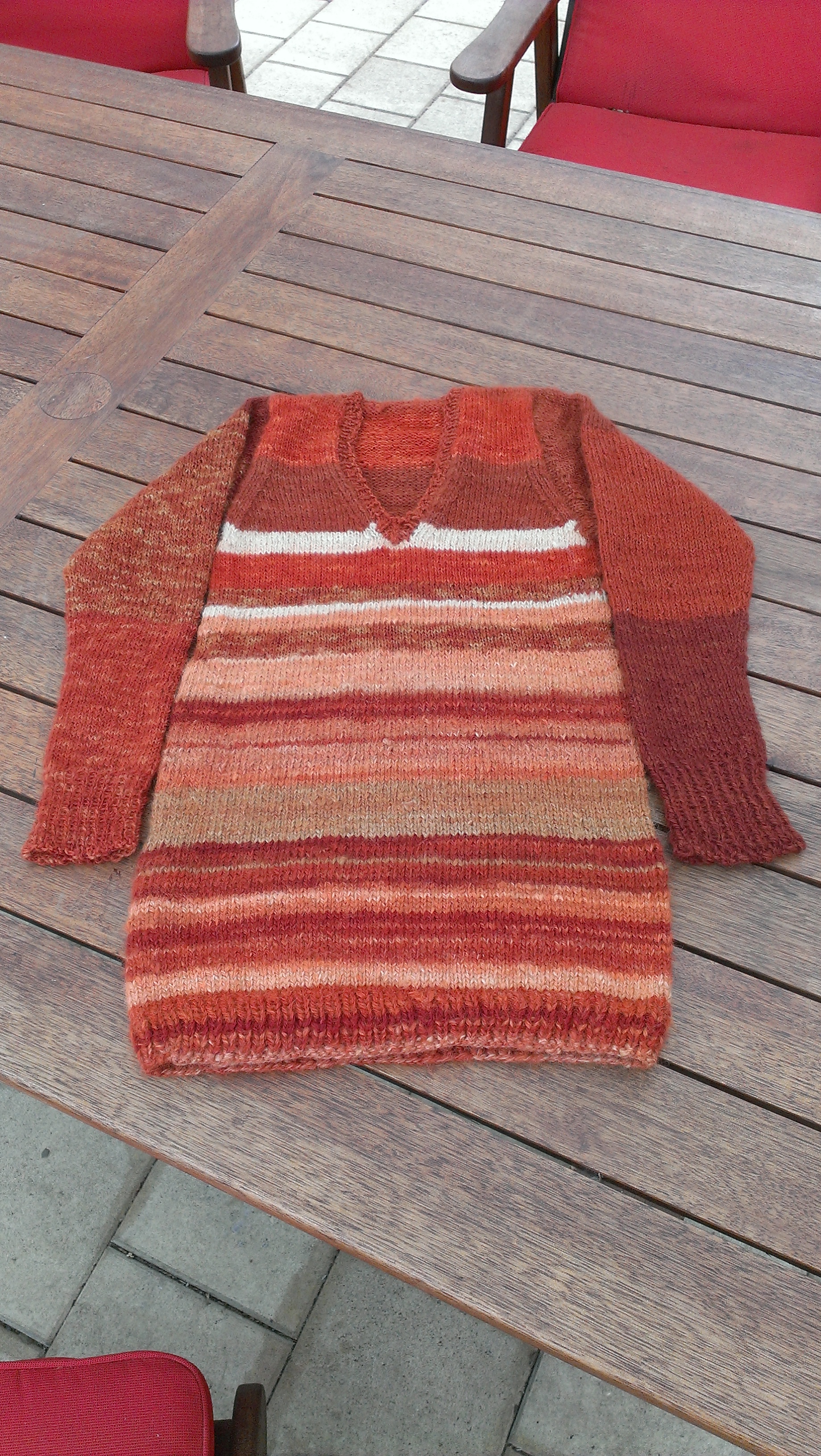
I have also finally finished making a jumper for my fairy godson. He is a tall and slender individual (just in case you’re wondering if the proportions are right), and if he’s lucky there will be one or two days cold enough to wear this jumper before winter 2014.  I hope it will still fit him then!  It was slowed down by misjudgment of the amount of yarn needed, and thus several stages of dyeing and spinning as knitting progressed, breaking all the rules of good handspun-handknit practise.  It is 3 ply eucalyptus dyed alpaca in 4ply/fingering weight.

IMAG2456

Here it is, tied up with handmade string crafted from the leaves of our daylily.  When it was raining this morning I decided to steam press it and just take it over on my way to work in hopes it might be cold enough to wear it, and was lucky enough to catch my friends at home.  It never fails to gladden my heart to give a gift that is really warmly welcomed… but it is an additional exquisite pleasure to find the handmade string to be just about as exciting as the jumper to its recipient.  It fills life with pleasure to find folk who feel just as intrigued by string from the backyard as  you do, and just as curious about how it could be made.
IMAG2460 (1)

Someone who works in the same hallway as me exclaimed over my looking happy at work on a Monday, just as I walked in this morning… and may not have understood if I’d said it was all about late but welcome presents and homemade string and love.  Sometimes you have to be there.
8 Comments

Filed under Eucalypts, Knitting, Natural dyeing, Neighbourhood pleasures, Spinning

Silkworms: 4 week update

The silkworm marathon continues. This week, there has been a hiatus in the relentless chewing while they prepare to shed their skins and move on to a still larger stage of life.

image

Meanwhile, I have been carding my eucalyptus dyed corriedale in preparation for spinning…

image

And creating another trash batt from the carder waste and some polwarth locks.

image

Leave a comment

Filed under Dye Plants, Eucalypts, Fibre preparation, Natural dyeing

Leaf print bags

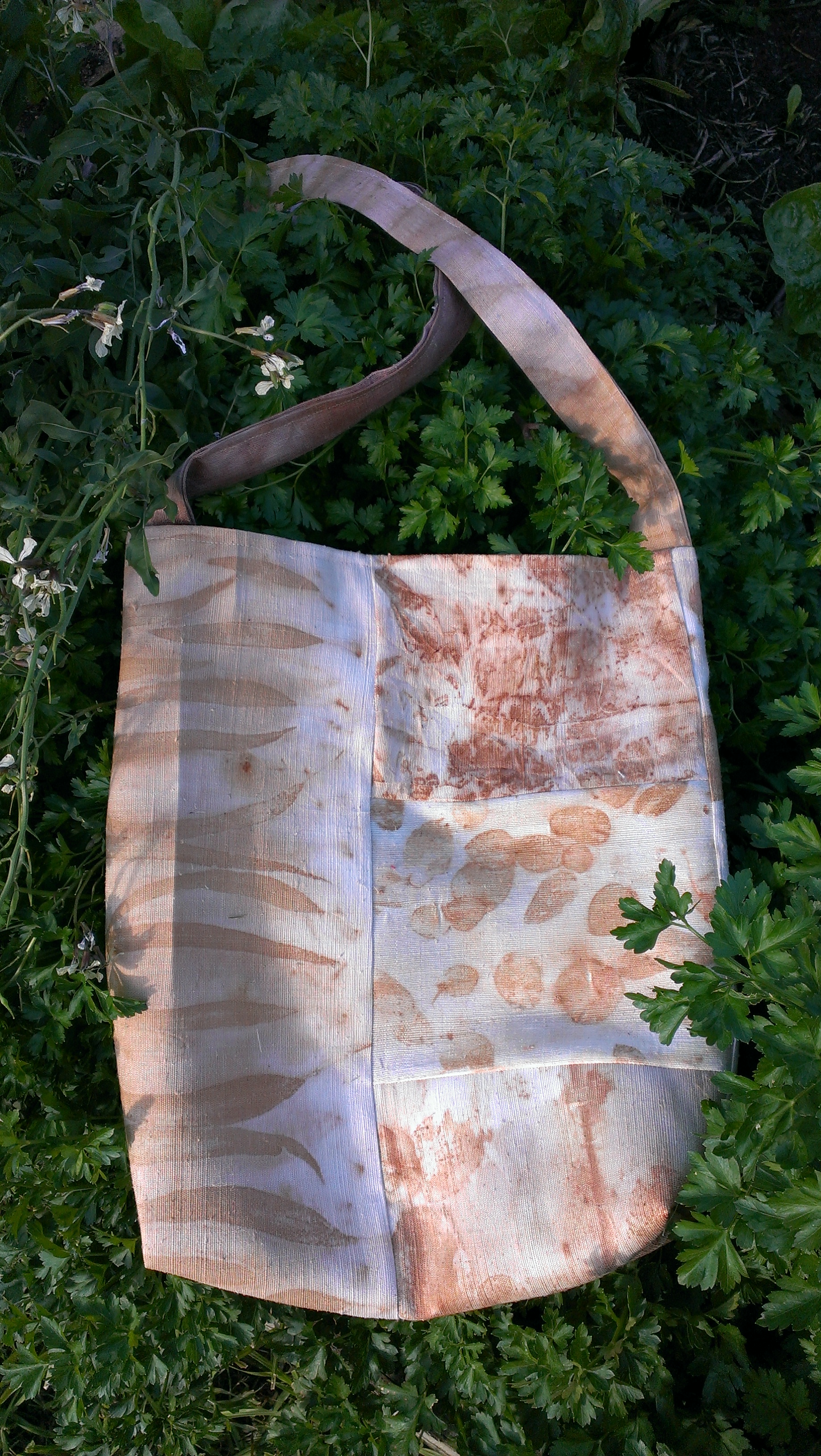
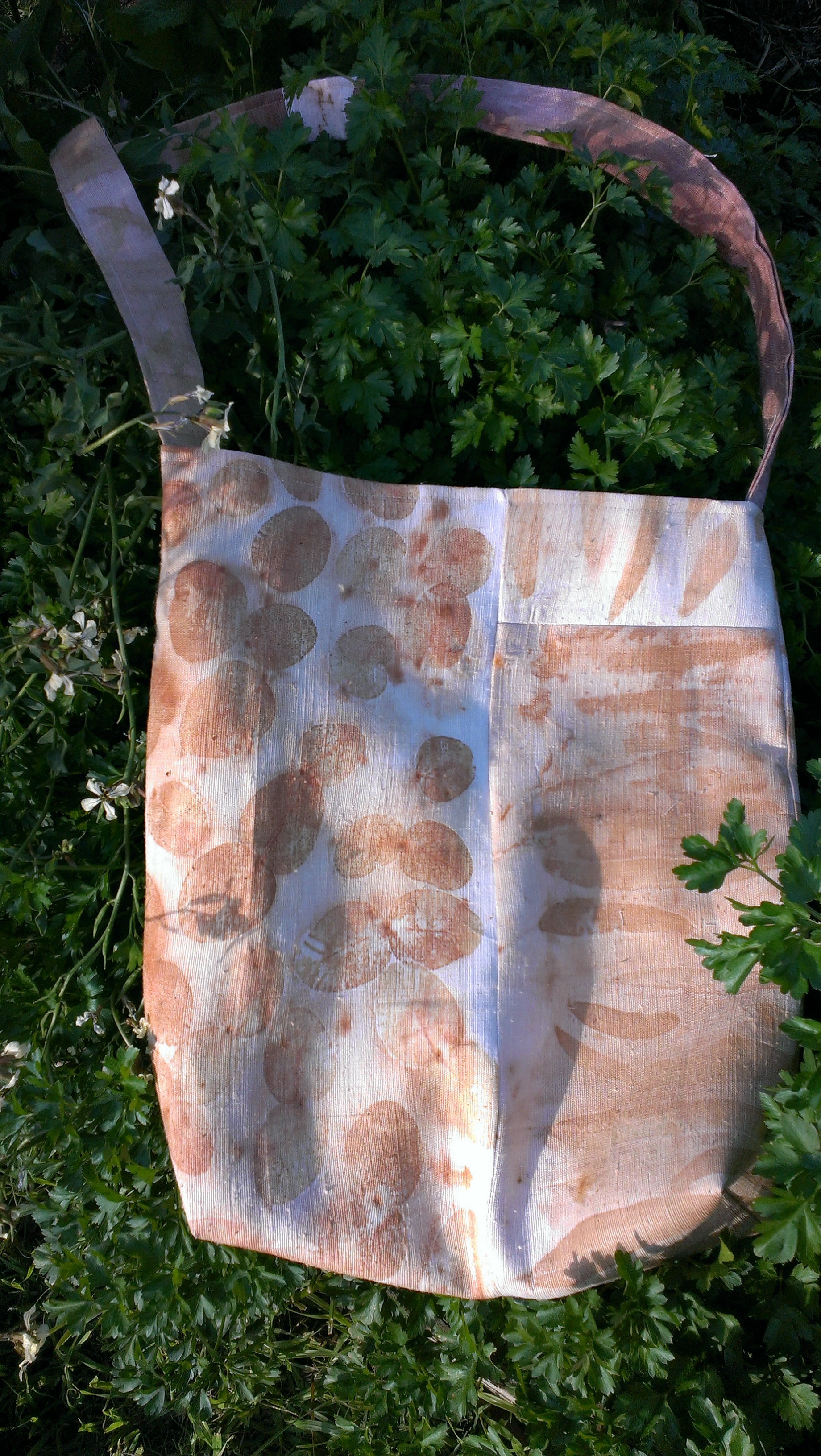
IMAG2211

The bag making has been continuing.  This is a simple, unlined bag made from recycled heavyweight garment fabrics–parts of an old pair of hemp shorts and some recycled men’s cotton twill trousers.  Last year I went to a huge Red Cross sale where entire secondhand garments were $1 or $2.  I acquired all kinds of stained and/or worn pale coloured garments which I have been transforming.

IMAG2202

This, on the other hand, is a lined bag made of silk.  When I first bought and read India Flint’s Eco-Colour, I was immediately inspired and keen to try out her ideas and techniques, but finding silk and wool fabrics was quite a challenge.  I had been dyeing sheep fleece and woolen yarns.  I started out eco-printing with some fine gauzy silk and that was exciting enough to keep me going, though I was less than clear about how I could use it.  Then I found a length of Thai silk clearly purchased in Thailand and brought home to Australia which had somehow found its way to an op shop I like to comb through.  Many experiments followed, and they have been sitting rolled up in the sewing room for years now.

IMAG2201

The darker colour on some sections is red wine.  The splotchy random pattern–clearly not a leaf–on one piece really had me puzzled until I ironed it.  The smell was a giveaway.  Ah!  Onion skins!  That is what you can see on the top right of this bag.

IMAG2199

And the other side (with red wine on the strap)…

IMAG2198

I have constructed the linings from samples and less successful printing efforts on cottons…

IMAG2204

It’s very satisfying finally to put these samples to use.

4 Comments

Filed under Eucalypts, Leaf prints, Sewing

Local windfalls 2

I went for a walk the other day after more gale force winds.  The wind had been so impressive I watched every piece of mulch in our backyard become airborne the previous evening!  I took my trusty secateurs and a calico bag with me.

My first candidate (for the dye pot) is a tree my father calls Queensland Box.  Wikipedia suggests my father is right, and also that this tree is widely cultivated outside Australia.  It is Lophestemon Confertus–and its flower is just lovely (go to Wilkipedia if you’d like to see it–they are not in flower here right now).  The trunks peel to a lovely burnt orange but at present this process has barely begun.

IMAG2320

They are widely planted as street trees here.

IMAG2321  #

And they certainly are fruiting, with two generations of seed pods on show at present among glossy leaves.

IMAG2326

Two generations of fruit is one thing. Dye pot candidate two had four generations on show.  This eucalypt has been pruned ruthlessly but shows mostly smooth bark with rough, peeling bark near the base.  My best guess is E Macrandra (River Yate)–but this really is a guess.

IMAG2338

Now for the reproductive material! I think this is a ‘flattened, strap like peduncle’ as constantly referred to in my reference works. Those tiny ‘fingers’ are buds.

IMAG2339

Here the buds are again, a lot further along, in the second generation:

IMAG2344

Immature fruit:

IMAG2340

Still immature but older fruit:

IMAG2341

Finally, I came past a stand of ironbarks where I often collect after wind, and collected my third candidate.  It’s a mixed stand from which I sometimes get good colour and sometimes very little.  Three dye pots full waiting their turn on the hob…

IMAG2346

The results were not tremendously exciting… different shades of tan and pale apricot from the eucalypts (clearly the ironbark was not E Sideroxylon). I have to confess that I forgot to photograph these unexciting outcomes before overdyeing them with E Cinerea.  The Queensland Box showed its capacity to give tan in the presence of alum, especially.  The samples are (from left to right) wool, wool+alum, silk and cotton.

IMAG2361

Leave a comment

Filed under Dye Plants, Eucalypts, Natural dyeing, Neighbourhood pleasures

Silkworms: 3 week update

This week’s update is a little late… But the silkworms grew hugely. Many shed their skins and moved on to the next stage of life.

image

There are so many I took about 50 to the guild yesterday and they went to happy homes!

image

I have expanded their accommodation and my hunt for mulberry leaves, and between our house guests and my beloved, they are getting an enormous amount of attention and concern for their wellbeing. But they seem to be doing well!

image

6 Comments

Filed under Fibre preparation