Tag Archives: E Scoparia

Travel Knitting

I have been travelling for work… and then my oldest friend invited me to his birthday… so I have been extending my carbon footprint by going to Perth for work, then to my friend’s birthday on my way home (for those who don’t know, Sydney is not on the way home to Adelaide, when you start out in Perth).

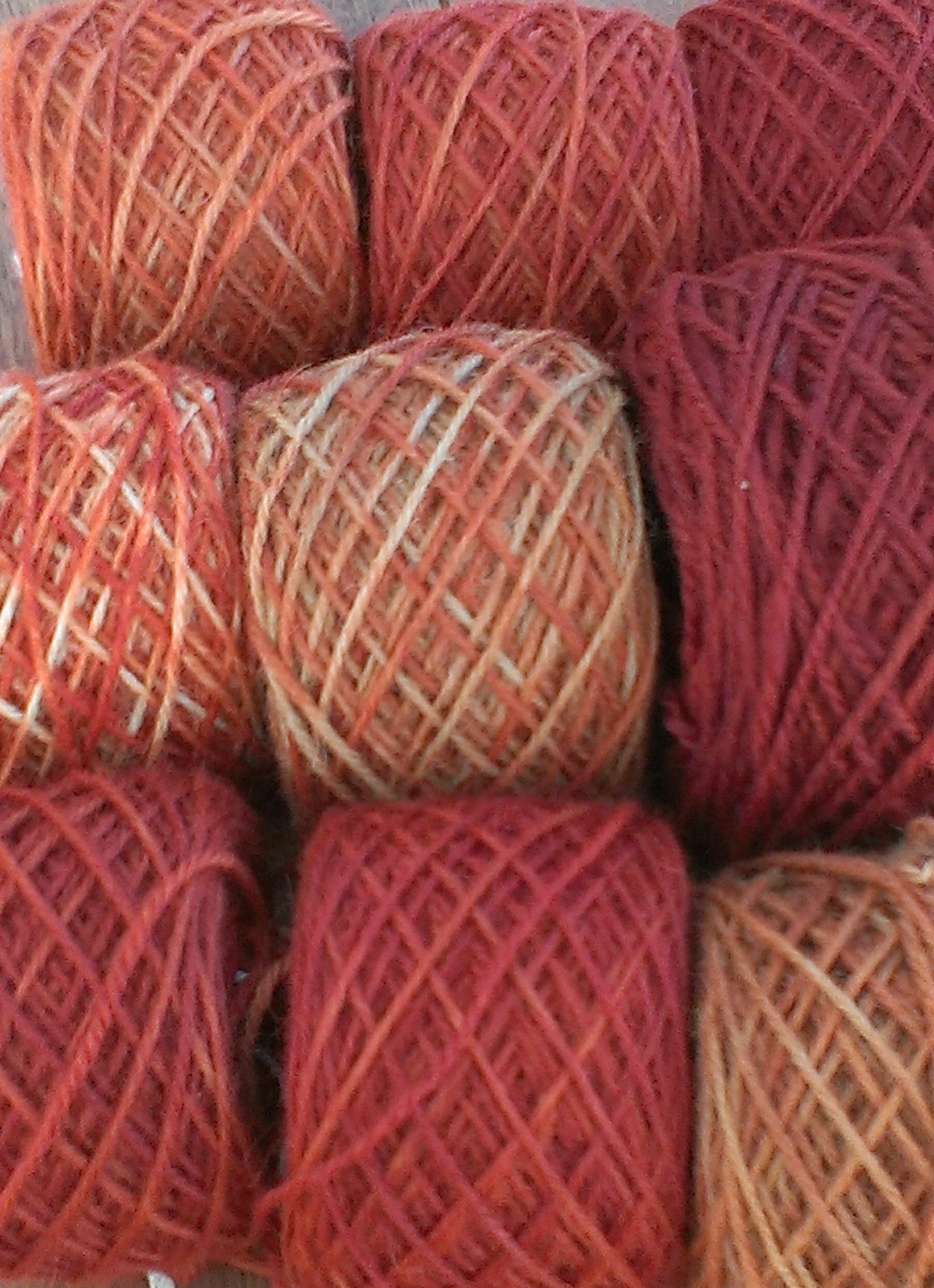
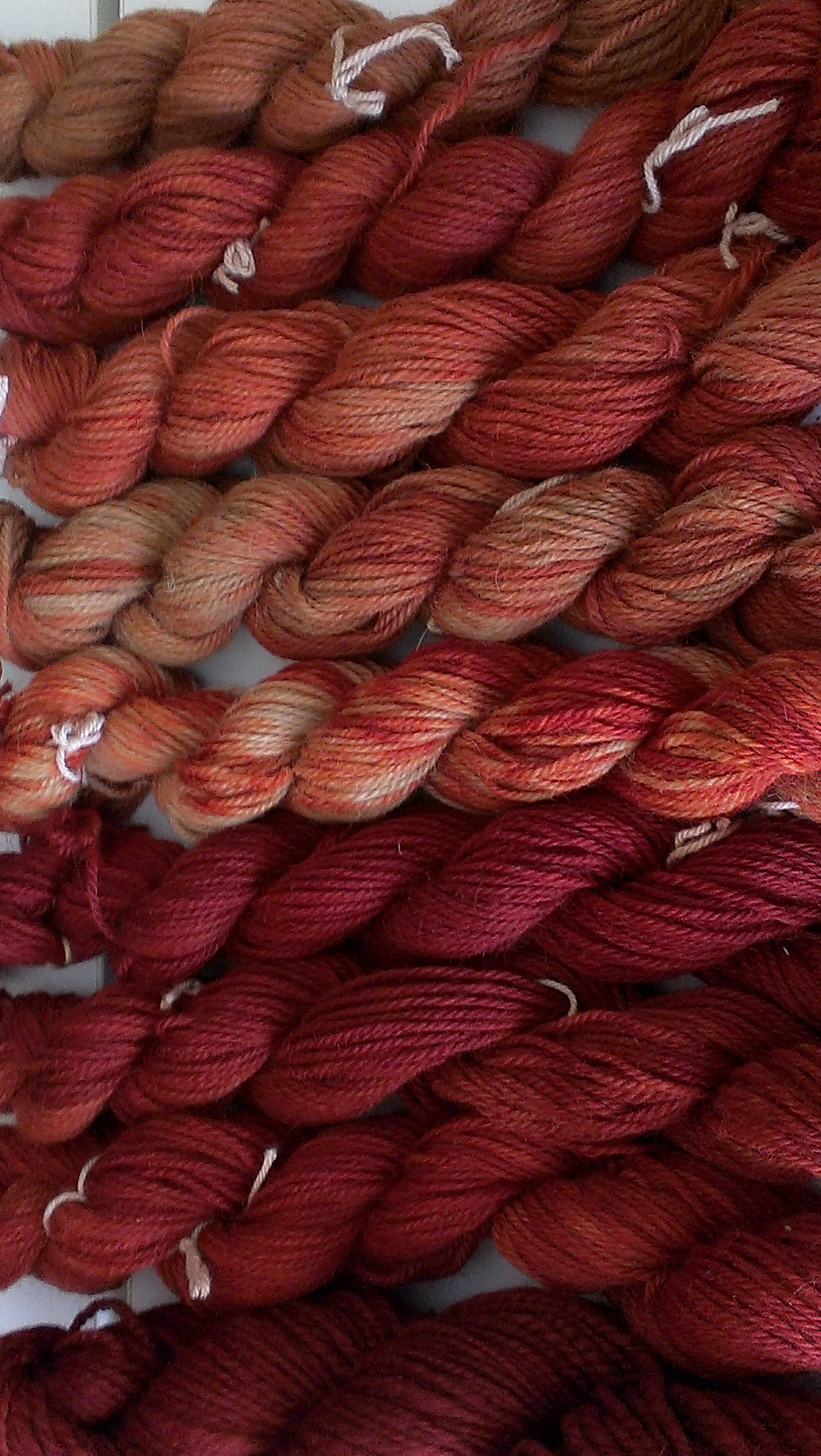
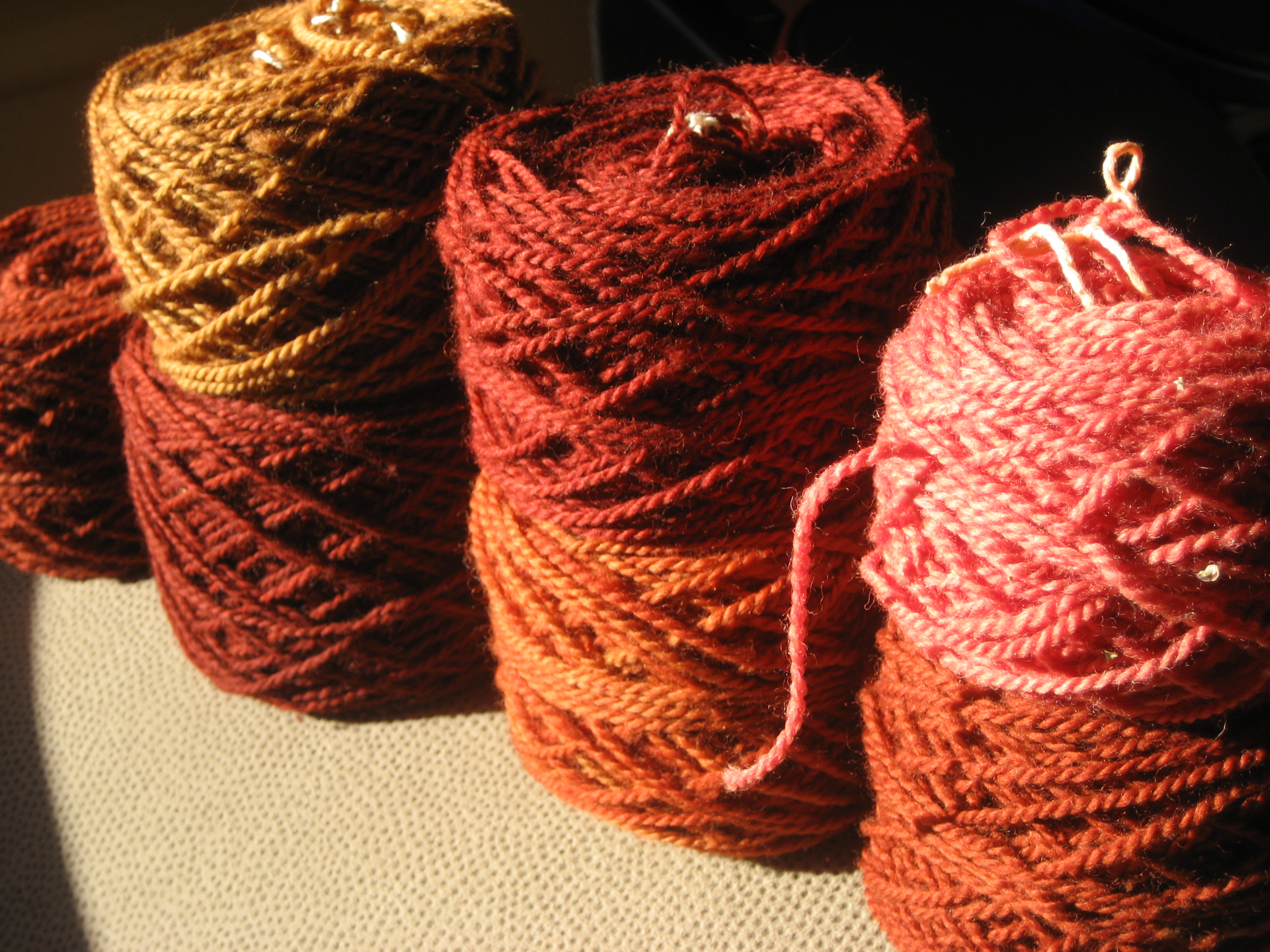
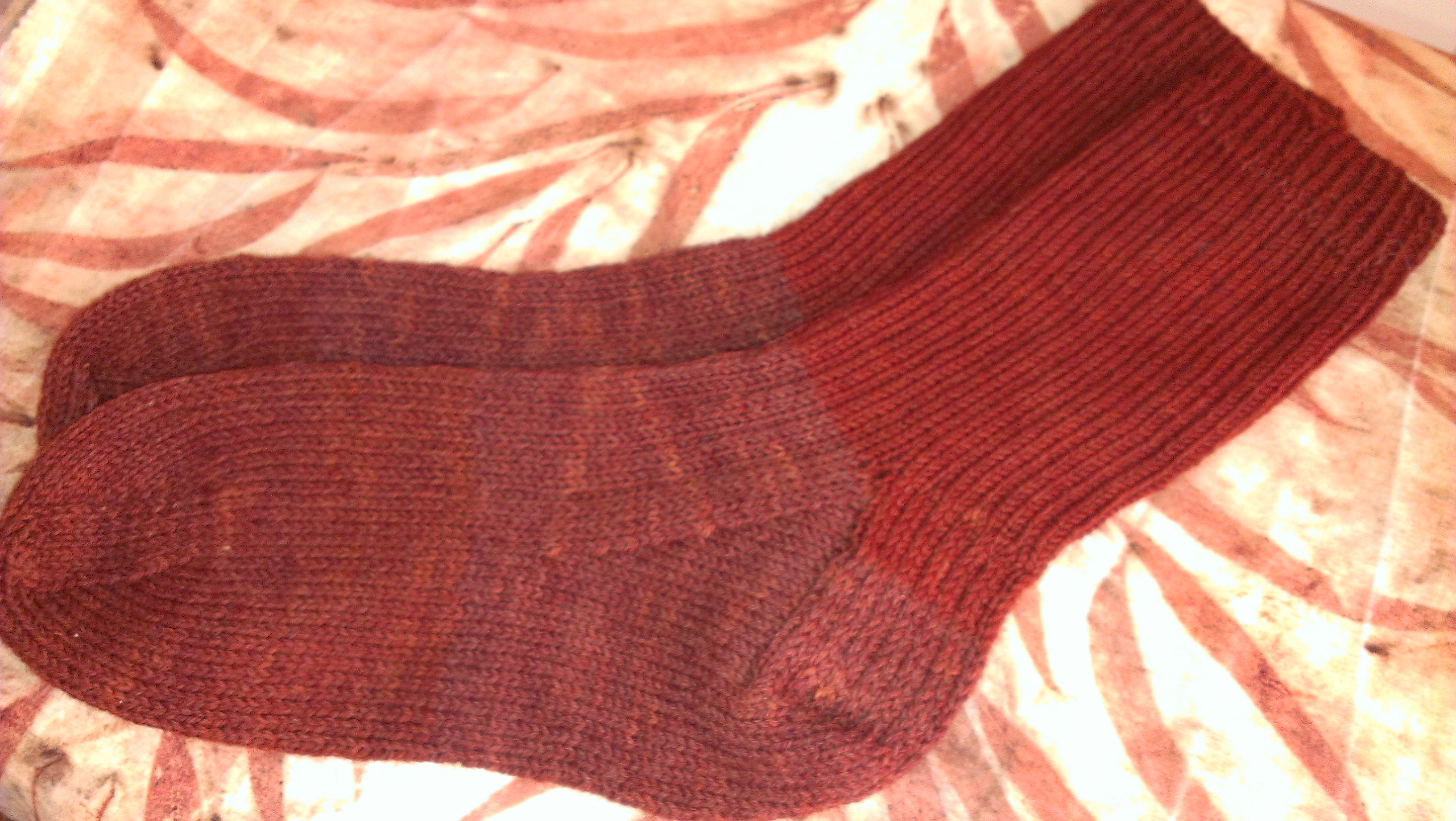
Anyway… in the hurry to leave home I managed to remember to pack travel knitting.  I started out with a sock in progress.  Eucalyptus dyed patonyle, destined for the feet of my Blue Mountains friends.  The weather where they live calls for handknit socks.

Image

These colours are the result of overdyes, where I didn’t like the initial colour and decided to try again.  By the time I left for Perth, I had one sock knit and another underway and caused quite a bit of fascination among the project team by knitting in breaks and grafting a toe over lunch.
IMAG3702

I had overdyed the rest of my patonyle more recently.  It started out dyed with black beans (not as colourfast as I’d like) and plum pine (not at all colourfast).

Image

These yarns went into my first attempt at the Michel Garcia organic indigo vat.  I had reservations about my vat as I went… the Ph test strips I had bought turned out not to measure the part of the Ph spectrum I needed and in the end I ran out of time and should have left the vat to the next day.  On the up side, the preparation of the vat all made sense and most of it went really well.   I think my judgment about it was basically right, I just didn’t go with my judgment as I should have done.  My friend dyed a doily:

Image

I re-dyed the sock yarn, originally bought second hand at a garage sale.

Image

Although I was happy with the finished colours, it turned out that I had hurried the indigo too much and I was left with crocking… the blue rubbed of on my hands a lot as I was knitting in Perth.  This made it certain the finished socks would leave the wearer with blue feet and I finally decided to abandon them after a few centimetres, frogged and left the yarn in a bin in Perth.  Sigh!  That must be the fiirst dyeing fail I have pronounced irretrievable.

I had an alternative plan.  I pulled out yarn I intended for a hat and chose one of the two patterns in my bag, Jared Flood’s Turn a Square.  I wound the ball in my motel room and cast on. Here it is as I wait for the taxi to the airport in Perth.

Image

The time difference between Western Australia (Perth) and the rest of the country is considerable, so even though the flight was four and a half hours, I left Perth at 10 am and arrived in Sydney at 5 pm, and here is the hat in the Sydney airport:

Image

Here it is in Sydney about to depart for Adelaide next day…

IMAG3701

I finished it on the way and started a second hat with the rest of the skein, top down. I’d call that a productive trip on many fronts!

IMAG3707_1

12 Comments

Filed under Dyefastness, Knitting, Natural dyeing

Holiday spinning

We had a fabulous holiday at Port Willunga.  In spite of the warm weather, I did a lot of spinning. I have three fat bobbins of naturally dyed wool waiting for plying and I three-plied this rather lovely wool and silk blend by Wren and Ollie, a relatively new local business.

IMAG3601

Here is the resulting yarn.

IMAG3628

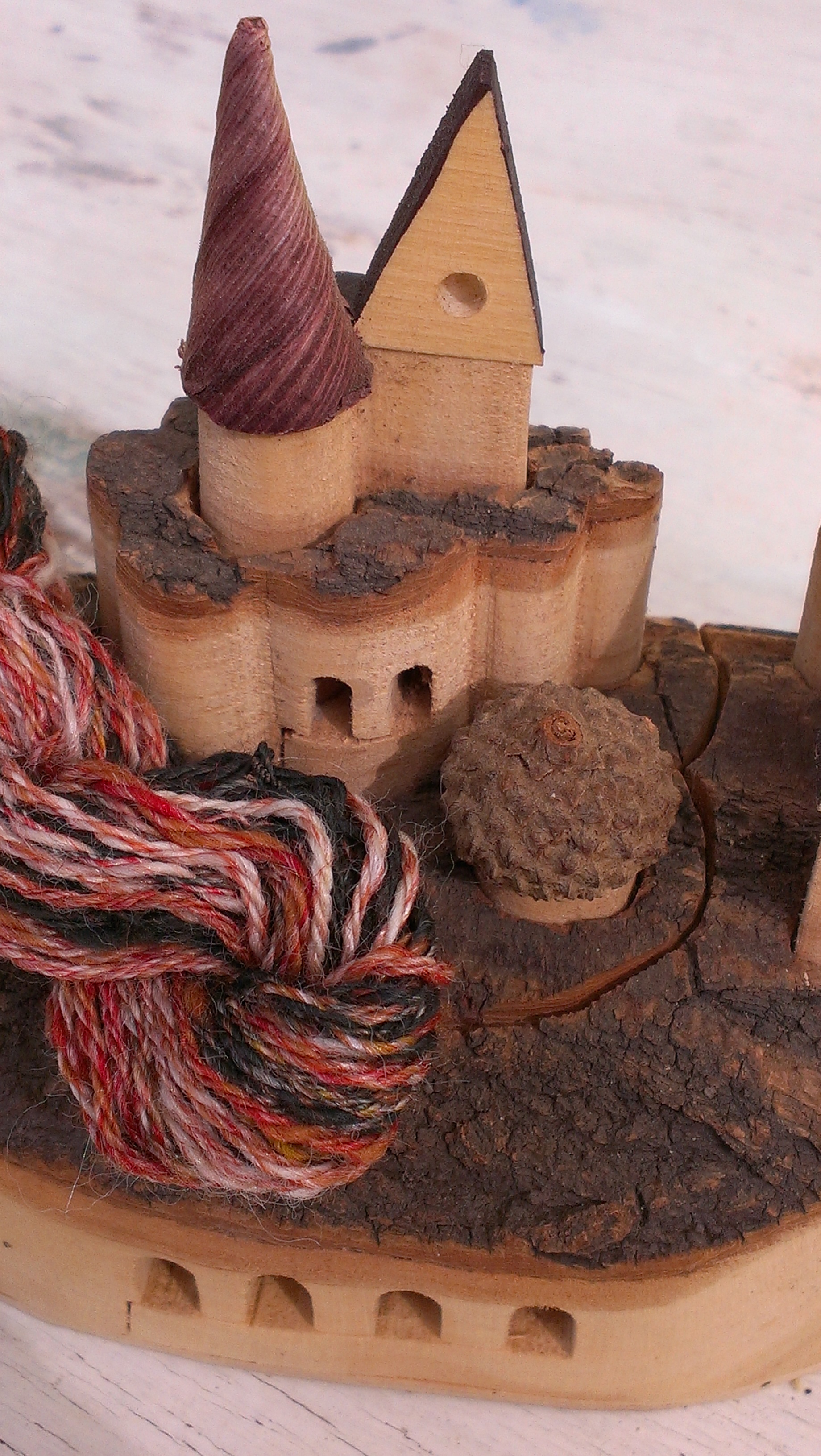
It came with a tiny lucky dip batt. I spun it up finely and three ply was the theme of the moment. I could’t resist using the photo opportunities of the lovely beach shack we were staying in. The low turret on the front right seems to be an acorn cap, for those wondering about scale.

IMAG3634

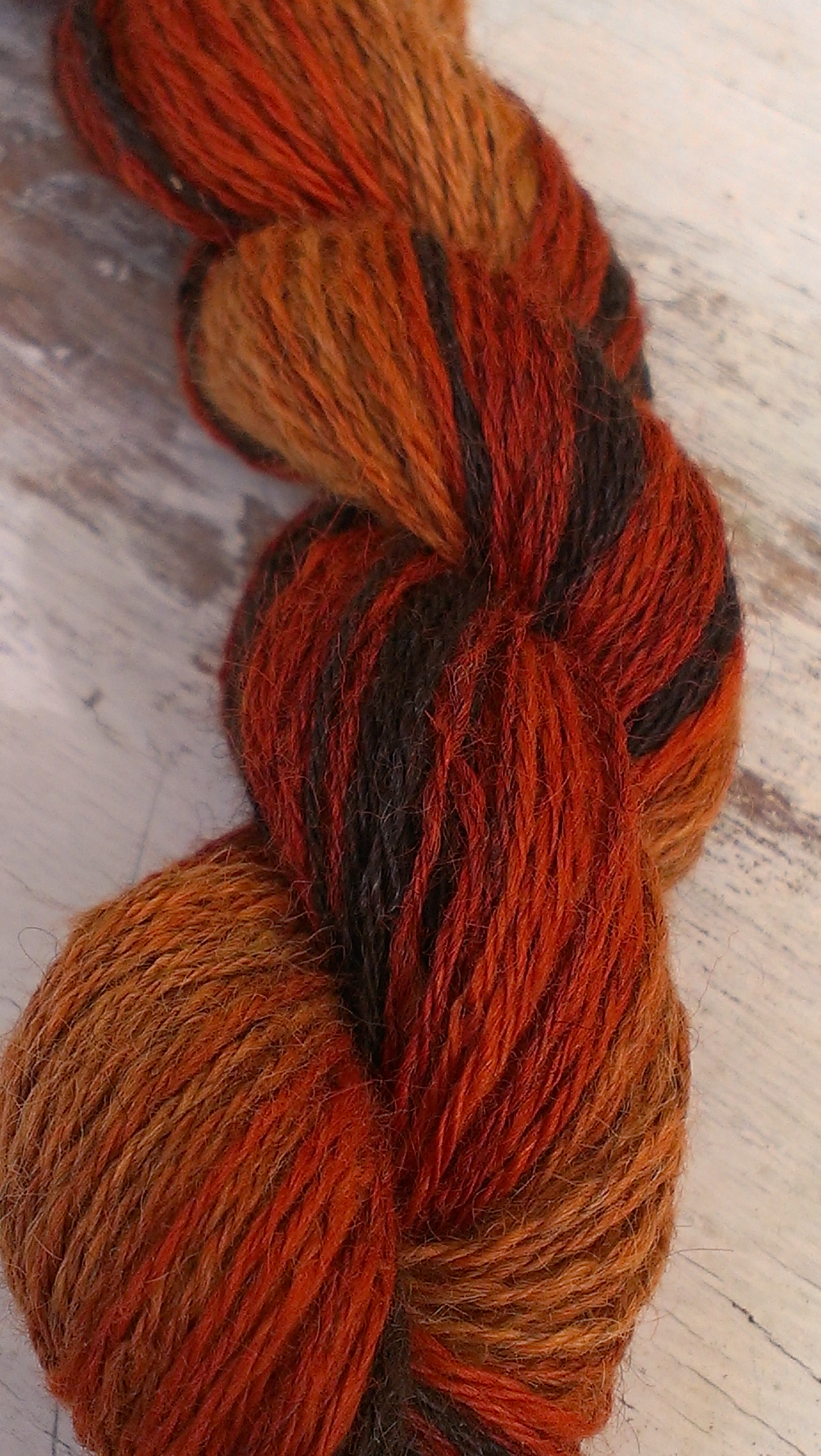
Finally, I had several small batts of alpaca that began in natural shades of grey which I then dyed with eucalyptus, leavng the deepest grey in its natural state.  I turned them into a gradient yarn.

IMAG3640

One final photo just for fun…

IMAG3641

6 Comments

Filed under Natural dyeing, Spinning

Trying out Stuff, Steep and Store

I mentioned a while back that I let out a squeak of glee when I got my copy of India Flint’s new book Stuff, Steep and Store… and it was only a matter of time before I’d try it out.

IMAG3530

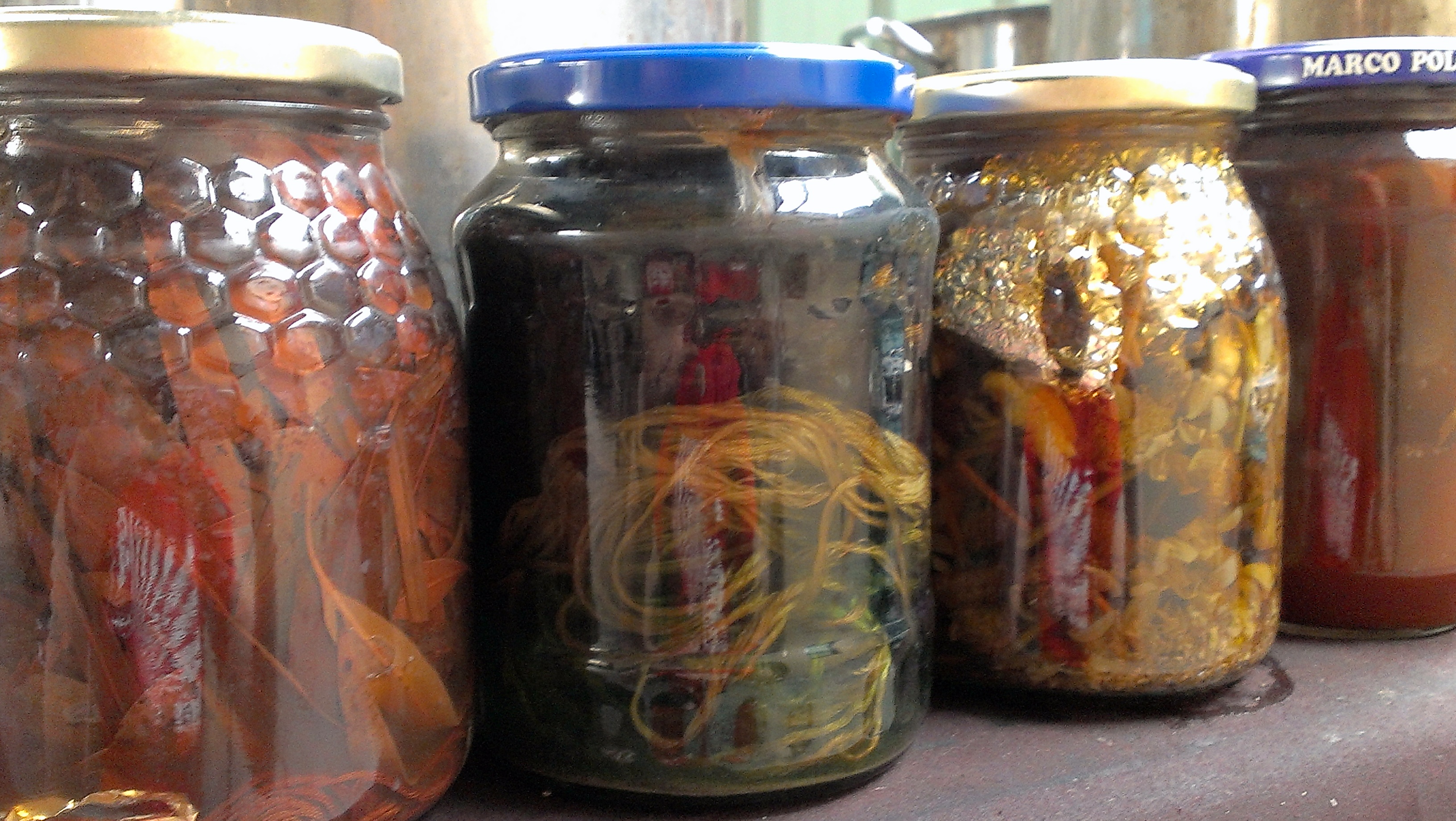
I’m trying out the following.  I can’t pretend to think they are especially well suited to this method but there it is… time will tell, as it always does!
  • Brown onion skins, aluminium foil, E Scoparia dyebath with vinegar (I hope I wrote some fibre or other on the label!!)
  • E Scoparia leaves, bark and dye, aluminium foil, silk thread, vinegar
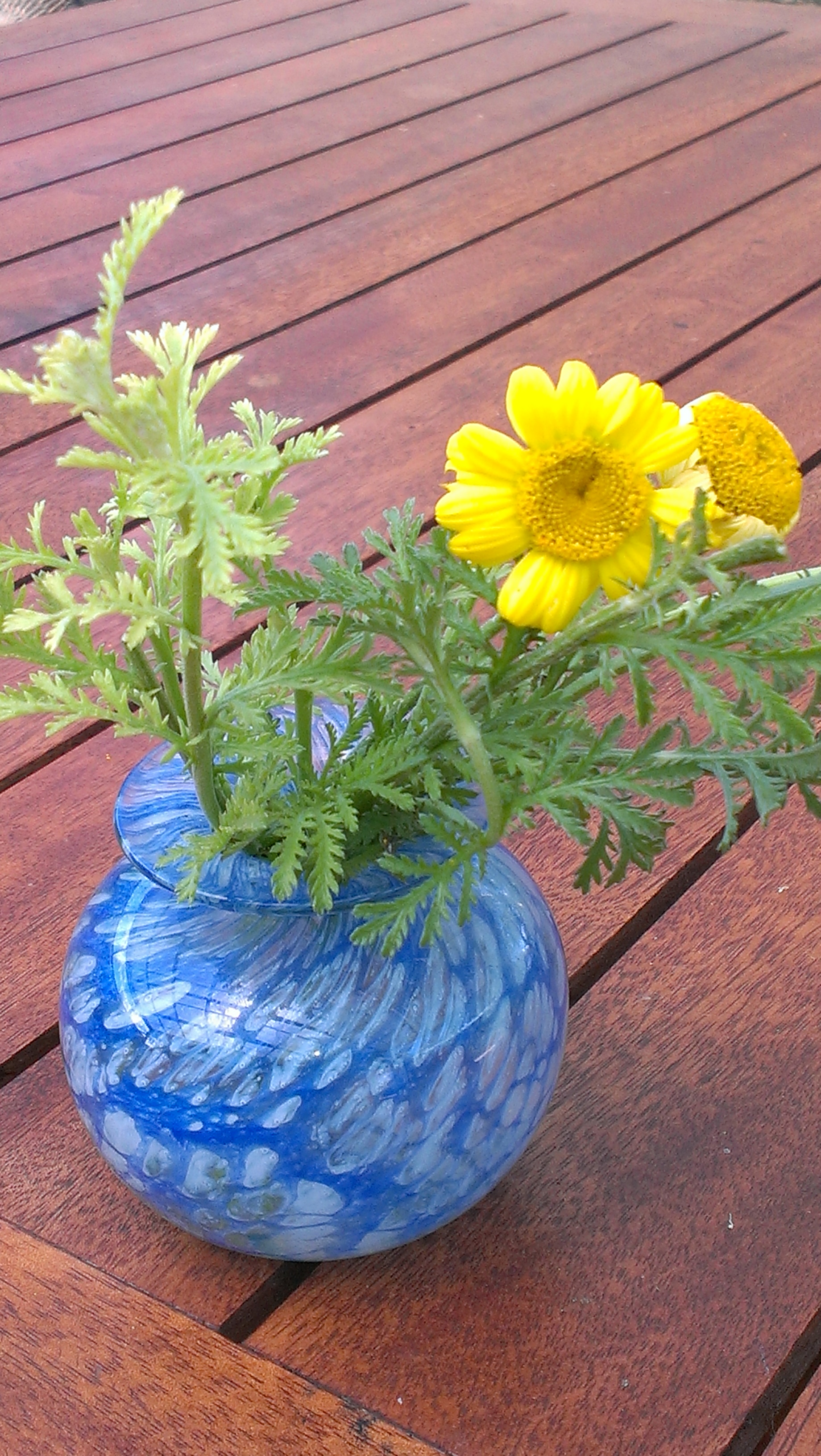
  • Dyers’ chamomile flowers, aluminium foil, silk thread, water and seawater and finally
  • Red onion skins, silk thread, copper and vinegar water, seawater.

Entertainingly enough, while India Flint says she has been inspired in this dyeing process by years of food preserving (and that’s evident from the book)… After my first batch of dye jars I was inspired to pitch a round of food preserving to my beloved.  We put up a dozen or so jars of white peaches and yellow plums for later enjoyment.  I am not sure why this is called ‘canning’ in the US, but in Australia it’s usually called ‘bottling’ because it is done in glass jars.  I have a massive collection. I have been the receiving point for others’ Fowlers Vacola preserving kits for so long I now gift or share them with friends who are not so well endowed.  Perfect, really!

Since filling these jars I’ve been on a seaside holiday.  I set the blog to load scheduled posts while I was gone… and being lazy at the beach is the reason for slow responses to comments lately.  WordPress and my phone have an on-again-off-again relationship, which doesn’t help.  Since I was by the sea and pedalling around the neighbourhood, I collected seeds of hardy native plants for later propagation and planting in the abandoned waste parts of my own neighbourhood. Plantings on public land just call out for seed collection, don’t you think?

IMAG3651

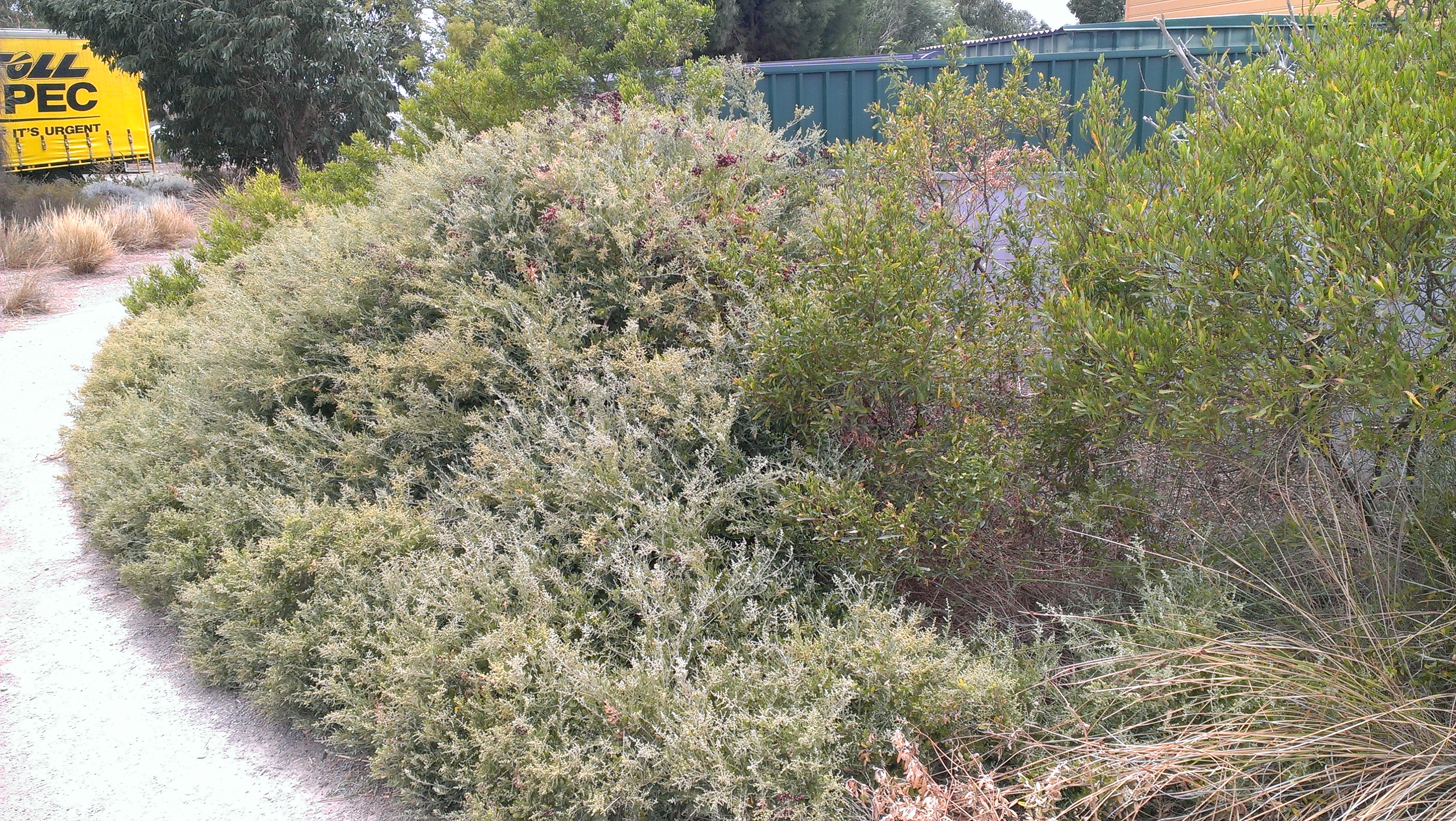
One plant, the seaberry saltbush (rhagodia spp, probably rhagodia candolleana), was in such profuse fruit that I collected enough to fill a small jar we had finished using.

IMAG3657

I can confirm that rhagodia fruit ferments quickly in heat like we’ve had lately (41C today)… and began to do so before I managed to get it home and process my jar properly.  Ooops!  That really should not have been a surprise.  The fruits are smaller than a currant but very pretty…

IMAG3670

Another experiment, since if anyone else has tried dyeing with this plant I don’t know about it and have only a foggy memory of the Victorian Handspinners reporting they got some colour from saltbush fruit (saltbush is a big family).  I happened to have embroidery thread with me… and into the jar it went with chocolate-bar-foil.  And now we wait.

IMAG3687

To see how others are working with this process, visit the delectable ‘pantry’ India Flint has set up, or if you’re so inclined, have a look on facebook.

8 Comments

Filed under Dye Plants, Eucalypts, Natural dyeing

Leaf prints of the week: Pecan and Eucalyptus on cotton

Last week there was some leaf printing. Eucalyptus Scoparia leaves, one of my favourites.

IMAG3492

Pecan leaves, inspired by Lotta Helleberg (when I went to her blog to insert this link there was an especially delectable pecan leaf printed fabric on show, by complete coincidence) and by a wonderful lunch with friends who have a pecan tree. The leaves have been patiently waiting in my freezer.

IMAG3490

Let me admit right here and now that I had some alum and tannin mordanted fabric which took no colour at all–I must have made some kind of mistake there!

IMAG3489

As always, the thrill of seeing good things begin to emerge.

IMAG3496

Then waiting to unwrap bundles.  I saved these until I had a friend over for dinner who I realised would enjoy the reveal as much as I do.

IMAG3499

Some pecan prints were better than others, but the good ones are lovely.

IMAG3535

And the Eucalyptus leaf prints were all I hoped for and more.

IMAG3534

6 Comments

Filed under Eucalypts, Fibre preparation, Leaf prints

More tree loving craftivism

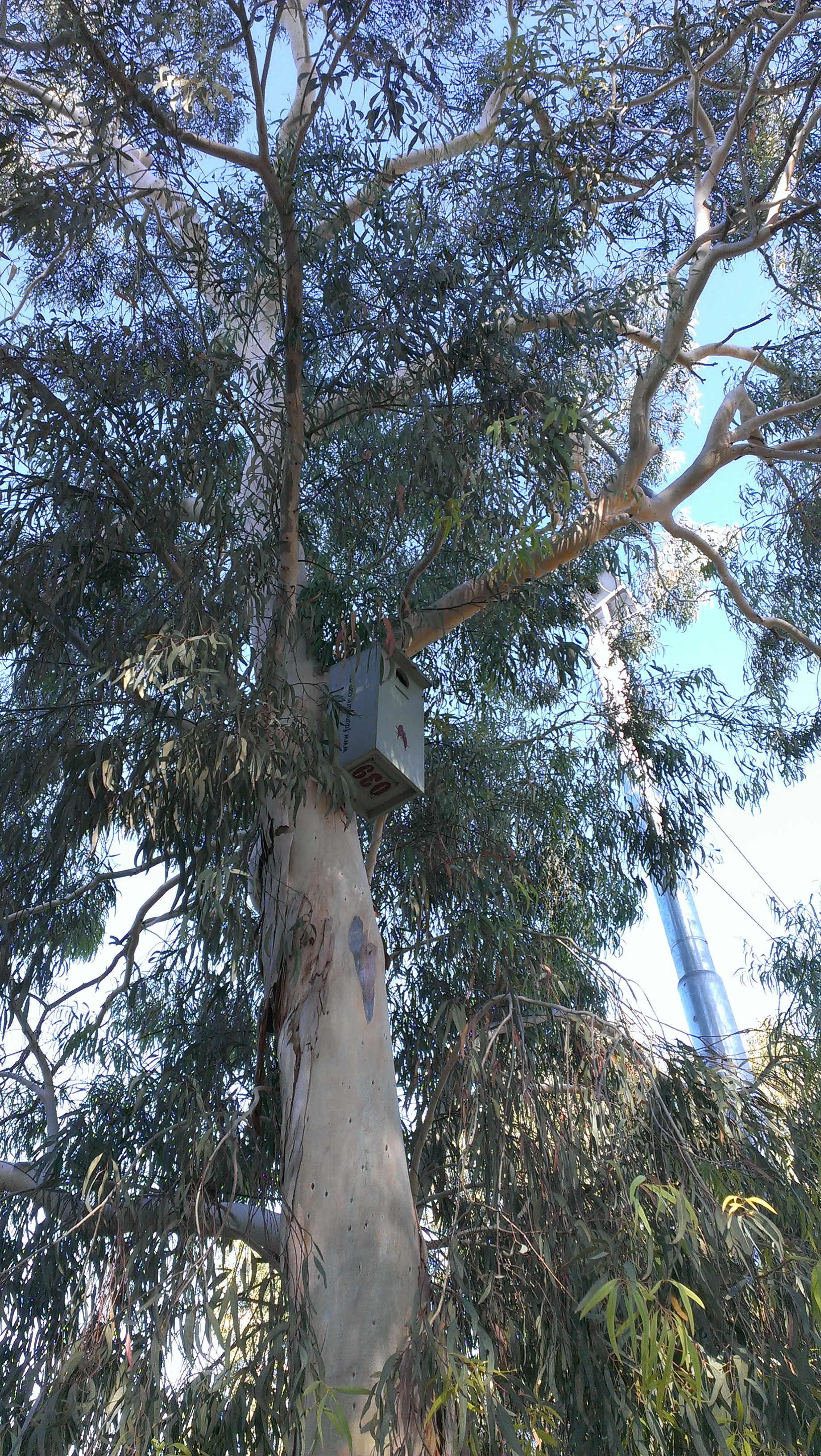
My second ‘banner’ has gone up another neighbourhood tree.  This one is my favourite E Scoparia. It was the first really promising dye eucalypt I discovered.  It used to be home to a pair of piping shrikes, who nested there in their little mud cup for many seasons.  In the last year it has acquired a nesting box and we’ve seen rosellas coming in and out of it.

IMAG3385

This is the tree my friends and I have been mulching and weeding and we have planted in an understory of native ground covers, mostly forms of saltbush, which are now doing really well.  If you have been reading a while you will have seen this tree protected from passing Royal Show foot traffic in earlier posts here and here.  Those images show how much the groundcover project has progressed in the last 18 months or so.  In the beginning, people would remove plant guards, pull out small plants soon after we put them in or just trample young plants by accident.  Not any more.  I think the evidence of care and the success of the surviving understorey plants generates more thoughtful treatment from passersby, and it’s clear that lots of local people now understand that their neighbours are making efforts that are transforming an almost bare patch of hard earth scattered with weeds and rubbish, into something lovely.  I collected the rubbish that had landed under it this morning and maybe that is ebbing a little too.

IMAG3388

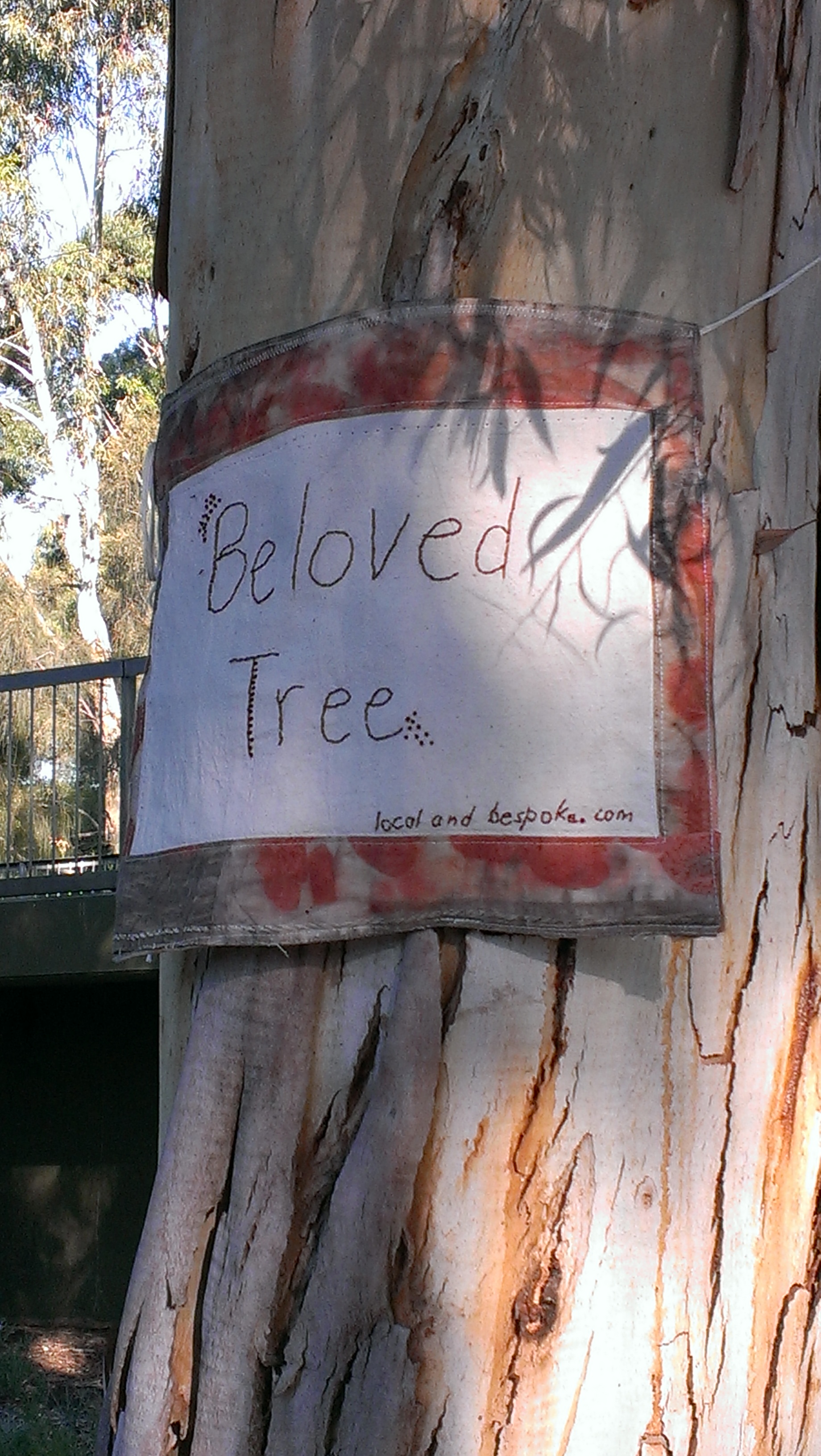
So, four of us stood and admired this tree, delectable breakfast smoothies in hand, and tied on this little banner of admiration and appreciation.

IMAG3387

And here’s the full length picture…

IMAG3391

Leave a comment

Filed under Craftivism, Dye Plants, Eucalypts, Leaf prints, Neighbourhood pleasures, Sewing

Bark dyes on alpaca and wool yarn

Here it is… some of my holiday knitting, ready to go!

IMAG3146_1

Last year I ran some workshops at the Guild, and I ended up with quite a quantity of Bendigo Woollen Mills Alpaca Rich in a shade of white called ‘rich magnolia’… which I was never going to use in this colourway.

IMAG3039

So… I have been skeining and dyeing it. Unevenly…

IMAG3135

More evenly…

IMAG3134

And in quite a range of shades.  The one right at the bottom in the picture below is handspun that had been mordanted with alum, dyed in logwood exhaust, suffered some kind of surprise bleaching episode in our laundry and then gone through two eucalyptus baths.  It looks great now, but what a soap opera of a story!

IMAG3136

And now… turned into balls and ready to be holiday knitting! Would you believe… slippers?

IMAG3141

9 Comments

Filed under Eucalypts, Natural dyeing

Harvest time: Eucalyptus Scoparia bark

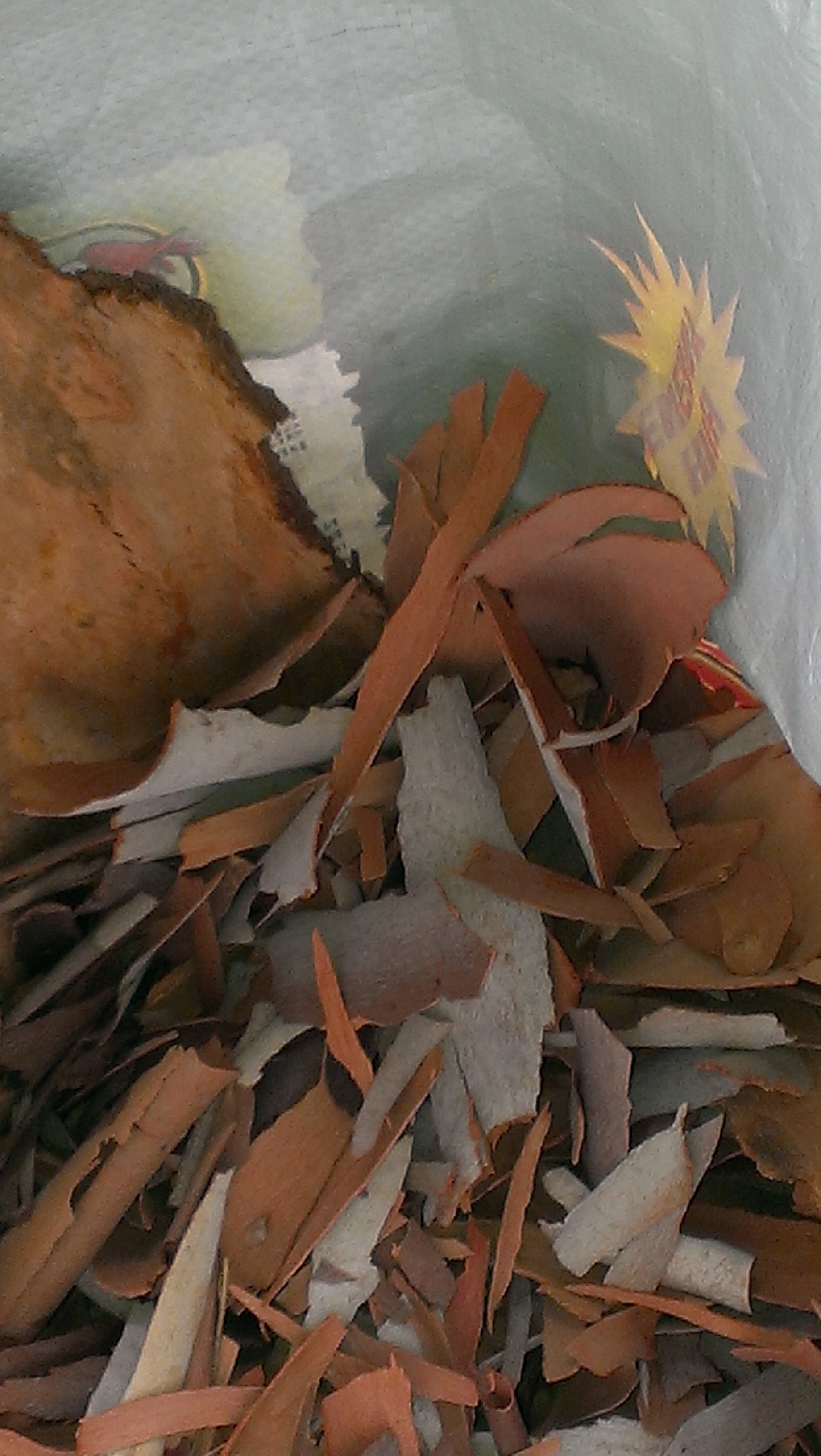
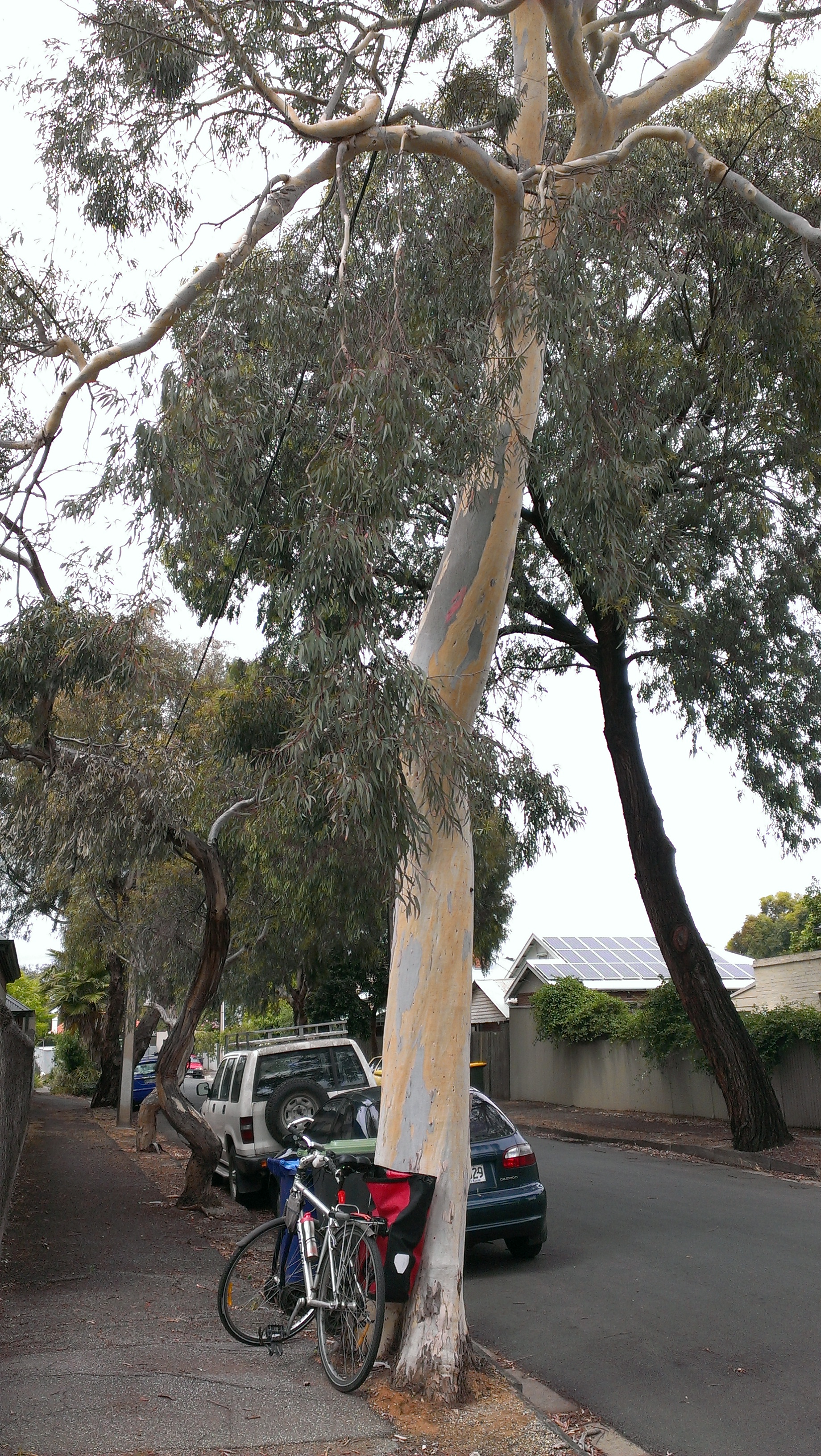
‘Tis the season for bark collecting, again!  I’ve been out on my trusty bike visiting all the E Scoparias I know and investigating others that might prove to be (or not to be) E Scoparia. I pull my bike over to pack bark into a bag, trampling on it to crush it and make space for more, and filling again before loading my panniers.  Or, go to visit friends with my big bucket in hand and pick up whatever has fallen since my last visit.  Or, head out for a run, leaving my rolled up bag under a tree and pick it up to fill on my cool-down walk on the way back.  This E Scoparia, tucked in behind the foliage of a carob tree, is peeling lavishly.

IMAG2991

At home, I stash the bark in a chook feed sack, offering more opportunities for trampling which let me stack a lot of bark into one bag and get it into a form that will go into the dyepot with minimal fuss.

IMAG2841

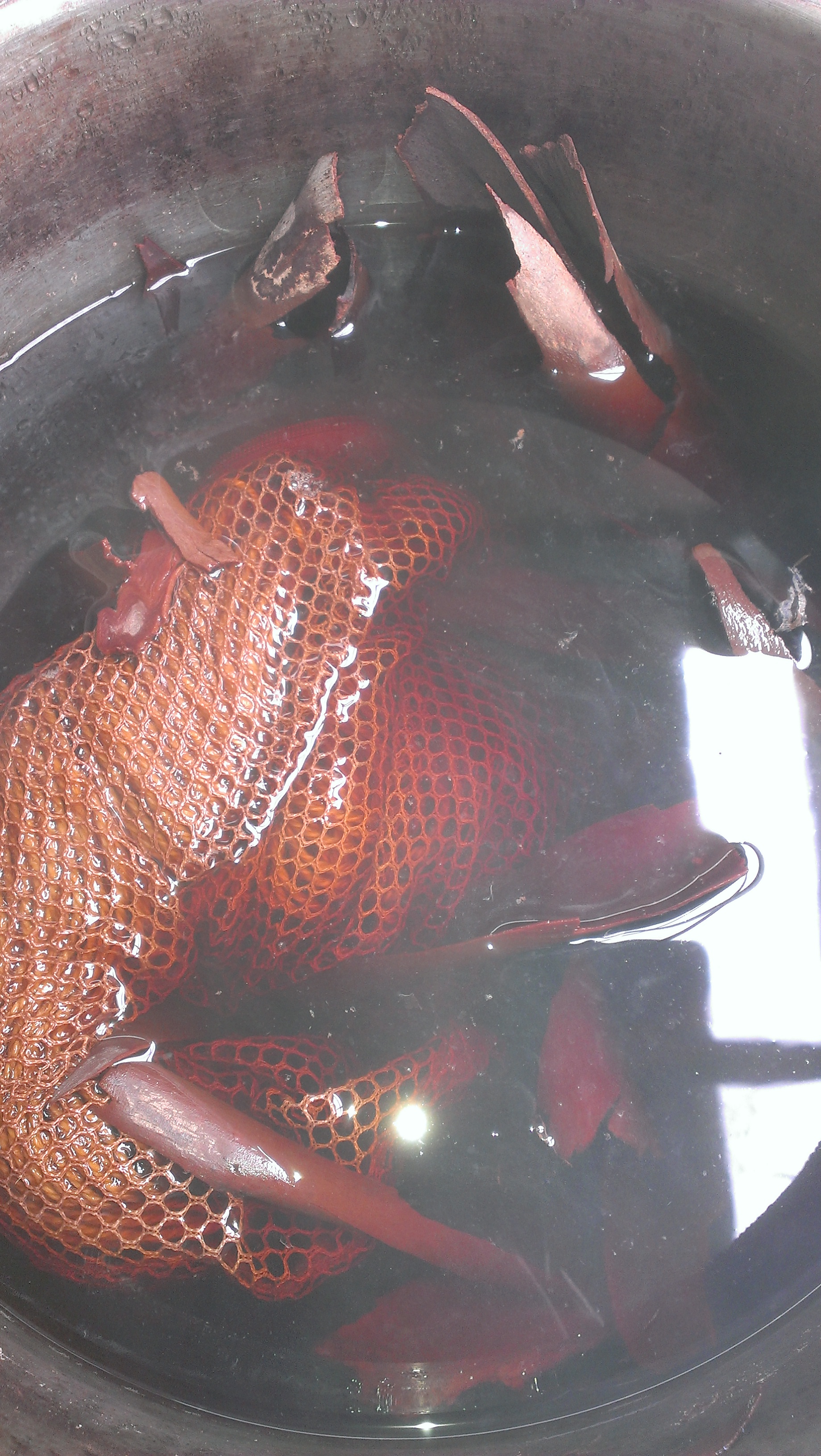
This week, I found a new E Scoparia (at least, that was my hope).  I collected a bag full of bark and it is now soaking so I can test whether I have that right, in consultation with the dyepot. A friend who appreciates natural dyeing lives in this street–so I’ll look forward to telling her if she has a great dye tree at the end of her street! Blackett St:

IMAG3022

I also collected bark from this enormous specimen.  Last year I collected a lot of bark from this tree and then found I had one bag of bark that gave brown and not red to orange as expected.  I suspect that means this is not an E Scoparia.  Checking it out again today it is bigger than any other tree I believe to be E Scoparia and it has many more fruits visible and clinging to the stem.  My initial sense is that the bark smells different, too. The leaves give fantastic colour (at least they did before someone took a chainsaw to all the lower branches), but I am running a trial bark pot before the tree sheds the main part of its bark.  It is soaking alongside the other one as I write. Laught Ave:

IMAG3024

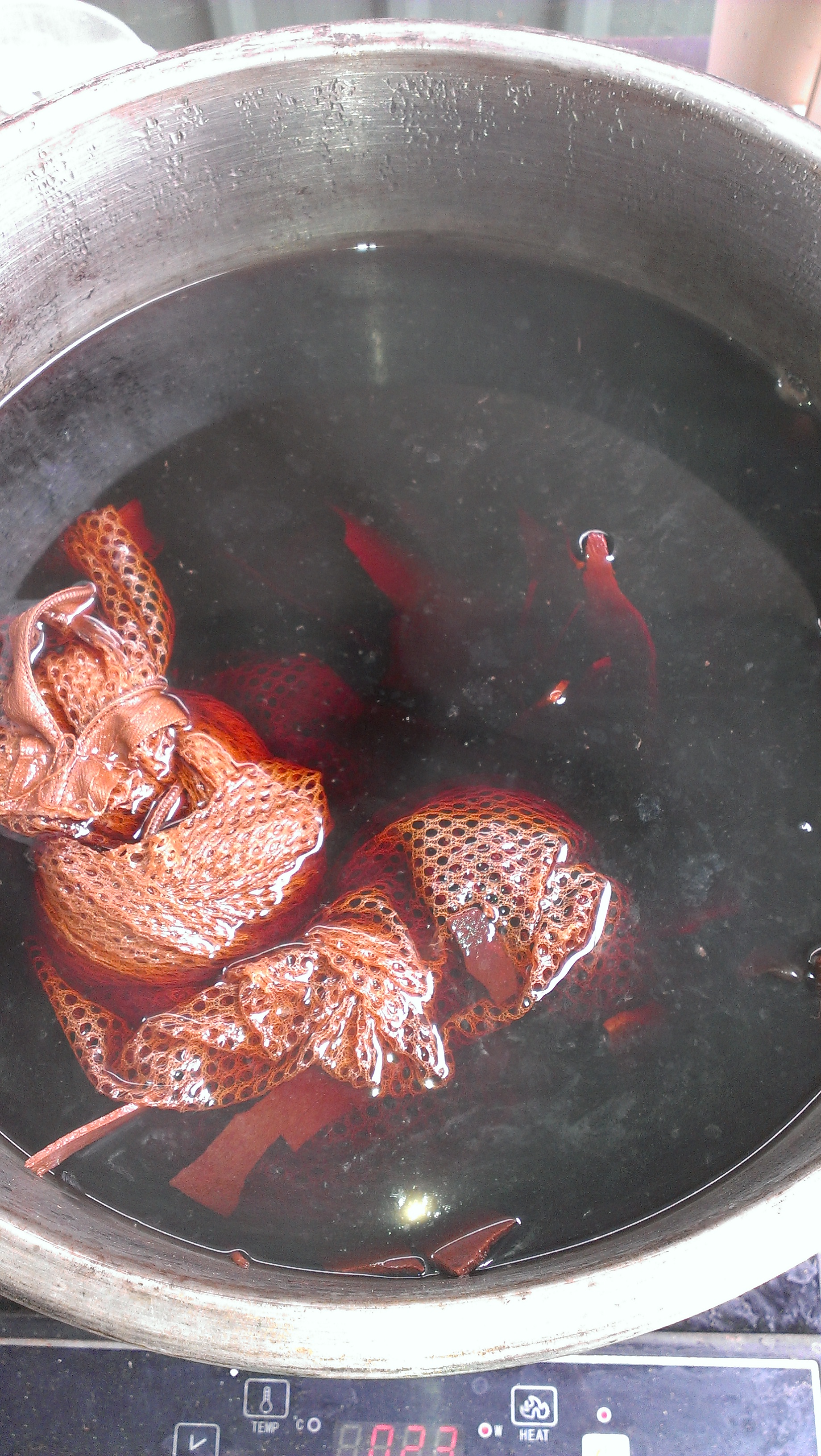
Next day, here are the dye baths, three hours in, presented in the same order as the trees from which the bark came. They look remarkably similar but smell quite different:

IMAG3027 IMAG3029

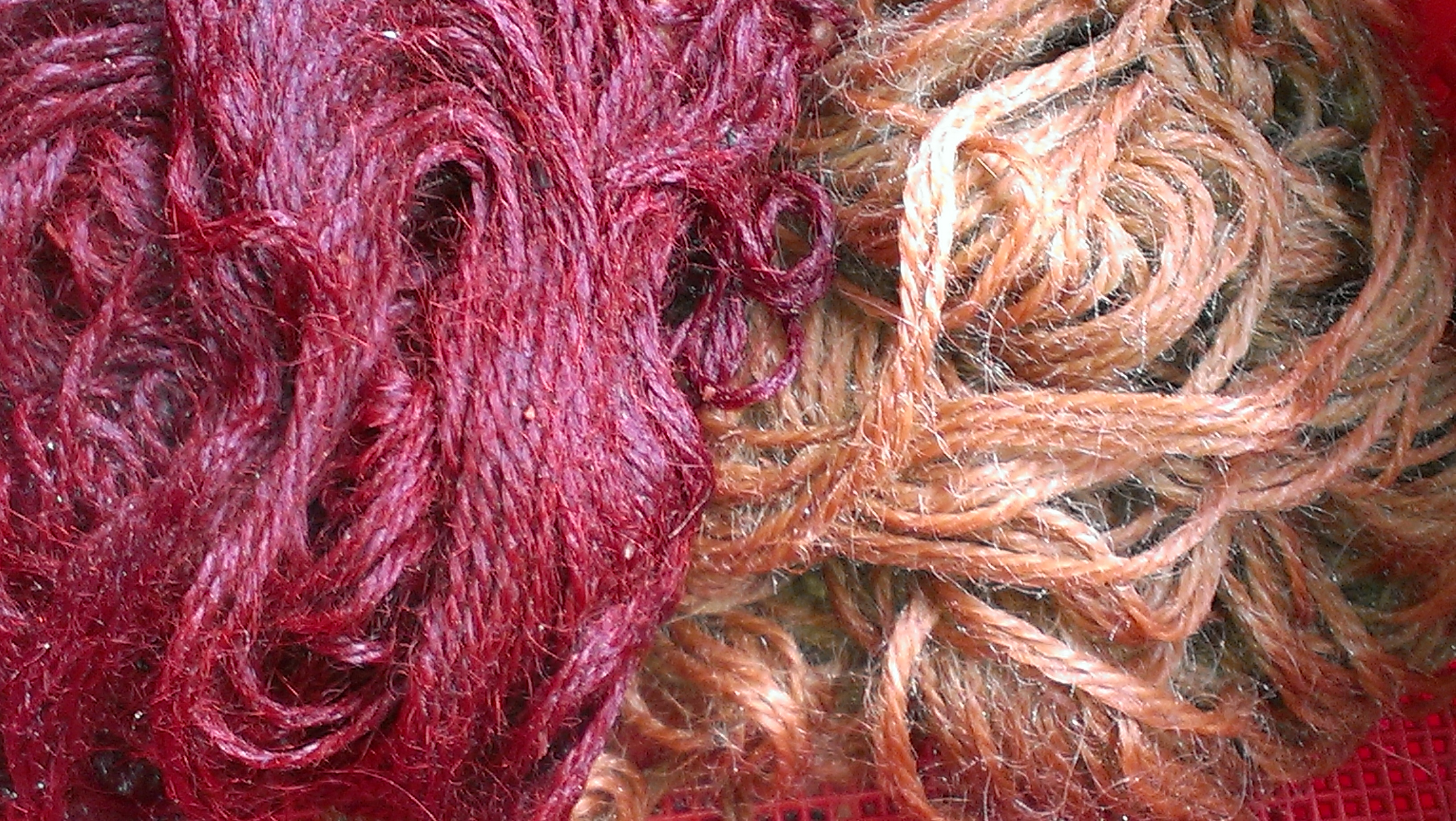
Here are the (still wet) yarns that came from those dyepots, in the same order again.  Clearly, the second tree is not E Scoparia–or–for some reason its context means it doesn’t give the same colour.

IMAG3031

As I have had great results from the leaves of that second tree, I pulled the bark out, put some fallen leaves in, and re-dyed the tan skein…!

IMAG3030

10 Comments

Filed under Dye Plants, Eucalypts, Natural dyeing, Neighbourhood pleasures

Harvesting the neighbourhood: Dyer’s Chamomile

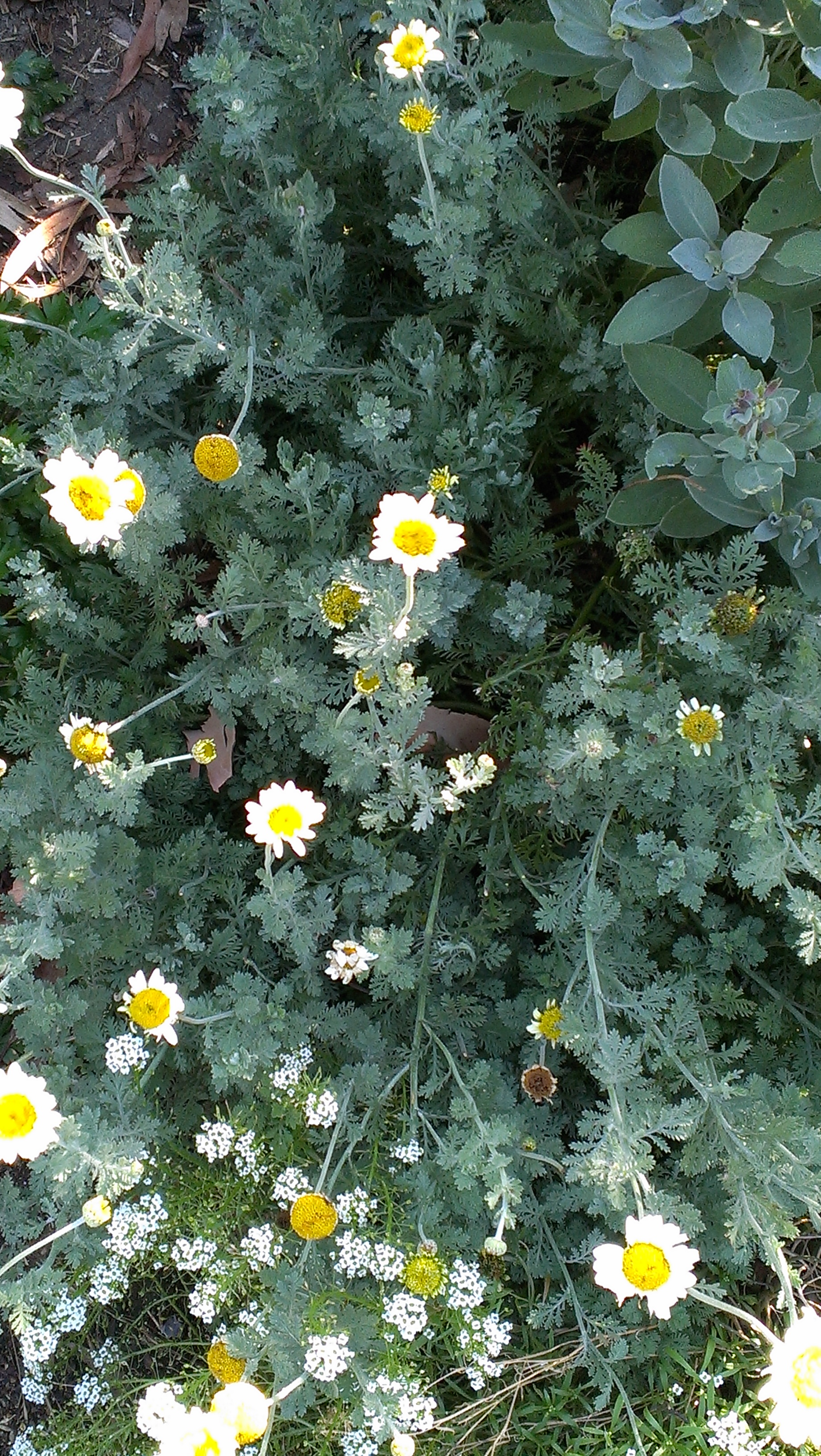
This summer, I have been collecting dyer’s chamomile for the first time.  I have some in the garden, gifted to me by a fellow Guild member who was keen to have some of my madder (this wish granted, needless to say)! It has white petals.

IMAG3008

But recently I found some with vivid yellow petals in the parklands beside the river Torrens.

IMAG3026 (2)

Our exercise class were astonished when I said I was planning to harvest while we were out on a DIY exercise session (our instructor was off doing the Busselton Ironman–she is our hero).  They offered to shield me from passersby who might intervene.  I think they underestimated how scared most people seem to be when they see someone doing something so inexplicable (to them)! I let them know I’d only be taking the dead flowers and we all relaxed again.  The patch is so big I really want to go back with more time… and it is flowering so generously, I am sure I have weeks in which to organise a return visit.

IMAG2998

Meanwhile, we’ve been harvesting at home, too.

IMAG3035

I keep thinking I’ll make rhubarb leaf mordant, and then not getting round to it!

IMAG3021

Leave a comment

Filed under Dye Plants, Eucalypts, Neighbourhood pleasures

Alas, poor Malcolm the Corriedale

We had a glorious visit to our friends in the hills on the weekend. There were recently shorn alpacas.  In black…

IMAG2929

In white…

IMAG2926

And in cinnamon.  But like the sheep, the brown alpacas were too shy for photos.  There was a woodlot of blackwood trees, and some stumps with very impressive fungi growing on them:

IMAG2932

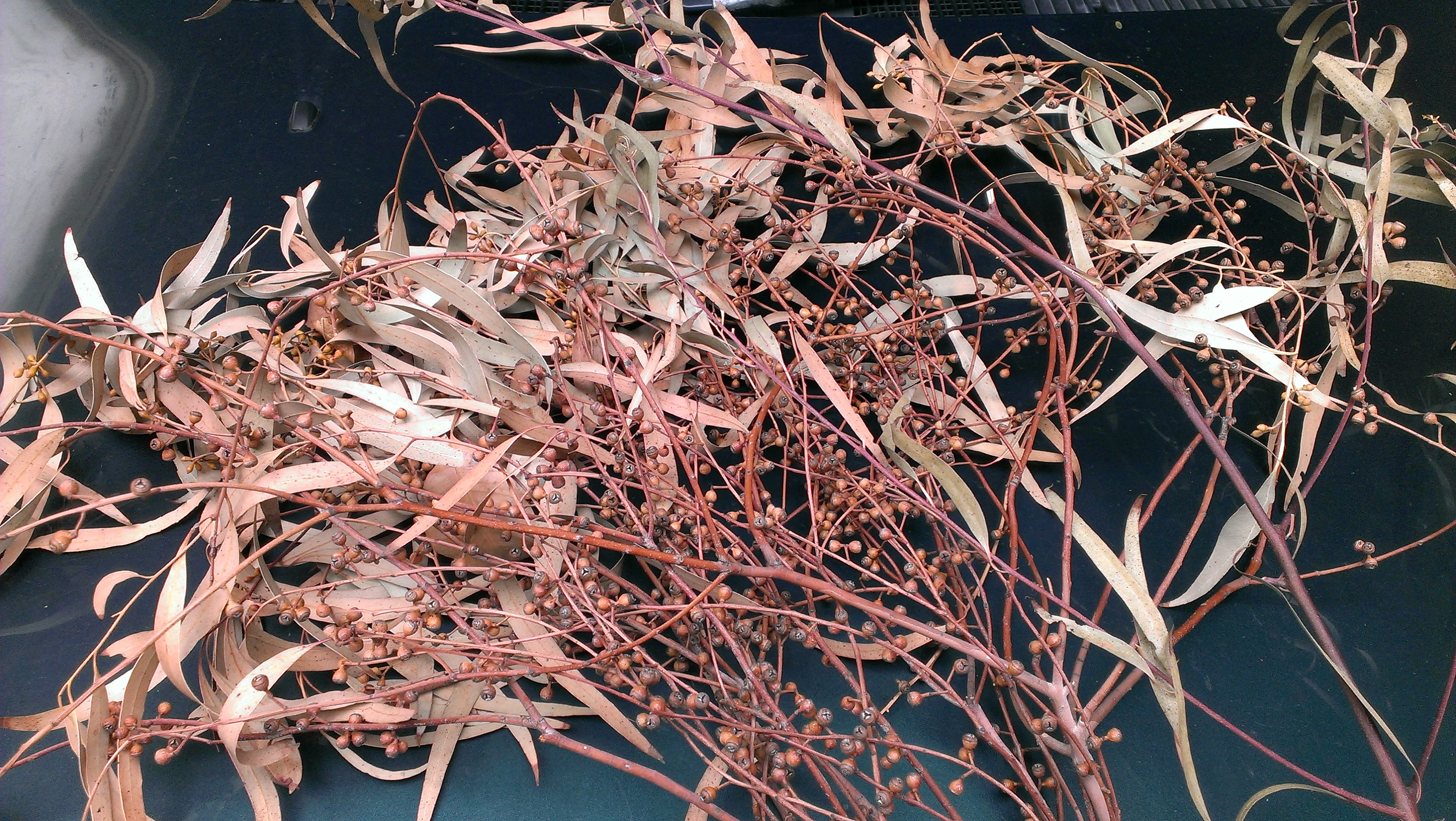
There was a wealth of eucalypts and a knowledgeable community member who knew what many of them were. I brought home E Nicholii leaves (I have not had the chance to greet a fully grown specimen before, let alone a row of them), E Cinerea leaves and some massive juvenile E Globulus leaves.

IMAG2935

There was fine company, cake and scones and home grown cherries.  Not only that, but koala sightings and visits with rescue joeys (baby kangaroos whose mothers have been killed on the road, being raised by hand with tender loving care).  Such awesomeness!  I took lots of handspun yarn and left quite a bit behind where creative minds were whirling with plans and fingers were itching to get knitting… but there was bad news too.  I got to meet with the people who hand raised the corriedale whose fleece I have been working with most recently, from a lamb.  And sadly, poor Malcolm had recently and unexpectedly died, just before the shearer was due to visit.  We paused on Malcolm’s grave.  So it was special to have taken yarns made from Malcolm’s fleece to share… and I still have some, plus fleece that I dyed with eucalypts last week (it is E Scoparia bark peeling season) …

IMAG2936


And fleece that is prepared and ready to spin, from my recent coreopsis–osage orange–indigo dyeing season.  So… although I never did get to meet Malcolm, it’s conceivable I’ve spent more hours with my hands in his fleece than anyone…

IMAG2939

And I now have 5 alpaca fleeces and one from Lentil the sheep to think about and share around, such is the generosity of our friends!

7 Comments

Filed under Dye Plants, Eucalypts, Fibre preparation, Natural dyeing, Spinning

Downsides of upcycling

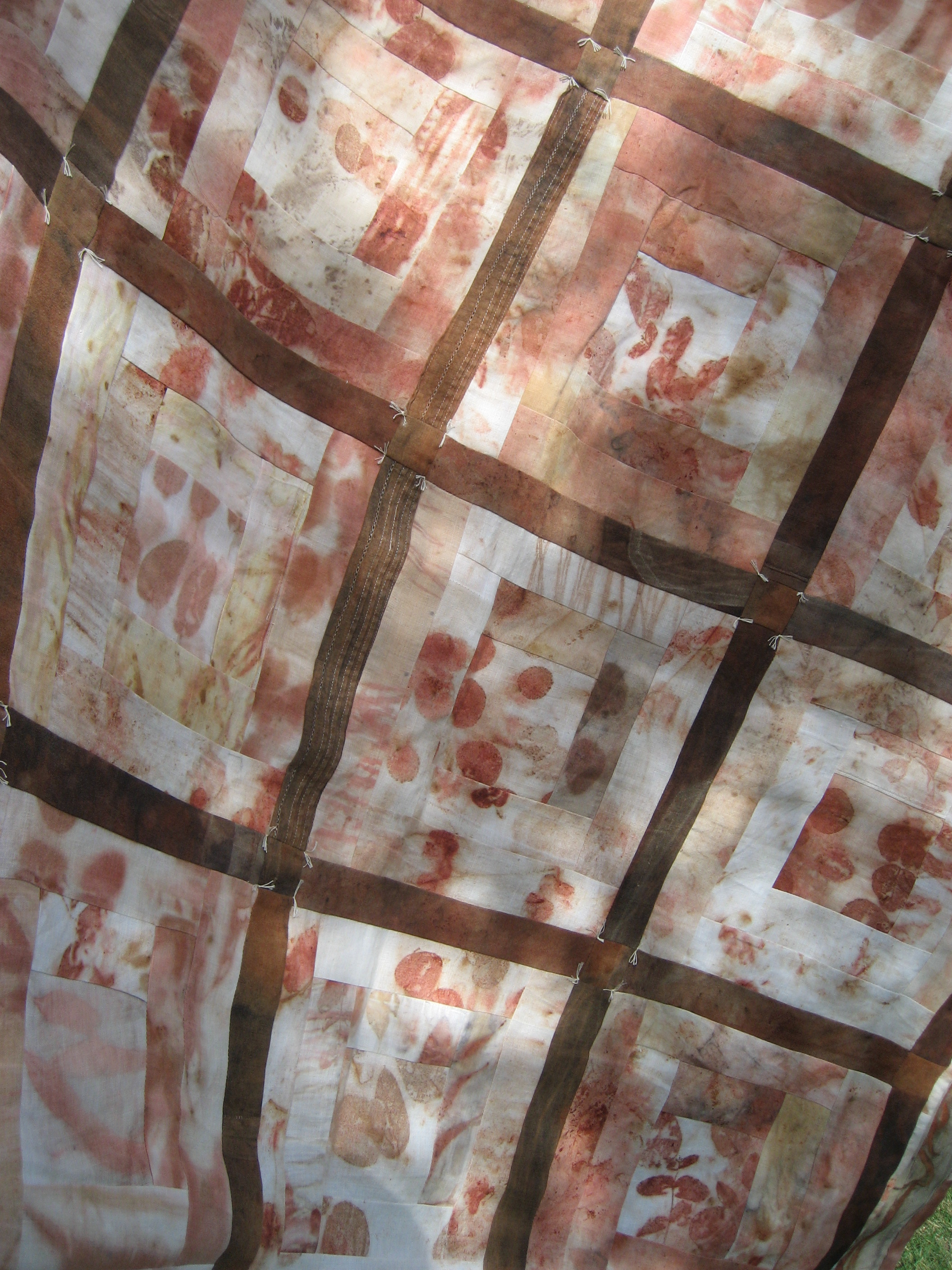
Quite some time ago, I made a quilt.  It was a project I decided on when I began to experiment with India Flint’s eco-printing technique on cotton and linen.  Her book Eco-Colour (see the left hand sidebar of her blog if you’re following the link–her books are there) mostly focused on wool and silk, but offered some guidance about cotton and linen.  I followed that guidance as best I could and at first I could achieve only pinkish smudges.  I had become pretty decent at dyeing wool by this stage, but only some of these skills proved transferable.

IMG_5240

Leaf printing or eco-printing was clearly a whole other skill. I teach for a living and observe the process of learning almost daily both in those I teach and in myself.  It is very rarely possible to read instructions and then successfully and immediately carry out a process someone else (that would be India Flint) has spent years figuring out and becoming exquisitely good at.  Nor can the outcomes of a process with so many variables always be confidently predicted by a novice (that would be me). Indeed, just plain carrying out instructions accurately is not always possible on the first attempt.

The amount of fabric wastage that might be involved in learning and practising made me think I would have to give up and just admire the work of others.  India Flint, for instance. This was the point at which I thought of the quilt.  If I made a log cabin style quilt, I could frame whatever leaf-ish smudges were my then best efforts, and the smudgy parts could simply be borders.  Standards are not always high round here.

IMG_6440

By the time I came to halfway through the back of the quilt, I had been experimenting for about a year and I had some breakthroughs–in understanding the process, in refining my skills at using it, in mordanting, in identifying eucalypts, even growing a few.

IMG_6446

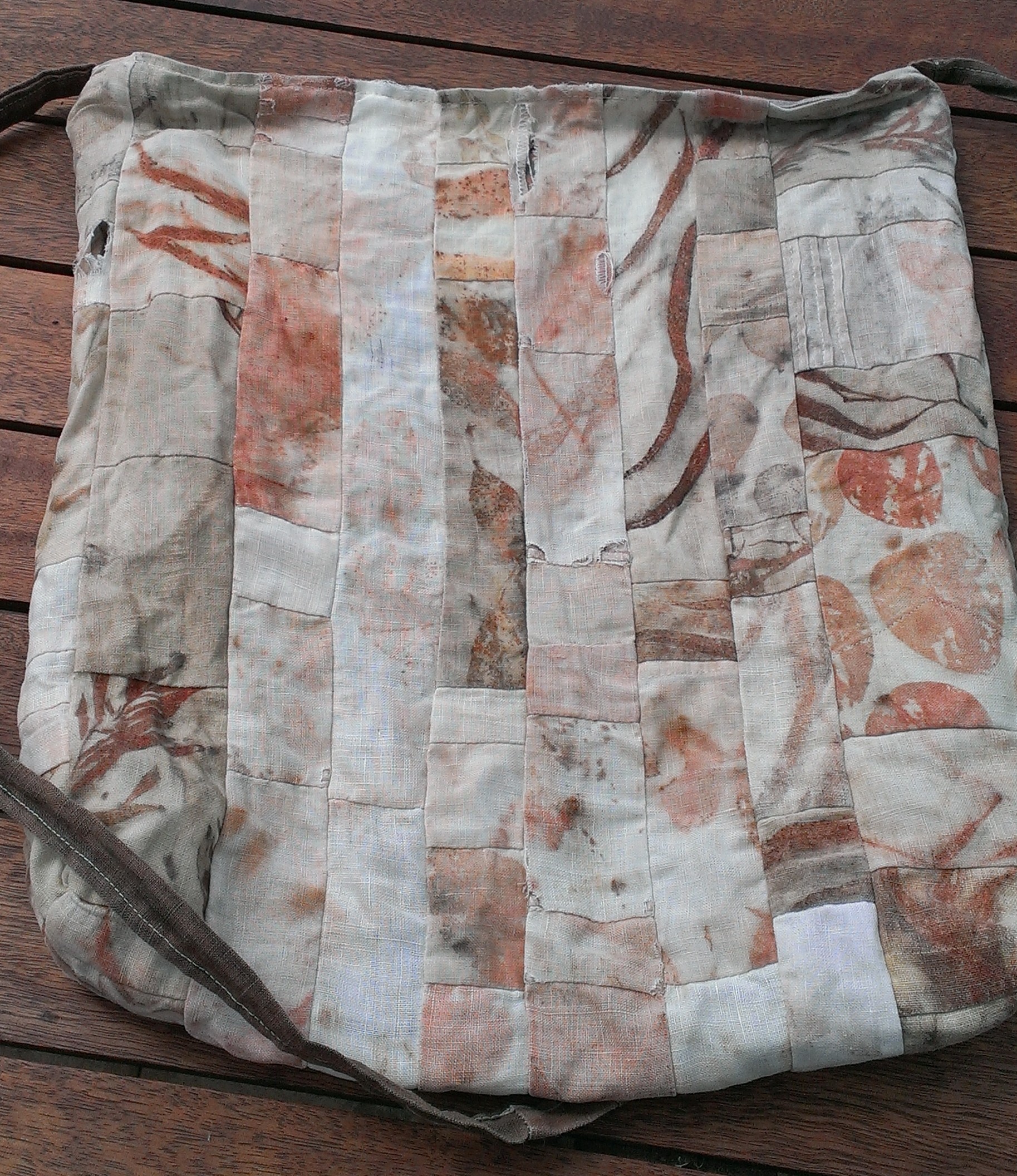
I made this entire quilt from recyled/upcycled linen garments from op shops and garage sales, most of them having gone there because they were stained beyond rescue.  Needless to say, I couldn’t bear to waste a scrap.  So even the tiny leftovers of the log cabin quilt were turned into other things.  Including bags–which won’t surprise regular readers!

IMAG2740

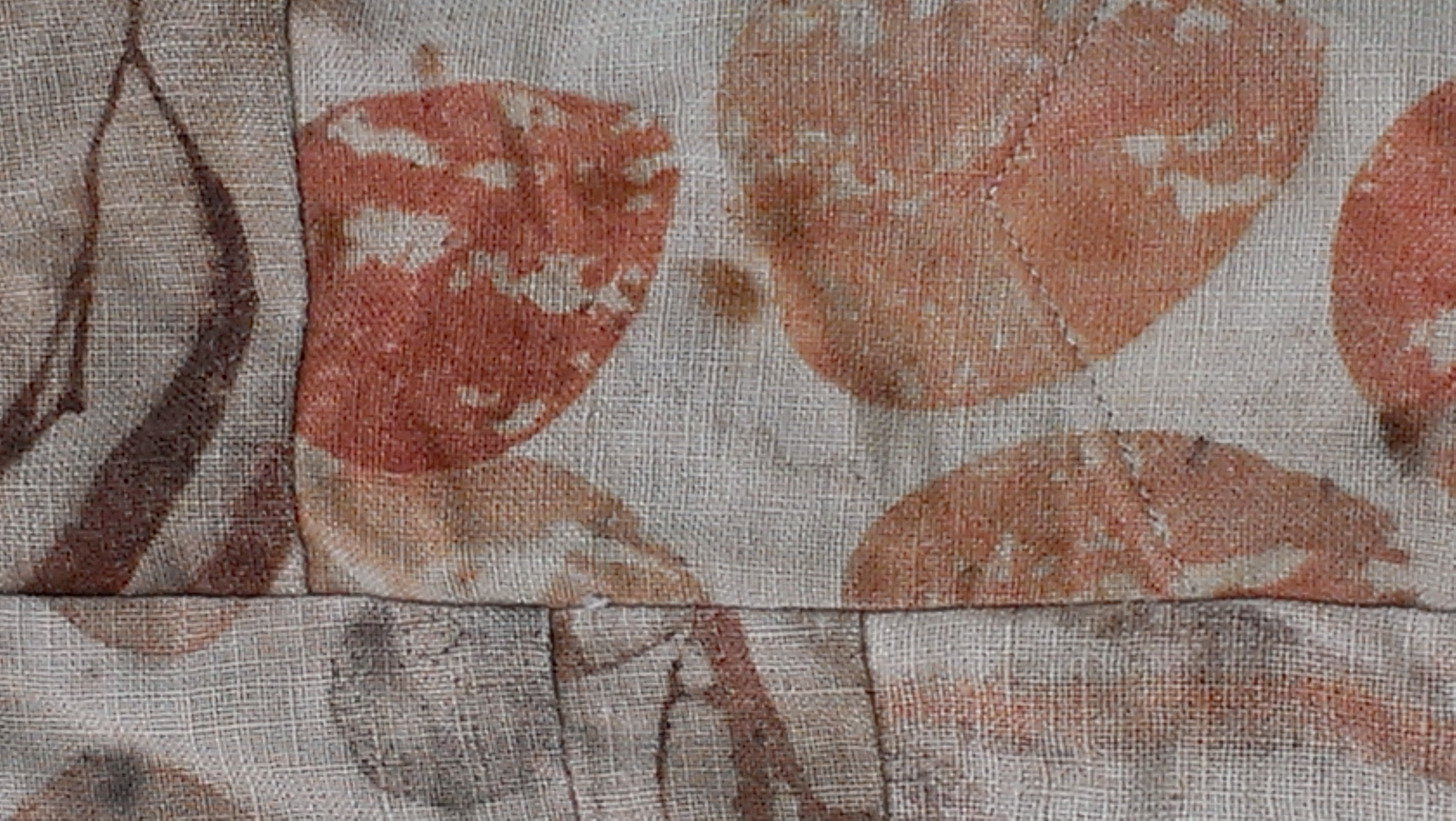
This bag has had a lot of use, because I like it so much.  Which is to say it has been treated roughly, stuffed full, rammed into other bags and rubbed against all manner of things.  And although parts of it are still glorious… including what must have been virtually my first really exciting E Cinerea, E Scoparia and E Nicholii prints:

IMAG2754 IMAG2753

There are also some points of real wear.

IMAG2752

I often think that a well made, long lasting garment or bag is highly desirable. But a thing that will stand the test of time is only a good thing when the item remains one you (or someone else) want to keep using.   I own things that I wish would reach the end of their useful lives because I’m tired of them even though they don’t need replacement, or because a better version exists 20 years later.  I have things I wish I had never acquired or that don’t have the capacity to biodegrade.  I now think about the benefits of things that can break down and won’t last forever to burden coming generations.

This bag, though, has had a short life as a bag because of the hard life some parts of it had as clothing, and it certainly will biodegrade.  I polled some of my near and dear and they thought the bag should continue even if it required lots and lots of mends… So here it is, reworked considerably.

IMG_0215

And the other side…

IMG_0212

Ready for more years of hard use, I hope! For those who are wondering, the quilt is doing fine so far and I remain happy to use it.

18 Comments

Filed under Leaf prints, Natural dyeing, Sewing