Tag Archives: silk thread

Mending

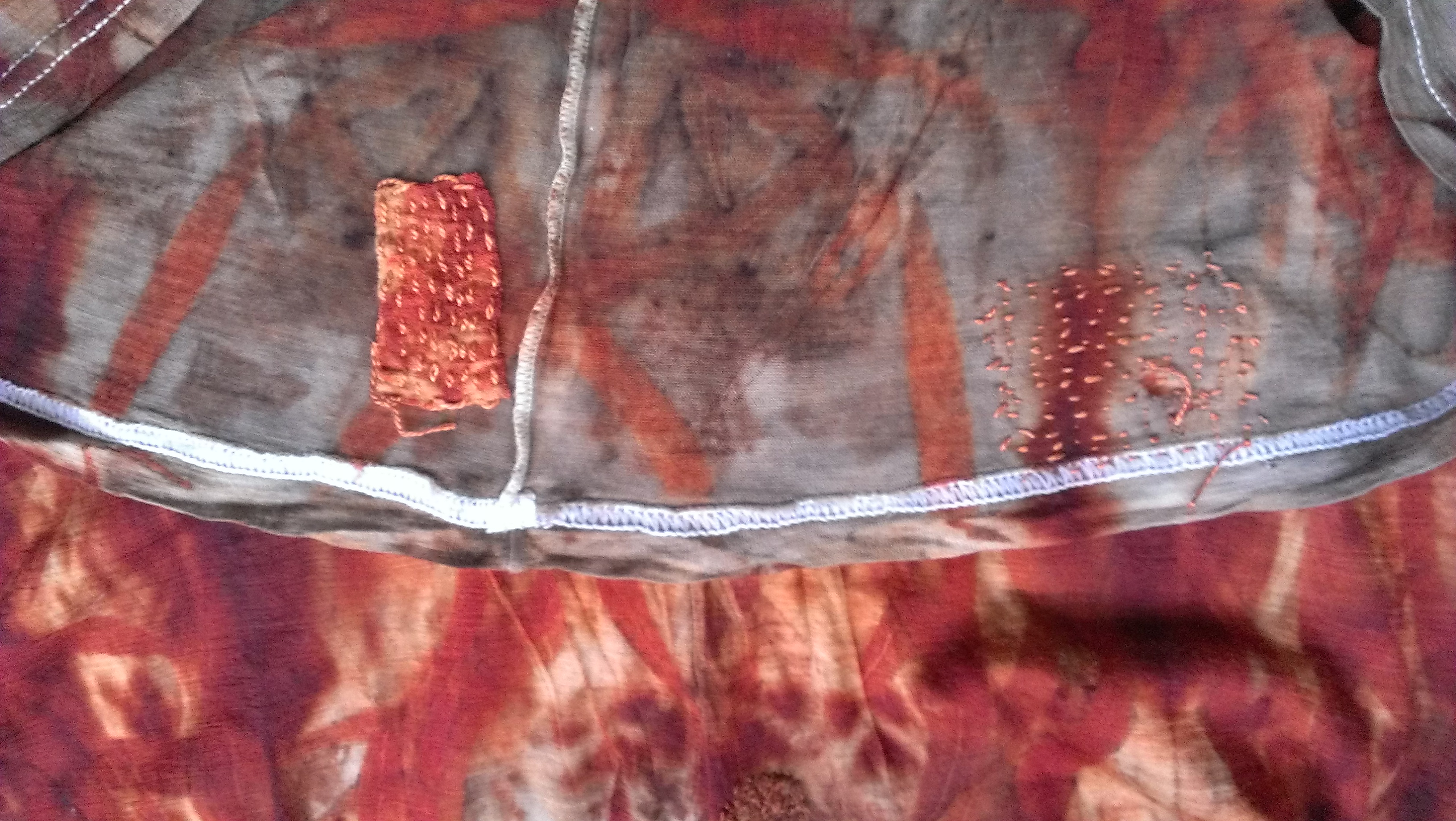
There has been less mending this winter because after the attack of the m*ths last year, stringent measures have been taken round here. M*th proof storage and pheromone sticky traps, and a cleaning programme that gets into the corners.  This is the first mend I’ve needed to make to a woollen undergarment this season, and this garment is years old and has seen a lot of wear.  It’s underwear, so I decided to trial an external patch, as well as an internal patch.  The internal patch was almost invisible from the outside. Here’s the outside view of the external patch:

2015-06-23 09.13.55

Silkymerino eucalyptus-print patch sewn on with eucalyptus dyed silk thread… and here is the inside–interior patch on the left and exterior patch on the right.
2015-06-23 09.14.40

I also have a favourite T shirt.  It’s a fine bamboo shirt with a design by the wonderful Nikki McClure. It has worn some small holes in front.  In the region of the belly button (or perhaps the belt buckle), to be exact!  Hence the trial of internal and external patching.  Conclusion: a feature external patch in this location… will not be flattering when the garment is on, though it could look great if it wasn’t actually on me!  The patched place is at the centre bottom of this image, looking slightly puckered.

2015-06-23 09.12.58

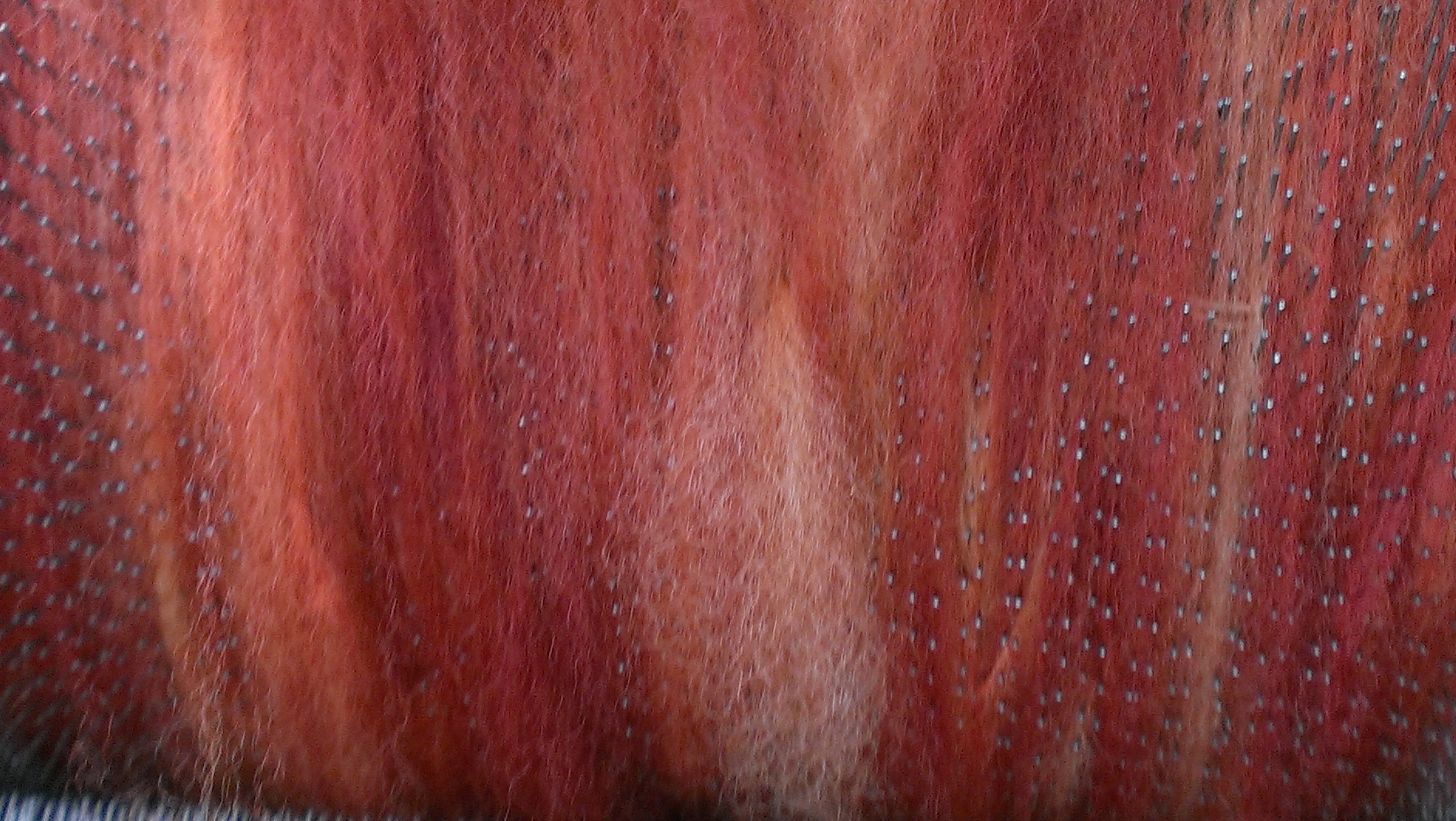
Here is the inside view–silkymerino stitched with madder dyed cotton/silk thread.  The little holes show red and so do all the tiny stitches… so there is a little speckled area on the front of the shirt.  In the spirit of the visible mending programme, this patch is visible… but not too visible!  And I personally will enjoy the internal view.

2015-06-23 09.13.30

And… some rough and ready patching on my gardening jeans has also been needed.  The second knee finally gave way.

2015-07-01 09.51.41

And when I went to mend the knee, one of the back pockets pulled away from the seat.  Better than this happening while I’m out on the street!  I decided against anything fancy because there isn’t much left in the way of strong fabric in these jeans any more–the hem has worn right through, the belt loops are pulling away from the waistband, and the next pair in the queue are more than ready for a permanent move to gardening wear.  In the meantime, some reinforcement on the inside and some machine darning over the most threadbare section will keep them going awhile longer…

2015-07-01 09.51.49

18 Comments

Filed under Sewing

Winter dyeing

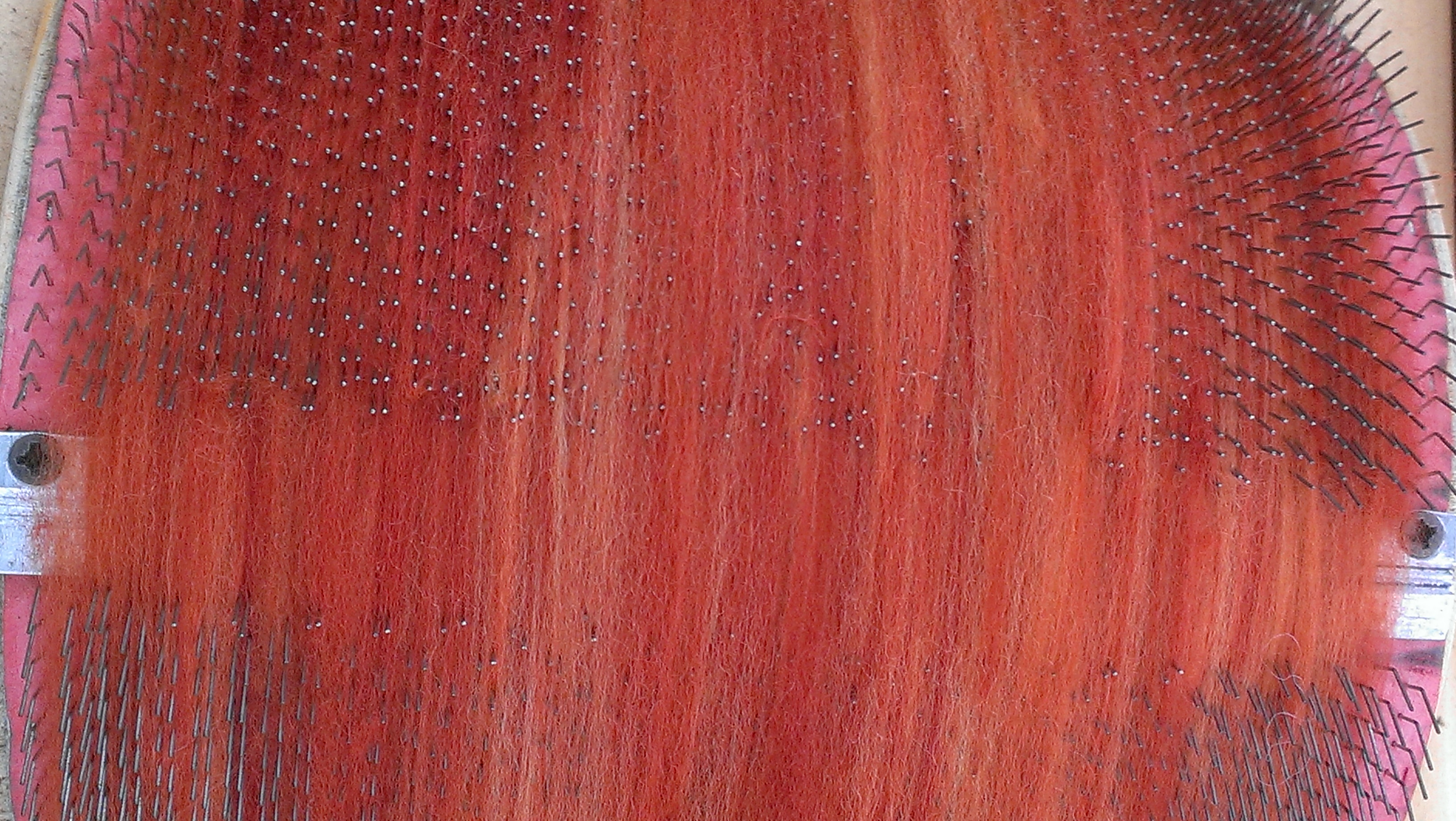
I had some rather pallid silk embroidery thread. That bag it is sitting on came from an op shop and has been through eucalyptus dye pots so many times it is a very deep shade now!

2015-05-02 14.42.56

I had some white and tan polwarth fleece.

2015-05-02 14.44.28

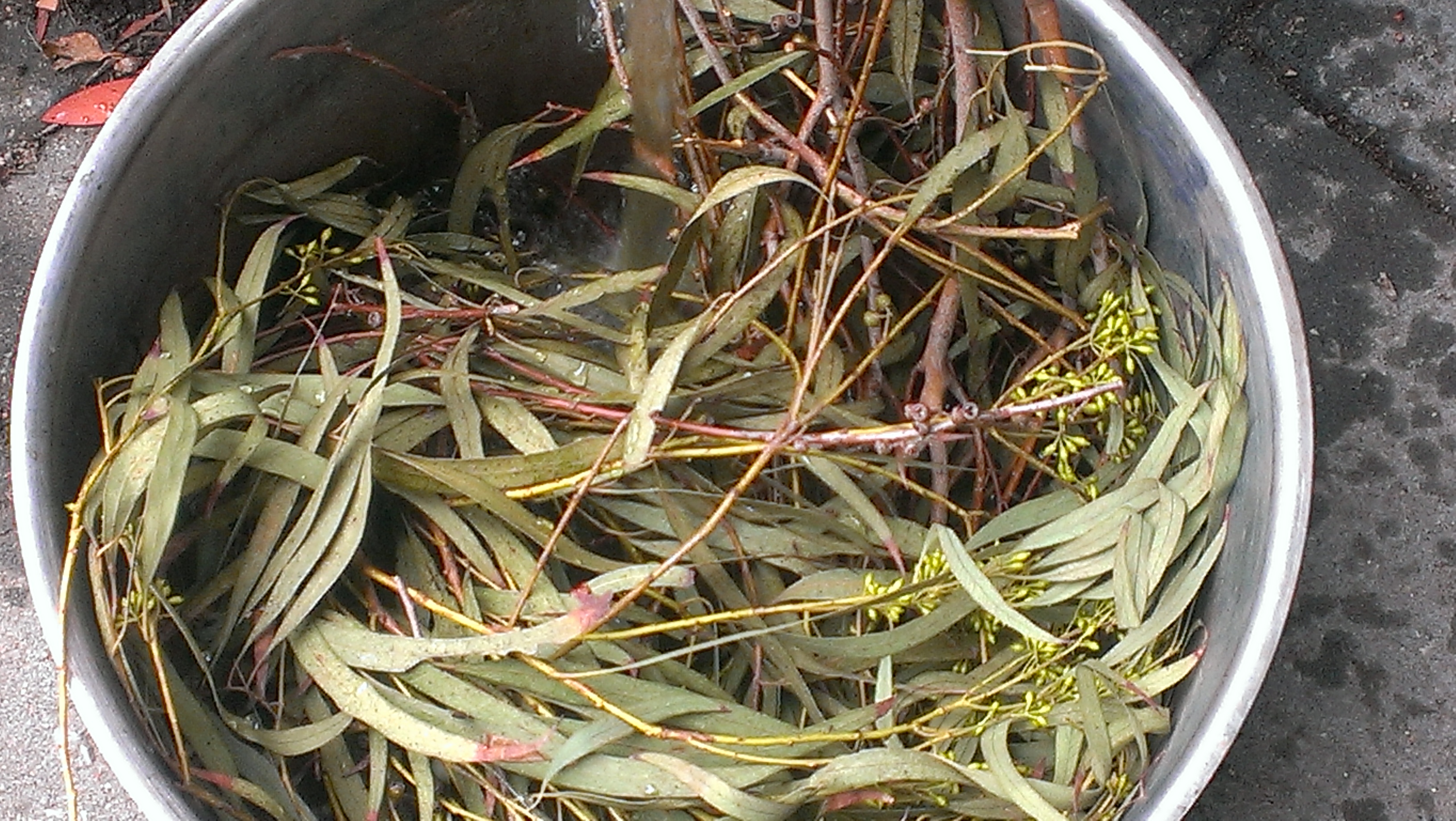
Eucalyptus cinerea leaves… I have sacks of them and decided it was time to get them moving!

2015-05-02 14.44.40

With wool going in a bit later…

2015-05-02 16.47.16

Then a gift of E Nicholii leavea arrived from a fried whose keen eye and quick wits diverted council prunings from going directly to mulch.  Thanks!

2015-05-09 10.06.17

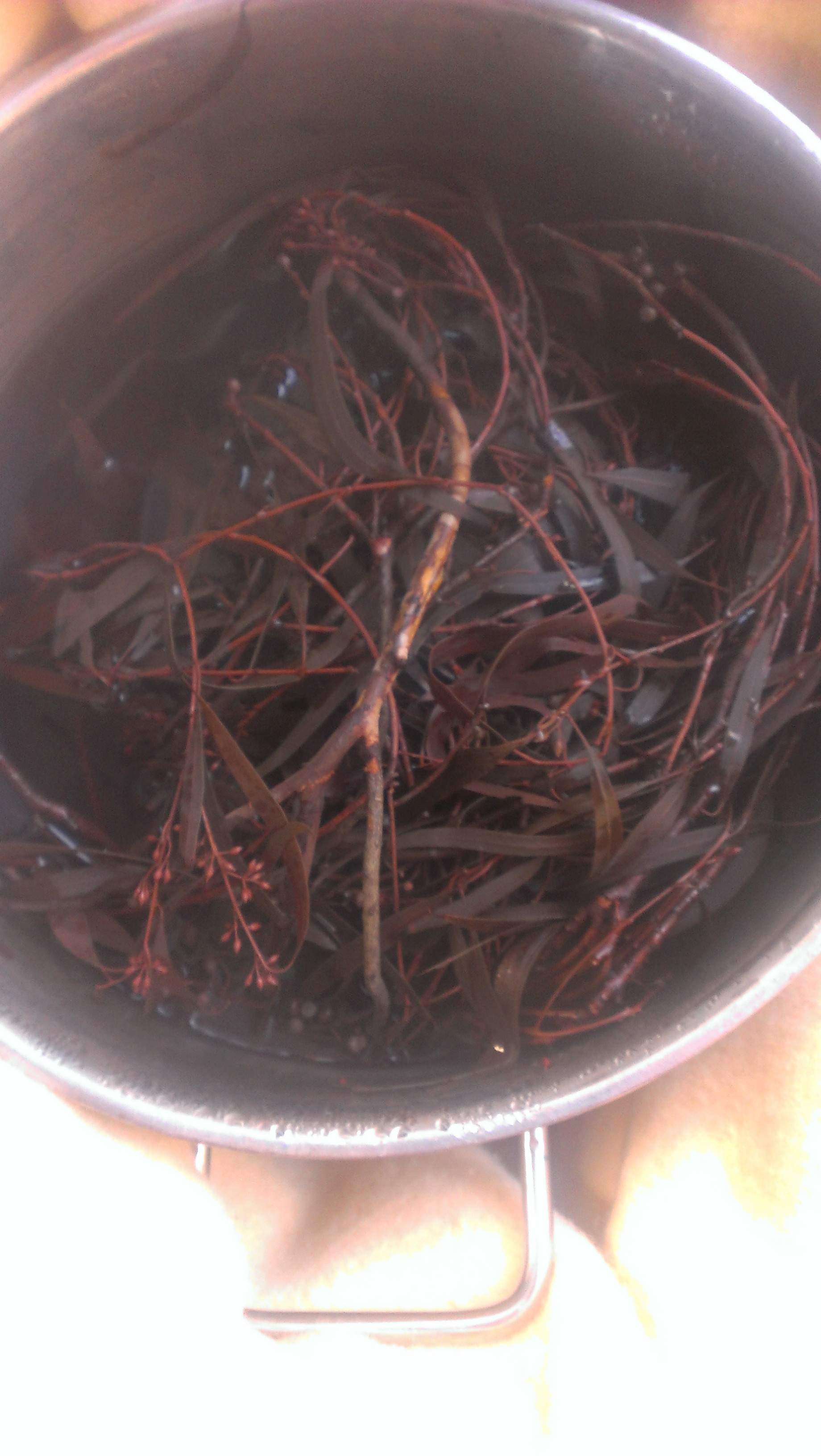
Here they are after some serious cooking.

2015-05-07 12.49.19

My tour of the dye stash also uncovered these, sitting in a bag I used to use for gleaning the neighbourhood.  Perhaps I could use it again if it wasn’t storing these leaves…

2015-05-09 10.10.27

I thought I remembered them being unexciting.  They are clearly ironbark leaves, but presumably I confused my ironbarks.  I wasn’t sure and decided to try them out.

2015-05-09 10.12.21

There has also been E Scoparia bark dyeing.

2015-05-09 10.05.00

And here we have, fresh from the dye bath (a day later): E Nicholii at the top left; the unexciting ironbark, and E Scoparia bark at the bottom.

2015-05-10 12.19.04

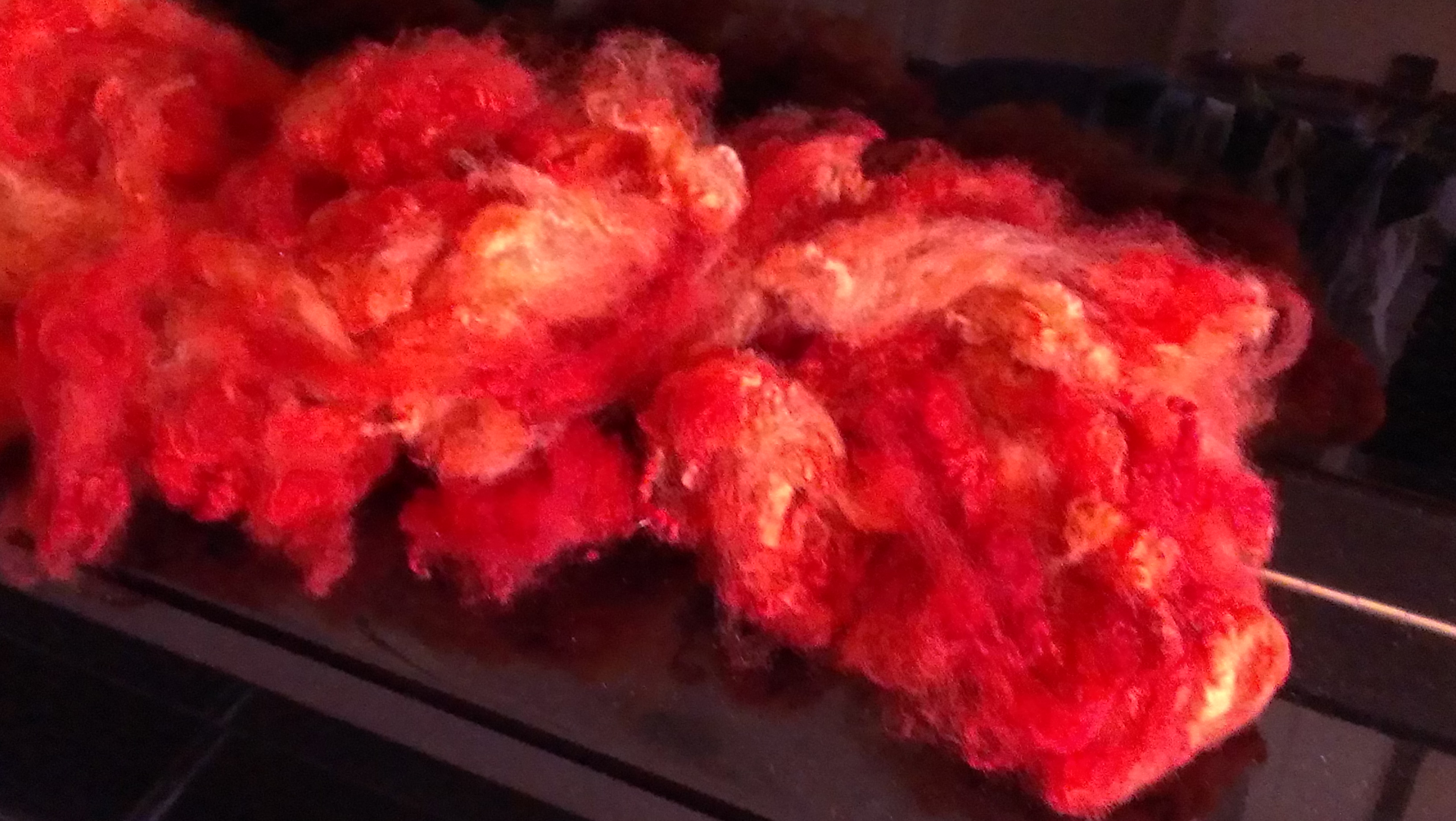
Later still, some of that polwarth fleece sitting on the piano like a fluffy flame…

2015-05-12 14.18.21

First pass through the carder…
2015-05-14 09.23.12

Second pass… ready to spin!
2015-05-14 09.30.33


And now I have some thread with a bit more colour in it, too!

2015-05-14 09.45.54

9 Comments

Filed under Eucalypts, Fibre preparation, Natural dyeing

Guerilla saltbush planting–and more solace pennants

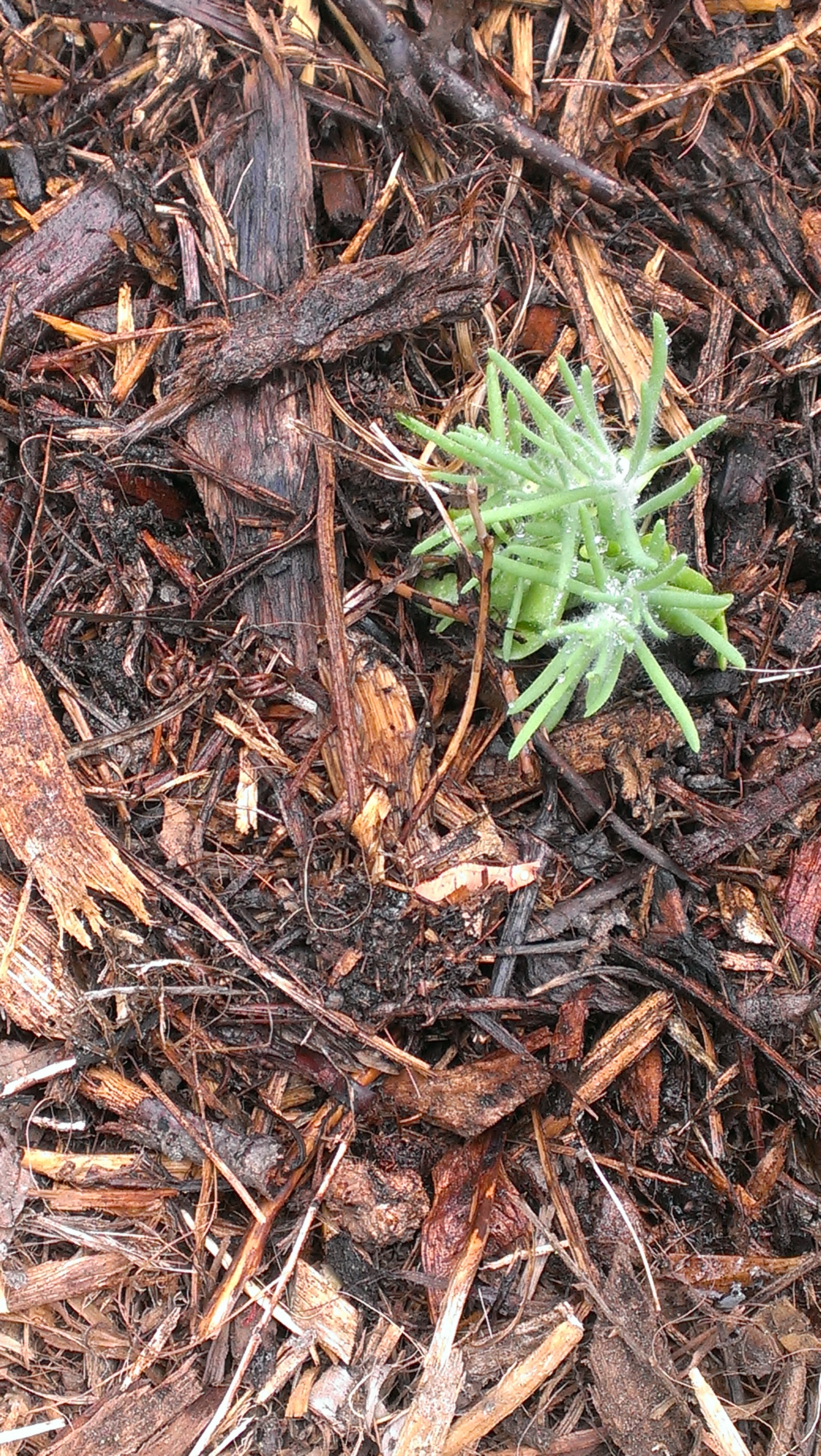
The latest round of saltbush seedlings have gone out into the big, wide (hot, dry) world.  With the occasional alyssum seedling carried along for the ride.  We loaded up the wheelbarrow and headed out with our well soaked seedlings.

2014-12-07 12.27.33

There was precious little soil to plant them in, in places… but we will just try them out and see how far they get.  We were planting by a pedestrian and cycle crossing, and I was a bit surprised by how many people thanked and congratulated us, perhaps giving us credit for planting that has been done by the council, as well as the 20 or so plants we were setting out.

2014-12-07 12.25.58

Once they were watered in, we wandered off down the road to spread a bit more mulch and pick plastics out of the mulch council has supplied.  Since planting we have realised that the council workers who are watering the council plantings are also watering the ones we put in–awesome!

2014-12-07 12.32.41

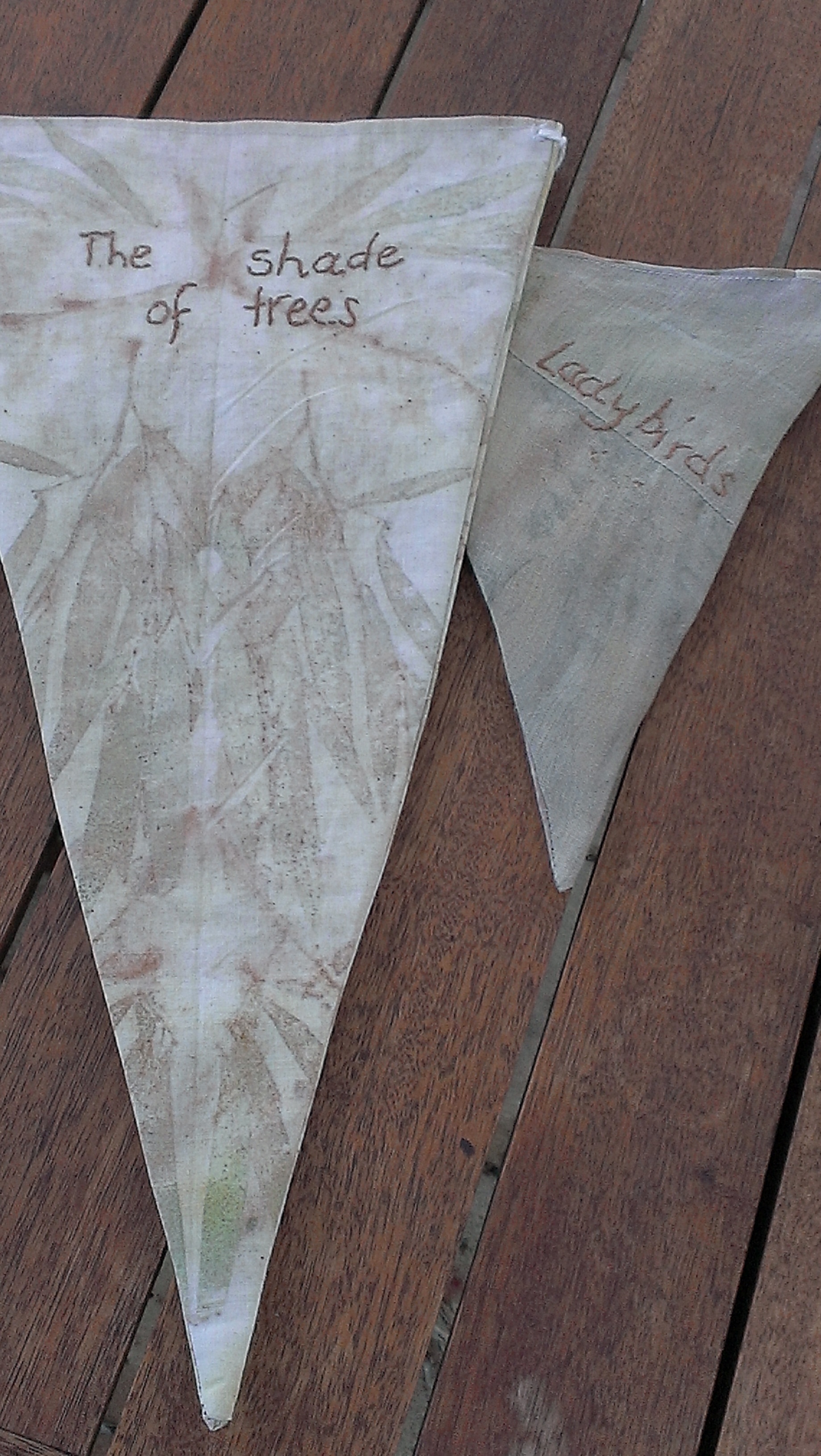
There have been yet more pennants for Solace… I went to a conference and spent the quiet evenings, of which there were few, stitching away on these.

2014-12-07 19.35.25

Some are double sided… I told my sister (we had dinner one night while I was conferencing) about the project and she asked what I was writing on the pennants.  When I said ‘ladybirds’ she laughed and said she felt that way about ladybirds too!

2014-12-07 19.34.22
‘Weeding and revegetation’ seemed an appropriate one to show in this post… but when I made this pennant I was thinking of dear friends who weed and care for precious places in the Blue Mountains and beyond… and of pulling out caltrop in the new plantings in our street, which is part of the route of a bikeway!  Caltrop produces the ‘three corner jack’, a vicious spiny seed capsule more than capable of piercing a thong (flip flop) or deflating a bicycle tyre.  For another contribution to the project, you might like to go here and be inspired.


6 Comments

Filed under Leaf prints, Neighbourhood pleasures, Sewing

Jars of summer’s glory

I’ve been collecting for a while now… as flowers finish or petals fall.

2014-11-29 13.27.30

After re-potting, the daylily had a bumper season, flowering for weeks.  The maroon pelargonium also did well, and I picked up all the dead flowers as their petals fell.

2014-11-15 12.02.22

My friends have hollyhocks, some almost black and some a little more pink and purple.

2014-12-06 18.16.51

They’re patient or even encouraging when I collect spent blooms… and realise that they will end up being stuffed into jars for steeping and storing following India Flint’s method of preservation dyeing (more or less).  This is my new favourite way to dye embroidery thread.  I never thought I could be converted to embroidery, no matter how simple.

2014-11-29 18.19.08

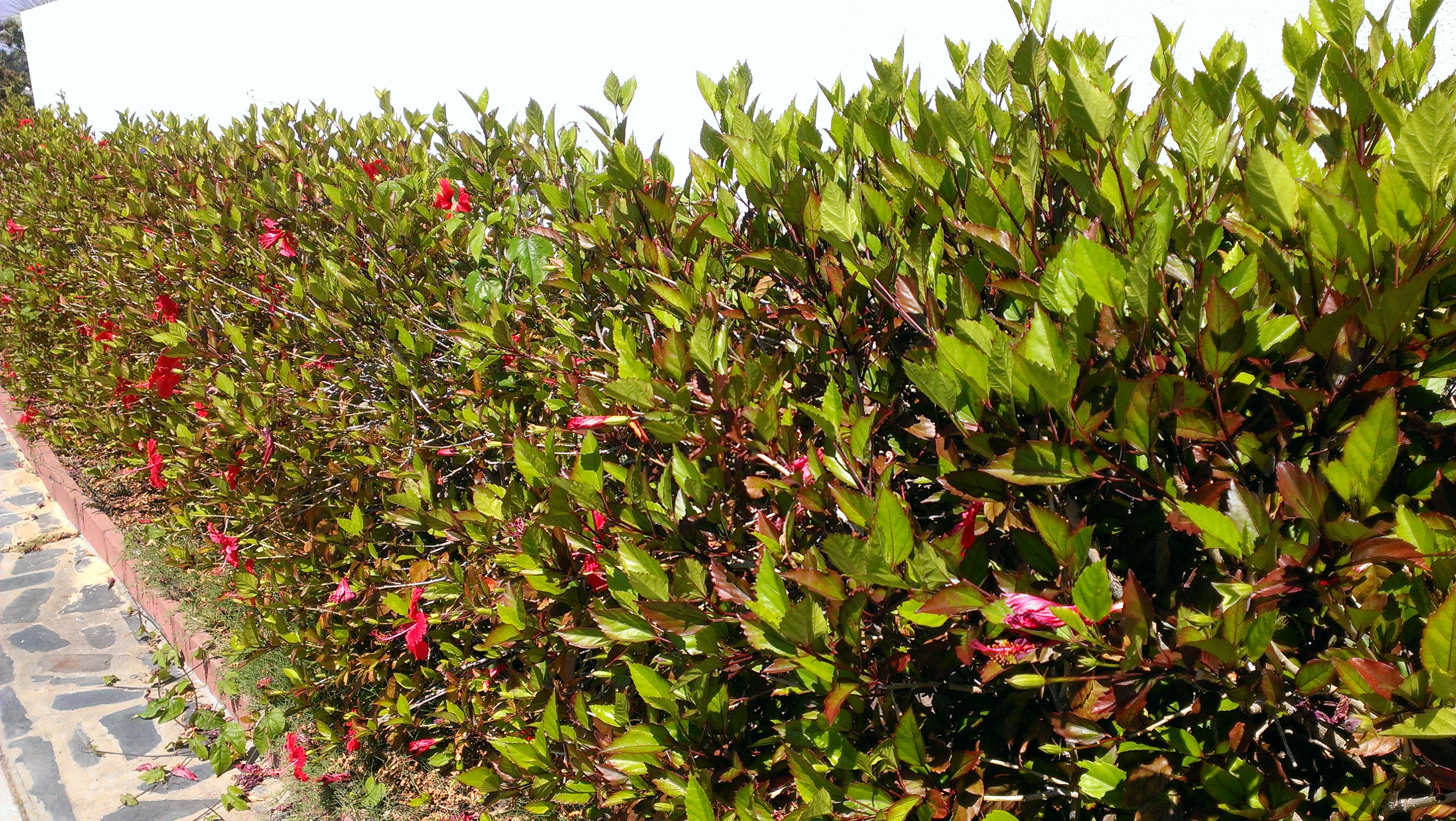
And, it is hibiscus season again.  I went along for a ride to West Lakes for others to do open water swimming.  The dog and I found an entire hedge of red hibiscus (we’re temporary dog aunties again), and I just happened to have a bag with me.  I know–how fortuitous!

2014-12-07 15.14.31

Closer up…

2014-12-07 15.14.46

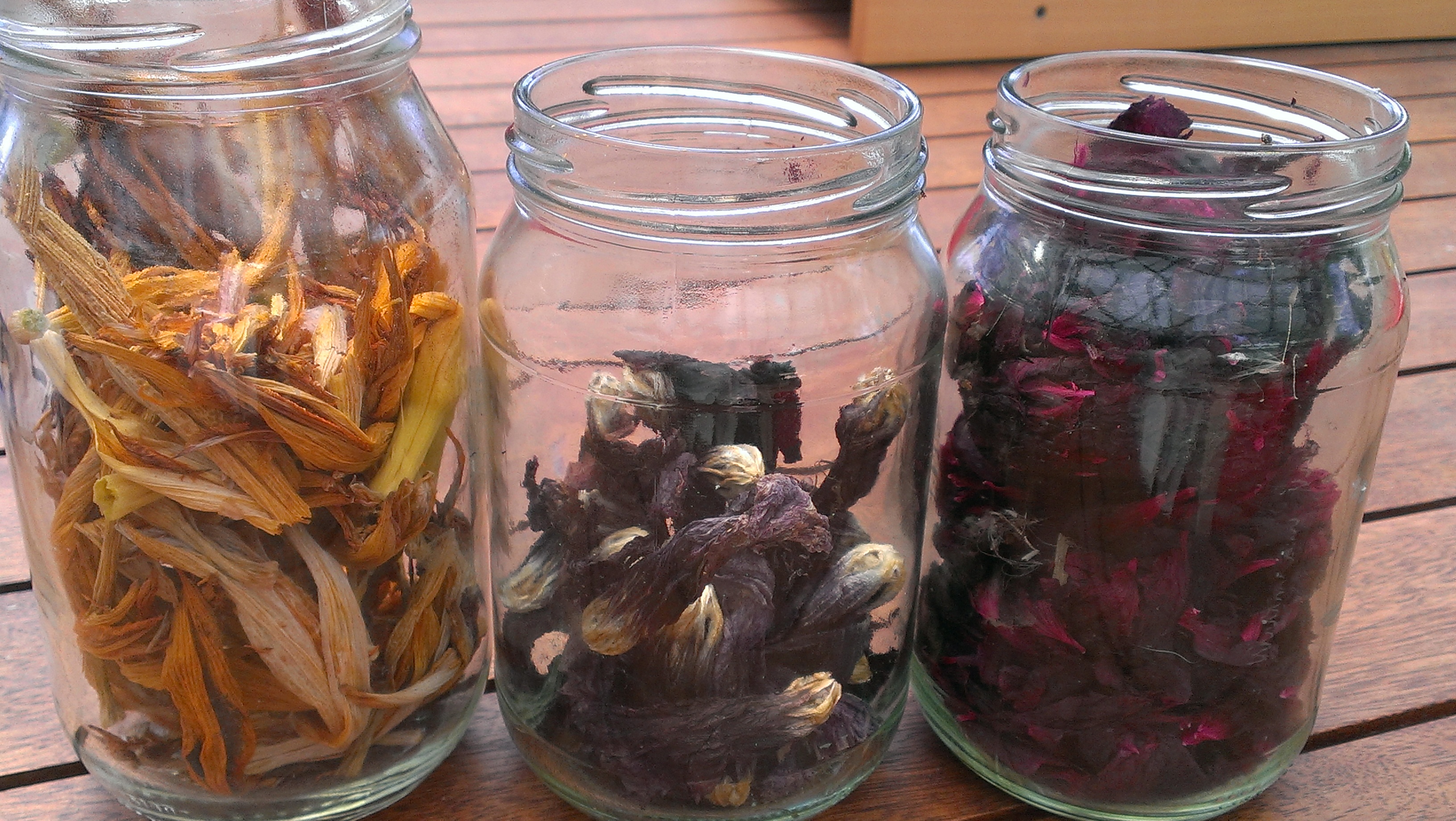
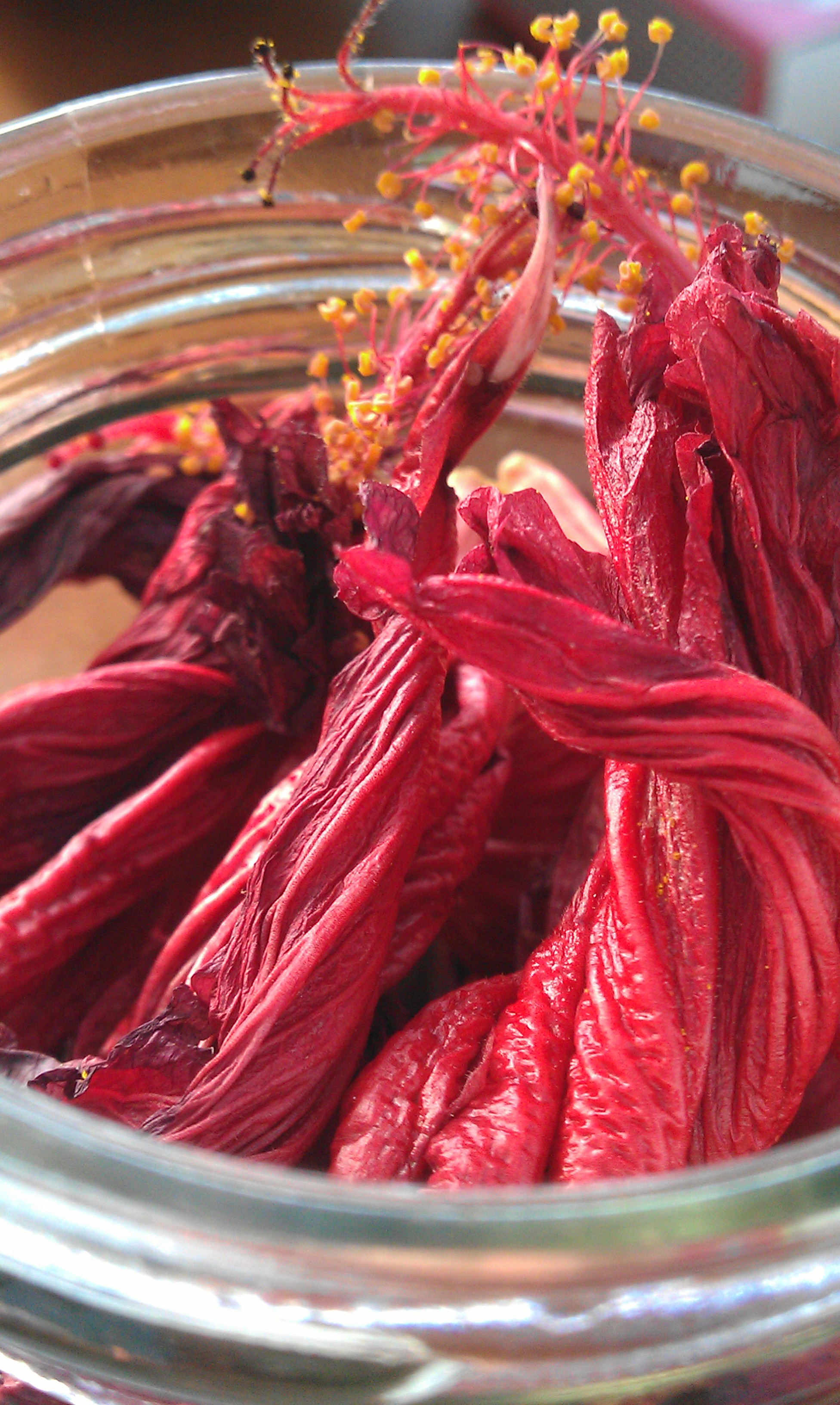
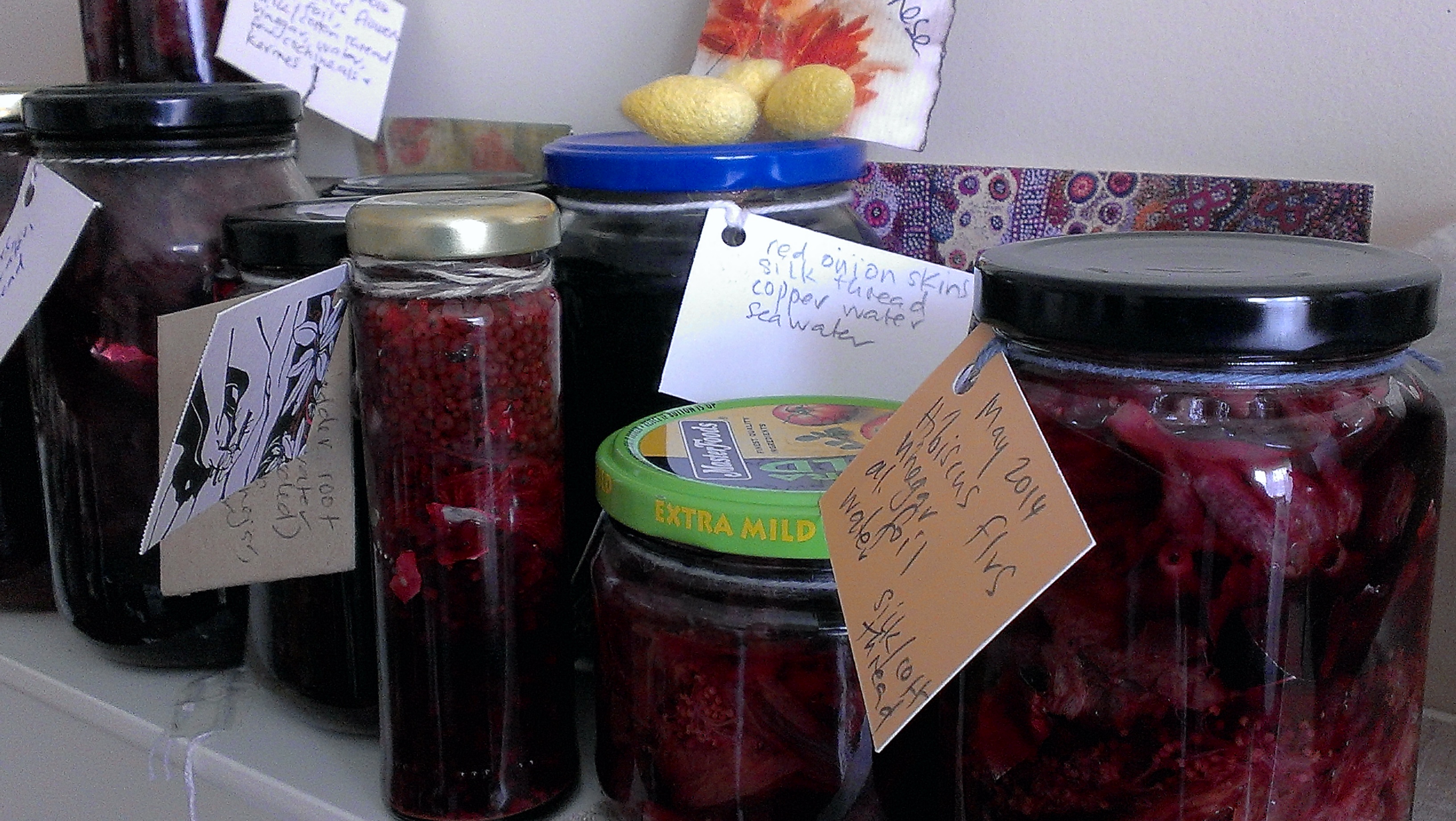
And here is the dye jar result of picking up all those spent flowers.  Hollyhocks on the left, hibiscus on the right.  The jars that have come to me as a result of Mum having a favourite brand of mayonnaise are all finding good uses despite being a bit too big for jam.  these jars of summer’s glory will now sit and steep in all their jewel like colours for about a year.

2014-12-09 11.46.54


8 Comments

Filed under Natural dyeing

Dyes of antiquity: Carmine cochineal

2014-06-14 14.20.01

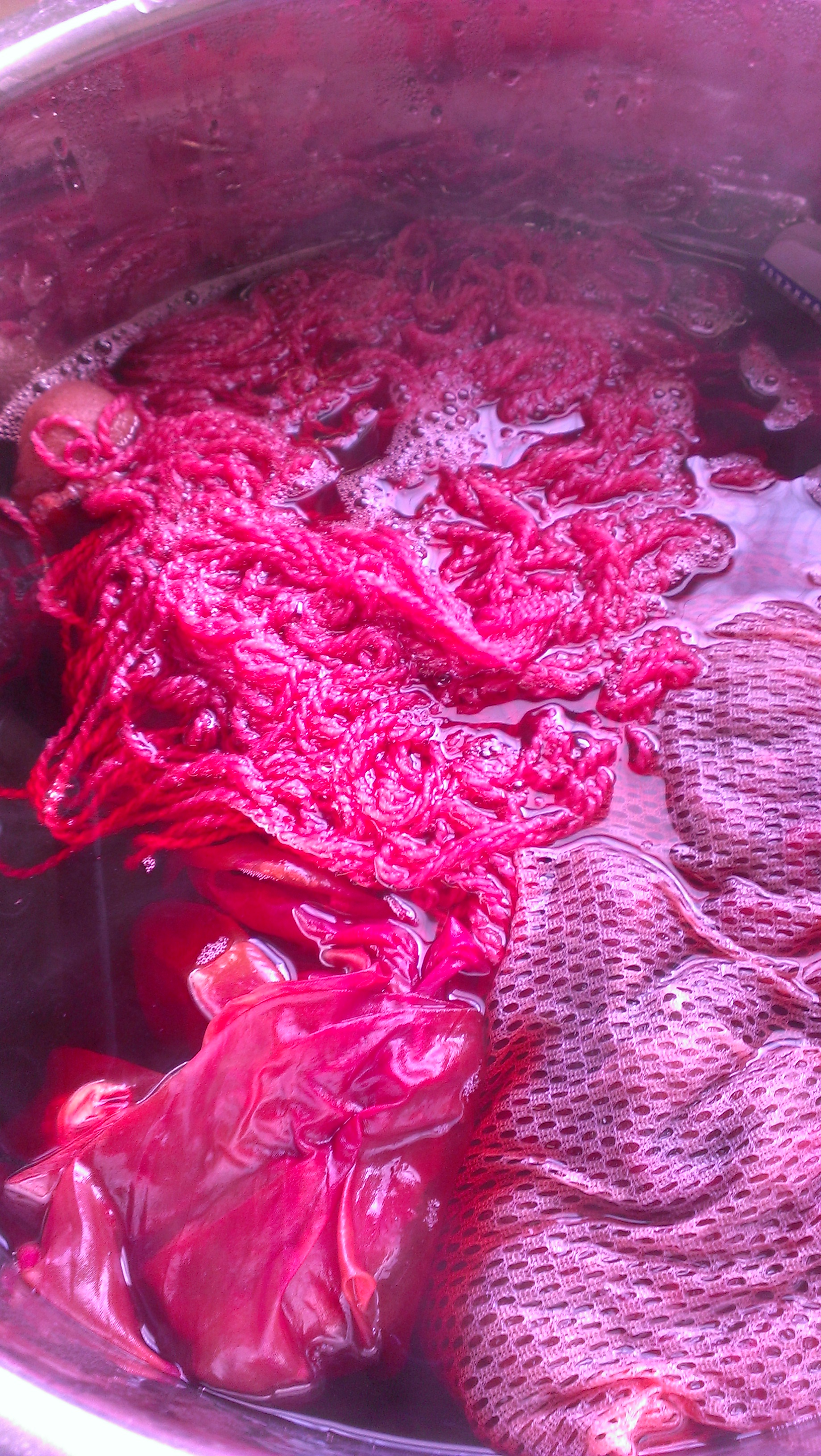
Cochineal is another of the dyes I received from the Guild and used at the workshop a while back.  In fact, there was a choice of cochineals.  In what I realise now was my ignorance, I chose ‘carmine cochineal’ because it was ground up and I was unsure how I could adequately grind the whole dried insects I also have.  As you can see, after an initial period of being dull ornage, the dye bath was an impressively shocking pink.  It turns out that ‘carmine cochineal’ is not a shade of cochineal but a preparation of cochineal boiled with ammonia or sodium carbonate.  I borrowed Frederick Gerber’s Cochineal and the Insect Dyes 1978 from, the Guild and found that the deeper red colour I had in mind when I saw the term ‘carmine’ could only be obtained from this preparation with the application of a tin mordant which I am not prepared to use.  the colours we achieved with alum were well within the range indicated by the included colour chart of wool samples (those were the days!)

2014-07-20 16.00.18

The colour range on this card (with madder beneath for comparison) is impressive even without tin. 

2014-07-21 14.33.21

We dyed organic wool. I dyed silk paj and twined string (the orange string was dyed with madder). 

2014-07-04 12.52.33

I brought the vat home with me and dyed a lot more fibre in an attempt to exhaust it.  Here is grey corriedale mordanted with alum and overdyed with carmine cochineal.

2014-07-30 11.27.48

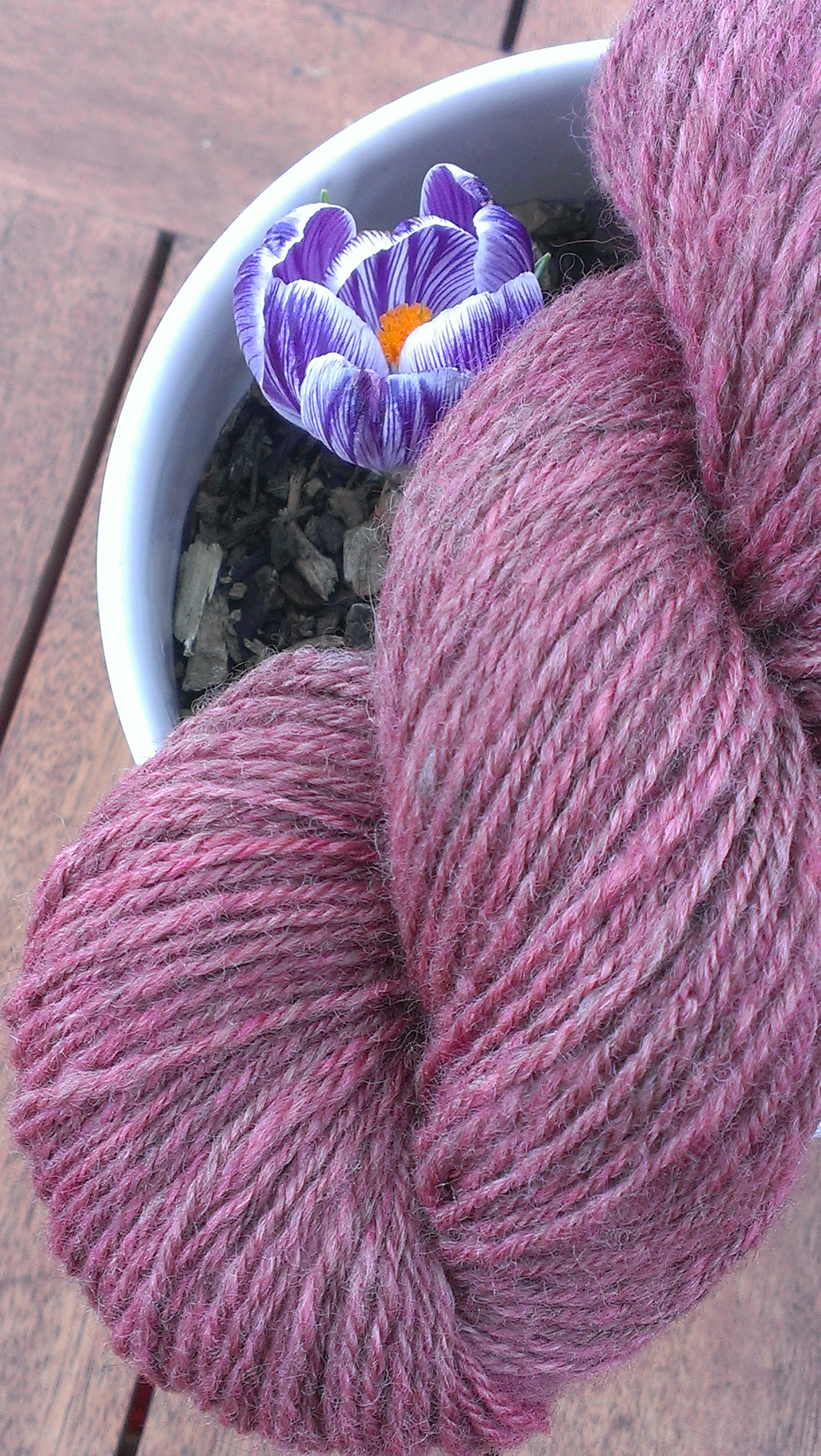
And spun–three plied.  This is my first ever crocus flower, by the way!

2014-08-23 11.57.30

The magenta silk embroidery thread had maximum time in the bath, since I fished it out when removing the dyestuff (in its recycled stocking) prior to disposing of the bath!

2014-07-30 11.23.55


12 Comments

Filed under Natural dyeing, Spinning

More stuff, steep and store jars…

The last hibiscus are only just still flowering…

IMAG1719

And being packed into jars…

IMAG1726

And the prunus trees are getting more and more bare…

IMAG1724

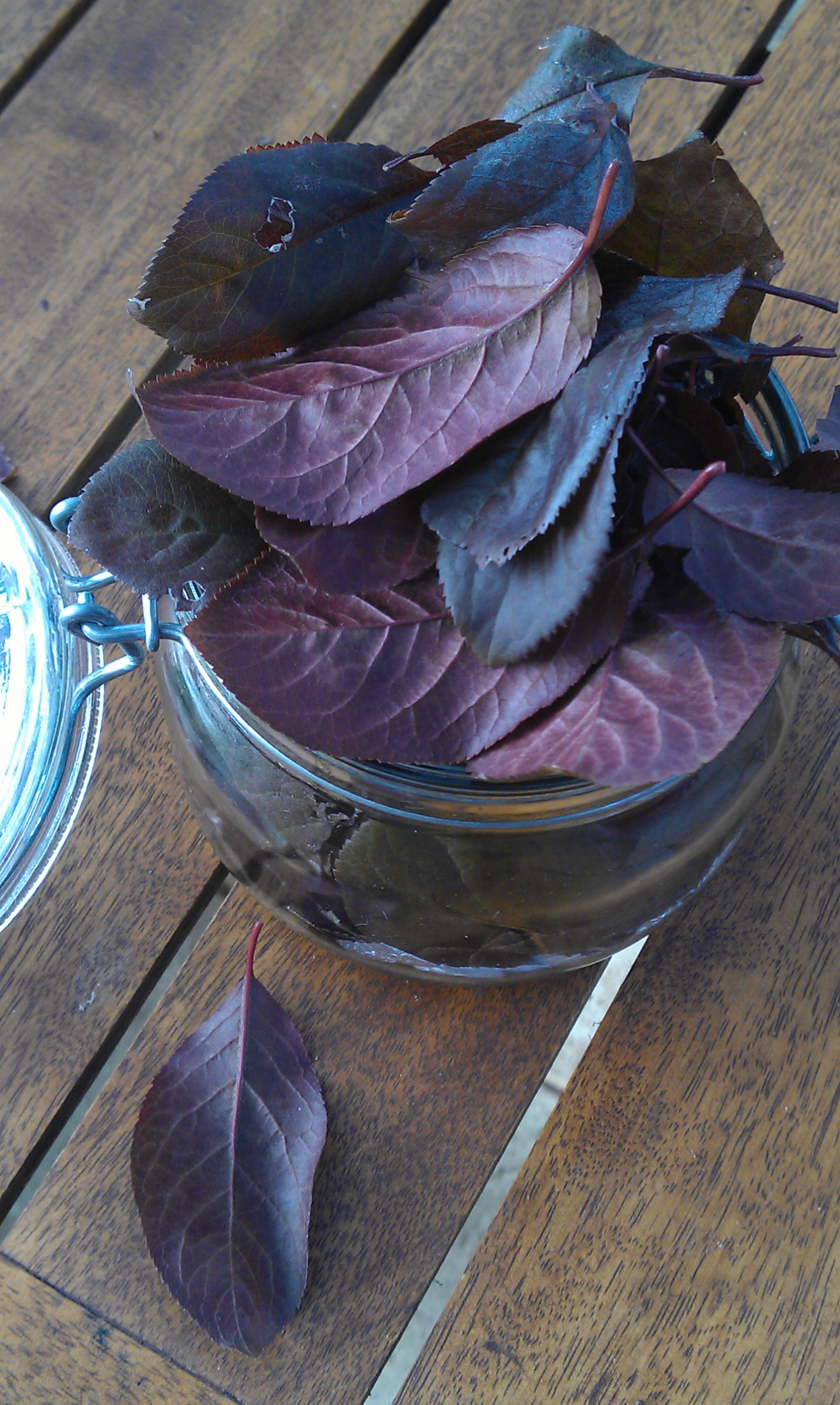
but not all those leaves are going to compost immediately…

IMAG1725

Since a friend introduced me to this book: Five Minute Microwave Bottling–I have been experimenting with that.  Yes, the bottles seal.  No, there is no obvious cataclysm despite the metal lid being in the microwave (and the book explains why).  Yes, my friend is successfully bottling fruit this way.

So, as well as having a few items in India Flint’s online pantry, (what a fabulous idea that is), I have a little pantry on my shelf at home…

2014-06-09 12.51.47


5 Comments

Filed under Natural dyeing, Neighbourhood pleasures

Embroidery for the heart, from the heart

One of my friends is a poet, and a social worker.  She has spent years dedicating herself to the wellbeing of the people in the locality where she works, a place where poverty and violence have taken their toll, creating tough lives.  She witnesses people’s skills and talents in the face of difficulty and enables the bringing into existence of new connections, new skills, new capacities and new lives.  She helps those who must escape violence to make that difficult, vital journey into new lives without abuse.  I am full of admiration for all that she can do and all that she is.

IMAG1901

She has been facing some powerful challenges of her own in the face of government budget cuts and policy changes.  I have been thinking of her a great deal.  There is one poem in particular that brings her solace.  I decided to embroider it for her.  It has been a pleasure to spend so many hours thinking of her, holding her in my heart and wishing her well.  I’ve stitched the words on hemp dyed with indigofera australis and thread dyed with indigofera for blue and silky oak for yellow.

Leave a comment

Filed under Natural dyeing, Sewing

Plum Pine 2: Mordant and Modifiers

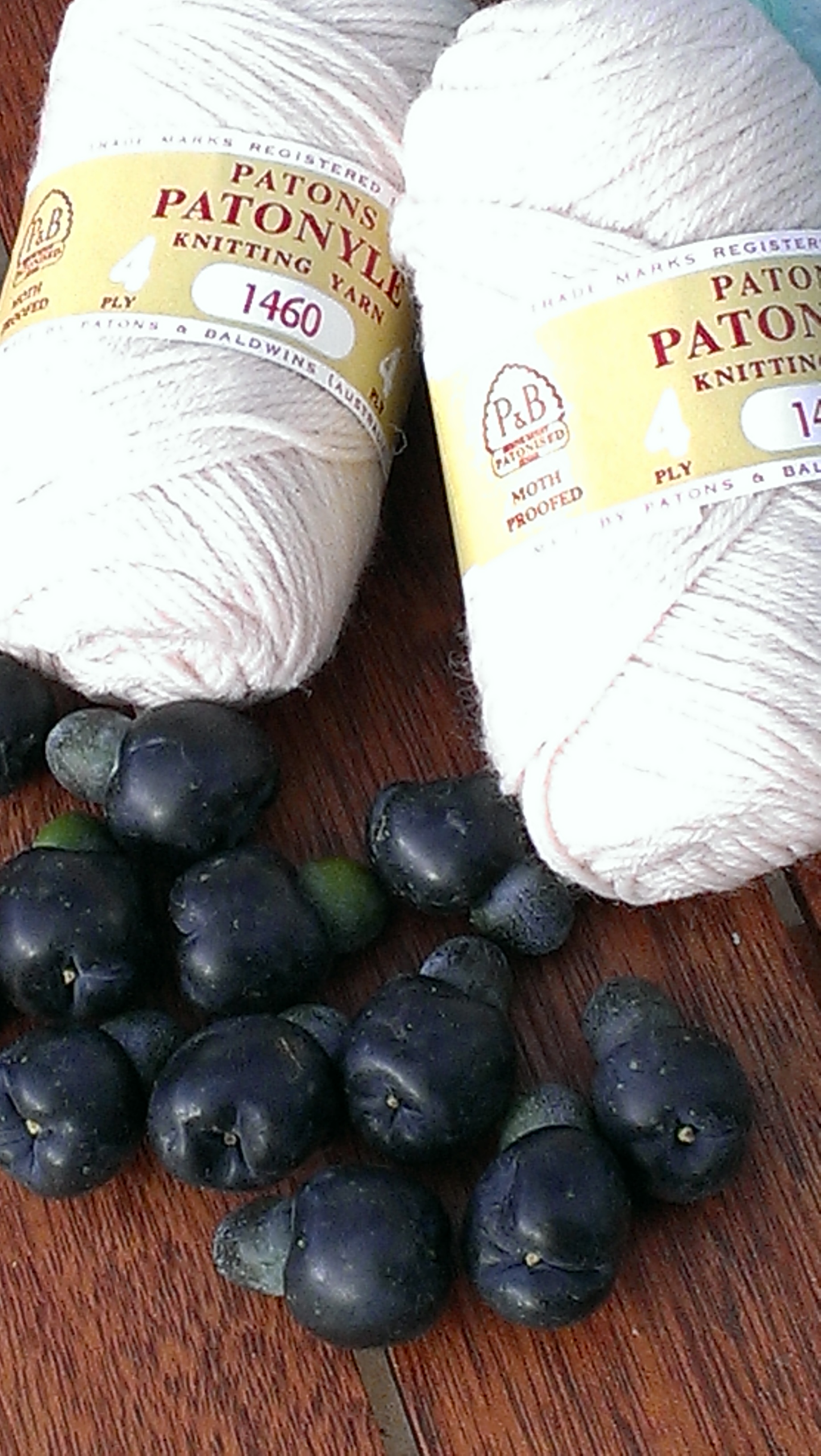
Having had success with a test dyebath, I made a point of returning to Botanic Park to collect more fruit on weekend, en route to celebrating World Wide Knit in Public Day.  I dyed some grey corriedale locks in my test bath and they went from grey to a dull brownish shade, so I opted for superwash + alum and silk as the most likely candidates for success. I mordanted sock yarn of antiquity (picked up at a garage sale) and prepared another dyebath.  I regard sock yarn as a no risk option.  If I knit socks for a friend, I can make an open offer to re-dye at any point they fade to an unacceptable shade (and I can ask how they’re faring under normal wear and washing).

IMAG1461

The dye bath looked fantastic.

IMG_0168

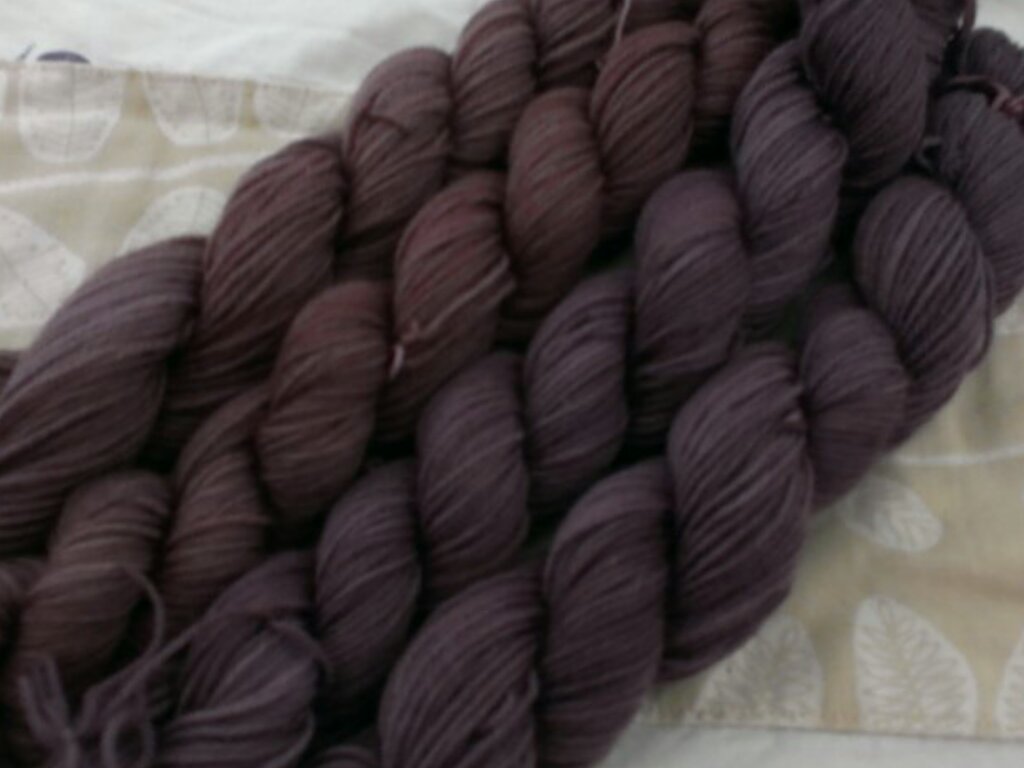
I ran two baths with this fruit, because the first one produced purple on my alum mordanted skeins of sock yarn (wool-nylon).  I pulled it out of the bath after dark and in artificial light it looked quite brown. So I dropped the skeins back in the bath for the night and put test samples into an iron bath and a vinegar bath. Next morning the sock yarn was purple! The exhaust dyebath was a lighter and browner shade of mauve.  I apologise for these photos but it’s winter here and sunlight is in short supply.

IMG_0183

My tiny skeins of silk thread came out various shades of rose pink through to magenta too… and I have embarked on an embroidery project, so that was exciting.  The shades on the right are both using vinegar in the dyebath.

IMG_0178

The modifiers were interesting: the wool+alum strand was noticeably more purple with vinegar and noticeably more brown/grey with iron, which is, I think, about what should be expected.  So… a promising beginning to experiments with a new dye plant–but with no sense yet of how washfast or lightfast it might be.

IMAG1499

7 Comments

Filed under Dye Plants, Natural dyeing

Plum pine 1

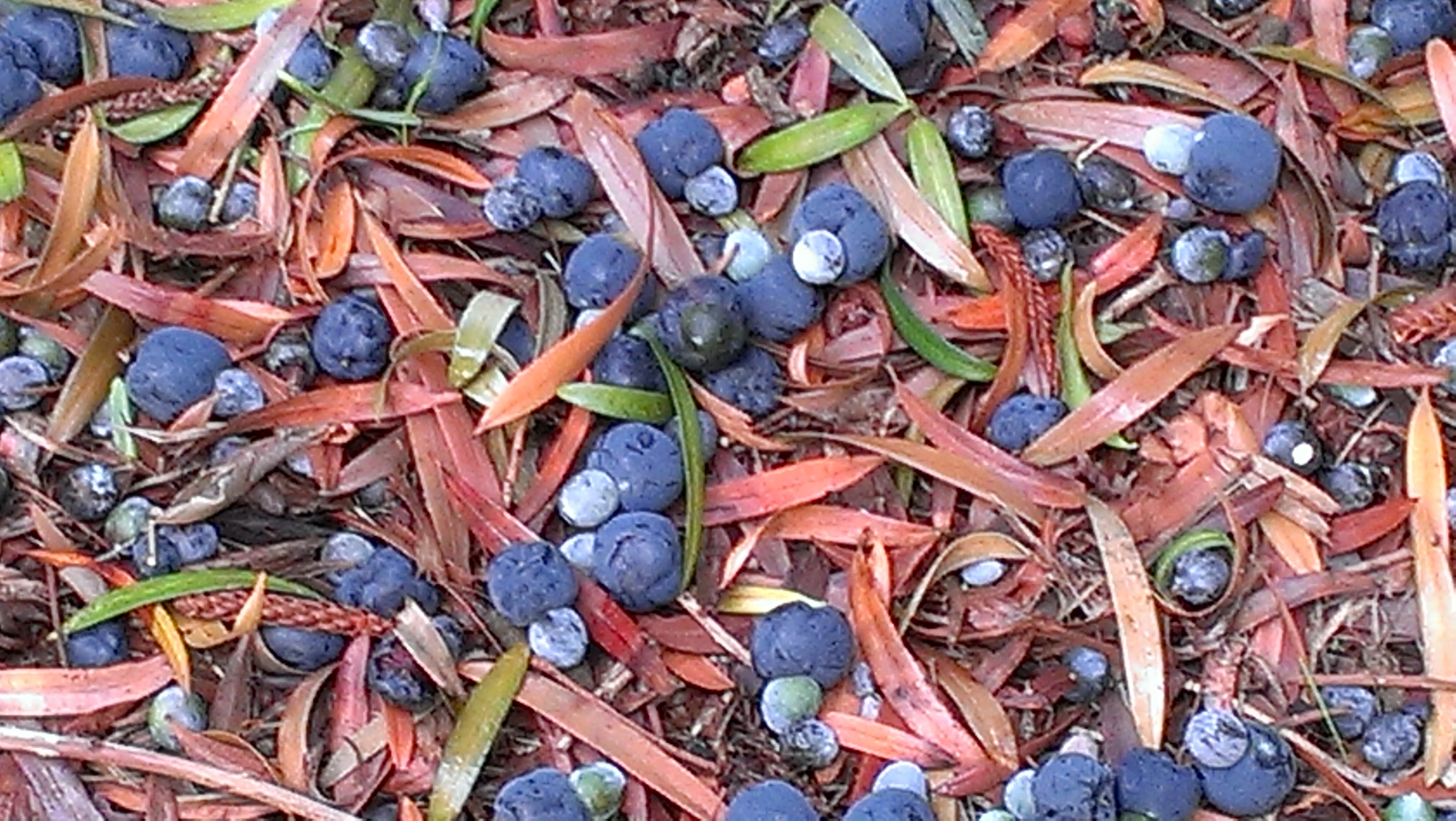
Podocarpus elatus is fruiting in Botanic Park.  I rode past recently with my beady eyes alert, looking for this tree.  I’ve investigated its qualities previously and discovered the fruit is edible.  And today, there they were, lying on the ground in plenty.  They offer plenty of weirdness by regular fruit standards, since the seed is outside the fruit.  One of the less common forms of fruit in my limited experience!  Here they are on the tree…

IMAG1412

And on the ground below.

IMAG1413

This is the tree itself.  It is native to Australia, but it is a rainforest tree.  For those who don’t know…  I am not living anywhere near a rainforest.  South Australia is generously described as having a Mediterranean climate.  Those less generous just call it a desert, and a fair amount of the state answers that description.

IMAG1414

I tried eating one of the fruits and it was just as I remembered it from last time: subtle is the most I could say about the flavour, and the word ‘mucilaginous’ came to mind immediately.  If there is a commercial application for this fruit perhaps it would be… lubricant.  Or perhaps it could be the gumbo of Australian bush food desserts.  I tried leaf prints… but nothing too exciting came of it.

IMAG1432

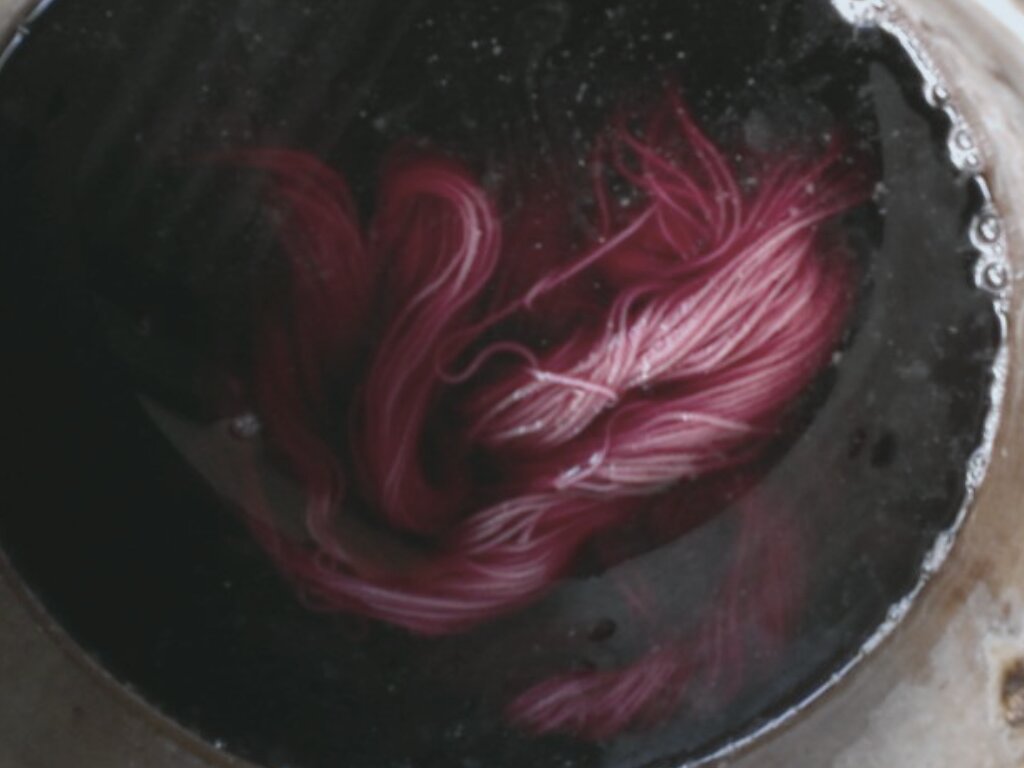
I twisted the seeds off the fruit and soaked the fruit overnight–pitting plums has never been so simple.  No change in the colour of the water.  I cooked them for almost an hour–water a deep plum colour by now–and then threw in a  sample card and some silk thread.  Soon after that, the alum mordanted wool looked almost blue, and the other fibres (cotton, silk, wool) looked pink.  After about an hour of heat, the alum mordanted wool was deep grey-blue, the wool was deep rose-pink and the other fibres looked paler shades of pink.

IMAG1462

Needless to say, this outcome made me think I should go back to that tree 🙂

7 Comments

Filed under Dye Plants, Leaf prints, Natural dyeing