Category Archives: Fibre preparation

So much for nettle fibre processing!

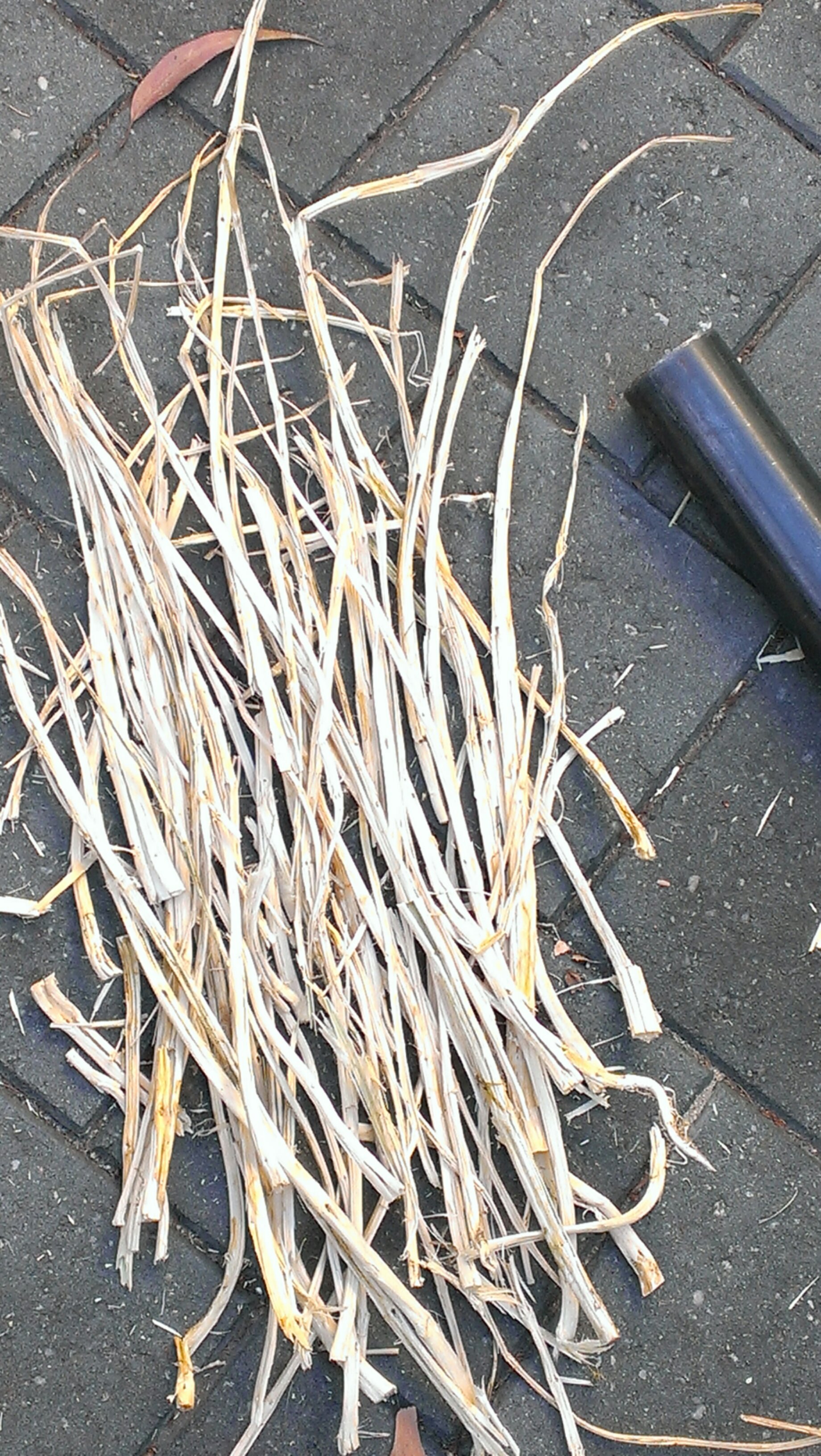
Finally, I returned to the harvested and then  twice retted nettle stems. I began by rolling a pipe over them to make the stems easier to split.

image

I have been putting this task off because these stems looked so little promising.

image

The stems mostly shattered without fibre becoming evident in any significant way.

image

I gathered just a little fibre for a lot of effort.

image

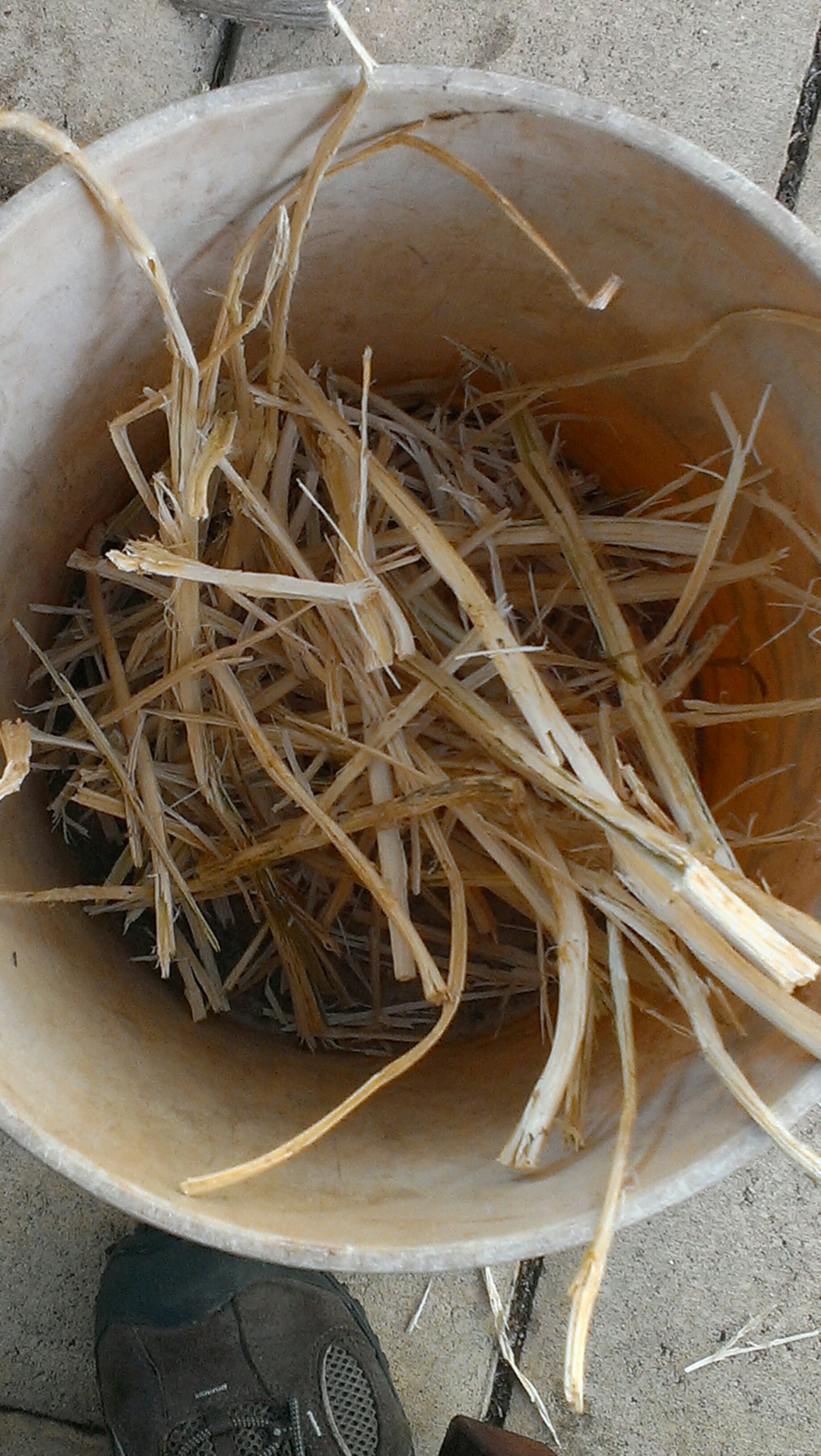
After carding, I was left with this. So I cleaned my handcards on the garden, added the stems to the mulch in the garden, and now… I wait for next year!

A image

A belated postscript: there is a wonderful community flax growing project reaching the spinning stage on the other side of the planet.  So for stories of bast fibre success, please go to visit Sharon Kallis here.

9 Comments

Filed under Fibre preparation

Of silkworms and socks

The very last silkworm went to silk yesterday, so there’s an end to silkworm updates for this year.  I can’t pretend to be sorry.  There have been a lot of weeks of feeding the hungry caterpillars multiple times a day and foraging on their behalf, and I’m happy to wait until next September to do that again.  I found an extra two cocoons under the guitar case on the floor below the silkworm raising station.  They must  either have crawled there to pupate (music loving caterpillars?) or fallen after chewing off the piece of leaf that connected them to the rest of their mates. Happily, I don’t think we  lost a single silkworm, which is good, since stories of silkworm tragedy came back to me from some of the people who took them home from the Guild! 

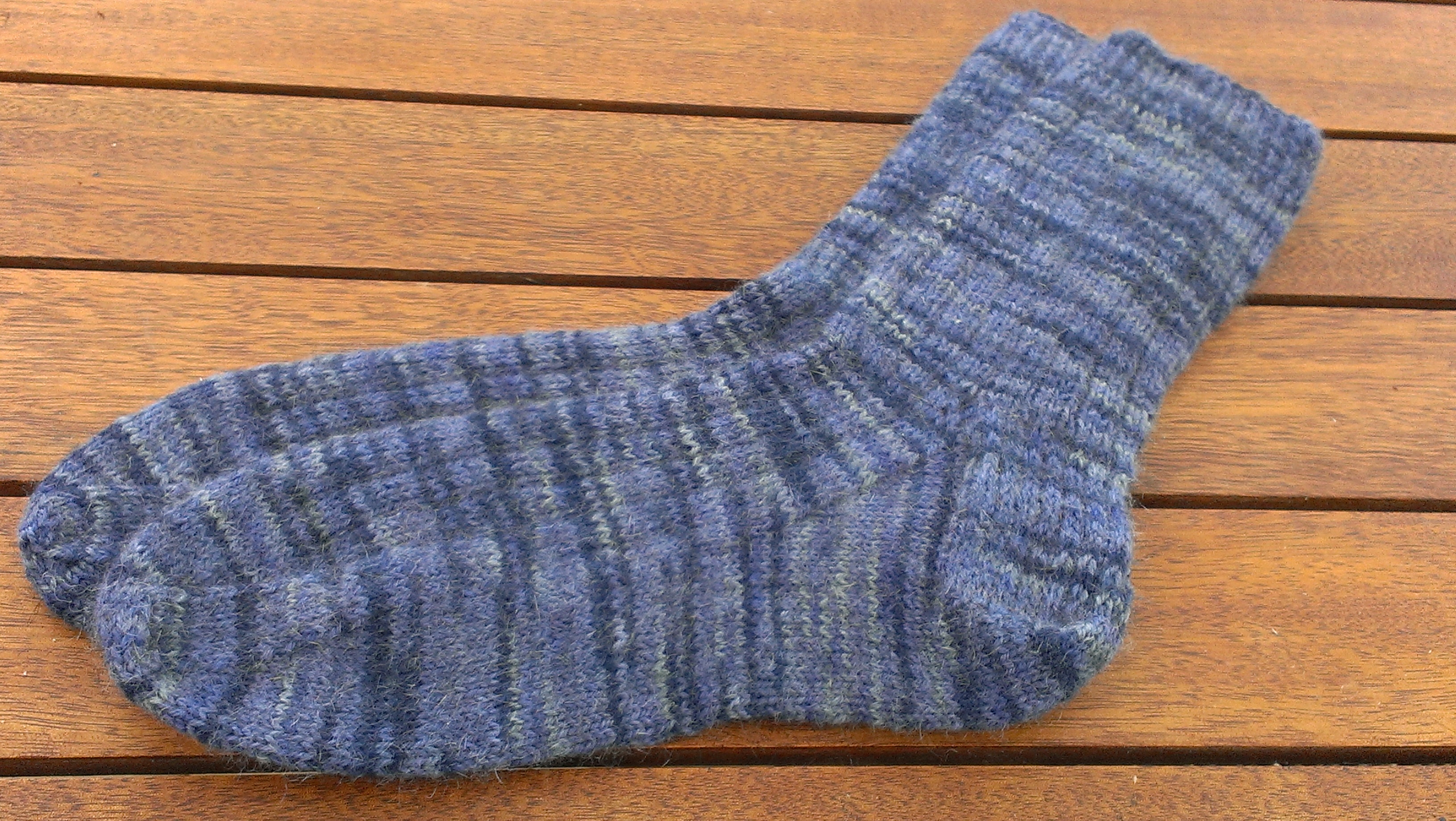
Meanwhile, a breakout of meetings and presentations at work has enabled the completion of these socks in Naturally Waikiwi Prints.

IMAG2700

I have only had them on the needles since August!  While the other hemisphere is celebrating Wovember, here we have had our first days over 30C.  These socks will be waiting a while to go onto a foot. They contain possum fur, which makes them delectably soft, while making use of the oversupply of possum fur in New Zealand/Aotearoa. Possums are incredibly cute, and as an Australian I am in a good position to know this because the possums in Aotearoa are feral.  They are native to Australia.  Without intervention, they would be well on their way to denuding those lovely islands and making life impossible for the plants and animals native there.  Since Australia also struggles under the weight of feral animals (including cute ones like rabbits and cats), the damage that can be done is very obvious even if the sadness of having to cull them is equally clear.  My apologies to any Kiwis who might be reading, for the introduction of our cute but damaging possums to your lovely land!

6 Comments

Filed under Fibre preparation, Knitting

What to do with art yarns/textured spinning

The other night, treasured friends came round for dinner and brought with them someone I hadn’t met before.  She saw the display of tea cosies and loved them.  She collects.  The honest truth is, I don’t even drink tea.  Nor does my beloved.  I just buy random teapots at the op shop and make them cosies for my own entertainment and the joy of giving them away.

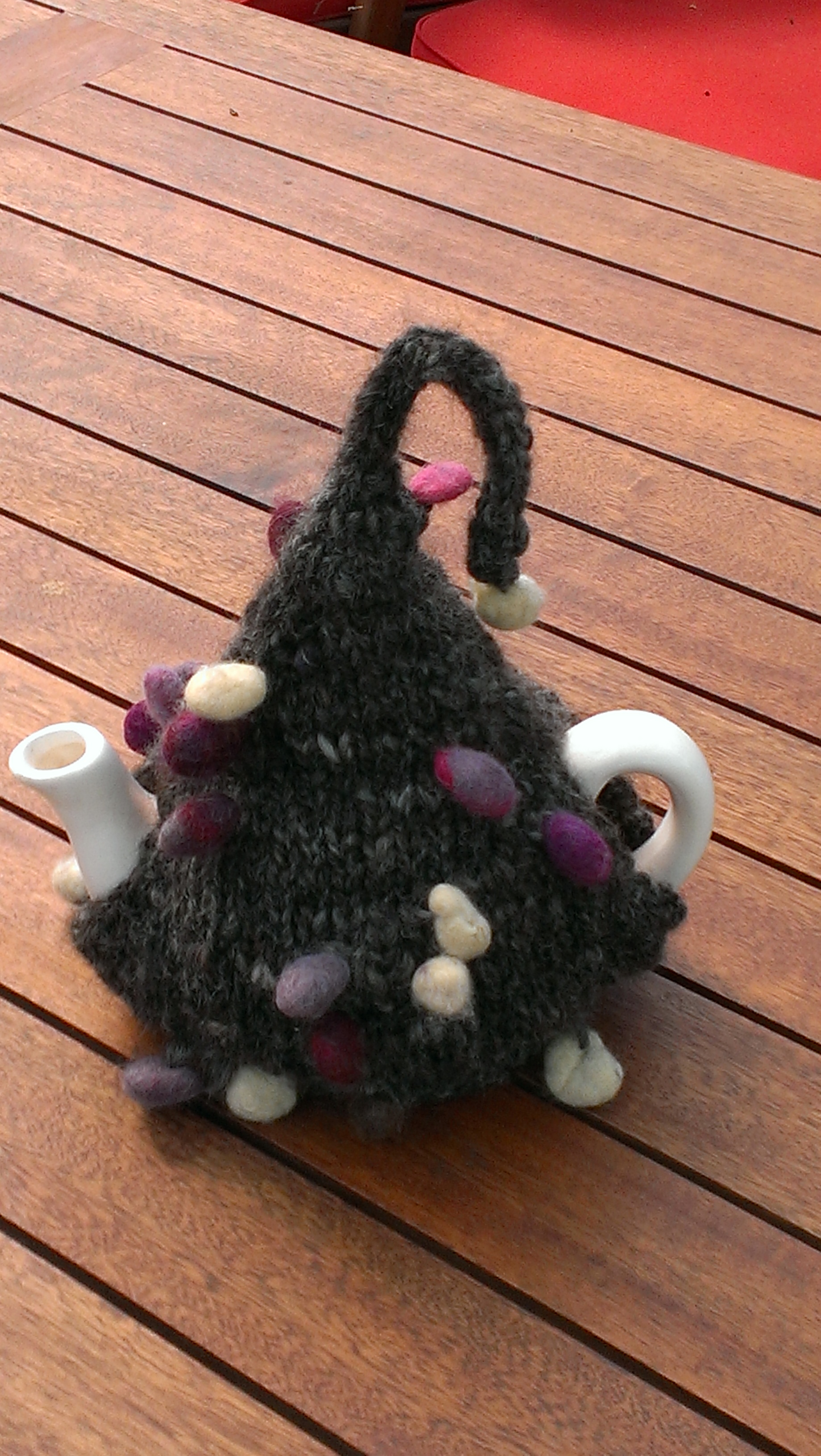
Naturally, I said ‘would you like to take one home?’  She struggled to choose and I offered that she take two, but that wasn’t happening… it is difficult to make people understand just how far I am from having a yarn or tea cosy shortage.  So a particularly ugly teapot was disrobed and a corespun cosy with recycled sari silk threads went home with her.  That had me in a tea cosy frame of mind… So I delved into the stash and came out with this the very next night:

IMAG2698

The yarn is felted wool blobs spun onto crossbred wool from a sheep known by the glorious name of Macchiato the Mongrel.  I believe the epithet was added after Macchiato ate the neighbour’s pea crop and had to be found a new home.  That fleece came to me from a friend of a friend who lives in the hills. The pattern is a fast and loose adaptation of Funhouse Fibers’ Fast and Fun Tea Cozy.

This twining vine yarn (commercial wool top, felted leaves) was in the same bag.  I started in on a cosy and the audience decided it was too cute and really should be a child’s hat.  I guess we’ll wait to see who it fits come winter!  I started with a three stitch i-cord and made the rest up, ending with a stitched cast off for stretchy edge…

IMAG2695


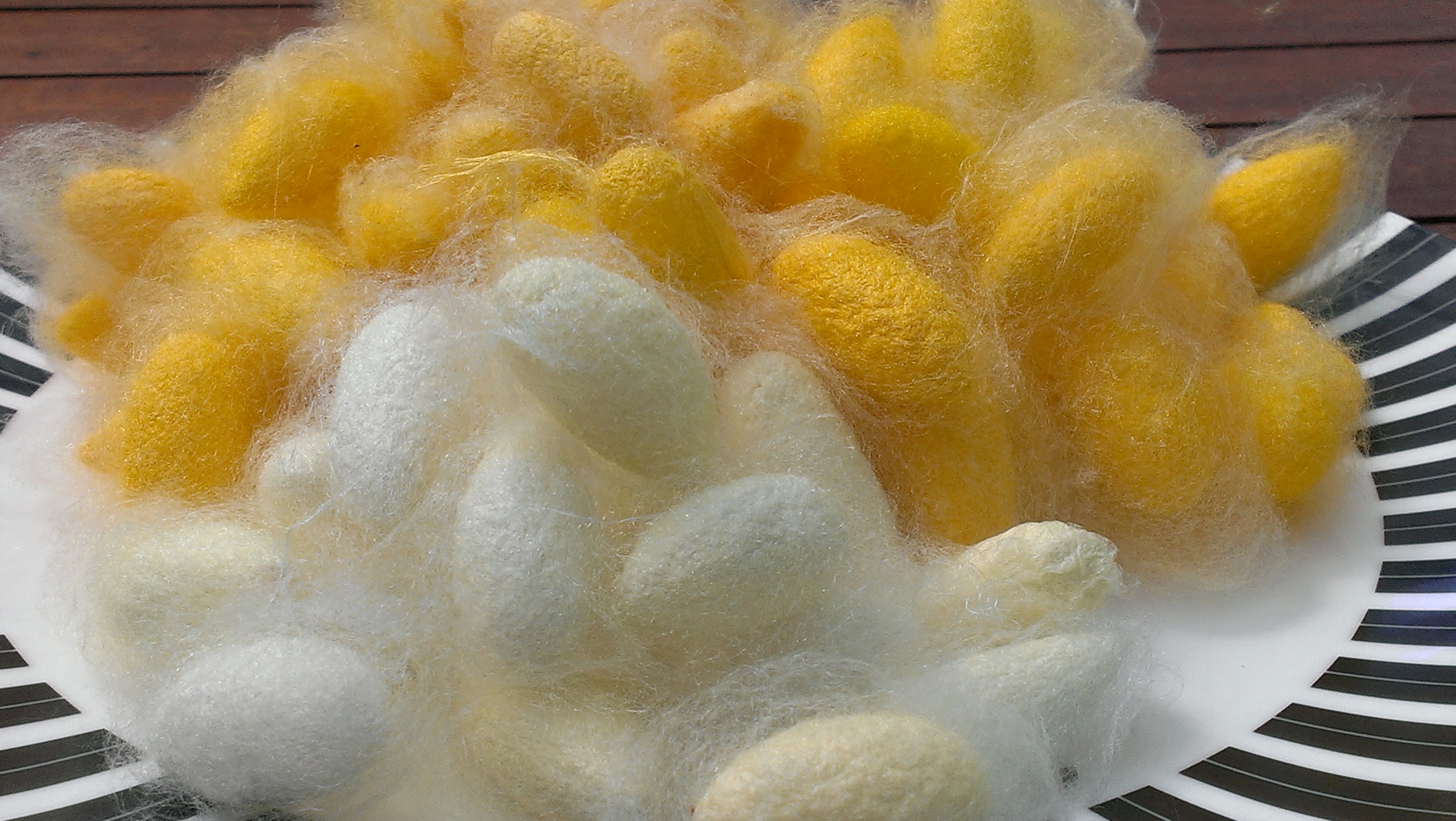
And, some silk cocoons went off to be reeled by a friend with a  lot more patience than me, and here are the rest.  I have no idea why they are in two colours, but if anyone else knows, please tell.  I keep thinking I will finally get back to the nettle stems, but I fear it won’t happen today…

IMAG2685

13 Comments

Filed under Fibre preparation, Knitting

Silkworms: 7 week update + more wild textured spinning

Well, here are the late bloomers. Yes, only 5 left.

IMAG2607

Everyone else is in here now in another form…

IMAG2608

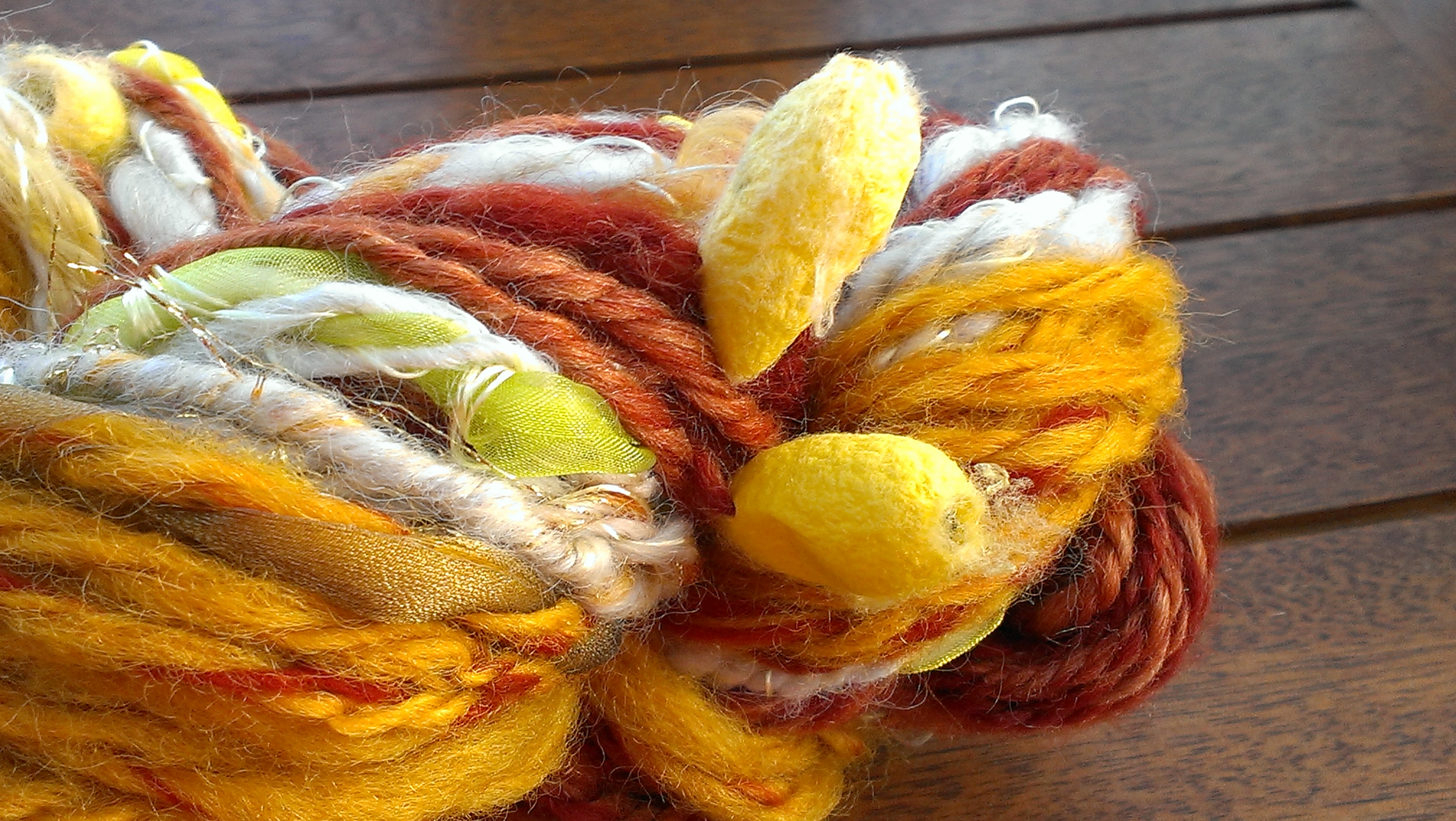
And meanwhile I decided to try a spinning challenge set up on Ravelry… a yarn generator based on a date system.  What genius on the part of its originator! Sounded like fun to me… I put in the date for my birthday and that meant creating a yarn that incorporated autowrapping (see that rayon thread over the white section?), metallic elements (there are strange and peculiar glitter pompoms from the op shop as well as sparkly gold fibre and gold recycled ribbon)…

IMAG2609

Yellow is required too, so there is some of the coreopsis dyed corriedale, some yellow preloved ribbon (there has to be fabric spinning too), and last year’s silk cocoons…

IMAG2610

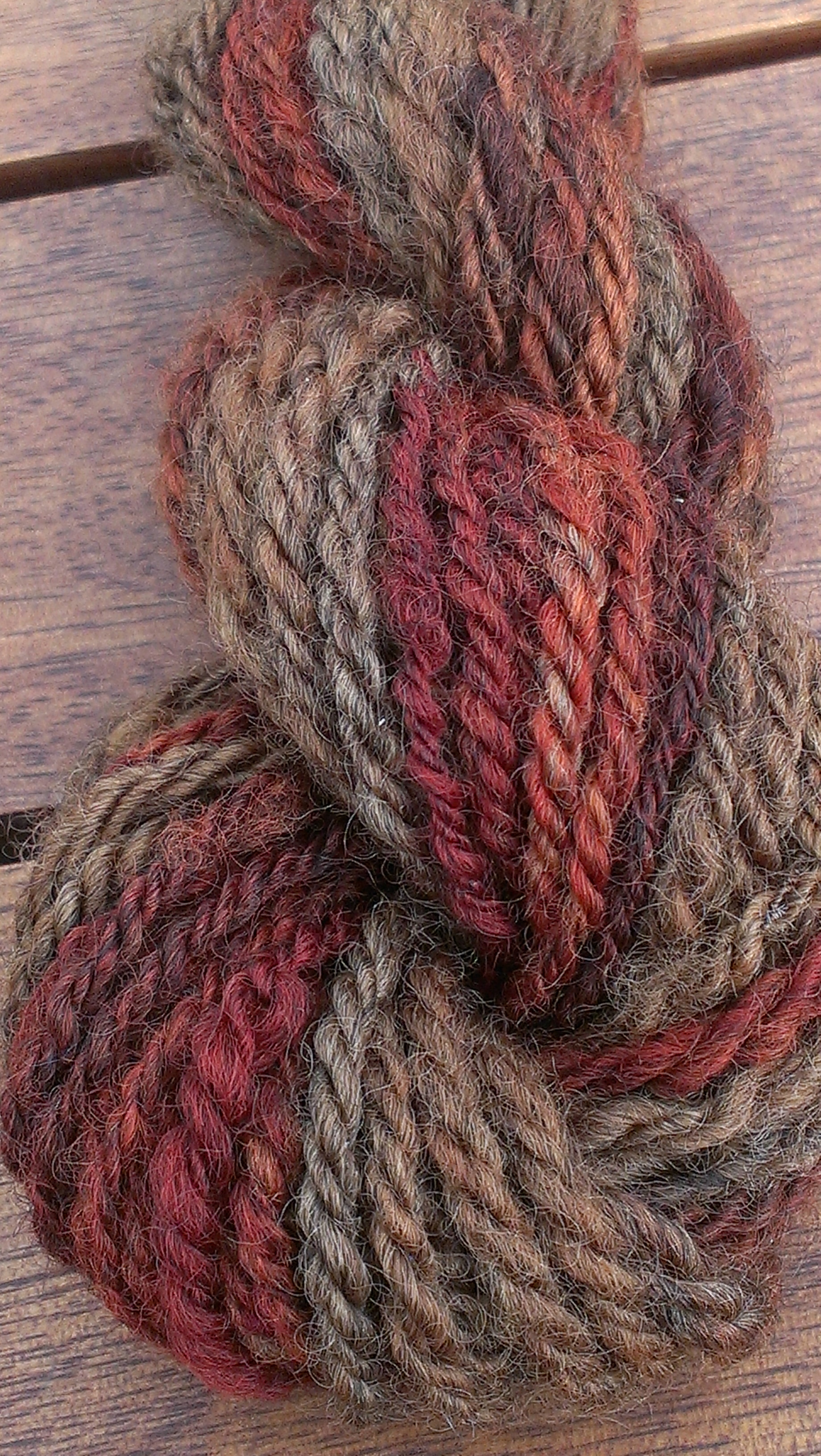
Then there is chain plying and the ever present eucalyptus dyed merino… and one mighty strange yarn overall!

IMAG2611

4 Comments

Filed under Fibre preparation, Spinning

Textured spinning and trash batts

I went on a weekend away with members of my Guild recently and had a fabulous time chatting, spinning and eating way more than made any sense.  I took some little packs I made up beforehand, each designed to create a skein of yarn. This first one began as Finn cross locks I bought pre-dyed and perhaps a little felted, with curly tips.  Perfect for this technique, I thought.

IMAG2260

Here they are as a lockspun yarn, with the teased-out, butt ends of the locks corespun around a crossbred grey wool core that can no longer be seen, and the curly tips on display.

IMAG2427

This batt of unloved green fleece that I was given includes some orange silk noil and some pre-dyed mohair locks.

IMAG2261

Here it is corespun over that same grey crossbred core.  I learned these two techniques from the fine writing and DVDs of Jacey Boggs.

IMAG2557

The trash batt experiments continue!  This is eucalyptus dyed carder waste (and nepps pulled out as I was spinning) carded with white and tan Polwarth locks.

IMAG2389

I used it for my first attempt at a  new textured spinning technique–a friend gave me a copy of The Wheel that contained this technique and you can also see it here.  It originates with Steph Gorin, who demonstrates here.  (The video also includes advertising for Ashford.)

IMAG2546

Here is the outcome of a batt made with the flick carding waste from the blue lockspun yarn above, and a eucalyptus dyed carder waste and polwarth batt.

IMAG2579

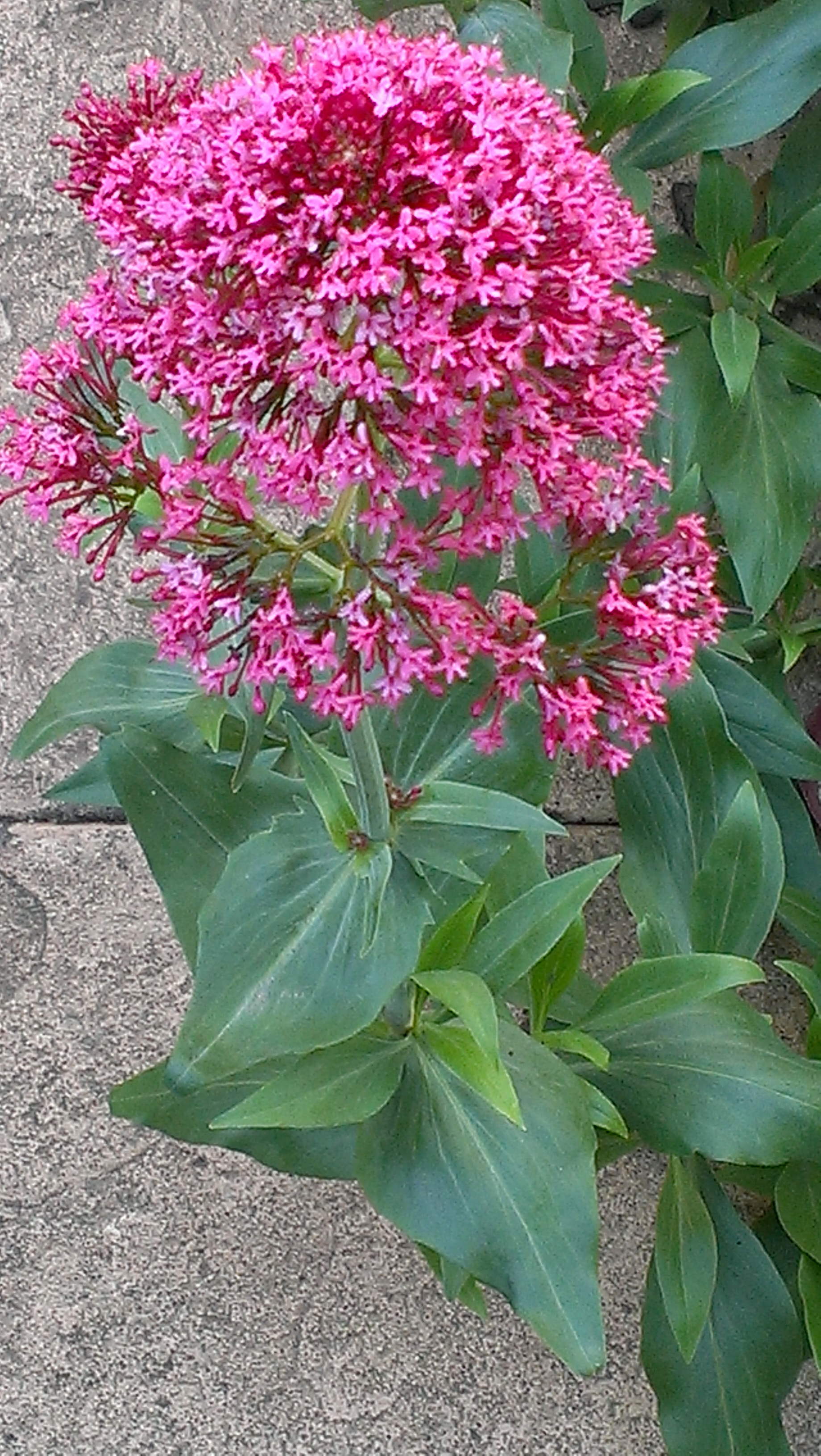
Finally, a gratuitous picture of what appears to me to be valerian in flower in my garden.  Which is gorgeous apart from the fact that I bought it because it was soapwort.  It doesn’t look like any soapwort I have ever seen now it is in flower, which makes me glad it wasn’t big enough to harvest until now!

IMAG2584

6 Comments

Filed under Fibre preparation, Natural dyeing, Spinning

Silkworms: 6 week update

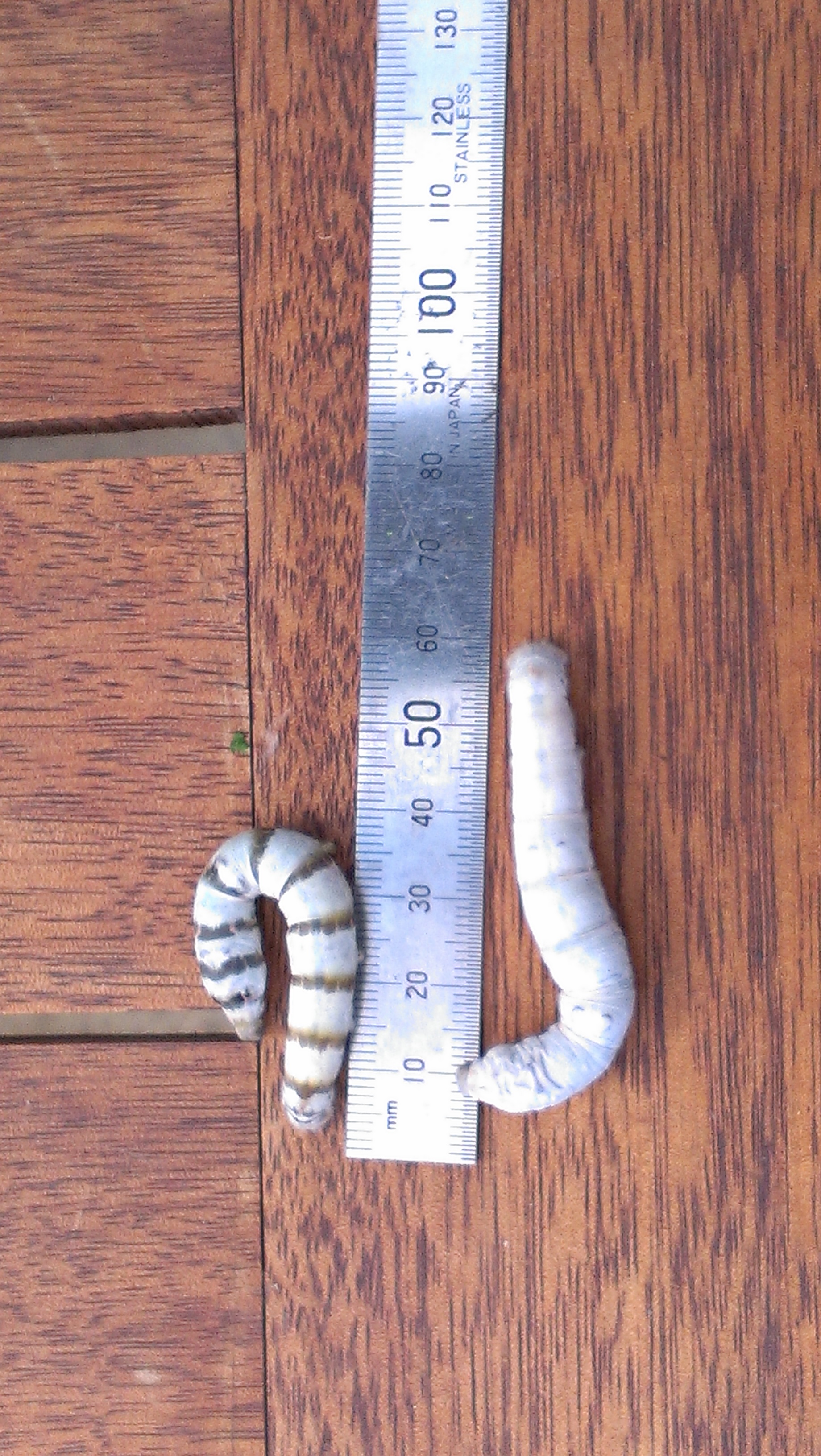
We still have a few silkworms.  28, to be exact.  The largest are now 7 cm or about 2 3/4 inches long. It’s hard to make photos of silkworms exciting, but here they are:

IMAG2586

Here is a picture of one silkworm starting its cocoon, or to put it the way we’ve been putting it around here, ‘becoming silk’.

IMAG2591

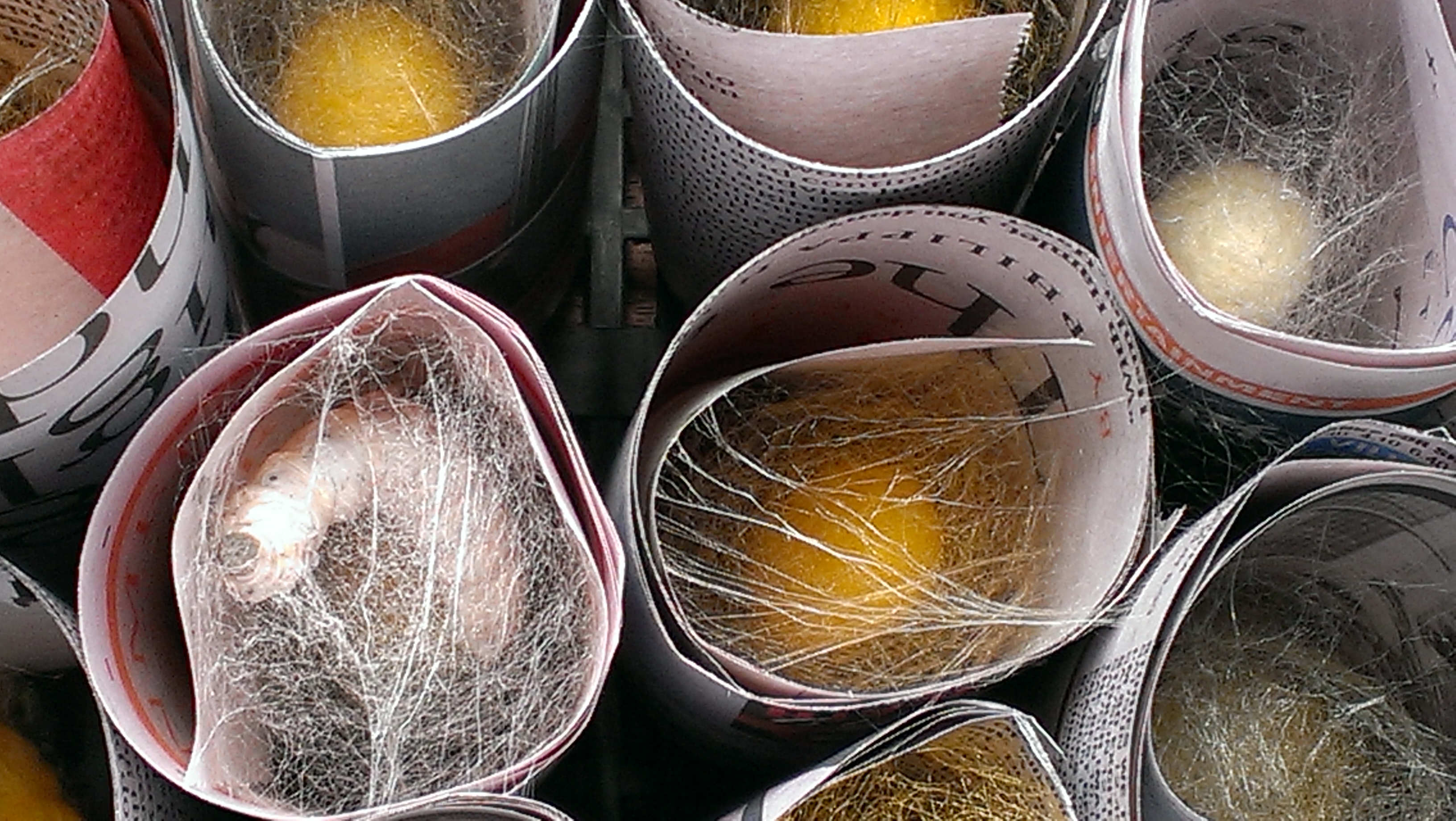
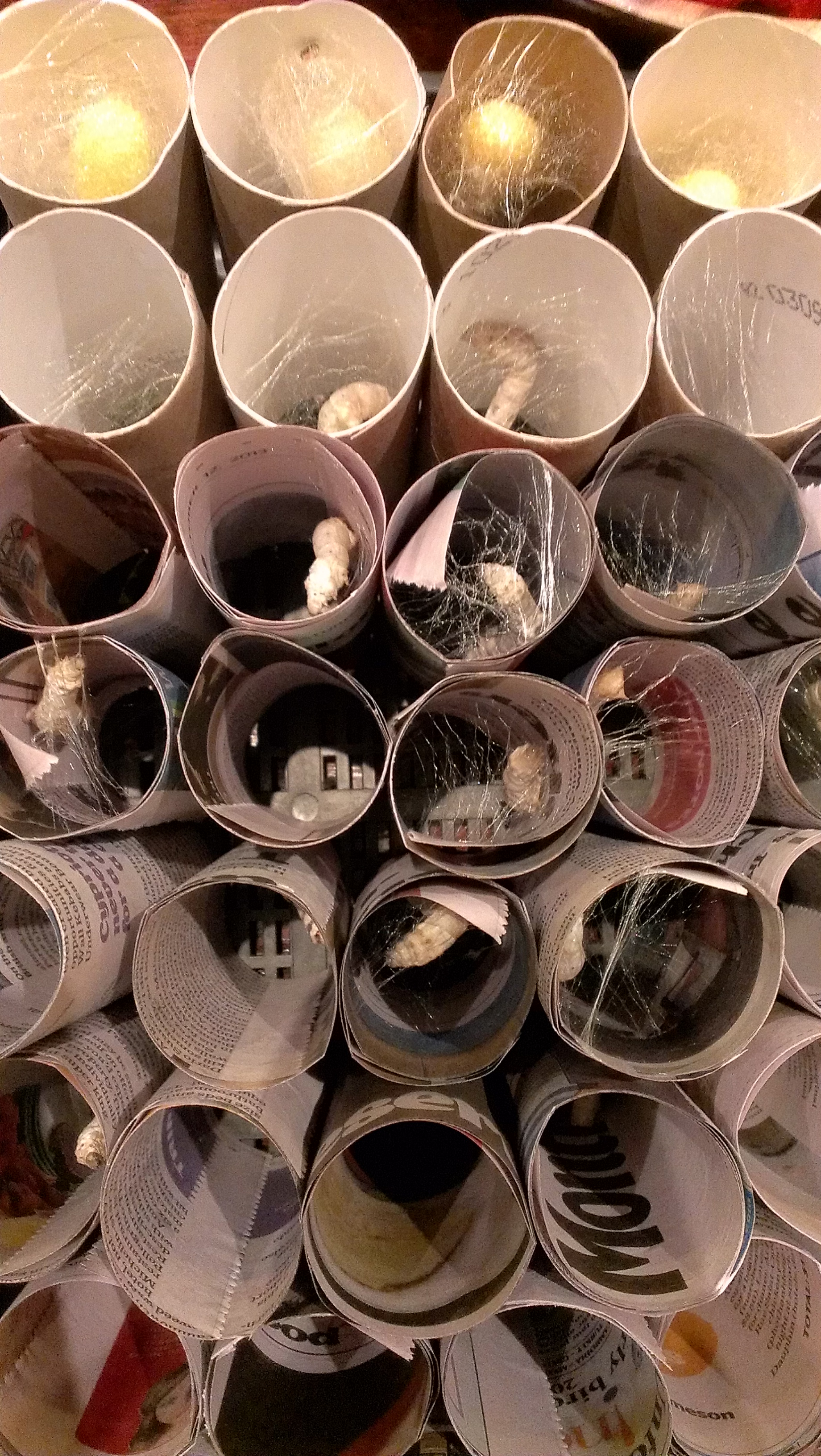
We have cocoons in two very distinct colours.  Mysterious.  All of the cocoons last year began pale and became golden very quickly–within the first 24 hours.  Not these.  Some are pale silver-white, with a slightly green hue in some cases. This is the view from above, looking down on a tray of paper and cardboard tubes.

IMAG2588

We have quite a few.  And about 28 still to add!  Luckily, I gave away about 70.  Some of which have been delighting schoolchildren, apparently.

IMAG2589

I am feeling deeply grateful to the friend who told me there was a mulberry tree behind the Japanese garden in the parklands.  It turned out there were three trees, two varieties of mulberry, and one of them was trailing leaves on the ground and down at head height across a path.  Begging to be pruned when I happened to pass with secateurs and a big bag, I tell you! I even ate a couple of mulberries that were almost ripe.

Leave a comment

Filed under Fibre preparation, Neighbourhood pleasures, Uncategorized

Eucalyptus dyes over grey corriedale: The spinning finale

I have a bit of a tendency to go a long way toward the completion of a big project and then pause near the end.  Sometimes for a little while, sometimes for a long while.  So here, finally, is the very last of the grey corriedale I dyed months ago and planned to spin during the Tour de Fleece. I loved the two ply yarn I created during the Tour a good bit less than my initial chain plied skein, even though it is what I need if I ever knit that cardigan I dream of.

I found the label for this fleece on the weekend and I started out with 3.5 kg of fleece.  I made a true three ply yarn (three singles plied together) from most of the last part…

IMAG2559

And chain plied the rest (one single plied on itself in a chain).  I think the long pause on this was caused by the way my heart sank when I stopped chain plying it in the first place.  I love the distinct colours in the last little leftover skein!   IMAG2562

I also spun up a little batt of alpaca dyed in eucalyptus.

IMAG2382


Three ply wins again!

IMAG2563

Leave a comment

Filed under Eucalypts, Fibre preparation, Natural dyeing, Spinning

Indigo vat with colour run remover

I am a bit intimidated by indigo.  Perhaps I have just made it a major performance each time I have attempted it so far–overreach is a superpower I have in spades.  But the temperature maintenance, chemistry, my lack of experience and (in the case of the hydrosulphite vat) my aversion to the chemicals involved, all make me wary.  Anyway, I overcame my reluctance and ran a vat last weekend.  I made an assessment of the fleece I might dye –in varying states of yellowness and natural whiteness (with a little tan), corriedale and polwarth.

IMAG2474

The quiescent vat has been dormant since January, since I failed to make a successful fermentation vat using ambient summer temperatures. It has only been waiting 10 months for resurrection!  It contained madder and bran as well as indigo due to its first life as a potential fermentation vat, so the night before,  I sieved out all the larger particles remaining rather than have them distributed throughout my already less than pristine fleece.

IMAG2475

I wetted out my fleece and some brown polwarth slippers in readiness.
IMAG2476

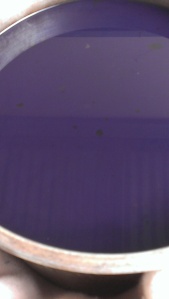
The vat was a far more exciting colour after warming and the addition of colour run remover.
IMAG2489

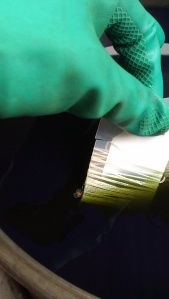
I had read Vivien Prideaux and Jenny Dean in preparation and realised some guesswork would be required. How much colour run remover?  How much could I hope to dye? Just the same, this is the second half of this vat I have managed to render useable by this method, another reason to think I should give up being intimidated and get on to practising fermentation methods.  Perhaps, just like sourdough bread, it isn’t as delicate as you might think at first–even if time needs to be on your side. It was very reassuring to see that telltale yellow-green colour appear under the surface on my silk embroidery thread.
IMAG2491

Some of the yellow fibre going into the indigo:

IMAG2499

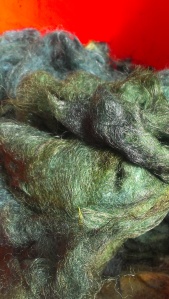
And afterward, while still wet. Some of the greens will be quite emerald when they are dry, I think, but the paler yellows became blue rather than green.
IMAG2509

The white fleece became many shades of blue in a very satisfying way that will let me create graduated yarns.  Here it is, going into the vat:

IMAG2512

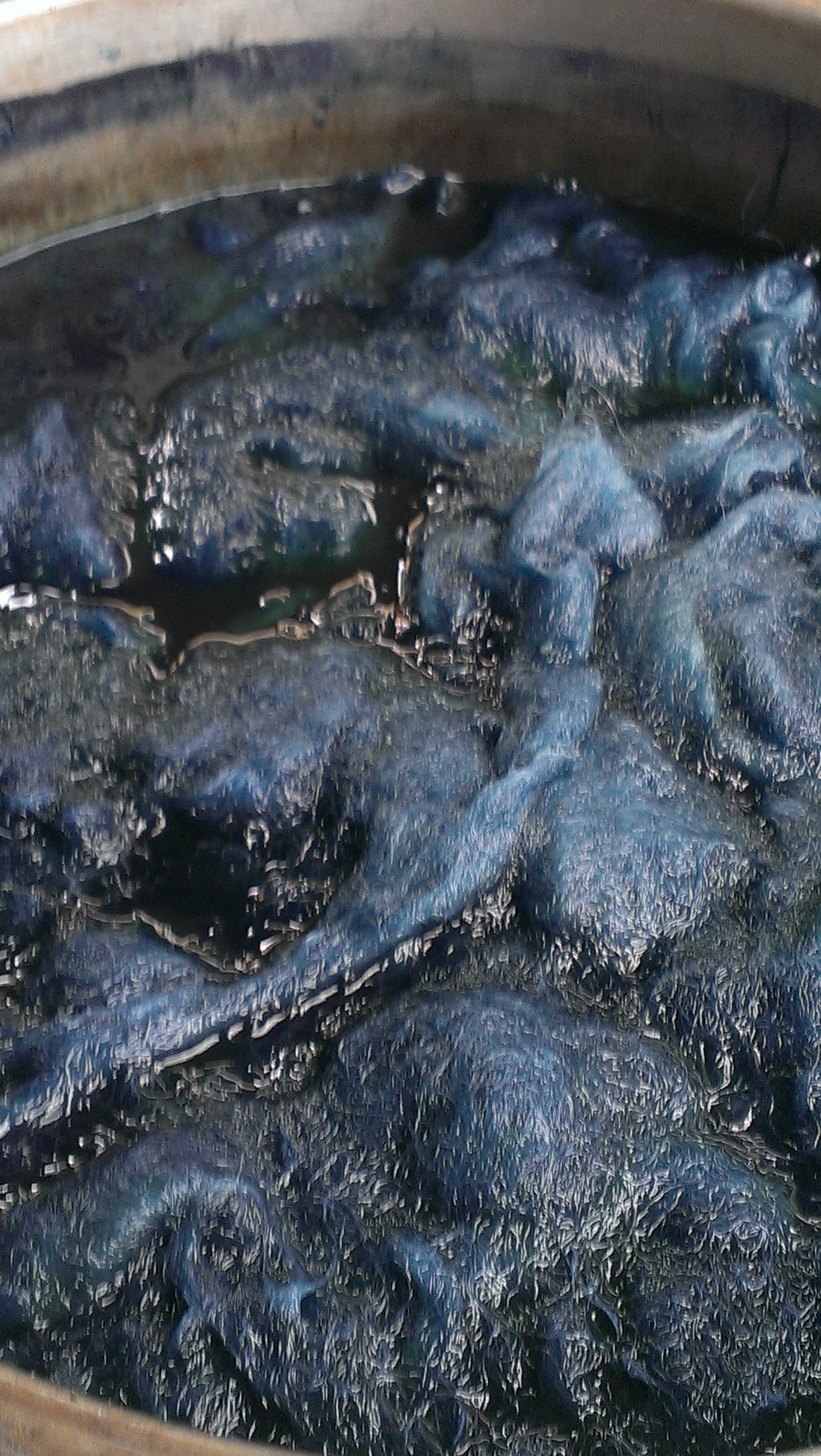
Here it is still wet but rather gloriously blue…

IMAG2524

The slippers took up blue where they were white or pale purple from the tail end of a logwood exhaust bath, but took virtually no colour on the brown parts, which is to say, most parts.  It may be that the vat was exhausted–not completely, or the pale parts would not have taken up colour–but sufficiently that no colour change showed up on the brown.  It may also be that they were greasy enough to repel the dye somewhat and that so much wet fleece having entered it, the vat was diluted.  So I have kept the vat aside for another day or a new thought on the matter.

Meanwhile, there has been a breakout of the urge to spin silk and enter the cocoon…  But not for every single silkworm, and the ones that remain are SO HUNGRY!  So now I am off to look for a mulberry tree in the parklands I heard about on the weekend…

IMAG2526

12 Comments

Filed under Fibre preparation, Natural dyeing

Silkworm Newsflash!

The first cocoon began yesterday.

IMAG2484

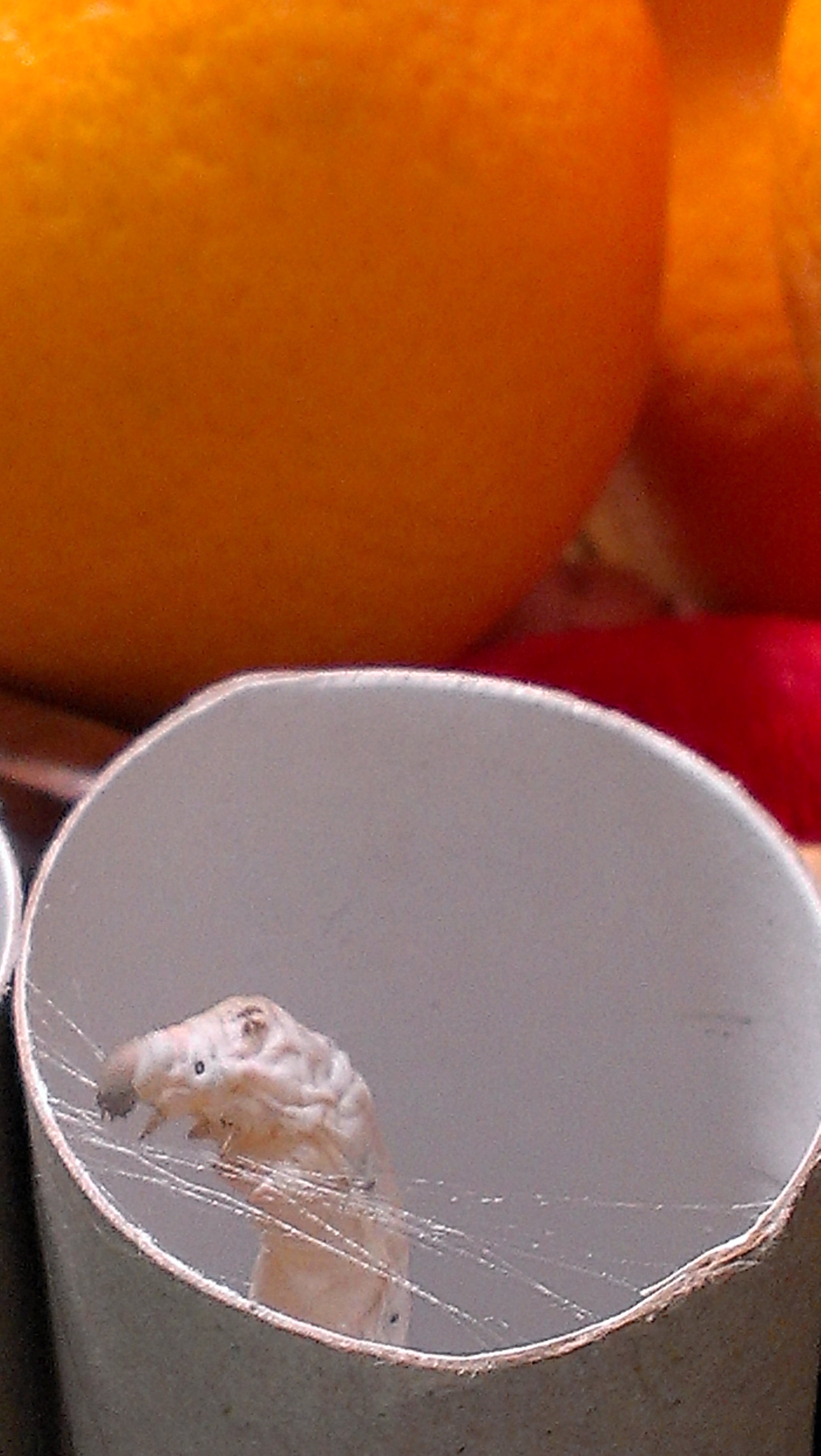
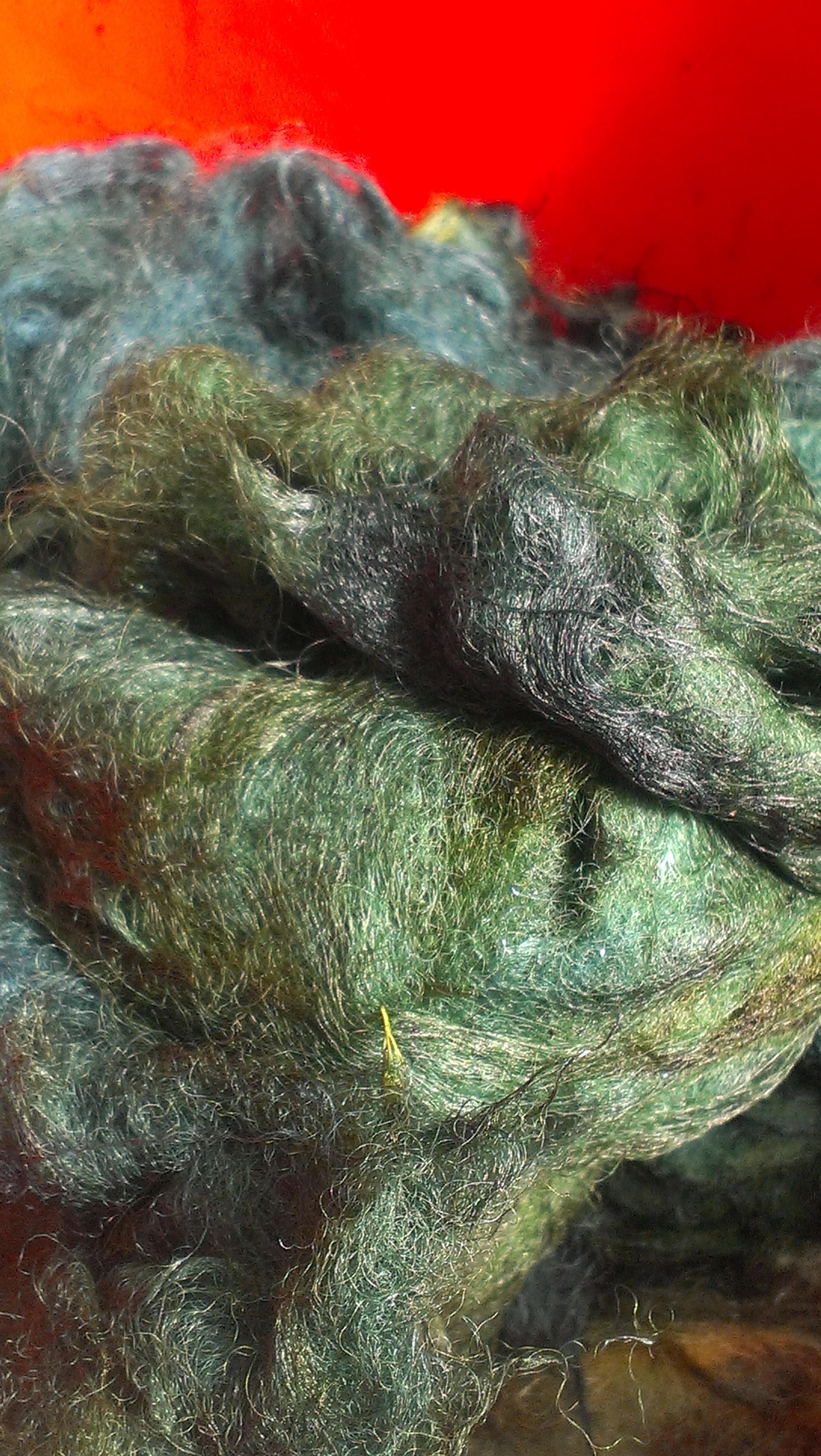
There are so many other silkworms writhing over one another I’ve removed this one to a cardboard tube in front of the orange bowl. (I say this by way of explaining the backdrop!)

IMAG2488

By breakfast this morning, there were 5 silkworms beginning the journey toward becoming silkmoths.  Meanwhile, alpaca dyeing and an indigo vat… more about that later.  For now, we need to collect more mulberry leaves.  Last night’s substantial harvest is almost consumed.
2 Comments

Filed under Fibre preparation

Silkworms: 5 week update

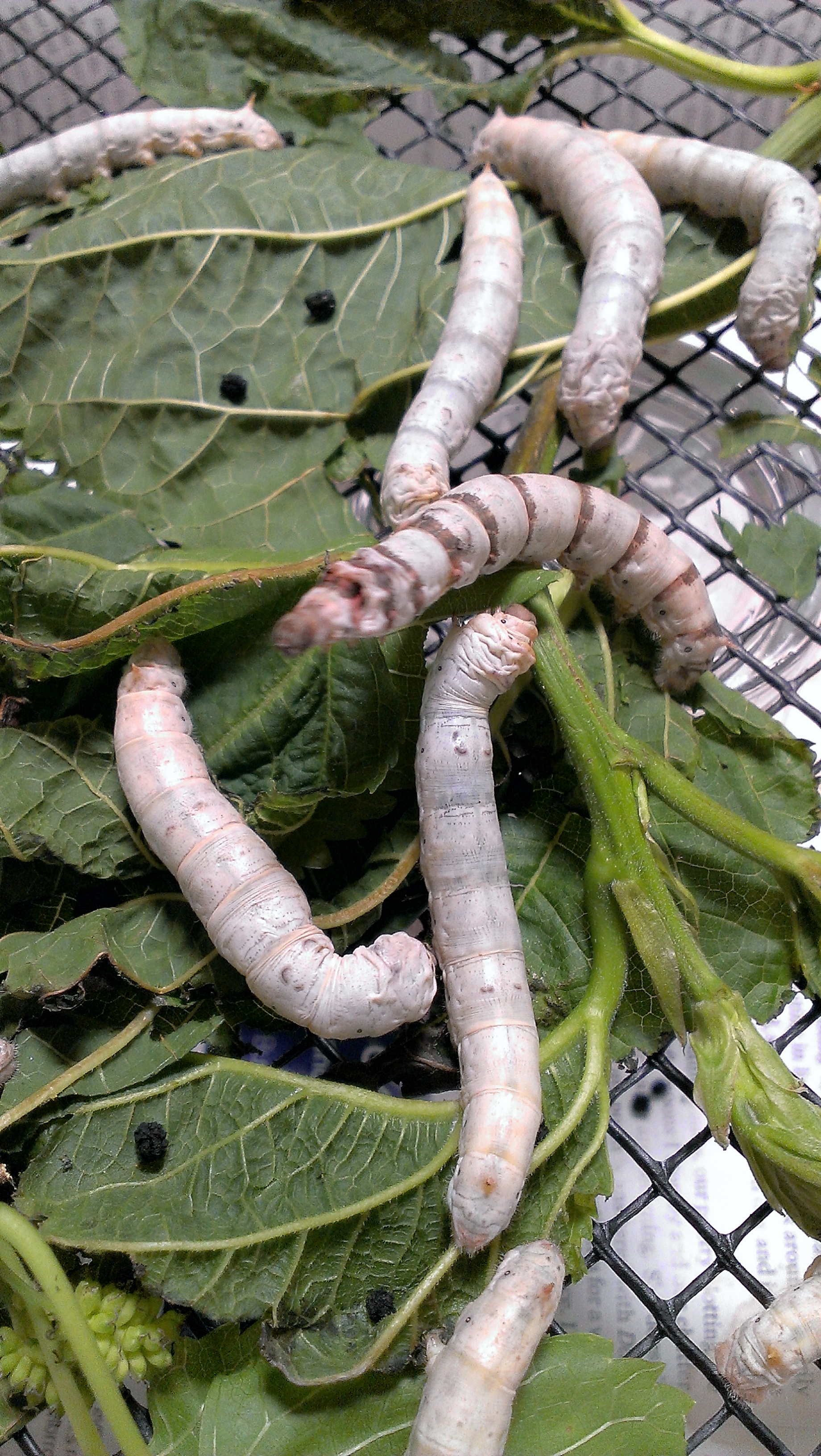
The sound of munching is getting louder.  When we add new leaves, there is an audible crackling, a bit like when you add milk to rice bubbles.  I am not sure I have really been showing you the full enormity. But, of course, the enormity is growing all the time. Here, a couple of specimens representative of their general size (some are smaller): about 6 cm or 2   1/2 inches long.  And hungry!  Hungry all the time!

IMAG2464


A friend took ten to share with her students at school, but we still have ohhh… over 100.  Here they are after this morning’s tidy up.

IMAG2461

I live in hope they will pupate before I have had to introduce myself to complete strangers with mulberry trees.  We had two merciful gifts of leaves this week, and offers of more from fellow Guildies who understood the gravity of the situation..  So perhaps we won’t have to strip the neighbourhood trees completely bare!  On the other hand, I can hear chewing…

5 Comments

Filed under Fibre preparation, Neighbourhood pleasures