Category Archives: Leaf prints

Leaf prints with rust water

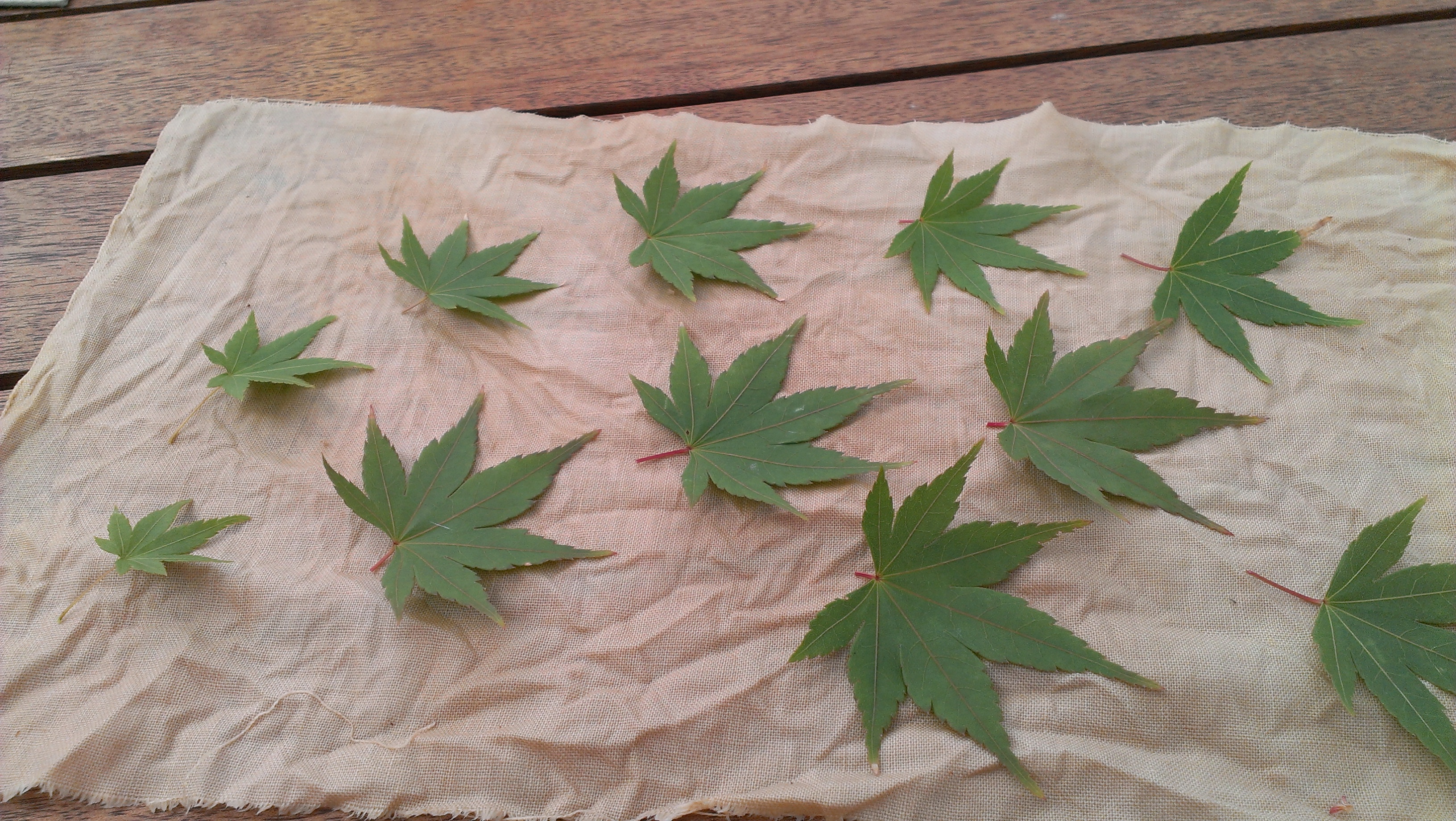
I have continued my experiments with Rebecca Burgess‘ ‘fall dye starter’ from Harvesting Color. I admit, it is barely autumn here and I’ve actually been trying this out through our summer… but this is a mere detail, I hope! I tried these three lobed leaves which someone told me were from a maple (I know little about maples), and birch leaves–why not?

IMAG0662 IMAG0765

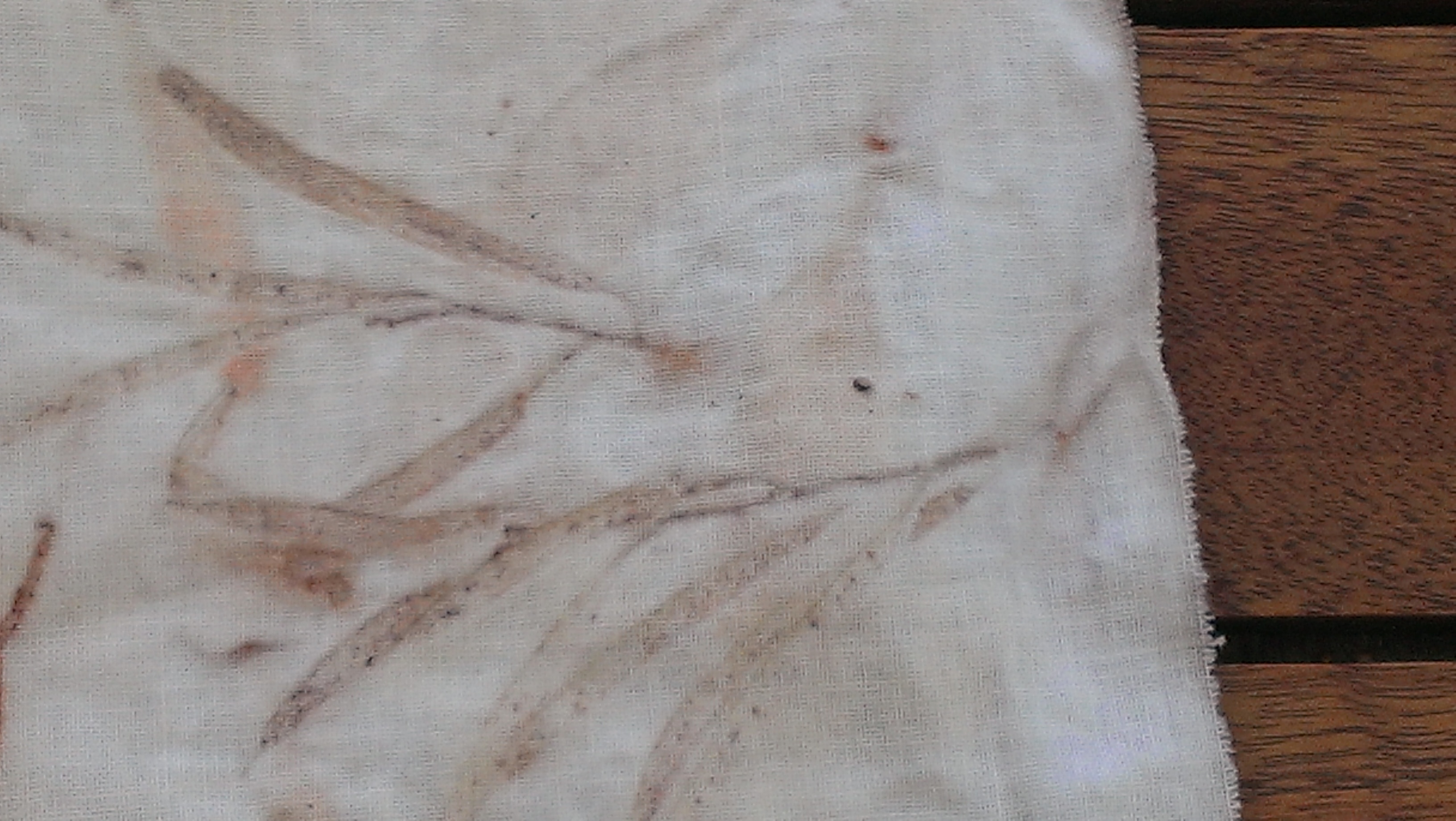
I like the results a lot, but I won’t bother with birch again. I also collected oak leaves and wrapped them.

IMAG0661IMAG0766

Finally, I made a special trip to what I was confident was a maple to collect these exquisite five-lobed leaves.    I tried these on fabric cooked with tannin-bearing eucalyptus bark, which is not what Burgess recommends at all.

IMAG0658

This produced hardly a smudge.  So, I may have to review my ideas about tannin.  Or on the other hand, I may have to reconsider my naive ideas about maples!

4 Comments

Filed under Dye Plants, Leaf prints, Natural dyeing

Waste not want not

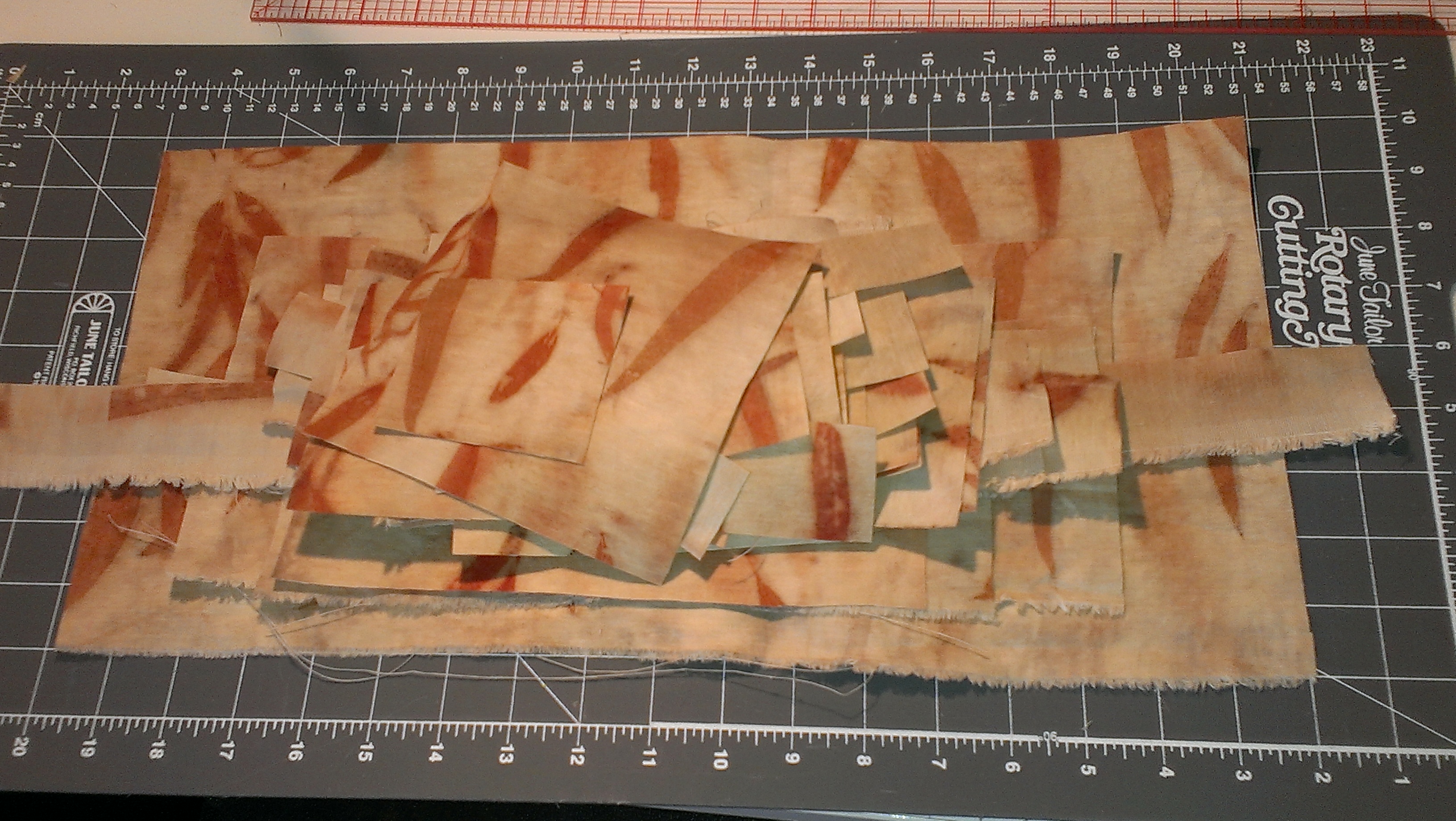
Having made two shirts from my length of leaf-printed hemp/silk, I was left with a selection of mostly quite small pieces.  Other people have clever ways of designing that don’t leave waste but use the whole length of fabric.  Not me.  Maybe I’ll learn this one day.  But I have my ways.  I cut all the pieces into rectangles and squares.

IMAG1075

Then I start piecing them together and matching sizes.

IMAG1078

I stitch them into bigger and bigger pieces, until I can decide whether to make a bag or a cushion cover or whatever seems to suit the fabric and design.  Finally all I have left are useable pieces of patchwork.

IMG_0059

And a really small pile of scraps.

IMAG1073

And of course, the second shirt.

IMG_0118

5 Comments

Filed under Eucalypts, Leaf prints, Sewing

Random harvest

In the beginning, when I’d read the Handweavers and Spinners Guild of Victoria Dyemaking with Australian Flora (1974) and perhaps Jean Carman’s Dyemaking with Eucalypts (1978) and knew just about nothing about identifying eucalypts, I used to just choose a tree at random and try it out on some wool.  Sometimes that is still the thing to do!

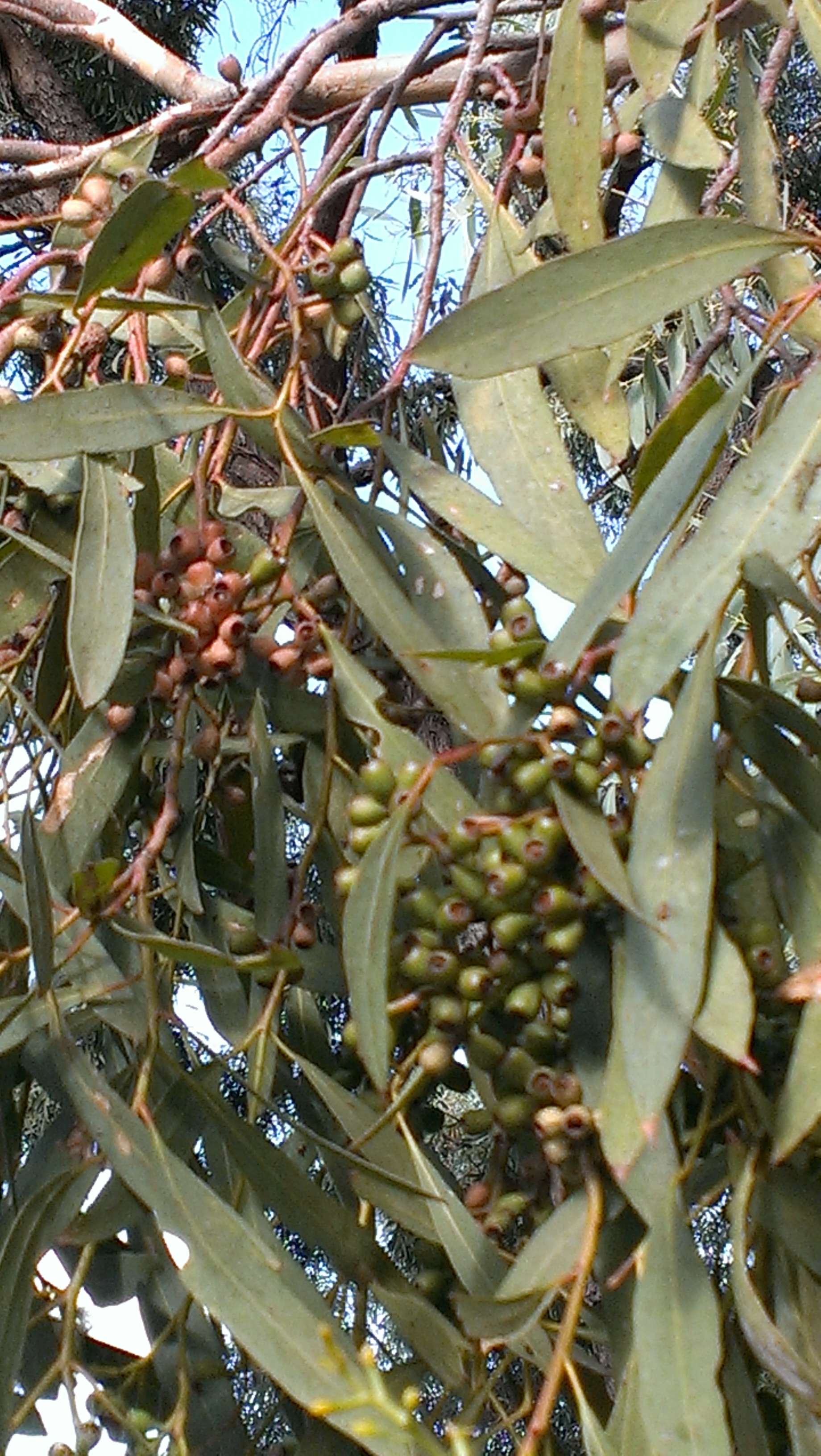
Last week I had a testing trip home from work by public transport.  It took one and a half times as long as doing the trip by bike would have done, partly because I travelled on a bus route further from home and walked a good way.  So I looked for entertainment on my walk.  This rough barked tree was in flower (small, cream-white flowers) and hanging through a park fence.

IMAG1105

Lots of fruit in several stages of maturity.  I took a small leafy sample. 

IMAG1107

I kept walking.and came across this tree with its spectacular peeling bark and bronzed trunk by the tramline.  There was a broken branch still hanging suspended from the intact branches, so I broke off enough dried leaves to make a meaningful test dye bath.

IMAG1109 IMAG1110

Along the tramline closer to home, I saw this beauty with coppery bark (suggesting it might be a mallet, I believe) but quite a broad leaf by comparison with the family member I know best, the swamp mallet, E Spathulata. A few more leaves selected.

IMAG1111 IMAG1112

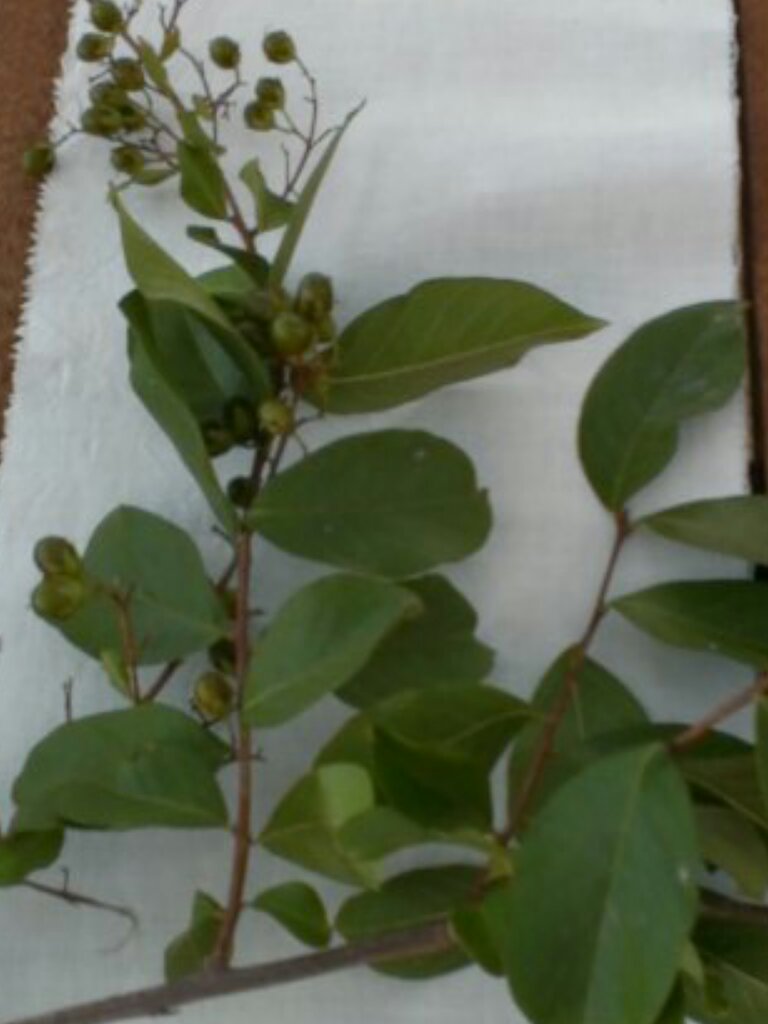
Finally, I passed a friend’s place.  His neighbour’s house had been demolished that day and part of the crepe myrtle (Lagerstroemia Indica) on the street had been a casualty, so I picked a sample of that, too, and when he came out of his garden, there was a chat to be had as well. Crepe myrtle turns out not o be an indigenous species.

IMG_0083

And now for the (dyeing) punchline.  I won’t be losing sleep identifying these trees! That’s the crepe myrtle to the left.  You can see the leaves have acted as a resist to the iron in my bath, with some tan patterning from the leaves themselves.

IMAG1216

And… here is the result from the dried leaf dye bath from the tree with bark peeling in strips.  Tan or brown, depending.

IMAG1214

3 Comments

Filed under Dye Plants, Eucalypts, Leaf prints, Natural dyeing

Eucalyptus Leptophylla; Eucalyptus Gillii

I love botanical gardens, where the trees are helpfully labelled.  In Adelaide, this is true even of those outside the grounds… which is how I came to take a few leaves from E Leptophylla.

IMAG0959

For lovers of brown, this might be a viable dye plant.  I’m still working on loving brown for most applications.  I tend to think brown sheep are made for creating brown wool.  But I’m blessed with access to coloured sheep fleece, and not everyone is so lucky.

IMAG0920

I have to say that it is more of a dye prospect than E Gillii.  A friend has this beautiful plant growing in his backyard, so I tried it out some time ago and got smudgy tan marks and no more.  It’s best admired for loveliness of leaf and flower in my view.  I also tried Chinese elm–no colour at all.

IMAG0965

A visit to the botanical gardens, even when I am really outside the gates, is never wasted.

Leave a comment

Filed under Dye Plants, Eucalypts, Leaf prints, Natural dyeing

India Flint at Murray Bridge Regional Gallery

The weekend that just was, was a long weekend for us.  Adelaide Cup Day honours a horse race–a strange reason for a public holiday, but we welcome public holidays!  5 of us went together to see India Flint’s exhibition in Murray Bridge.

It was an hour long trip each way with Totally Gourdgeous sing-a-longs, word games, a ‘how many songs connected to Africa can you sing?’ game and I-spy.  I highly recommend Totally Gourdgeous.  Where else can you hear orginal Australian music on gourd instruments?  And find reviews which actually are plausible when you’ve heard the band, like:

“Joni Mitchell meets James Brown in Bob Marley’s pumpkin patch via the Muppets!”  There was a picnic under some river red gums, with climbing on old trains (which was the highlight of the day for one of us).  And there was a fabulous almond and rice banana cake. 

But… the exhibition was very much the reason for the trip.

By way of introduction… because I feel a little odd saying anything at all about this experience, but at the same time, I’d really like to share it a little… as a musician I have been fascinated to hear people speak about songs I’ve sung. Sometimes the listener has complete confidence they know what the songwriter had in mind.  As the singer, sometimes I’ve been in conversation with the songwriter about interpreting that song from when it was half-written, and know that the songwriter was quite emphatically not thinking what the listener believes s/he heard.  I believe that art succeeds when it moves people and makes them think.  But the feelings and thoughts that result from encounters with art may be only loosely connected to what the artist offered, let alone intended!

The exhibition spans two rooms in a lovely gallery–in one of them, the lighting is bright and the dominant colours are white and– it was a subject of conversation between us–orange–red? India Flint has offered a preview on her blog for those far from Murray Bridge.  The long span of fabric suspended on hooks which dominates the room is extraordinary: brilliant colours and shapes.  It is a spectacular sight hanging in space looking fragile and gauzy yet vibrant and strong.  In the same room hangs a work called ‘waterbag’.  I just loved this work but struggled to explain why.  One of my friends theorised my fascination with bags–using, giving and making–might be part of it, but even with that suggestion I’m not sure.  I was drawn to its complexity–the dyeing, the form of the bag, the vivid stitching.

In the second room was a poem about New Orleans seven years after the storm painted on the wall in mud, together with an arrangement of paper and silk boats in a range of subtle colours. We spent a lot of time looking into individual boats as well as admiring the effect of the boats from a distance and reading the poetry.  Then there was a selection of eco-bundles wrapped around various pieces of pipe suspended in the air–also spectacular.  It made my fingers itch to unwrap them!  There were a series of works on the wall… one of them a single piece of fabric in purples and greys with a spectacular repeating compound leaf eco-print on it.  The others were rich and complex: pieced, stitched/embroidered and plant dyed in a multitude of different ways, using different fibres and mostly in dark colours–greys, browns, blacks and blues.

It gave rise to a series of conversations.

One was about the extraordinary source of inspiration that India Flint and her work have been.  Her work has been so generative.  In its showing the possibilities of eco-printing as a process.  In its incitement to experiment–explicit and implicit.  In its focus on local and native plants (eucalypts for us, of course–but clearly people in other parts of the world have taken up the invitation with plants local to them).  In its deployment of mending and boro and patching and darning as skills, aesthetics and practices.  In its use of a wide variety of materials.  In its uses of stitching.  In its invocation of the natural world and the potential of sustainable dyeing practices that would respect that world.

Another conversation was about the hoary old question of art and craft.  Naturally we did not resolve it (or try to), but we spoke about the phenomenon of people like India Flint, who are gesturing at larger ideas, images and aesthetics in their chosen media.  Who carry ideas into their works and express ideas through their works.  And then, there are people, me for instance, who seldom do this and have more of their attention on the process of making and the function of the ultimate thing/s made.  This is not to say that they don’t overlap or cannot coincide. They must, they clearly do… but they are not exactly identical processes or intentions and they affect what might be understood as an interesting outcome, too.

There was a lot of interest and speculation about process–how was this done?  What could have produced this shape/colour/amazing thing of wonder?

There were a number of conversations about which works or parts of them drew attention viewed from close up and which were fascinating from further away.

It was a lovely adventure.  Thanks to India Flint for inspiring it, and so much else besides.

4 Comments

Filed under Eucalypts, Leaf prints, Natural dyeing, Sewing

Tribeca shirt

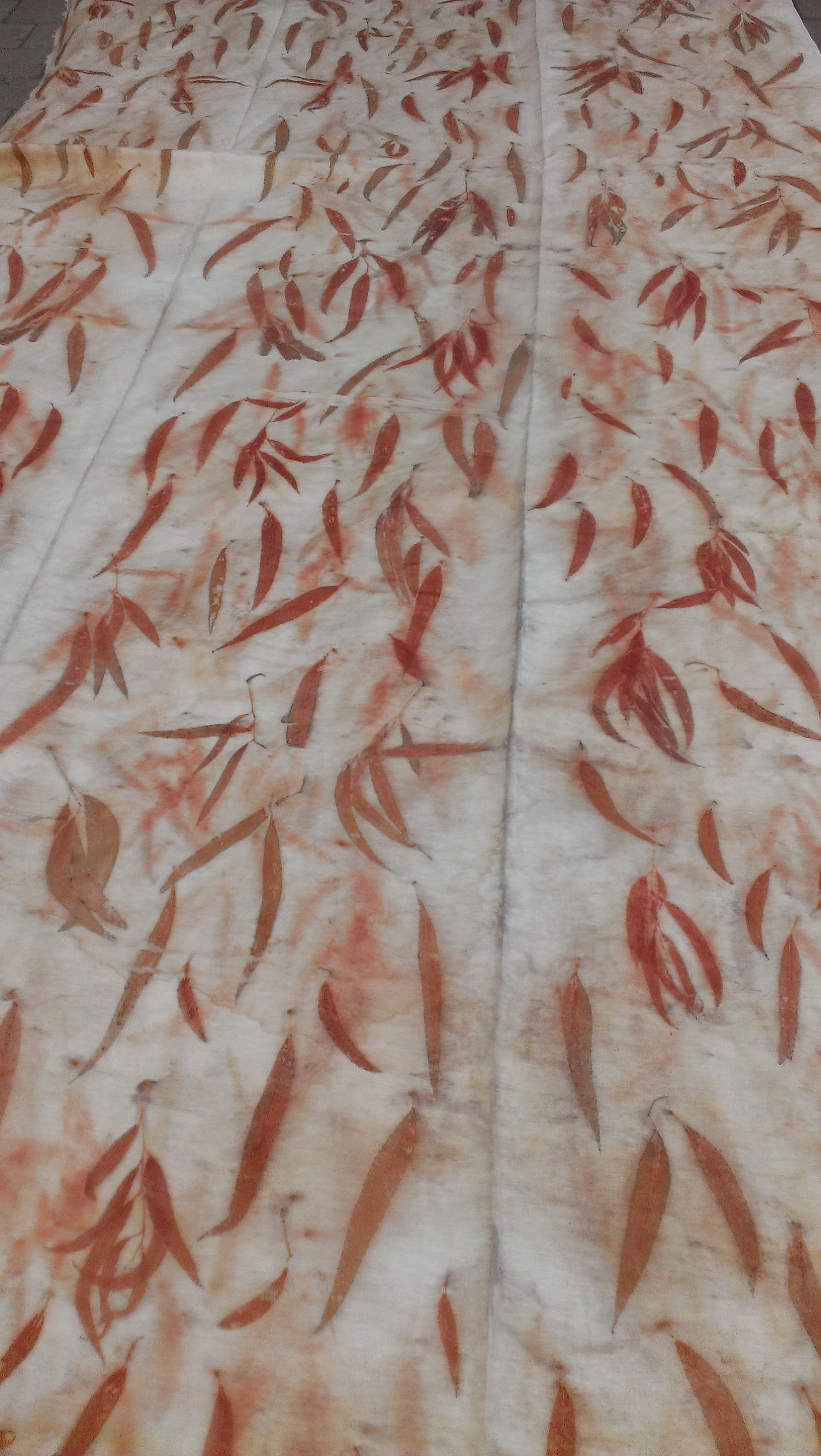
At last, the piece of lovely fabric I was speaking about toward the end of this post has become a garment.  The fabric is a silk/hemp blend from Margaret River Hempco.  The pattern is the Tribeca Shirt from the Sewing Workshop.  The leaf prints use India Flint’s techniques and Eucalyptus Scoparia leaves.

IMG_0080

I invested in this pattern because I have been making the same unisex shirt from McCall’s for years in different fabrics.  It is an oversized shirt with collar, collar stand, button bands, plackets and cuffs.  I’ve had great value from that pattern, making it for myself numerous times and for other people from time to time. Sometimes I’ve made it with collar stand and no collar, or a differently shaped collar.  I’ve made it from recycled linen tablecloths, lovely quilting fabrics and even a screenprint from an Indigenous business on the Tiwi Islands.
IMG_0074

I wanted something different and I decided on this.  It really was different.  No facings, no cuffs, the funnel neck involves no collar, and the whole shirt is designed for french seams. I had a failure of nerve prior to setting in the sleeves using french seams and had to set it aside for a couple of days!  The buttonholes are placed over a patch sewn to the reverse side.  Shaping is achieved with darts.  This is really interesting but also really efficient sewing.

IMG_0078

The level of instruction in the pattern worked well for me.  As usual, the bodies contemplated by the pattern measurements and my own body seemed to have little in common.  My pattern adjustment skills are better than they have ever been but could still use improvement–just the same, the result has me feeling really happy.  I had enough fabric leftover to cut out a second, simple shirt which is now waiting for my attention. Now all I need is the right occasion for a first outing.

IMG_0076

8 Comments

Filed under Eucalypts, Leaf prints, Sewing

Leafy pillowcases

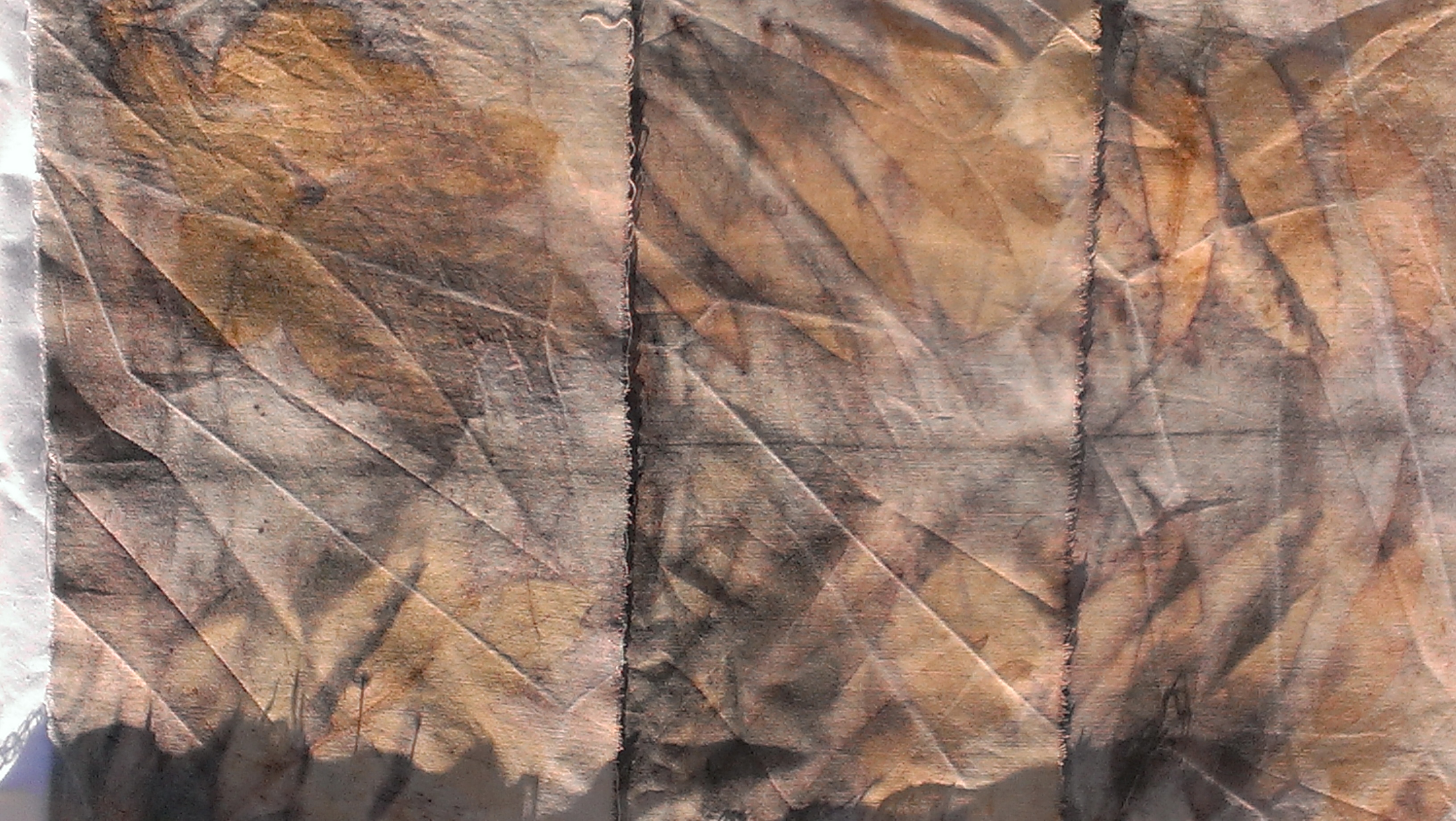
A while back I leaf printed a length of seedy silk noil.  Today I turned it into two custom fit pillowcases for a small and contoured pillow I find very comfortable. One part of the fabric I printed wth E Scoparia–but you can see faint prints of E Cinerea leaves coming through too.

IMG_0060

The other, with E Cinerea. Interestingly enough, the lingering smell of eucalypt is very faint and the smell of raw silk overwhelms it: I’ve tried this before and it will last only a few washes. The colours are muted but the leaf shapes are clear.

IMG_0064

I love a simple sewing project… I’m one of those people who can make the same thing over and over again.

1 Comment

Filed under Eucalypts, Leaf prints

E Kingsmillii subsp Alatissima

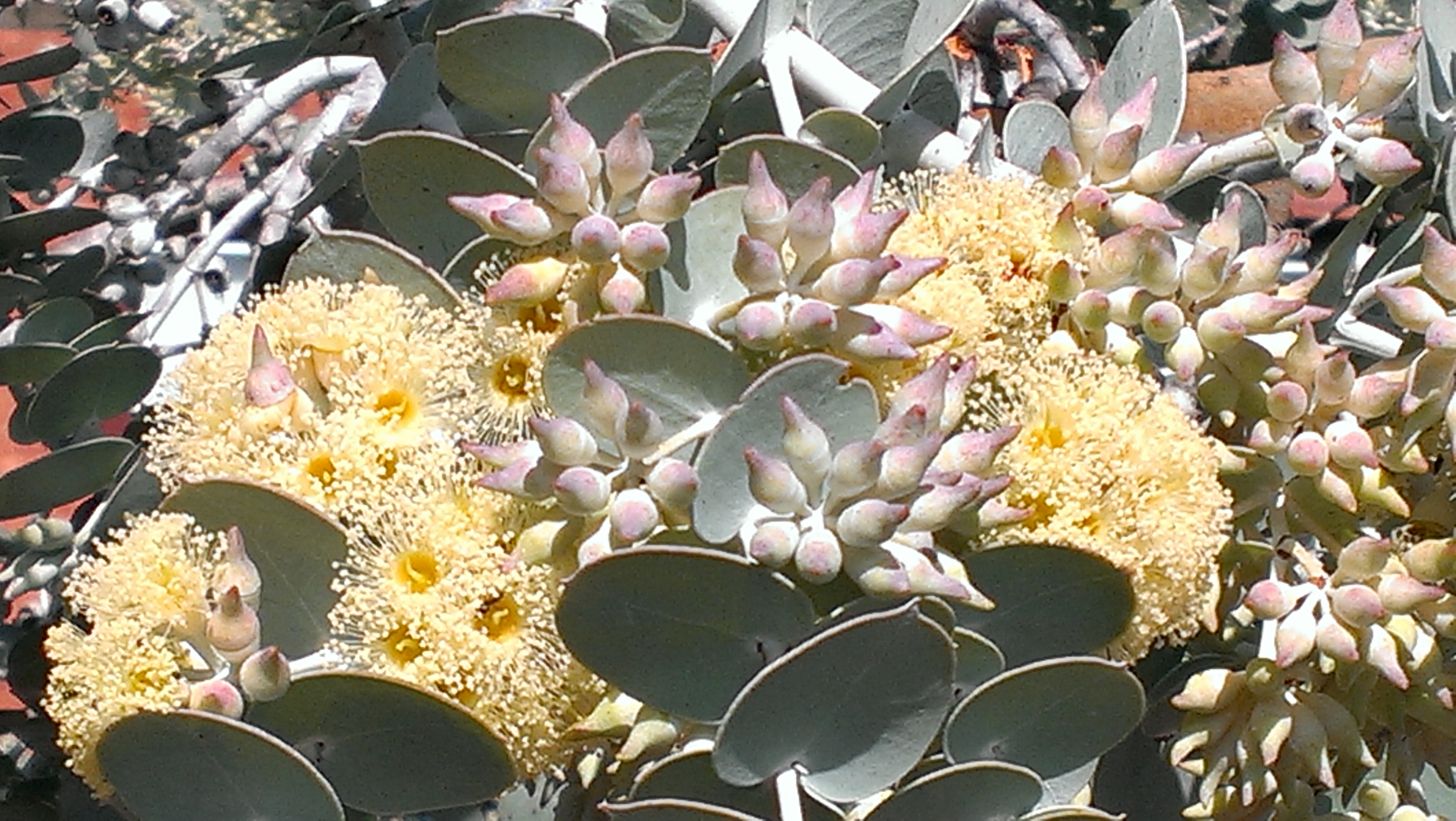
How spectacular is E Kingsmillii (Kingsmill’s Mallee; wing-fruited mallee)?

IMAG0952

Perhaps the tree doesn’t seem obviously wonderful.  The buds are truly glorious!

IMAG0955

And so are the flowers and the fruits.  It turned out I was photographing this tree outside the Botanical Gardens centre for plant diversity.  My eucalypt admiration was shared with a woman who came by and offered me more information, so I told her about this beauty being a dye plant.  It isn’t every day you get this kind of fun on your way to a conference!

IMAG0957

And… for me this is a happy result, pulled from the copper at the Guild as a test during our workshop.  I am so prejudiced in the matter of red.  I just love it…

IMAG0919

4 Comments

Filed under Dye Plants, Eucalypts, Leaf prints

Another workshop done!

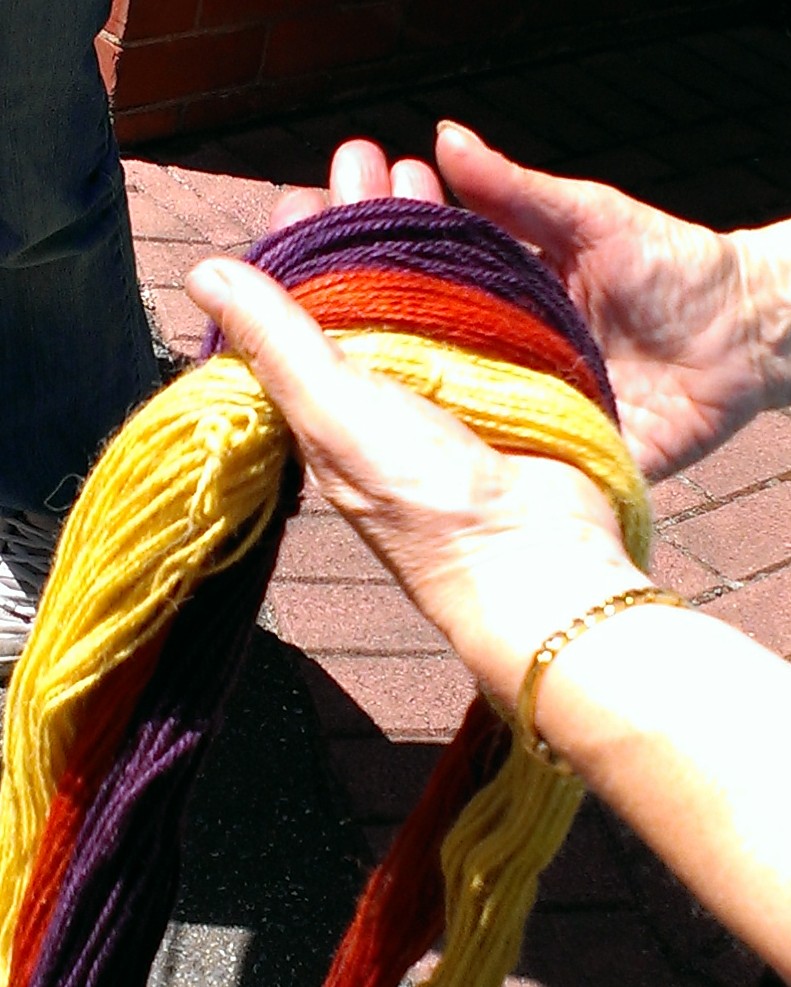
The second in my little series of workshops at the Guild went really well. There was yarn, fleece and roving dyeing.  Brown, orange, almost-red and maroon from E Scoparia (bark and leaves) and E Cinerea leaves, yellow from silky oak (Grevillea Robusta) using Ida Grae’s recipe from Nature’s Colors: Dyes from Plants, and the ever-astonishing purple from red sanderswood with alum.  I again used Jenny Dean’s method from Wild Colour and still got nothing like the oranges she suggests are likely.

IMAG0896

Mysterious outcomes in natural dyeing are not all that uncommon (at least for me!), as the number of variables is so huge.  But this one is out of the box–purple!?  Since my last post on the subject, Jenny Dean has very generously been in touch with her thoughts on the matter.  She suggests this purple could be the result of alkalinity (but given I made no attempt to generate an alkaline bath, it seems unlikely it was seriously alkaline).

Or–and I agree with her that this is much more likely, even though I used 4 different jars/packs labelled “sanderswood”–perhaps the dyestuff  was never sanderswood to begin with.  The colour is very, very like the logwood results I have had, just about indistinguishable.  I am still not complaining about the result–I love purple and so did the participants.  I was hoping for purple on this occasion, as I have no more logwood–that I know to be logwood.  Perhaps there was a time in the past when a batch of “sanderswood” came to our Guild or a supplier nearby and all the different jars I’ve used ultimately can be traced back to the same mislabelled supply. This would fit with my experience of Eucalypts… it is much more likely that I have misidentified my tree than that the dye bath is giving a completely different colour.  Variation to some extent, however, is completely expected.

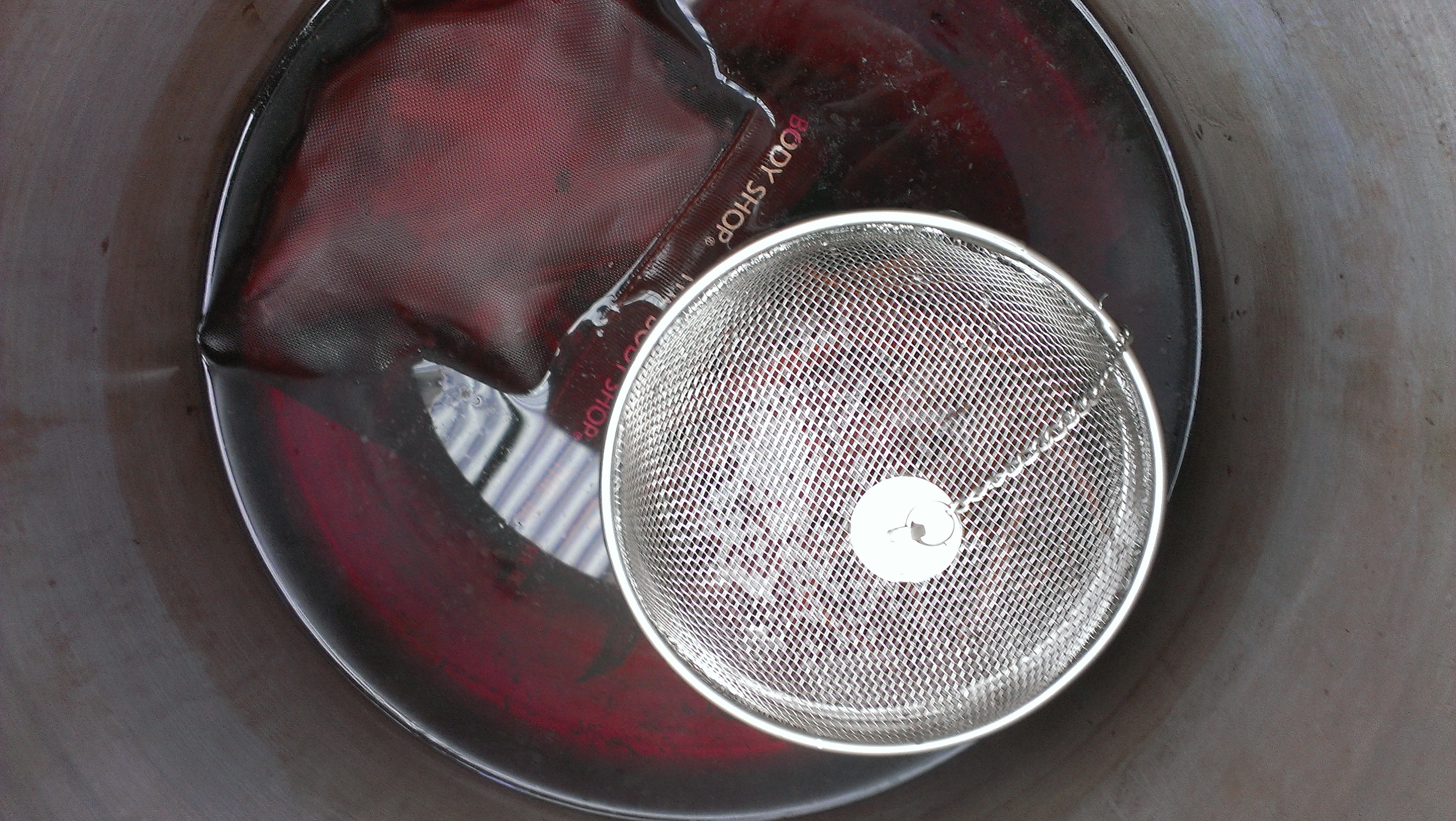
Here is the “sanderswood” just after I poured boiling water over it–Jenny says this looks like a logwood bath to her.  I bow to her much more extensive experience and wisdom, without hesitation.

IMAG0862

I have the biggest chips in a little zippered mesh pouch that must once have held toiletries.  The smallest chips/splinters are in something that looks just like a giant tea ball.  I saw it for sale in a Vietnamese grocery where I was investing in greens, seaweed and soy products and immediately saw its possibilities.  The woman who sold it to me had an eye-popping moment (evidently she hasn’t sold one to an Anglo before), and asked me what I was planning to do with it.  I love those moments in Asian groceries, because once I’ve been ask the question and given my (admittedly bizarre) response, I can ask about the ordinary use of the device or food in question.  This one is usually used to contain whole spices when making a big pot of stock or soup.  This point was helpfully illustrated by a packet of soup seasonings–star anise and cinnamon and coriander seed were some of the spices I could identify right away.

People tried out India  Flint‘s eco-print technique on cotton, wool prefelt and silk.  I hope she will get some extra book sales as a result (if you’d like to acquire her books, click on the link to her blog and look for the option to buy them postage free in the left hand sidebar).

IMAG0871

There were biscuits and icy poles and lots of chat.  I demonstrated soy mordanting and black bean dyeing.  And while we were at the Guild and using the copper, which is such a generously sized vessel by comparison with my dye pots, I leaf printed some significant lengths of fabric that I brought to the workshop bundled up and ready to go.  The copper really is copper lined, but I could detect no obvious impact on the colours.  Seedy silk noil:

IMAG0903

Wool prefelt… the degree of detail is fantastic.  This is destined for felting experimentation by a dear friend who generously assisted me at the workshop.  Her practical help, support, constant grace and good cheer made things go so smoothly.  I also decided to start some processes before participants arrived, which I didn’t do at the previous workshop.  I think that helped.  But it was a fabulous group of people too.

IMAG0913

And finally, silk/hemp blend, destined to be made into a shirt (by me, so it may take a while).  I am delighted with how it turned out, after many months of putting off the day.

IMAG0924

9 Comments

Filed under Eucalypts, Leaf prints, Natural dyeing

A story of a quandong and its mistletoe

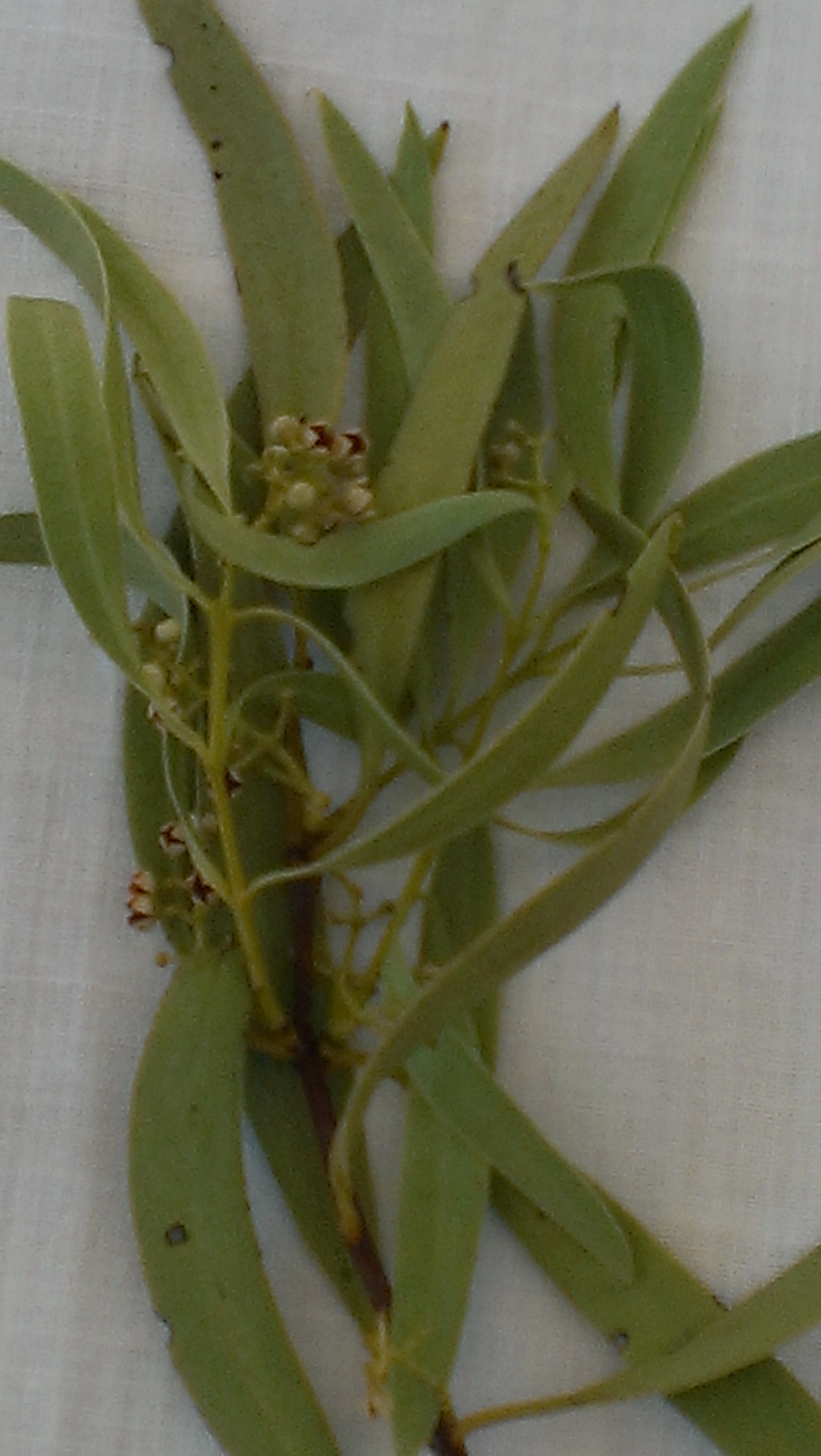
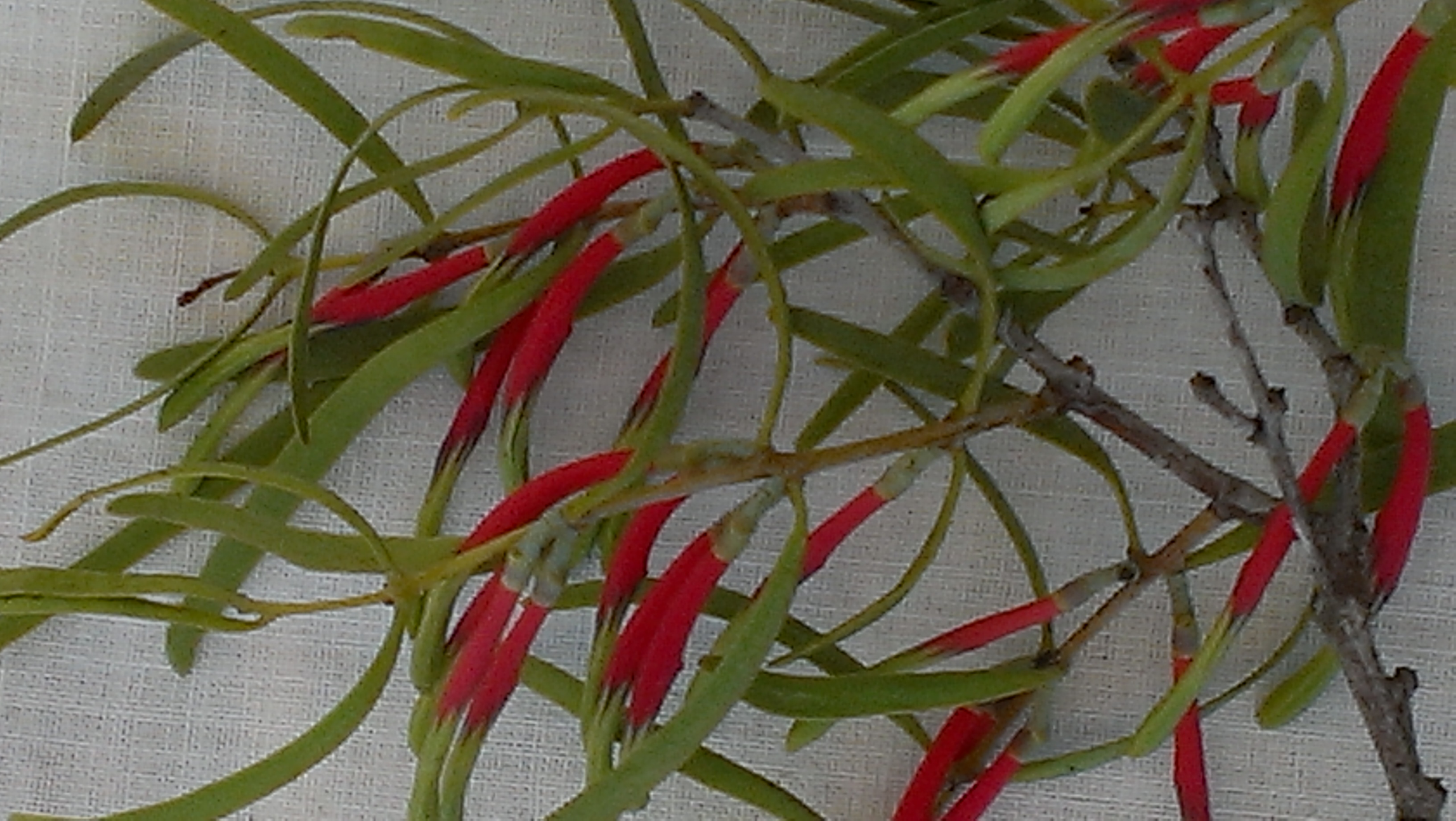
One weekend recently we went to visit a friend who lives near the Aldinga Scrub. While I was there we went for a wonderful walk on the beach, making the dog and ourselves happy.  So I collected a couple of samples while we were out, as many local people, like my friend, are planting as many local species as they can around their homes.  I decided to try a quandong and its mistletoe.  In case you’re not from around here, dear reader, let me advise that in Australia, mistletoe is a big family of parasitic plants which will eventually (but usually slowly) kill their hosts.  It isn’t so much the romantic plant under which people kiss at certain festivals.  There are lots of mistletoes, and they are cunningly adapted to a narrow range of host plants.

I have a fabulous book on mistletoes, Mistletoes of Southern Australia by David M Watson, published by the CSIRO.  It has me in awe of these extraordinary plants, but has convinced me that I am unlikely ever to be able to identify them with confidence.  There are only 46 to choose from in this part of the continent, though, so the task is a good bit smaller than learning Eucalypt identification.  There are some mistletoes in the book that this plant is clearly not.  But as to which one it is… I have several candidates in mind.  And I don’t know which of the quandongs this is, either.  It doesn’t look like the favoured bush food species Santalum acuminatum to me.  But Wikipedia lists a lot of other varieties all called ‘quandong’!

Anyway, on to the leaf prints.  Quandong in flower, before:

IMAG0825

After cooking with iron, which left quite an impression:

IMAG0846

The iron may have made an impression, but this convinced me that this quandong isn’t much of a dye plant.  And now, the mistletoe, which is in glorious flower and will later create a rather impressive berry.  Before:

IMAG0827

And after.  I think this leaf print is a good bit less glorious than the plant, but this is definitely a distinct print.  So the mistletoe has dye potential.

IMAG0848

And that is the story of the quandong and its mistletoe for now…

4 Comments

Filed under Dye Plants, Leaf prints, Natural dyeing, Uncategorized