Category Archives: Natural dyeing

Workwear for a suburban guerilla gardener

2015-10-27 18.50.54

Some months ago I had an idea.  I thought I would embroider my gardening shirt, or one of them. Once I had the idea, I couldn’t let it go.

2015-10-27 17.54.22

I had my beloved’s gift of Japanese indigo dyed thread and it felt so perfect for the job…

2015-10-27 18.50.34

But when I spoke with a friend about it she gently suggested that investing so much time and effort in something on the verge of falling apart might not be wise use.  She is a wise woman and gentleness is her way.

2015-10-27 17.44.02

I began thinking of the fabrics I already had, offcuts of linen, canvas and stout cottons.  It occurred to me that I had a Merchant and Mills pattern (The Top #64) that struck me as pieced, and that called for quite stout fabrics.  I thought over a kind comment here on the blog about using more than one type of fabric as a potential feature rather than a problem (thankyou!).  I started dyeing more fabric.

2015-11-06 14.51.31

And so two sets of offcuts from different generous friends found their way into various dyepots.

2015-11-06 14.52.18

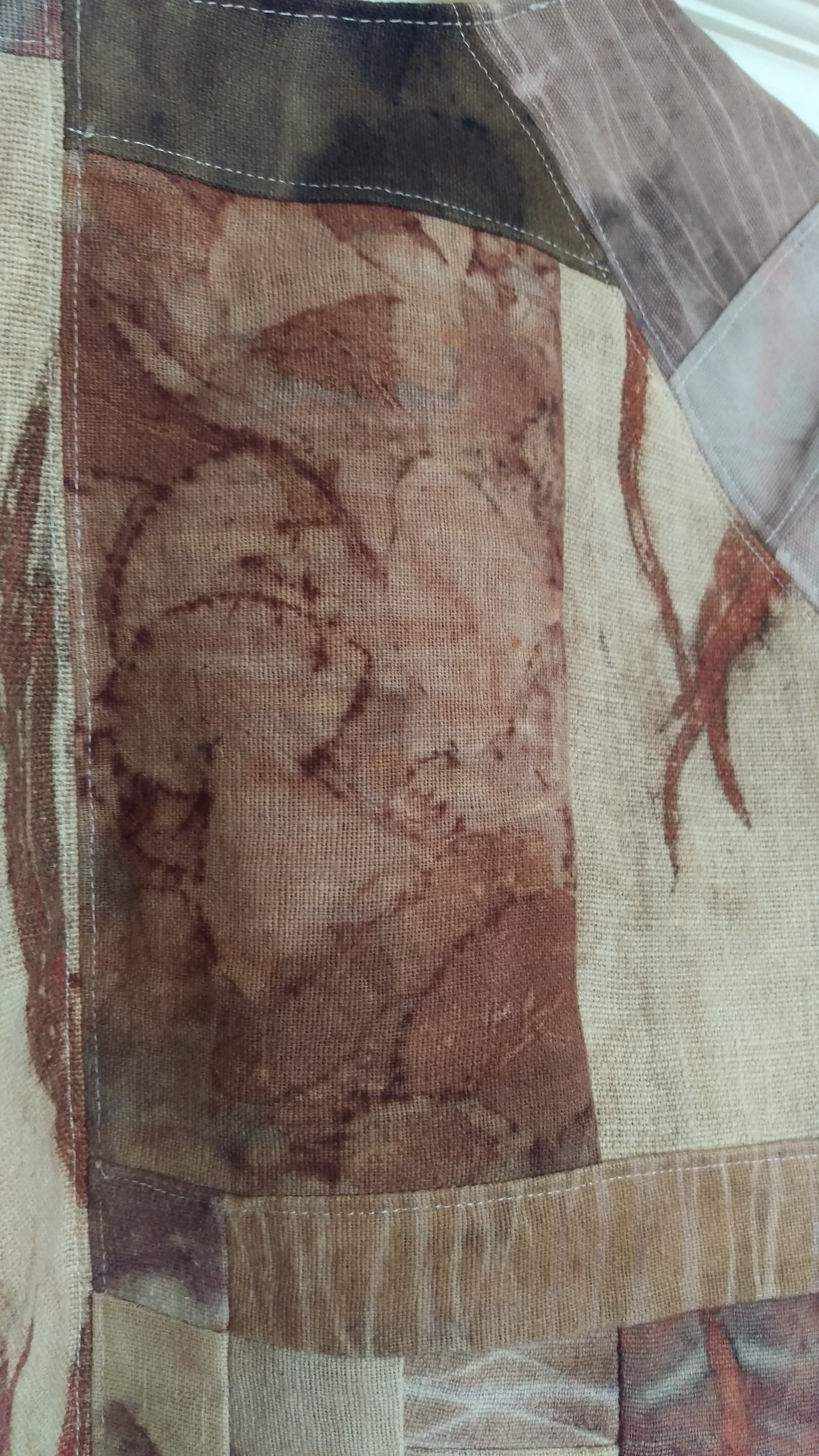
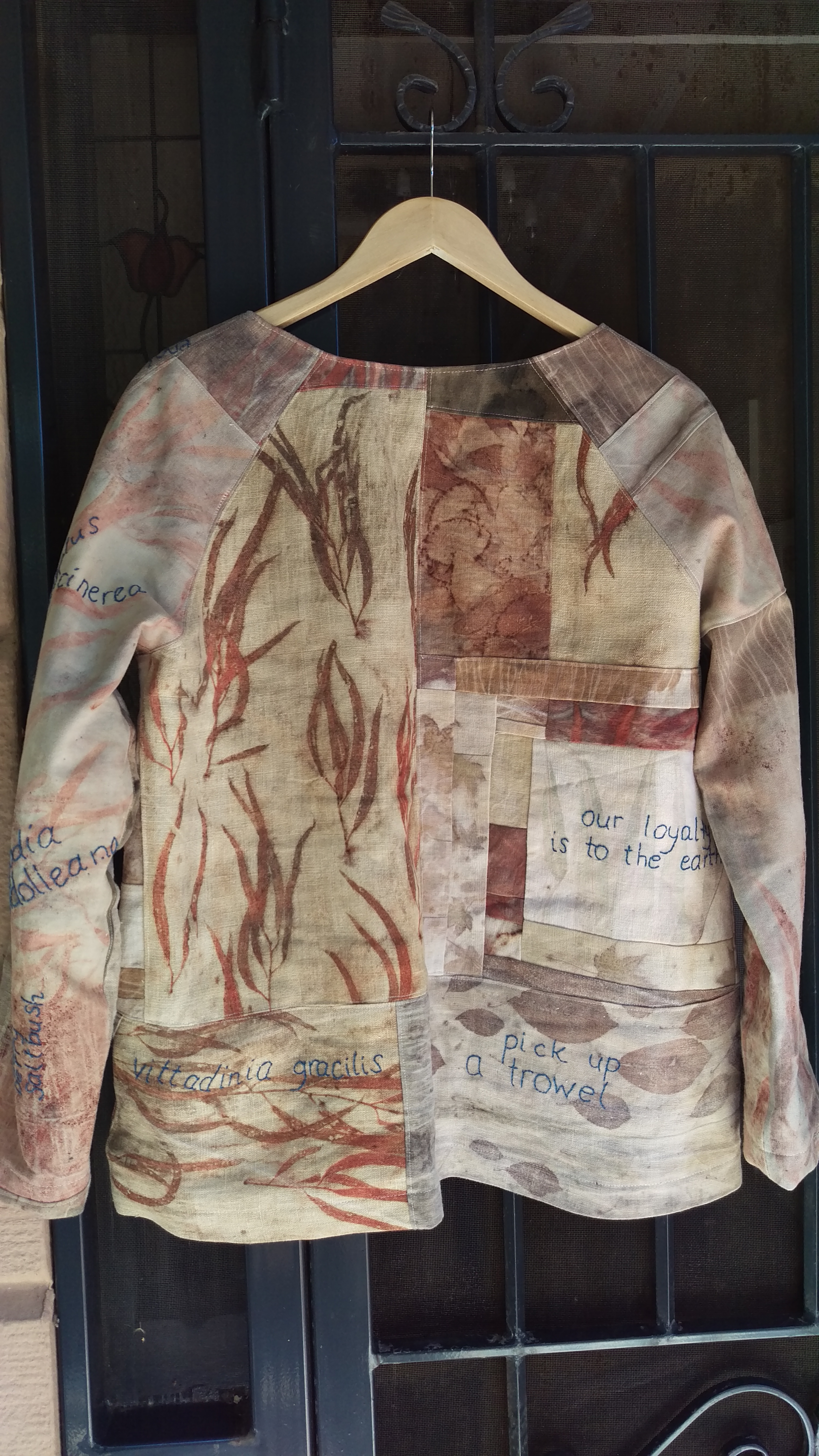
I found that I didn’t have pieces big enough for the pattern pieces anyway–even with front and back each being made up of 4 different pieces of fabric, some parts of this garment were still pieced together from smaller segments.

2015-11-06 14.52.32

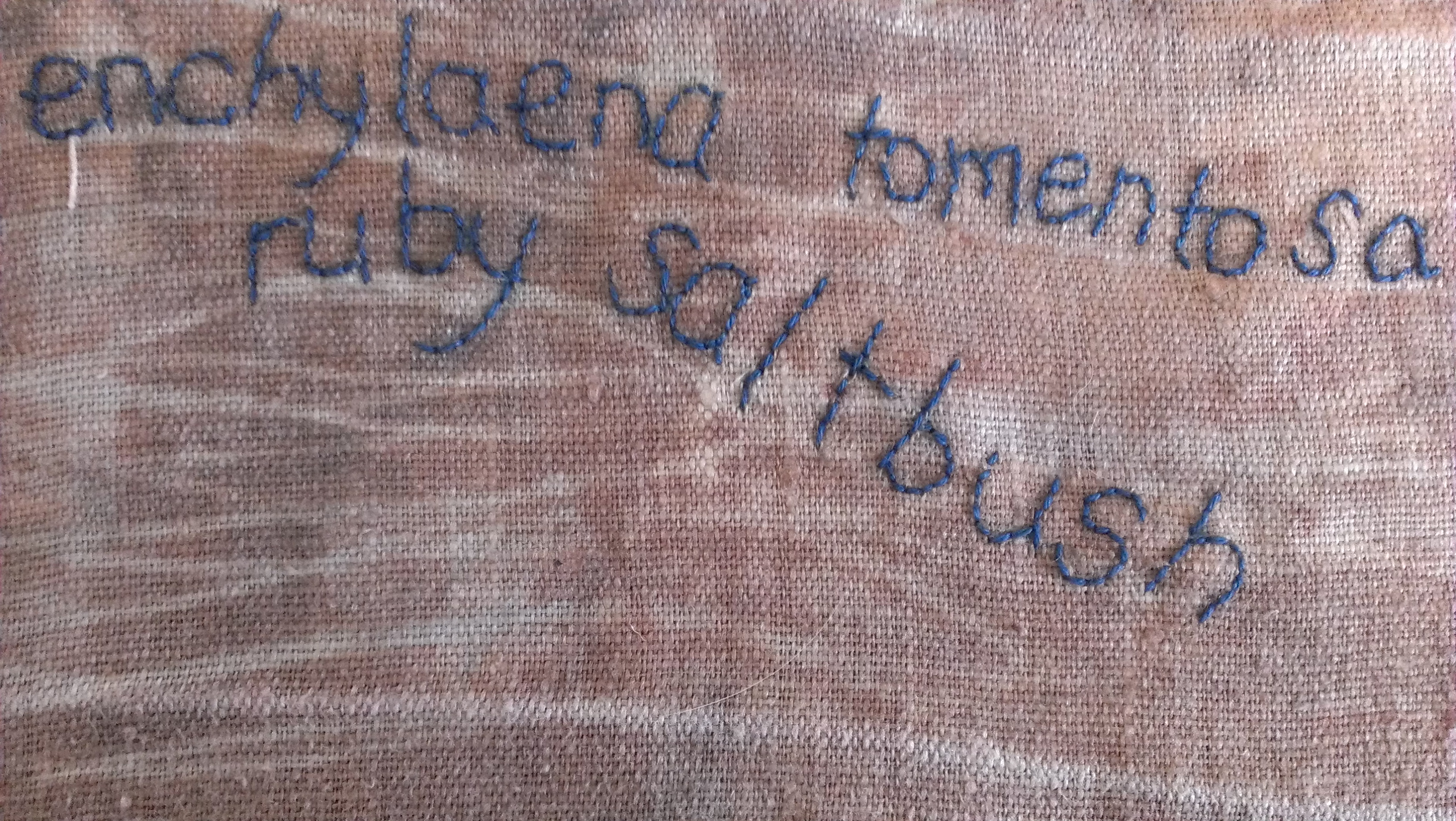
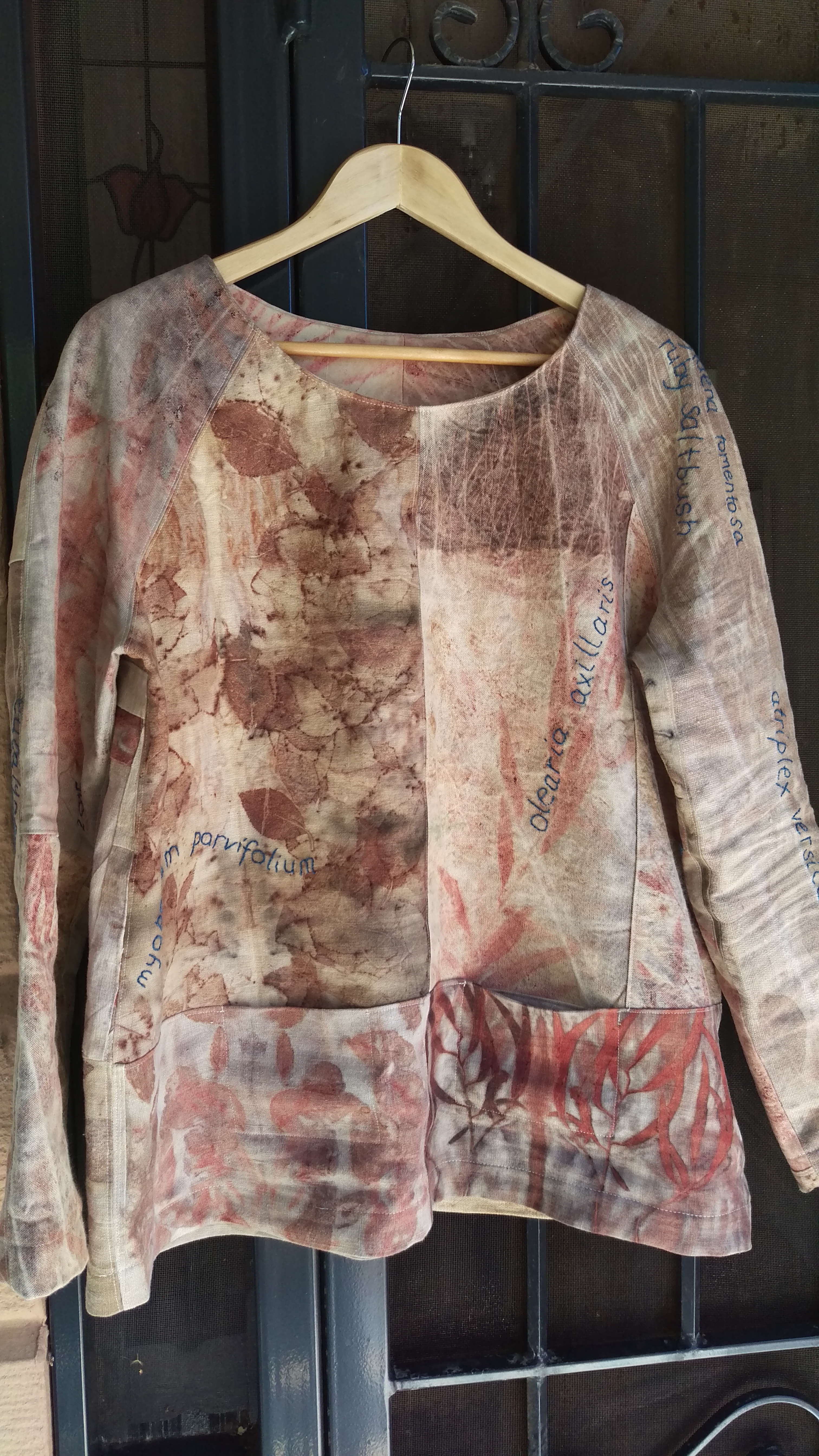
And now, here it is.  Embroidered with dye plants of the neighbourhood and the names of plants I have been propagating and planting.

2015-11-06 15.16.08

And a few other phrases of note.  There may be more yet to come!  And now you know how I came by so many scraps that I needed to Make patchwork as I went…

2015-11-06 15.16.21

20 Comments

Filed under Leaf prints, Natural dyeing, Neighbourhood pleasures, Sewing

Scrappy patchwork

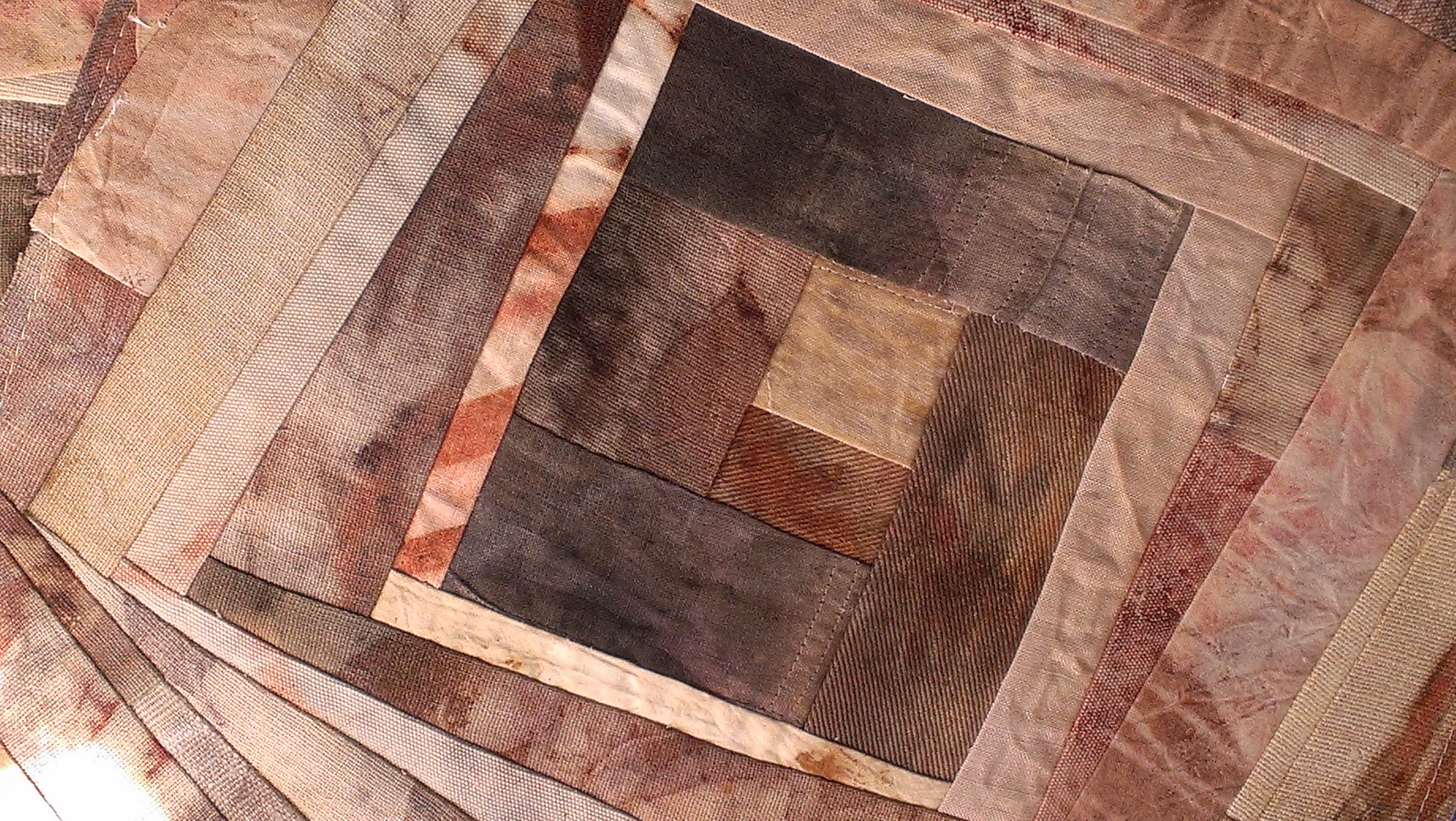
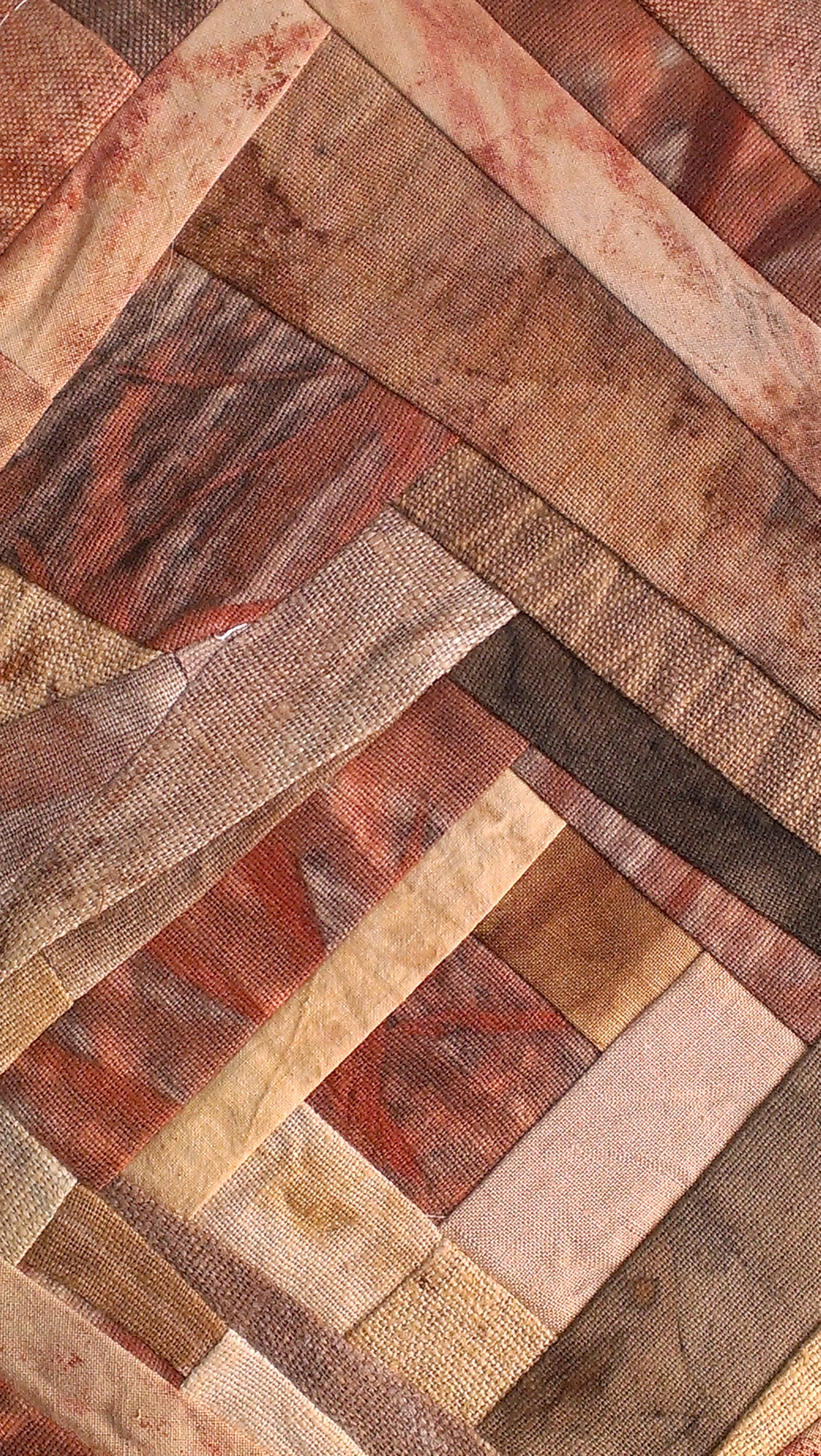
In the strange cauldron that is my mind, what Block Party calls ‘wonky log cabin’ and what Slow Stitch calls ‘distorted log cabin’ suddenly became very compelling recently. This was the first one.

2015-10-22 14.32.28

I think the triggering factors were some dyeing that really didn’t work out as I had hoped (as you heard in my last post)–some of which became the foundation for foundation piecing and some of which became strips for the log cabin itself–and cutting out and piecing a garment.

2015-10-22 14.32.06

I don’t know what it is about offcuts that is so distracting to me that they take precedence over the garment or project that they are offcuts from… but this has become a theme.  I think I am beginning to understand that these themes in making are not problematic and don’t require resistance.  They might instead be what makes my work my own and not someone else’s.  I love that this piecing strategy lets me use the odd triangular shapes that I have been struggling to use, and sometimes regretfully trimming off in the creation of squares or rectangles.

2015-10-22 14.32.36

Here, they are perfect.  In fact, they drive the effect in a rather lovely way.

2015-10-22 14.32.54

The other happy feature is that instead of sighing and thinking ‘this is all I have left of that piece of fabric’, I can think…

2015-10-22 15.52.00

‘Here is the start of something wonderful’!  It is also an opportunity to use really well worn fabrics.  In this case, a cotton kimono sent home from my mother-out-law.  She clearly struggles with throwing away treasured threadbare fabrics and so I have been receiving gifts from her more and more regularly as the wish to have her cupboards clear has been growing in her.  High quality fabrics that have seen decades of use.  Damask napkins that have worn right through and which I’ve been using to interface embroidery.  Cottons that make a great foundation fabric but no longer have enough integrity to become a smaller garment or even a lining.  And the occasional treasure that she just can’t figure out how to use.

2015-10-22 15.52.34

I am really not sure what she would make of these blocks!  She loves the eco prints and has an eco print bag I am told she uses a lot.  But it might still be tough to see her cherished kimono become an underlayer!

11 Comments

Filed under Natural dyeing, Sewing

Dye bundle results

2015-10-05 18.45.21

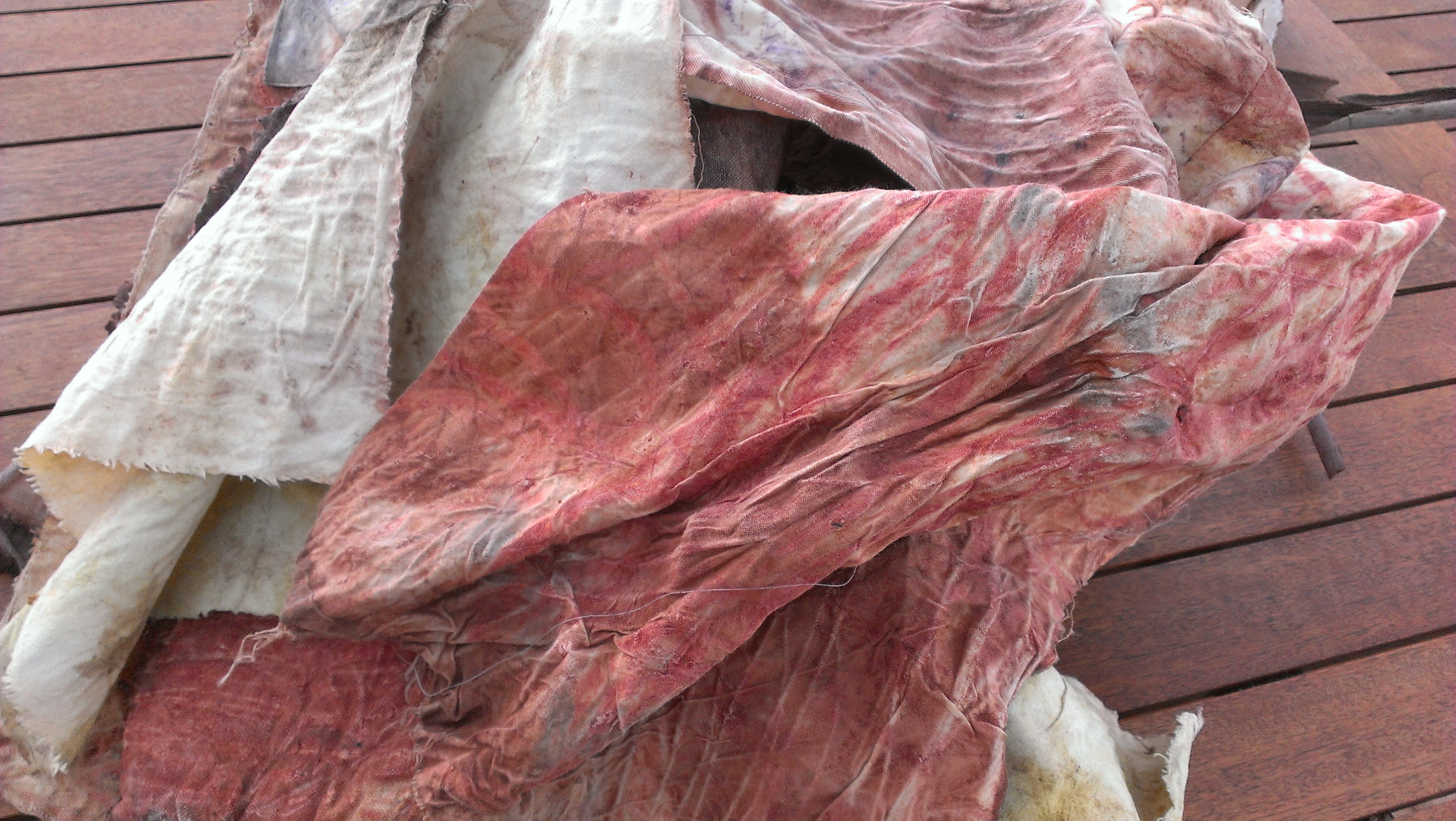
My recent dye bundles came out less well than I’d hoped.  Some went well…

2015-10-05 18.46.08

I got some great string resist marks on others…

2015-10-05 18.46.44

Still others were delicate and pale.

2015-10-05 18.45.49

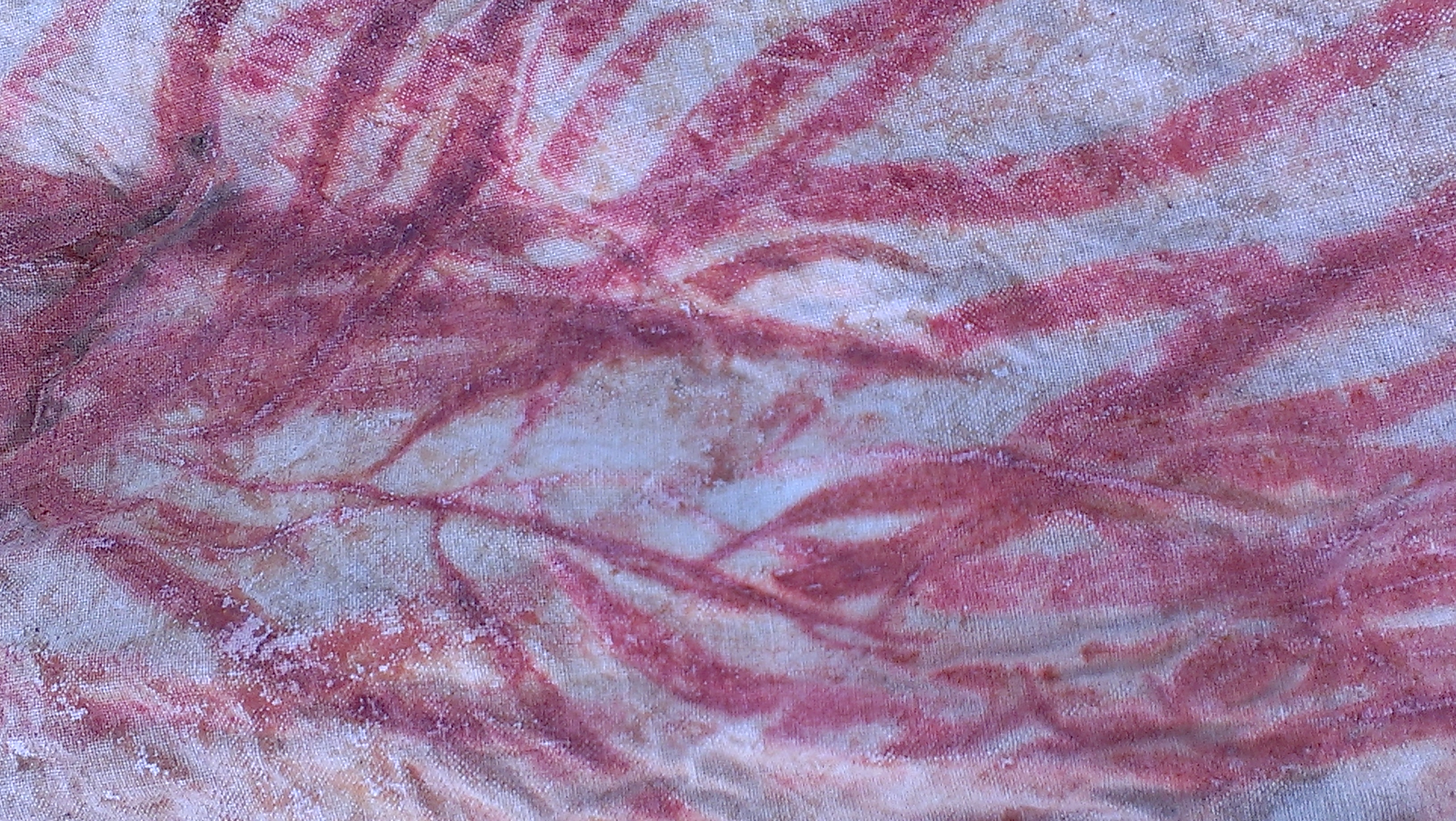
This rather promising looking print of sheoak in flower largely washed out, and so did several others.

2015-10-05 18.47.16

I think there is something about using a dairy milk mordant that I have failed to understand.  I have tended to use soy more and so this was a bit of an experiment.  Or perhaps part of the trouble was that these were new fabric offcuts, and I am used to using well washed and worn recycled fabrics, which present a different kind of substrate for dyeing.  But I have been using them nonetheless… and finding places where these prints work for me.  More soon!  So much more 🙂

19 Comments

Filed under Natural dyeing

More ruby saltbush!

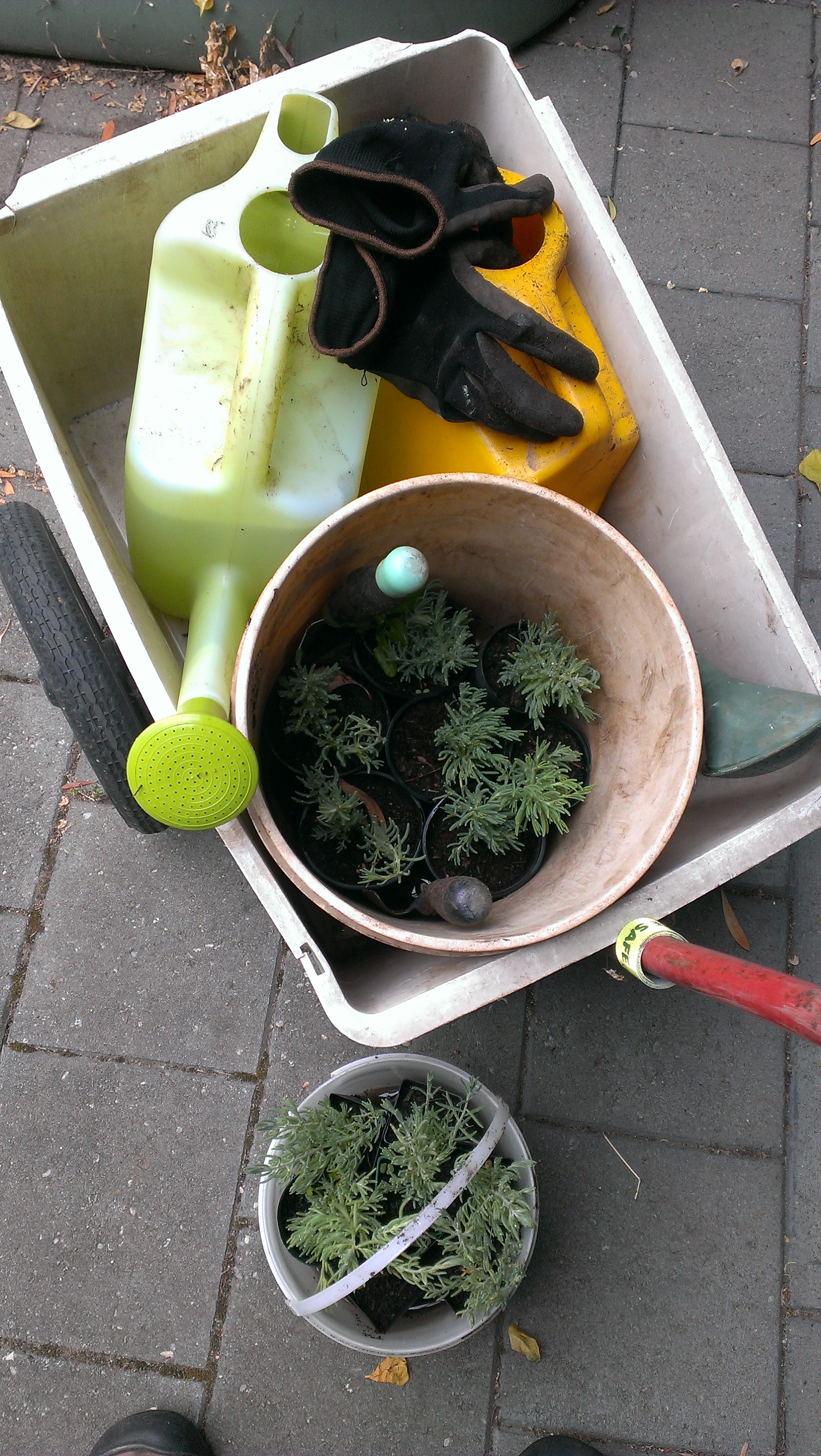
I know… so many pictures of my watering cans and so little crafting.

2015-10-25 16.20.12

This time, ruby saltbush had its turn again.

2015-10-25 16.38.19

These little treasures are going into a narrow mulched area between a wall and a pathway.  The mulch is a saving grace, that and the fact I walk this way when I get home on the bus.  My niece came along to the planting as she was staying with us again, and we had a decent chat as I dug and she watered. The previous plantings in this truly harsh spot are all but one, still alive.  Fingers crossed for the newbies!

2015-10-25 16.43.14

Then it was home to prick out more little seedlings.  Seedlings and seeds… couldn’t be any better if they were magic.

2015-10-25 15.28.15

Japanese Indigo is coming along slowly but at least I have sprouts!

2015-10-25 15.28.23

And actually there has been quite a bit of stitching too…

2015-10-27 18.51.05

Even if the lighting lacks a little.  More news soon!!

2015-10-27 21.46.48

1 Comment

Filed under Natural dyeing, Neighbourhood pleasures

Carrot top dye

2015-10-04 12.51.48

Having a hank of silk embroidery thread that has already been through a long, cold alum soak has been going to my imagination.  Usually when I think about local dyes I am thinking about eucalypts, but one recent weekend I went to the farmer’s market and when I cut the tops from these treasures, I was struck by the urge to dye with them.

2015-10-04 12.55.05

Into the pot they went without delay.

2015-10-04 12.55.51

Once the water went in, I saw there was a passenger.  Can you see it (her, probably)?

2015-10-04 12.56.34

I did get her out of the pot eventually, and yes, with a long handled wooden spoon.

2015-10-05 14.44.31

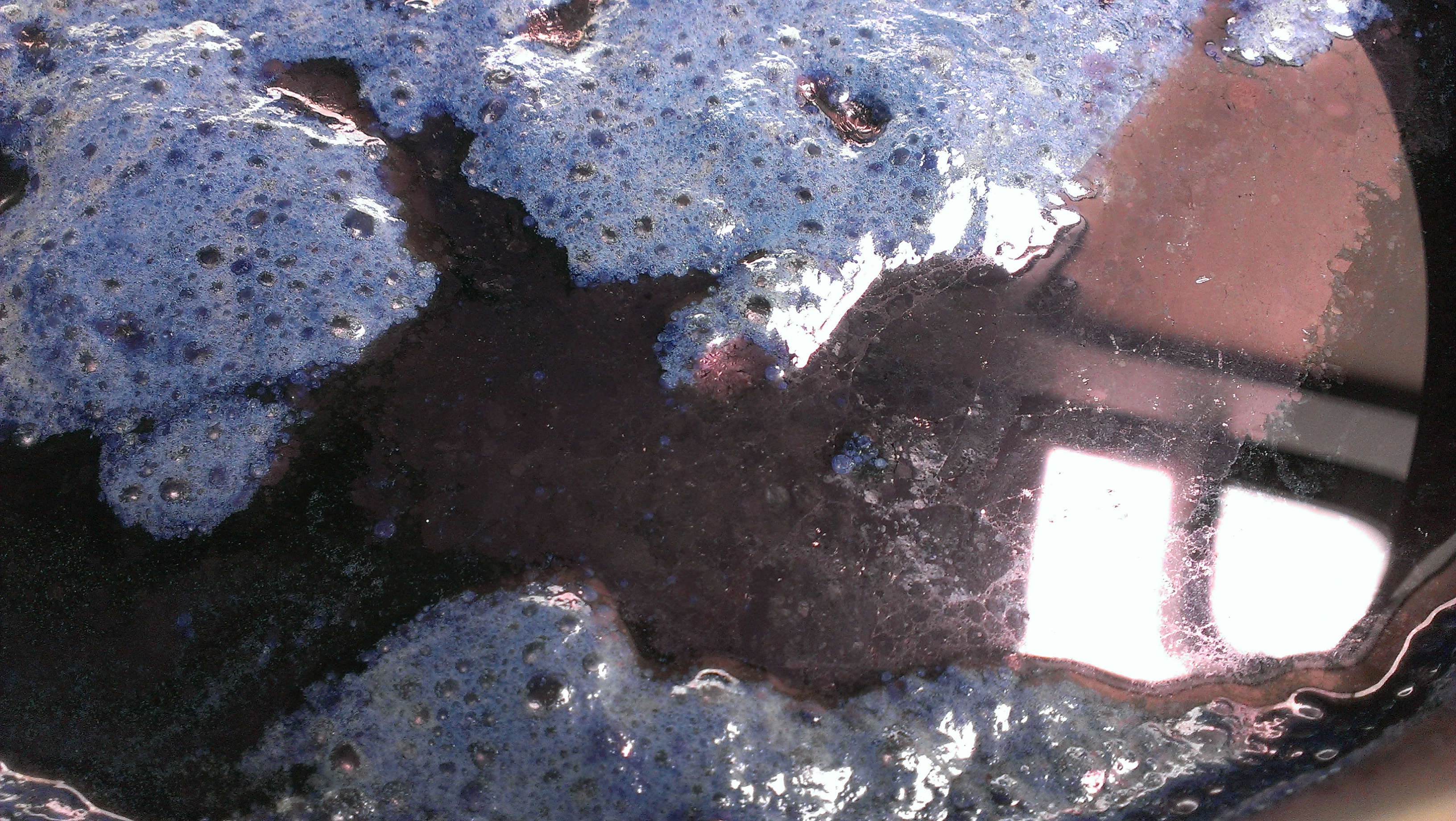
Here, a photo of the dyer reflected in her pot, a day later.

2015-10-05 18.41.07

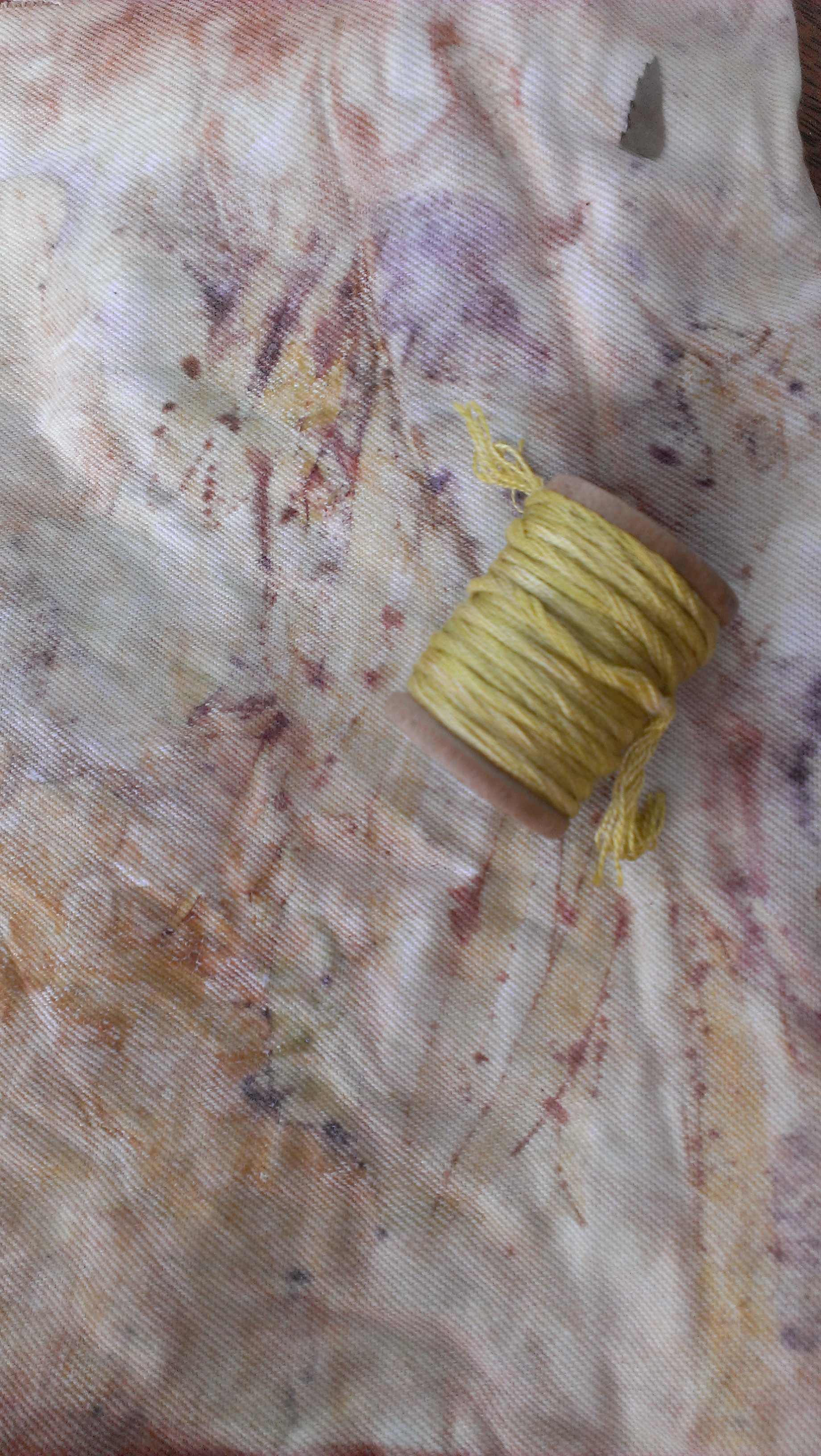
The thread is a greenish shade of yellow.  I have plans already!

2015-10-05 18.45.36

10 Comments

Filed under Natural dyeing, Neighbourhood pleasures

Dyes of antiquity: Opal Cochineal

Some time back, I started a series of posts using dyes that have been gifted to my Guild–or perhaps just abandoned there!  Among the haul of amazing dyes of unknown provenance and considerable age was quite an amount of cochineal.  It had so many forms of packaging and so many forms that I brought together all those with similar labels and packages… and this left small quantities of ‘opal cochineal’ (12 g) and ‘ruby cochineal’ (36 g).  I was absolutely unable to figure out whether these were marketing terms or actual descriptions of the dye qualities of the dried bugs themselves, and finally I decided to find out.

2015-09-27 14.38.12

Step 1: weighing the opal cochineal, consulting the dye books (I went with Rebecca Burgess on this one), and stitching my dried insects into a pouch.  I abhor stockings, so they only come my way from other people’s discards.  I found an antique nylon curtain in the stash and stitched up a double layer bag for the dyestuff to be sewn into.

2015-10-02 16.41.00

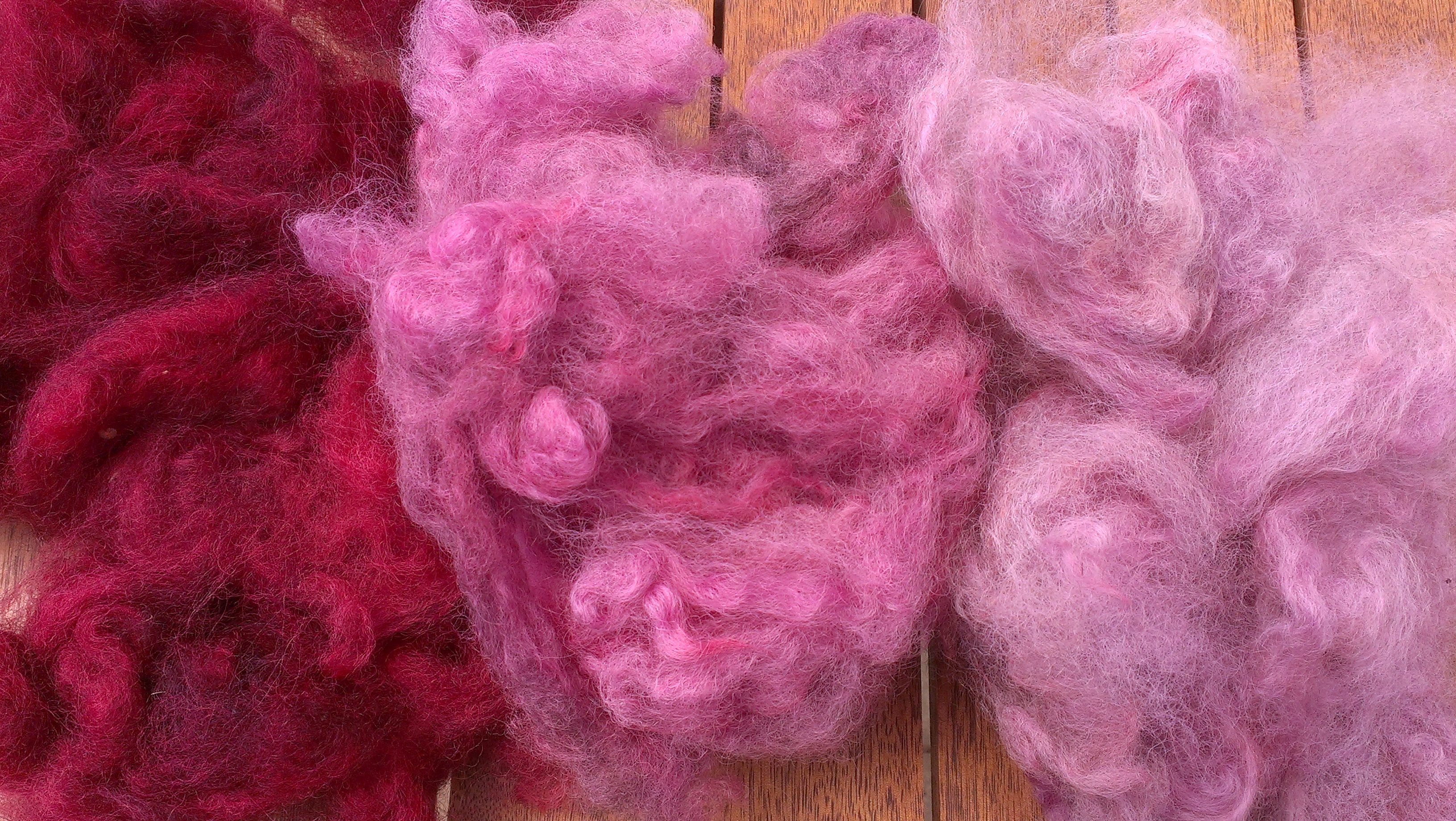
Into the dye bath!  When the mount of colour released almost immediately is so stunning, it’s easy to understand why this dye was so sought after (and of course, still is in some quarters).  I added small quantities of silk embroidery thread at different stages in the process, along side several batches of fleece from ‘Viola’, a silvery-grey English Leicester Cross. The thread looks just great.

2015-10-04 12.50.13

I love the colour from the first bath best, but tried to exhaust the dye, with three batches of fibre.  Total dyed weight: a whopping 72g.  Is it ‘opal’ in some special way??? Let me know if you have a view.

2015-10-04 12.50.19

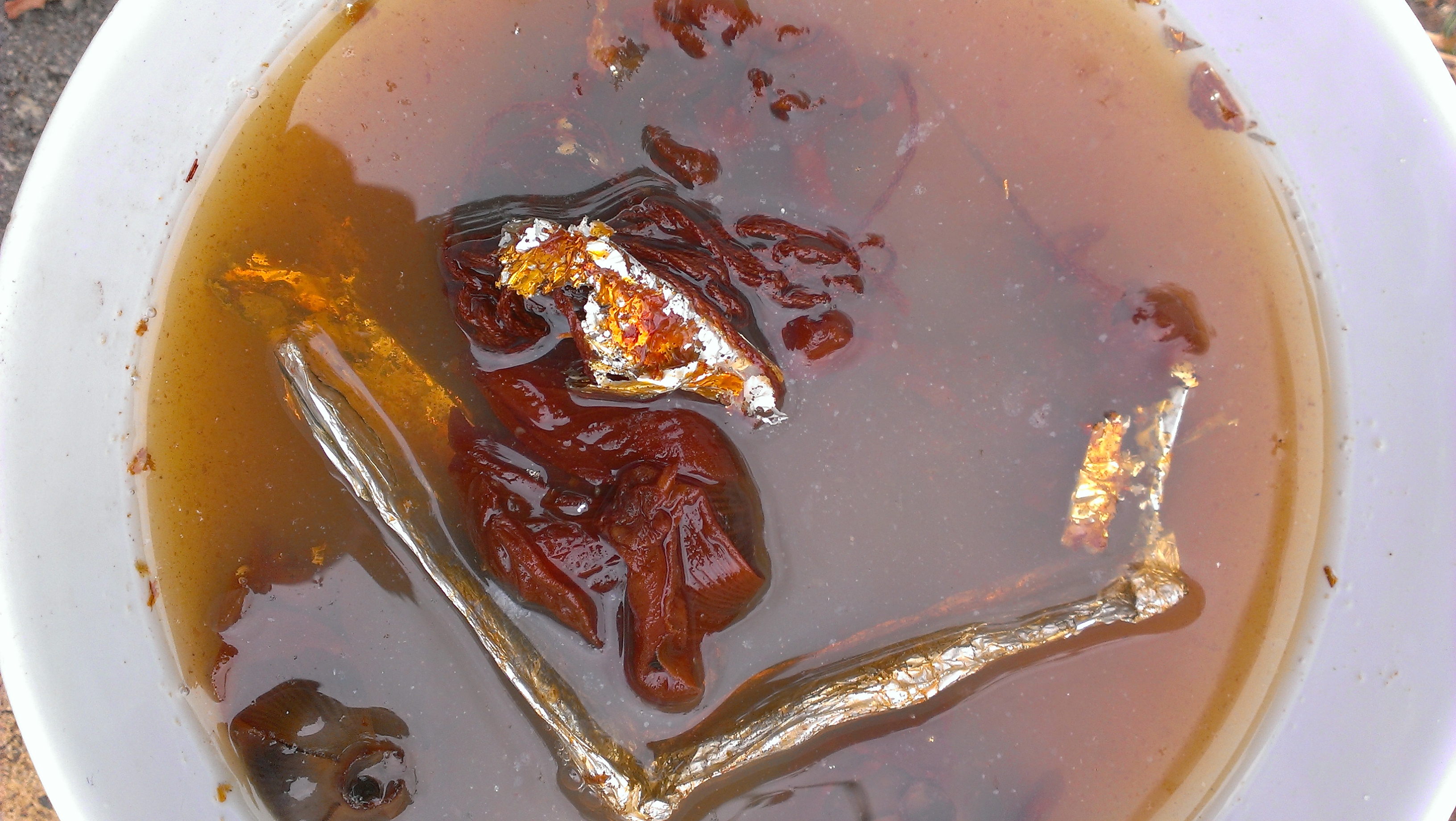
Here is my little nylon sachet after its many steepings and soakings, heatings and coolings.  I had a chat with a friend at the Guild and she’s been cochineal dyeing too.  Maybe all our exhausted insects will go into one final exhaust bath.

2015-10-05 18.42.14

7 Comments

Filed under Natural dyeing

Opening the first experimental jars

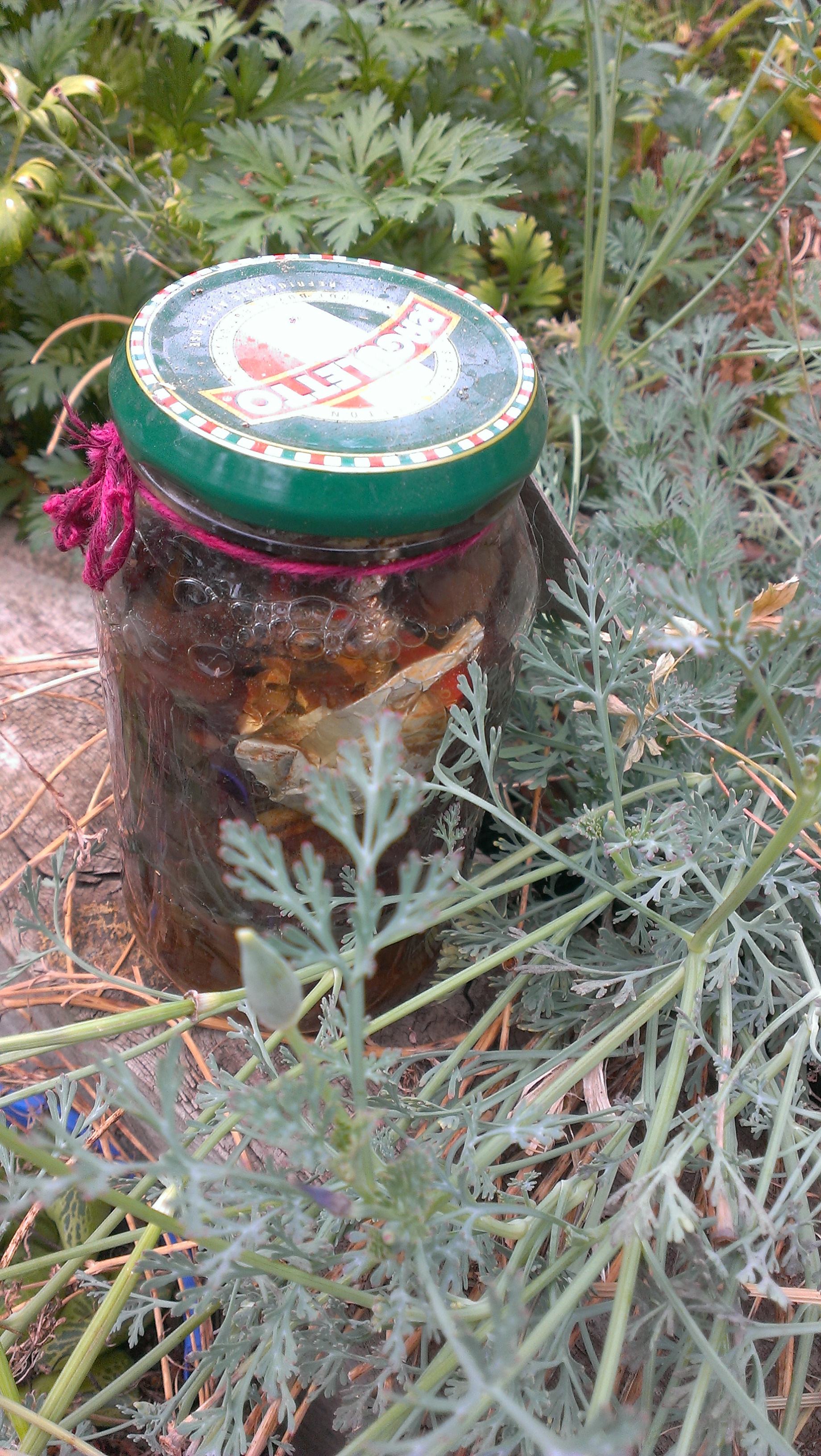
I finally decided I could open some of my stuff, steep and store jars.  I have to say that all three of the first I decided to open are experiments–not just my experimenting with India Flint’s preservation dyeing process (I have shown myself a poor follower of instructions many times so everything is an experiment in one sense)–but using this method to try out plants that have no dependable dye properties I know about.  India Flint seems a genius to me, but even she can’t convert a plant with no exciting dye properties into a gem on my behalf.  I find India Flint’s process exciting, and I am loving using it with experiments using small quantities.  But naturally, India hasn’t stood by my side and saved me from my own mistakes.  Speaking of my mistakes, I want to say: One total sealing failure which resulted in mould.  So far, 24 jars that sealed in spite of some of them being re0used many times.

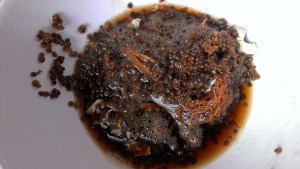
1. Rhagodia berries.  These are the fruits of the seaberry saltbush, gathered on holiday.  I learned a lot from this jar.  Its contents began to ferment while we were on holiday and before I could get it to a place where I could try to seal it.  Ahem.  Next time, I’d put it in the fridge while it waited, because this was totally predictable.  I failed to think of these berries as essentially, just like a jar of any other fruit.  After all, they are a (small) fruit. And it was summer.  Next, I had sealing trouble and decided in the end that we re-use jars a lot, and that if I want a really good seal, perhaps I should try using jars I know won’t have lids that have been bent out of shape.  India kindly assisted with a re-sealing strategy (I’d forgotten about it, but there it was tucked inside the lid!).  13 months after they went into the jar:

2015-03-27 16.42.03

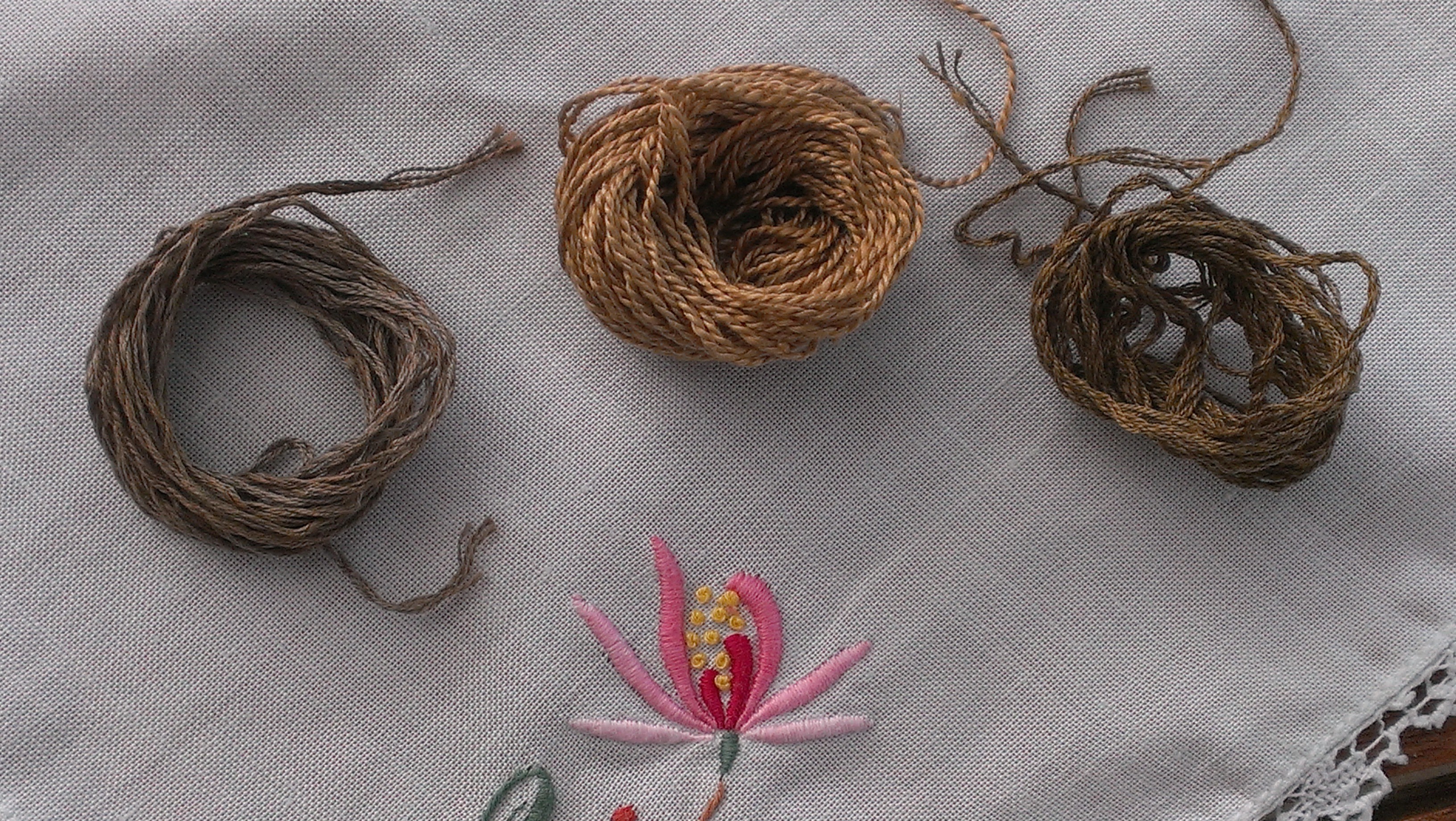
And here are the contents! Including some respectably orange-brown silk embroidery thread.
2015-03-27 16.44.36

2. Hibiscus flowers from the Himeji gardens. The trees in Himeji gardens have purple leaves–very pretty.

2015-03-29 08.23.05

By coincidence I found these trees growing at West Lakes when I was there supporting three friends doing a triathlon (there is a lot of waiting if you’re a spectator)–a man saw me taking a photograph of his tree and told me it was a cottonwood hibiscus (H tiliaceus–more here).

2015-03-27 16.46.58

This is the most unappealing looking of all my dye jars.

2015-03-27 16.47.51

The contents are no more spectacular but the thread in this jar is quite a deep brown colour.

3. Finally, the camellia flowers.  Hope springs eternal!  I had all kinds of experiments with the camellia flowers  when they were plentiful. This jar looked almost grey.  This one had only been in the jar since August 2014.  Not really enough time for a full result, maybe.

2015-03-27 16.51.15

Actually the colour on that silk thread is pretty good. But nothing like the colour of the flowers from whence it came.

2015-03-27 16.53.32

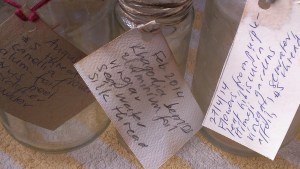
If you are curious, there is a lovely post on using this method here.  Another here.  Another blogger has some glorious results to show here.  Go visit and be inspired!  There is a wonderful online pantry of people’s experiments kept by India Flint with links to the book and all here.  You can find my jars as they looked once sealed up there.  Now to wait until some more jars have had a good long wait.

2015-04-05 15.50.34

Things learned so far:

  • use a jar that has a good chance of sealing–an undamaged lid is a good start.
  • treat contents with care if they have to wait for sealing.  Duh.
  • jars that appear not to have sealed completely may still be fine.  I selected three of these jars because I had concern about sealing despite multiple attempts.  The contents smelled pleasant.  Nothing mouldy, smelly or rank at all.  They were not bulging at the lid (which would suggest fermentation) but they didn’t have any indication of having vacuum sealed either.  Perhaps I conceded too quickly! I have a madder jar that contains some mould, which Deb McClintock on madder dyeing says can provide good colour even if it happens to go mouldy…I decided to re-heat and leave the steeping madder on the strength of these jars having sealed.
  • be bold.  What if I’d had a little more boldness and some bigger jars?  I would now have more than thread to show for my efforts.  Timidity has its place, but not every place!
2015-04-05 15.50.58

4 Comments

Filed under Dye Plants, Natural dyeing

In they go…

This time it was a weekend morning jaunt out into the neighbourhood with a dozen ruby saltbush.

2015-09-27 08.48.23

I have had my eye on this spot where mulch has been laid but nothing has been planted.

2015-09-27 08.50.33

Once I got my trowel into it I could see why–some parts are concrete, some are all bluemetal and gravel.  But in others, there was some very clay soil.  Not ideal.  But I am not planting anywhere ideal really.  I wished them luck.

2015-09-27 09.09.47

Hopefully they will make it in spite of the soil and this massive fence with one of the tallest olive trees I have ever seen peeping over it.

2015-09-27 09.09.54

I’ve pricked out the bladder saltbush.

2015-09-26 17.45.25

To join their larger relations, soon to go out into the suburban wilderness.

2015-09-26 17.45.43

And I planted seeds of New Holland daisy and more ruby saltbush and bladder saltbush.  Then, I worked over the E Scoparia fruits I have been gathering.

2015-09-27 09.36.15

I hadn’t been feeling optimistic about gathering seed, but actually once I started rolling them around, seed started to emerge.

2015-09-27 09.40.35

I think there will be plenty to make good on my sharing promises and try planting some myself!

2015-09-27 09.45.48

6 Comments

Filed under Natural dyeing

Jaywalkers in osage orange and indigo

First, there was some undyed wool and silk yarn.

2015-05-30 12.01.12

Then, there was osage orange sawdust. The colour was so sunny and lovely I considered leaving it at that.  But there was an indigo plan.

2015-06-08 15.20.47

The fructose vat, no less.

2015-06-08 10.49.33

So one fine day there was  variegated yellow-green-green-blue yarn.  (Yes, that is madder on the left).

2015-06-16 08.56.59

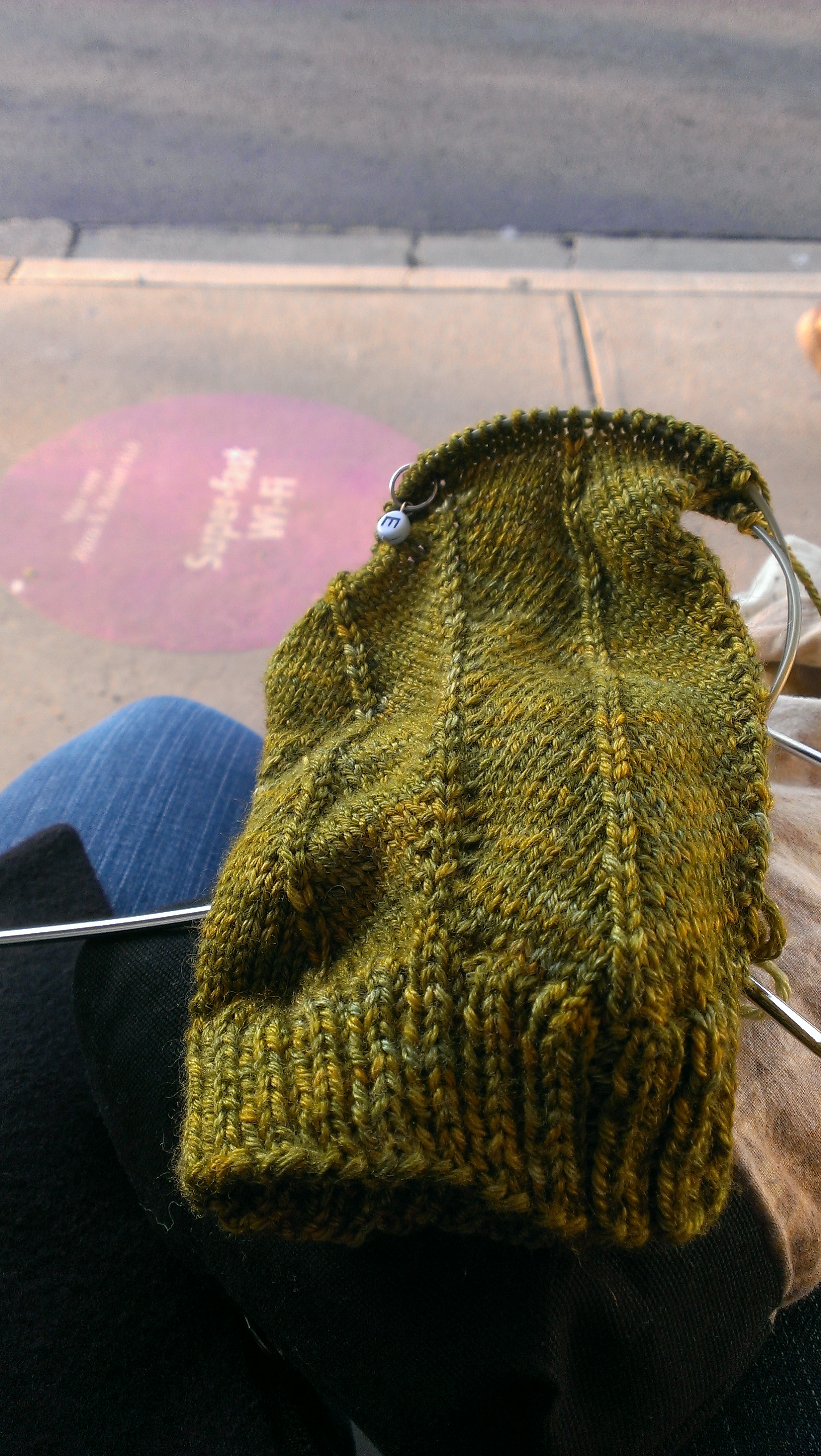
Jaywalker seemed the obvious pattern for the job.  Here we are at the bus stop after work.

2015-08-21 17.07.03

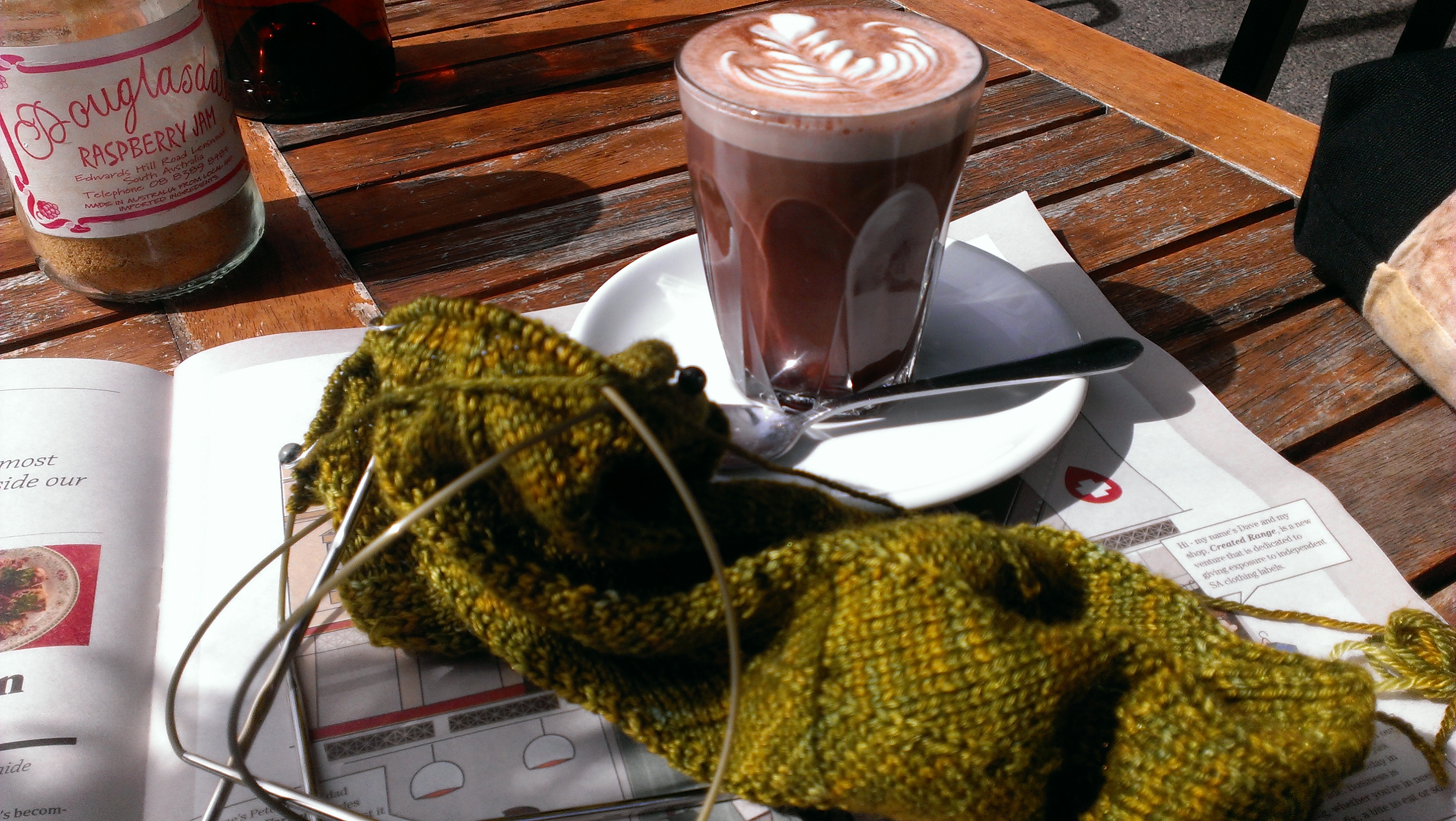
And at a coffee shop waiting for a delicate operation to be performed on my guitar across the road.

2015-08-29 11.58.05

And out for dinner at the central markets with our friends.

2015-08-28 18.44.38

We even went to a conference in Melbourne.

2015-07-17 17.29.38

This Melbourne arcade was so splendid I took photos just for the pleasure of it.

2015-07-17 16.38.58

Here is the sock in the foyer of the unglamorous conference venue, with its best feature (the flower arrangement).

2015-07-17 16.03.34

And here, at last, are the finished socks!

2015-09-27 10.06.07

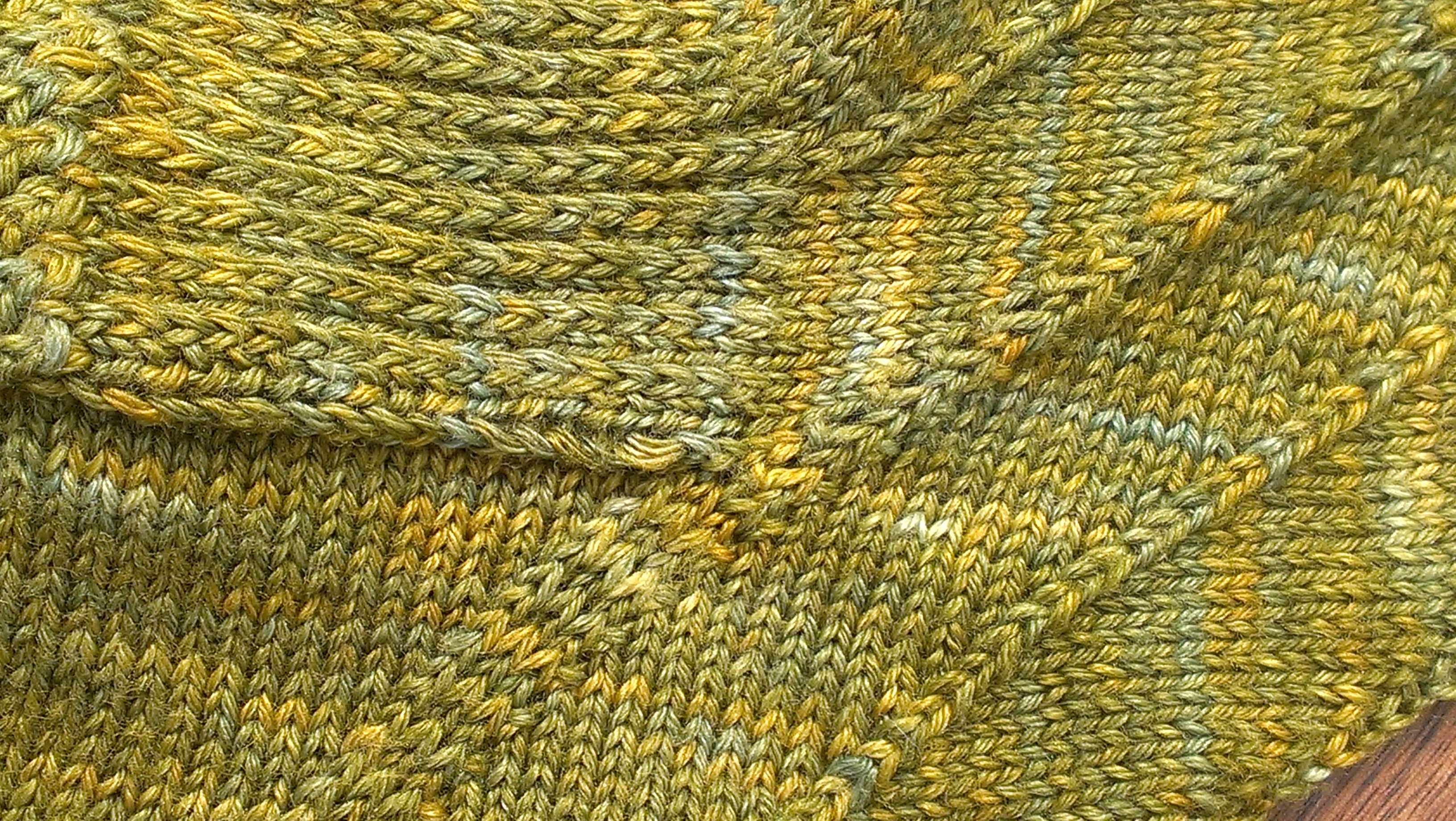
I like the way this pattern zigs and zags.

2015-09-27 09.59.24

I like to use a reinforced heel stitch.

2015-09-27 09.59.39

And I’m pretty happy with the dyeing.  Hopefully the recipient will like them too when she returns from her current extended travelling.  They’re going in the mail today, with about 2 metres of leftover yarn.  Phew!  Just made it!

2015-09-27 10.11.01

9 Comments

Filed under Knitting, Natural dyeing

Local dyepots

2015-09-28 08.34.24

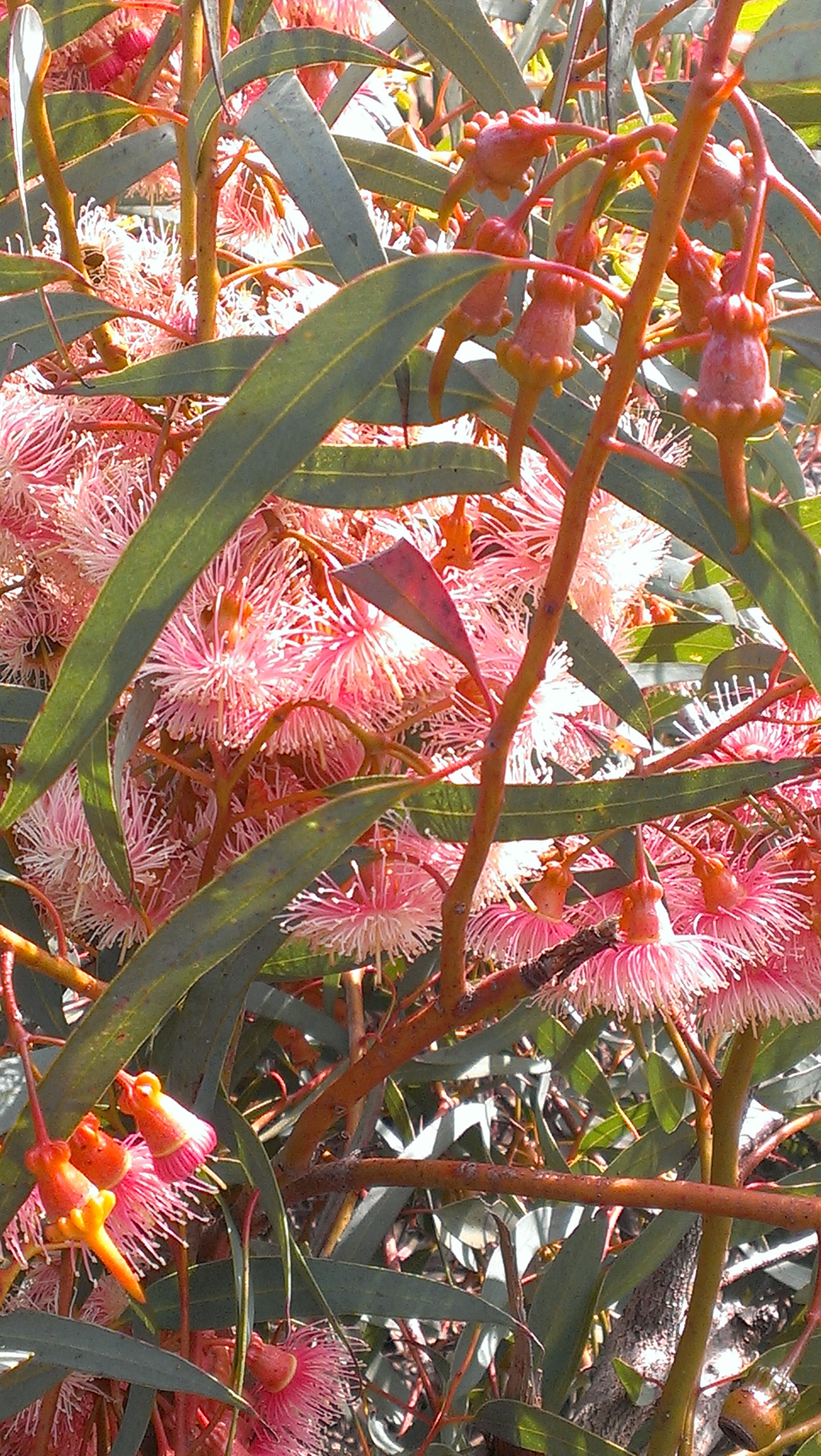
E Torquata in flower…

2015-09-28 08.34.52

E Acaciiformis (I think).

2015-09-28 08.35.37

In flower right now but not in quite such a lush way.

2015-09-28 08.36.18

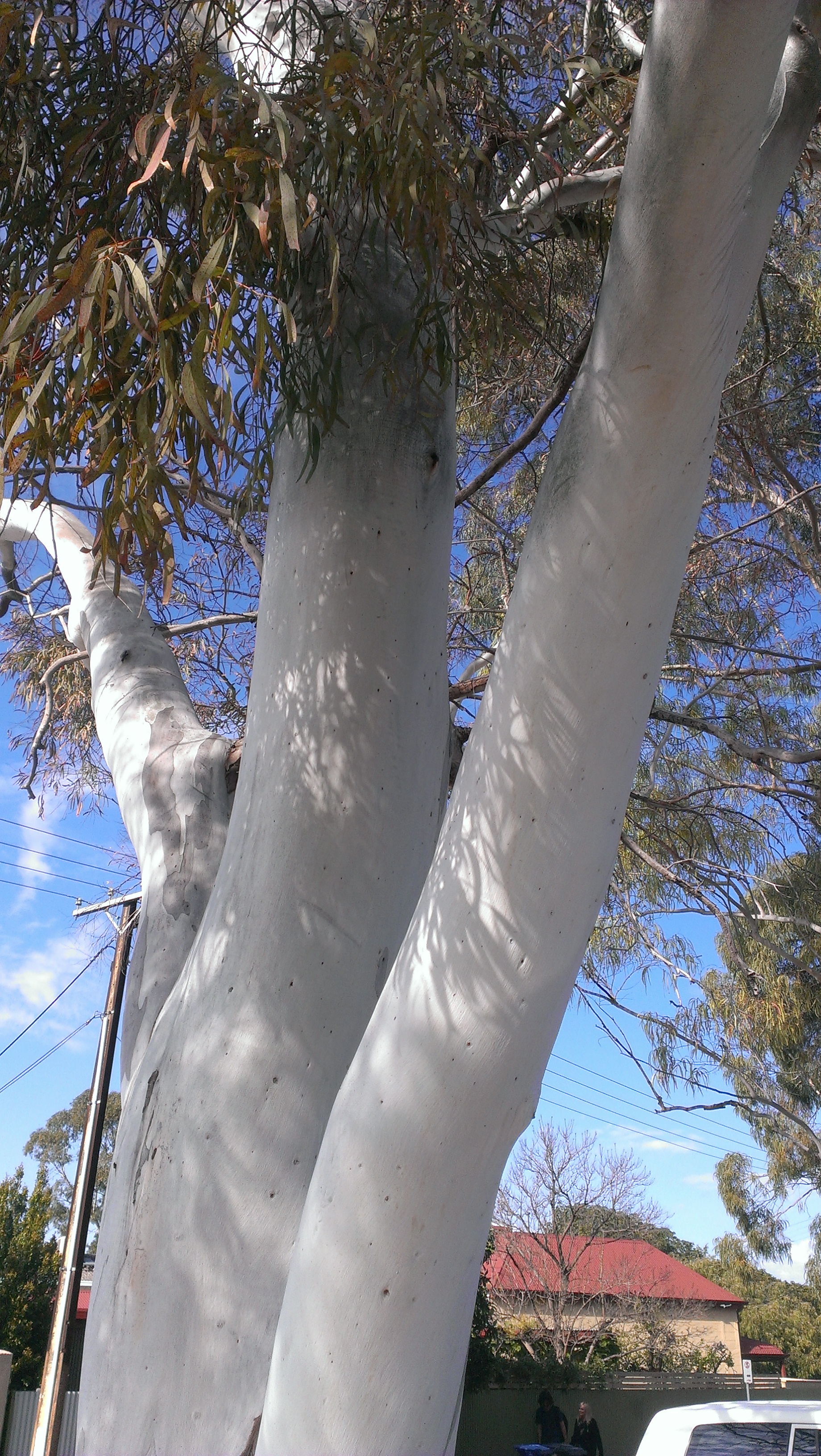
One of the local E Scoparias.

2015-09-28 08.37.35

Under attack from some kind of small insect… and with so much rubbish dumped all around it, including an entire innerspring mattress.

2015-09-28 08.55.25

And another E Scoparia.

2015-09-28 08.56.25

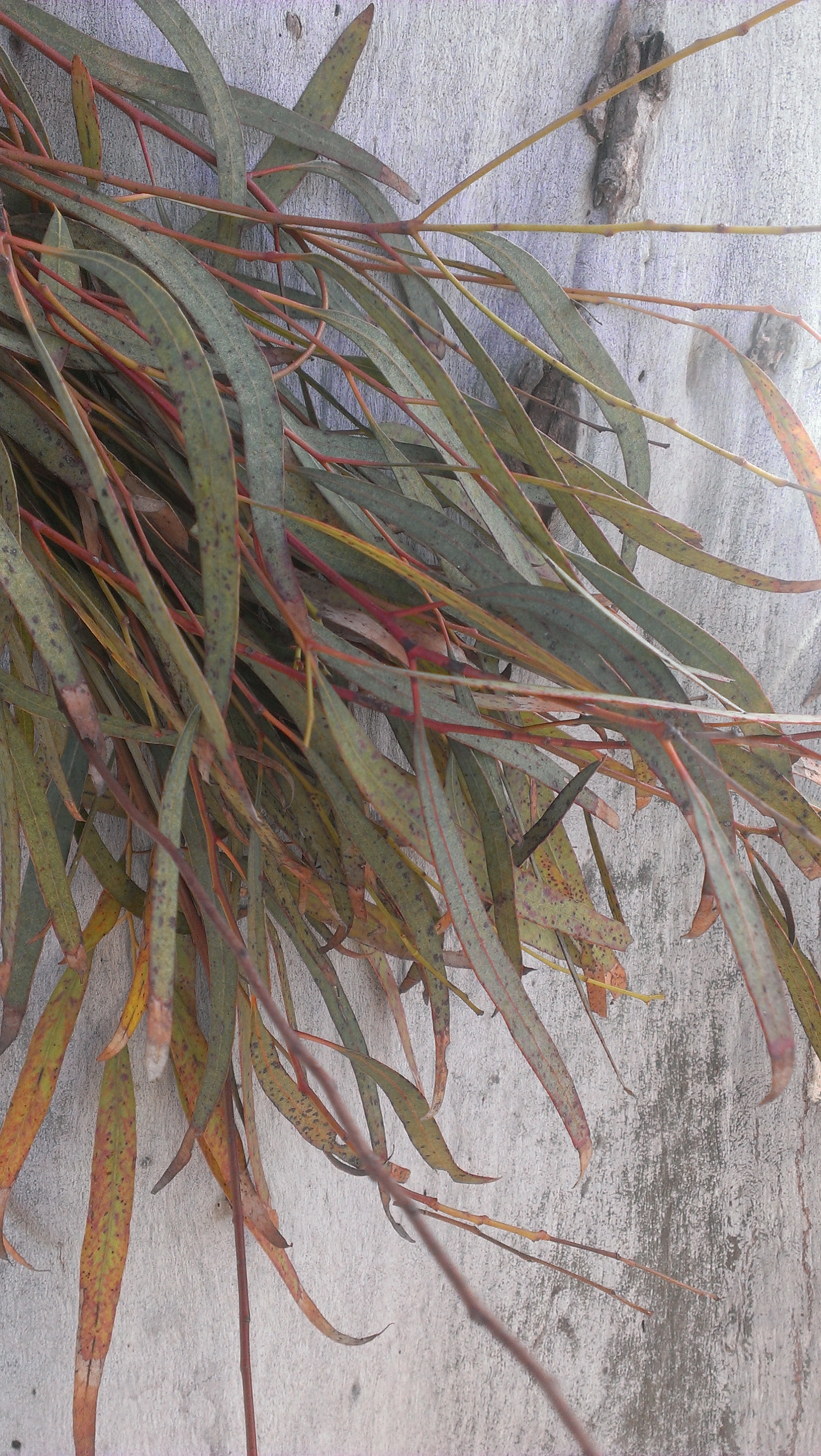
I also sampled small amounts of all kinds of native species from public plantings and over the odd fence.

2015-09-28 09.23.52

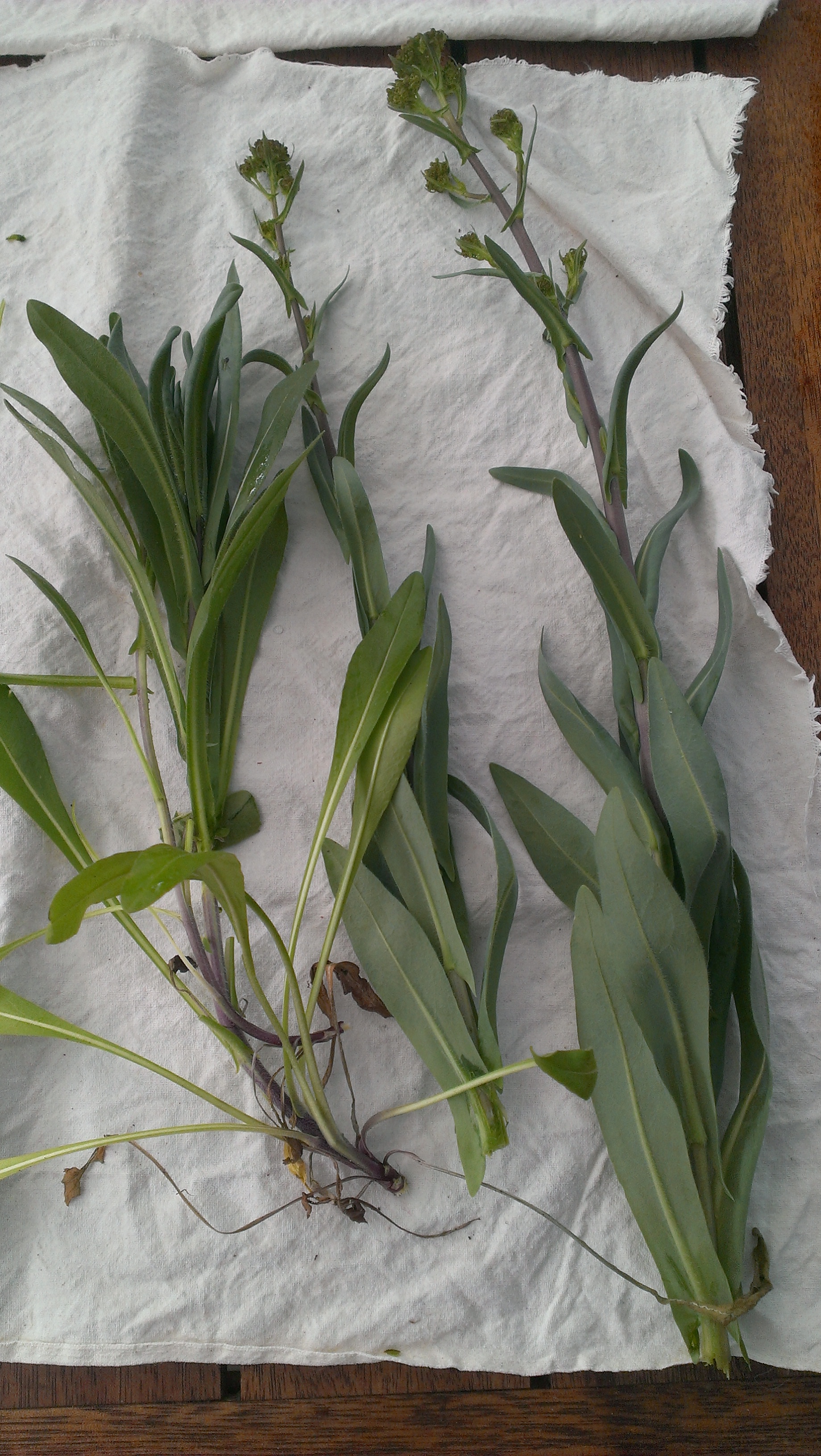
And threw in some woad leaves and woad flower stems.  Curious minds and all that!

2015-09-28 09.44.02

I love the transformation from this…

2015-09-28 09.49.17

To this…

2015-09-29 09.36.00

and this.

2015-09-29 09.37.08

Now I’m going to try some waiting!

12 Comments

Filed under Natural dyeing