Category Archives: Neighbourhood pleasures

More lessons from string

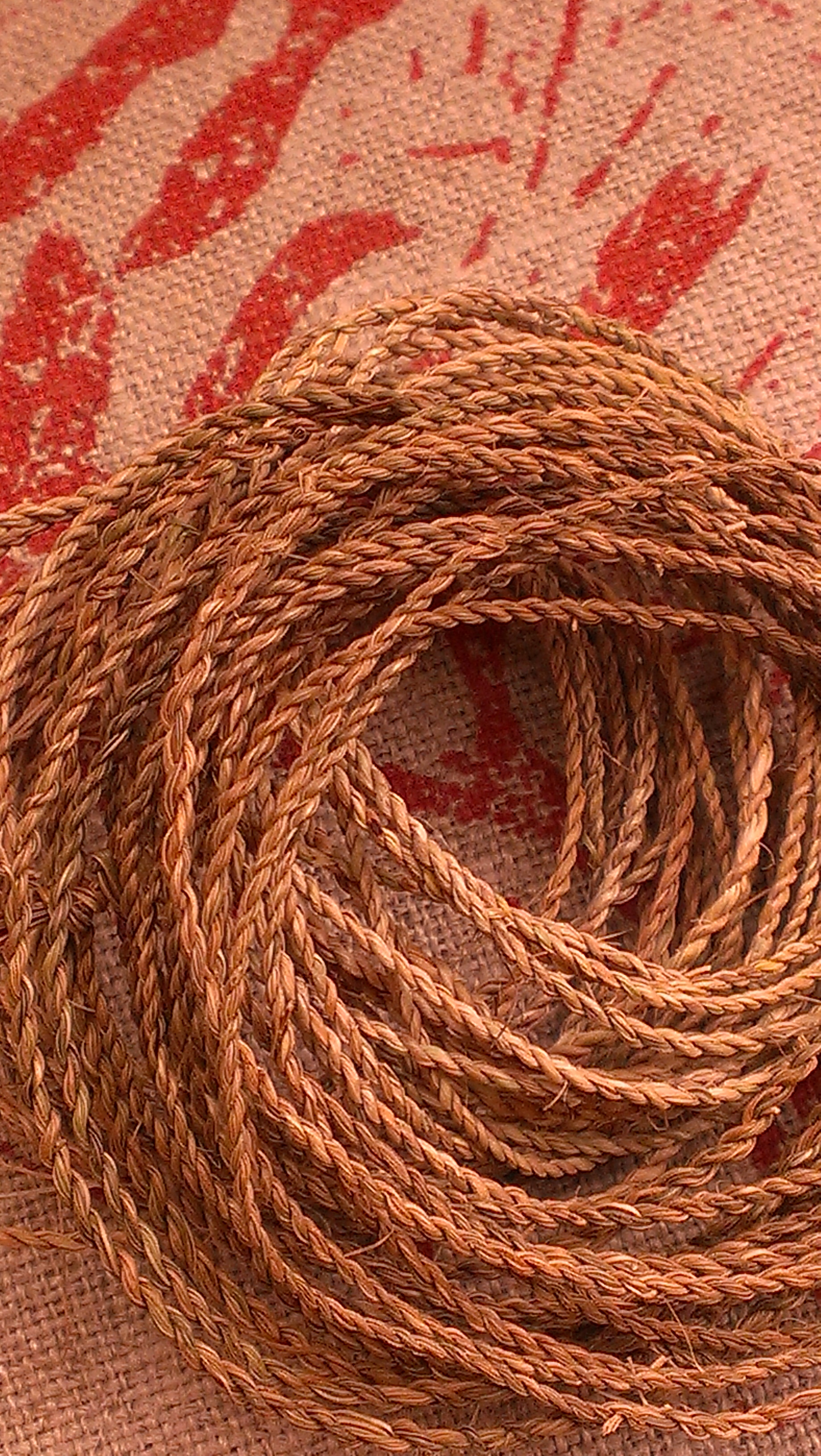
You don’t need as much as you think. A message that I can never hear too often as a first worlder.  Only a few leaves will make many metres of string if you twine it right!
2015-07-01 09.18.29

What you might need is all around you.  This is dianella, which we are growing, and so is the council.  Eventually dead leaves come away from the base and even these make decent string!

2015-06-24 15.00.21

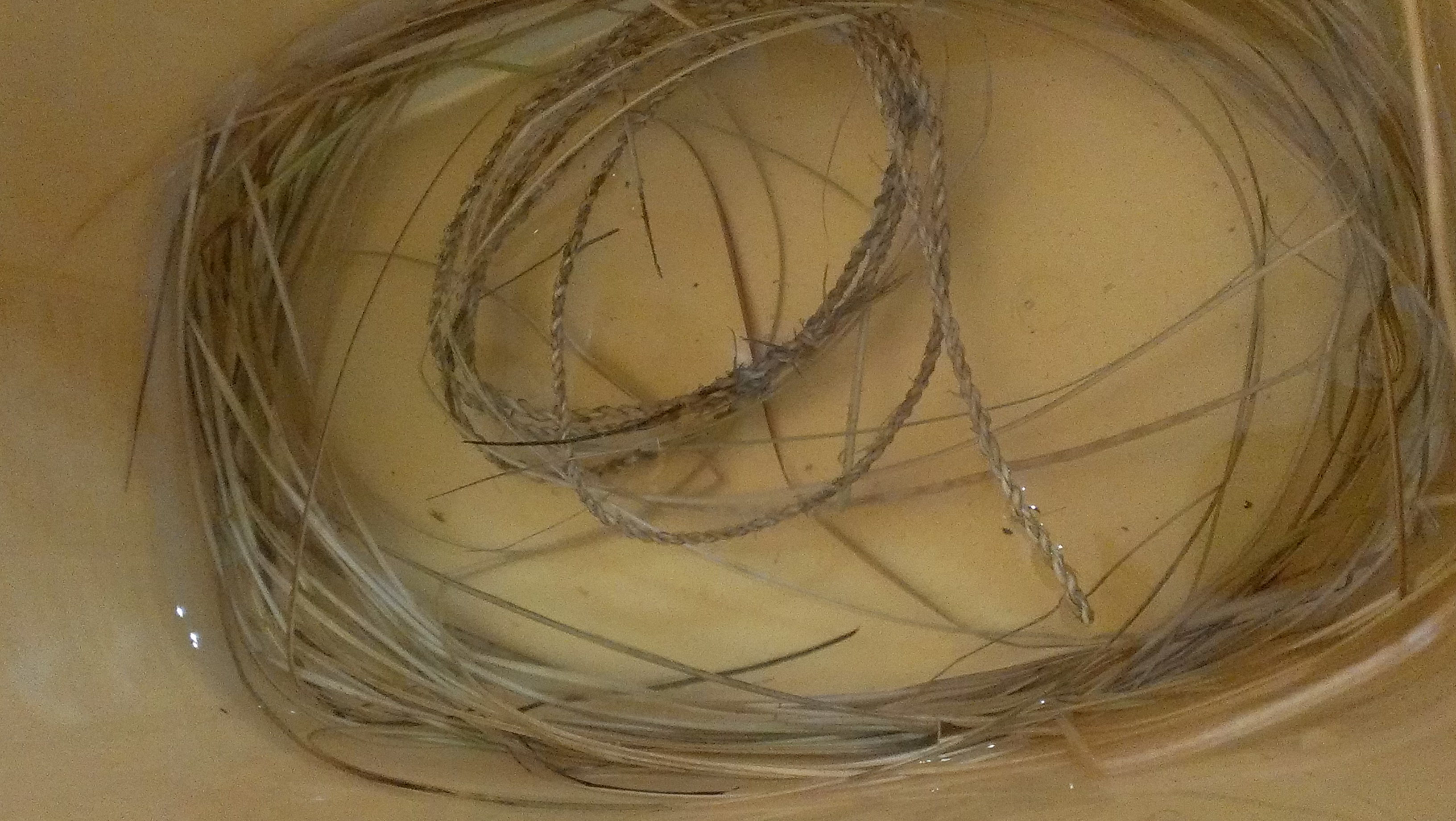
If you have the right leaf, and you use a pin or needle, you can get a nice, fine strip with which to make nice, fine string.  Just insert needle into leaf and pull it toward one end of the leaf or the other! I learned this method when I did introductory basketry, but had clean forgotten until just recently.  I’ve found with cordyline that keeping everything really wet helps a good deal.  Here it is stripped into fine lengths and sitting in a container of water suitable for indoor string making.
2015-06-24 18.29.03

Tough fibres are more resilient and make a more robust string, but pliable fibres are much more pleasurable to work and not so poky to wear (if you’re wearing string this season).  Cordyline and dianella have been my more recent experiments, and they make very resilient and strong string.  But it never gets as smooth as daylily, which is lovely and pliable when damp and smooth and comfortable to wear when dry.
2015-06-24 08.43.22

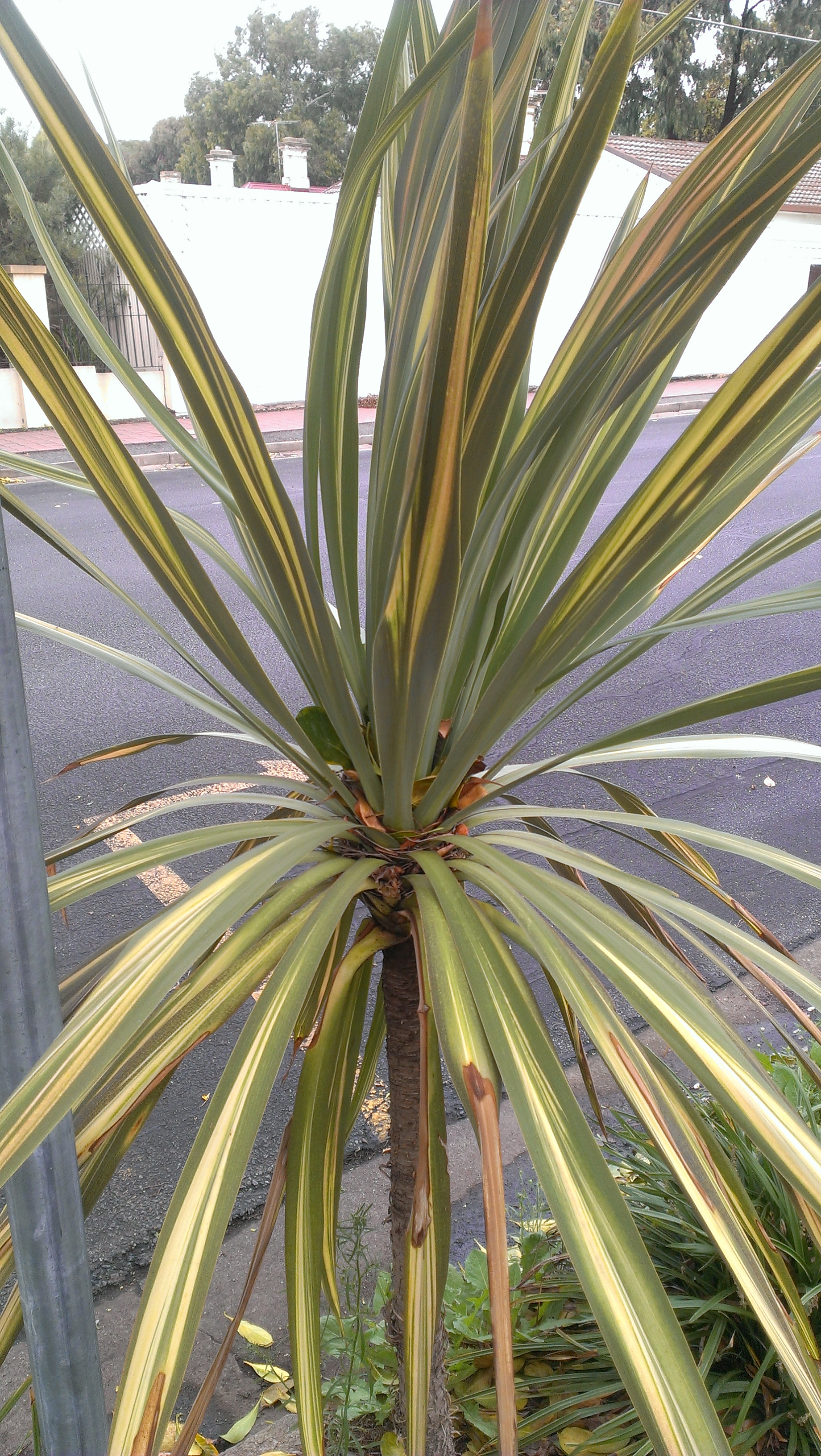
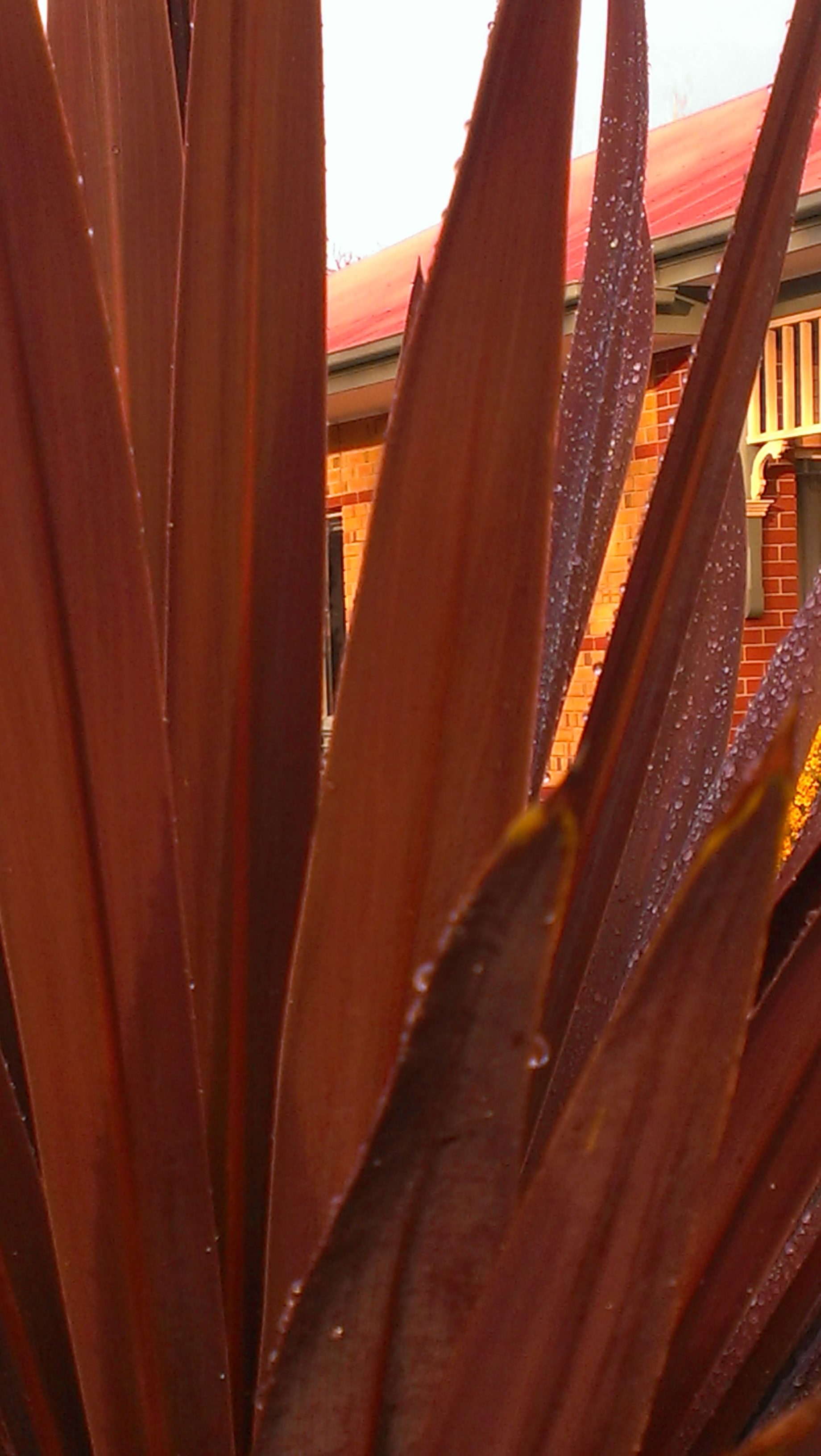
Imperfection is acceptable more often than you might think.  Basketry manuals offer excellent advice about how to choose and prepare plant fibres for optimal use in basketry and cordage but you can use non optimal fibres and less than optimal preparation and still make something that will please you and that might be more than adequate for use or need.  Here you can see the cordylines I have most recently tried making string from.  They are standing in a bed alongside the footpath outside a residential facility for frail elderly folk in my suburb.  Under the live red leaves, dead brown leaves are gradually withering and eventually falling to the ground.  Taking a few of the dead leaves is unlikely to worry anyone.  In fact, I’ve collected fallen leaves for mulch from the footpath outside this place and been thanked by the residents and applauded for my public spiritedness (little do they know!)  If leaves have been out in the sun, wind and weather for too long they will become brittle and degraded, but these leaves are so tough they have been more than adequate for use, and I have made a lot more string since I realised (with some help from Roz Hawker and some experiments with leaves wet from rain in my own garden) that much less preparation and care might work fine for at least some applications.

2015-06-24 08.41.57

The structure of leaves is every bit as intricate and individual and interesting as I had always suspected from looking at leaves but not trying to work out how to use the fibres in them.

2015-06-24 08.43.28

There are companions on the road.  There are always companions.  Helle Jorgensen; Patten project; Weaving Magic and clearly many Indigenous traditions.  Thanks to kind readers who have pointed me in the direction of some of these lovely makers.
2015-07-05 11.53.23

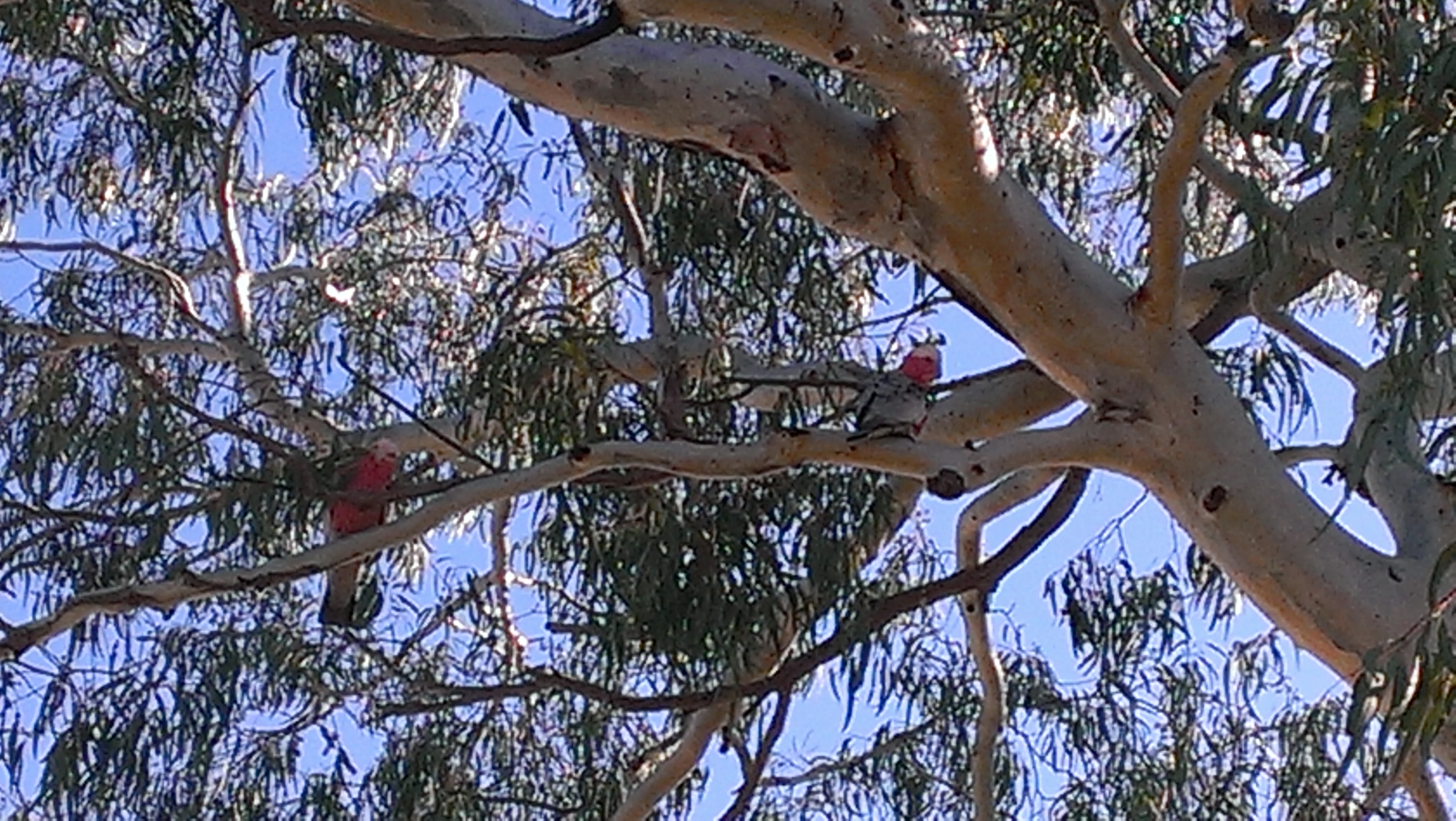
These galahs (can you see them?) kept me company making lemongrass string and some rosellas watched over me and dropped little bits of tree on me while I made green lomandra leaf string and lemongrass string.

2015-07-05 11.46.18

There and the lessons of string for the moment!
2 Comments

Filed under Basketry, Neighbourhood pleasures

Saltbush in, weeds out

2015-06-18 07.54.56

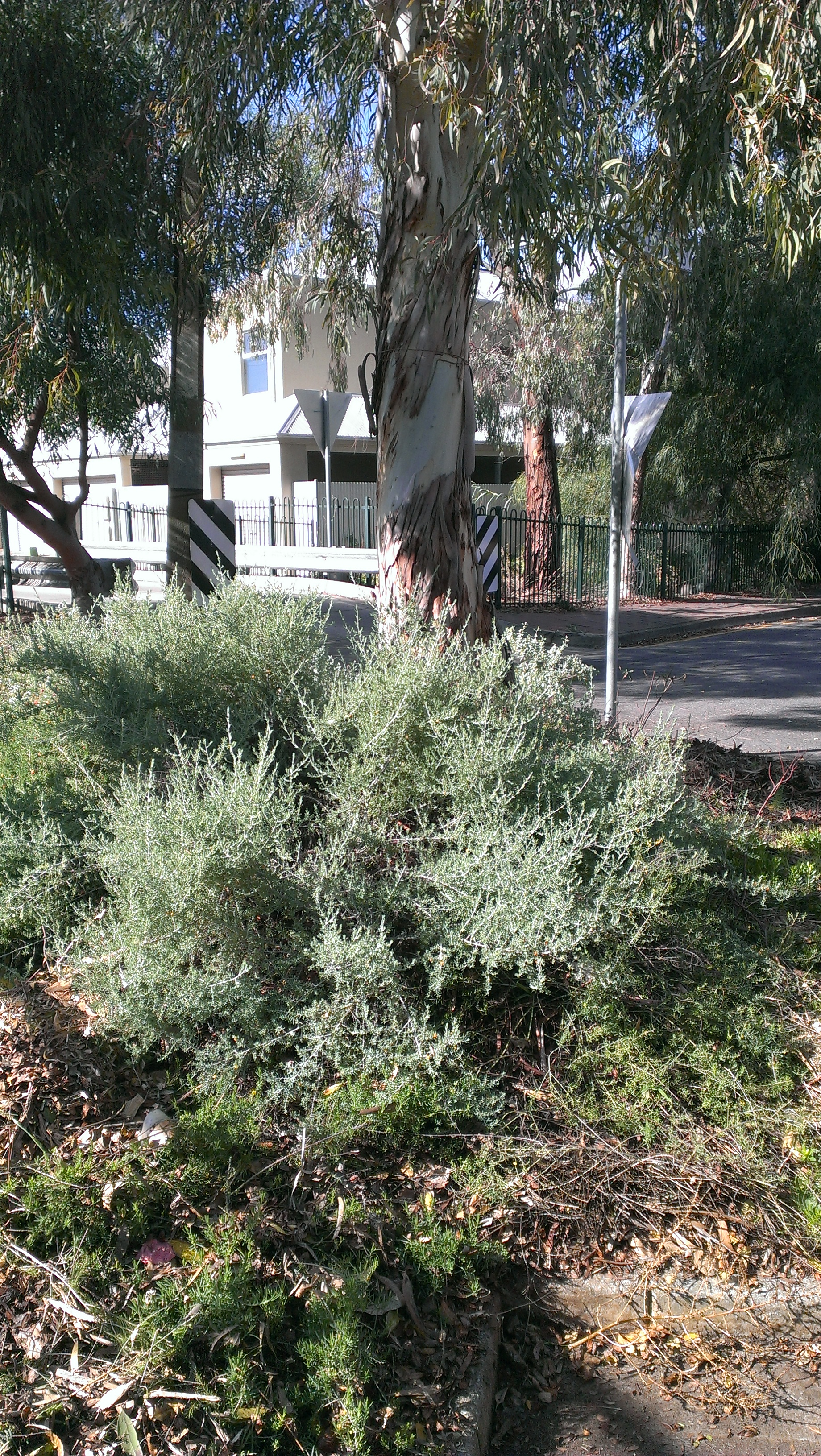
The earth hours of guerilla gardening have been continuing quietly (and a but more slowly in the chilly mornings lately).  Earlier in the week I had a couple of interesting conversations with passersby who wondered if I might be responsible for certain things that had happened in the neighbourhood (sometimes but not always) and what had happened to those big trees on the nearby corner (cut down after tree protection legislation was changed to remove protection from them).  There have been some lovely recent happenings in the neighbourhood, including installation of some wooden barriers that will stop cars parking over the root zones of a group of large eucalypts we still have, and from killing smaller plants altogether.  Then, new plantings went in to replace those killed by careless parking and midsummer planting.  Wonderful.

2015-06-18 08.04.54

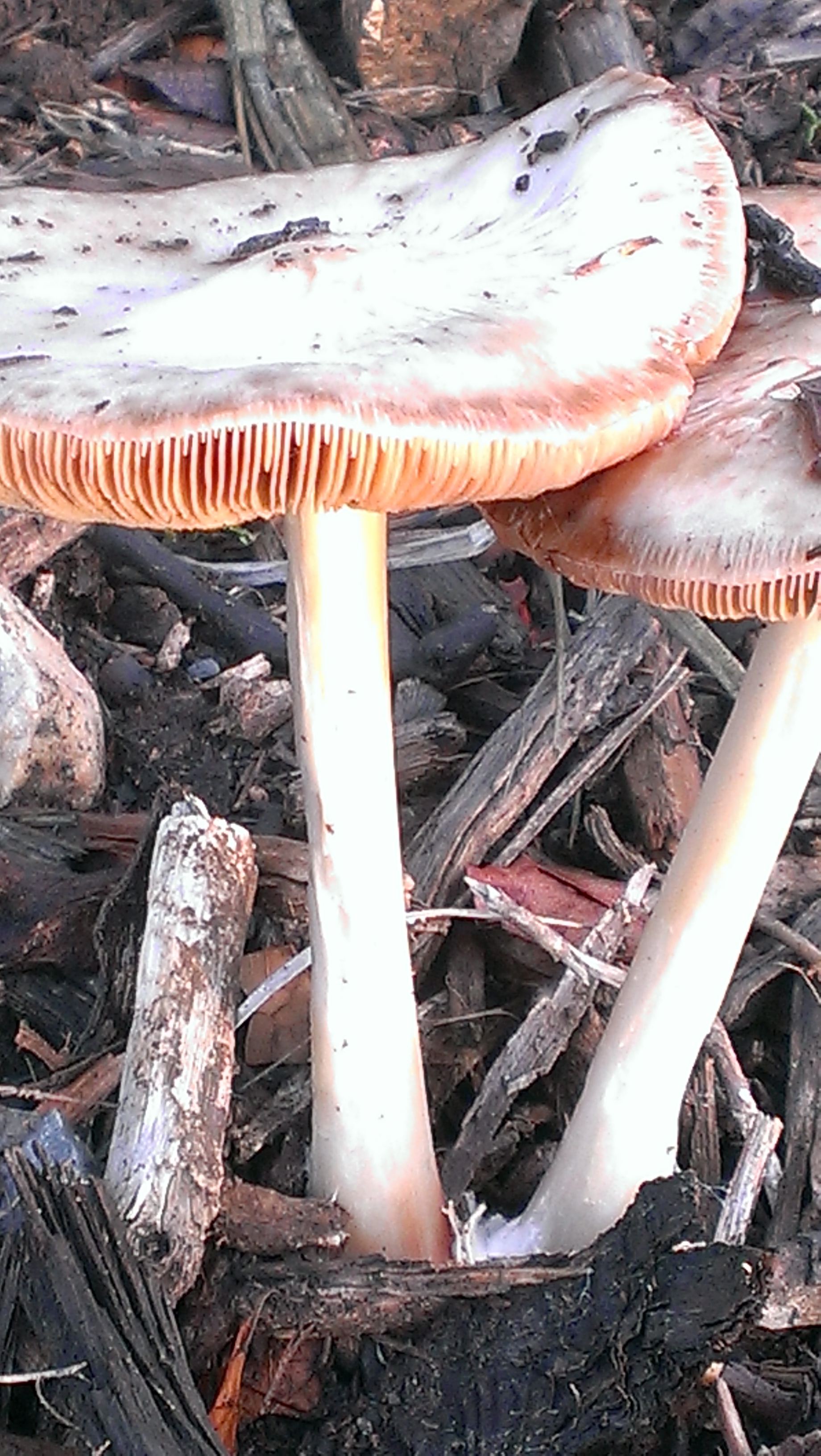
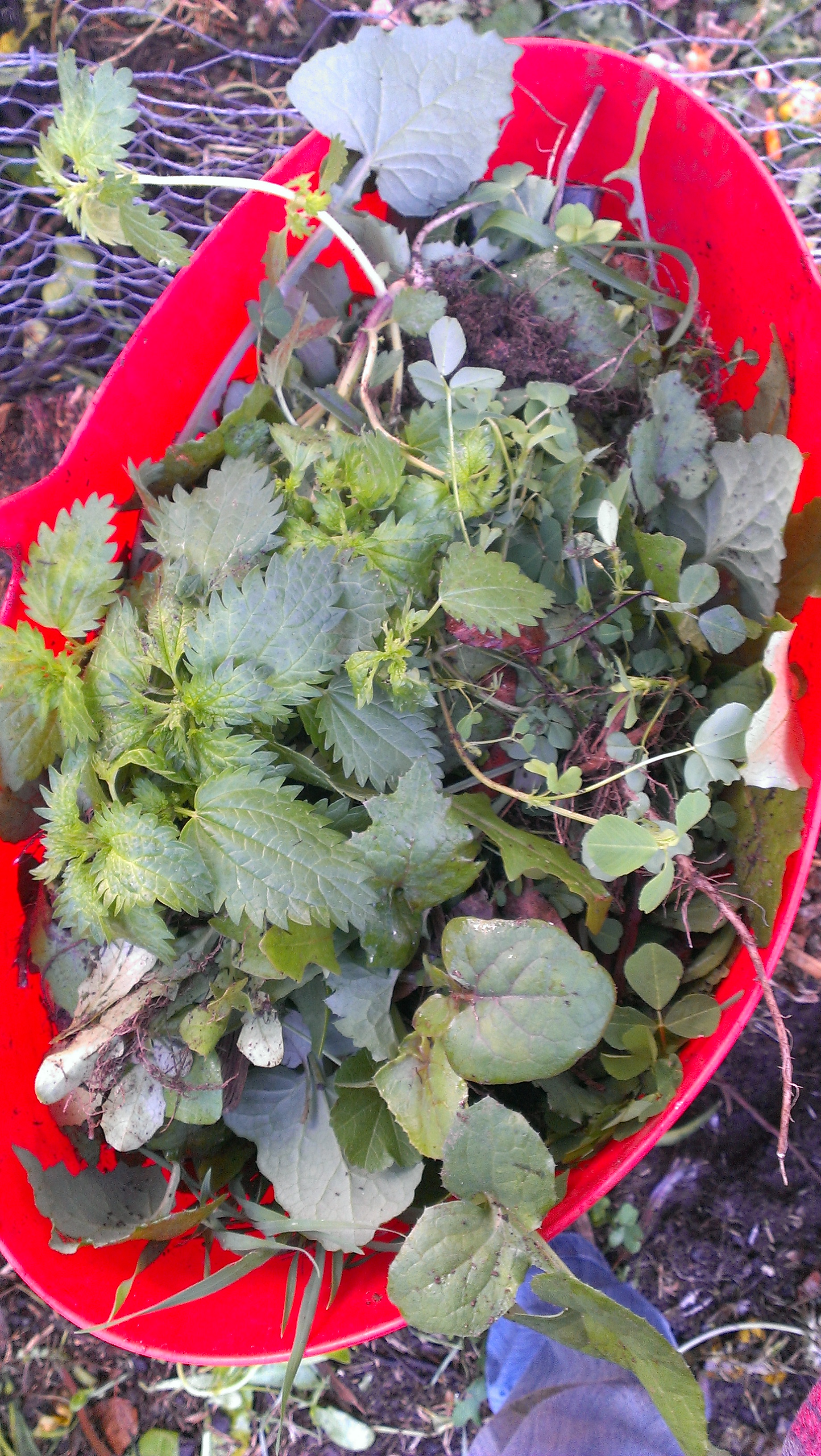
This morning there was a rainbow as I went out with my ten saltbush plants, my trowel and my fiendishly effective Japanese weeding tool.  And these fungi had appeared.  Some time later, I returned with a bucket full of weeds.  More mulch has been appearing at random all over the neighbourhood, and it has become apparent that smaller plants are at risk of being buried (some I planted earlier in the week were buried the same day!)  If weeds grow near little plants they are also at risk of being treated as weeds, since the poisoner doesn’t get out of his ute to check.  As if to confirm my perception that now is the season for weeding, the poisoner’s truck passed twice as I worked, drawing attention to itself with the sound of its pump, and the driver was not the reluctant poisoner I’ve spoken to recently, so there is no guarantee he will recognise small saltbush as in need of protection.

2015-06-18 08.32.27

The weeds I pulled hadn’t been poisoned (our street came later and it was shocking to see how much poison was lavished upon it). There were lots of sow thistle and lush prickly lettuce among them, so there was chicken happiness at our place, and I treated that Japanese weeding tool to a loving handle oiling while I tried to imagine what its name might be.  I failed completely to imagine what a Japanese mind might call this tool, and having bought it at the Royal Show years ago and never seen another, I don’t know its English name either, should it have one.  ‘The uprooter’? ‘Stabber, foe of weeds’? ‘Defier of nutgrass’?

6 Comments

Filed under Neighbourhood pleasures

What making string has taught me… so far

This decision I have made to use string making as a way to contemplate connection to the earth and plants, a way to think about Indigenous law… is teaching me a lot.  Not all of it as expected.  Which is the way learning goes, when it goes well!  I am noticing potential string-plants in the neighbourhood a lot.  And as I do that, noticing so much more. 2015-05-12 14.11.16

I have been learning some more about the supposed divide between public and private.  It turns out that if I take up my damp leaves and it is light, and so I think perhaps I’ll go and commune with a tree (or try to imagine what communing with a tree would involve)–or even just stand beneath it in admiration and enjoy the birdsong–I can just about never manage this alone and without comment.

2015-05-12 14.04.53

If I take my wet leaves up the street and round the corner to check on the latest little saltbush plantings, I end up listening to one of my neighbours who spends a lot of time on the street himself.  I hope it helps him to talk, because in all honesty, it isn’t that relaxing to listen to him.  But the string does help me and he doesn’t notice it.

2015-05-12 14.10.41

Other people do notice it.   People do not expect you to do anything when you are out in the neighbourhood other than walk, or walk your dog.  Knitting while walking is a spectacularly attention grabbing thing to do.  I have known this for years, I admit.

2015-05-12 14.10.34

So is gleaning (picking up fallen bark, leaves or spent flowers).  So is weeding.  So is planting.  So is picking up litter.  Walking a dog is fine, but walking a wheelbarrow stands out from the crowd.  I now discover that fidgeting with strips of leaf in the street is also worthy of comment.  A friend who had been to Central America once said to me that I was the only white woman she had ever met whose hands were never still.  I took it as a compliment.  I am not sure why being passive is a desirable thing.  Rest, I can understand.  Sometimes stillness, too, is desirable and necessary.  But not all the time.  I think making and gathering and tending the commons, even in the suburbs, is much more fulfilling.

2015-05-12 13.40.56

I am also learning about the uses of plants.  I hadn’t realised that this would be such a simple way to assess the qualities of a leaf.  I thought this plant looked like a cordyline (a plant known to basketry and a member of the family whose leaves I happily turned into string at Tin Can Bay), and so I gleaned a single dead leaf.  It is extremely tough.  Even after 24 hours of soaking, when I could split it with my nail and pull it apart along the length of the leaf, it felt dry and tough and hard to twine.  But the fibres were exceedingly tough and there was no fragility with twisting.  This made me think that this plant would make a great stitching medium.  You could thread a strip through a needle and use this to stitch.

2015-05-12 13.52.12

This plant had tough leaves that I soaked and split.  I managed to create string with it but it felt unpleasant–simultaneously slightly sticky and as if the fibres had a square profile–and I strongly disliked the smell–which made me wonder whether long term skin contact was a good idea.  From now on, it is safe from me. But the string was… stretchy!

2015-05-12 13.55.37

I took this photo over the top of a tall fence, as this plant is tree sized–taller than I am.  I haven’t tried it out yet but if it is useful–it has many dried and dead leaves falling off onto the footpath.  Gleaning goodness. I have also been learning about my own skill levels… as wearing the string means I can see which fibres break first and where the weak points in my work are,  and I can see the different thicknesses and finenesses of string I am able to make, too.  The learning continues…

14 Comments

Filed under Basketry, Neighbourhood pleasures

Earth hours

2015-05-11 16.35.59

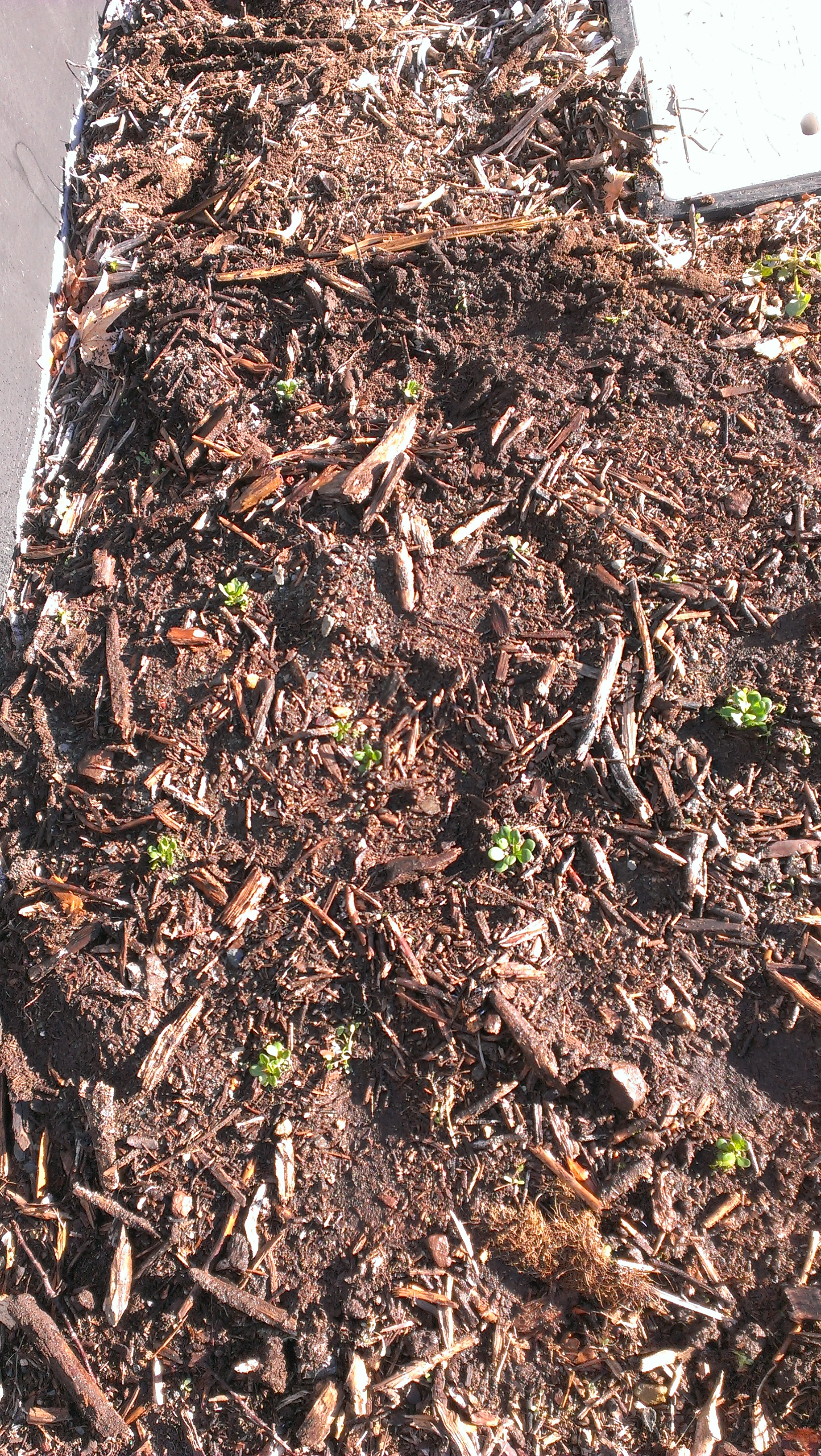
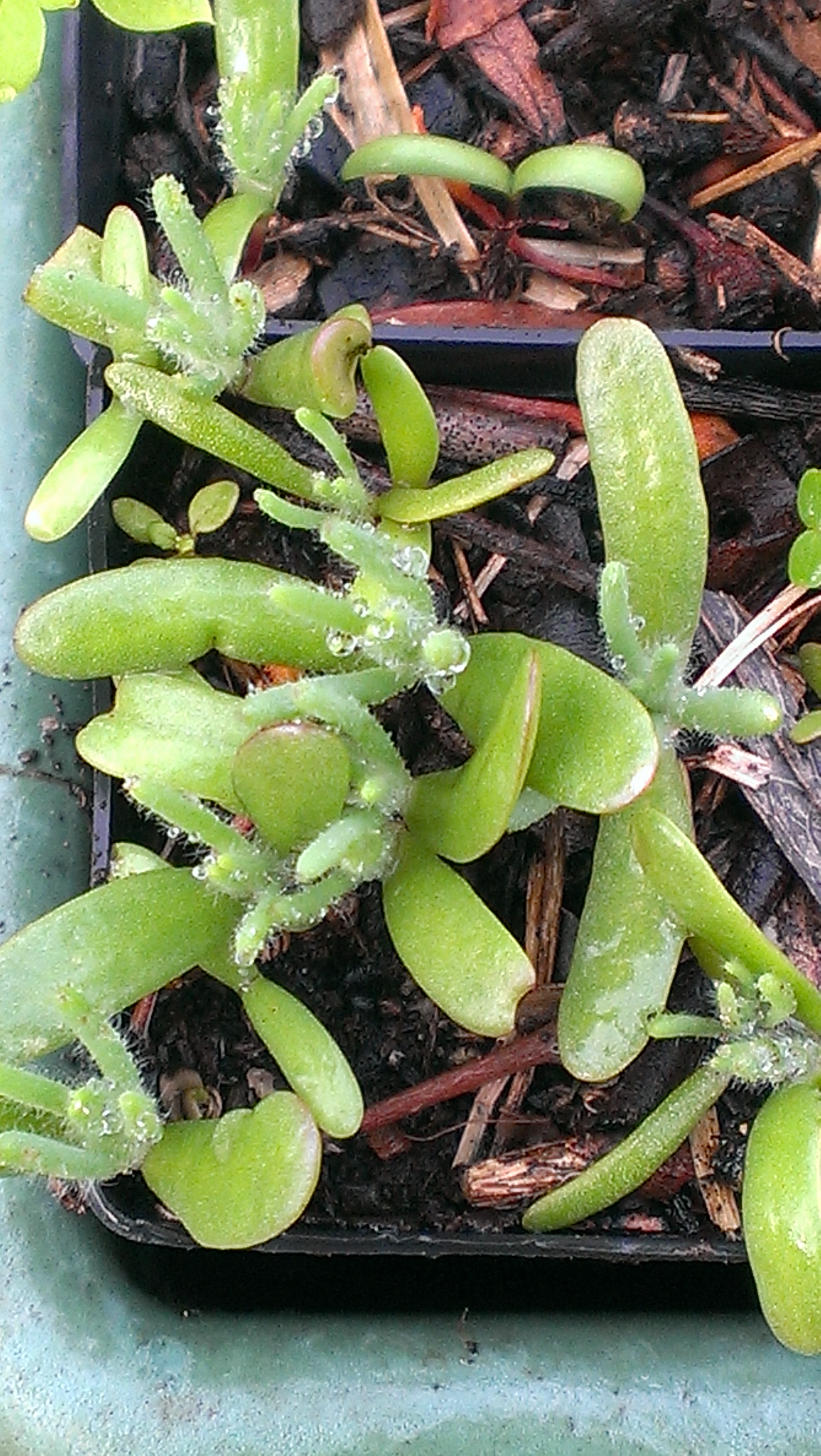
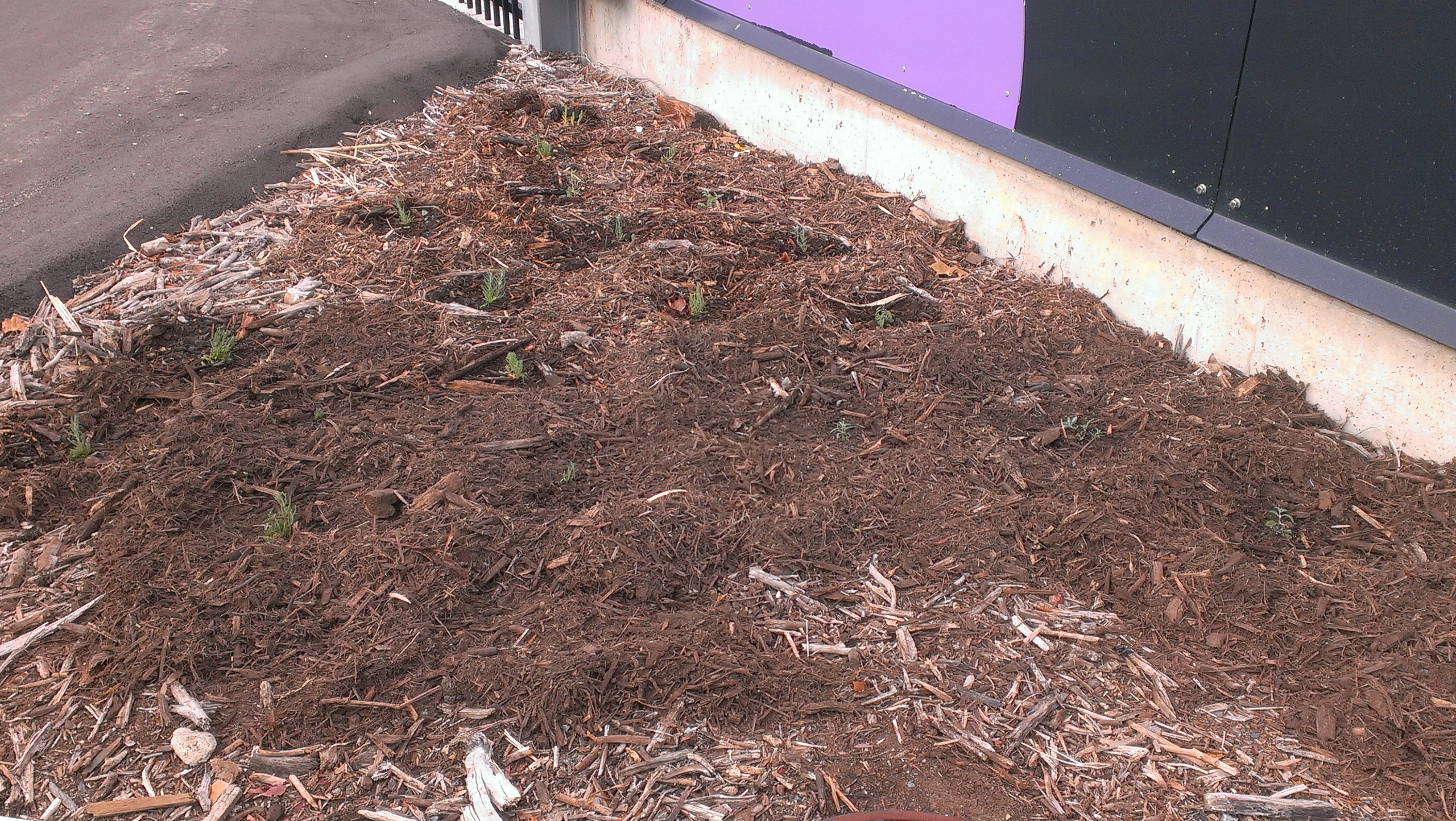
These plants are the smallest form of statice I know.  It isn’t native.  I gathered the seed from a  spot where this plant is growing in fine gravel beside the tram line.  I hope if it can do that, it might manage in a spot where there is about 10 cm of mulch and earth over concrete beside a footpath.  It’s inhospitable terrain for any growing thing.  Just the same, burr medic is already volunteering to hold that earth in place, and in spite of my antipathy to burrs, I have to admire nature’s ways of getting the job done.  I am hoping that the more I plant and mulch, the less weeds will grow here and the less the council poisoner will apply his weedicide.  Now that I have spoken with him, I realise he prefers not to poison , and that he is aware I am planting out this patch.  I’ll put some bigger plants in nearby to make it easier for him to recognise these are not weeds.

2015-05-01 08.14.57

This is the ‘garden bed’–you can hardly see those little plants!

2015-05-01 08.31.33

On the day I put the contents of these ten pots into the ground, I realised a further 12 plants had been stolen from public land just around the corner (they even stole some of the saltbush I have planted).  Heartbreaking,  The chalked message ‘STOP STEALING OUR PLANTS: They belong to all of us’ featured in a previous post lasted only 48 hours before being painted out when other graffiti was removed.  Painted out–when a wet rag would have done the job. I was at a railway station the previous day thinking that in just over 200 years this continent has gone from being inhabited by far fewer people with land management practices which, by modern standards, were extremely low impact–to a place so thoroughly covered by roads and railway and concrete and buildings and… I don’t think I am entitled to give up because of these small losses.  Entitlement is an interesting thing to think about. So I went home and pricked out more saltbush into the empty pots.

2015-05-11 08.44.30

I mentioned my angsty moments to an exquisitely thoughtful friend, who offered the perspective that this was a harsh way of thinking about it.  She’s right, of course.  She told a fabulous story about one of the Australian permaculture thinkers, who planted a fruit tree as a street tree and had organised for the council to fund this.  The tree was stolen.  They planted another.  It was stolen.  they planted another.  It was stolen.  They took to just putting a tree out on the footpath, until one day it wasn’t stolen and they planted it.  He evidently told this as a success story about how to get fruit trees out into the neighbourhood!  What a great perspective. At least it makes me laugh in the face of plant theft.

2015-05-11 09.01.43

I made two other sorties out into the neighbourhood in that week.  Having saltbush big enough to plant now it is raining is a great development.  There have been gains and losses.  In the gains department, someone has mulched near a beloved tree my friends and I have been building up understorey for.

2015-05-16 13.00.55

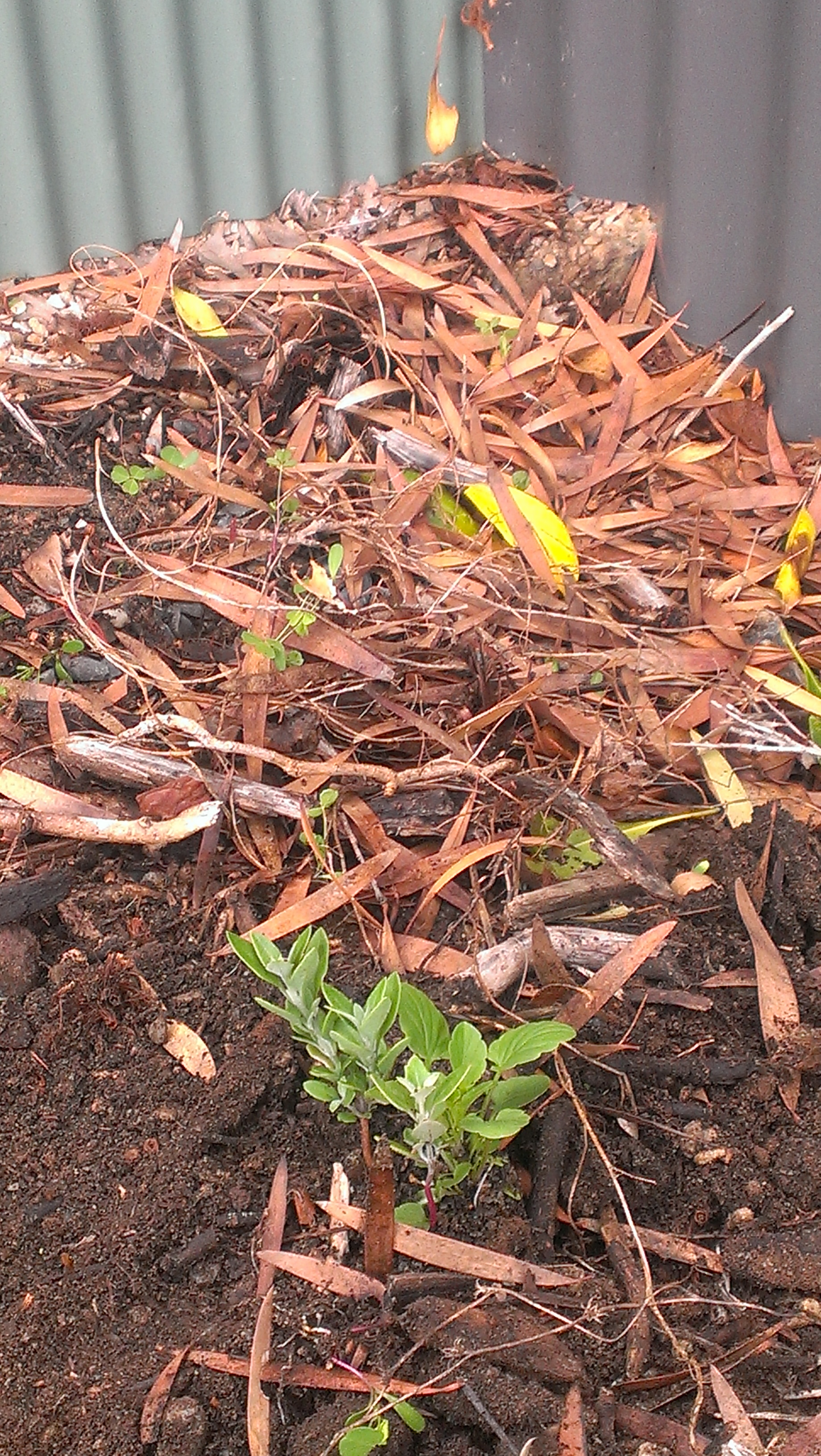
Our efforts have really paid off here despite early plant losses to dogs, dryness, vandals and accident.  The mulch looks like it might be from the council chipper.  No matter where it is from, clearly this now looks like a spot where some mulch might be helpful, where previously I made my own from street tree leaves and we wheelbarrowed in mulch council had abandoned some distance away.  Now there is decent soil under this tree and the new plants have a much better chance.  There is a wattle seedling coming up and some of the saltbush have begun to self sow.  Now that is exciting!

2015-05-16 13.00.46

Over a week I believe I planted nearly 60 plants out and about.  Plants out, rubbish back in.

2015-05-16 12.23.50

In one of the spots I have been planting out (beside the statice), a concrete pad has appeared.  No plants have been destroyed while this happened, but it doesn’t inspire confidence, as I have no idea what the next step will be.  So I chose a new barren spot under a bottlebrush tree and planted that out.

2015-05-09 10.55.49

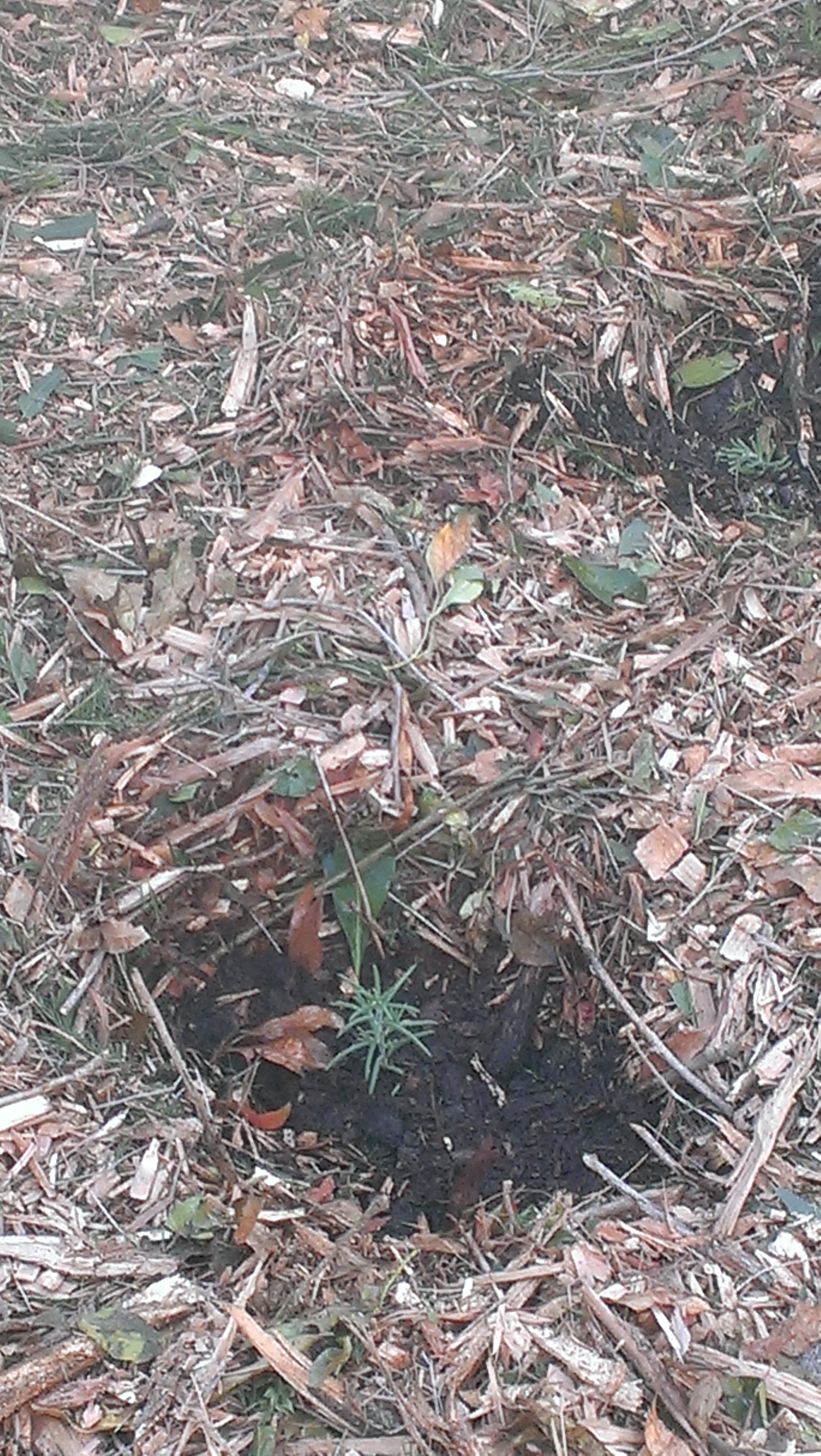
On the next trip I decided to plant a little triangle where a lot of bluemetal got dumped.  Some weeds managed to come up just the same, and they were poisoned by council.  That weeds could grow struck me as promising.  I pulled out the dead weeds and out came this spider, menacing me with its front legs.  I spoke reassuring words and then dug holes for the saltbush.  I have some in bigger pots (which is to say, they come with their own little patch of soil).  They will need it.  The bluemetal was deeper than I had believed and I can only hope the plants can get their roots down into the ground below.  I was heartened when my friend offered an explanation of why this might actually work–gravity and water are friends!

2015-05-16 13.16.06

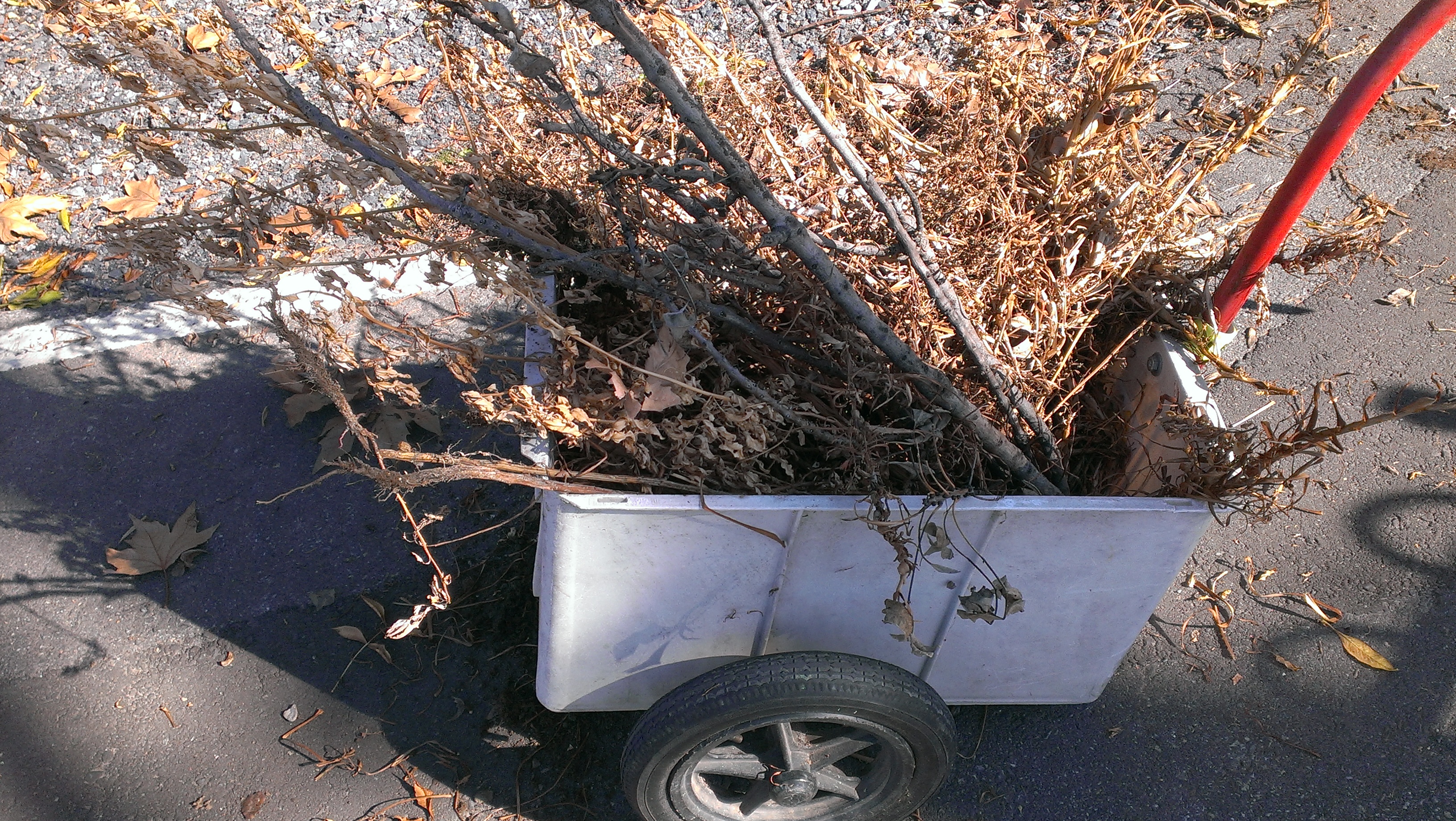
So–plants go out and poisoned weeds come home for disposal.

2015-05-16 13.35.36

These pots have been in constant rotation for ages now, and it feels good. 

2015-05-09 11.39.40

Previously, I’ve been slower and less successful at propagating–so I feel as though my skills are a whole lot better and I’m acting on my intentions more.  In the places where it is working, having plants is creating soil as my friends and I coax these plants along and as they create something that can hold fallen leaves in place so they can be mulch and the soil can build fertility.  Thinking about how bare and sad and weedy that patch under the beloved tree was when we started and how I lost about 5 plants for every one that grew to begin with–reminds me to be hopeful.  And so do all these seedlings coming up under an established saltbush in the garden.  I thought it would be too cold for them to germinate–but maybe not.

2015-05-09 11.35.53

If saltbush have a lesson to teach, perhaps it is ‘when your life’s work is to grow in harsh conditions, put down roots fast and deep, before poking your leaves out into the sunshine.’

10 Comments

Filed under Neighbourhood pleasures

Autumn and winter activity

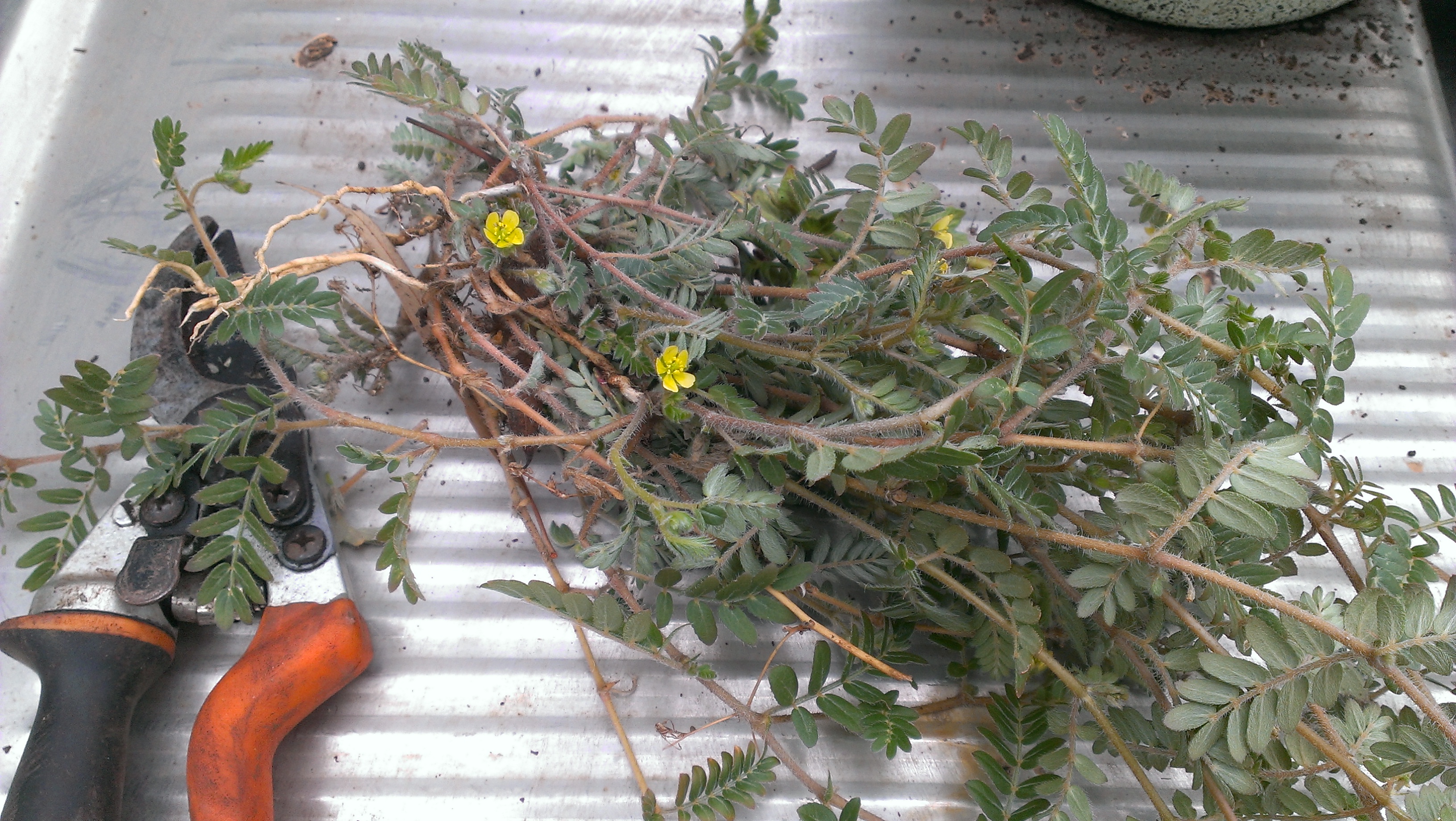
I found more caltrop growing in the neighbourhood in a spot I have been keeping an eye on (I found some there last year).  Out it came!

2015-04-17 14.39.37

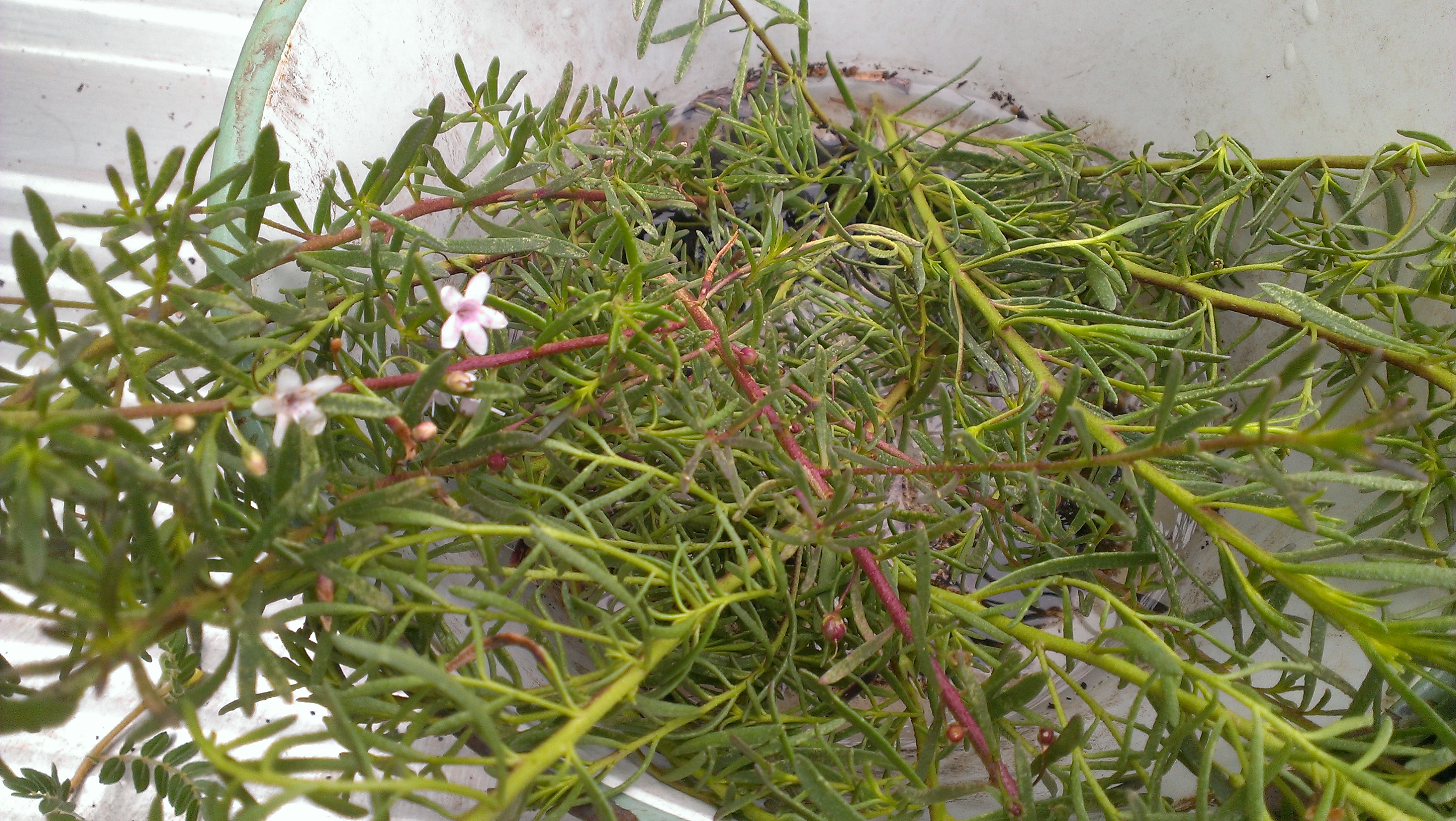
The autumn propagating season continued.  This time, fine leaved, purple creeping boobialla.  I know, it isn’t very purple.  There is a lot of mystical thinking in plant naming to my way of thinking.

2015-04-17 14.39.53

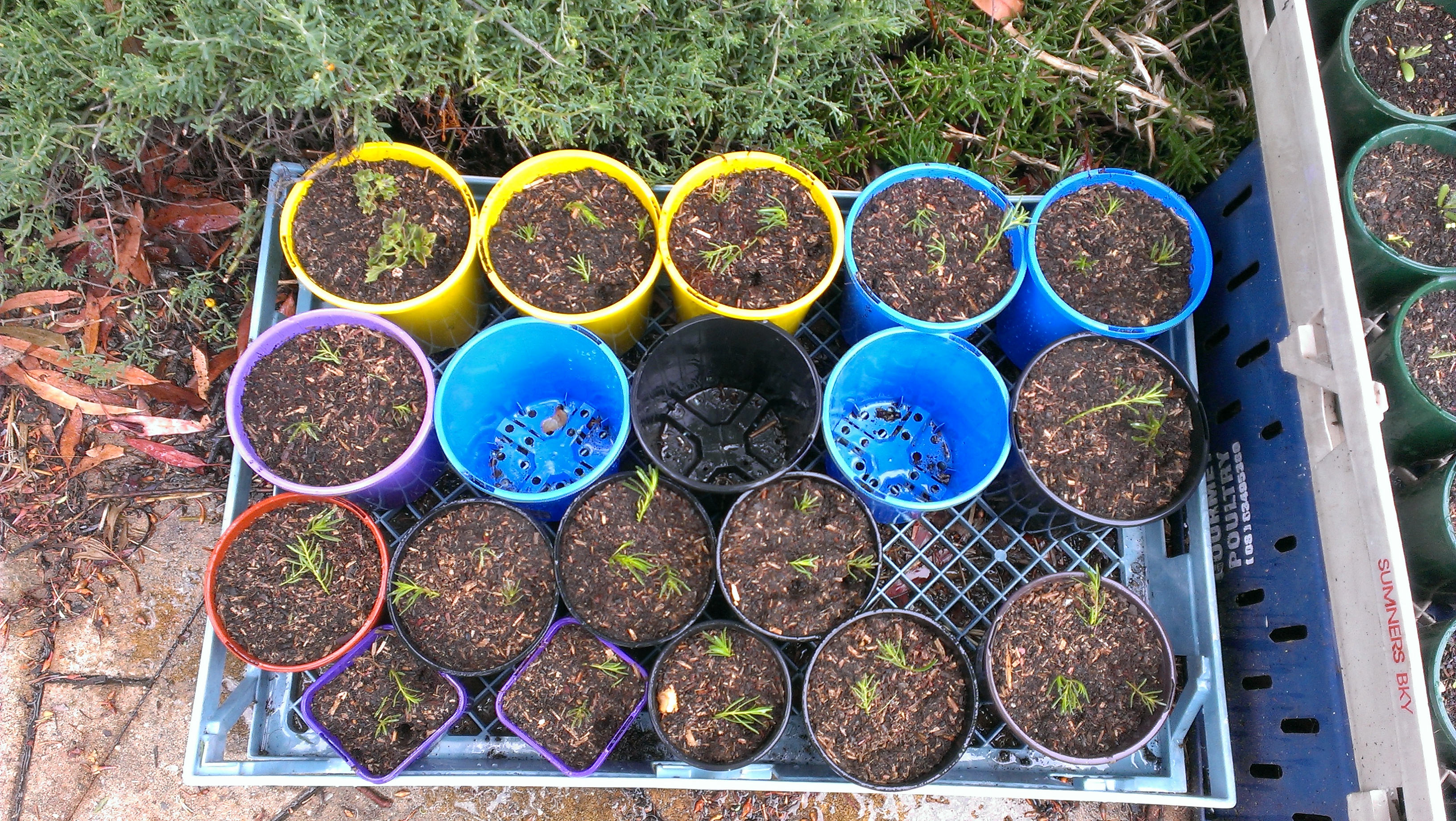
Here they are, next to the baby saltbush.  Hopefully they will grow.

2015-04-17 14.54.14

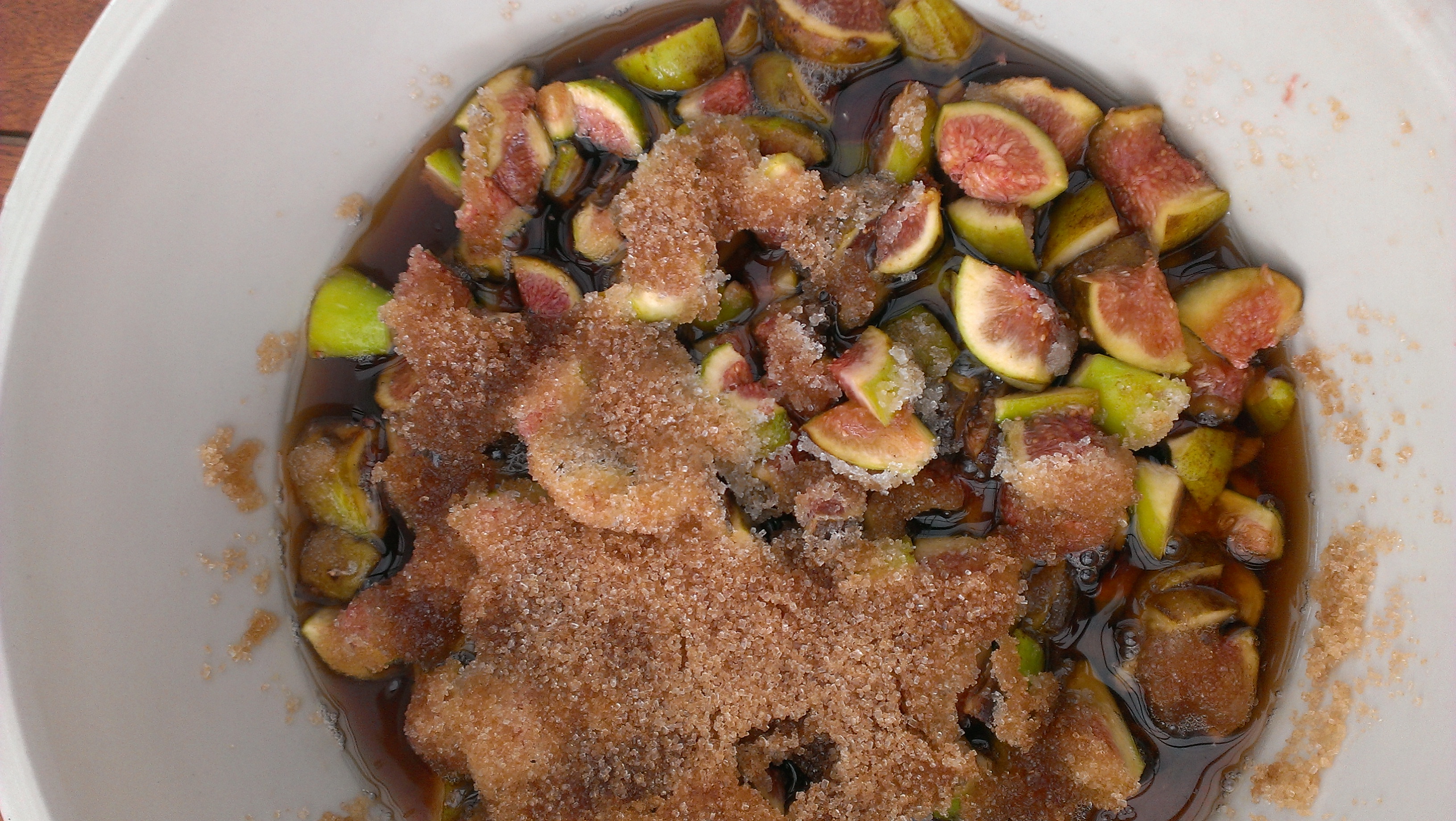
There was a gift of late figs from an old friend who came to visit.

2015-04-15 08.36.05

Pretty soon they were fig and ginger jam…

2015-04-16 16.59.05

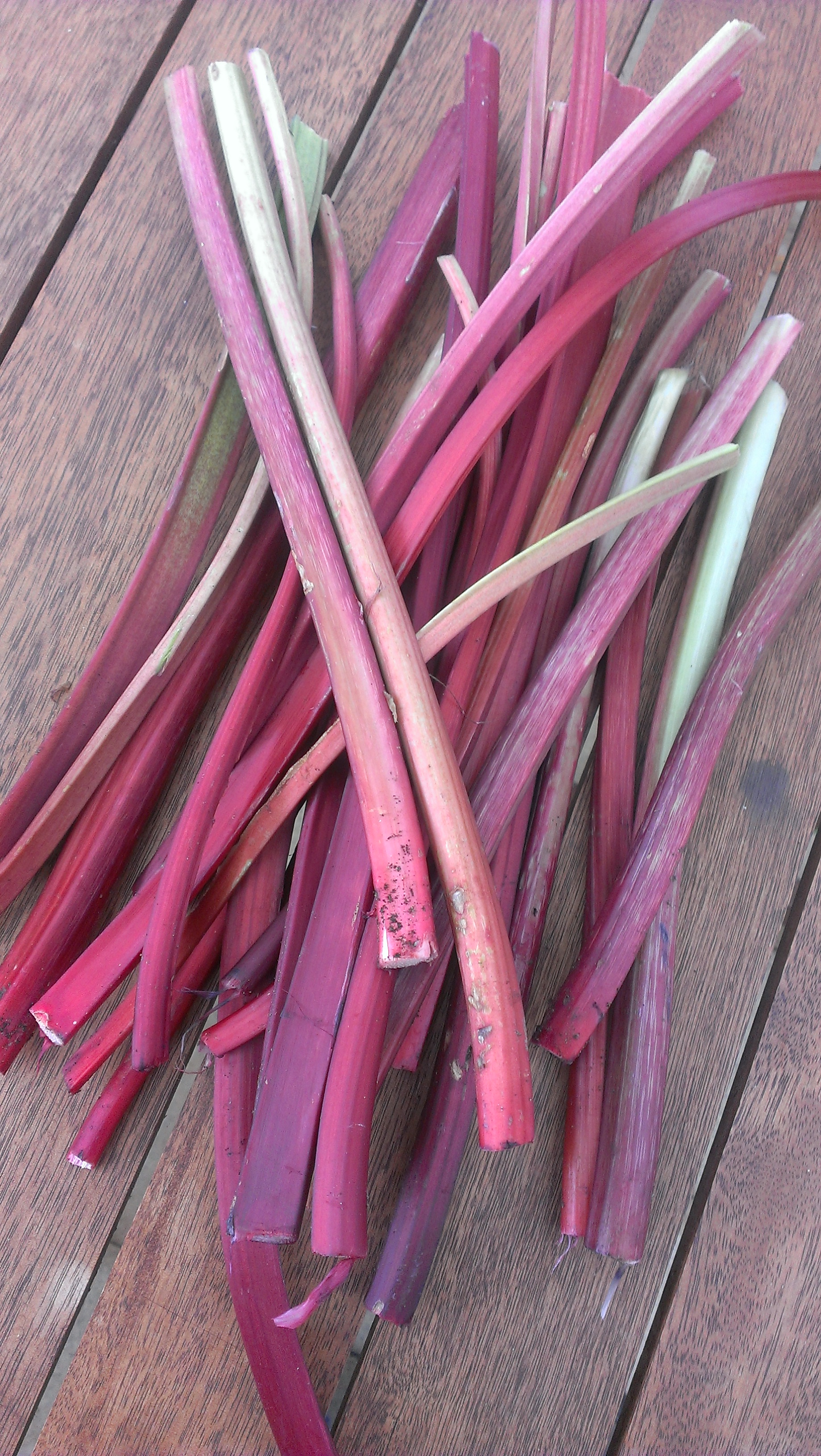
And since then as the cold weather has real ly begun happening, rhubarb harvest!

2015-05-09 12.29.57

Japanese Indigo ready for the freezer (yes, that is the whole crop unless you count the seeds, which are still the real crop at this stage).

2015-05-09 12.03.31

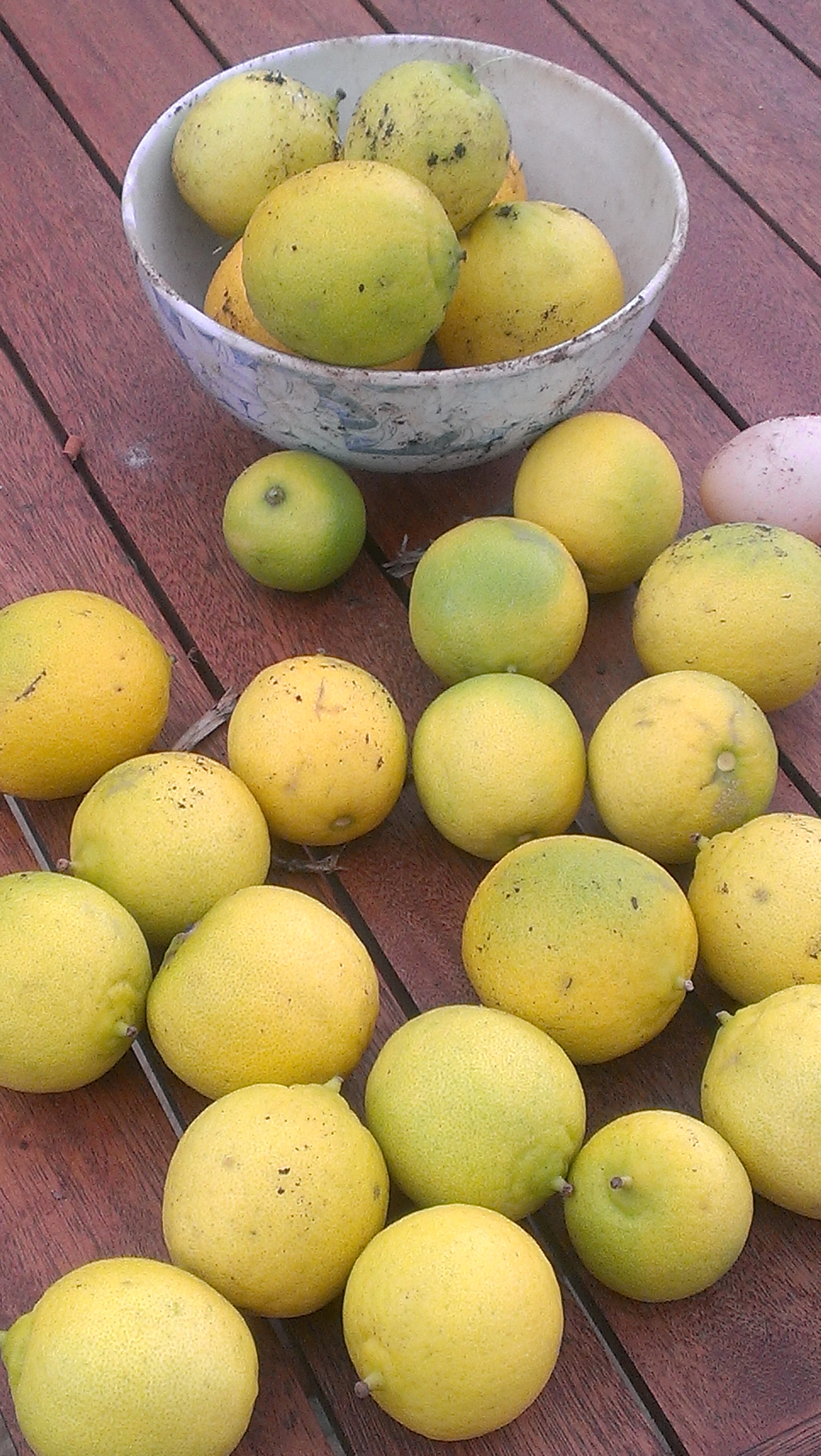
And many more limes, thrown from the tree in gale force winds.  There may yet be more marmalade!

2015-05-09 10.51.06


2 Comments

Filed under Neighbourhood pleasures

Returning home

I decided to celebrate returning home from Tin Can Bay with some local bundles… and knitting, and a visit to the saltbush plantings… and time with my beloved and our friends, and music… but here I’ll focus on the bundles!  If I can restrain myself that far…

2015-04-25 15.28.09

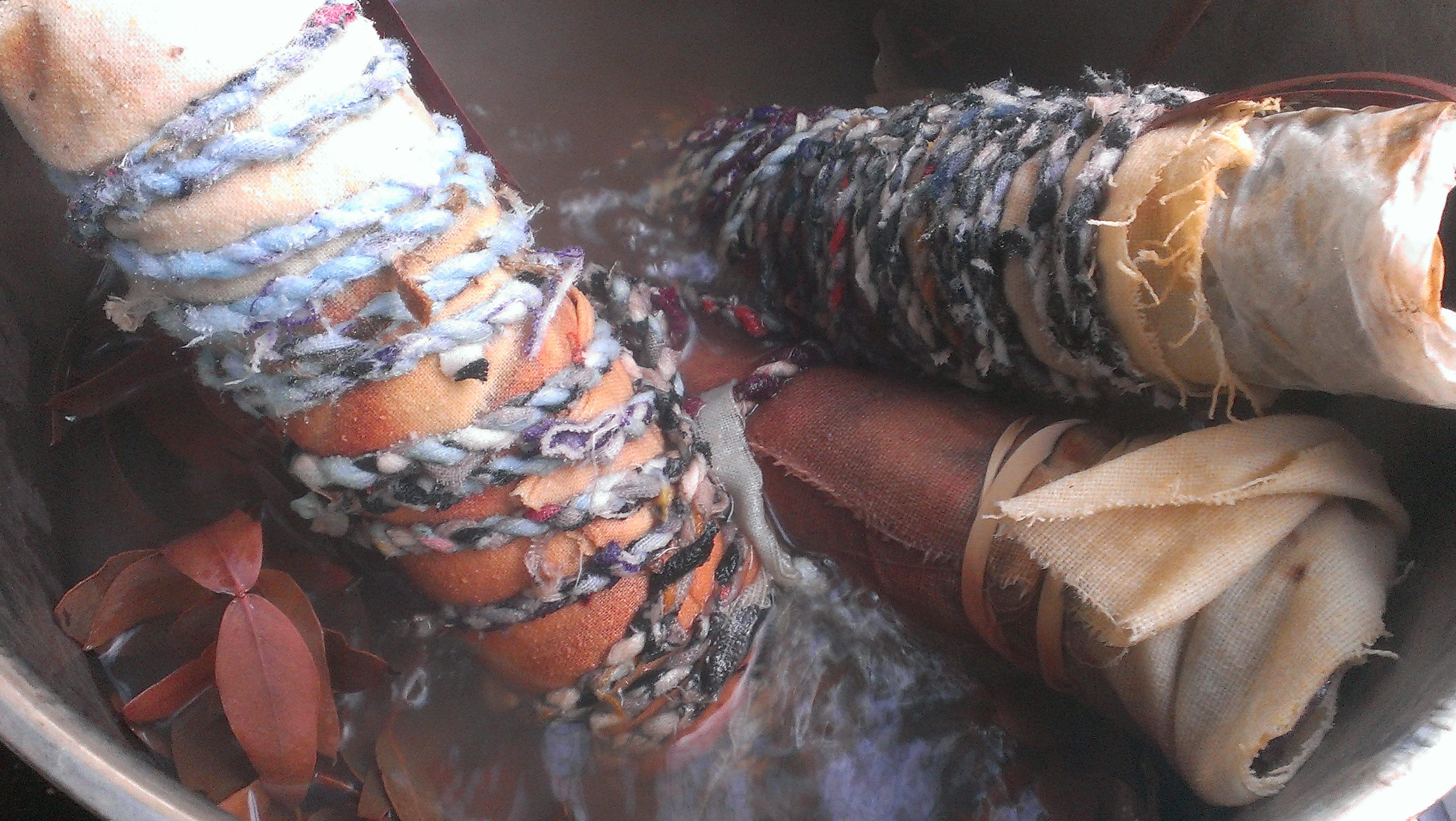
I took my new found knowledge and experience of bundling paper, which built on my reading of India Flint’s Bundle Book.  There is a cheap and simple e-book version available –or go for the glory of a solid object!  I tried a different kind of paper, acquired in the last few weeks, and I used scrap metal my Dad cut me.  I tried op shopping for flat metal with remarkably little success in previous months.  But there are quite a few priorities on my personal list and some progress slowly.

2015-04-25 17.16.40

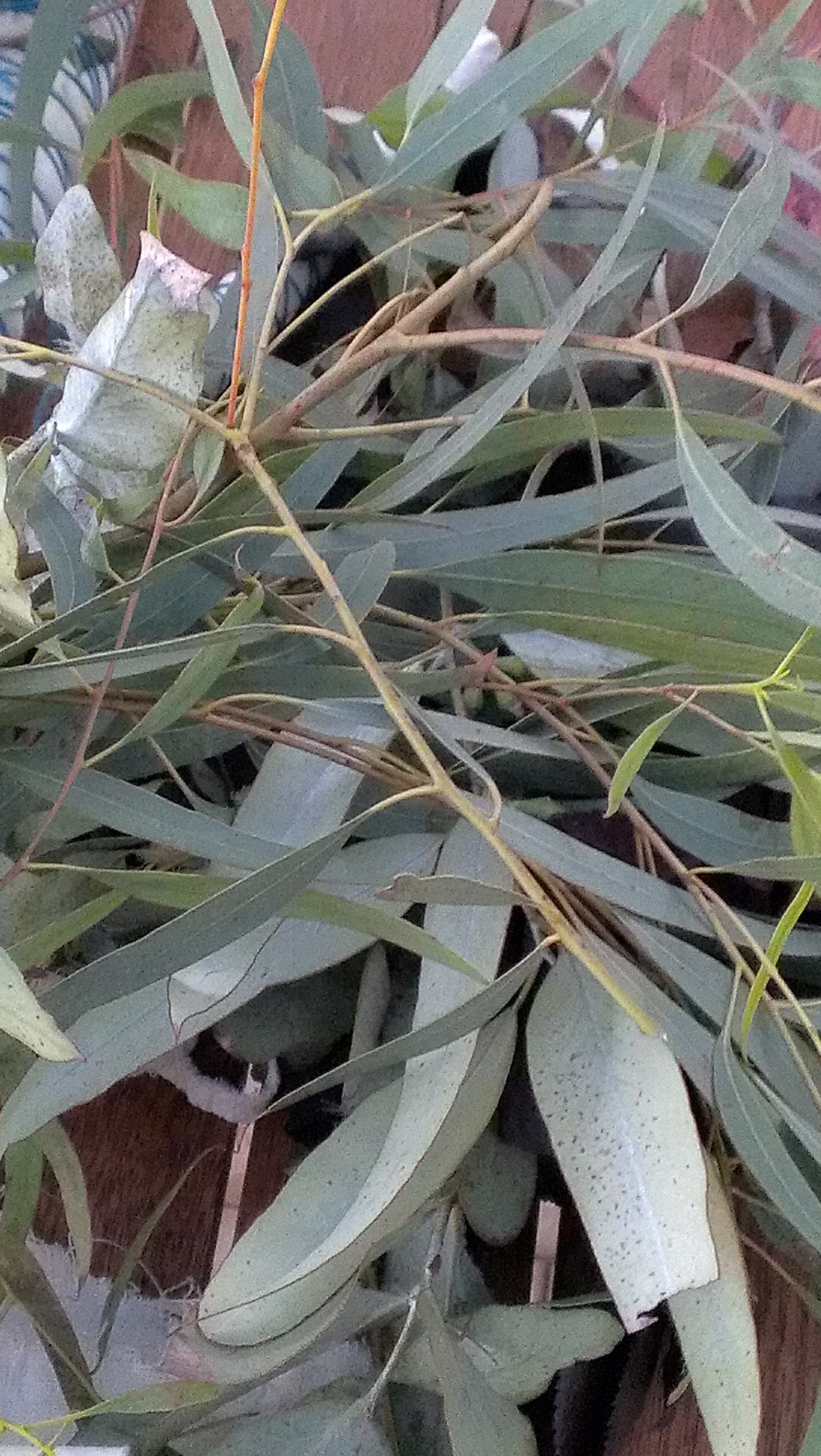
Happy results!  These are E Cinerea leaves–different to what I would get on fabric and very lovely. Like all bundle dyeing, part of the mystery and part of the joy is trying out what is local and seasonal. Everyone’s selection is different.  My garden is heavy on calendula and marigold right now and I had some lovely little geranium flowers and all sorts of local leaves to try too.

2015-04-25 17.18.35

I decided to use my flanellette string for bundles despite it being unnaturally dyed.  I loved seeing some of my retreat companions loving their bundles enough to use handmade string to tie them.  And my much re-used string collection is getting to the end of its tether.

2015-04-25 17.14.56

I used all kinds of fabrics–raw silk from a recycled garment, calico, linen offcuts, and a little piece of silky merino given to me by a retreat companion (should she be reading, thankyou again!)

2015-05-06 10.13.36

The silky merino gives such vibrant colours, but actually the linen was a bit of a standout too.

2015-05-06 10.13.52

Meanwhile, the string making continues.  I have decided to try using this process of making string as a point of reflection on my obligations under Indigenous law–and of so many principles of earth care that might come under that set of principles.  The importance of things that will biodegrade and that will not last forever, the way plastic will.  The intertwining of all life.  The cycles by which nature does its magic.  Our dependence on plants and water.  the way things and beings come into closer relationship with one another.  I keep sharing the string–as people admire or ask about it, I have a little stash right here by my hand and I can give them some.  Sharing is a primary principle too.

2015-05-03 15.53.03

I have in mind something like what Grackle and Sun might call atheist prayer.  But different, of course.  Do read her post and be inspired.  I love her idea of chantstrands, but my experiments along those lines didn’t work for me the way taking a few wet leaves out to a tree to twist together into string and considering things has so far.  So I have taken inspiration from her and begun to make cordage from it…

2015-05-02 14.49.32

A few people have been asking about how to make string.  I have put a link to an online tutorial in the How To tab at the top of the blog, but you could learn from a basket weaver (as I did) or from any basic basketry text.  Or put yourself near India Flint, who shares string making everywhere she goes, as far as I can tell (having learned how from Nalda Searles).  Or go to YouTube and be among survivalists who do something similar!  Meanwhile, the garden is growing as rain begins to fall.

2015-05-02 14.49.47

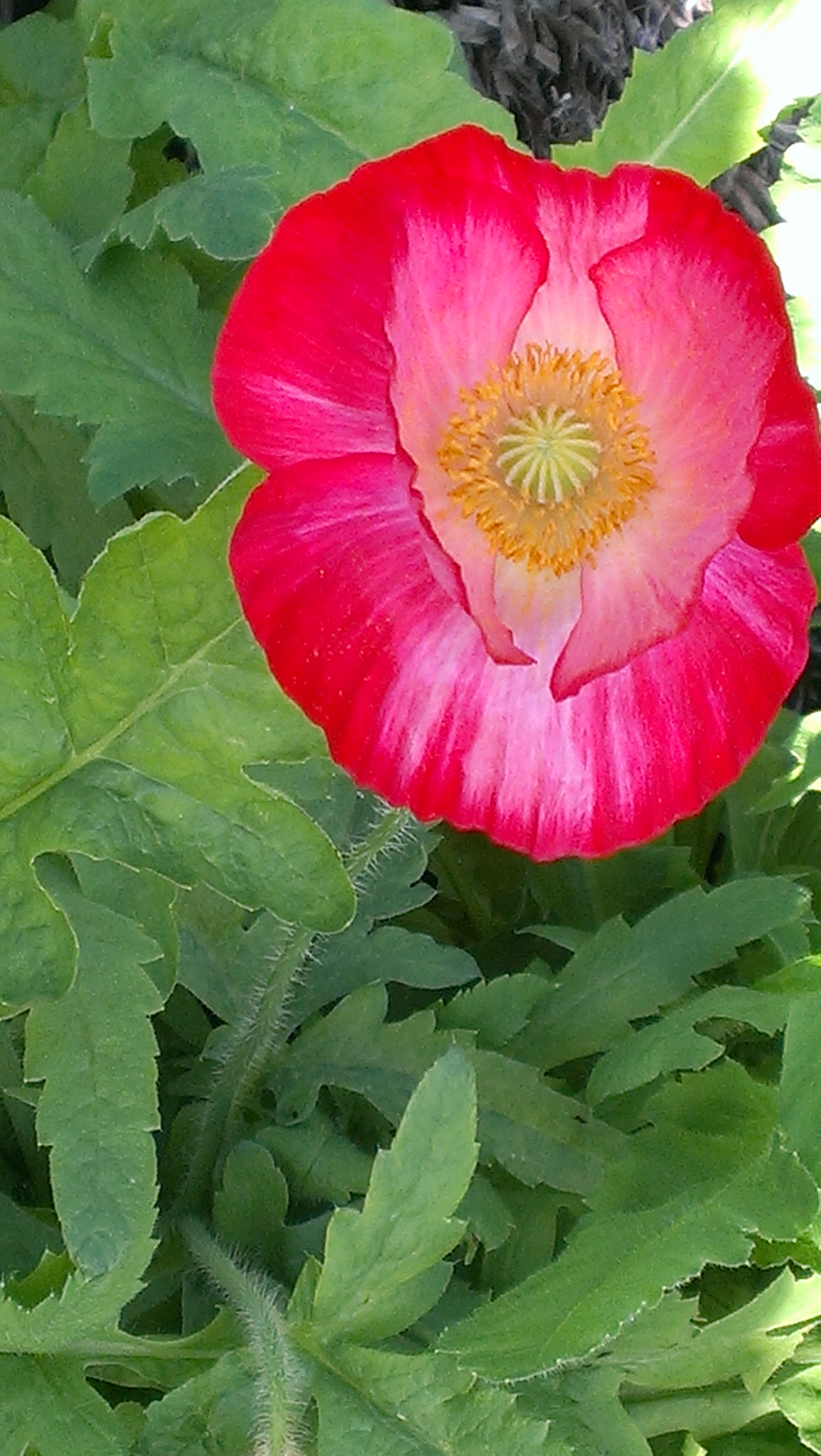
The first poppy of the season is out and beyond lovely.

2015-05-04 12.19.04

And I had a new insight about this especially beautiful saltbush which I have so far not managed to propagate.  It has taken a lot of observations to figure out when I might be able to collect seed, but one day at work recently I pulled out a seed envelope I happened to have with me (as you do) and amused bystanders by rubbing the ends of these silvery stems gently into it.  Who knows what might come of that?  I have high hopes…

8 Comments

Filed under Dye Plants, Natural dyeing, Neighbourhood pleasures

Saltbush and friends

Since I’ve had a few questions about saltbush, here’s a little more information for the curious.

2015-04-01 13.49.16

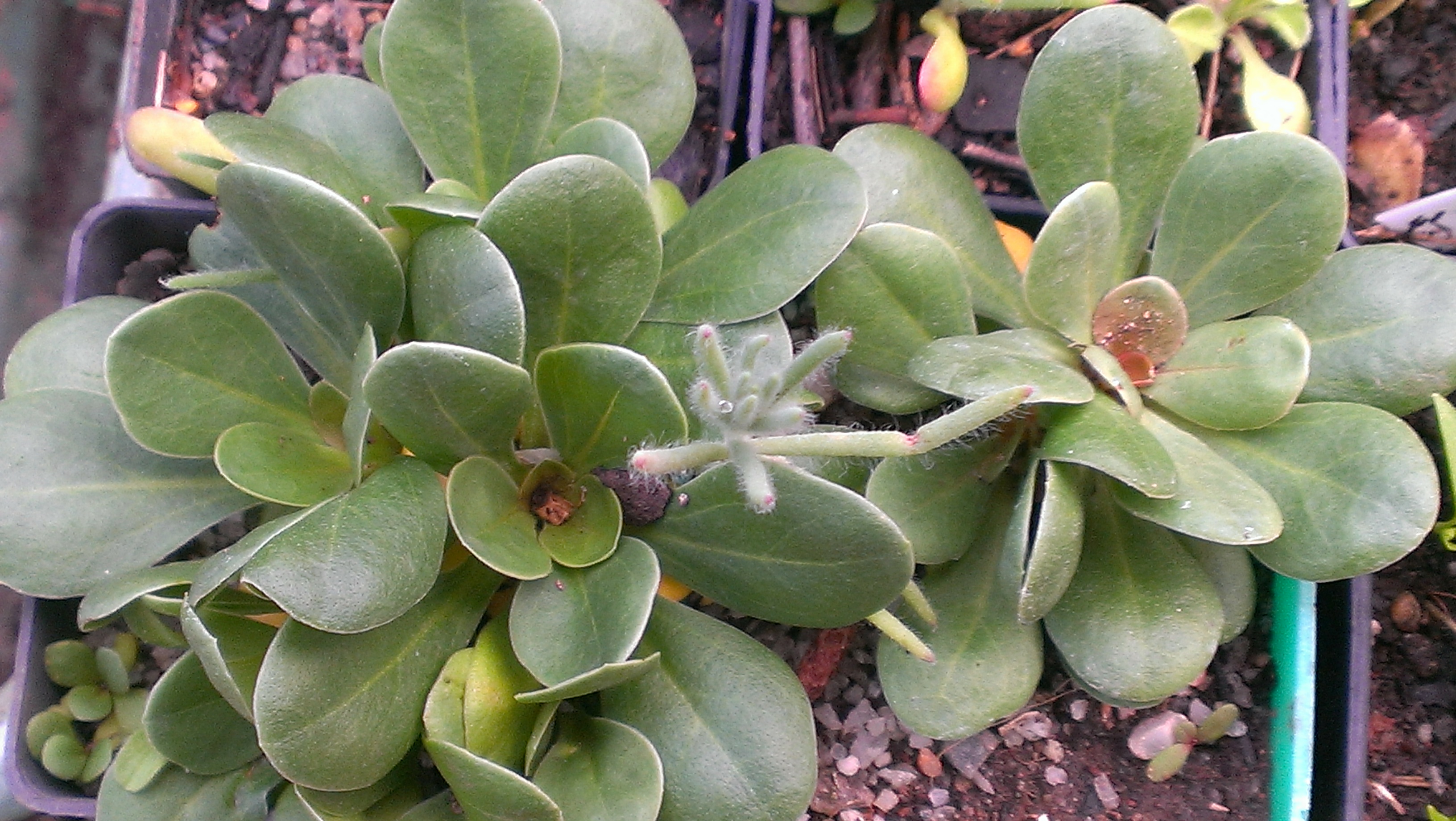
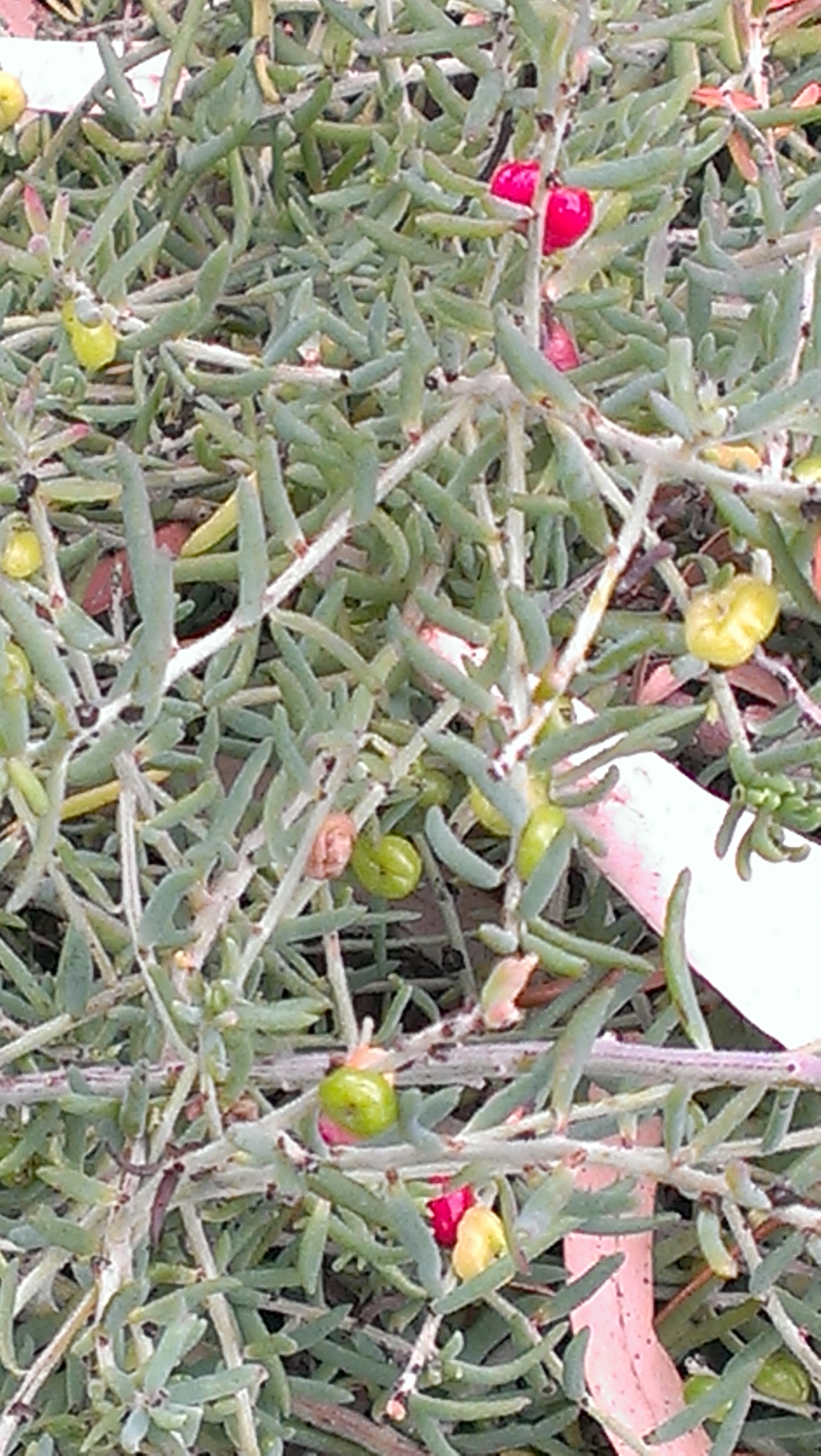
Ruby saltbush (Enchylaena tomentosa) is my big success story in propagation so far, so most of what I have been planting is ruby saltbush.

2015-04-01 13.49.44

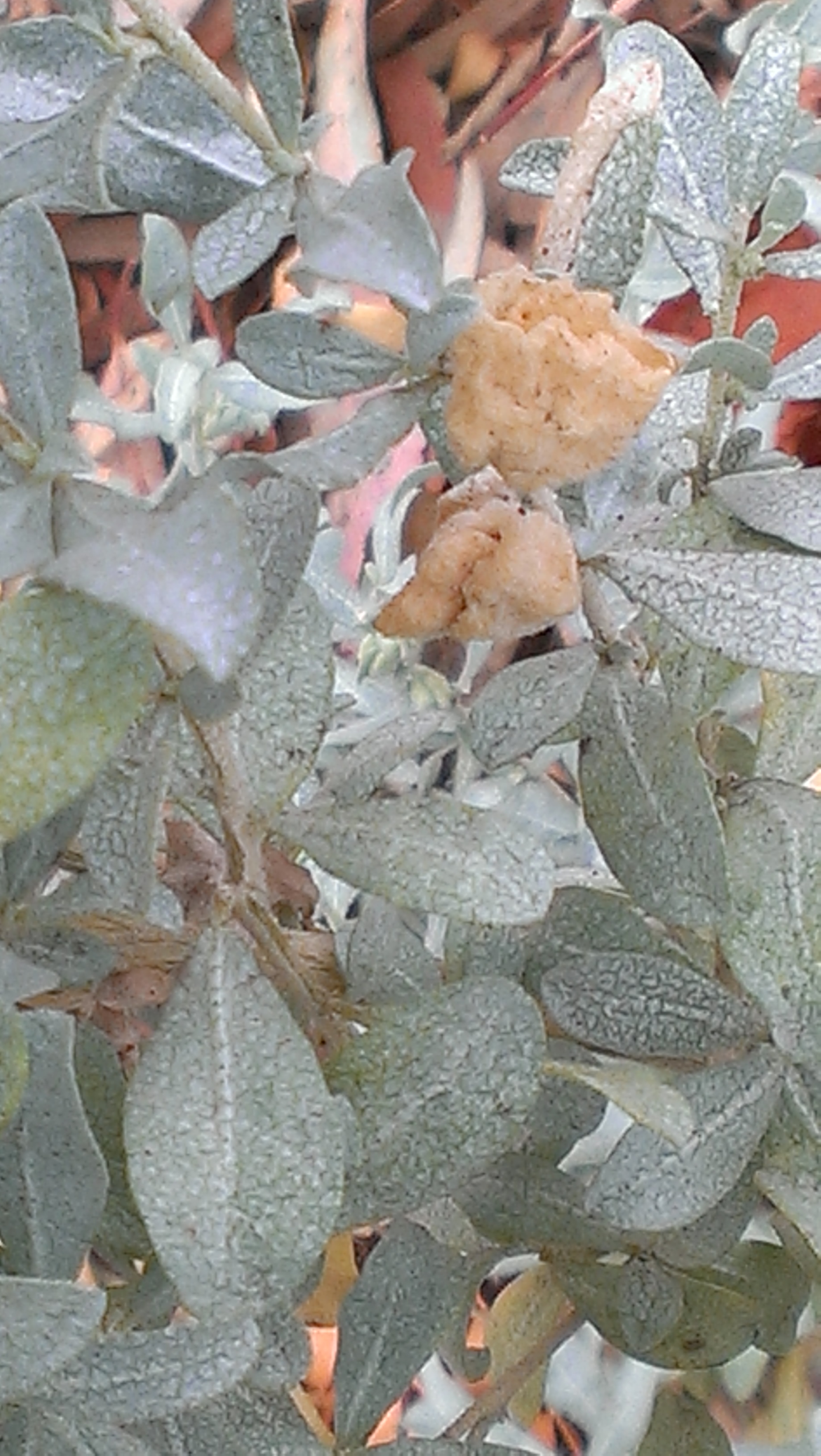
This one is bladder saltbush (Atriplex vesicaria), named for the seed capsules which are like soft blobs with a seed inside!  I love the silver grey leaves and this one grows a little taller than ruby saltbush.  Dad collected seed for me and one of the plants I grew from the seed he gave me is now large enough to be seeding.

2015-04-01 13.50.11

I am not entirely sure what this plant is, but I have succeeded in propagating it a couple of times and now it is seeding freely. It is widely planted or native to the parklands here.   I think it might be Maireana enchylaenoides (wingless blue bush)–or Maireana brevifolia (Short-leaf Bluebush).

2015-04-01 13.49.27

This one is still a mystery!  There’s a lovely guide to plants in parks here, beautifully named Parks for Us All–and the saltbush and similar plants are in the Chenopodiaceae if you scroll down from here.

8 Comments

Filed under Neighbourhood pleasures

Autumn leaf prints

I went to a wedding in the hills recently… a very pleasantly relaxed and extremely celebratory occasion.  On the way home, I stopped in a small town because… many European trees grow in the Adelaide Hills and it’s wonderful to see.

2015-04-11 15.57.18

And of course, I had hopes and plans.  If you don;t want to look at pictures, stop now.  This is a post of MANY pictures.

2015-04-11 16.55.24

I collected leaves…

2015-04-11 16.55.12

I made bundles…

2015-04-11 16.58.41

I made experiments…

2015-04-11 17.18.41

I tooled around the neighbourhood on my bike collecting tried and true leaves.

2015-04-11 17.51.10

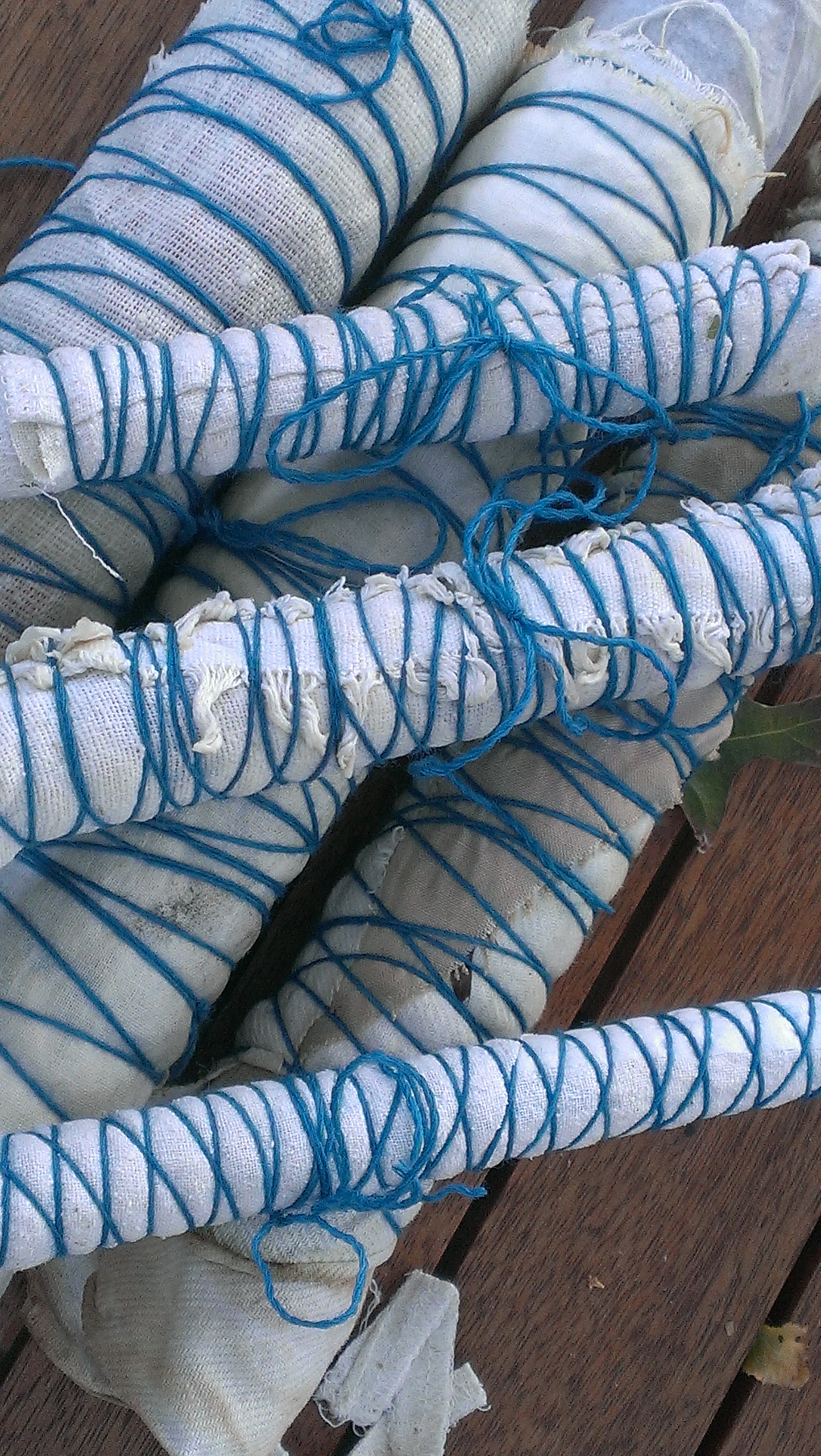
I unwisely tied my bundles with coloured string for the first time ever.  I sorta kinda knew this was stupid but did it anyway and was rewarded with blue lines, most of which happily washed out!

2015-04-11 17.26.25

I applied heat as the sun set…

2015-04-11 18.22.13

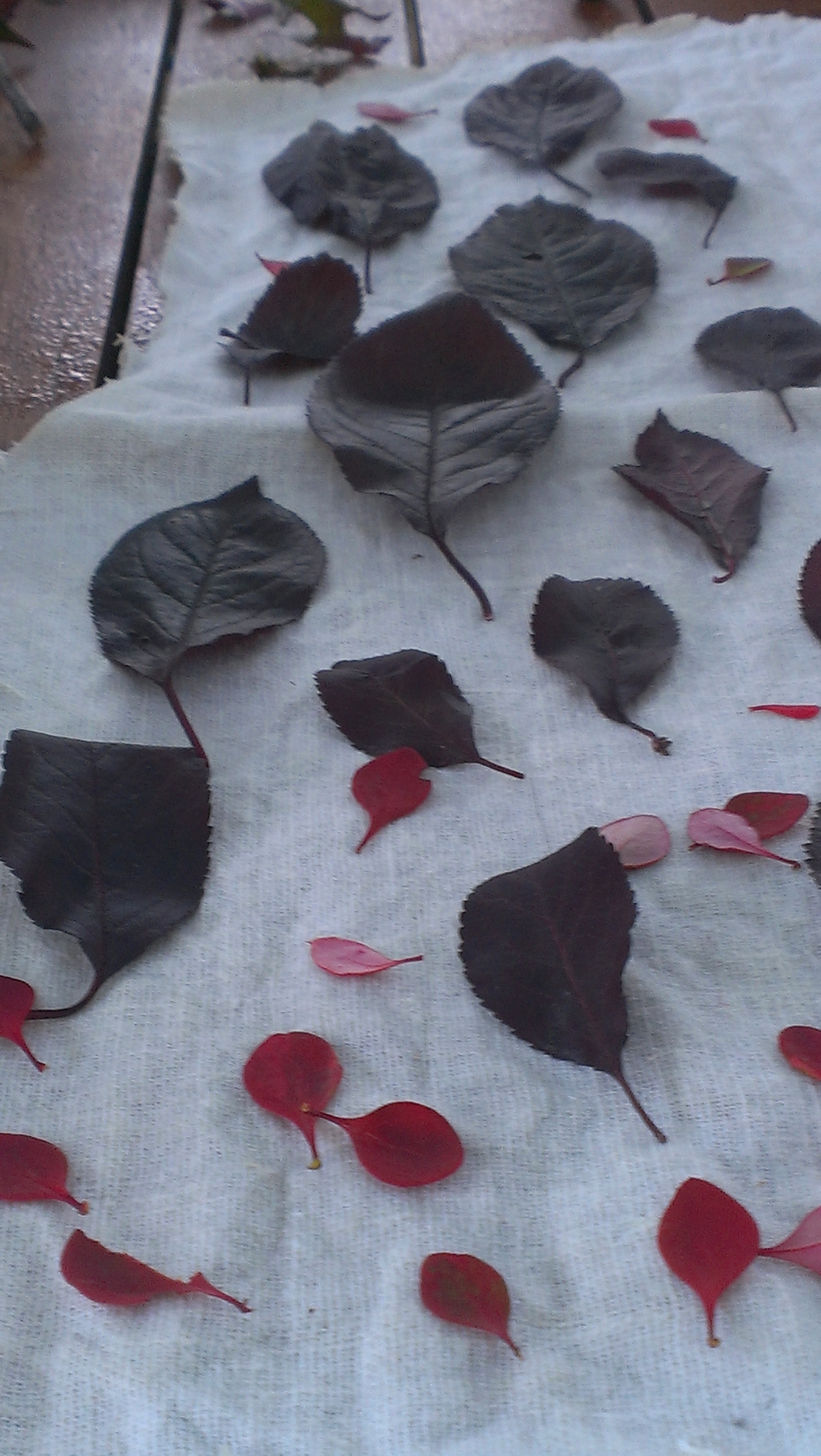
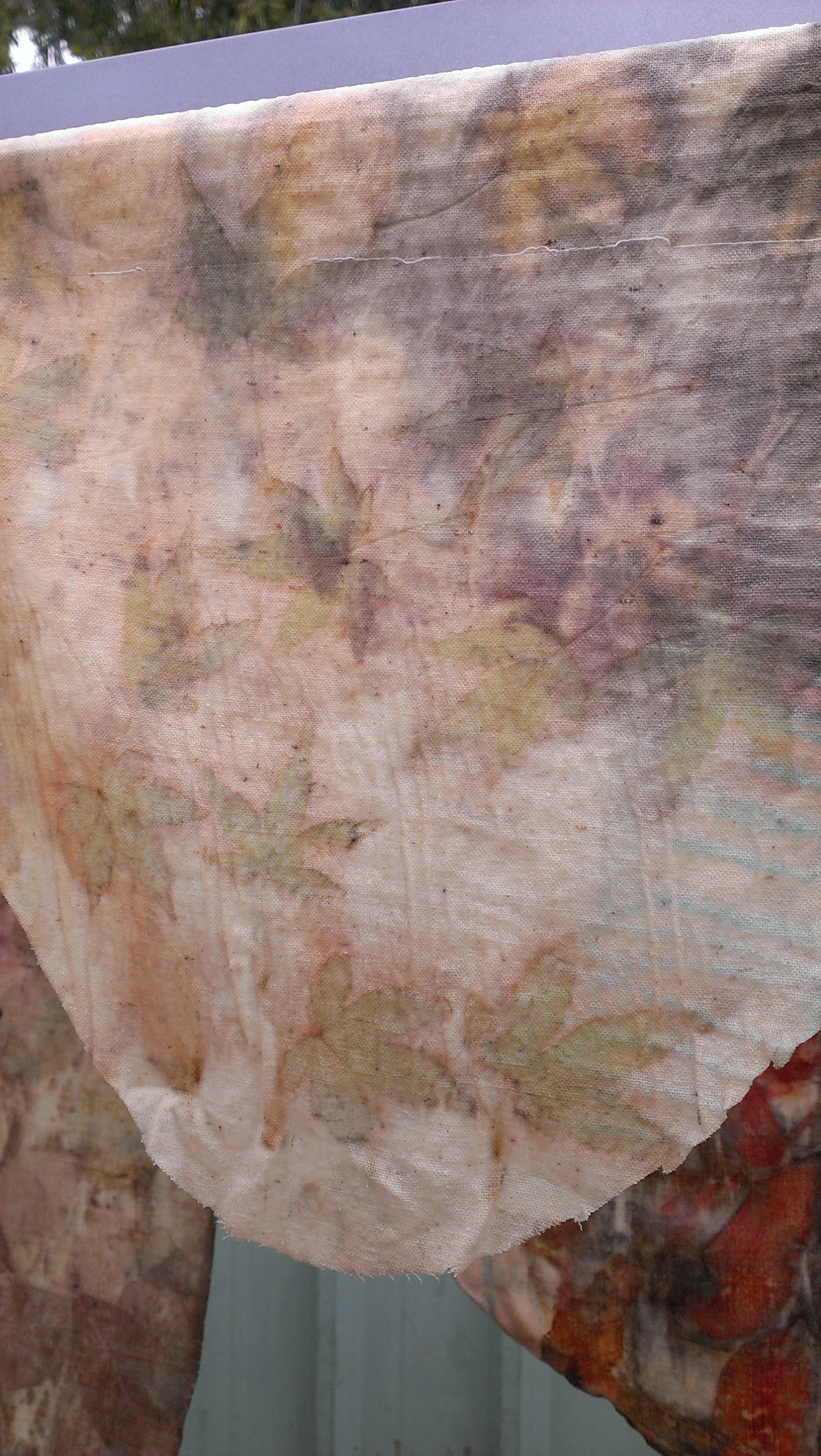
And the next day! These images are of fabrics still damp and freshly unwrapped.  Even the flannel rag I had used to create a bit of ‘padding’ on one bundle took dye.

2015-04-12 11.56.00

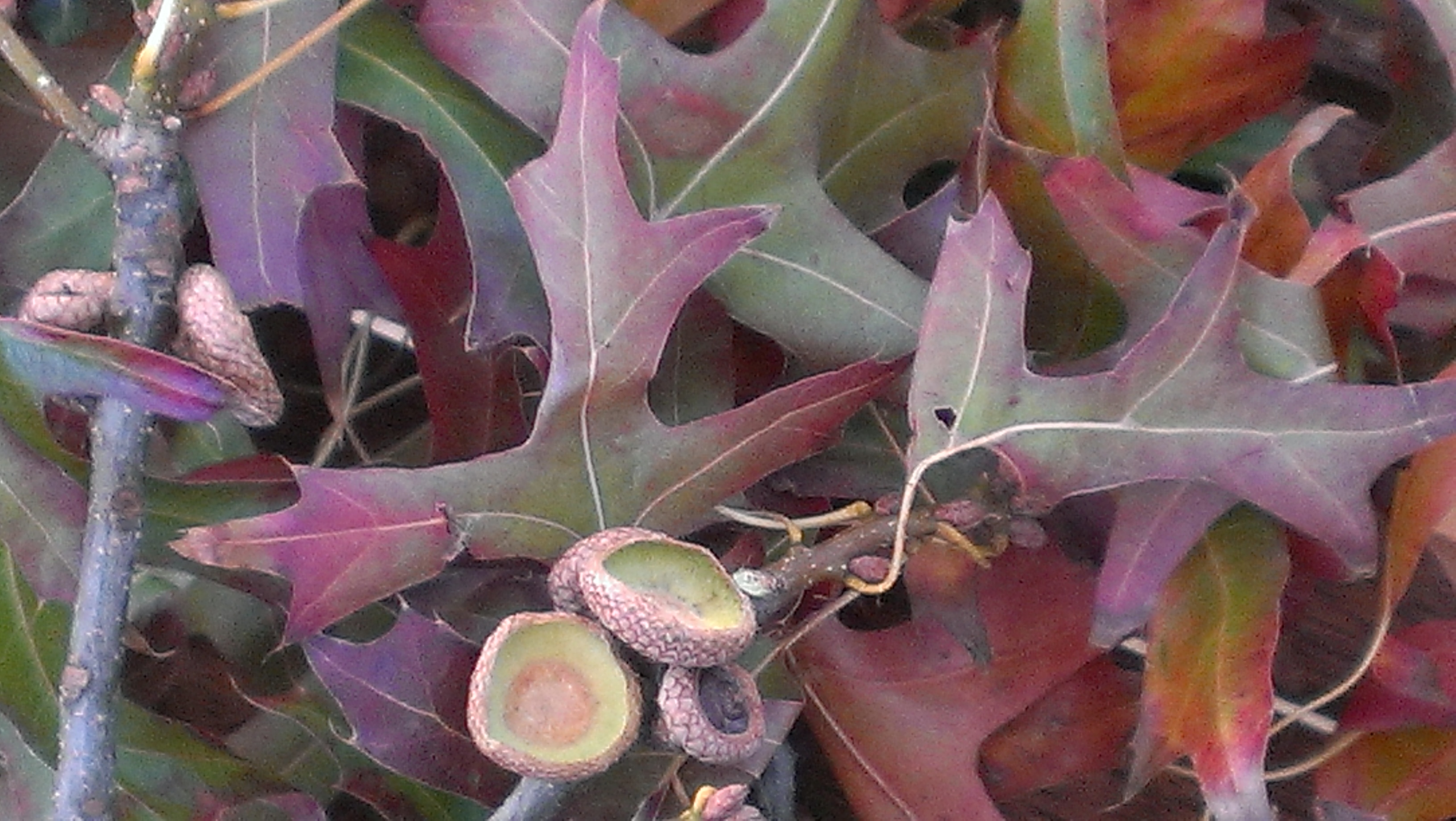
Oak leaves on silk

2015-04-12 11.56.56

Maple leaves on silk.  So green!  they are still green after washing and ironing.  This silk is from a pantsuit a friend scored for me at an op shop. It is well washed and work raw silk.

2015-04-12 11.56.14

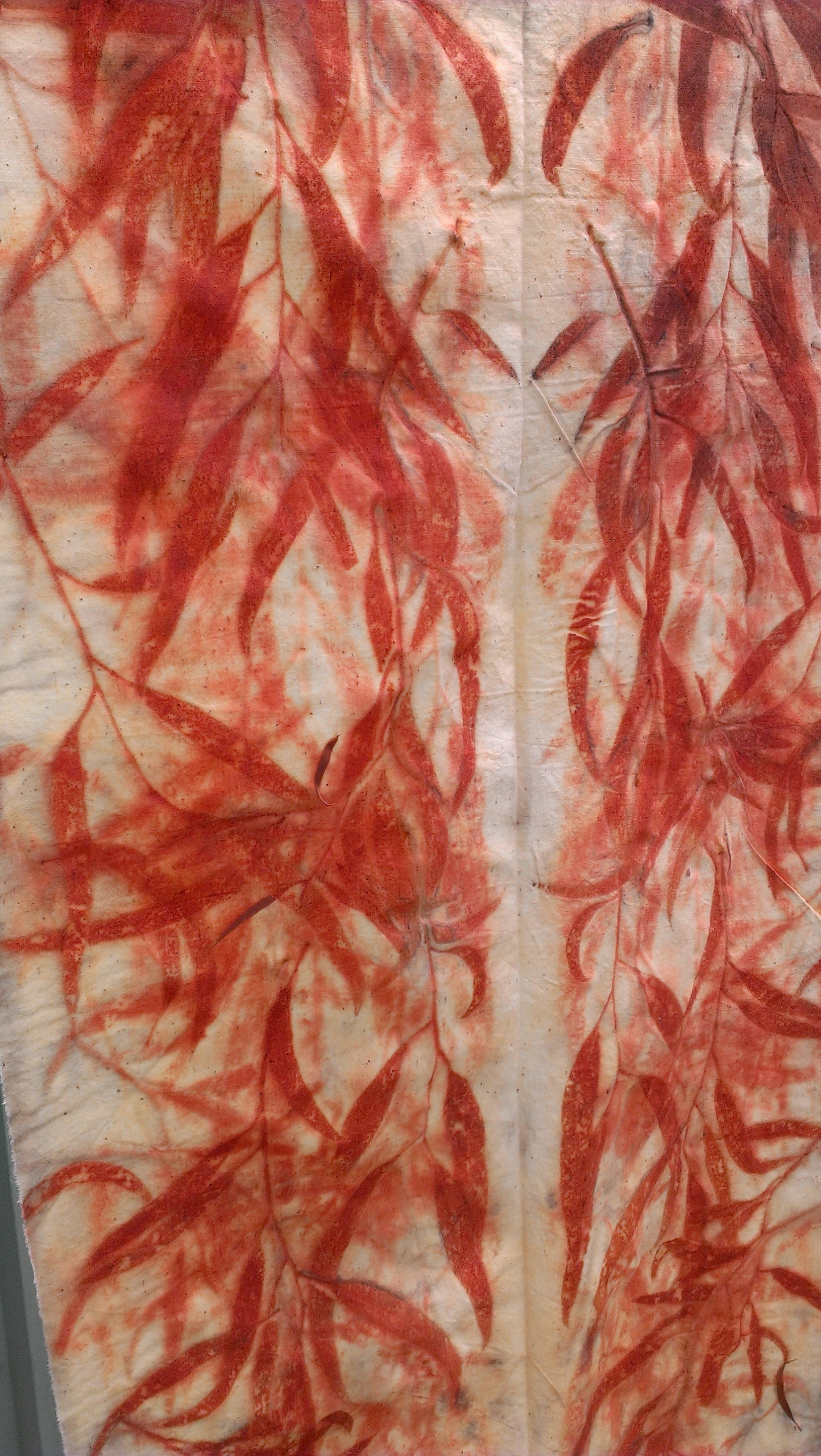
The ever faithful E Cinerea on linen.  A friend gifted me linen offcuts and these are the first that have made their way into the dye pot.  Am I ever blessed with generous friends!

2015-04-12 11.56.19

Maple leaves on linen.

2015-04-12 11.56.25

E Scoparia is awesome yet again on cotton.

2015-04-12 11.56.37

Sheoak from the neighbourhood on linen.   This has so much potential…

2015-04-12 11.56.43

A happy day all round!

15 Comments

Filed under Leaf prints, Natural dyeing, Neighbourhood pleasures

Solace

It is not too late to add your contribution to India Flint’s Solace project, should you wish to.  Here is further encouragement on India’s blog.  Here is the invitation to the project–which explains it all rather beautifully… and here is SweetPea’s collection of inspirational blog posts about worldwide contributions to the project, should you need inspiration.  SweetPea’s blog is rather spectacular.  I commend it to you.

2015-04-10 15.20.10

In the meantime, I’ve been taking solace in guerilla planting and native plant propagating. Earth hours are going well. I feel as though I should make some pennants that say ‘salt bush berries’ and ‘kneeling in the dirt’.  I still might.  It certainly is a source of solace in my life in the face of all the planet has to contend with.

2015-04-13 08.14.43

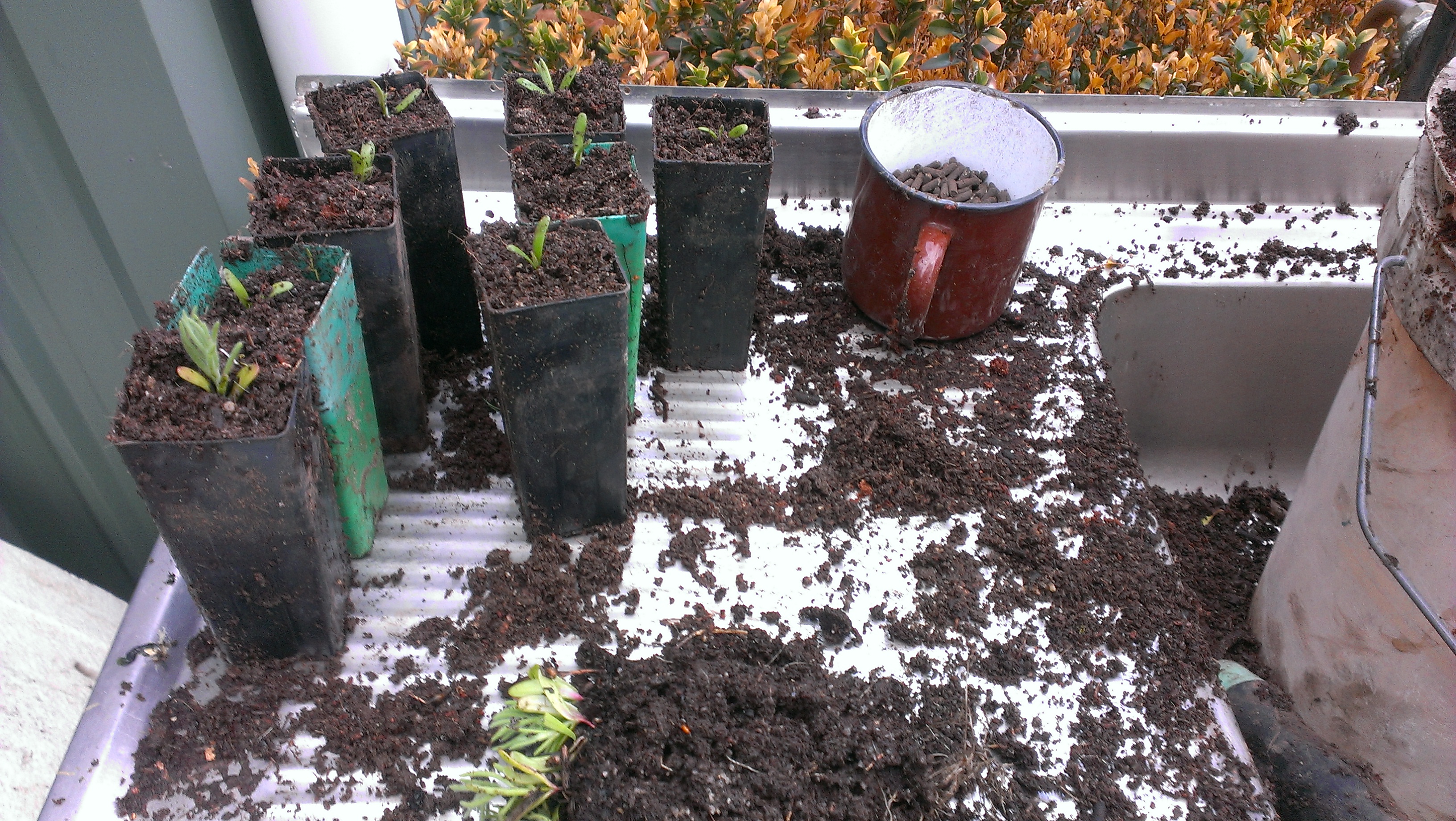
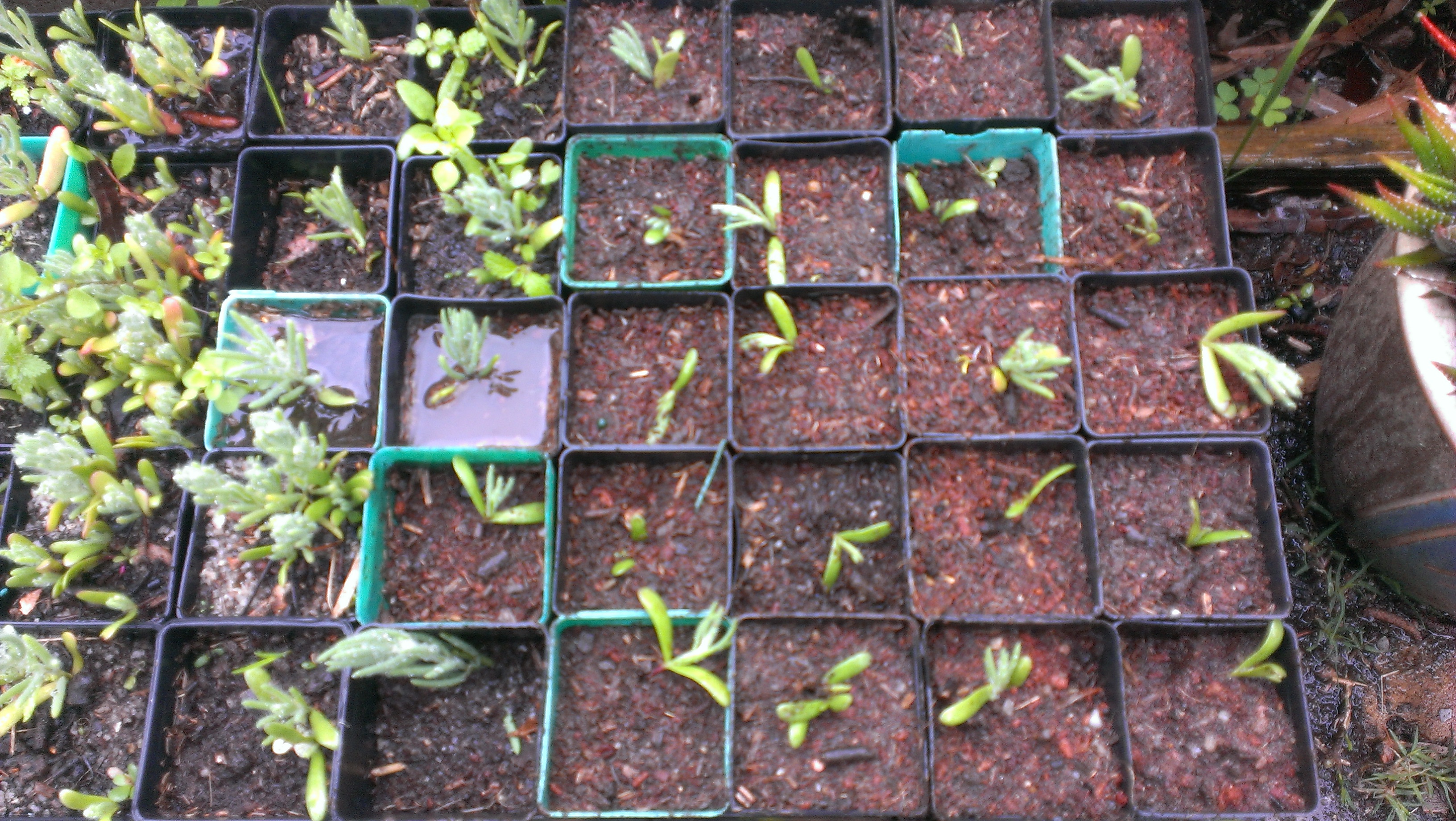
Ruby saltbush has kept coming up.  In fact, I think my success rate has increased as I have become more careless.  I thought over the way it comes up under existing bushes and just gathered up berries straight from the bush and threw them onto the top of the tubes where nothing had germinated along with leaf litter and saltbush leaves and whatnot.  So many seedlings this way!  Pricking these tiddlers out has been working, so I pricked out yet more.  28 more!

2015-04-13 08.14.57

I haven’t had so many of the stash of plastic pots in use for years.  My potting mix is basically compost turned by our chooks, sieved to get out the lumps, so there seems nothing to lose by potting up more.  Garden and kitchen waste goes out to the chooks, and eggs and compost come back. It is a fabulous arrangement.  Last week my Dad gave us masses of his guavas, and there was a separate collection of fallen mushy or rotten fruit for the chooks.  What a sweetheart.

2015-04-14 07.35.02

Meanwhile, it’s seedlings out into the neighbourhood (two different types here)…

2015-04-14 08.07.45

And rubbish from the neighbourhood back home to be dealt with appropriately.  There is less of it each time I go out to the new patch. It might not show, but the patch of planted and mulched earth is growing larger.  Nothing has been lost on this patch yet.  It seems there is not a lot of traffic of people wanting to walk across or dogs keen to dig it up. And we had rain. All good.

2015-04-14 08.07.55

One morning this week I thanked the chap from the council who was watering the council plantings.  We talked about the plant thefts and he thanked me for replanting those that were abandoned.  He asked me if I was the one who had planted the saltbush on this new patch as he had noticed it appear, and warned me that it might all get taken out if Council decided to do something in that spot–but when he had asked, they had no such plans.  I said I was prepared to take the risk. I managed not to explain that I think my time is better spent just planting than asking the council nicely–they haven’t been responsive in the past and quite a few of my plantings are doing well without their permission.  He had also noticed someone was weeding the spot where he was watering, and he explained a few things about why some plantings are thriving and others are not. It seems the council have some knowledgeable and dedicated workers and the contractors are not as diligent.  And I was happy to hear he thought myoporum (boobialla) was a suitable thing to plant in tough contexts–as that is the main focus of my cool weather propagating programme, as you know!

5 Comments

Filed under Neighbourhood pleasures

Marmalade

We had a gift of limes from a friend…

2015-03-25 17.41.18

And a gift of many mandarins from my parents…

2015-03-25 17.41.50

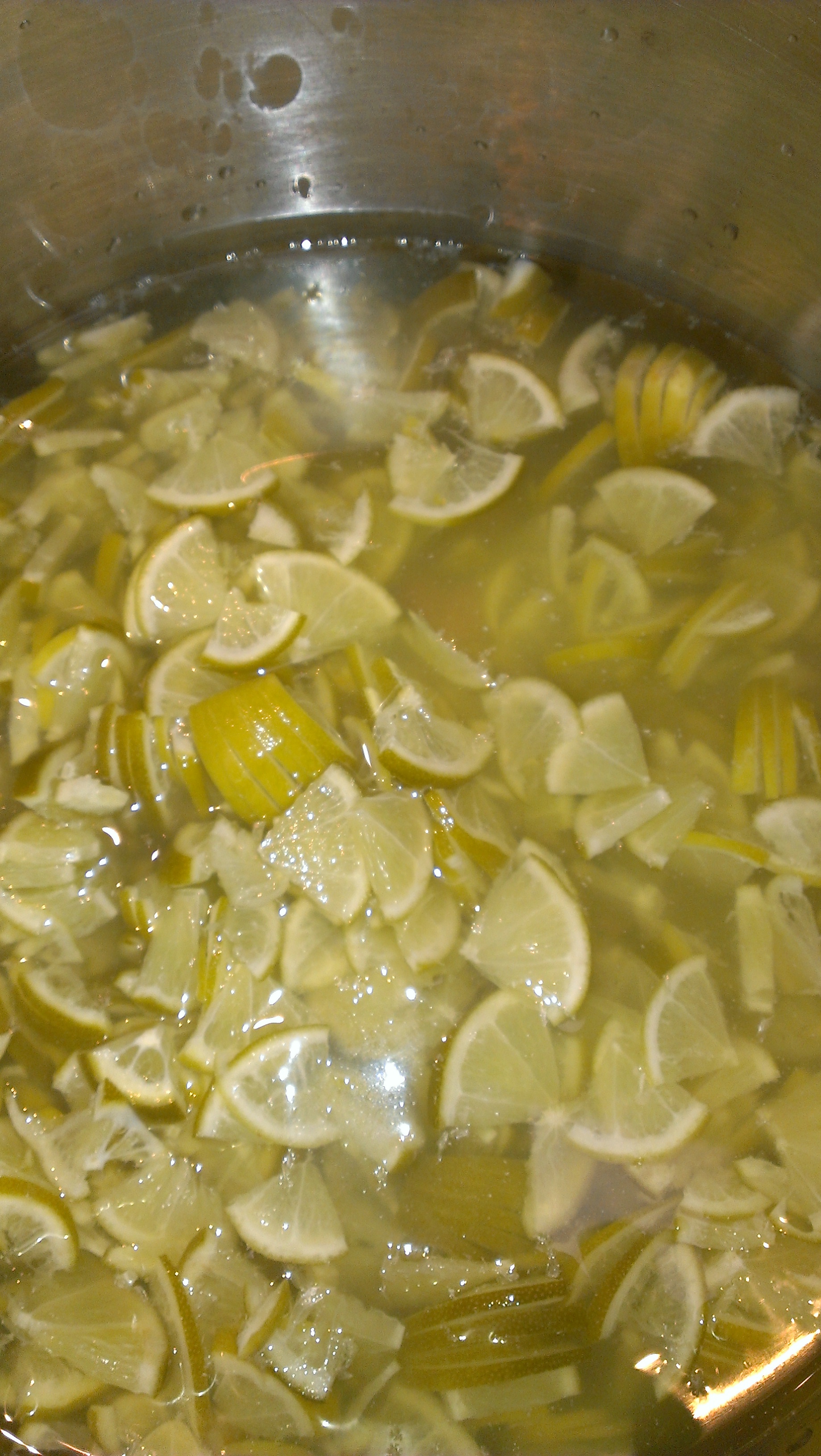
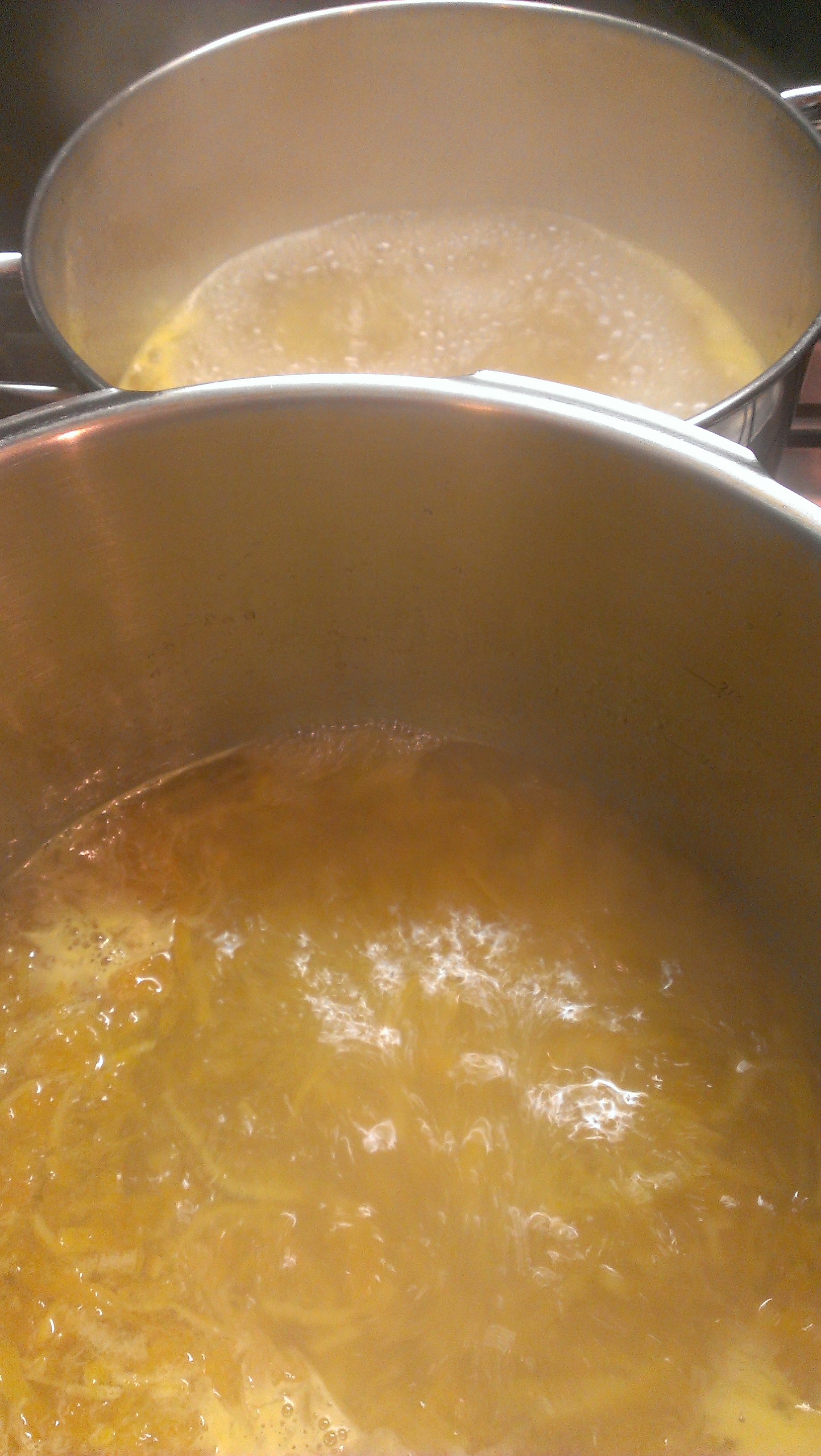
And in the time honoured tradition there never seemed to be time to turn them into marmalade.  So one night after work I chopped.  Soaking followed.  Then two nights later, we did the cooking part.

2015-03-25 19.27.05

The lime looked especially good!

2015-03-25 19.27.00

And in the end… they were both pretty lovely.

2015-03-29 14.25.39

It is definitely the time of year for it!

2015-04-10 15.20.10

Leave a comment

Filed under Neighbourhood pleasures