Socks at last

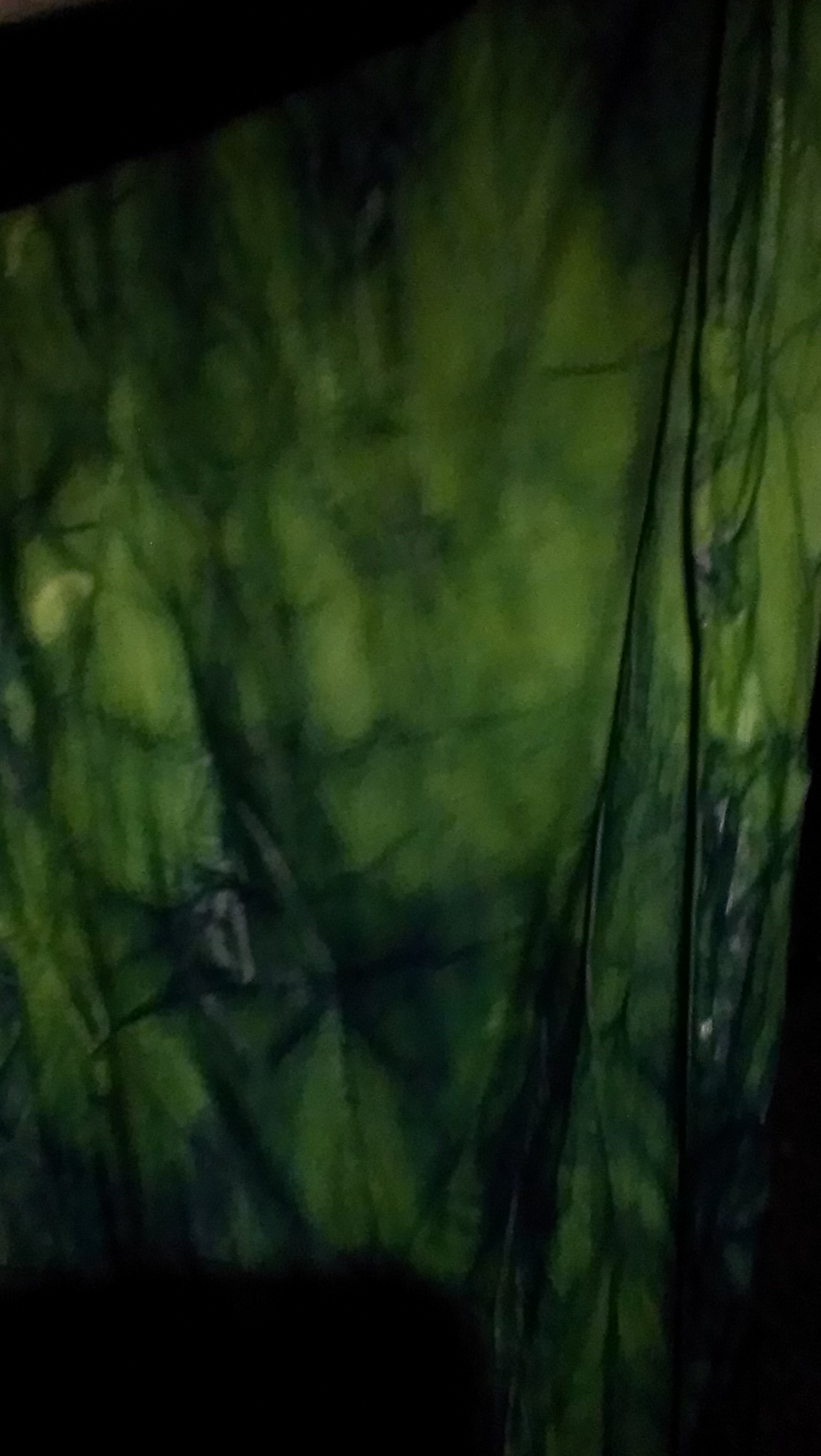
It seems to me as though I’ve had three pairs of socks on the needles for a very long time.  At last this pair have emerged: 50/50 silk and wool from Kathys Fibres, a dyer local to me, in Forest colourway.  The sock is just the plain ribbed one that lives in my mind, but I’m hoping they’ll be warm and comfy for a fellow knitter and dear friend who is facing a tough time.  No one has ever knit her socks before, though we’ve compared notes on lots of pairs she has knit for other people.  It’s about time.

IMAG1356

Leave a comment

Filed under Uncategorized

Fermentation Indigo Vat… not this time…

On the first day of the new year, I started up a fermentation indigo vat, following Rebecca Burgess’ recipe in Harvesting Color.  I’d had the ingredients waiting for some time but finally decided to gather my courage and give it a try.  I have previously used the hydrosulphite vat with success, but this was my first time trying a fermentation method.  I thought setting this vat up in the heat of an Australian summer was a good application of the principle that you should do those processes which work with the seasons and not against them.

We had a heat wave in January where the temperature went up to 45C during the day, but it was blessedly cooler at night. I stirred every day.  No sign of a coppery sheen.  In February, we had another hot spell where the temperature went up to 38C during the day and stayed well above 20C at night.  I wondered if that was a coppery sheen, or my imagination.  On the days I noticed it, I was too busy to try dyeing.

Well.  Here it is, May and the vat never became active in summer and won’t now that winter is on its way.  So the other week my friend wanted to indigo dye a birthday surprise item, and what with the need for it to be a surprise, the difficulty of laying in hydrosulphite and the volume of other things to do, by the time we got the vat happening, it was after dark.  What I am saying is, these pictures are not great!

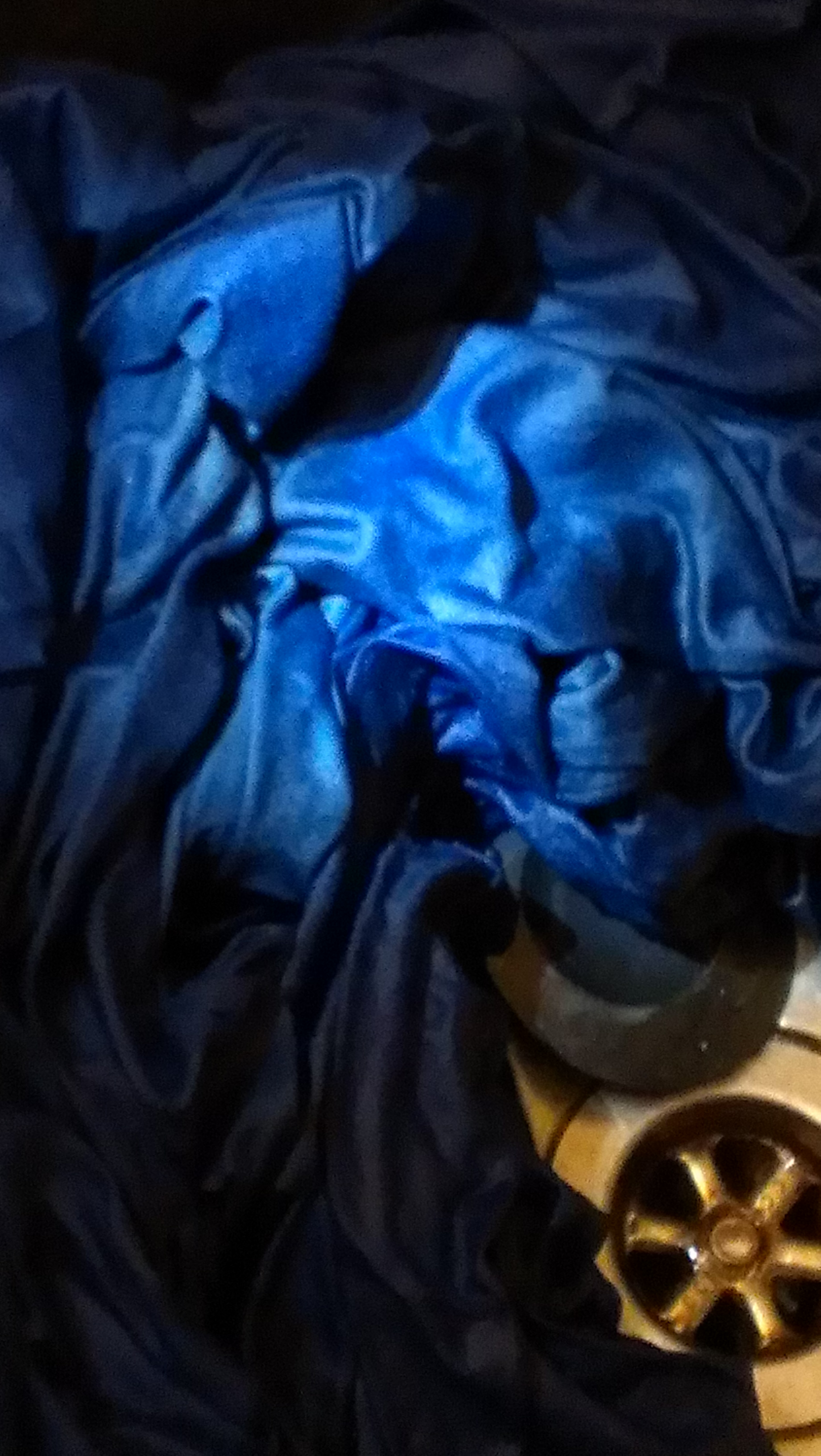
We used about half of my fermentation dye bath and added hydrosulphite. With the help of a nice woollen blanket (sold to me as a dog blanket due to what must have been a vey sad felting episode in its previous home) for insulation, and of course big red protective gloves… we got started and had that indigo magic in spite of the months the vat has lain untended.  In goes the white fabric…

IMAG1314

Exposure to the air on the clothesline

IMAG1324

After a good rinse!

IMAG1332

Next summer, I can see I’ll have to do better to get fermentation happening.  Better focus, more effort at maintaining temperature, and perhaps some feeding and maintenance.

For those who have been worried, our caterpillars have apparently changed into moths and moved on, and the madder is recovering.

IMAG1357

2 Comments

Filed under Dye Plants, Natural dyeing

Lillypilly fruit

IMAG1282

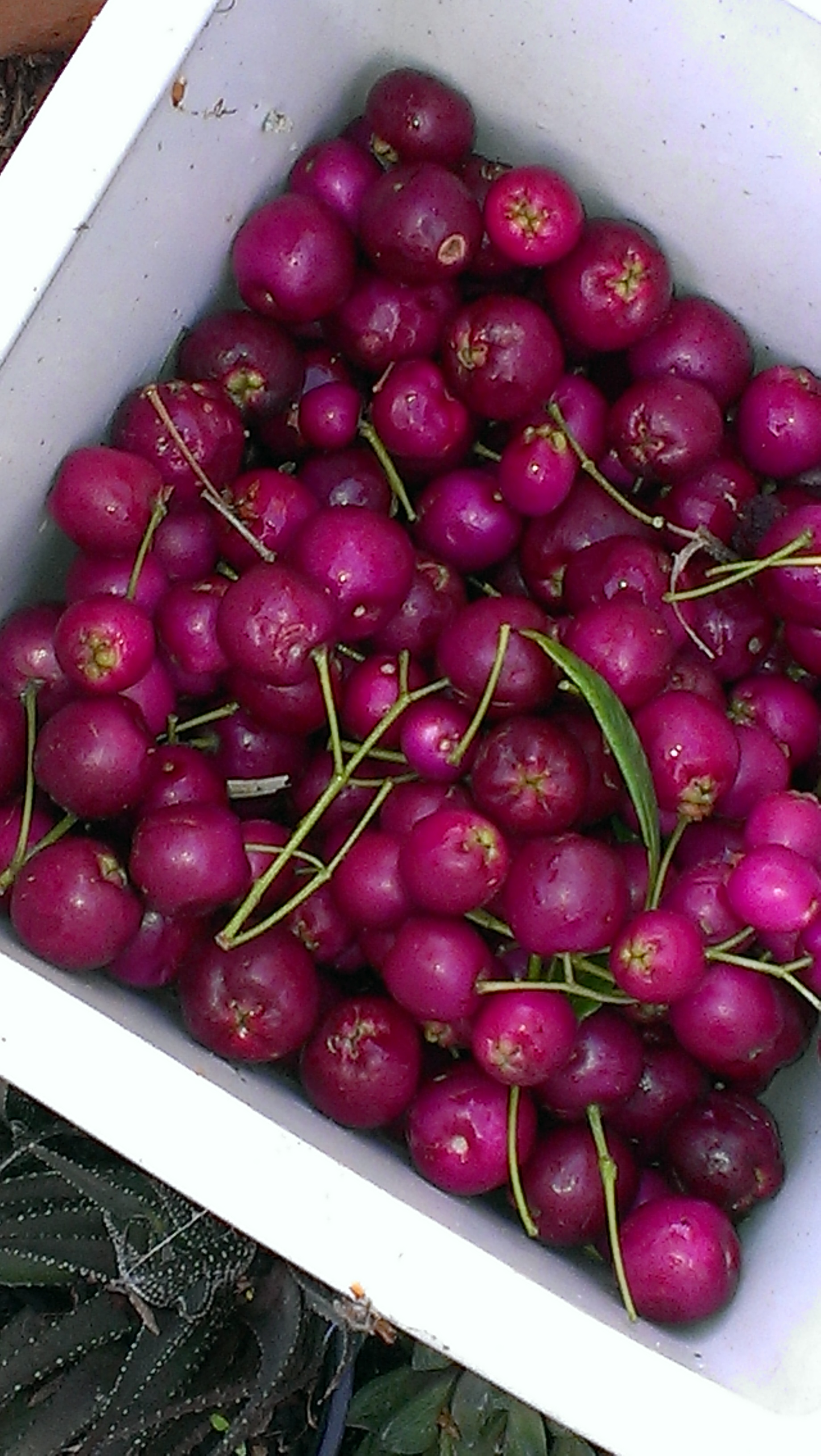
Lillypillies are in fruit around my suburb.  They are the fruit of a large, glossy-leaved forest tree and they stain the footpath in a most impressive and promising manner.  This one is Szygium Smithii (but this is a family of trees some of which are widely grown ornamentally in Australia).  The fruit is edible, but in the case of this species, unexciting in terms of flavour, with a crisp texture and a fairly large seed inside.  On the dye front…  I did not find this an exciting outcome.  Fawn on silk (the card on the right), brown on wool with alum and tan on unmordanted wool.  I think I’ll stick with cooking lillypillies and admiring their enormousness and the spectacle of so much fruit!

IMAG1306

2 Comments

Filed under Dye Plants, Natural dyeing

On the way to work

Sighted at a bus stop on a major road on a cold, rainy day: Eucalyptus Camaldulensis, the river red gum.  It is nowhere near any river I can think of but glorious nevertheless.

IMAG1346

4 Comments

Filed under Eucalypts

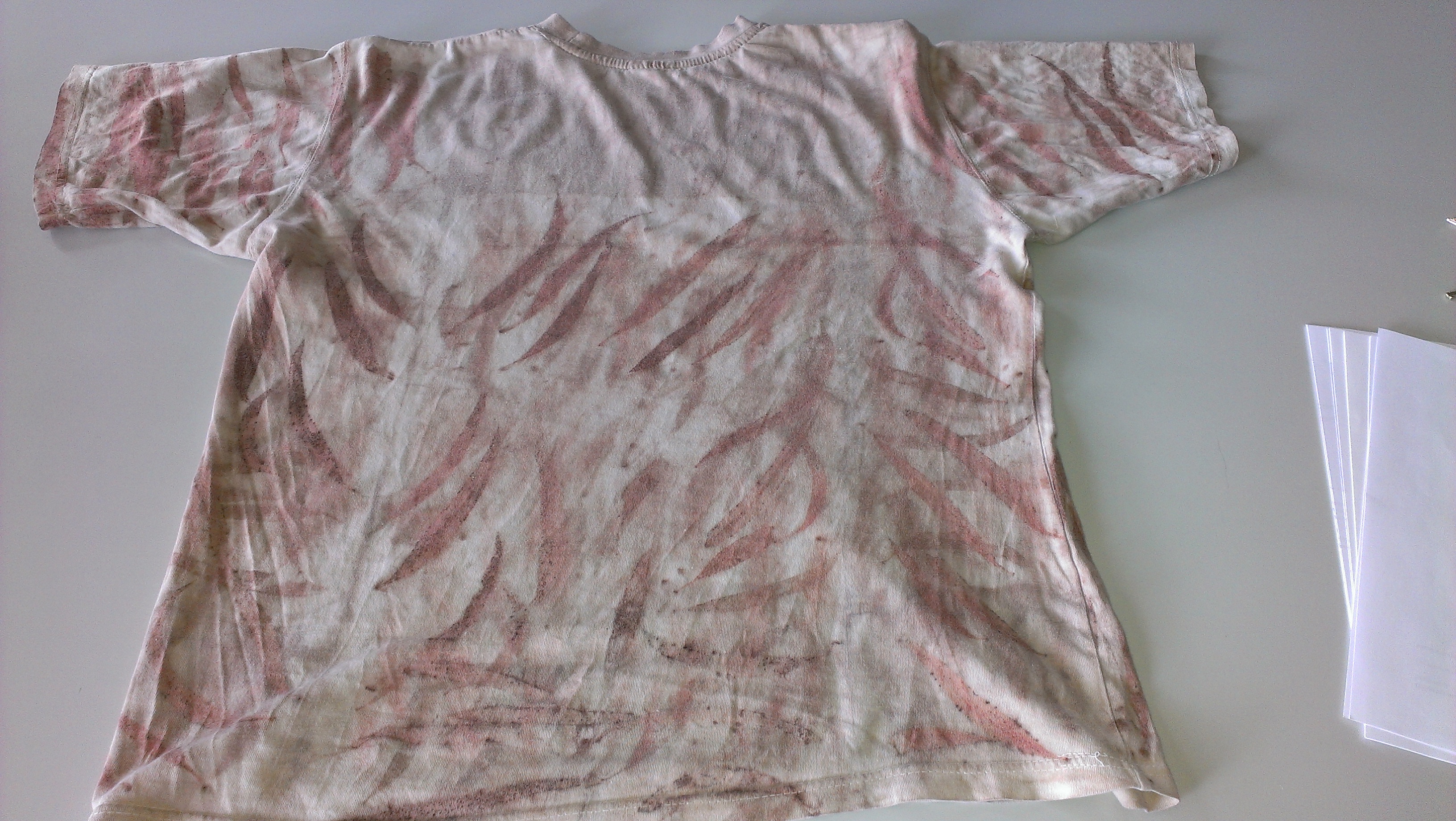
Wash fastness: Eucalyptus leaves on cotton knit

I leaf printed a cotton t shirt on 10 February 2013.  I prepared the fabric with soymilk and dyed using iron and E Scoparia leaves.

Here it is on my office desk after its first trip through the washing machine at 30C and its first trip to my office on my back as I rode to work. The front and the back (with the part that was outermost in the dye bath at the upper mid back):

IMAG0950 IMAG0951

It still smells strongly of eucalyptus when you’re up close (and sweaty), but the smell of soybean is almost gone, or overwhelmed by eucalyptus.  I am thinking I can take a photo of it in the (relatively) controlled light conditions of my office at regular intervals and see what we can notice.  One wash more and the smell of eucalyptus was fading a good deal.

Here it is in May, 12-15 washes later:

IMAG1289IMAG1288

I am just not sure about the influence of light on this image… to me as the person wearing the garment, it seems to have changed little except that the part on the upper mid back where the fabric was exposed to the dye bath (and consequently, to  iron) is much lighter.  There’s no doubt the photo looks much less orange, though the leaf prints are still entirely distinct.

6 Comments

Filed under Eucalypts, Leaf prints, Natural dyeing

A funny thing happened in the madder patch…

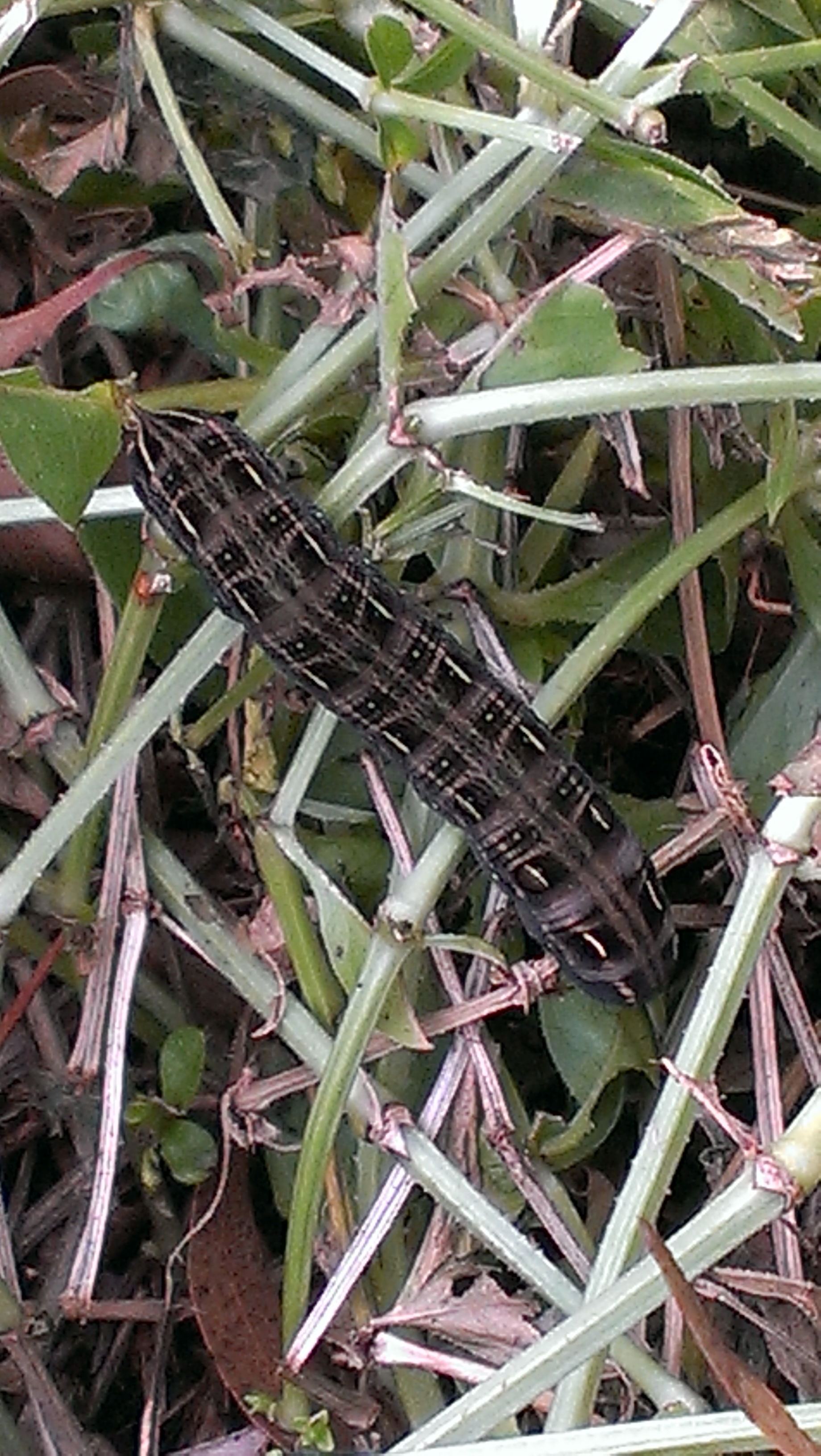
This morning I gave the madder a closer than usual look.  The weather has turned toward autumn here, so I expected the madder to look a little leafier, and it really doesn’t.  I found snails–which is normal–and then I found this, which is a first…

IMAG1298

That, my friends, is a bigger than average caterpillar, and I have no idea what it might become in the fullness of time.  And through being full of madder leaves.  It has at least one friend/relative.  So I decided not to remove all the stems for now and let the caterpillars munch what remains of the madder leaves until they transform.  I’m still pondering whether to dig roots and try them as I think this plant must be getting up toward 3 years old now!

5 Comments

Filed under Dye Plants

Alpaca preparation

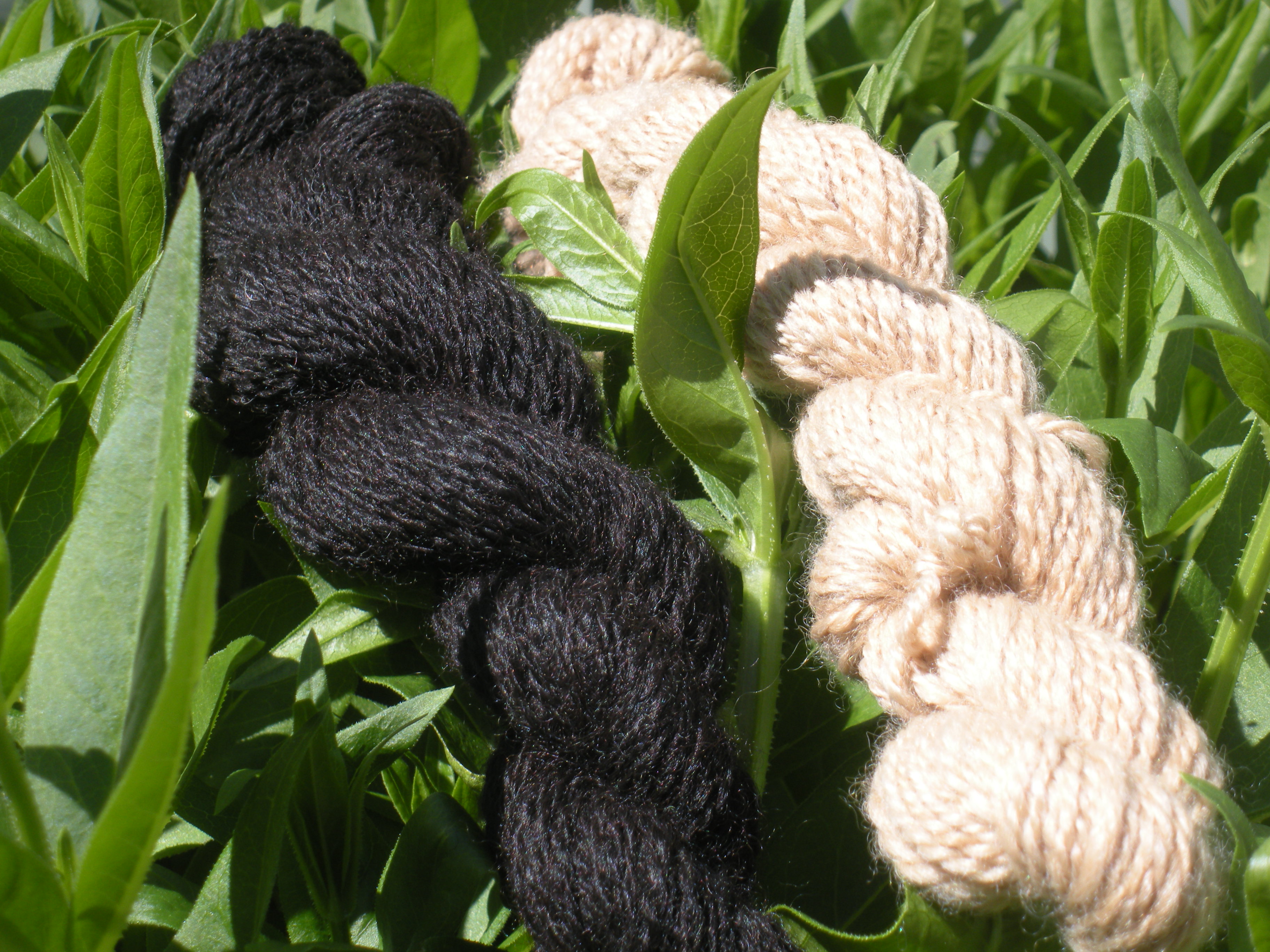
I’ve been having a lovely time spinning alpaca given to me by a generous friend.  She gave me samples of three different fleeces, white, black and what she rather fetchingly calls ‘champagne’.  I’ve been combing it and spinning it two ply and I’m very happy with the results.

I told my friend how lovely I thought the alpaca was, and she gave me more!  I have spun alpaca before, sometimes in quite a large quantity, but this has the longest staple I have ever seen, about 90 mm (these are the 90 mm matches I use to light to the dye pots–extra long.

I have to confess I have never washed alpaca, and it is always filthy, since alpacas roll and dust bathe.  My chooks dust bathe too, and watching them,  it’s no wonder that sand falls out of this fleece any time I move it! This fleece had so much dust in it that combing it was an outside activity that gave me hayfever.  I spun a lot of the white fleece rinsed and combed (that stopped the hayfever at least).  Then, I decided to brace myself and washed the rest of it.  And that led to dyeing the unspun fibre, as it turned out.  I have been working my dyepots hard experimenting toward red and…

IMAG1267

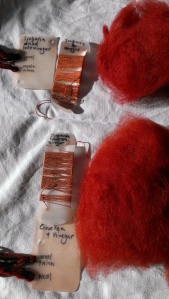
I am getting more interesting colours on silk thread (wrapped around the cards at left) than ever before.  My friends agree that the alpaca on the left, first through the dye bath, is red, then there is grey corriedale (second pass, same dye bath), more alpaca (third pass, still the same dyebath) and some still damp alpaca (fourth pass).  Three cheers for the potential to spin alpaca of many colours!

4 Comments

Filed under Dye Plants, Eucalypts, Fibre preparation, Natural dyeing, Spinning

On obtaining reds from Eucalypts

I’ve spent a good deal of time trying to figure out how to get stronger colours, and especially red to burgundy, from Eucalypts.  I’ve had occasional, but not dependable, success.

I have had the thought that the temperature of a dye bath might affect the colour obtained from eucalypts several times.  In particular, I’ve had the thought that relatively low temperatures might be required to obtain reds. Bear with me in my ignorance about chemistry… I’ve had this idea when thinking about the way that madder turns toward brown if heated too much. The chemical constituents are not the same, but perhaps their reaction to heat could be.   I’ve had the same idea reading the inspiring Karen Casselman’s Craft of the Dyer, in which she mentions that tannin bearing plant dyes will move toward brown if overheated.  I’ve certainly obtained many oranges from boiled eucalypt dyebaths.  I had this idea about reds and temperature again reading this glorious and informative post by Dustin Kahn and her comments.  I had it when reading Ravelry and coming across very infrequent references to people achieving red from eucalypts of unknown variety, in which I’ve noticed slow cooker or crockpot methods seem to get success sometimes, suggesting low temperatures and long processing.  I’ve noticed that when I’ve achieved red or maroon shades I’ve considered temperature to be a factor sometimes.

I used to use two gas burners that would do ‘boiling hard’ or ‘blowing out’ with only luck in between, and a lot of turning on and turning off to manage my results.  Now that I have hobs that will allow relatively finely tuned temperature control, I think it is time to test this theory a bit more systematically. I’ve tried to test it before and been unable to replicate anything close to red. More recently I tested it again and felt that while keeping the pot at a simmer close to but below boiling is a good idea in order not to create felt, the lower temperatures I trued did not generate reds and sometimes were too low for good fixation. For the time being I am letting go of my temperature theory.  So what are the other factors?

It is beyond question that the variety of eucalypt will predict the range of colours that are possible.  I have best results with E Scoparia, E Cinerea, E Kingsmillii Alatissima and E Sideroxylon in the red range and of these, the best is E Scoparia bark in my own experiments.

I’ve found that sheer quantity of dyestuff to fibre is a factor in achieving any strong colour, certainly including red, but it is not a guarantee.  Dustin Kahn reported using 340g fresh E Sideroxylon leaves and stems to 10g yarn to obtain brick red (and then achieved yellow and orange on two other 10g skeins).  I am convinced that time is a factor.  Rebecca Burgess and Dustin Kahn both report heating their dyestuffs for long periods with cooling in between (which I have found changes the colour but not in a red direction necessarily). The redoubtable Ida Grae reports achieving red from E Cinerea only after 3 hours of simmering.

India Flint recommends acidity as influencing brightness of colour, but I have to admit having tried it without being confident it made a difference–hence, more experiments needed, preferably with higher acidity levels. At a recent workshop, we had two E Scoparia bark pots running.  We did a trial and put vinegar in one pot and not the other.  The no-vinegar pot gave brown on alum mordanted superwash wool and alum mordanted alpaca.  Brown surprised me, but I wouldn’t usually use alum.  We’d run out of unmordanted wool in the mix that day.  In the with-vinegar pot, grey handspun wool with no mordant came out burgundy, which was very exciting!  Polwarth locks with no mordant came out brilliant orange, and the alum mordanted skeins of alpaca and alpaca blends came out toward the red end of orange.  We cooked them on as low a heat as we could–but the no vinegar pot was bigger, so heat control was easier.

So… I am continuing to experiment with favourite species, no excessive heat (wasteful in any case), a high ratio of dyestuff to fibre and acidity.

Here are the latest findings: red on alpaca!  Burgundy on the wool samples, rosy pink and orange on silk thread.  The top sample used E Scoparia (dried leaves) and The lower samples used dried E Cinerea leaves, both with white wine vinegar.
IMAG1270


18 Comments

Filed under Dye Plants, Eucalypts, Natural dyeing

Preparing

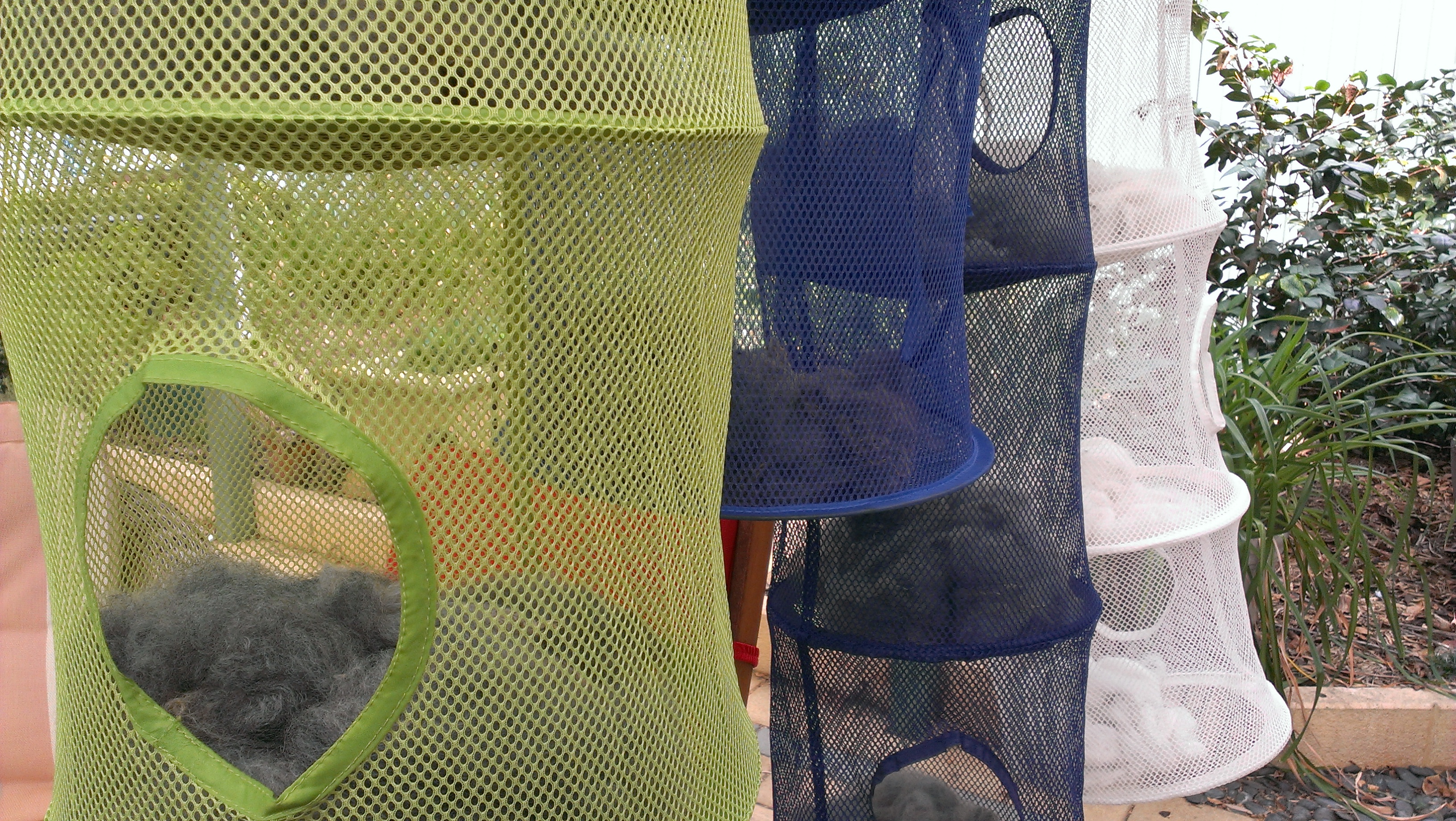
It has been a time of preparation, lately.  I’ve been on a fleece washing project.  After months of thinking I should wash while it is still warm but feeling quite unable to begin, apparently the change in the weather (toward autumn) brought on the sense that fleece washing would be possible. I have washed all that remained of over 3 kg of grey corriedale and some white alpaca for good measure.  My motley collection of drying apparatus have all been in use.  I still have a lot of high-grease polwarth and a filthy corriedale to wash.

IMAG1226

A bunch of friends got together to make passata and I was too sick to go and join in the fun.  However, my partner went along and I put the results up in these jars preparing for the winter.  The Fowlers Vacola outfit is steaming on the stove as I type.

IMG_0109

Our freezer is full of pesto from all the basil of this summer.

wpid-IMG_0133.JPG

I have some Lincoln locks sitting waiting for cold dyes to fix .  And I had better get ready to use the drum carder!

3 Comments

Filed under Fibre preparation

Leaf prints with rust water

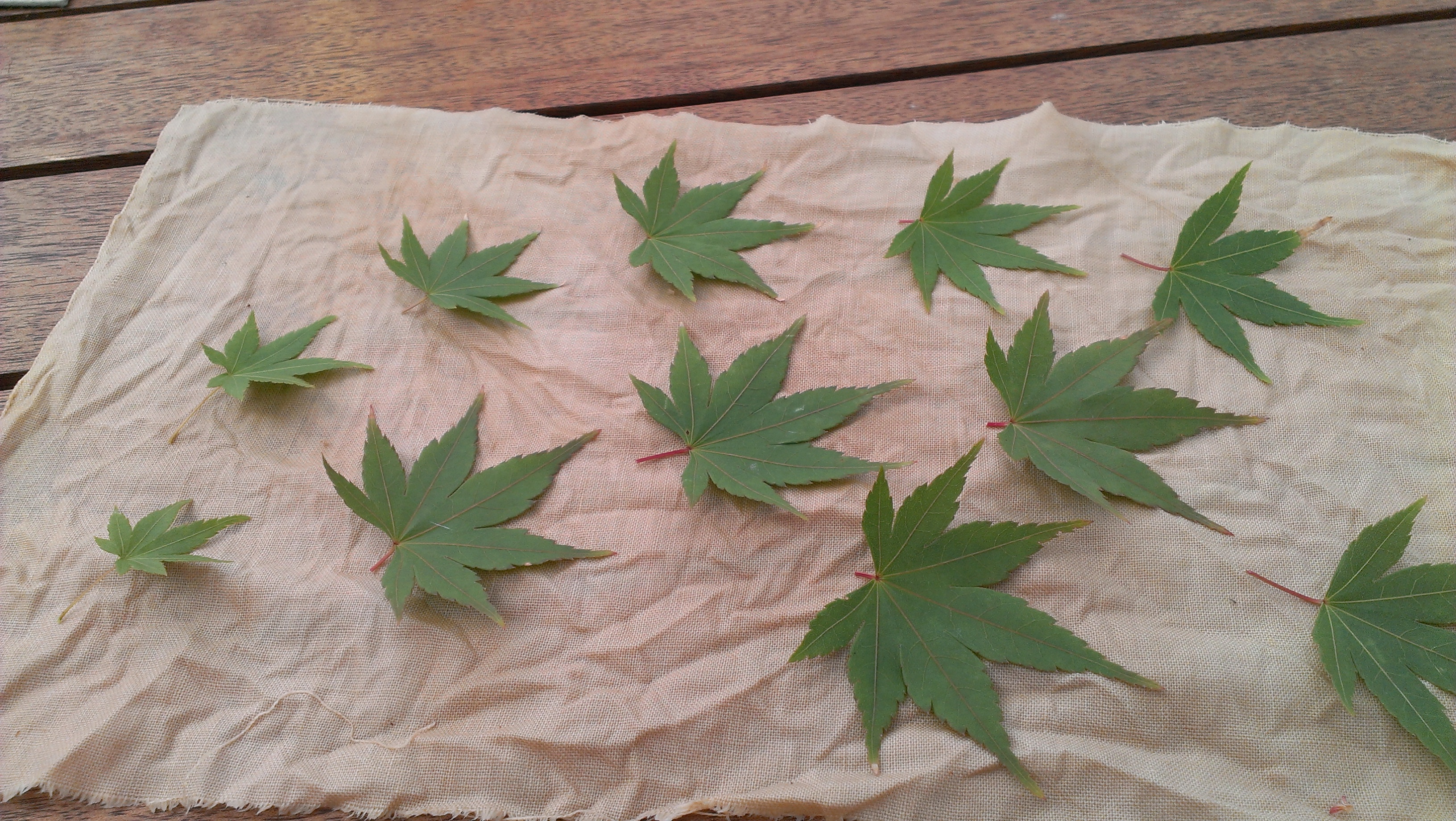
I have continued my experiments with Rebecca Burgess‘ ‘fall dye starter’ from Harvesting Color. I admit, it is barely autumn here and I’ve actually been trying this out through our summer… but this is a mere detail, I hope! I tried these three lobed leaves which someone told me were from a maple (I know little about maples), and birch leaves–why not?

IMAG0662 IMAG0765

I like the results a lot, but I won’t bother with birch again. I also collected oak leaves and wrapped them.

IMAG0661IMAG0766

Finally, I made a special trip to what I was confident was a maple to collect these exquisite five-lobed leaves.    I tried these on fabric cooked with tannin-bearing eucalyptus bark, which is not what Burgess recommends at all.

IMAG0658

This produced hardly a smudge.  So, I may have to review my ideas about tannin.  Or on the other hand, I may have to reconsider my naive ideas about maples!

4 Comments

Filed under Dye Plants, Leaf prints, Natural dyeing