Tag Archives: wool

The winter festival of mending continues!

I am in a little band, or perhaps it is an ensemble. It’s modest, and it is unlikely to ever achieve fame.  But we do rehearse.  At one rehearsal the drummer asked me if she could bring me in some knitted things that needed mending to look at.  Maybe it was my knitting in periods of waiting that made her ask.  The long backstage wait before our one significant gig to date, fro example.  I had my sock along, as you might well expect if you have been to this blog before!
IMAG1732

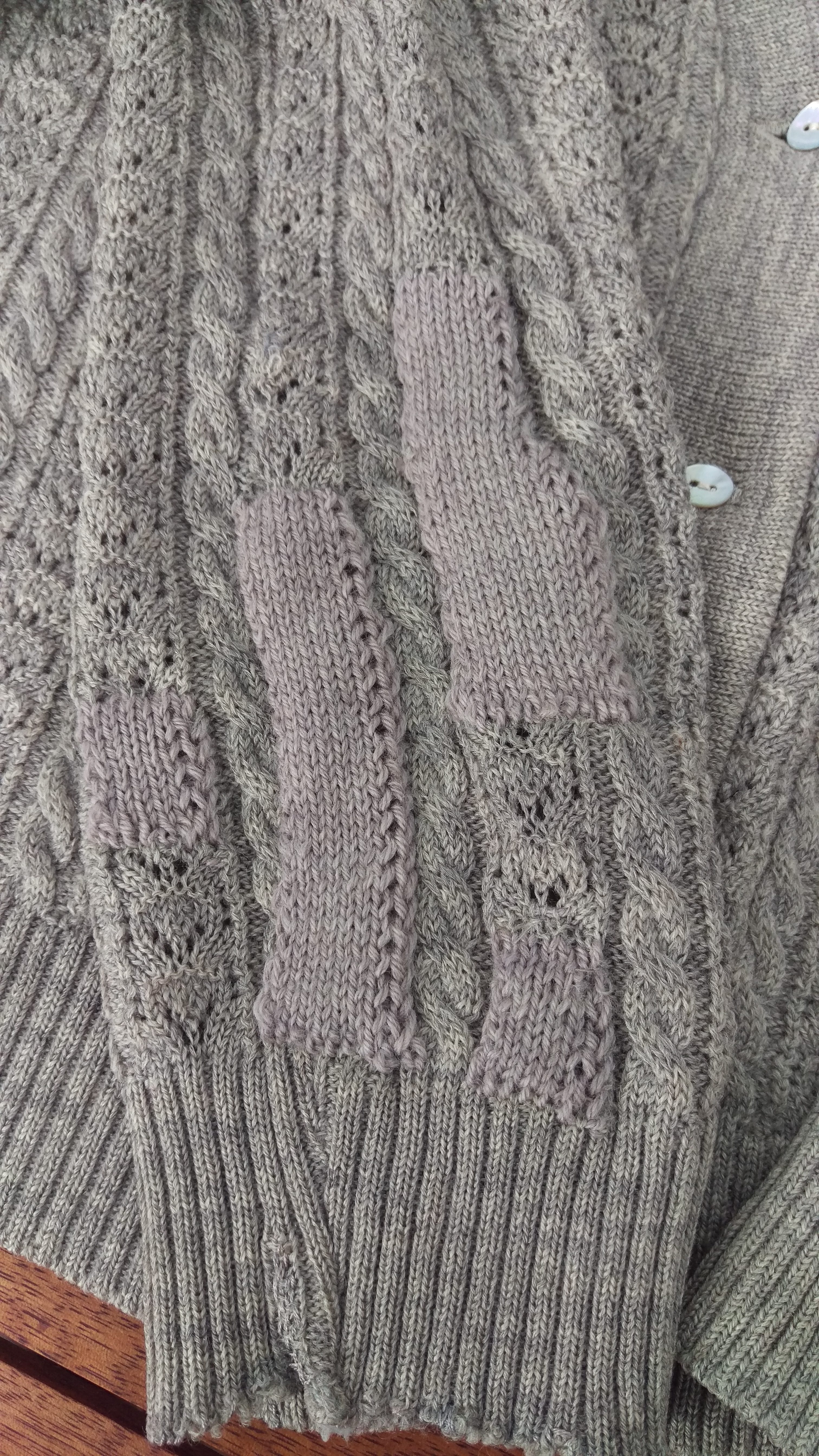
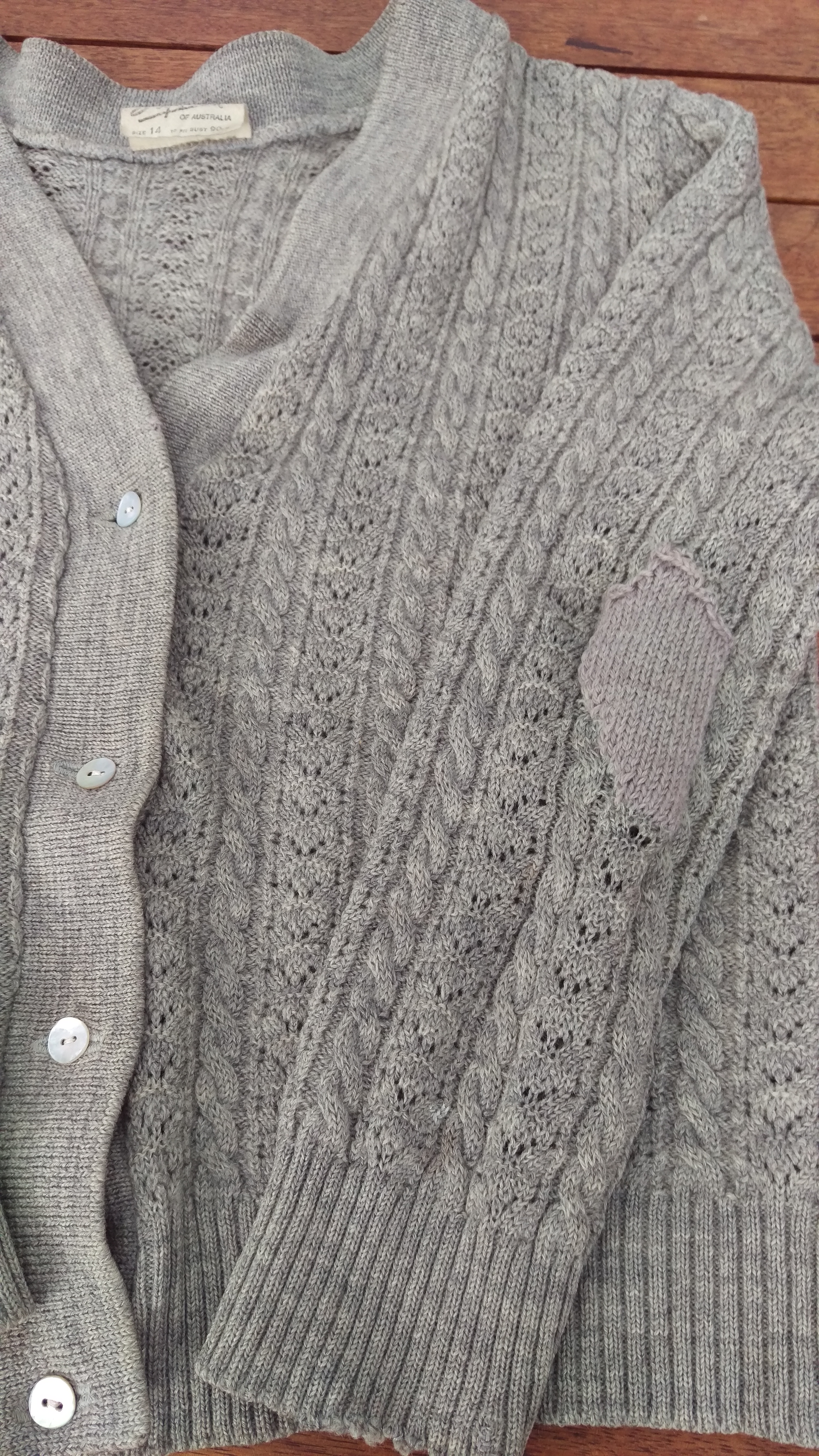
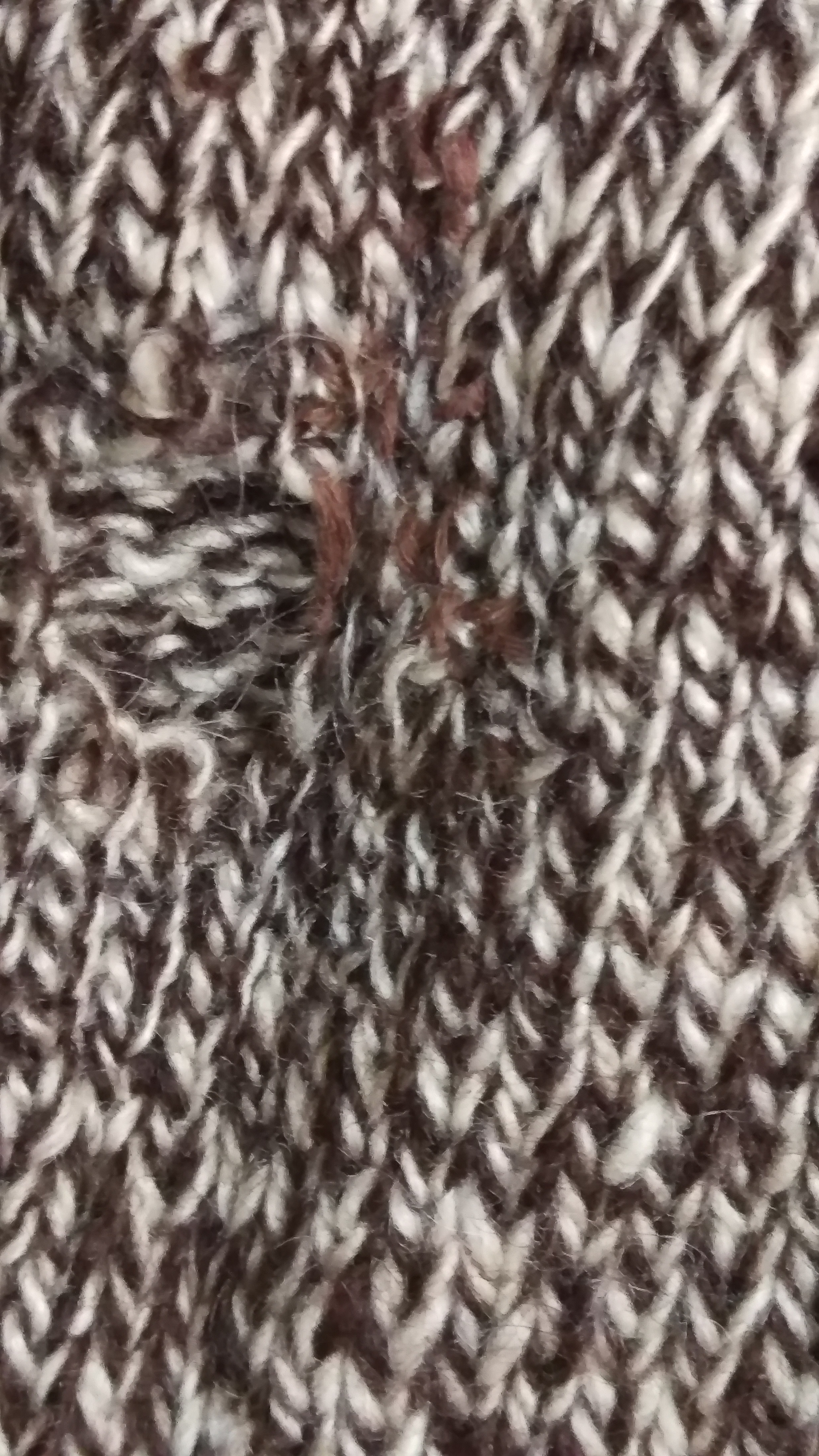
It’s my usual practice to offer to teach people to mend rather than mending things for them without debate.  But she is just so charming.  She brought her two garments in the following week and I took them home.  The first is a cardigan which looks to me like a hand spun and hand knit treasure made of relatively coarse wool by contemporary Australian standards.  It had already had some mending (above) in a couple of places, and had those signs of long wear–a cuff and hem where the entire edge is on the verge of giving way.  I wonder if the drummer knows the knitter and/or spinner? [When I returned the mended item she told me her grandmother had made it but she wasn’t sure whether her grandmother had spun the wool].
IMAG1740

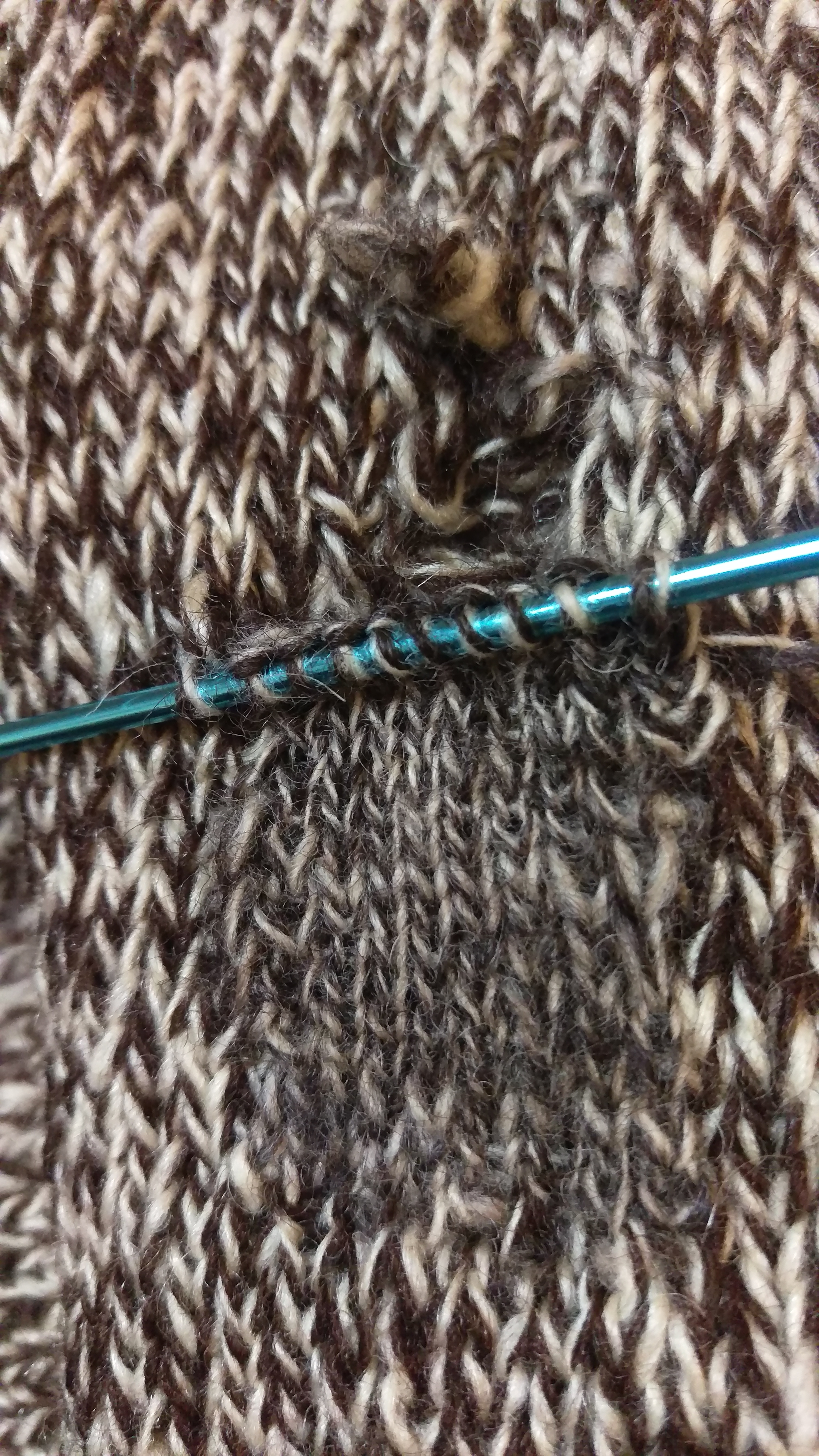
The biggest holes were in the elbows.  Generously sized and sporting some long ladders in both directions.  Happily, the ladders are easy to fix with a crochet hook, so I picked them up, stabilised the edges of the holes and set about knitting up some patches.

IMAG1742

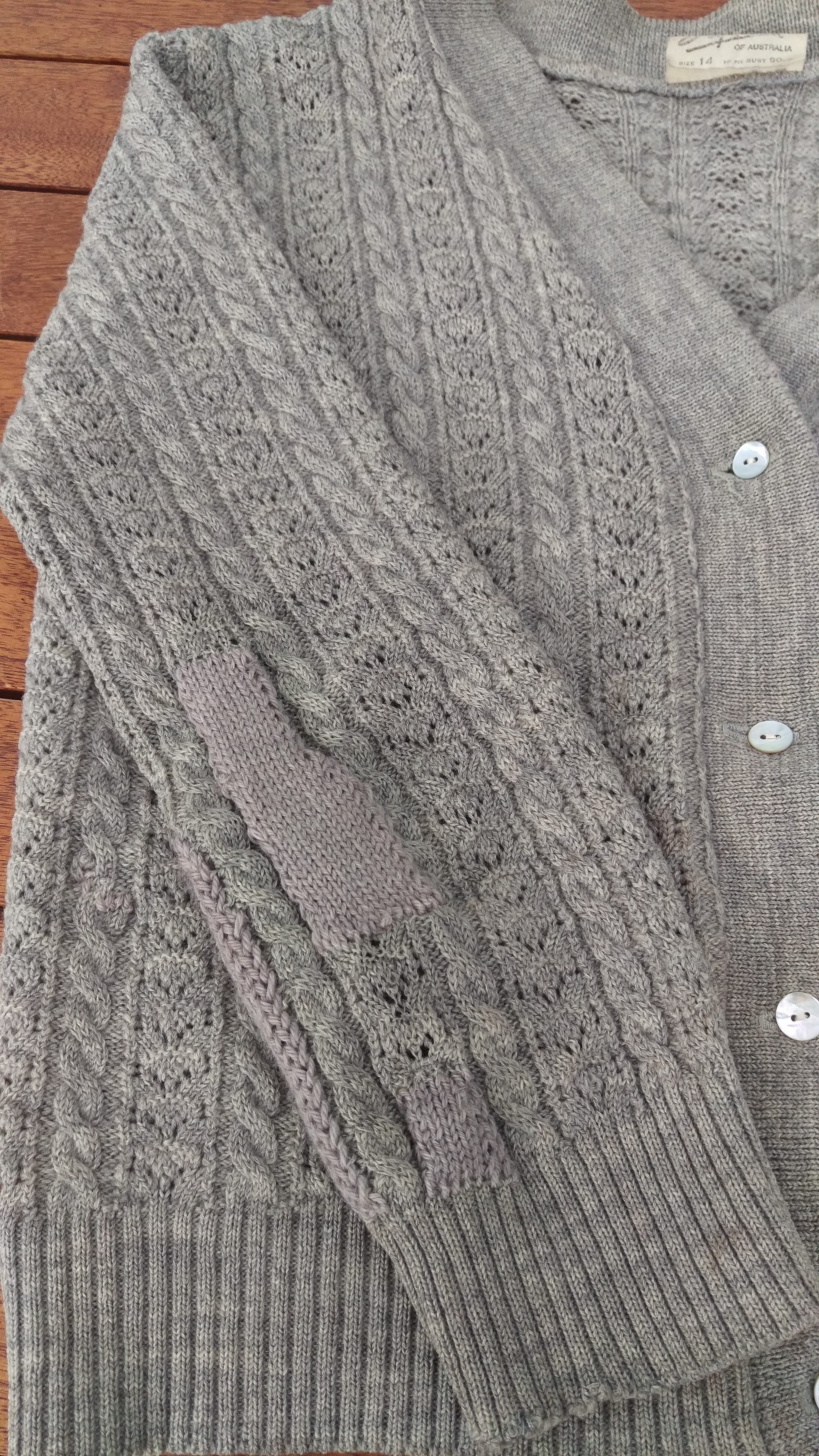
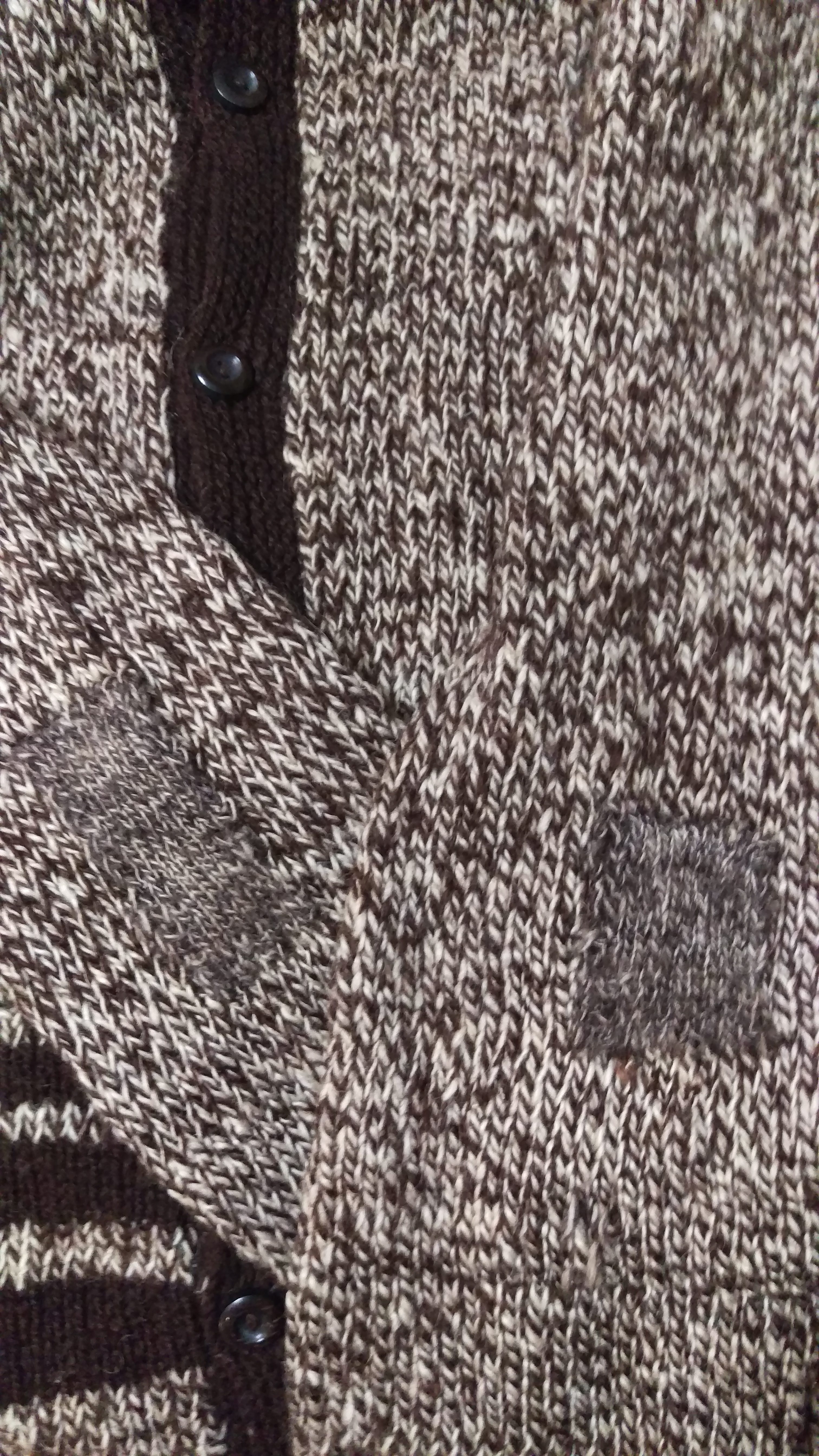
Remarkably, I had some matching wool–same colours, handspun and marled.  But not the same gauge.  She had said she was up for a visible mend, so I just went ahead and knit some patches in.
IMAG1741

She will now be able to wear her cardigan again, just as she said she wanted.  Next, a merino jumper.  It’s a style that is readily recognisable but a little bit complicated to match.  The complex nature of the machine knit had limited the size of the holes, so I tried for a woven mend in something pale enough not to yell out.

IMAG1730

Two more mends..

IMAG1736

And we’re done.

IMAG1734

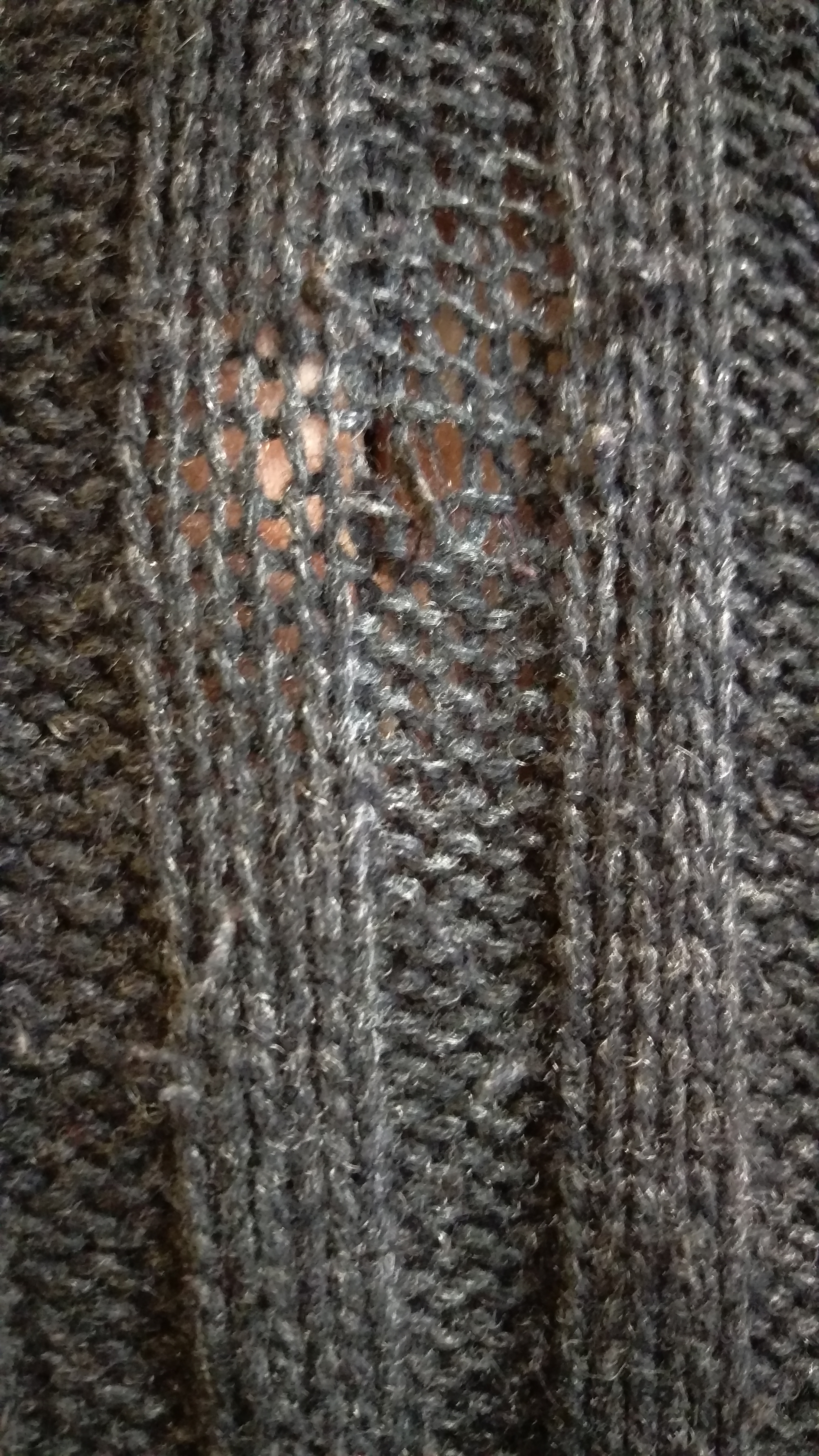
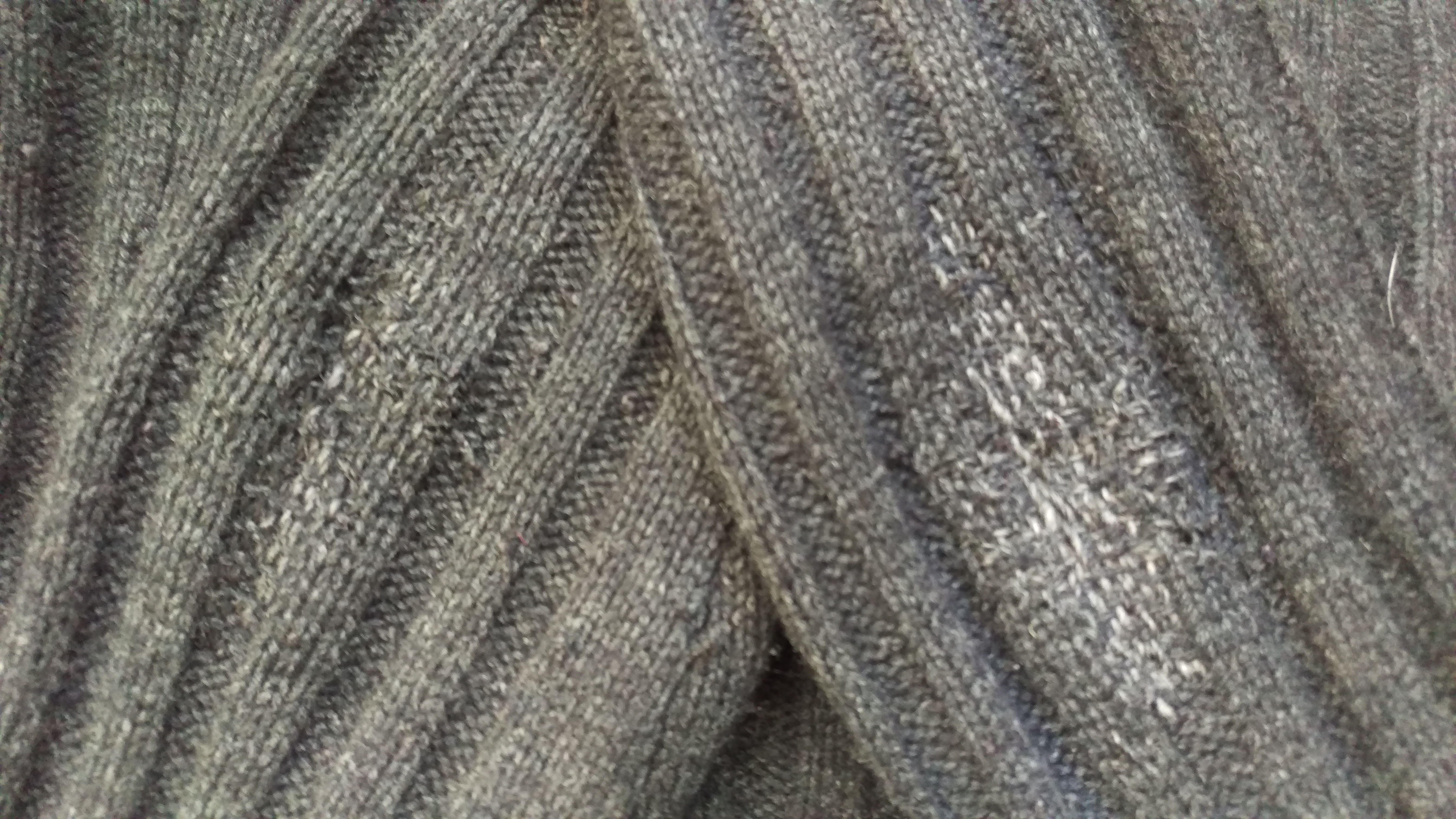
And lest you think I’m only mending away from home, followed up the next week by darns to the elbows of one of my beloved’s possum wool jackets.
IMAG1765

These darns show a bit, but not nearly as much as her shirts were showing underneath through what remained of the elbows!
IMAG1774


9 Comments

Filed under Sewing

Dyes of Antiquity: Coral lichen and Sticta Colensi

IMAG1692

Quite some time ago, I became the beneficiary of natural dyes that had been abandoned at, or gifted to, my Guild.  Among them were some very old looking bags of dried lichen.  I was appalled by this discovery, to be honest.  Lichens are slow growing, increasingly threatened, complex organisms.  I hear they are plentiful in some parts of the world but I am not living in one of those parts. People far more articulate and knowledgeable than I am on this subject, such as India Flint, have explained why harvesting these plants for dye is not a good idea.   However, clearly there was a point in the past when these lichens were harvested and it is too late to make that unhappen.  So I have done some research into the lichens that have labels on them.  Some of them are so old they have imperial labels on them rather than metric labels.  Wikipedia says Australia began metrication of weights and measures in 1971.  So you know what I’m saying.

IMAG1693

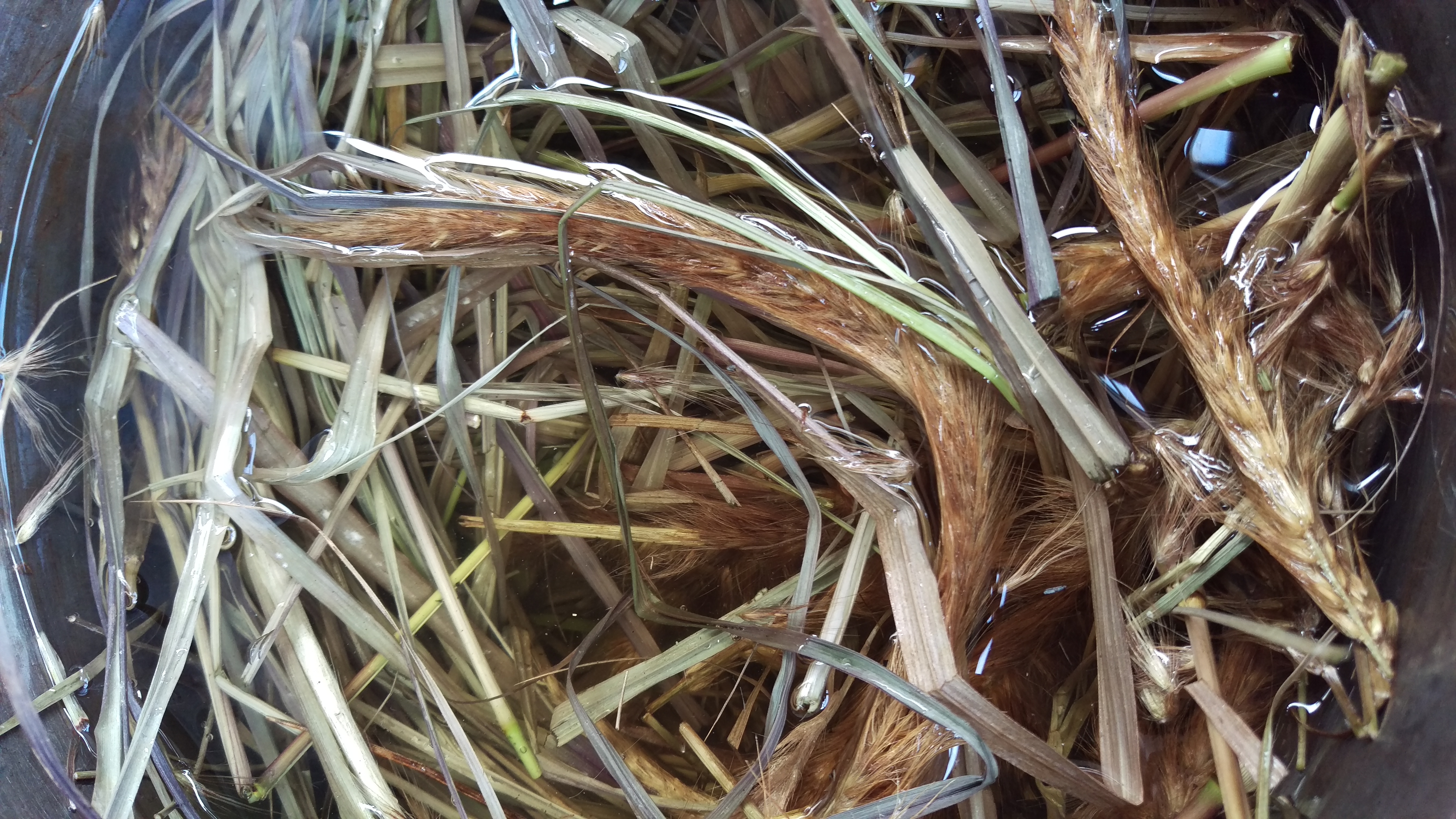
I decided to start with some of the lichens whose labels suggested they should be treated using the boiling water method.  The simplest, and the one achievable in winter. First, a soak in rain water.  Coral lichen above and Sticta Colensi below. I gave them a 24 hour soak in rain water, and then started the heating.  Then there was straining out.  Then a contest between dye baths on the go.  In the end I decided that since Karen Casselman’s book on lichen dyes pretty clearly recommends long processing, perhaps this was a dye that could spend some time wrapped in a blanket to stay warm between heatings.

IMAG1694

The whole time I was working on these two dyes I was thinking about why anyone would harvest lichens to get the colours suggested on the labels which say things like ‘boiling gives gold’ and ‘boiling gives pale olive green’ or even ‘boiling gives warm beige’. And the outcome: Sticta Colensi is the yellow on the left.  Coral lichen pale brown on the right.  So now we know. Leave them where you find them, my friends. There are faster growing ways of achieving these colours.

IMAG1767

20 Comments

Filed under Natural dyeing

Slippers old and new

Warning.  This post contains many images created in poor lighting conditions! Apologies in advance.

Oh dear.  A much loved and well worn pair of slippers came back to me from a friend for examination. I thought I would have matching yarn but I really didn’t.  In the end I went for visible mending of this pair and also decided to knit her a new pair. #Menditmay I thought!

2016-04-26 20.45.22

Here they are about to be returned to their owner over breakfast (in May), with big mends in the heels.  The inside sole is black so these darns will be less visible when they are being worn, perhaps!  I cast on the new pair…

2016-04-30 08.40.39

The next step was knitting a new pair.  Two pairs for different people, in the end, and two dinners with associated felting (no end to the thrills when you visit us!)  With appalling photographs to match.  This pair are a rich purple and they are on a blue background, not that it shows.

IMAG1705

They went to a new home with a cherished friend who has been feeling the cold terribly.  She also scored these hand warmers, knit from the remainder of a ball of Noro sock yarn some time ago and awaiting the right moment.  They look better on!

IMAG1706

Then, my beloved negotiated handover of a small pile of pre-loved and partially felted socks that will fit my friend better than my beloved at this stage.  Some required running repairs.

IMAG1710

Some were too felted for anything other than brutal patching.  No way to knit a patch in.  Can’t find any stitches to pick up! Some of these socks were knit before I really understood the kind of yarn that was suitable.  But pairs like this, made from Bendigo Woollen Mills 8 ply alpaca, were such a hit among my friends I made a lot of them anyway.

IMAG1704

I’ve since had an email about blue socks being worn at Pilates class and a photo of my friend’s ankle as she heads out to dinner in handspun, handknit socks!  Too good.  These are the people for whom hand knits should, indeed, be made.  And finally, the friend whose slippers I was darning at the top of the post came over and I felted her new slippers to size.  She arrived wearing hand knit socks… perfect!

IMAG1718


7 Comments

Filed under Knitting, Sewing

Carrot tops and carding

When a moment arises and there is an opportunity for dyeing, I dye, my friends, I dye.  One such moment came a little while back when we had lovely organic carrots from our friends’ farm… and they came with lovely organic carrot tops, of course.

IMAG1695

Fixing carrot top dye requires alum, but I am well prepared.  I have sheep fleece sitting in cold alum solution in buckets in my driveway.

IMAG1636

Into the dye pot they went!  This went so well that I am doing it again as I write.

IMAG1638

In the mean time, undyed fleece from the same sheep, Viola the pale grey crossbred, is also being prepared for spinning, because… I have an ambitious plan that will require some more undyed yarn…

24 Comments

Filed under Fibre preparation, Natural dyeing

#MenditMay: Beyond darning

I have a dear friend whose entire family are facing some very tough times.  I’d been wondering what I could do that might bring some comfort to her, and then I had an idea.  I knew she had a cardigan that had belonged to someone she treasured, and that it was showing signs of long wear and lots of love.  So I offered to mend it for her.  She chose some yarn and on some quiet nights last week I set to work.

IMAG1584

Darning is always possible, but sometimes it seems barely adequate to the task, and the result is unlikely to be pleasing.  I have darned holes bigger than this, but I did cover some of them with leather elbow patches afterward!

IMAG1586

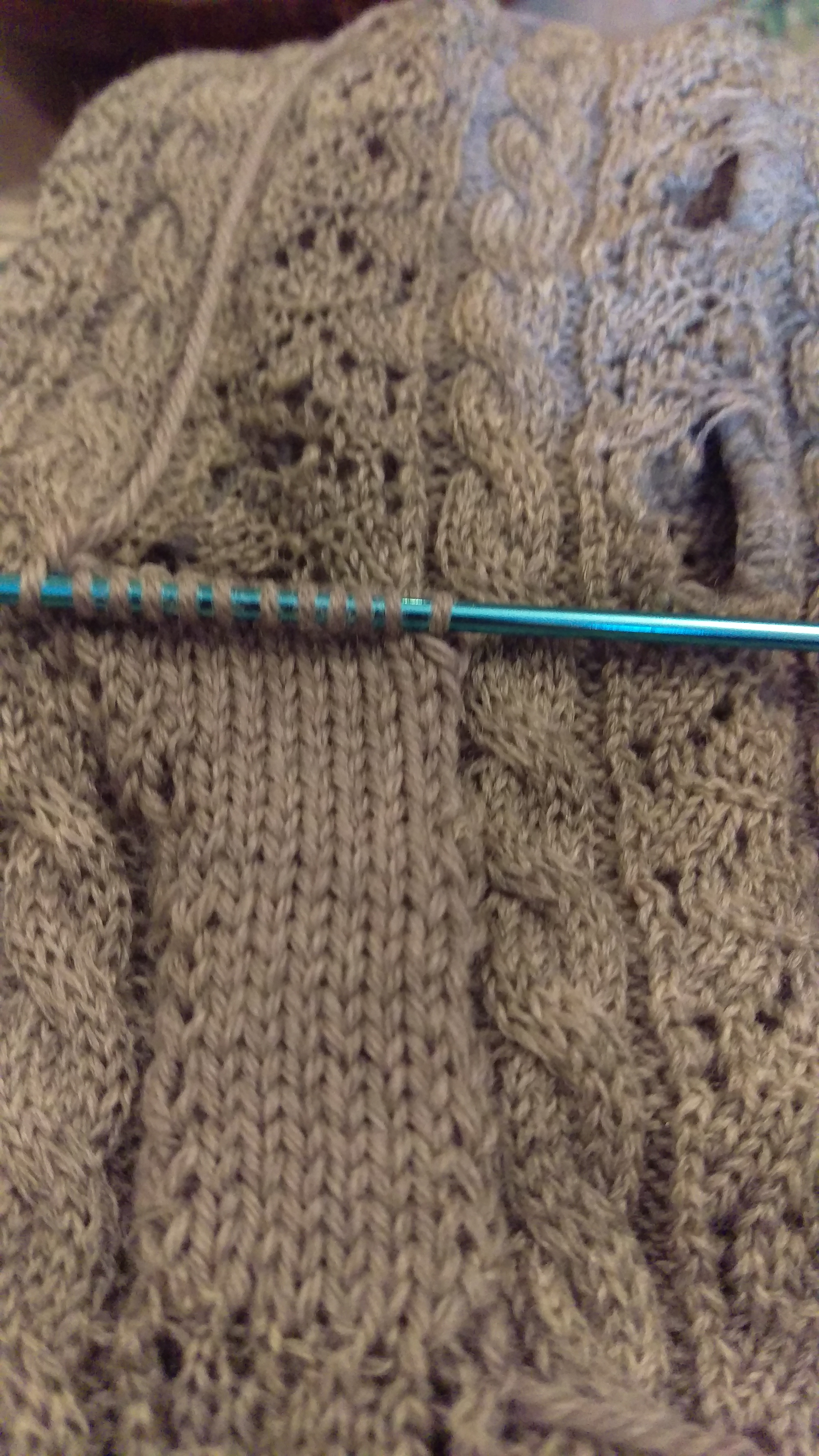
In the end I decided knitting in patches was a better idea.  I used needle and yarn to stabilise runaway live stitches.  Then I picked up some stitches, as you can see above.

IMAG1590

In a couple of spots I darned first and then picked up stitches.  See the woven section above the knitting needle?  Then it is really a process of knitting along and purling back, knitting two together at each side with a patch-stitch and a picked up strand from the garment.  There were some places where I added extra stitches or cast some off as I passed.

IMAG1588

One sleeve got several patches.  I tried different ways of casting off (binding off) and decided hand sewing the stitches down was the smoothest finish.

IMAG1602

There were smaller places where I did small darns or just trapped live stitches so that ladders could not spread further.

IMAG1592

On the cuffs, I considered a few options before settling on using some of the silk thread I dyed with Japanese indigo.  The grey was pretty much perfect here and I was able to use a fine enough needle to stop the stitches that are unravelling going further.

IMAG1594

There were four buttonholes but one button.  I couldn’t match it, so I sewed on four that have come off some other garment.

IMAG1598

Because a cardigan can be worn open, I concealed the ends of the stitching, with the initial knot and the tie off under the button rather than on the ‘wrong’ side, where I would happily tie them off on a shirt.

IMAG1599

And here it is.  Visibly mended but in a way I hope will mean this treasured cardigan will have an extended life providing comfort and warmth to my friend through times good and bad.

IMAG1601

I know my friend is surrounded by the love and care of many friends and her family too.  I’m lucky to be among them.

IMAG1600


18 Comments

Filed under Knitting, Sewing

#MenditMay: Loving up a lining

2016-05-05 13.12.37

My generous friend India Flint gave me this coat. I would never have chosen it for myself, and if I had been the one to find it second hand, I would have been too scared to throw it in a dye pot.  India suffers from no such shyness (and there are good reasons for her confidence, of course!)  I love it.  It is a gorgeous fabric with wool content but cashmere too, and the edges have been picked out in a fine, shiny thread, by hand.

2016-05-05 13.13.08

I think India sewed a new button on, or moved the old one.  The thread looks like it met Eucalyptus at some stage, and is in two subtly different colours.  The coat is lined with silk.  It is like wearing a big snuggly hug.  I find I take it out when the day holds particular challenges, even on days when it might not be cold enough to wear it, because it has comfort factor. I took it on a very challenging hospital visit last year even though I never put it on!  I patted it on the long trip out and home again.

2016-05-05 13.12.53

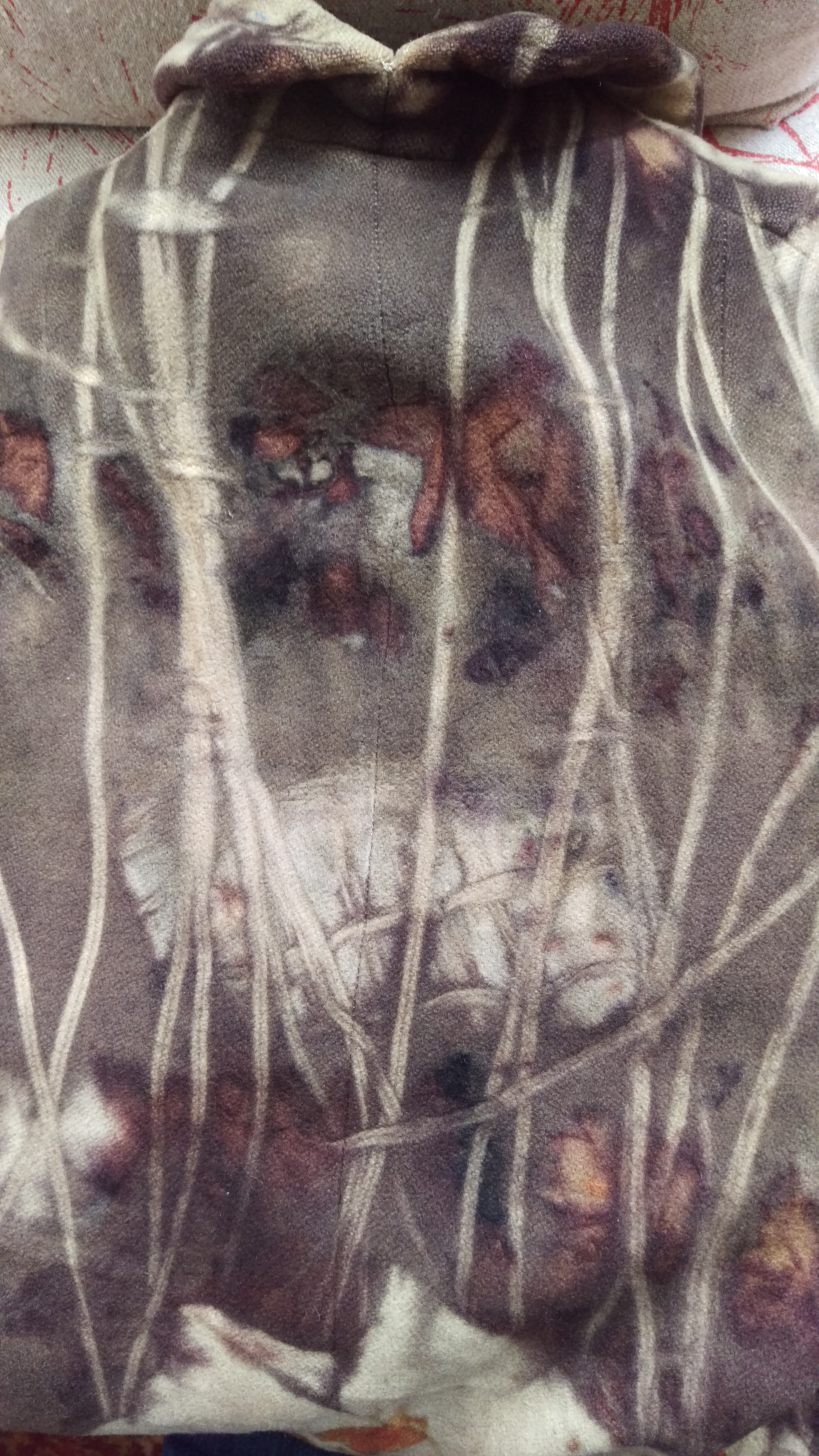
The back has a wonderful set of resist marks from a nice rich dye pot.  In short, this coat is a treasure.  A treasure with  a history in which it has been loved and worn by other people, found by India in a suitably romantic location in the US, dyed and then gifted on to me!  And now, it needs a little love from me.

2016-05-05 13.13.26

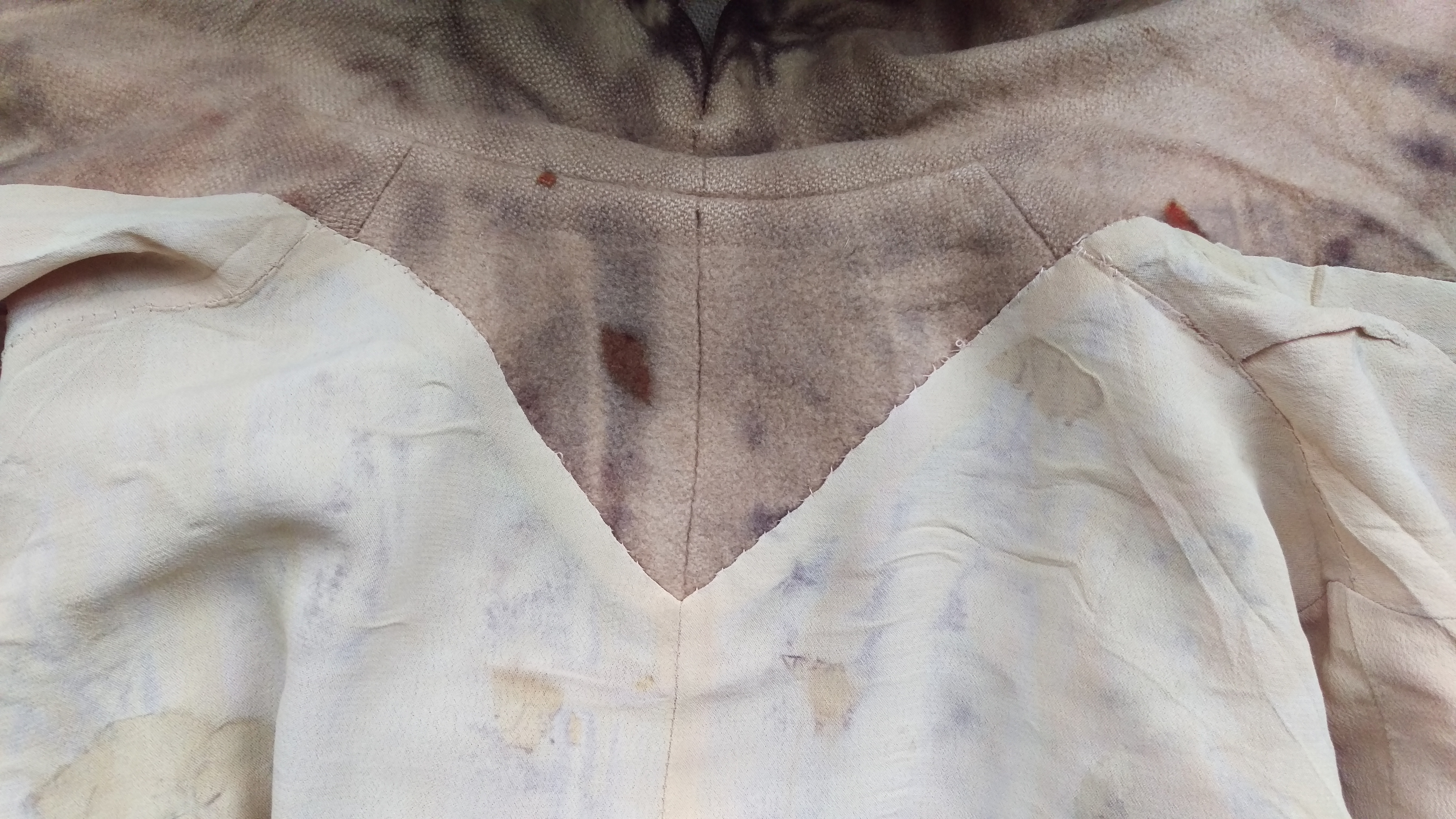
The lining is coming away below the neck line.  Those two peaks are an interesting detail at the inside centre back.

2016-05-05 13.13.32

Clearly the armscyes were the most vulnerable place in the lining.  They  have been restitched by hand, in several different threads.

2016-05-05 13.13.48

This one has a thicker thread and a different, bolder stitching strategy.

2016-05-05 13.14.34

And, there is a label explaining that the garment has been made under fair labor standards.  I wondered whether this was a reference to union labor, or something else.  It took a little google-fu but in the end it turned out that this is a union label from the National Recovery Board for Coats and Suits, used 1938 to 1964.  This coat was made before I was born! According to my online source, ‘The National Labor Relations Act encouraged growth in stateside unions to create more jobs during the economic crisis of the ’30s. The Coat & Suit Industry union was born out of FDR’s New Deal Coalition.’ This label was used by the International Ladies’ Garment Workers’ Union and there is a wonderful online history which details some of their labels as well as so much more.

2016-05-12 10.45.23

And so, to mending it back into good shape so that it can go on keeping me warm and being its lovely, touchable and glorious self.


18 Comments

Filed under Natural dyeing, Sewing

A quick spin…

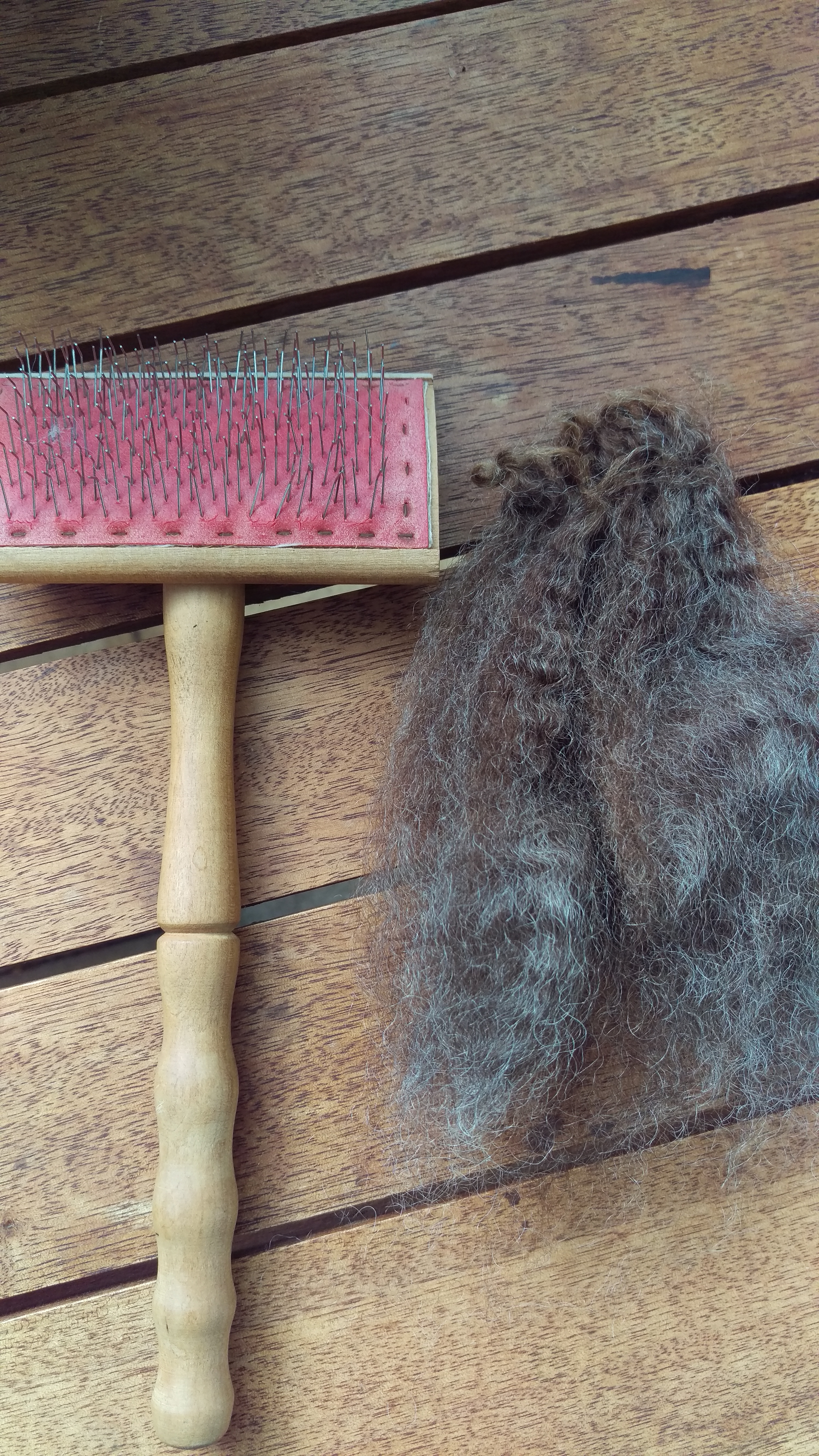
A friend came around for an exchange of books and thoughts on dyeing and, as it turned out, an exchange of gifts! She had some naturally brown and lovely greasy sheep fleece of unknown breed that she will not be able to take on her next big adventure.  That was a gift to me!  For some reason, a day or two later I felt the urge to wash it. Who can explain this? But–washing fleece is one of those jobs where I have made an in-principle decision.  If I ever feel like doing it, and I can do it, I just leap in and do it.  The urge doesn’t come upon me very often.

2016-04-23 14.05.57

The fleece was lovely actually, long locks, little chaff and rather soft.  It reminds me of the Finn X that is sold at my Guild by a local grower. It carded up beautifully. Apparently the manageable quantity was irresistible… as I have entire fleeces awaiting me….

2016-04-23 16.22.51

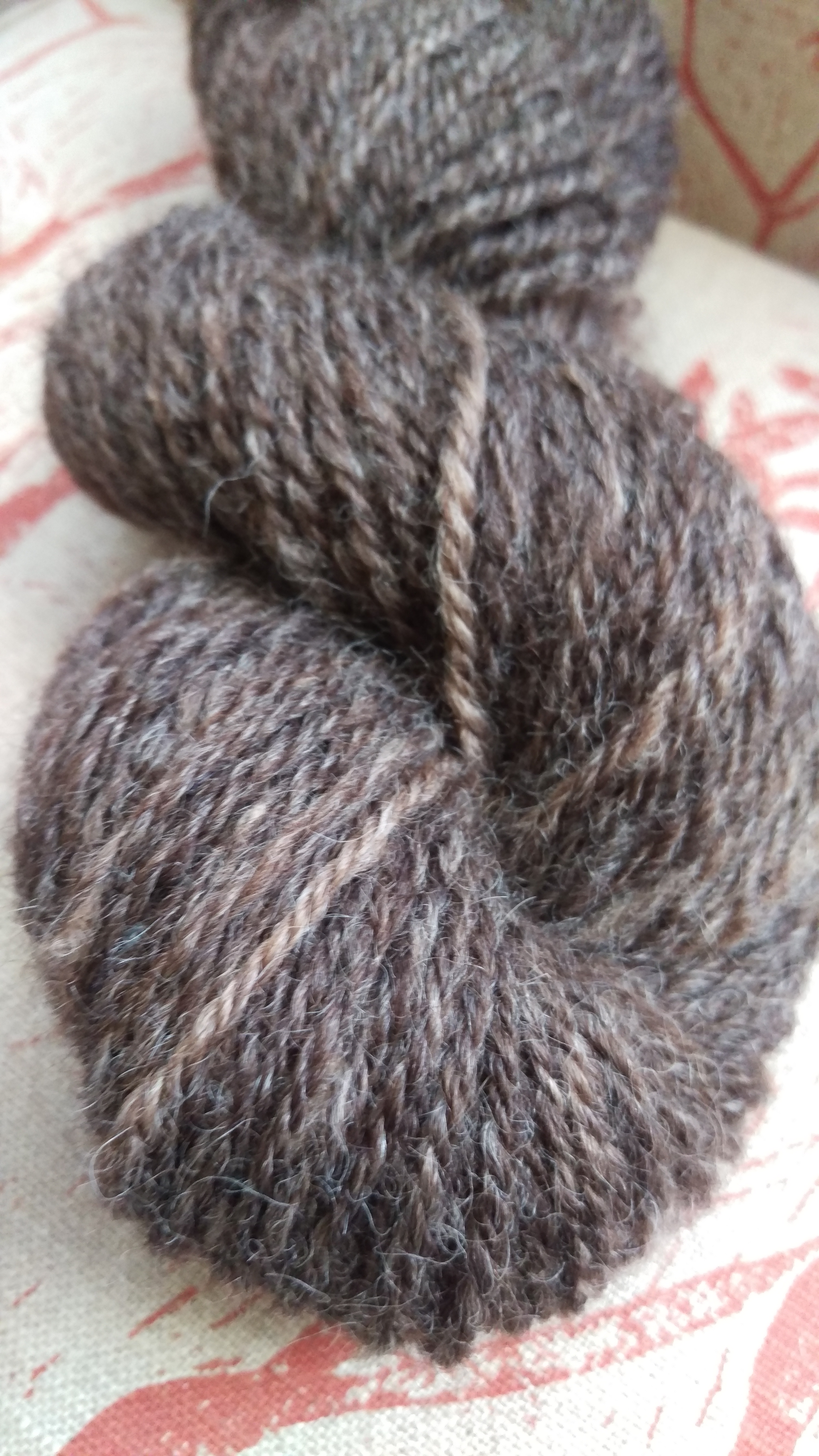
Here is the finished yarn, which I intend to give back so my friend can enjoy knitting it.

2016-05-02 16.14.57

And here is  a yarn created from carding and combing waste over the last while… I am not sure what its final use might be, but here it is in all its neppy glory!

2016-05-02 16.15.06


11 Comments

Filed under Fibre preparation, Spinning

Spinning for slippers

2016-01-26 12.09.24

Suri alpaca cross.  I could not resist these when they came into the Guild with a local grower.

2016-02-14 12.25.47

I dyed them… and carding was quite a challenge. Some went to a friend at the Guild who showed up with wheel but no fibre one night when I was there with fibre and combs and carder but no wheel!

2016-02-14 14.35.00

I also dyed some local gift sheep fleece from a sheep called ‘Lentil’.  I had been taken in by Lentil’s lowly status as a lawnmower and the filth of the fleece.  Actually, Lentil’s is a long and lustrous fleece with a burden of burrs.

2016-02-14 10.05.11

The first batts look great–

2016-02-14 12.12.49

And perhaps they are destined to become slippers–because I am trying to spin for the things I knit this year.  Really, I knit slippers and socks.  So.  Here we go!

2016-02-14 12.12.45

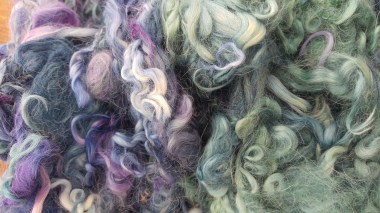
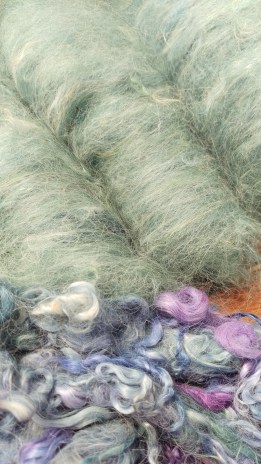
Lentil in berry colours on the left, and suri cross in pale greens on the right.

2016-03-17 13.36.34

Lentil in shades of blue. It might be almost time for slipper knitting…

2016-03-17 13.30.31

8 Comments

Filed under Spinning

Just mend it: Getting started

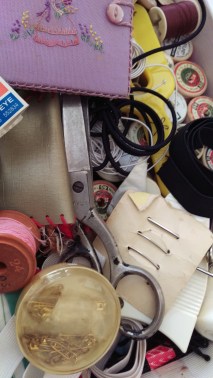
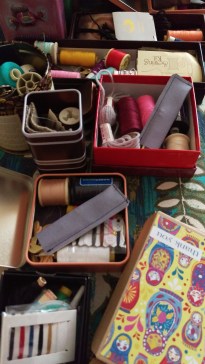
In preparation for the upcoming mending workshops, I’ve created a directory of mending tutorials.  I’ve also been beetling away creating mending kits. Friends have been handing over their spare unwanted haberdashery and tins.  I have raided local op shops.  At one of them I was offered a motherlode of  unwanted notions that were seeking a new home. Here’s a partial view.

2016-04-13 14.49.05

Such treasures.  Including a lifetime’s collection of travelling mending kits from hotels and airlines the like of which I have never seen.  Now, it is going to new homes. I’ve even sewed little covers for thread snips from lino samples I seem to somehow have acquired.

2016-04-16 10.26.28

There are pincushions and measuring tapes, thimbles and safety pins and many reels of thread.  Amazing collections of needles, pins and such.

2016-04-16 10.27.08

The creation of the needle case gallery has been ongoing. Scraps of fabric with a lovely button and all manner of little bits of ribbon, string and cord I have saved for a special occasion (or just a use) have been converted into needle books.

2016-04-16 07.08.38

Lovely little bits of hand embroidery on fabric that has gone well past original use, now adorn a few.  Beautiful Australian print remnants have been  turned to use too.  Some have buttonholes and some have loop closures. Some are plant dyed and some are tied with cord too short to form a drawstring on a bag.

2016-04-16 07.09.22

I am very fond of my own needle case, so eventually I made some just like it.  Well, sort of like it. We started here (mine on the left, and pieces of dyed blanket on the right).

2016-04-16 12.36.40

Eventually, there were about eight.  I stitched at triathlons and in front of the TV and on the train.  I finished some with fancy buttons, beads or little bells saved from Easter bunnies.  I tied some with cotton string that has also seen the dye bath, and others with some hand twined silk string, with a thankyou to India Flint for allowing me to see this was possible and that string was not only to be made from plants.  I was thinking about the fact that I had saved all these improbable things, while others had been handed on to me by relatives and friends with similar habits–

2016-04-19 22.20.55

It brought to mind my mother’s parents, two people who lived in poverty their entire lives, scaling up to indoor plumbing and heated water during my lifetime.  My grandfather left countless pieces of recycled string, pre-loved screws and straightened out nails when he died. My grandmother had a drawer where special treasures lived that I was allowed to admire as a child.   There was a special safety pin in there she used to pierce a hole in the filter of her rare cigarettes for some supposed health reason.  There was also a little black cat made of plastic.  I knew it had come from a box of Black Magic chocolates.  I had seen the boxes for sale but never had any.  Like her, I thought this little creature was a treasure worth saving when the cardboard box and the rather amazing papers surrounding each chocolate might have passed on.

2016-04-19 21.29.37

My life is utterly unlike Millie’s.  But it is good to have things in common with her. It warms me to carry these memories of her along and hold them in my mind as I craft these little books for future menders who will share some fraction of the skills she had.

15 Comments

Filed under Leaf prints, Sewing

Walnut, weld and purple fountain grass

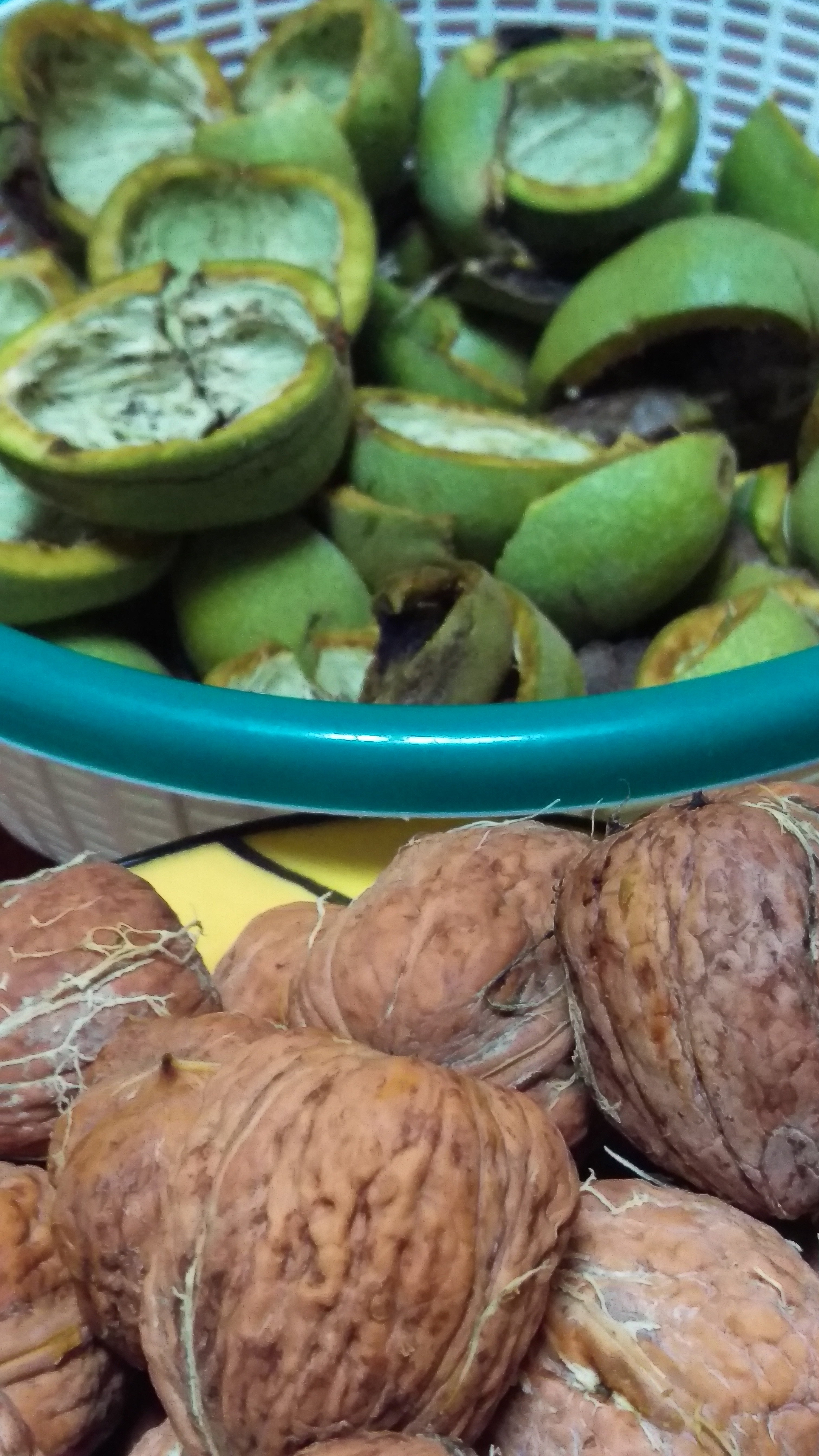
I went out to help with the local organic food co-op recently and came home with walnuts from the local food forest produce swap, with the nuts soon ready for eating and the hulls ready for dyeing:

2016-04-02 13.14.09

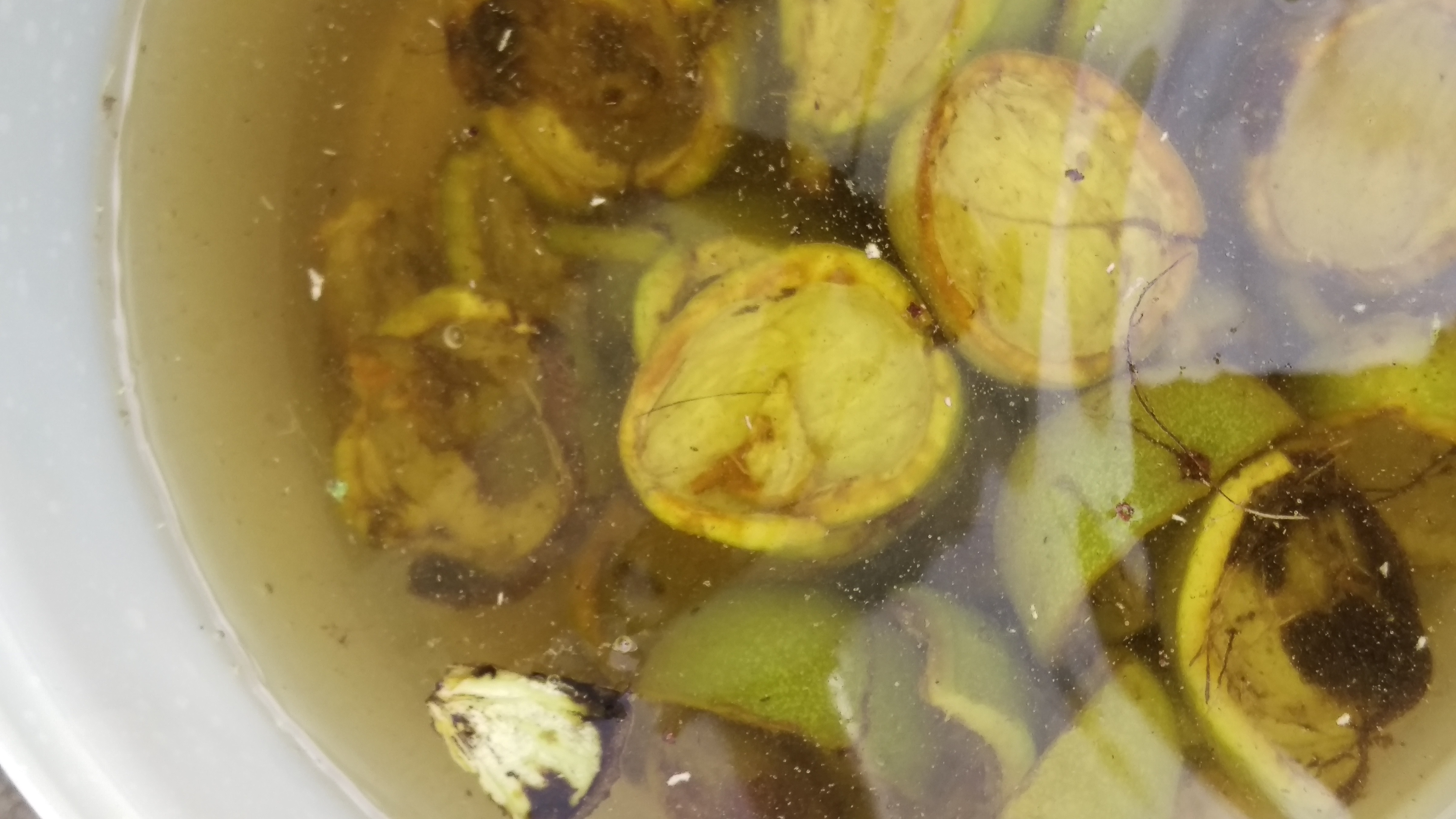
In the bucket, ready for their three week soak/fermentation:

2016-04-02 13.16.50

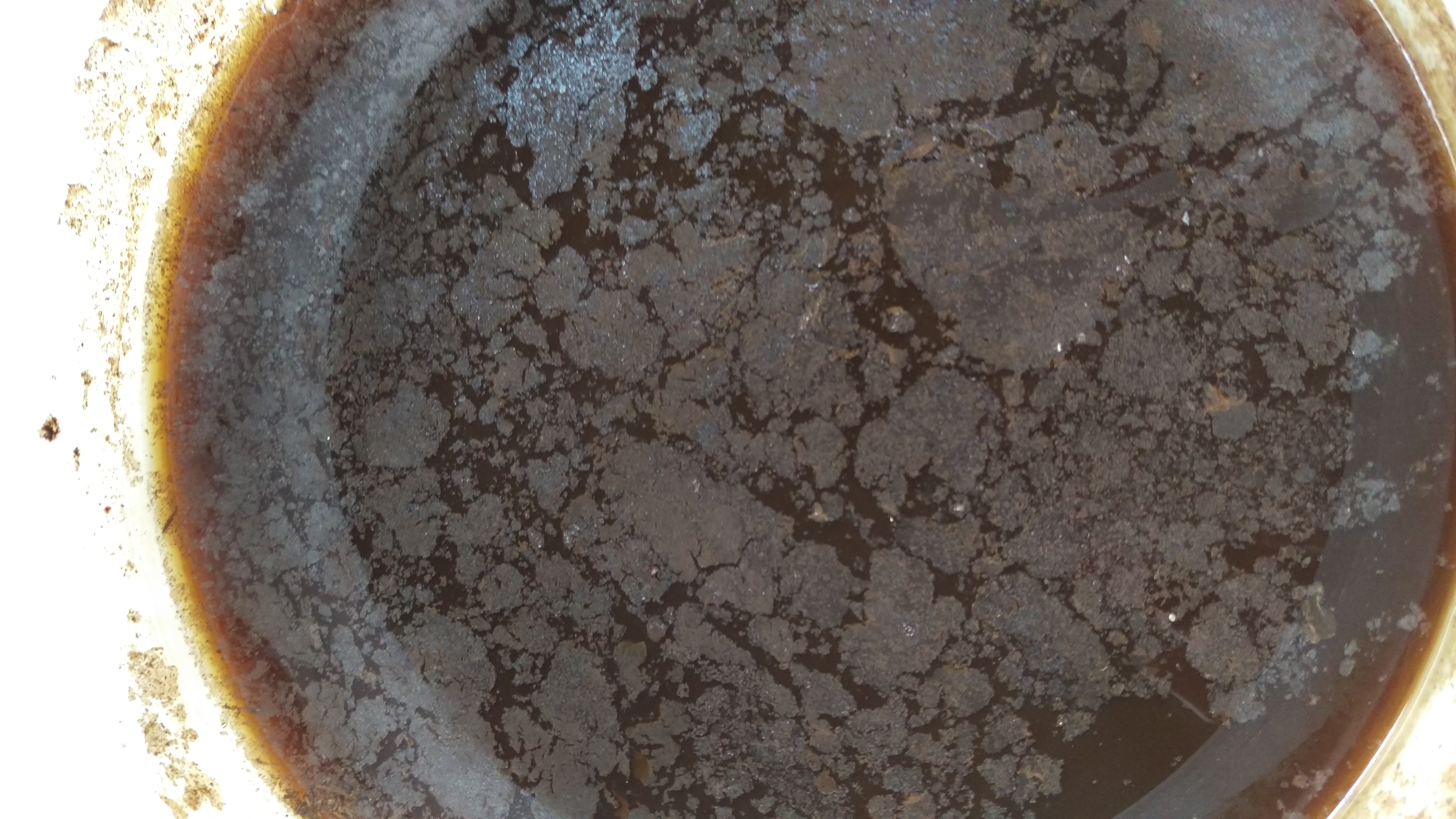
Post soaking and ready for the heat:

2016-04-16 10.00.10

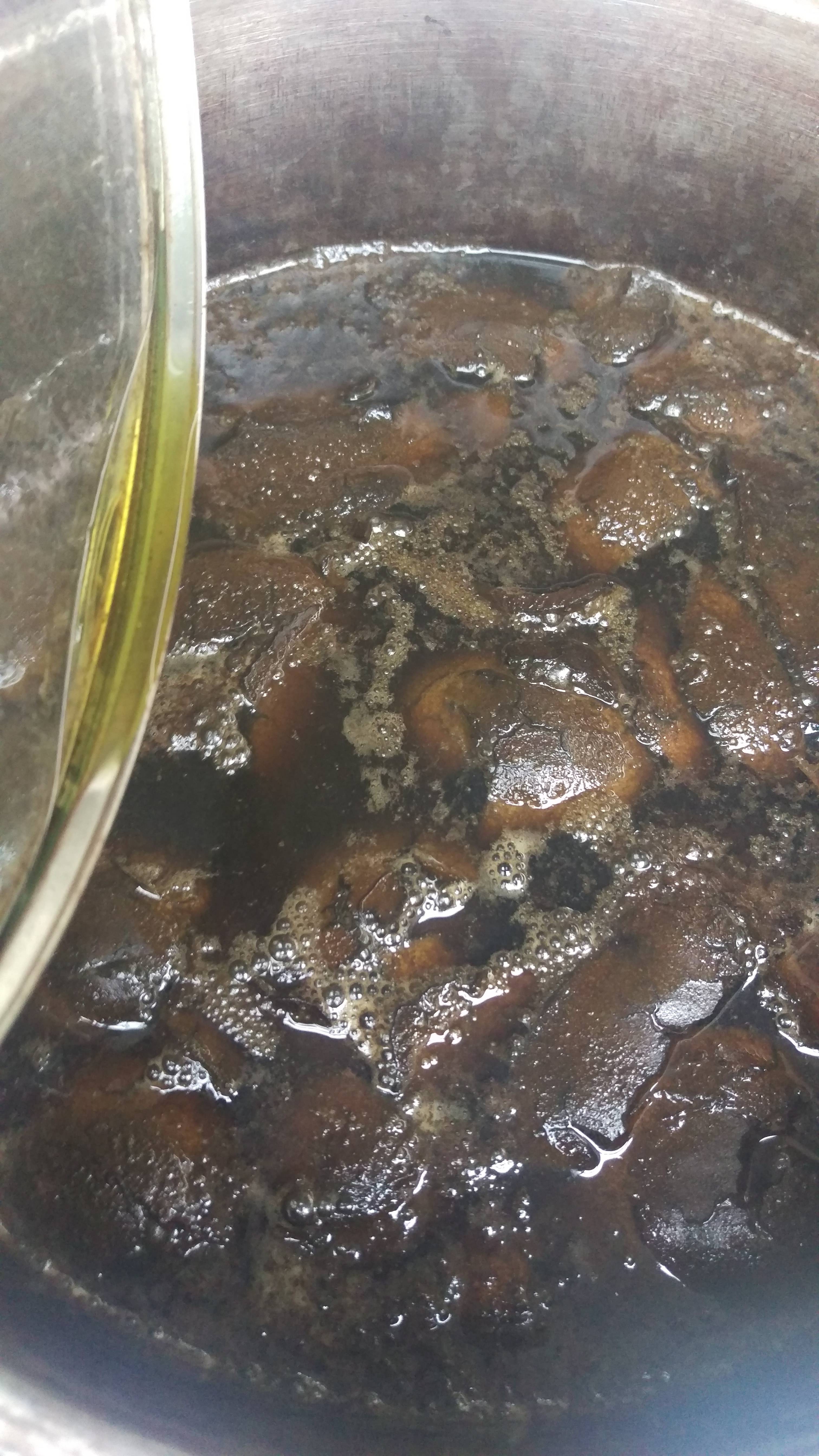
With the application of heat, the dye bath grew darker still.  So in went my remaining suffolk fleece. It was with deep relief that I assessed the (acceptable though not delectable) smell of the dye bath.  It was a walnut dye bath that almost had me excommunicated from my Guild for cooking it up in the dye room when the Little Glory Gallery was open.  Ahem!

2016-04-16 10.33.49

Here is weld growing in the vegie patch:

2016-04-16 10.02.36

One of my plants wilted and fell over for no obvious reason, so I cut it out and set it to dry. I wondered if something has nibbled on its roots from below ground. Some days later I went out and found that the rest of the plant had died.  This time it is obvious that the main root has been chewed on or rotted away.  Curious.  I followed Jenny Dean’s instructions (more or less…) and due to lack of time, left the dye bath to sit for some days.

2016-04-16 10.05.53

Mum saved me her purple fountain grass–a whole wheelbarrow load.  I saw a post on Ravelry where a lovely green came from this plant just about when she was planning to cut hers back.  This was exciting!  For me, however–it gave only a fawn colour.  Sadly!

2016-04-16 10.41.11

Here is the walnut dye on the left and the fountain grass on the right.  It is a little more yellow-brown in life, but nothing exciting.  It went into the walnut exhaust.

2016-04-21 13.27.54

I now have two shades of brown Suffolk and some weld-yellow crossbred fleece ready to join a future colour knitting project.  May the rinsing begin!

2016-04-22 13.16.13

6 Comments

Filed under Dye Plants, Natural dyeing, Neighbourhood pleasures