Tag Archives: wool

Mending the blanket

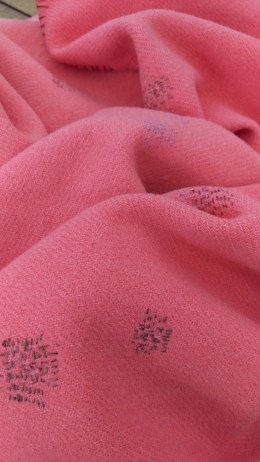
I have this blanket.  It doesn’t have a family history of emotional attachment; I found it in an op shop.  I can’t say what made me bring it home, it’s quite a strong shade of orange which isn’t entirely lovely.  It’s not in good repair.  It has fade lines from being left out in the sun too long on a washing line.  Some of its stitching had come undone when I brought it home.  Moths (well, moth larvae) had nibbled on it before it came to my house.IMAG5839

In a way, it is even more odd that I feel driven to mend this thing.  The holes are small enough they they will not lead to unravelling or any serious consequence.  I want to mend them anyway.  My beloved offered me a robust critique of this project one night recently, and there wasn’t a thing she said, that I didn’t accept.  Yet, I started mending it in 2015.  I notice in that post I think the blanket is rather lovely! Apparently I have been less sure of its loveliness recently… but no less attached to it.

These holidays, I sat the sewing kit on my bed and mended a few more holes each day until I had a big evening session and finally mended all the little holes the moths left. Things I’ve noticed: how lovely it is working with the silk embroidery thread from Beautiful Silks, and in colours I’ve dyed with plants.   That I have settled on the number of strands I like using best.  That my sense of how to use thread, and how to work with colour,  has changed.  How comfortable I feel with these odd little grids in mismatched colours sprinkled over my blanket.  How confident I feel that this blanket and I will spend many more years together, and maybe in that time, there will be more mends, or simply more stitching.  So I guess the reality is that this blanket from the op shop now does hold emotional resonance of some kind, even if it’s hard to say exactly what or why.  It’s a blanket, after all.  I don’t really feel like there has to be an accounting for these things.  Though I like its warmth very much when the season calls for it.

9 Comments

Filed under Natural dyeing, Sewing

Needlebooks

While I was on holiday, I finished sewing a batch of needle books made from scraps of blanket dyed with various plants.  Now they are waiting to become part of mending kits!

4 Comments

Filed under Natural dyeing, Sewing

More spinning


…some more fat yarns spun from the fleece of a sheep called Lentil, which have now gone to their new home with a friend who likes to knit fat yarns. Plus some yarn that had been dyed in a very weak vat of indigo or woad at some time in the past, now a soft green with some help from soursobs (oxalis), a common weed here.

5 Comments

Filed under Natural dyeing, Spinning

Madder dyeing

There was a very exciting moment in the garden last week.  I was digging out madder roots hoping to create enough space to plant Japanese indigo seedlings (as you do).  I found a substantial chrysalis and moved it out of harm’s way.  Then a bit later, a movement caught my eye, and a large moth was emerging from the chrysalis right before my eyes.  What a privilege! Naturally I wasn’t going to waste the madder root.  I had some wool cold mordanting in a bucket, so I processed the roots and created a vat.  While I was at it, I did the same with the carrot tops from our farmers’ market.

IMAG5767

I ended up with quite a red colour from the first madder bath and two orange shades from the exhaust baths, as well as a nice yellow from the carrot tops.

Plus, the joy of watching the moth emerge.  I think it might be a native hawk moth. Back in this post, I found I rather wonderful caterpillar in the madder, and I have found them several times since.  I’ve also seen similar chrysalises (?) in the garden.  Pisstkitty,  a generous and regular reader thought it might be a native hawk moth, Hippotion scrofa, the Coprosma hawk moth.  I thought she was right then, and I think this is the moth form of the same creature.  Glorious.

IMG_20171230_124725_299


5 Comments

Filed under Dye Plants, Natural dyeing

Spinning in the background

I keep forgetting, or simply not finding the time to post.  Apologies, gentle readers.  I’ve needed the making more than I’ve been inclined to post about it this last while.  But I’ve been spinning Malcolm’s Kangaroo Island “black” Merino cross (left), and leftover batts of local Finn cross (right) and clearly there was a day when they posed with leaves and flowers…

When we were at Marion Bay (cough) I carded a lot of wool, and did some blending.

But I’ve also spun up all manner of wool dyed previously, including the last of the earth palette dyed wool.  There was a request for bulky yarn from one friend in particular.  She’s managing the state of the world by knitting a lot of beanies and gauntlets.  So I sent more yarn. And there was some very pale woad dyed wool that went into a vat with soursobs I weeded at someone else’s house.

But the big excitement is the Suffolk/Silk/Kid Mohair blend for #tuffsocksnaturally. The last of which is in the dyepot with some leaves on the day I am drafting this post.  To be continued…

IMG_20170911_174957_237

9 Comments

Filed under Fibre preparation, Natural dyeing, Spinning

Leafy patchwork

The leafy log cabin workshop went ahead recently, and it was a lovely day of stitching, dyeing, company and cake. So much cake!  I took one photo near the start…

IMAG5564

And one photo of a silk bag at the end.

IMAG5568

Evidently, I didn’t take any in between!  I dyed a lot of fabric in advance of this workshop, so I’ve had a lot of fun with it already.  I had a surprise success in getting green from maple leaves. Kangaroo Paw prints was another happy surprise outcome. And I have what are sure to be the first of many more leafy log cabin blocks.  It was great fun watching what other people made with some of the fabric I’d dyed (and in some cases, fabric they had dyed), and their own big imaginations. I was very struck by how many others expressed what I often feel: reluctance to use beautiful materials.  Wanting to start with whatever is leftover or unwanted.  Patchwork is a bit of a happy place for people who have this orientation toward using things up, I think.

And as well as the pleasure of spending time with lovely women, sewing and sharing and exploring, I had the pleasure of Susan’s home and hospitality, and since we spent the night before the workshop nearby, the joy of Aldinga beach at sunset too.

IMAG5563

2 Comments

Filed under Leaf prints, Natural dyeing

And now for a little brioche knitting

What is it about brioche knitting?  I can honestly tell you that I do not know.  It is all over the internet of knitters.  There are designers who are all about the brioche.  And there’s more.  Like Stephen West’s videos of wildness.  Brace yourself if you’re new to Stephen West.  If someone had asked me if an over-the-top, camp, intensely colourful aesthetic could grip the imagination of thousands of knitters, I am not sure I would have seen this knitting phenomenon coming.  But I love that it is even possible. If you’re curious, follow him on Instagram! But he is not alone–there are calmer, gentler, more quietly coloured brioche patterns and books out there too.

IMAG5392

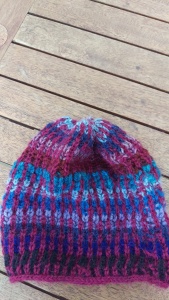
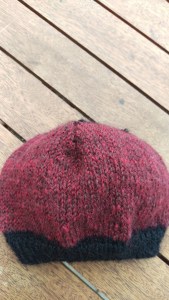
Then brioche started appearing in patterns I was proof reading.  One of Kit Couture’s signature designs is a brioche jumper (sweater).  I like it very much though I am not convinced it is designed for a person of my shape nor climate.  But reading the instructions made me think I needed to try it out with wool to understand.  I decided to try a hat to see if I could do it, and helpfully Stephen West has created one, and as a bonus, it uses up small quantities of yarn in a weight I use and spin a lot.  I took this to Marion Bay.  Oh, Marion Bay!

I didn’t finish it there, but in the end I finished it and improved my understanding a lot.  Ta da!

IMAG5576

Postscript: after I’d finished this hat and added it to my little stack of beanies, I had a call from a treasure who has some pet sheep.  I either spin her sheeps’ fleece, or find people who would like to spin it and gift it on.  This time she didn’t want yarn and I couldn’t figure out a return gift, until I suggested beanies.  I left the whole beanie stash for her to consider when she dropped off fleeces, and this is the one she chose!

3 Comments

Filed under Knitting

DIY knitting kits

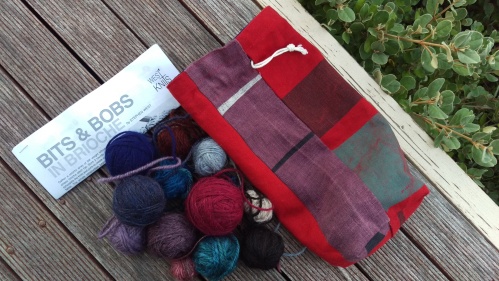
My recent experience of Danish knitting kits had me in mind of Yarn Harlot’s DIY knitting kits. I seem to remember her setting up her own sock club, with yarn, needles and patterns already in her possession, tucked into bags, set up and ready to go the moment she needed a knitting project. So, I got out my empty project bags and prepared myself for weeks of meetings.

IMAG5252

This one is Bendigo Woollen Mills alpaca and some of Joyce’s handspun. That became a hat in one day.

IMAG5317

There was black alpaca left from that kit, so I switched it for the natural yarns in the kit below.

IMAG5257

That hat flew out in less than two days.

IMAG5318

Finally, I decided to use up the remainders of the jumper I made a while back.

IMAG5253

I made some random design decisions (I use the word “design” lightly here) in the middle of a meeting and that’s how this hat came about. At the end of this week of knitting kits, I decided I could probably set up a kit for a jumper provided it had lots of mindless simple knitting–and knit that in meetings.  So much casting on…!

IMAG5382


4 Comments

Filed under Knitting

Handspun socks in use 1 & 2 PLUS Knitting in a patch

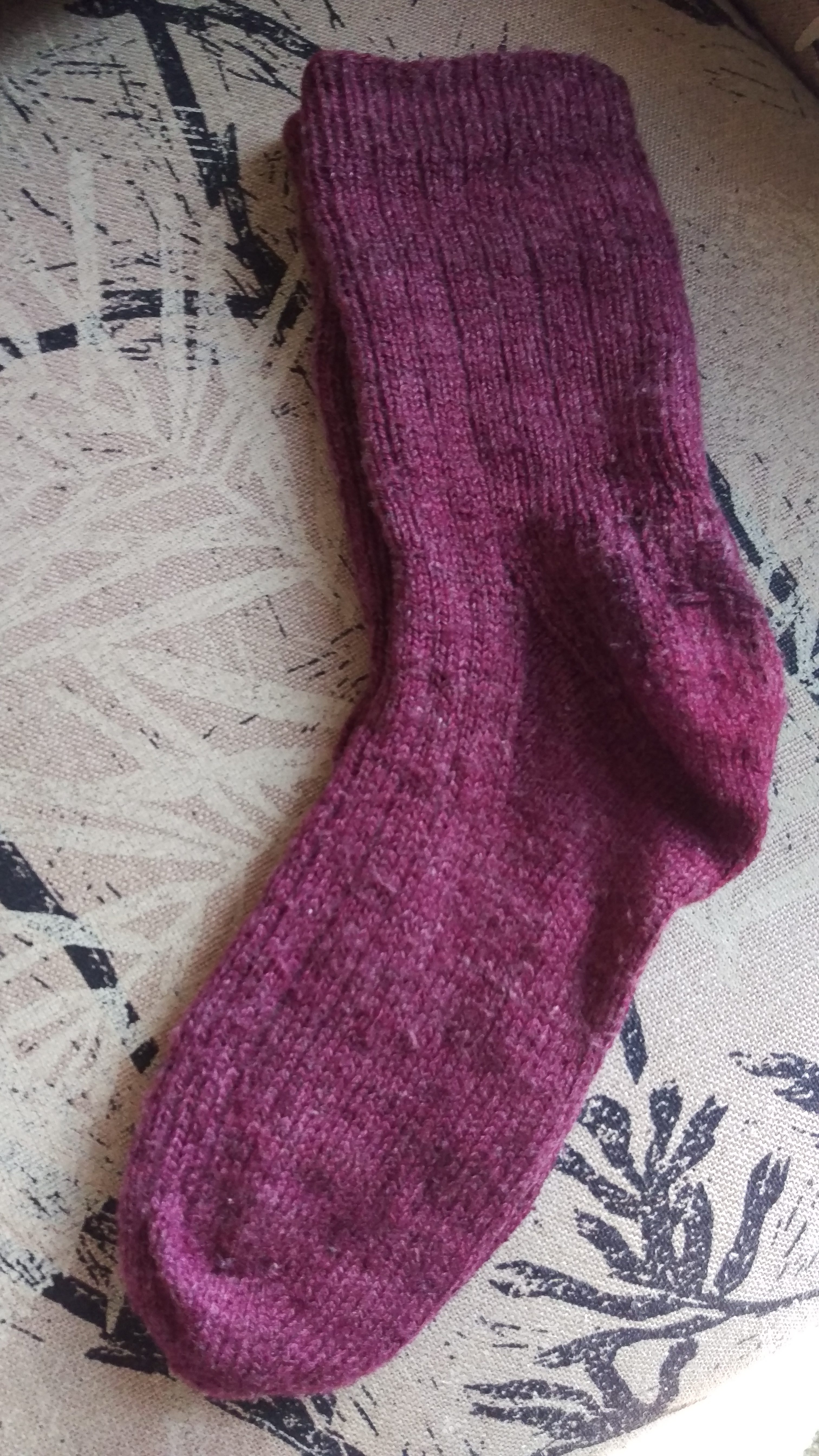
I thought one thing I could do to complete the feedback loop on the toughness or otherwise of my sock spinning would be to ask people I’ve given handspun socks to whether they could return them for inspection.  One of the hard things about the fact that I–gasp–can no longer wear handknit socks, is that I don’t have the capacity to see and feel for myself how my handspinning fares in daily wear inside a shoe or boot.  In return for people showing me how their socks have worn, I’m offering to mend socks that come back to me to close the feedback loop.  So if you happen to be reading this and you think you have a pair of handspun, handknit socks I gave you, bring them in and if they need darning, I’ll do the honours!
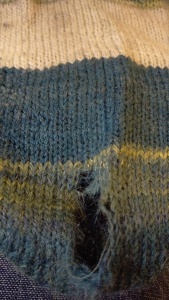
IMAG5273

I think it is worth considering the question of wear.   It is a striking feature of most conversations I have with people about how hand knit items are wearing, that they feel they need to apologise if something I knit has worn out or worn through.  I don’t think so.  Sometimes it is obvious enough that the fault was with the spinning or knitting or fibre choice (so if anyone should apologise it should be me; or perhaps there could be shared acknowledgement of how wonderful the alpaca socks felt, but that they were never destined to last decades).  On the whole, though, I tend to think that it is rather flattering that people like things I made enough to wear them until they fall apart.  And unless I know what happened to them, sometimes I am not in a position to learn what might make me a better sock spinner (for example).  Nylon is permanent, it will never biodegrade, and therefore we should think seriously before we use it.  But the flip side of this recognition is awareness that socks without nylon will not wear as well as those with nylon.  There is a reason it came into use in the context of socks.  And–now that I have lived long enough to understand how a plastic bag will “degrade” into squillions of little bits of plastic, I think it may be time for a thoroughgoing recognition that when your #tuffsocksnaturally wear out they will biodegrade, so the compost or the worms can take them, especially if you dyed thoughtfully too.
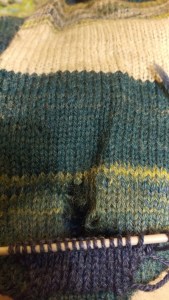
But I digress.  This sock came home recently with only one hole!  I made these socks a little over a year ago (follow the link for details),  so they have not had a huge amount of wear.  But the hole was quite big, and clearly resulted from the fabric wearing right through in a large area. Given the fact that the other sock had not worn through in the same place, I’d say there was a weak patch in the fabric, likely caused in this case by the blending of the fibres (Suffolk, mohair and silk) being uneven, or by the spinning being on the thin side, or underplied.  I decided on a knit-in patch rather than a darn.  So I picked up stitches at the base of the heel flap (above) and began to knit, joining on by picking up a stitch on each side of the patch each row, and knitting it together with the edge stitch of the patched section.  The under-heel section will be thicker than the surrounding fabric, and the patch is generous, but I think under the heel is about the least sensitive place to put a patch and clearly reinforcement is needed!

IMAG5275

To finish the patch, I picked up the same number of stitches , knit right up to them, and grafted them together (kitchener stitch, if you prefer).  If you’d like to see that mending strategy again, I’ve blogged it before here and here (on cardigans) and here (another pair of socks!)

Another pair of handspun and handknit socks came home the same day.  These had two tiny, neat darns in red thread, a lovely application of visible mending (and I think I found the remainder of the skein in my stash subsequently, which may explain the yarn choice another way).  One darn was up by the cuff, where it may have been a breach in the spinning or perhaps a munch from a m*th.  The other is here on the toe, where wear is to be expected, in my view.  All our feet (and shoes) are different, of course!


I found the post about knitting these socks here.  They were knit in 2014 and have gone from son to mother in their lifetimes thus far.  And yest so little obvious wear??

I spun them from… Superwash Merino/Bamboo/Nylon blend.  I bought it at a spinning workshop as the recommended blend for sock spinning, and did a class on spinning for socks.  the other thing I note with interest is that I knit them on 2.75 mm needles.  I think that was partly because the yarn was finer than I anticipated, but it dies also suggest a  finer gauge than my usual, and that is another long-wearing-sock-strategy handed down through the ages. So–the combination of nylon content, tight gauge, machine prepared fibre and handspinning produced a higher wear sock–but not a nylon-free sock, and let’s not pretend that industrially produced bamboo fibre is kind to the environment–though I do assume it would biodegrade at least.  So there you have it!  My first two worked examples of handspun handknit socks in wear for review.  What are you learning from reviewing your spinning and knitting?


14 Comments

Filed under Knitting, Spinning

Spinning tuff socks

The #tuffsocksnaturally project has begun at my place!

IMAG5249

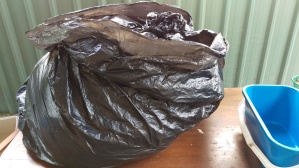
This HUGE bag of Suffolk fleece arrived some weeks ago, and I have begun to wash it.  Like other local Suffolk I’ve spun in years past, the staple is short.

IMAG5251

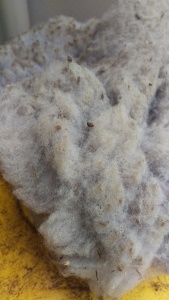
This fleece is filthy. Fair enough. It has been worn in actual life by an actual sheep roaming around freely like a sheep should.  It is also full of seeds and other vegetable matter.  Again, that’s what happens when sheep freely graze.  But it does make the task of creating a yarn that is finely spun and free of little scritchy pieces of chaff or prickles that much more difficult.

IMAG5250

Step one is washing.  I’ll spare you.  It’s really hard to make muddy water interesting. Then drying.  I think drying fleece is more exciting than paint drying, but even so.  Then preparation for spinning. There are choices to be made here.  Combing is the classic preparation for a worsted sock yarn, but I decided against it.  I have decided to try a blend of Suffolk, silk and kid mohair.

IMAG5233

I have found that blending these fibres really well is difficult if I comb them, because they are different lengths (especially because the Suffolk is so short stapled).  And, the last time I made sock yarn by hand I combed all the fibres and was not convinced it made such a difference compared to carding that it was worth the extra effort, which is considerable. So this time, I drum carded to blend more evenly.

IMAG5246

I did a lot of passes with the wool alone, picking out more vegetable matter each time, before adding the silk and kid mohair. And then… to the wheel!

IMAG5243

Now I’ll spare you progress images of three singles being spun.  Only people who are involved in the Tour de Fleece get excited by the sight of a bobbin filling up ever so slowly!  Have you decided to be part of the project? How have you started?
 

15 Comments

Filed under Fibre preparation, Spinning